

Vettuvan Koil, photograph
← Pandya Nadu
Entry 066

Vettuvan Koil

Kazhugumalai · Thoothukudi · Pandya

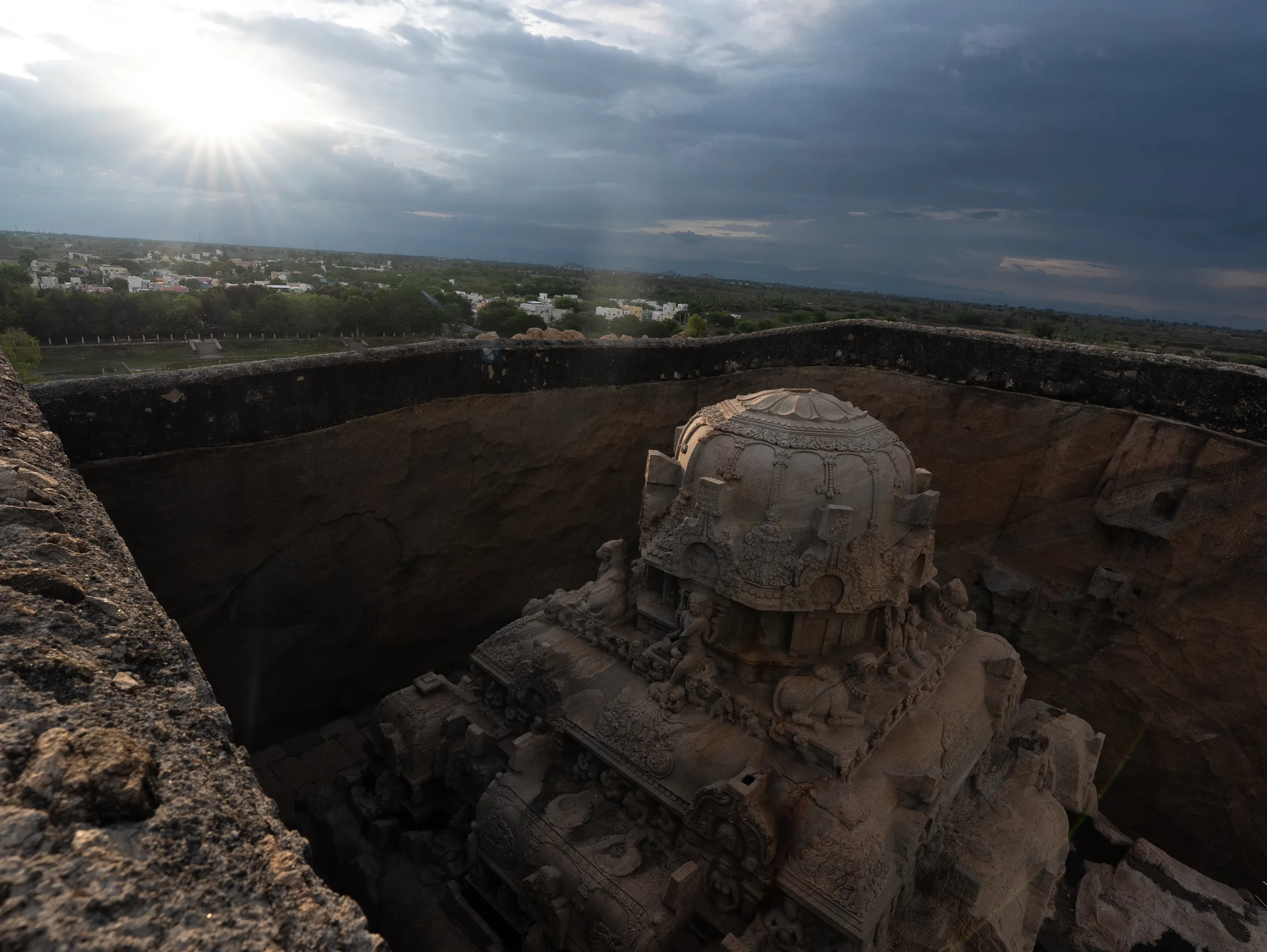
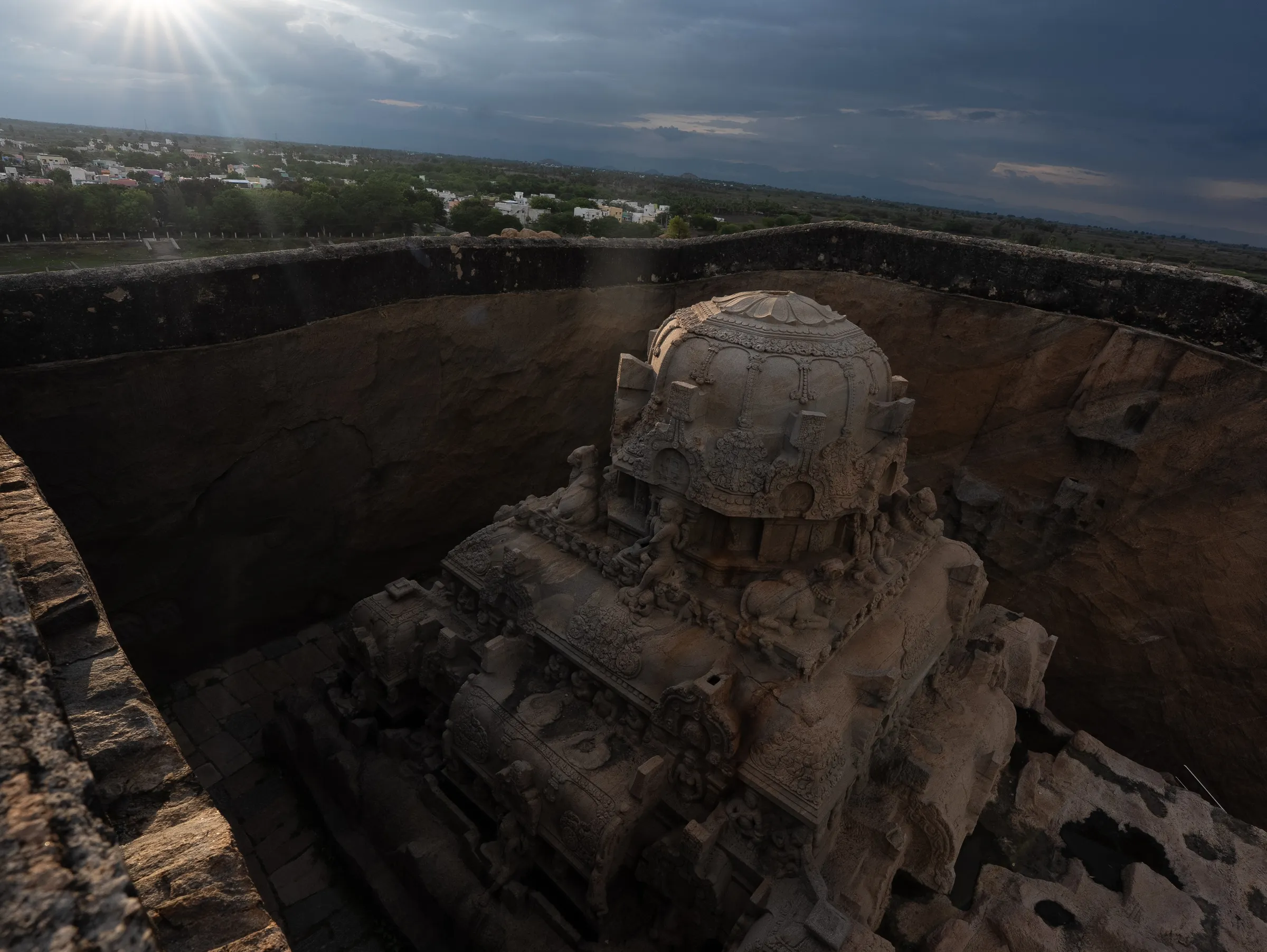
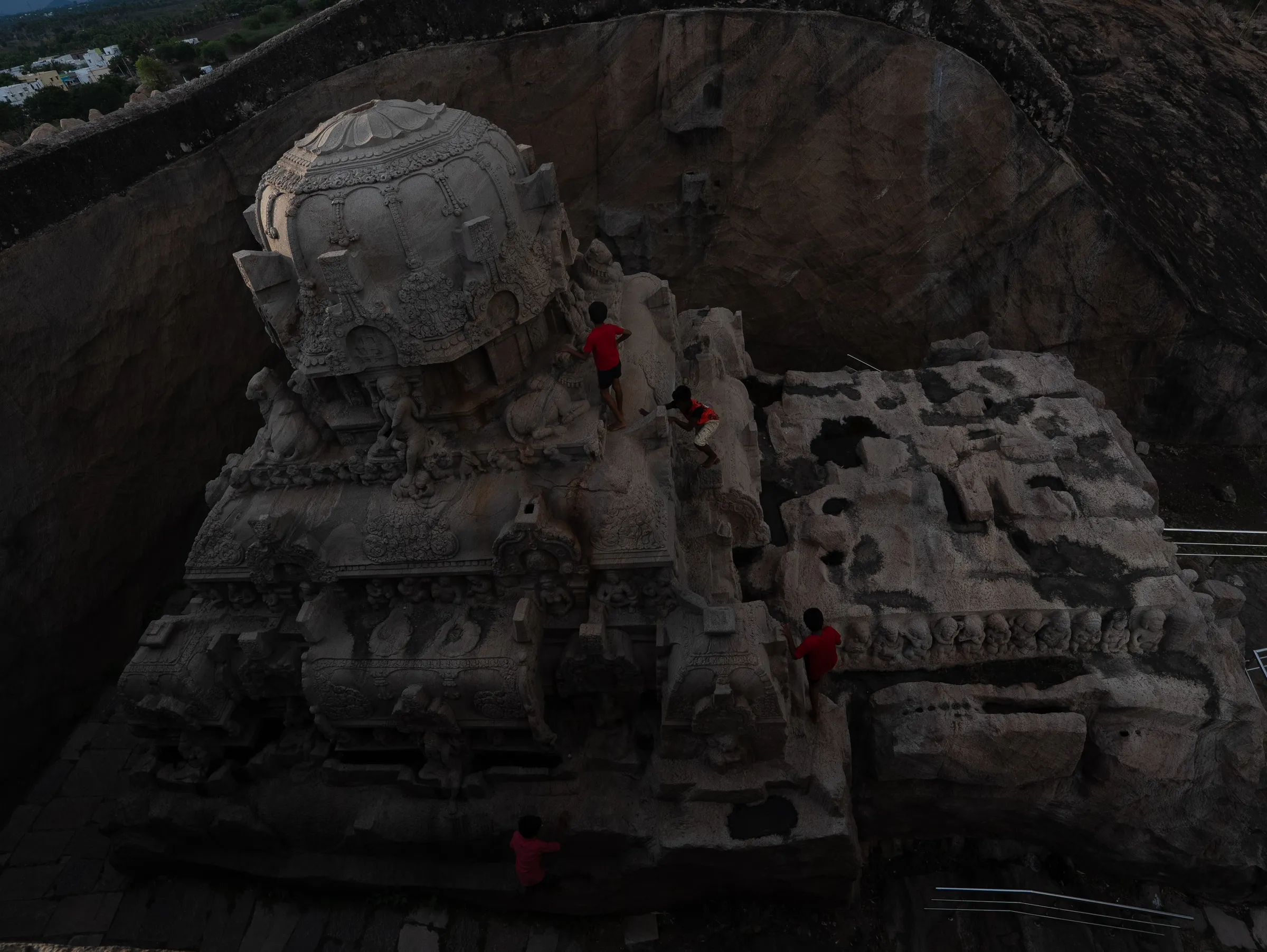
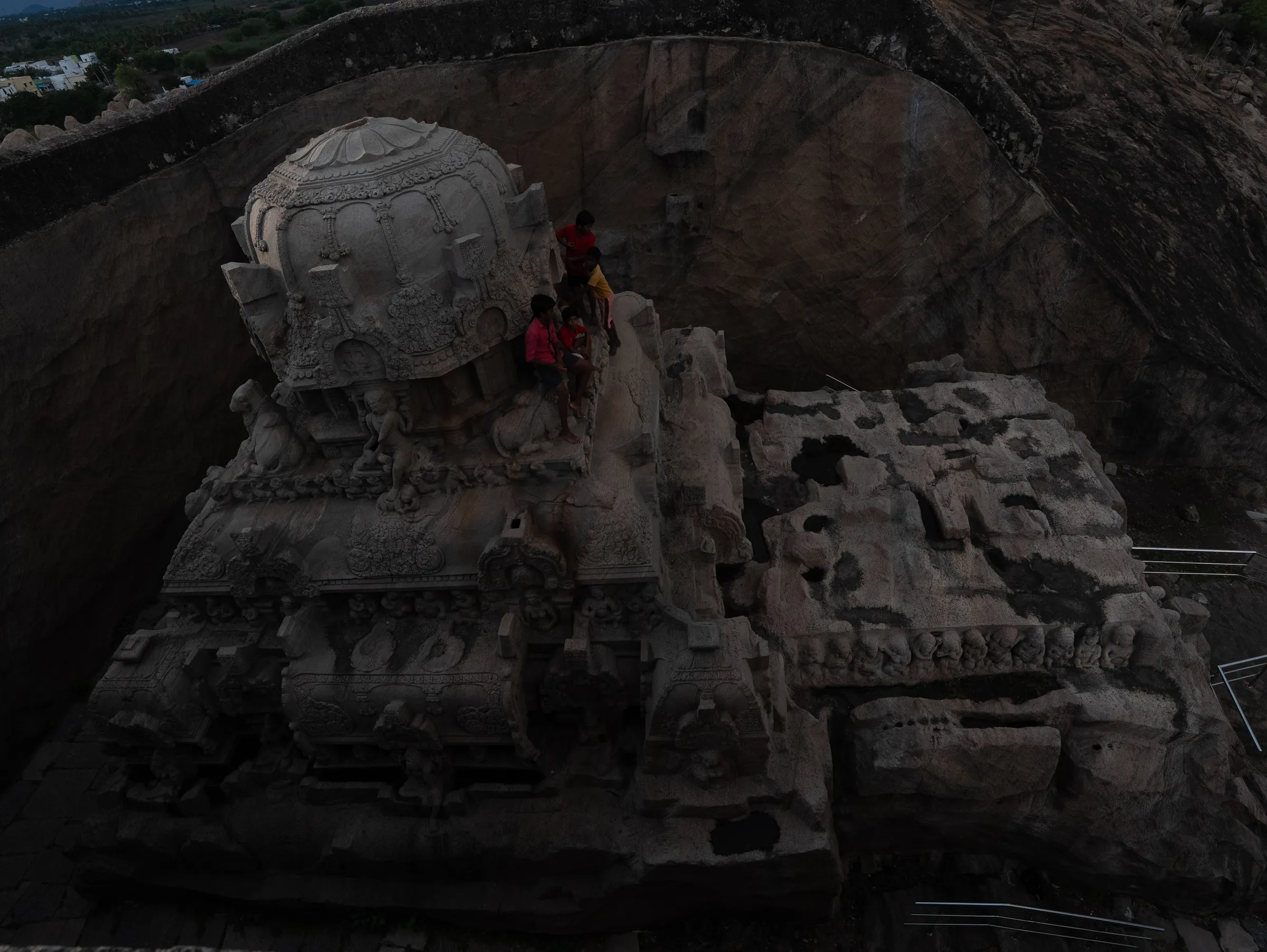
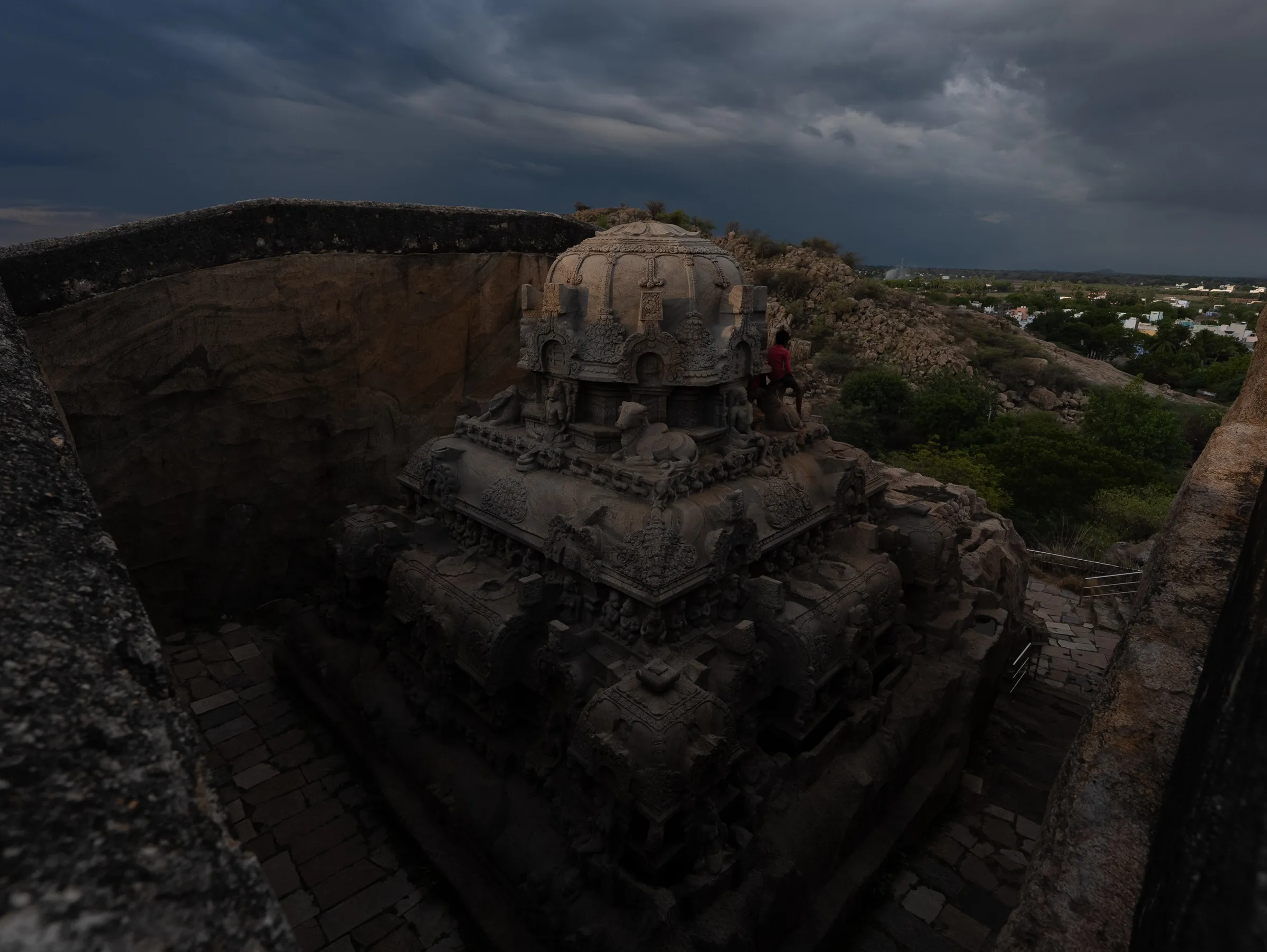
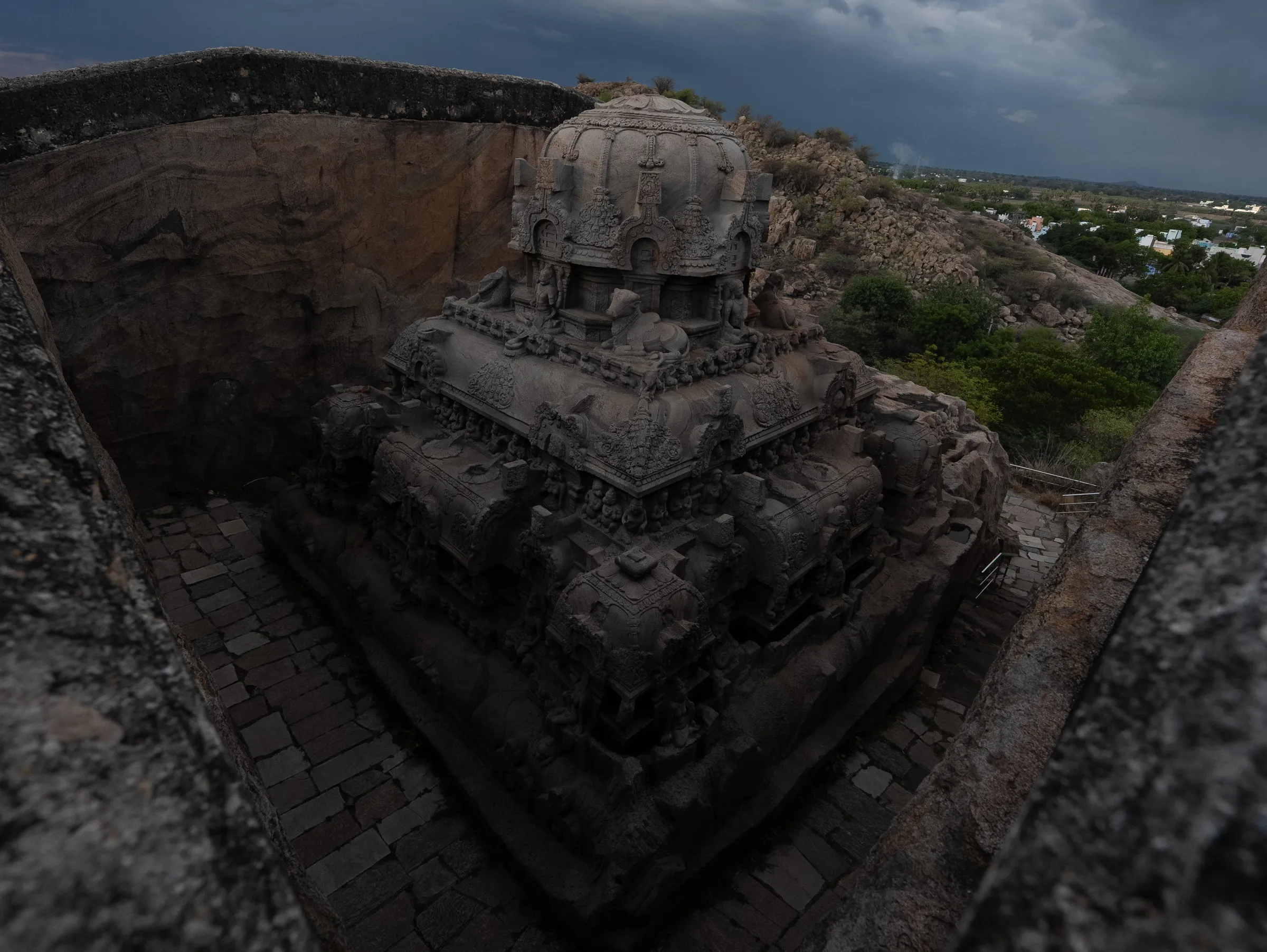
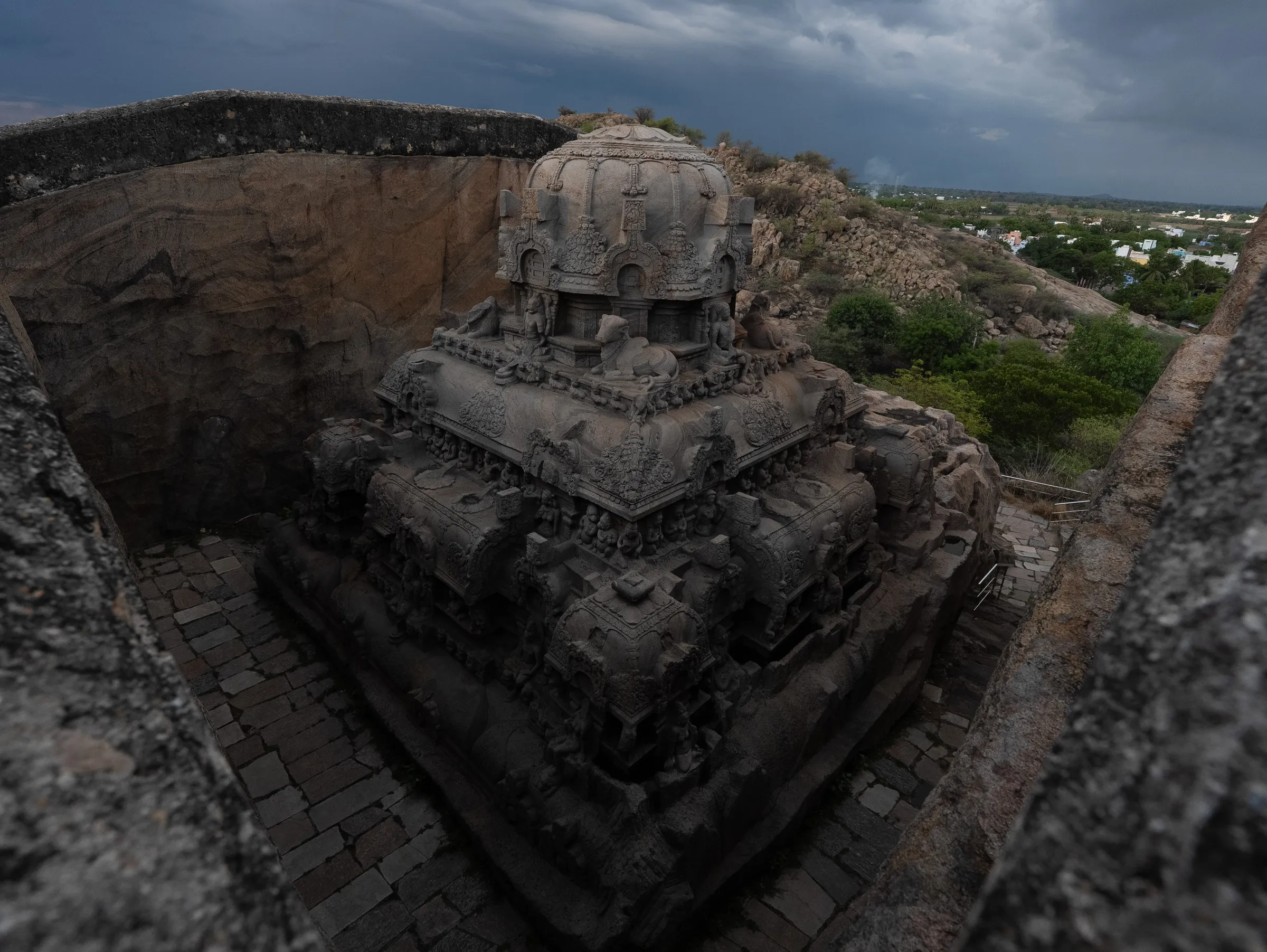
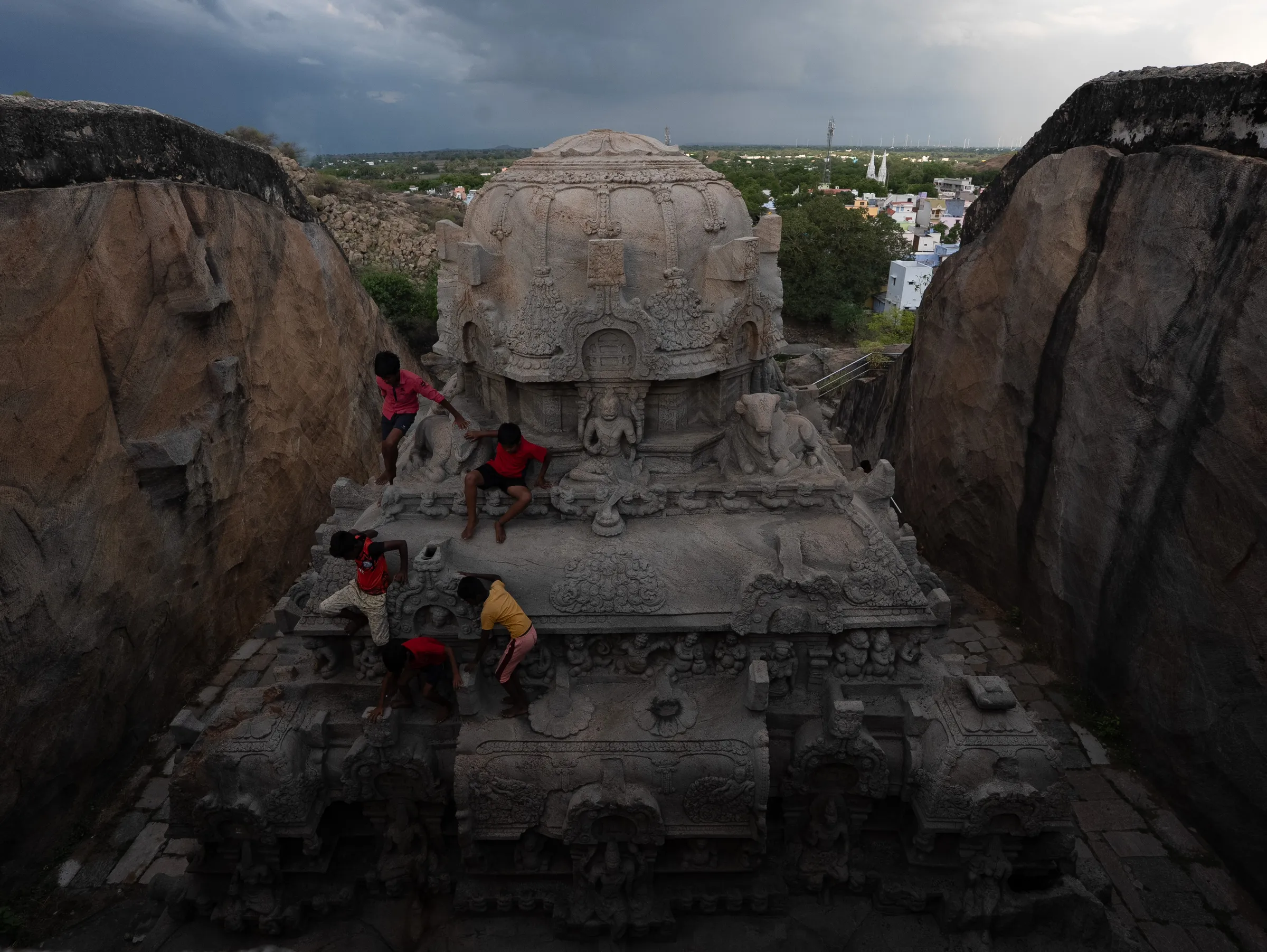
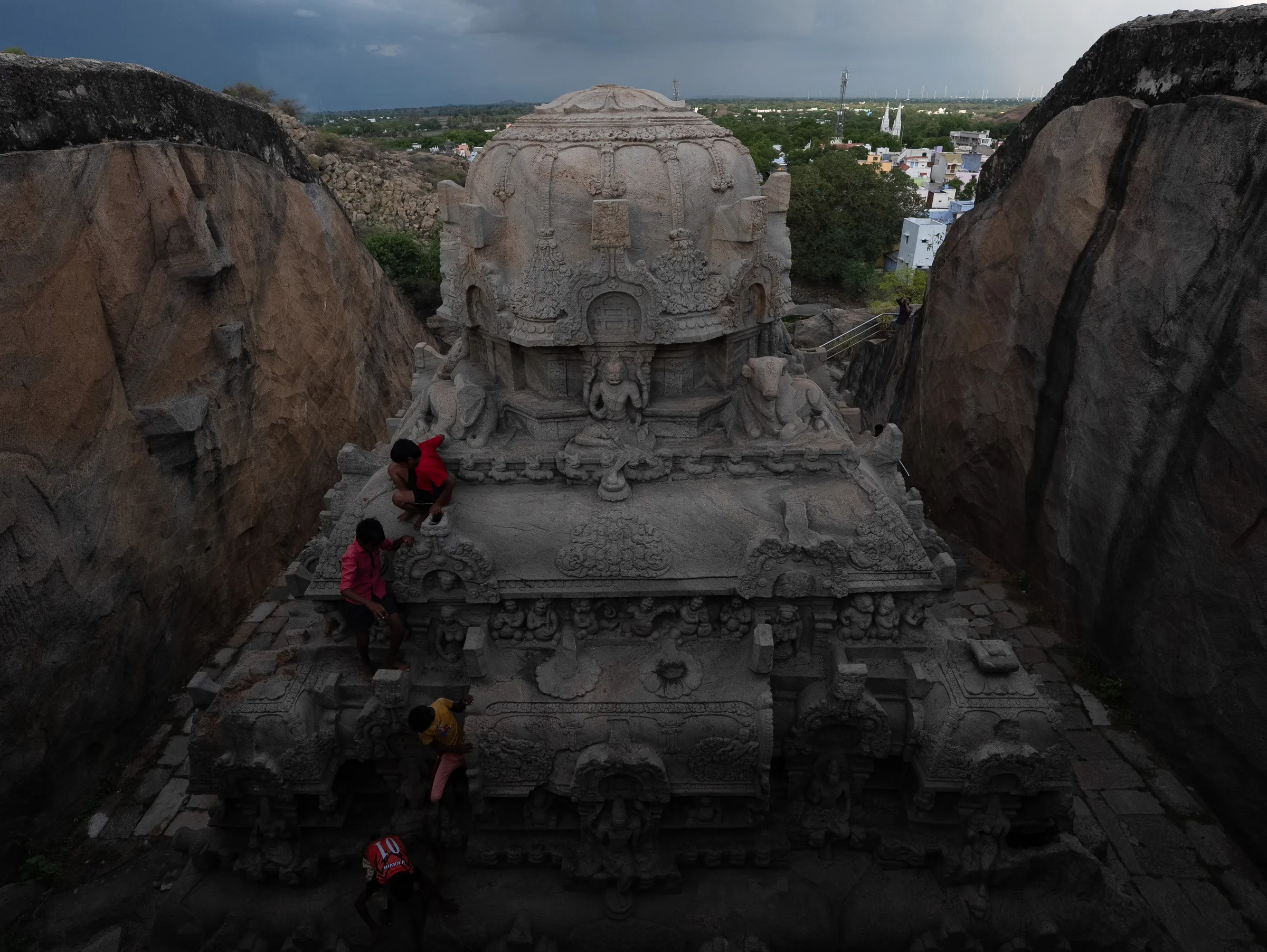
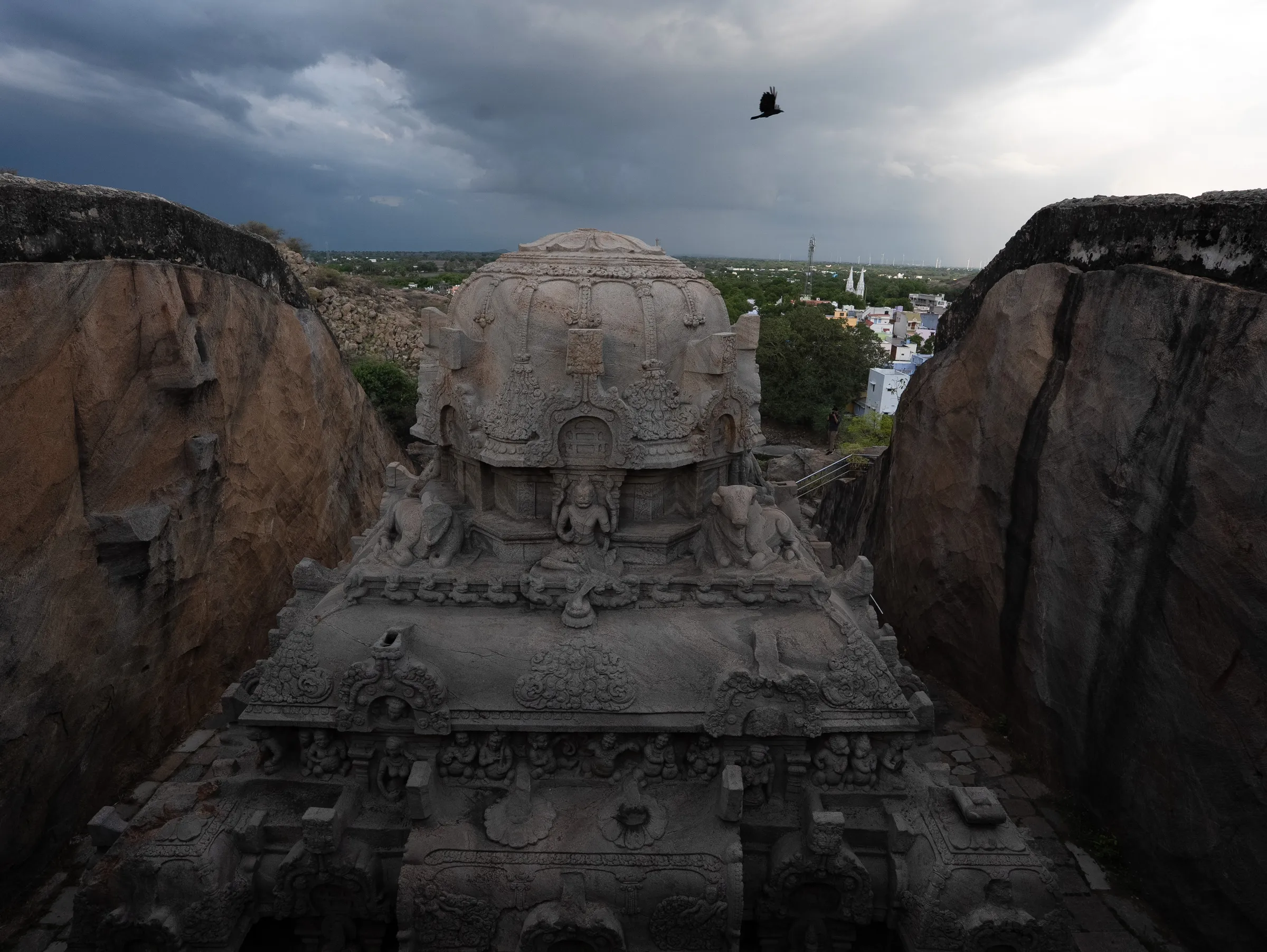
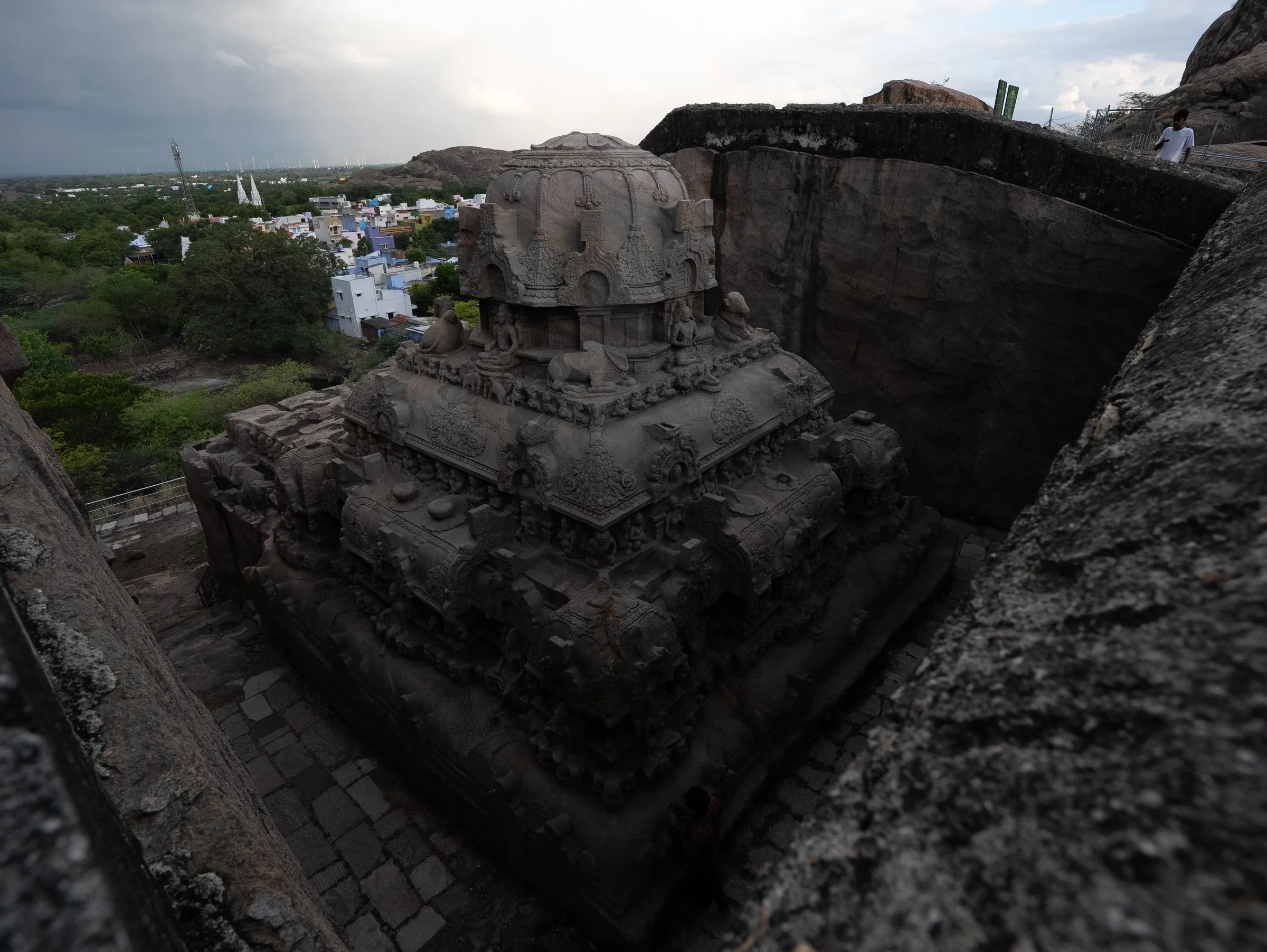
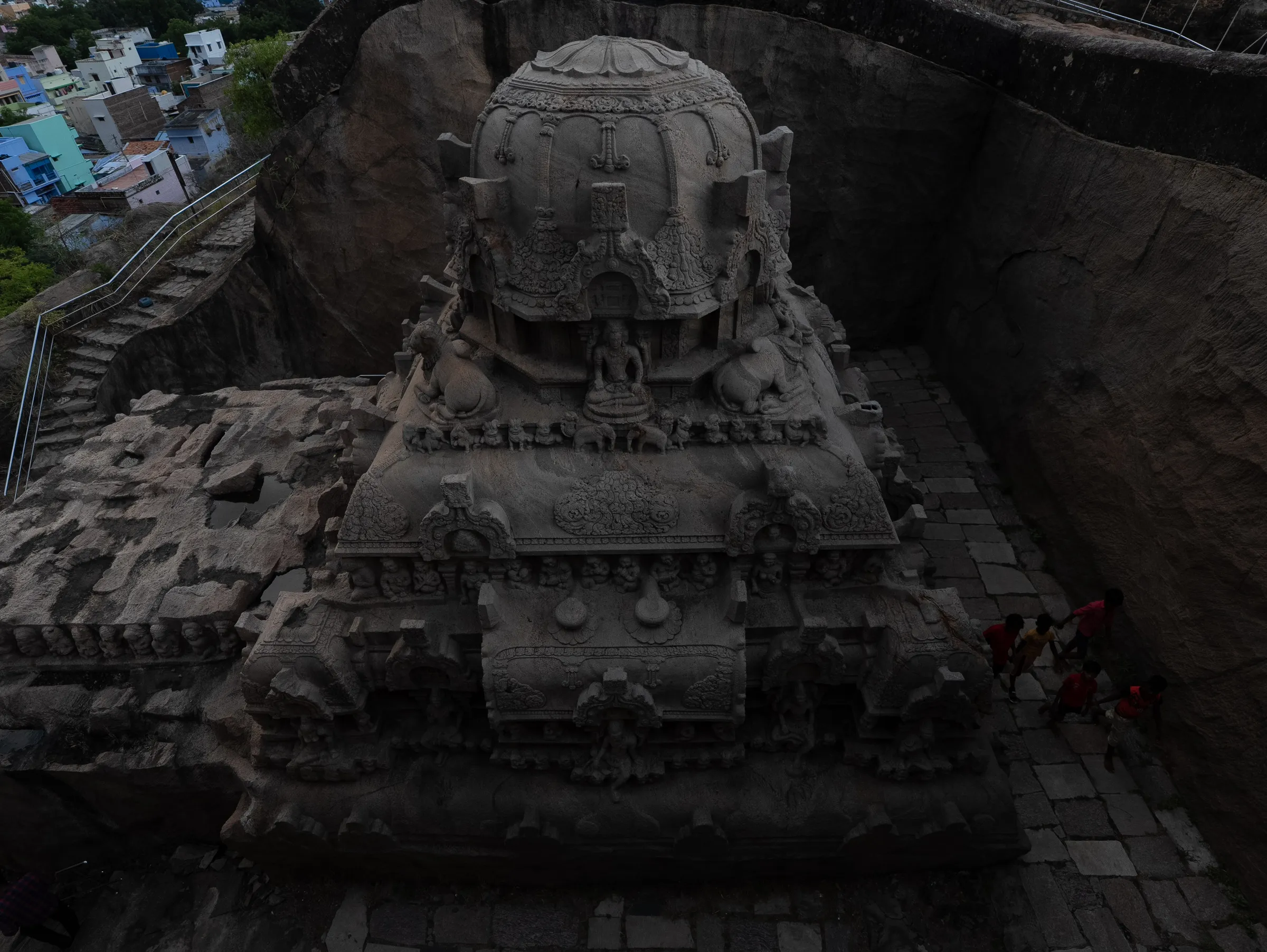
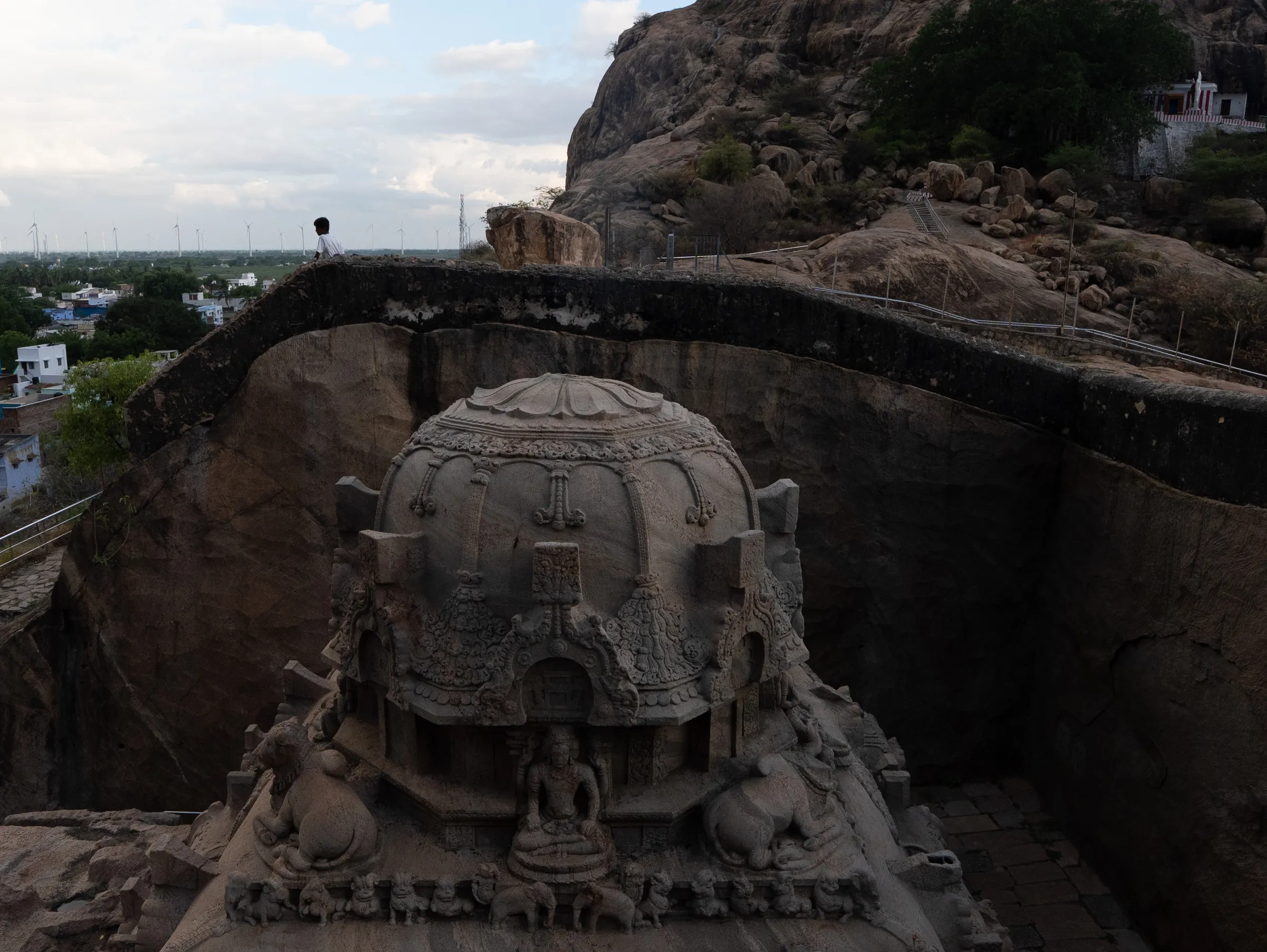
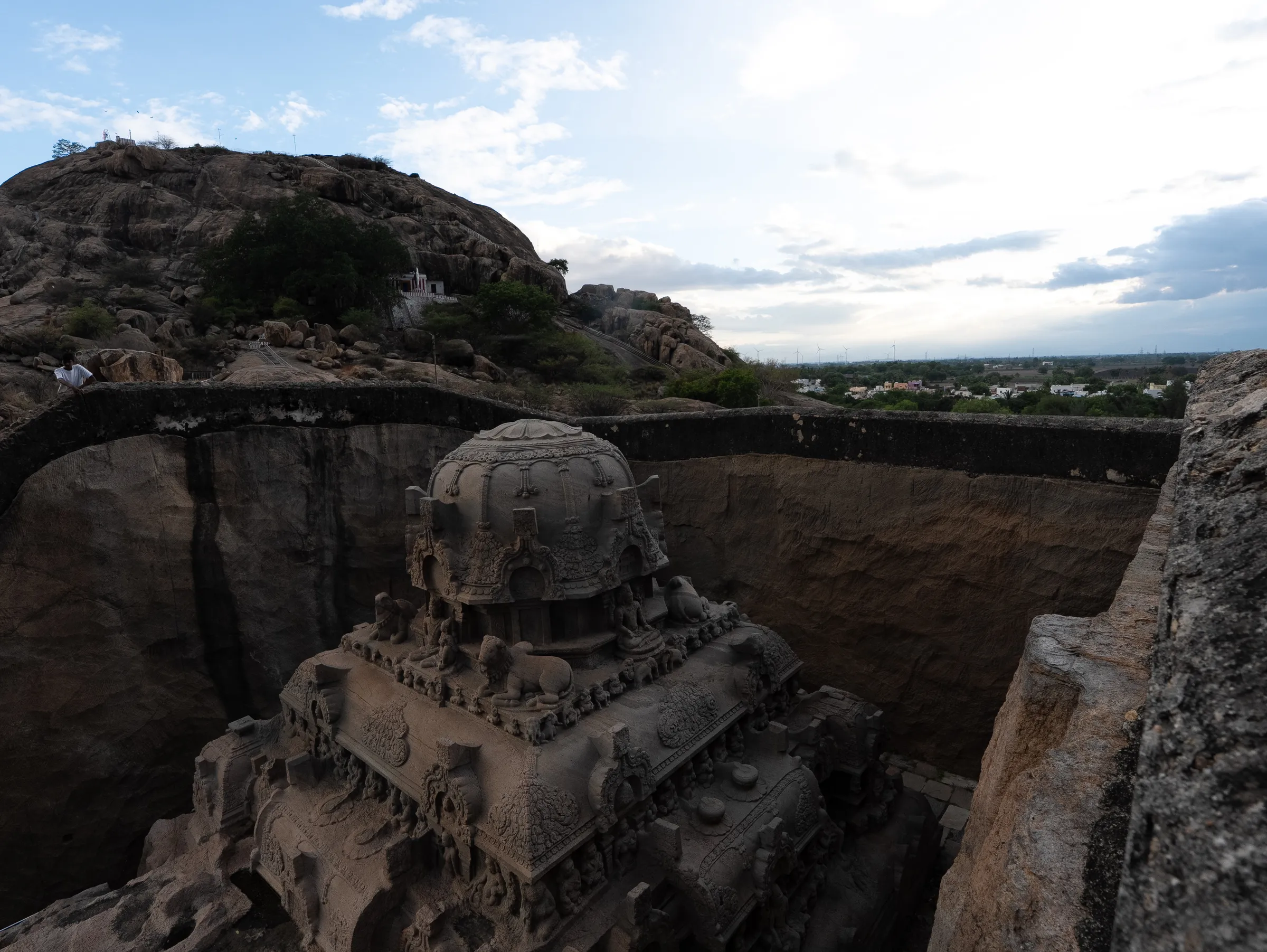
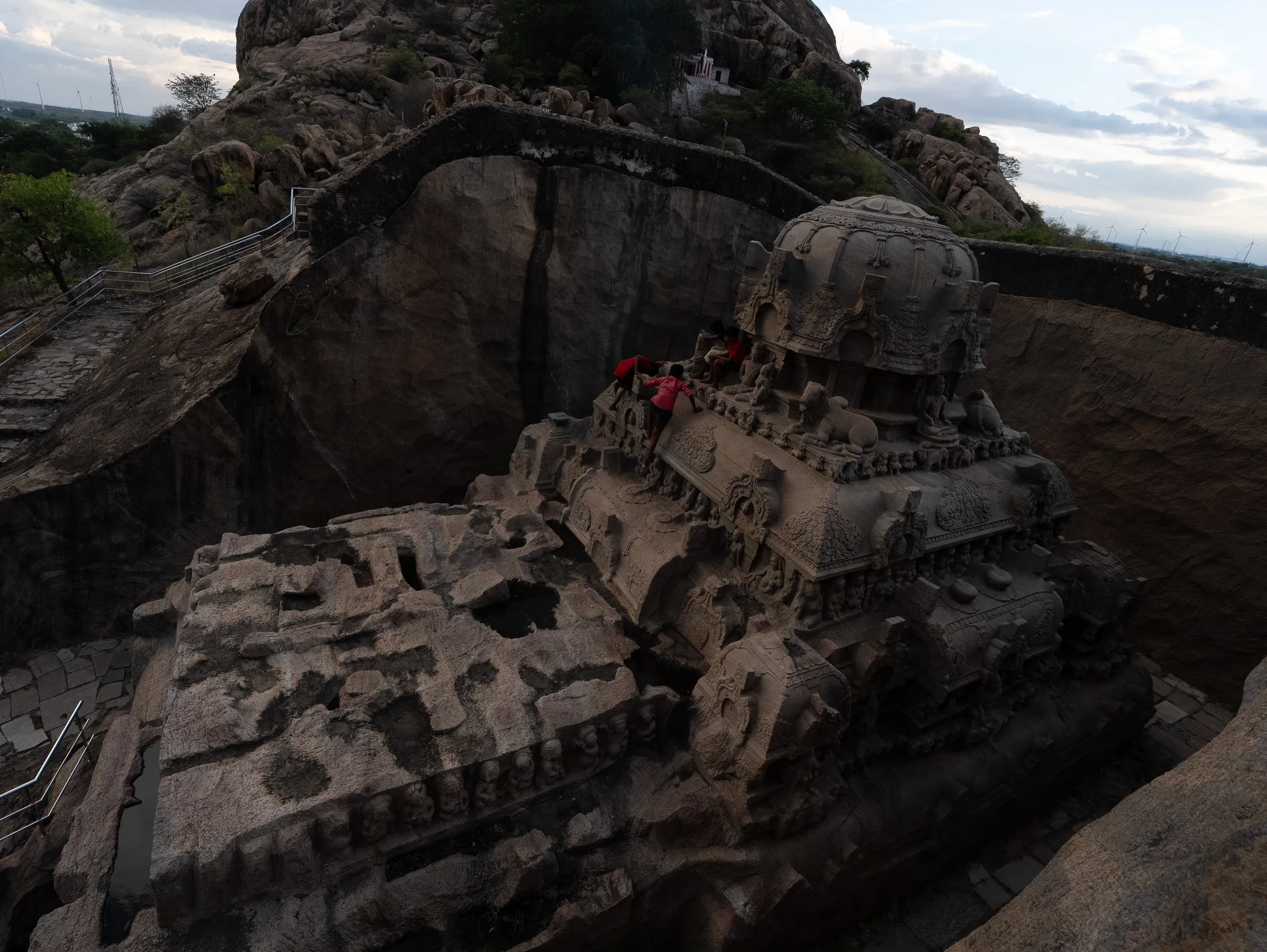
An unfinished monolithic rock-cut Shiva temple at Kazhugumalai in the Thoothukudi district, of 8th century Pandya rule, carved vertically from the top down and resembling the Kailasanatha temple at Ellora. The hillock also bears a wall of Jain bas-reliefs.

The Vettuvan Kovil at Kazhugumalai is an unfinished 8th century Pandya monolithic temple, carved from the top down like Ellora’s Kailasanatha, sharing its hillock with a wall of Jain bas-reliefs.

The photographs

Plates · 17

Vettuvan Koil, photograph
© Amar Ramesh and team · All rights reserved
Vettuvan Koil, photograph
© Amar Ramesh · All rights reserved
Vettuvan Koil, photograph
© Amar Ramesh · All rights reserved
Vettuvan Koil, photograph
© Amar Ramesh · All rights reserved
Vettuvan Koil, photograph
© Amar Ramesh · All rights reserved
Vettuvan Koil, photograph
© Amar Ramesh · All rights reserved
Vettuvan Koil, photograph
© Amar Ramesh · All rights reserved
Vettuvan Koil, photograph
© Amar Ramesh · All rights reserved
Vettuvan Koil, photograph
© Amar Ramesh · All rights reserved
Vettuvan Koil, photograph
© Amar Ramesh · All rights reserved
Vettuvan Koil, photograph
© Amar Ramesh · All rights reserved
Vettuvan Koil, photograph
© Amar Ramesh · All rights reserved
Vettuvan Koil, photograph
© Amar Ramesh · All rights reserved
Vettuvan Koil, photograph
© Amar Ramesh · All rights reserved
Vettuvan Koil, photograph
© Amar Ramesh · All rights reserved
Vettuvan Koil, photograph
© Amar Ramesh · All rights reserved
01

Architectural

structure & vocabulary

The Vettuvan Kovil is a monolithic rock-cut Shiva temple carved on a granite hillock, bearing a striking resemblance to Ellora's Kailasanatha temple, also of the 8th century. What makes both special is the method of carving: they were excavated vertically, the carvers standing atop the rock mass and working downward, rather than the usual carving from front to back of the rock face. The site allows one to stand atop the hill for an aerial view of the temple.

Although unfinished, the workmanship is impressive. The Kalasa, the finial, is missing today, but the lotus atop the vimana is likely its base. The square base of the vimana is set with a seated Nandi at each of the four corners, and carries representations of Vishnu, Brahma, Narasimha, a seated matted-haired form of Shiva, heavenly Apsaras and Bhoota Ganas. At the entrance is a beautiful sculpture of Shiva seated beside his consort Uma, as if in casual conversation. The sanctum houses a Ganesha idol today but was probably left empty earlier, as the temple was never consecrated, which is why it is known in Tamil simply as the temple that has been cut.

02

Archaeological

dated & cited

The Vettuvan Kovil belongs to the 8th century Pandya rule. On the same hillock a wall of Jain bas-relief sculptures, with inscriptions, spans the 8th to 12th centuries, after which Jainism declined in the Tamil lands. The reliefs depict the 24 Tirthankaras in three rows, with other figures flanked by chowri-bearers or yakshis, topped by a horizontal recess strip cut to divert rainwater and reduce erosion; a row of holes below once supported a thatched roof. The many Vattezhuthu inscriptions name patrons, Jain monks, teachers and Pandya kings, record Kazhugumalai serving as a Jain monastery from as early as the 9th century, and mention the founding of a Samanar school by Parantaka Nedunchadaiyan.

Dating
Begun8th century CE

The unfinished monolithic temple belongs to the 8th century Pandya rule; it was abandoned before completion and never consecrated.

Protection & condition
ConditionUnfinished and abandoned; the book calls for it to be treated as a protected archaeological monument by the State Government.
Register interest in prints Buy the book
Improve this entry

This is an open, reviewed record. If you have spotted an error or have something to add — a correction, a date, a source, a name in another script — propose it. Every change is reviewed before it joins the record.

“Suggest an edit” opens this entry on GitHub and turns your change into a pull request. “Share feedback” opens a short form. Both go through review.