Vaikuntanatha Perumal Temple, photograph
← Thondaimandalam
Entry 015

Vaikuntanatha Perumal Temple

Kanchipuram · Kanchipuram · Pallava; later Chōḷa gifts

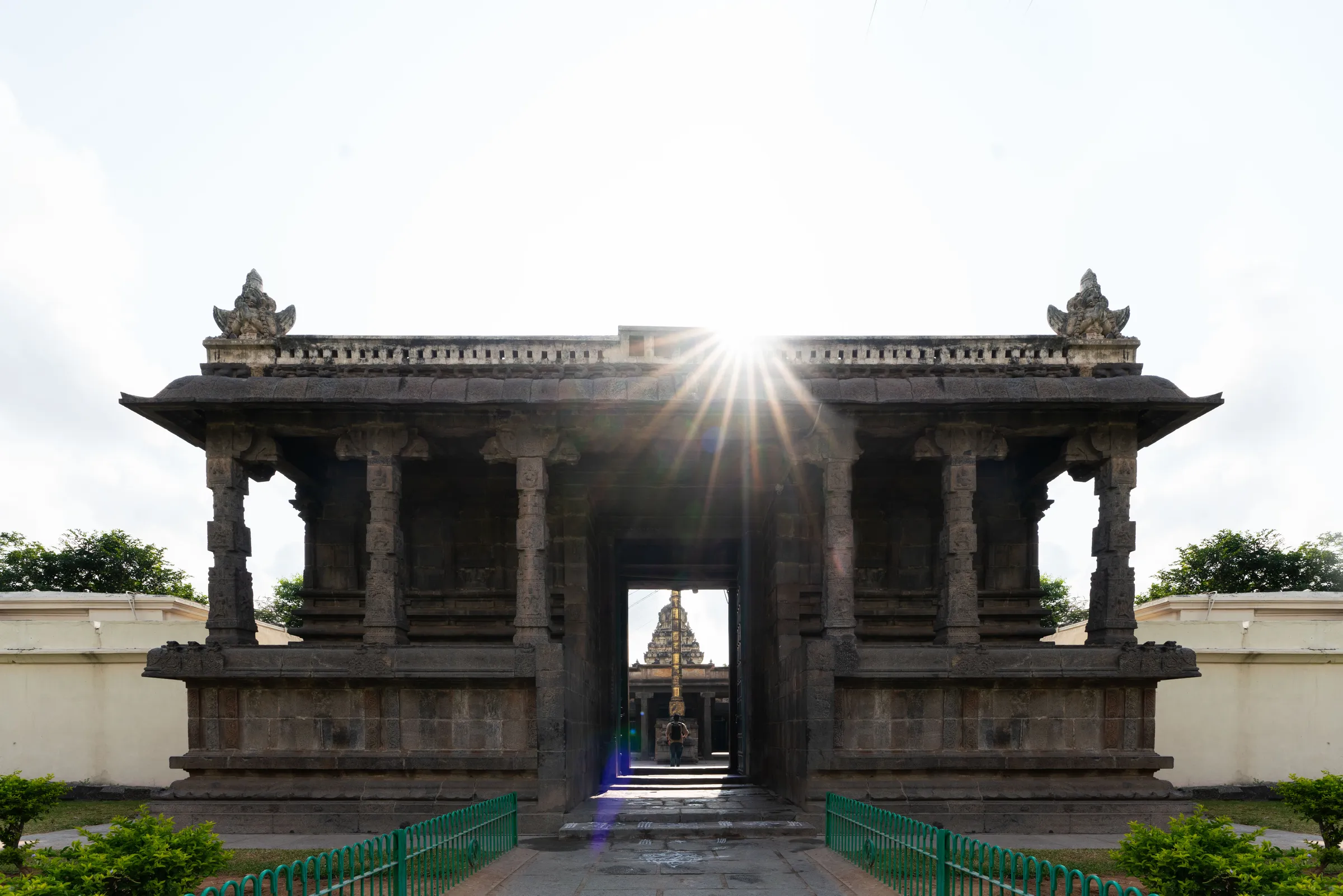
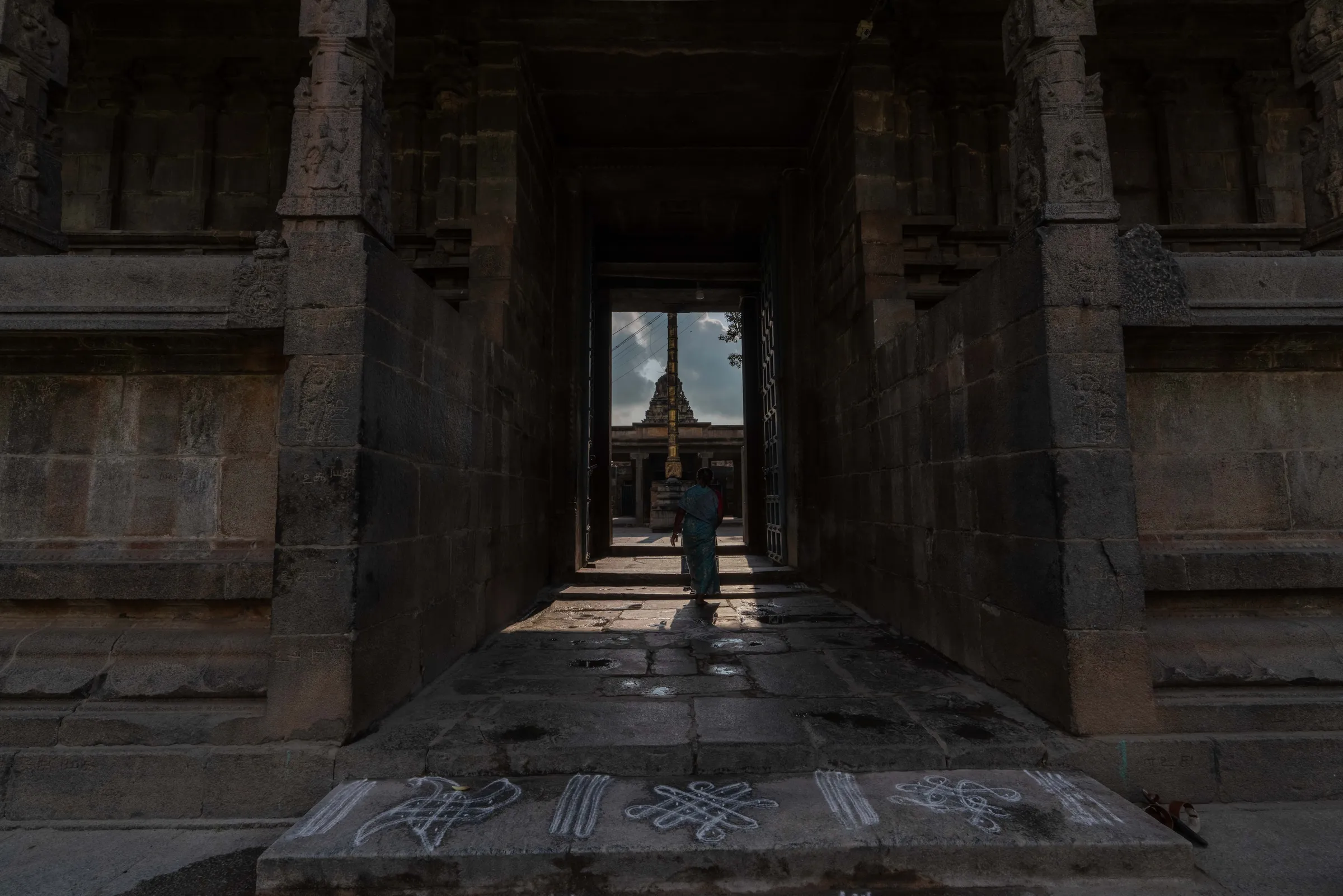
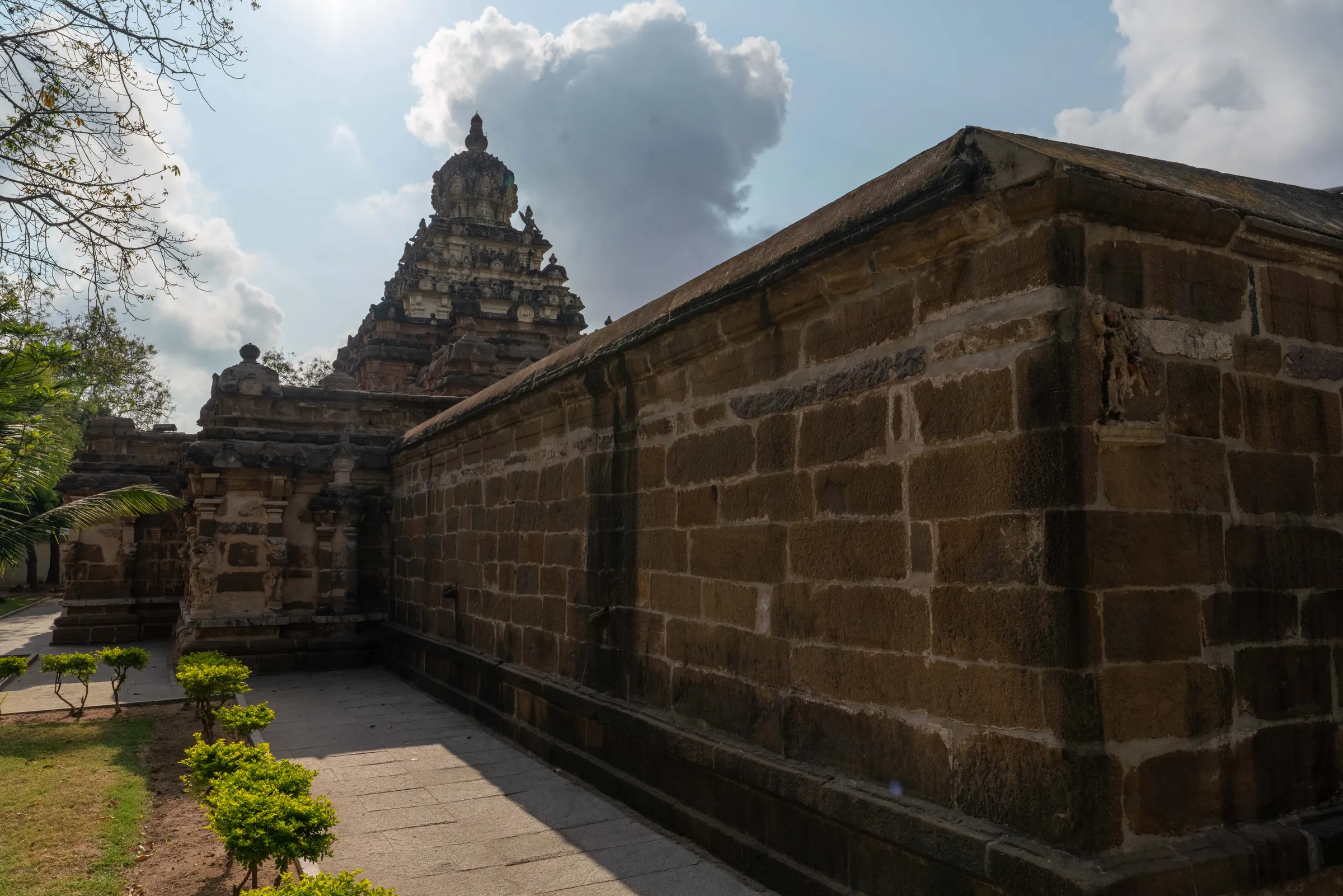
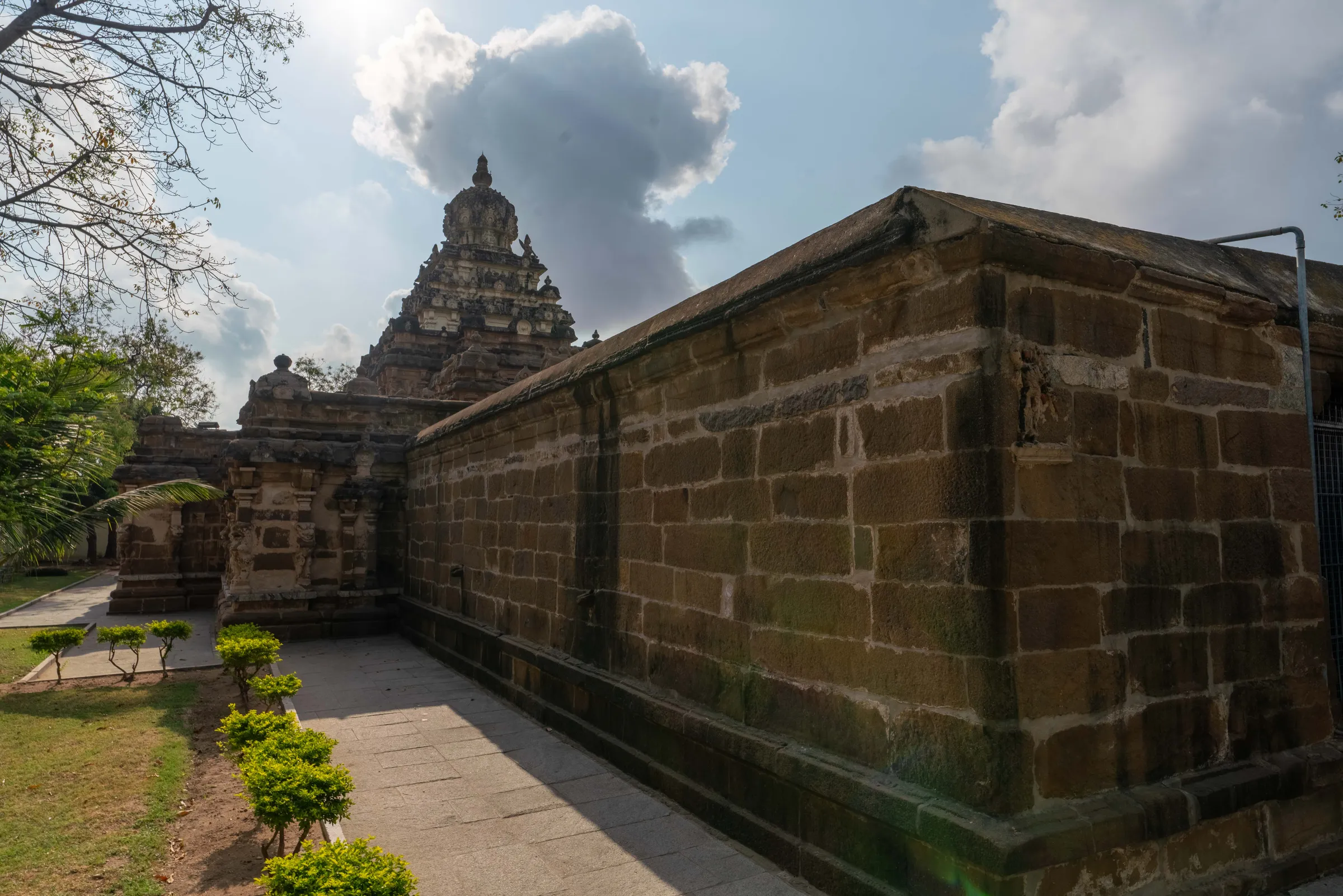
An 8th-century Pallava temple of Vishnu at Kanchipuram, a three-storeyed Ashtanga vimāna whose pillared corridor walls carry the entire story of the Pallavas in stone, like a comic book of its day.

The Vaikuntanatha Perumal Temple at Kanchipuram is an 8th-century Pallava temple of Vishnu, its corridor a story of the dynasty in stone. The three registers below are held apart, as the book records them.

The photographs

Plates · 7

Vaikuntanatha Perumal Temple, photograph
© Amar Ramesh and team · All rights reserved
Vaikuntanatha Perumal Temple, photograph
© Amar Ramesh and team · All rights reserved
Vaikuntanatha Perumal Temple, photograph
© Amar Ramesh and team · All rights reserved
Vaikuntanatha Perumal Temple, photograph
© Amar Ramesh and team · All rights reserved
Vaikuntanatha Perumal Temple, photograph
© Amar Ramesh and team · All rights reserved
Vaikuntanatha Perumal Temple, photograph
© Amar Ramesh and team · All rights reserved
01

Architectural

structure & vocabulary

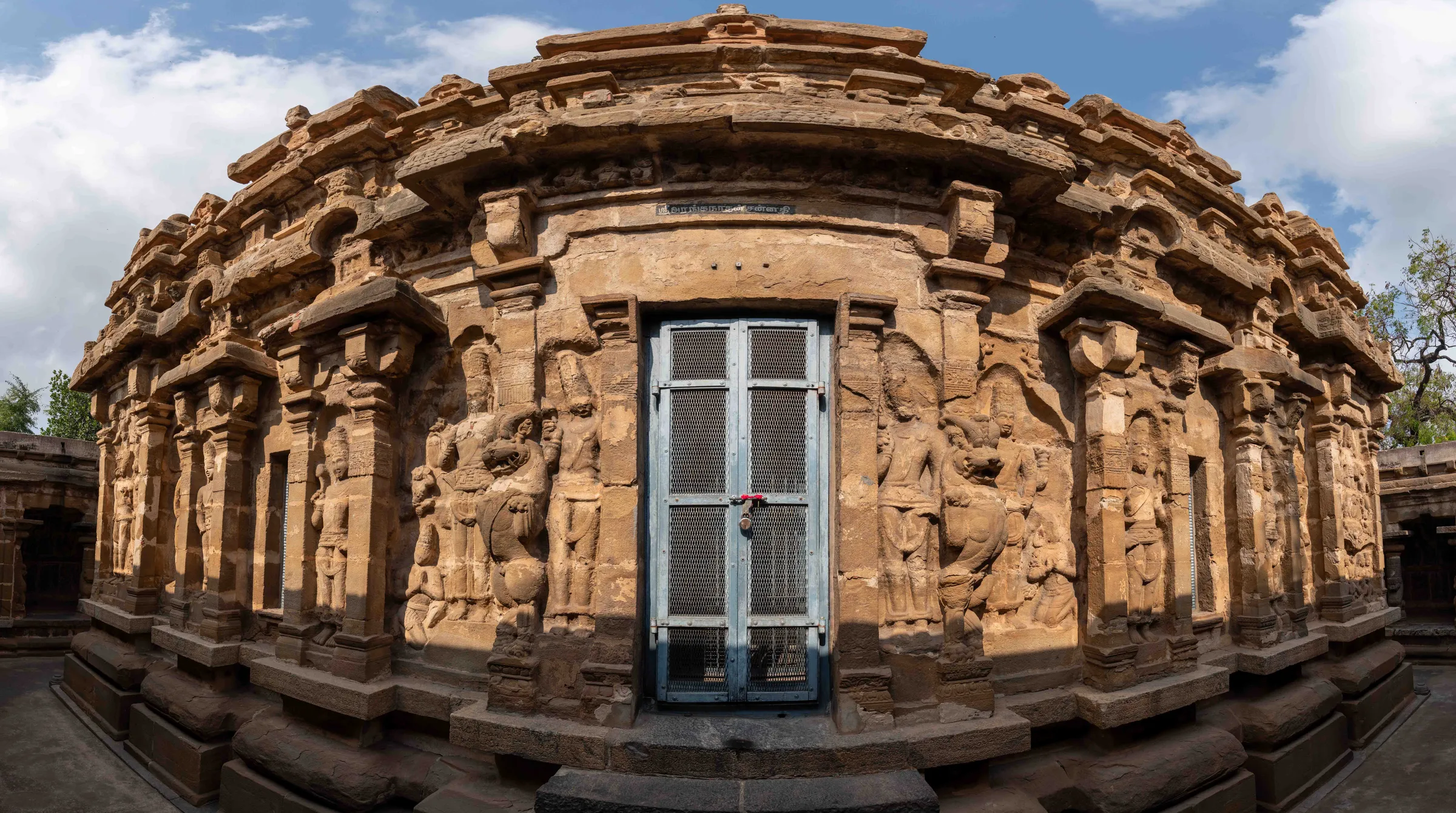
The temple is a tri tala or Ashtanga vimāna, with a ground floor, first floor and second floor, each receding in size and all with separate pradakshina pada or circumambulatory paths, like the temple at Utiramerur.

The main temple wall carries a series of Pallava sculptures, once brightly painted over. In the main wall is a rare early image of Vishnu as Hayagriva with the face of a horse, and another of Vishnu as Varaha teaching someone. At eye level are the dasa-avatars of Vishnu. The heavily plastered first-floor outer walls show, in places, Garuda carrying Vishnu and an asura holding the head of Vasuki as they churned the ocean; the scene of Narasimha fighting Hiranyakasipu is relatively free of plaster, showing the best Pallava art.

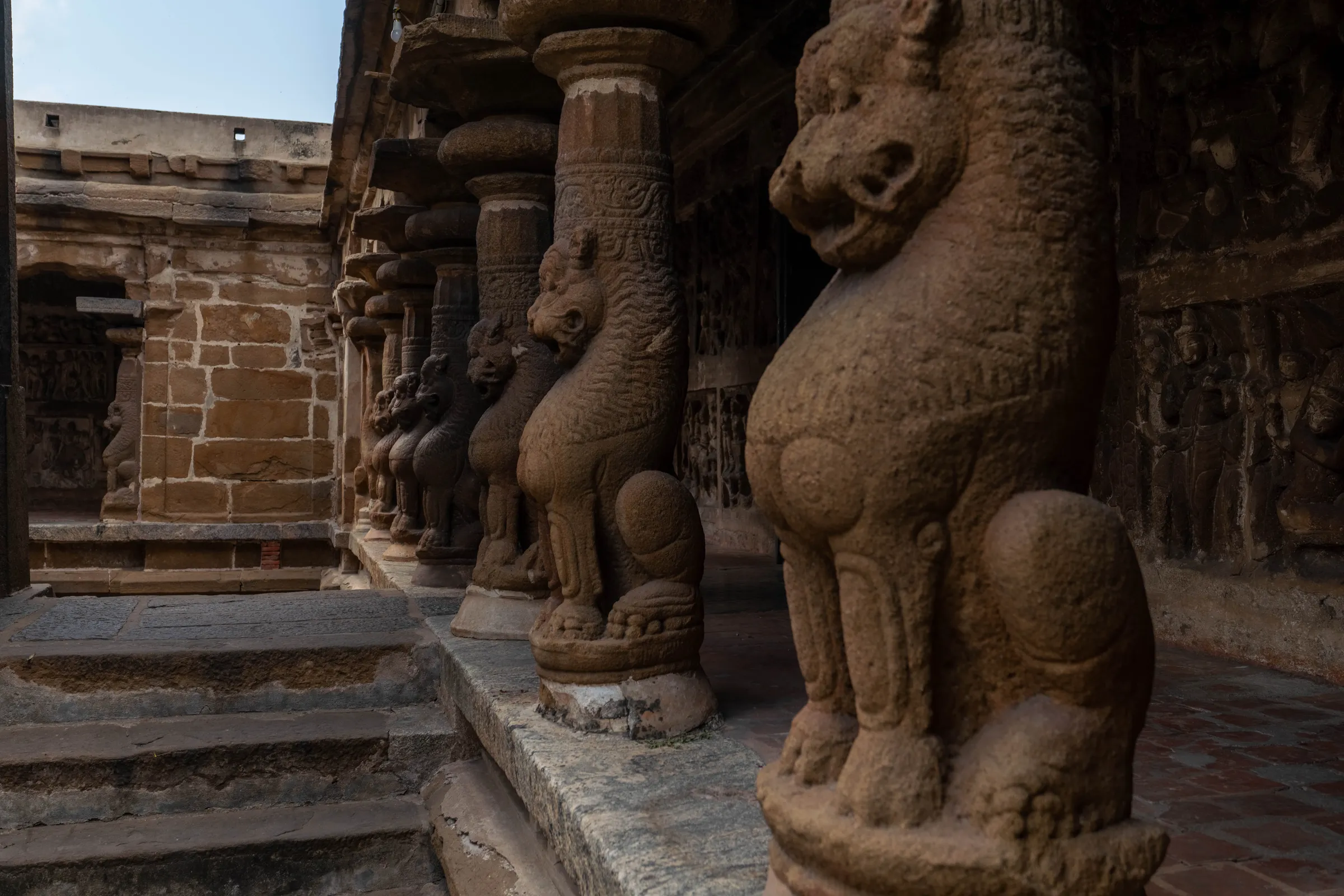
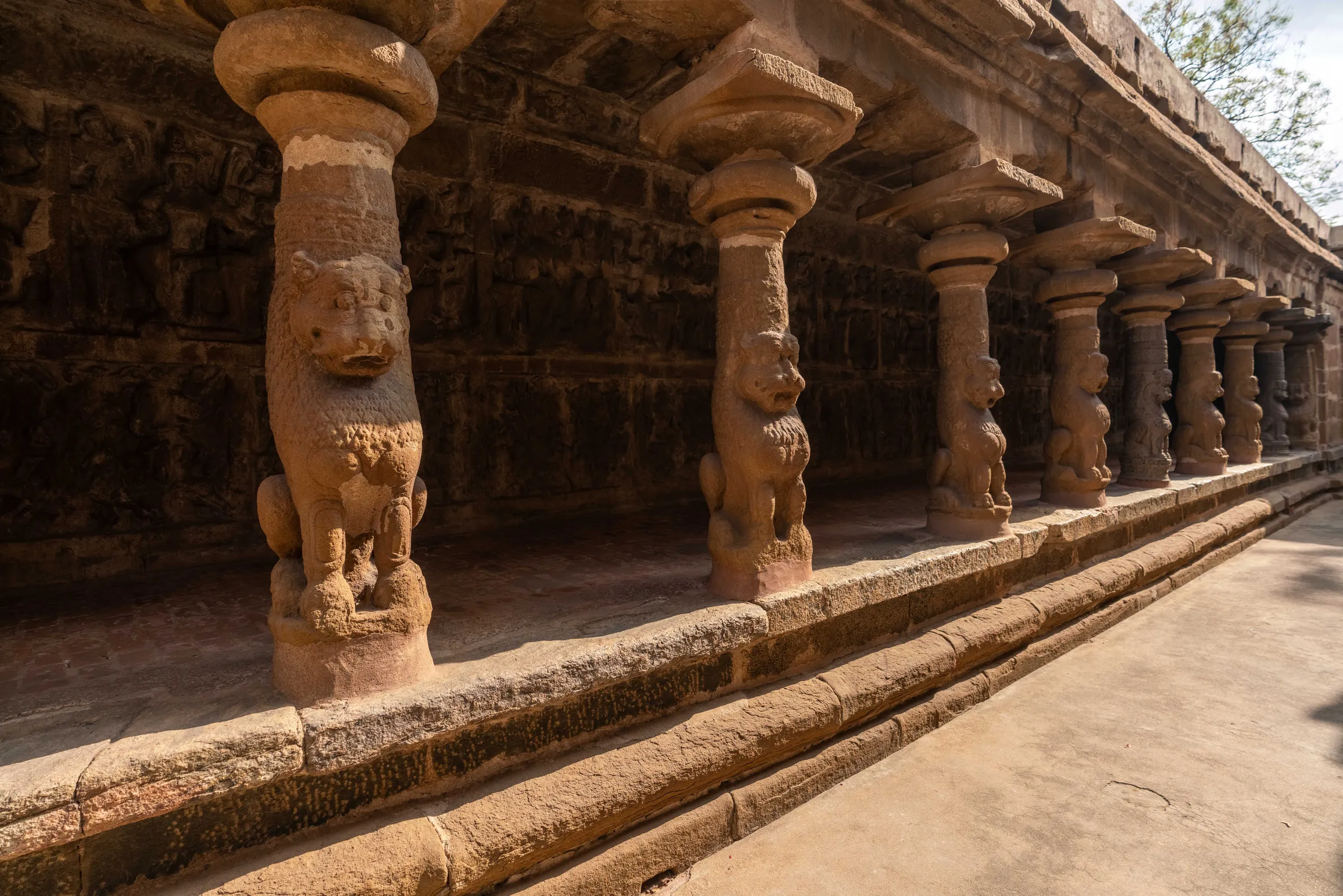
The main temple is enclosed by a pillared corridor whose walls bear panels of the entire story of the Pallavas, most of them sadly damaged, with a small band underneath where captions were probably painted, like a comic book in stone. An easy panel to identify is the coronation of the Pallava king, though the many figures cannot be named for lack of captions; another shows elephants in battle.

02

Archaeological

dated & cited

The temple was built by the Pallava king Parameswara in the 8th century, and so was called Parameswara Vishnu Griham, the house for Vishnu, which has since become Parameswara Vinnagaram. The book counts it the most recent of the Divya Desams.

The inscriptions are damaged, but record that a Pallava king gave the temple a solid gold image of Vishnu and other gold puja utensils. Chola inscriptions from the time of Kulotunga mention many gifts of land, some given by dancing women.

Dating
Begun8th century CE

Built by the Pallava king Parameswara in the 8th century; once called Parameswara Vishnu Griham, later Parameswara Vinnagaram.

Protection & condition
GroupOne of the Divya Desams; the most recent among them per the book
03

Mythological

as transmitted

Tirumangai Alwar (8th century CE), a contemporary of the Pallava king Nandivarma Pallavamalla, sang about this place. The Pallavas claimed descent from Drona through Ashwathama.

Register interest in prints Buy the book
Improve this entry

This is an open, reviewed record. If you have spotted an error or have something to add — a correction, a date, a source, a name in another script — propose it. Every change is reviewed before it joins the record.

“Suggest an edit” opens this entry on GitHub and turns your change into a pull request. “Share feedback” opens a short form. Both go through review.