Architectural
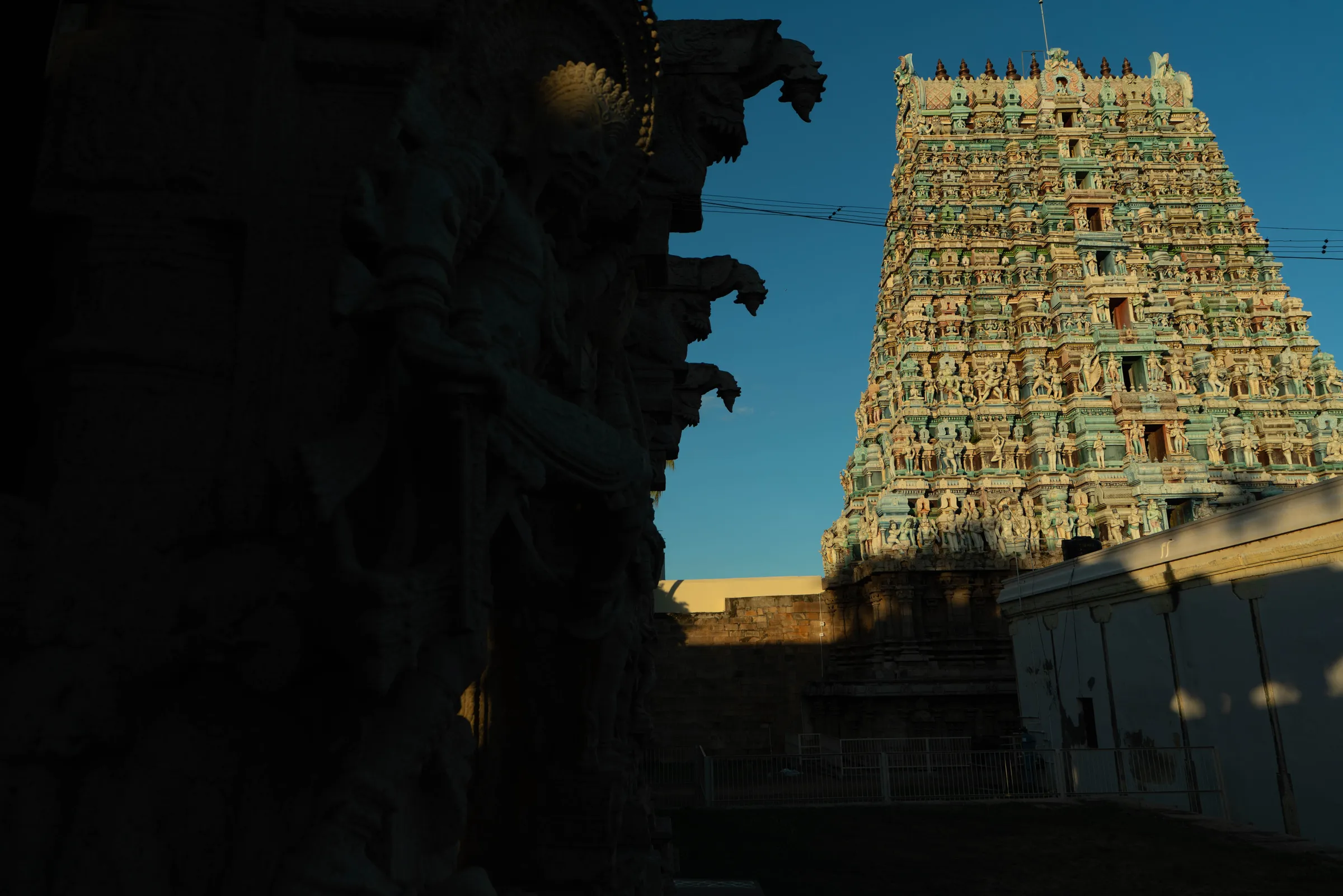
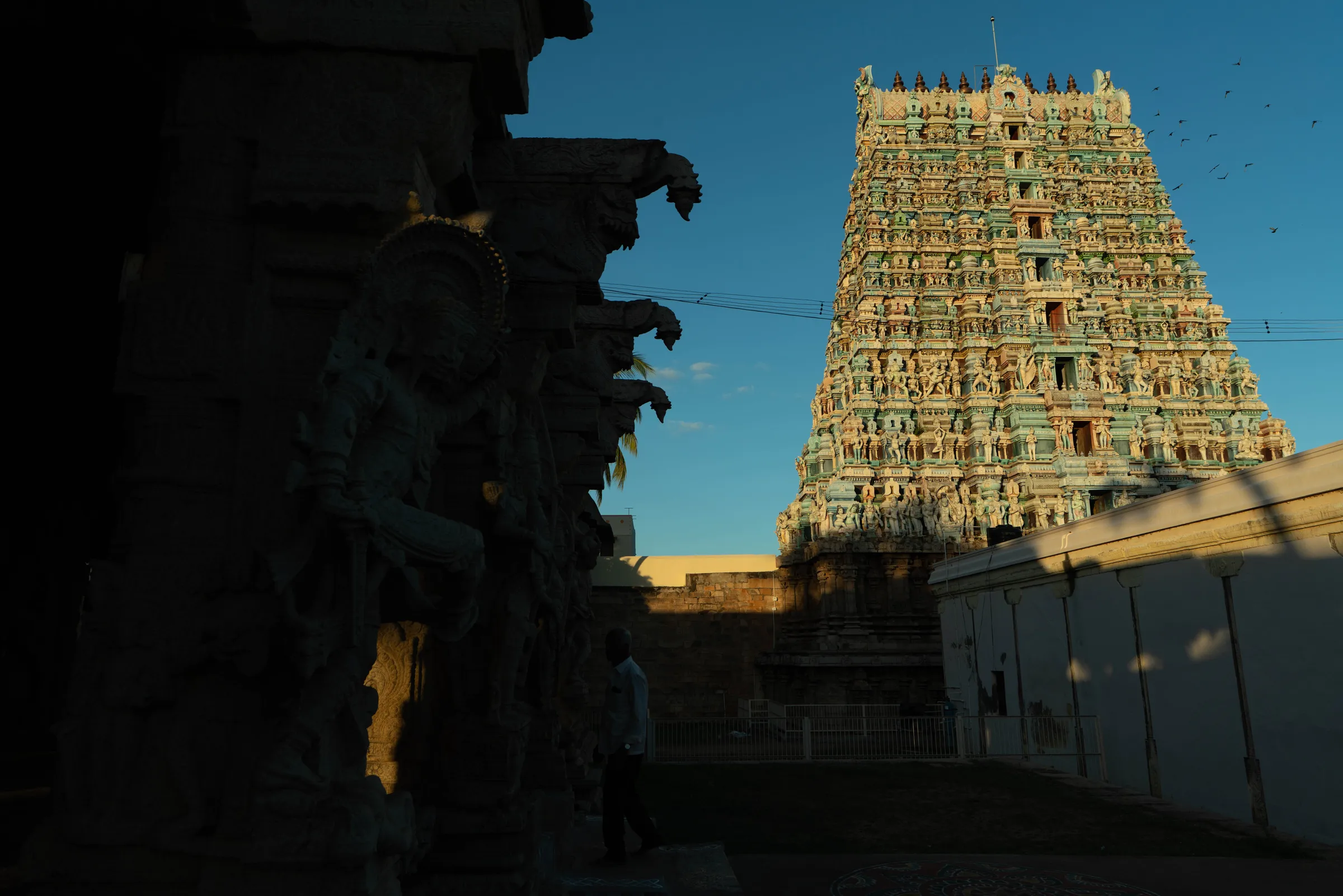
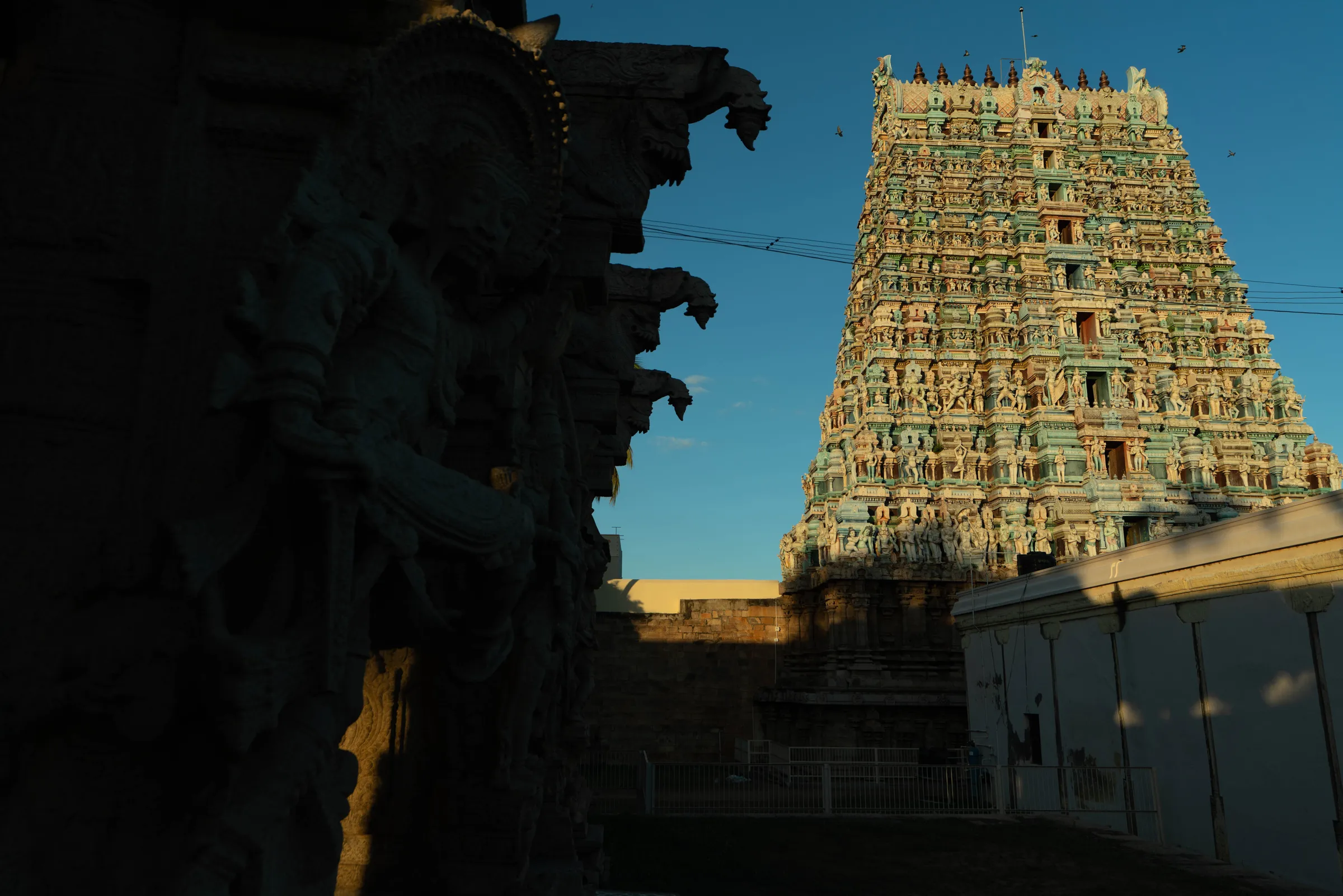
structure & vocabularyThe large temple has three enclosures. The main deity is Vaikuntanatha, the moolavar in the sanctum; the processional deity is Kallapiran. The Pandya kings built the core structure, while the Madurai Nāyaks later added the gopurams, doorways and mandapas. The pillars of the inner mandapa, though plainer than the rest, appear to be of the Chola style.
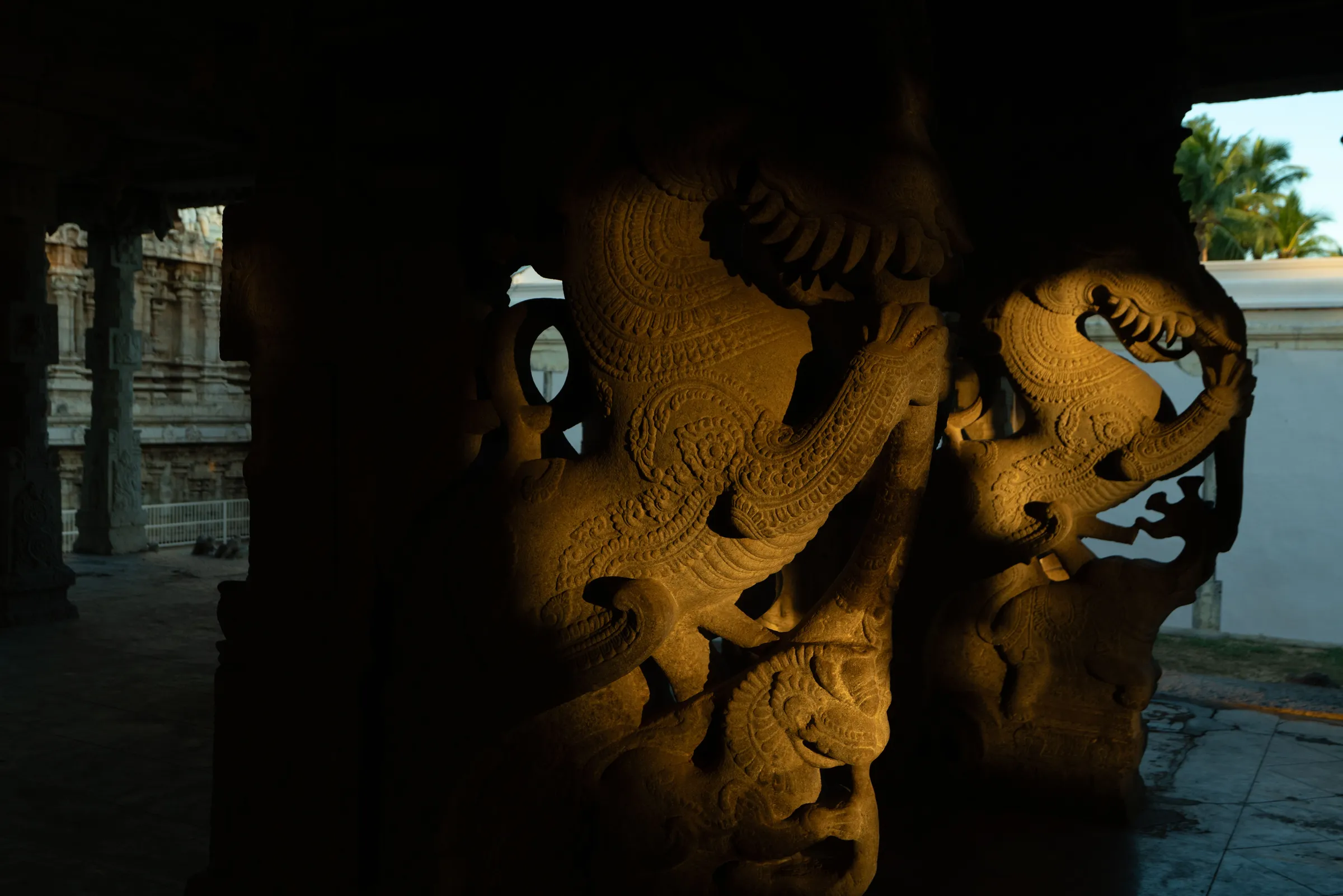
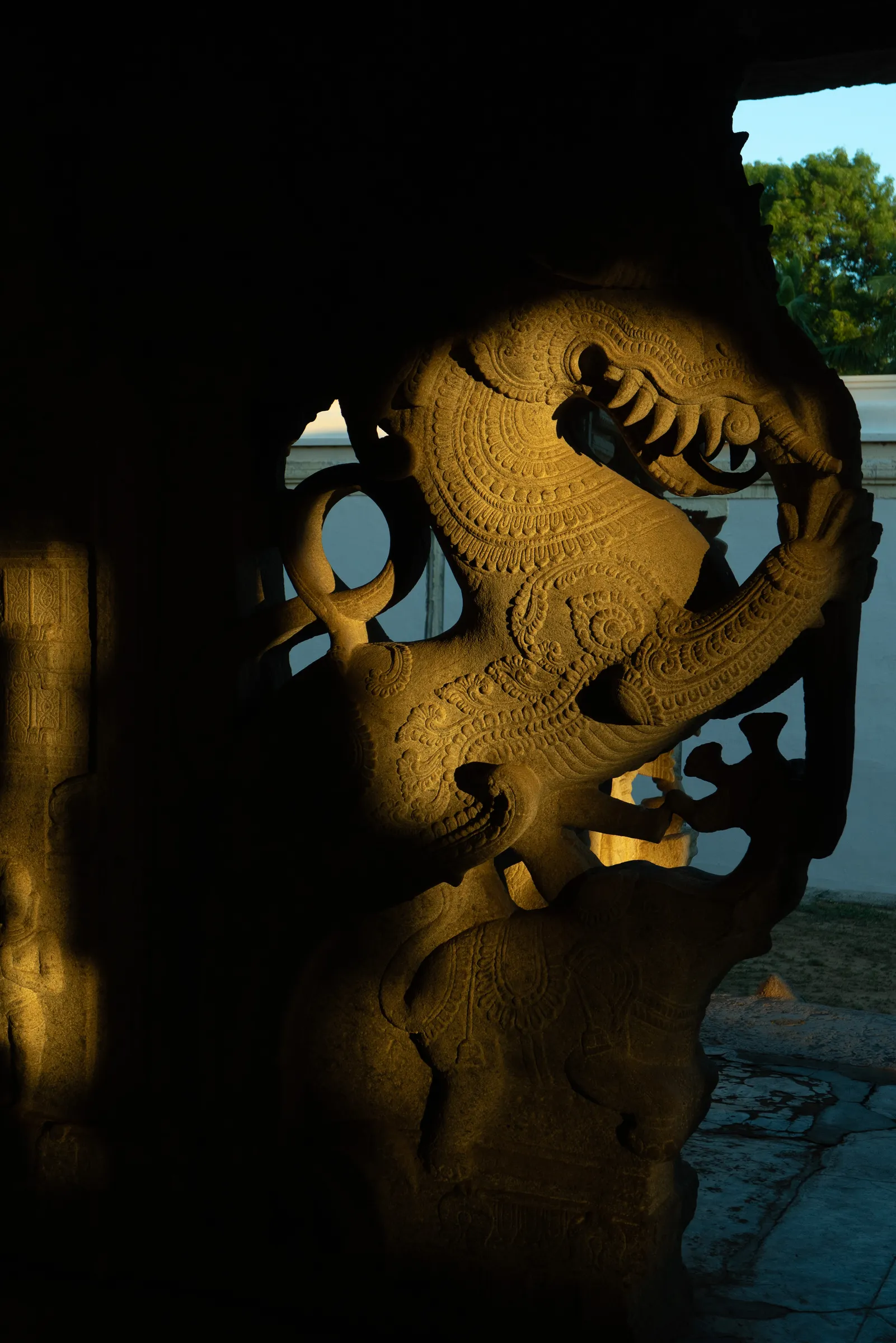
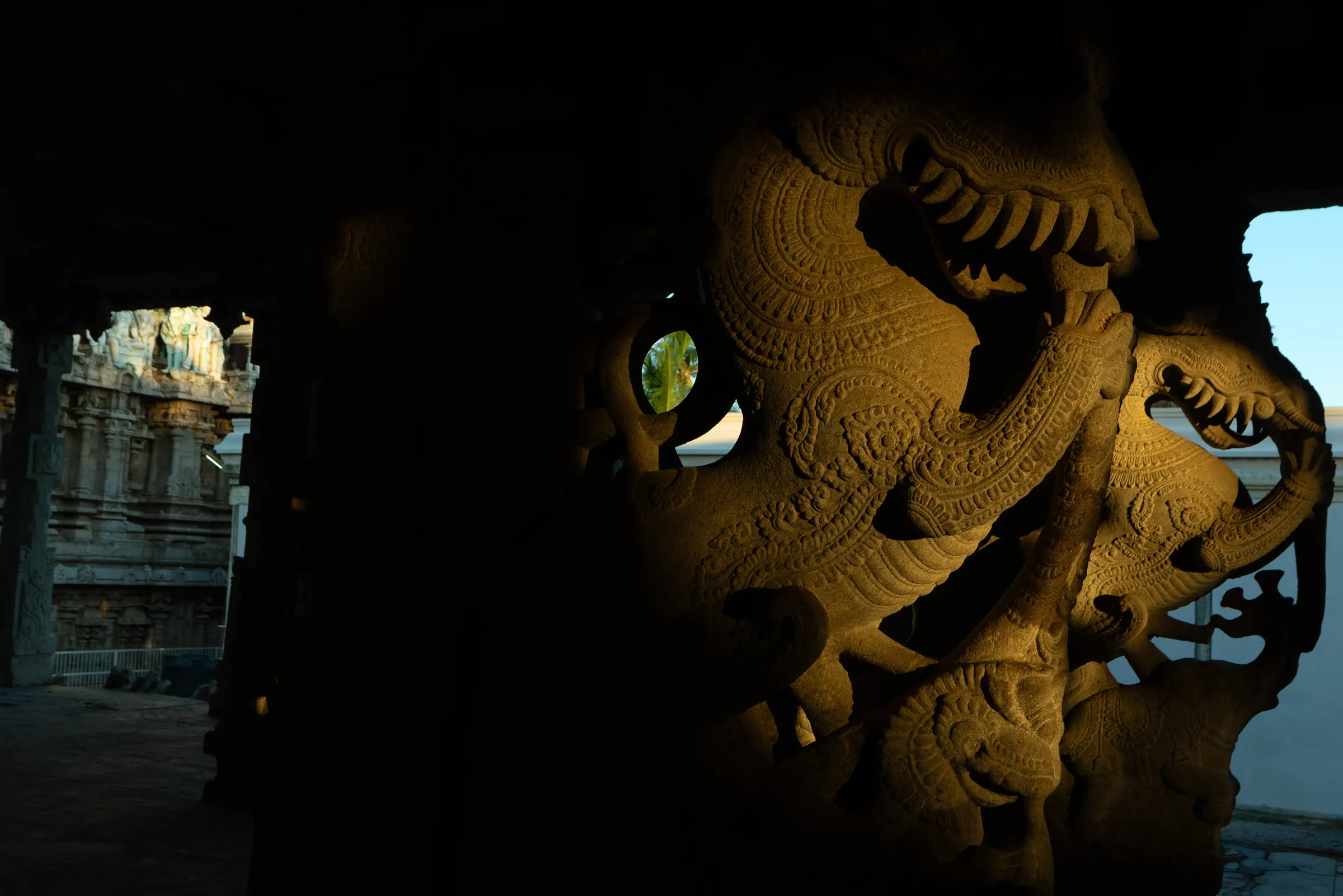
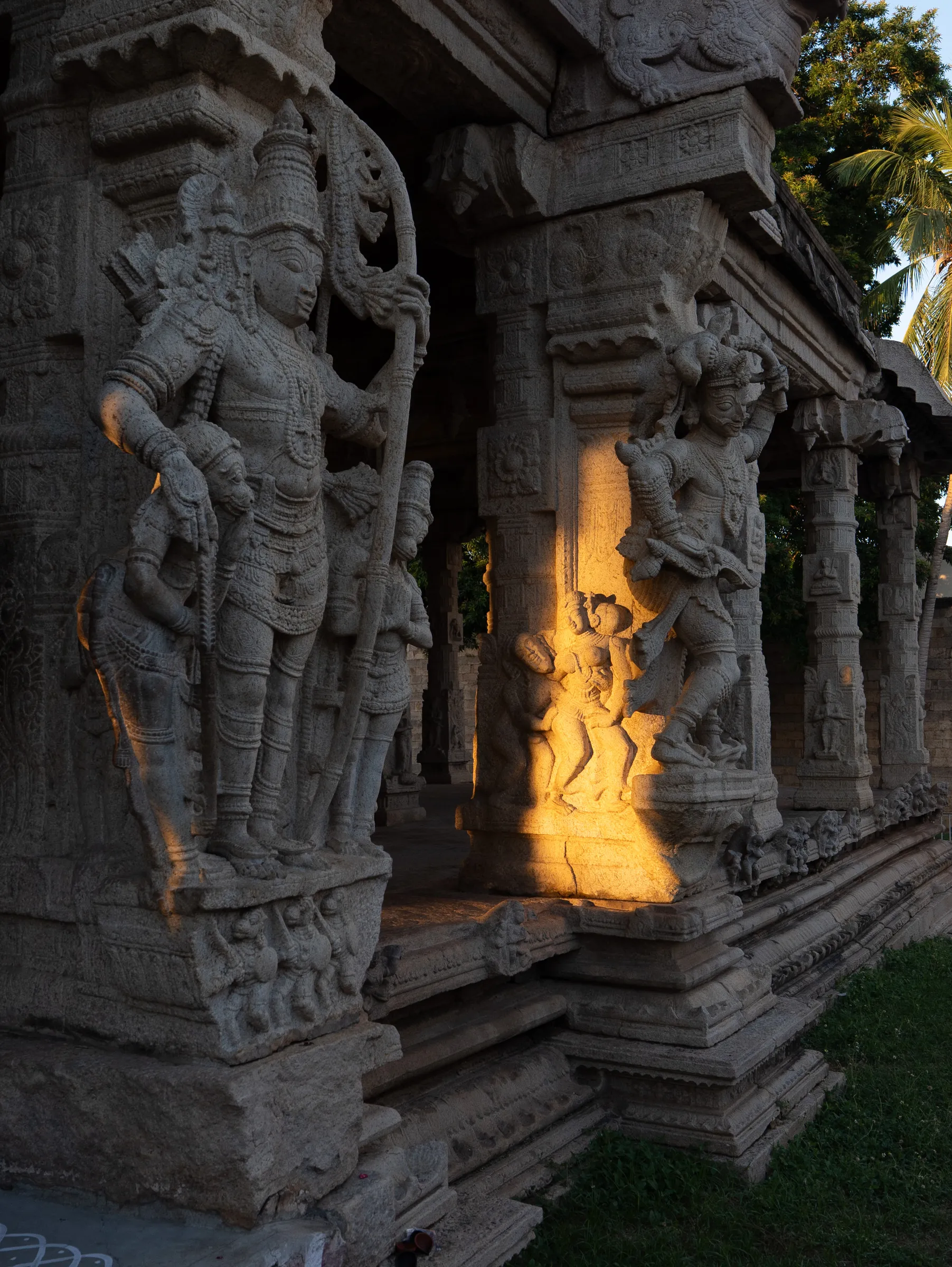
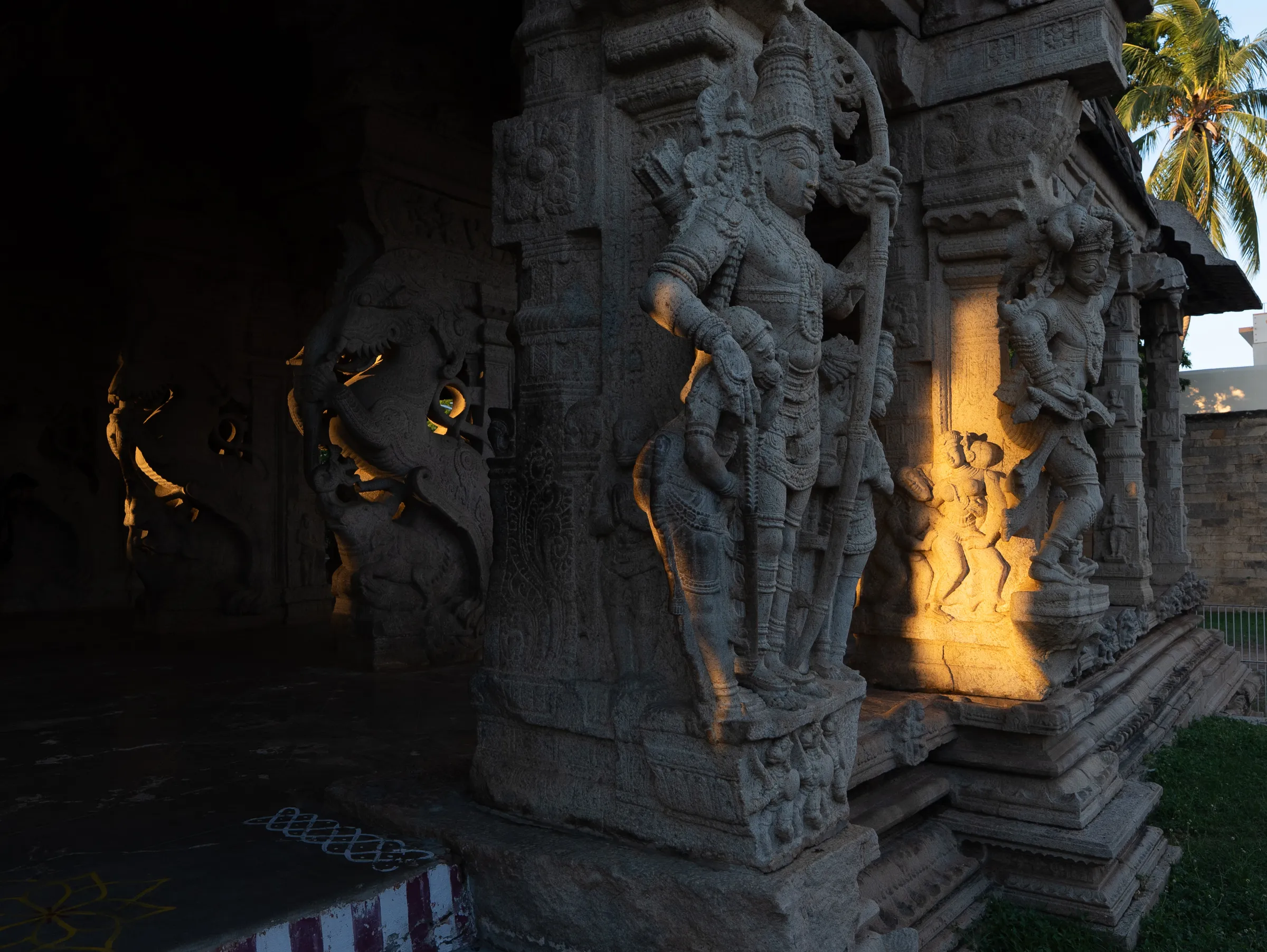
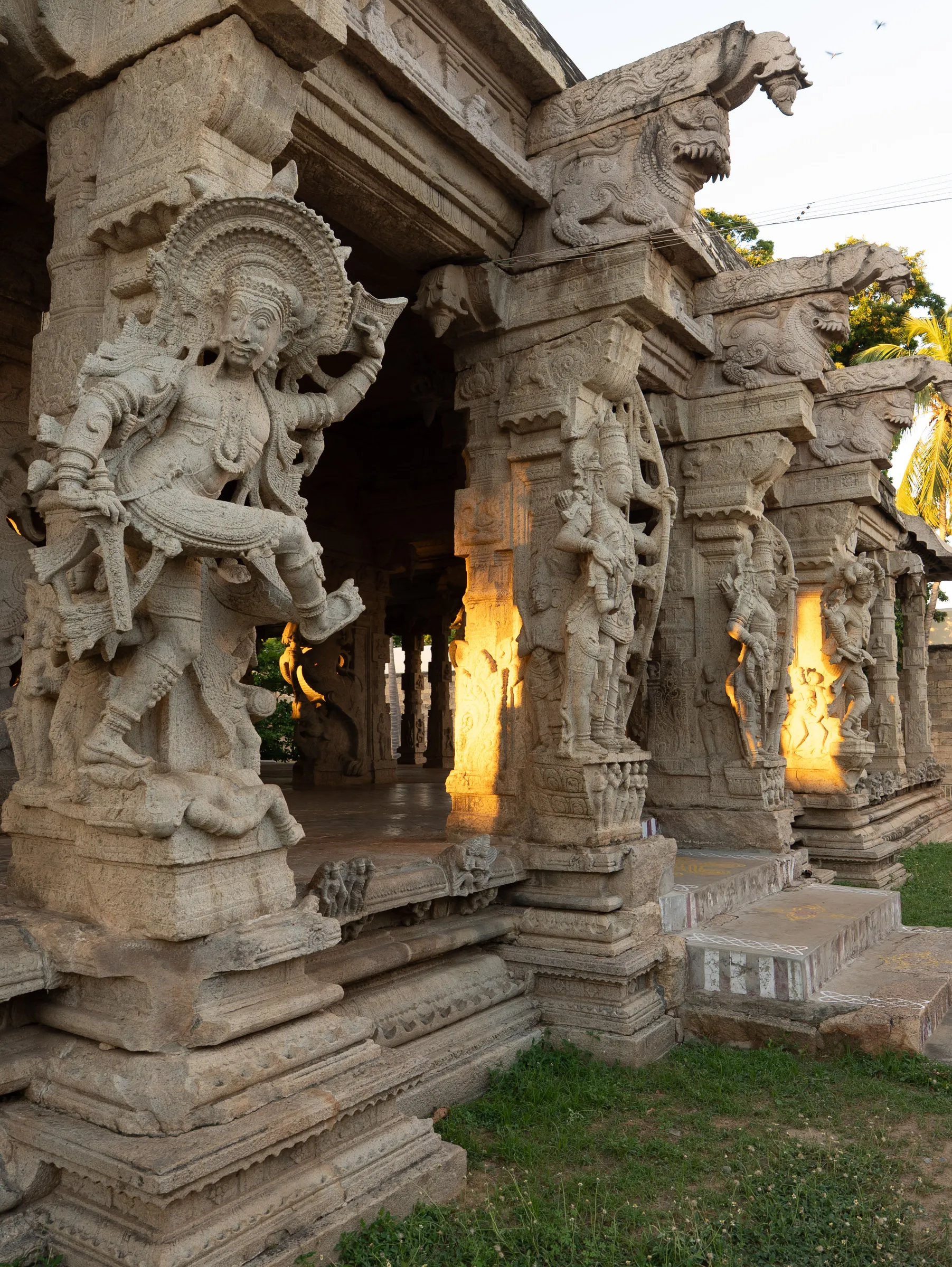
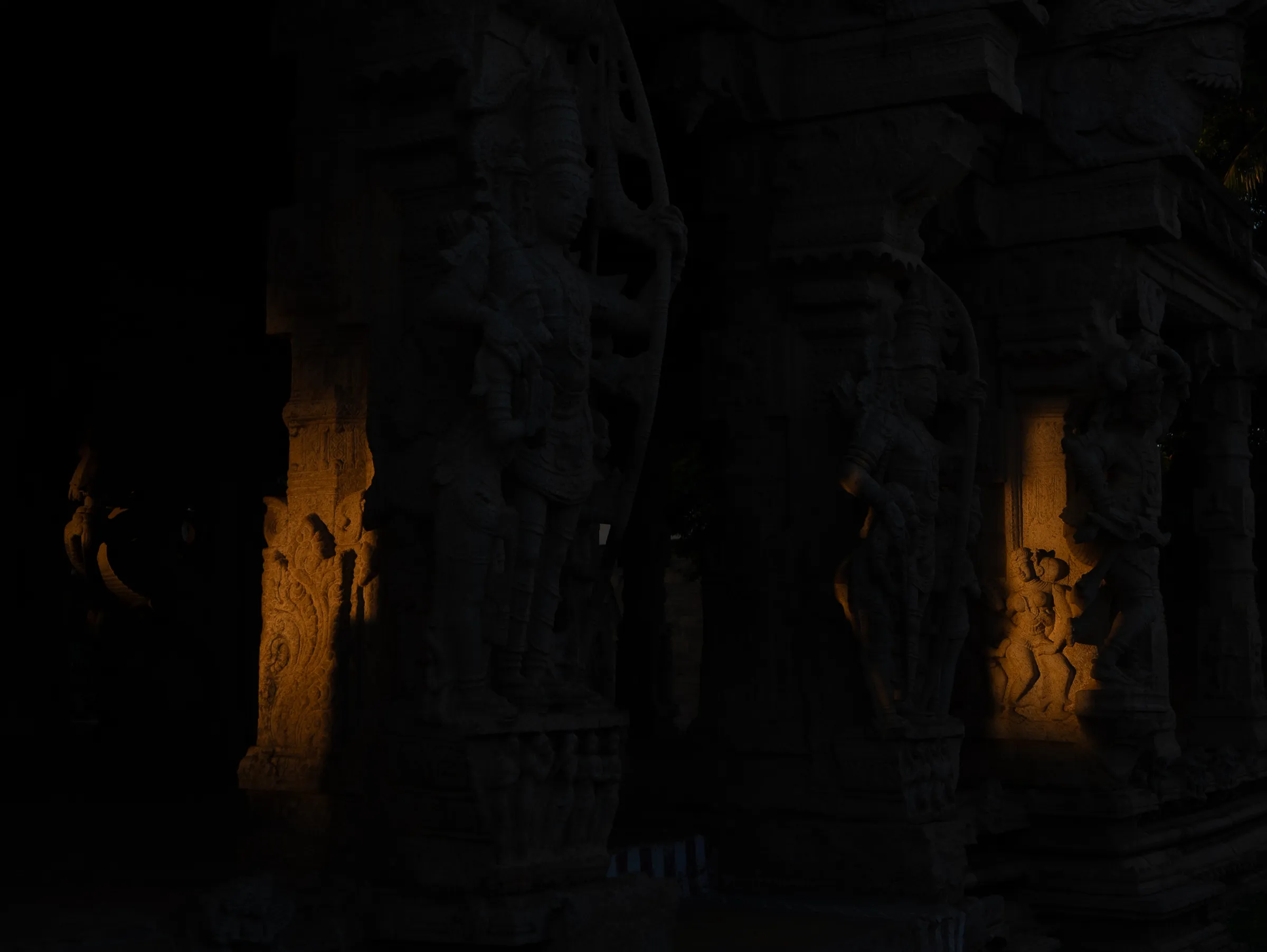
The mandapa pillars bear exquisitely carved gods, goddesses, mythical hybrid figures and saints, the most remarkable feature of the temple. Near the gopuram, the outer prakaram holds a Kalyana mandapa in the typical Vijayanagara and Nāyaka style, rich in Rama imagery: a large Rama resting his arm on Hanuman's shoulders, and another with Hanuman and Angada on either side, the sculptor using scale to mark hierarchy. These figures are neither full high relief nor sculpture in the round but a mix of the two, detailed on the sides and back. Another pillar shows a fierce Aghora Veerabhadra trampling an enemy, his raised right foot carved with popping veins.
The Thiruvengadamudayan mandapa, named in temple records and built by Vadamalayapa Pillai, an official of the Madurai Nāyaka court, carries a row of Yali figures and high and low relief work. A four-pillared mandapa in the outer prakaram has ceiling paintings of Vishnu as seen at each of the Nava Tirupati temples, captioned in Tamil and Telugu. The Thirumozhi mandapa is ornate, its pillar figures jutting out life-size, seemingly portraits of Nāyaka officials, rulers and donors standing in Anjali mudra. The inner prakaram walls were painted with the 108 Vaishnava Divya Desams in the late Vijayanagara style, of which only a few survive, still showing the painters' yellow, green, blue and brown. The wooden doors to the main shrine are carved with forms of Vishnu and other deities.