01 Architectural
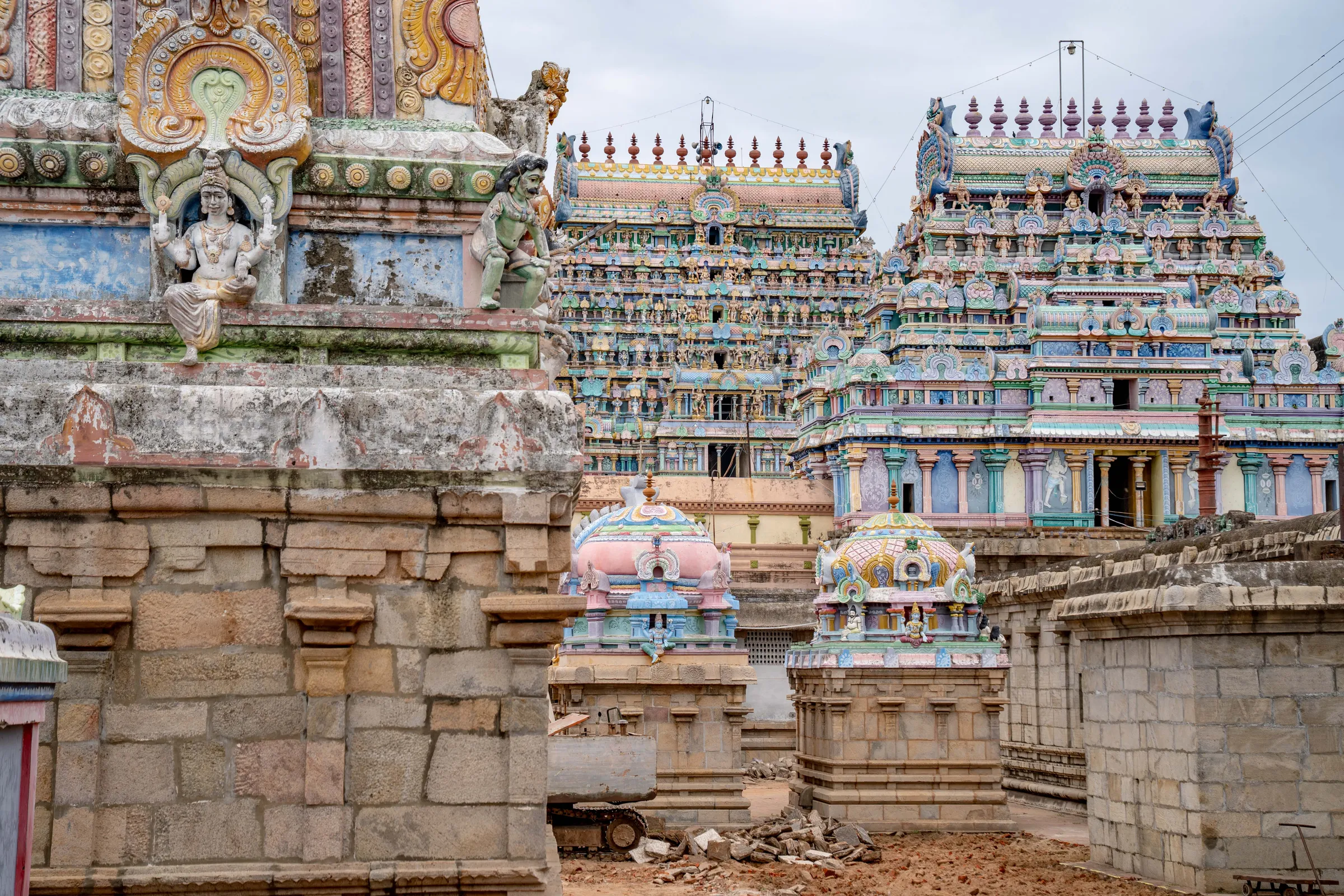
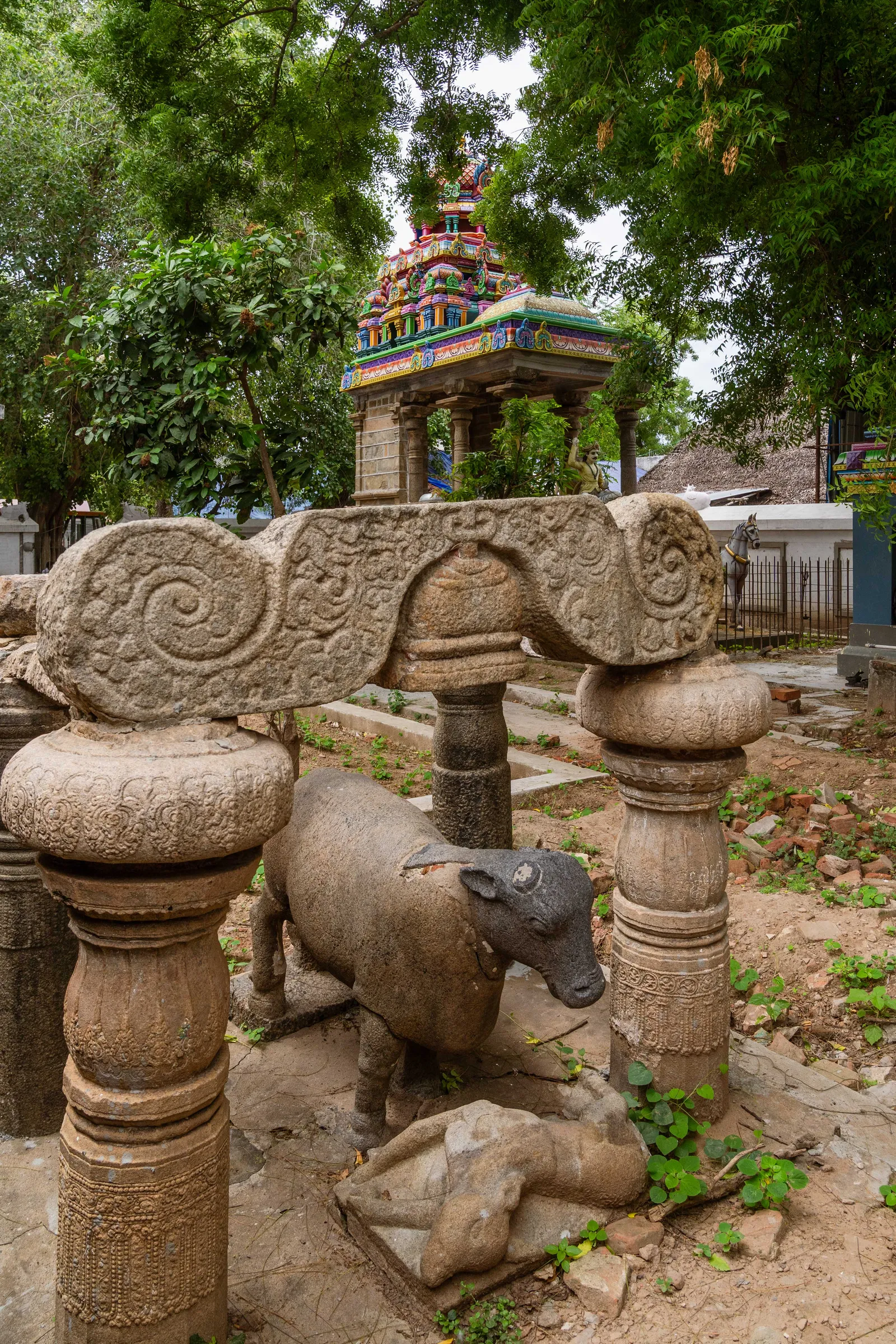
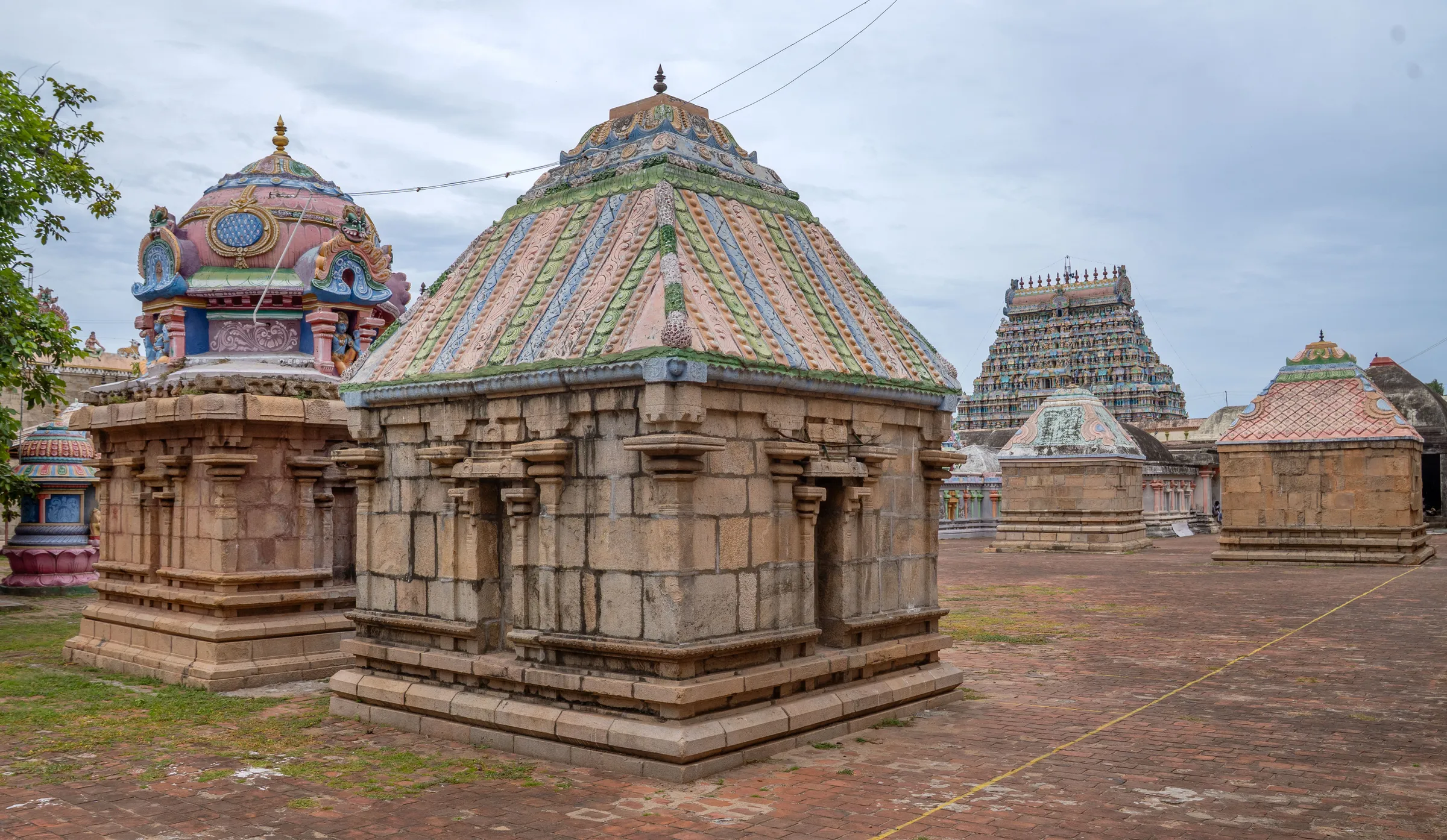
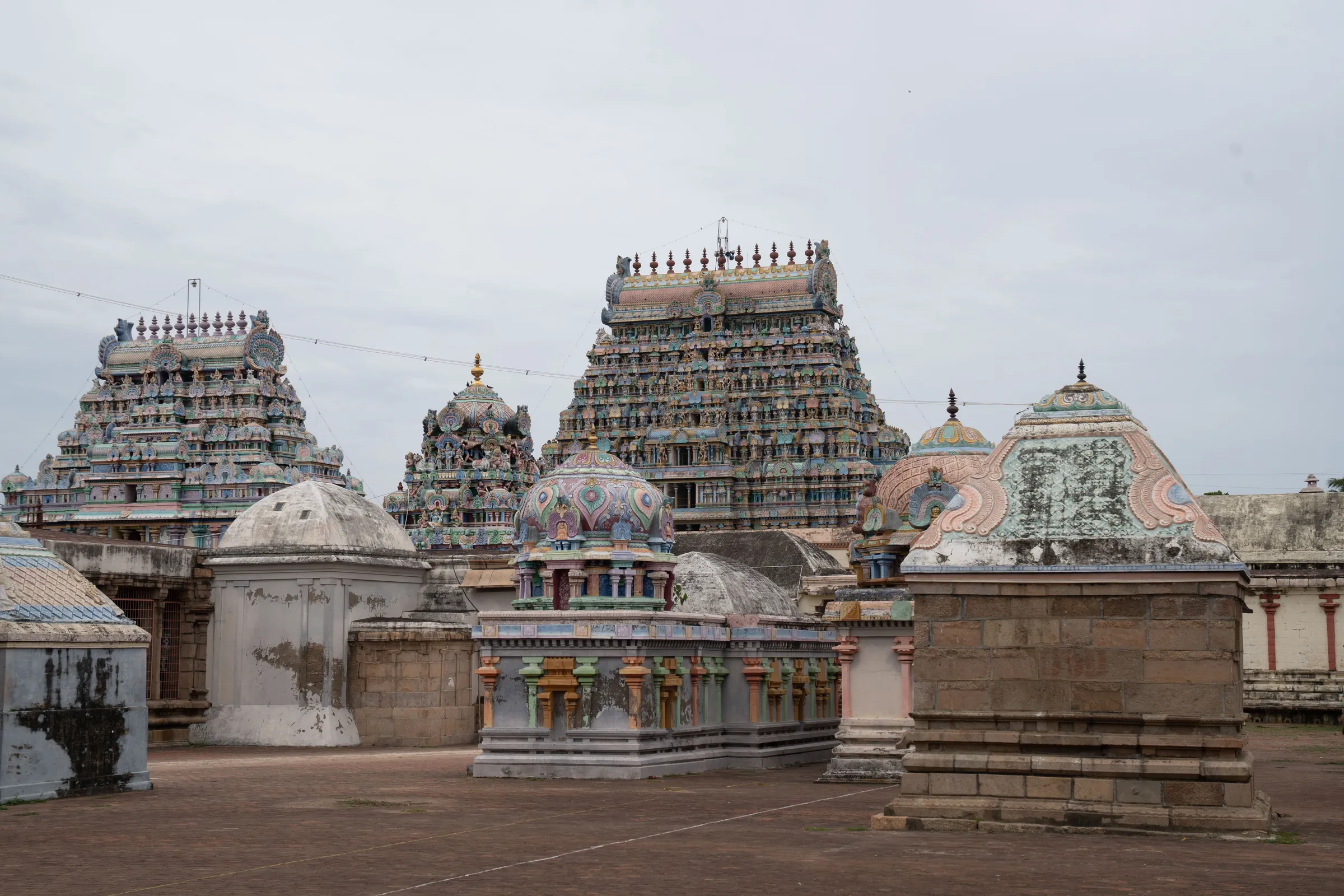
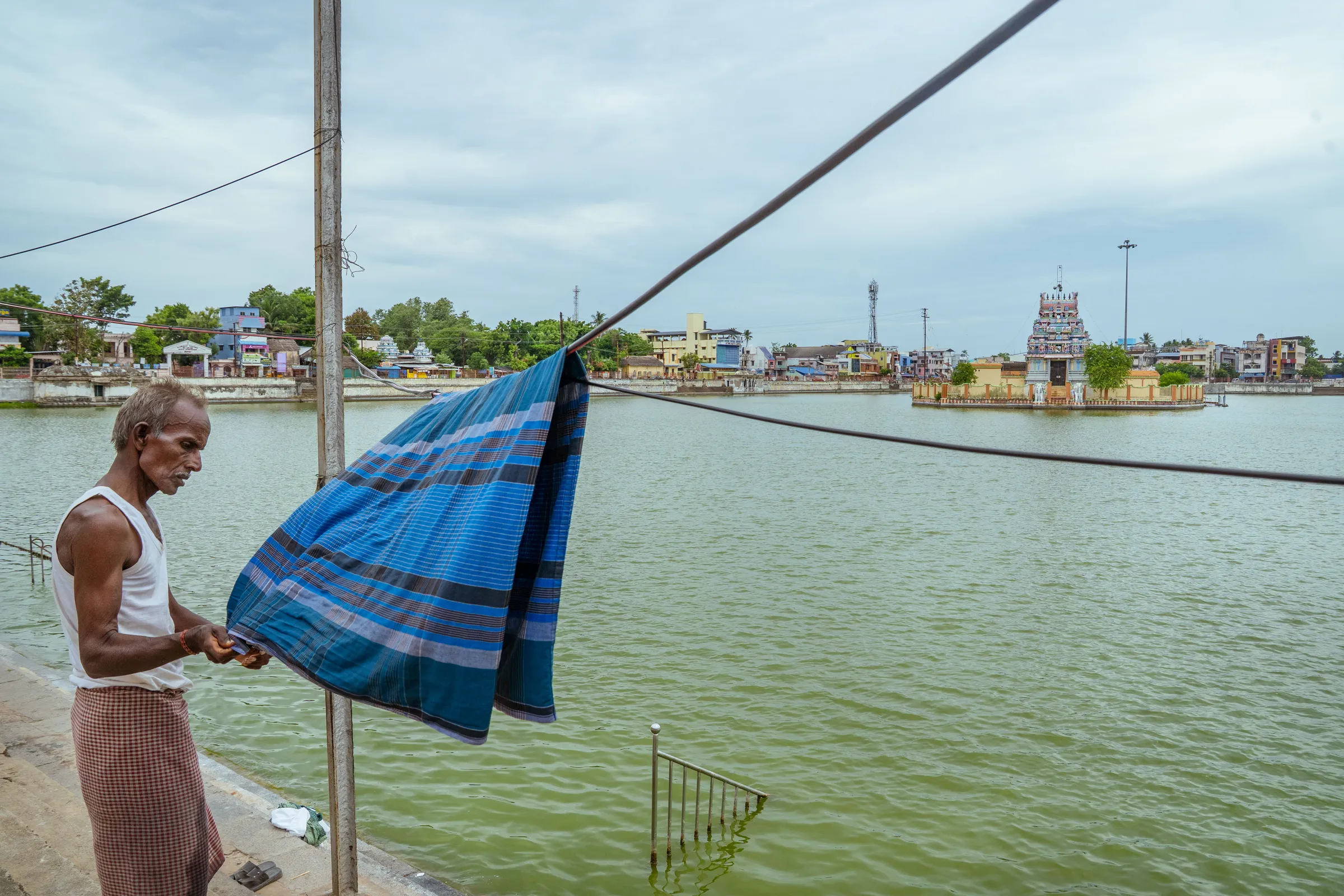
structure & vocabulary The temple spreads over about 20 acres within walls 30 feet high, facing a tank of some 15 acres, and has stood at this size since the middle of the 14th century. Its core preserves older nature worship: the sacred tree or sthala vṛkṣa is the patiri, and the main deity is an anthill that forms the liṅga. Snake worship survives in the Aṭakeśvaram shrine in the second prākāra, now only an empty subterranean passage closed by a stone slab.
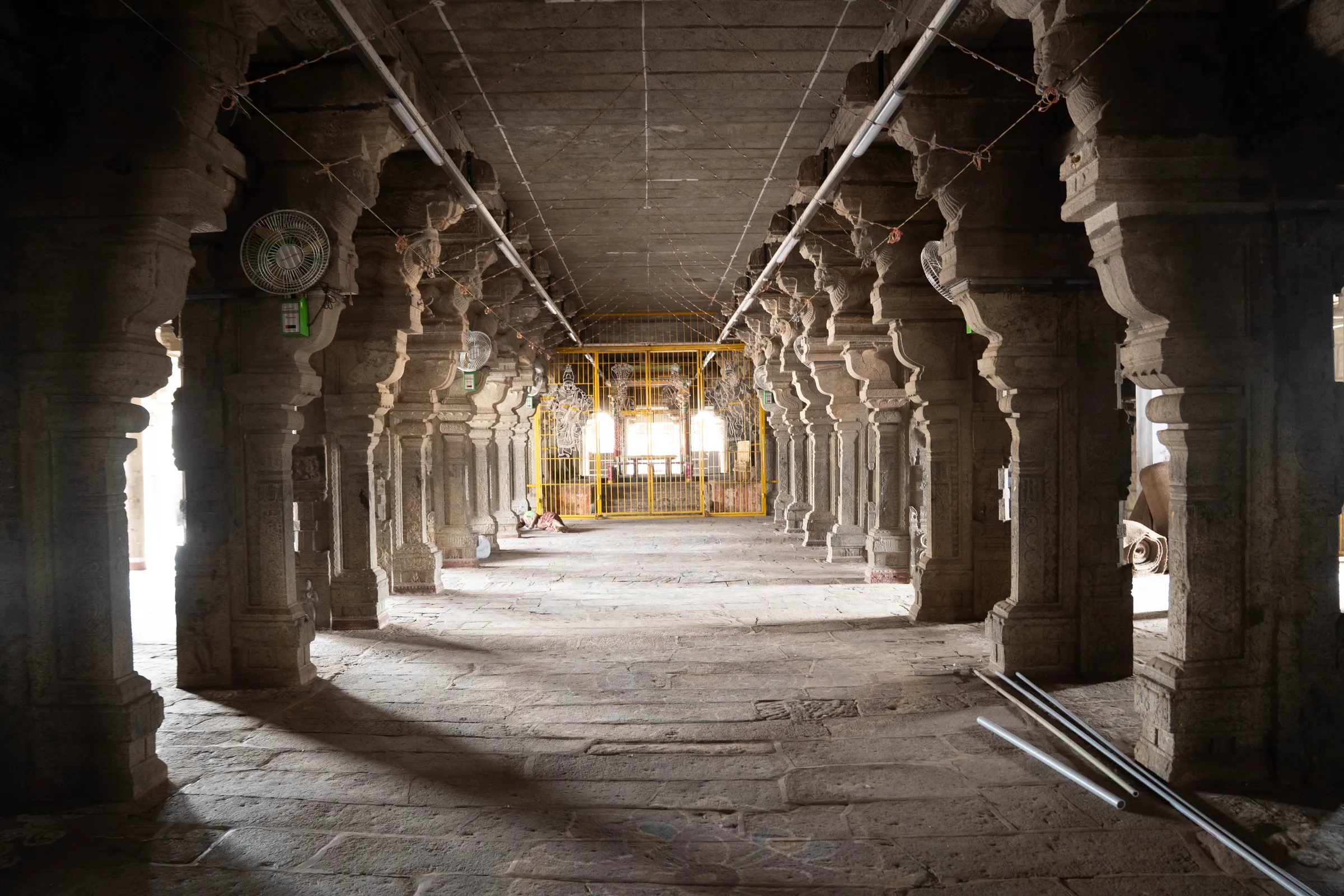
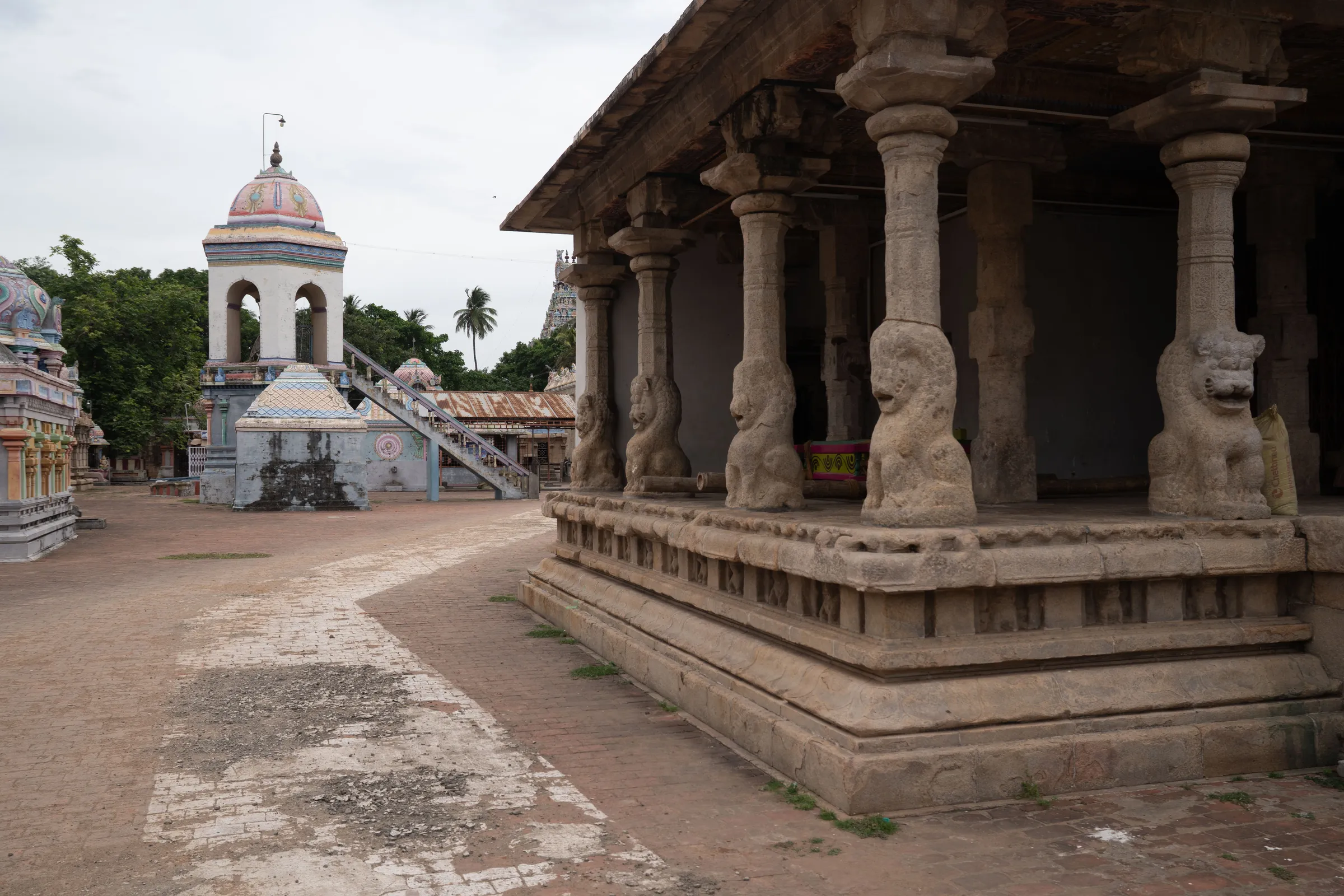
The first prākāra holds the shrines of Vālmīkanātha and Thyāgarāja. The second holds the shrines of Achaleśvaram, Aṭakeśvaram, Ānandeśvaram and Siddhīśvaram, the shrine of the goddess Nīlōtpalāmbāḷ, and the Rājanārāyaṇan Maṇḍapa. The third holds the shrine of the goddess Kamalāmbāḷ, who inspired many songs of Muthusvāmi Dīkṣitar, along with the Dēvaśrīyan Maṇḍapa, whose ceiling carries stunning paintings, and the Sabhāpati Maṇḍapa. Many further shrines and safe rooms hold rare metal images brought from other temples.
The famous Thyāgarāja shrine holds a Sōmāskanda image, Śiva and Pārvatī with the infant Muruga between them, a portrayal unique to the Tamil country. The deity is set in a second, closed chamber where a liṅga would normally stand, and as an independent deity acquired many emblems of authority: the maṇi thaṇḍu sceptre, the ratna siṃhāsana throne, a garland of water lilies, the vīragaṇḍāyam sword, several rare percussion and wind instruments, an elephant, and one of the grandest chariots in India.
02 Archaeological
dated & cited Temple inscriptions survive only from the 12th century CE, which shows the temple is much older. When Sembiyan Mahādēvī (949 to 957 CE), queen of Gandarāditya and mother of Uttama Chōḷa, converted several brick shrines into stone, older inscriptions were patiently re-engraved to assert the temple's ownership of vast tracts of fertile land and to continue earlier gifts. In 991 CE Rājendra Chōḷa, accompanied by Anukkiyār Paravai Naṅgaiyār, gave many gifts of gold, copper and silver and had the brick structure converted to gilded stone. The deity is addressed as Thyāgarāja only from the 15th century; the main deity Vālmīkanātha is called Mūlasthāna Nāthar.
Dating
Inscriptions survive only from the 12th century CE, so the temple is older; it reached its present extent by the middle of the 14th century.
03 Mythological
as transmitted The temple is closely associated with Manunīti Chōḷa, who was always just even at the cost of his son's life, and with Muchukunda, the monkey who was a great devotee of Śiva, both counted as ancestors in the Chōḷa genealogy. Birth in Tiruvārūr was held to give mokṣa, release from the cycle of birth and death, and perhaps for this reason the Navagraha here are installed in a line worshipping the deity rather than in the usual concentric pattern. The Sōmāskanda deity is said once to have borne Nārāyaṇa on his chest as he breathed gently in meditation to be freed of a curse, before being given to Muchukunda, who installed it here.
The Nāyaṉmārs Sambandar and Appar of the 7th century and Sundarar of the 8th have sung of this temple. Sundarar's listing of the Nāyaṉmārs in his verses became the basis of Sēkkiḻār's Periya Purāṇam. Tiruvārūr holds a special place in Carnatic music: the Maratha king Shahaji composed songs on Thyāgarāja, the composer-saint Thyāgarāja lived here a while, and Muthusvāmi Dīkṣitar and Śyāmā Śāstri were born here, many of their most evocative songs addressed to the goddess of this temple.