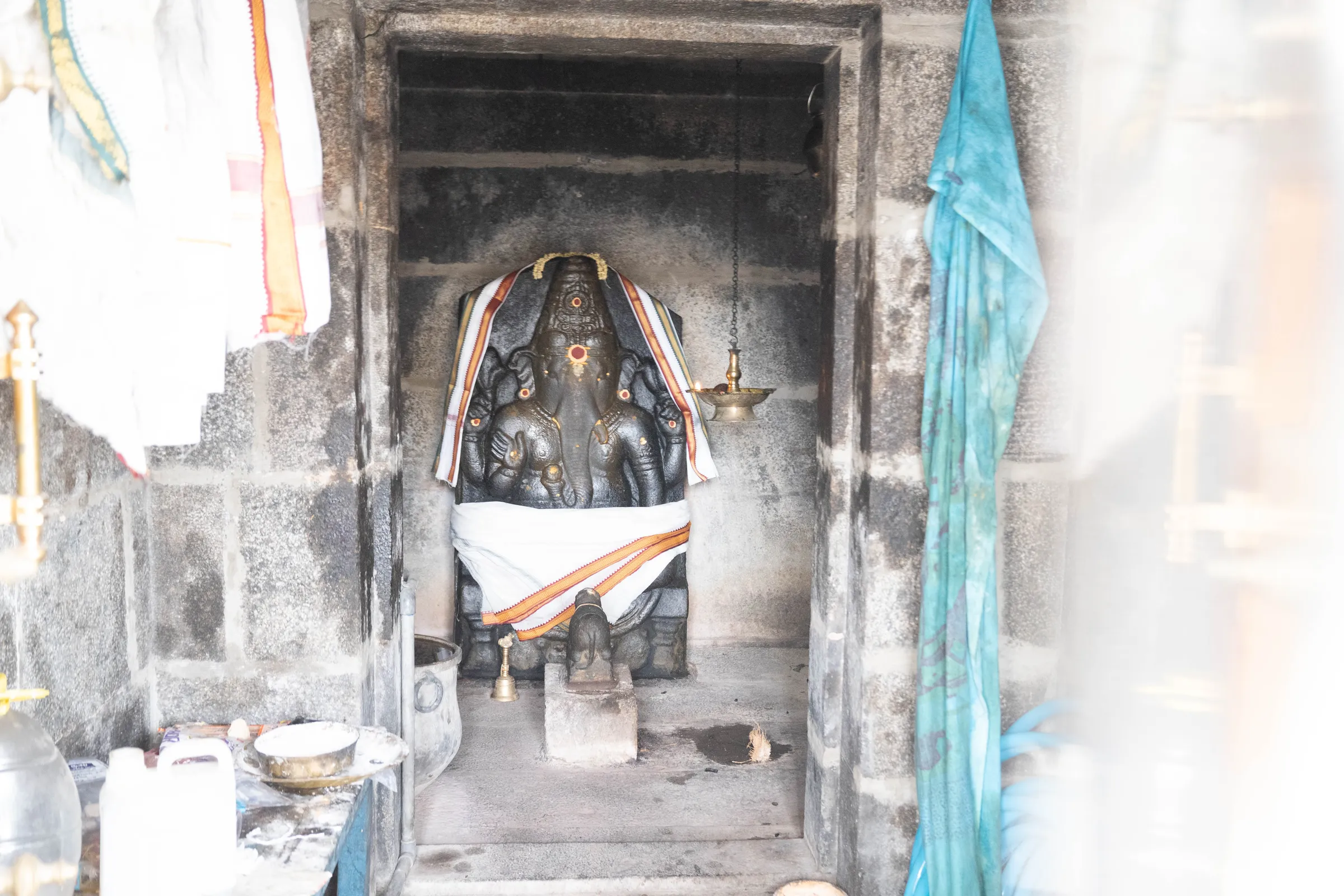
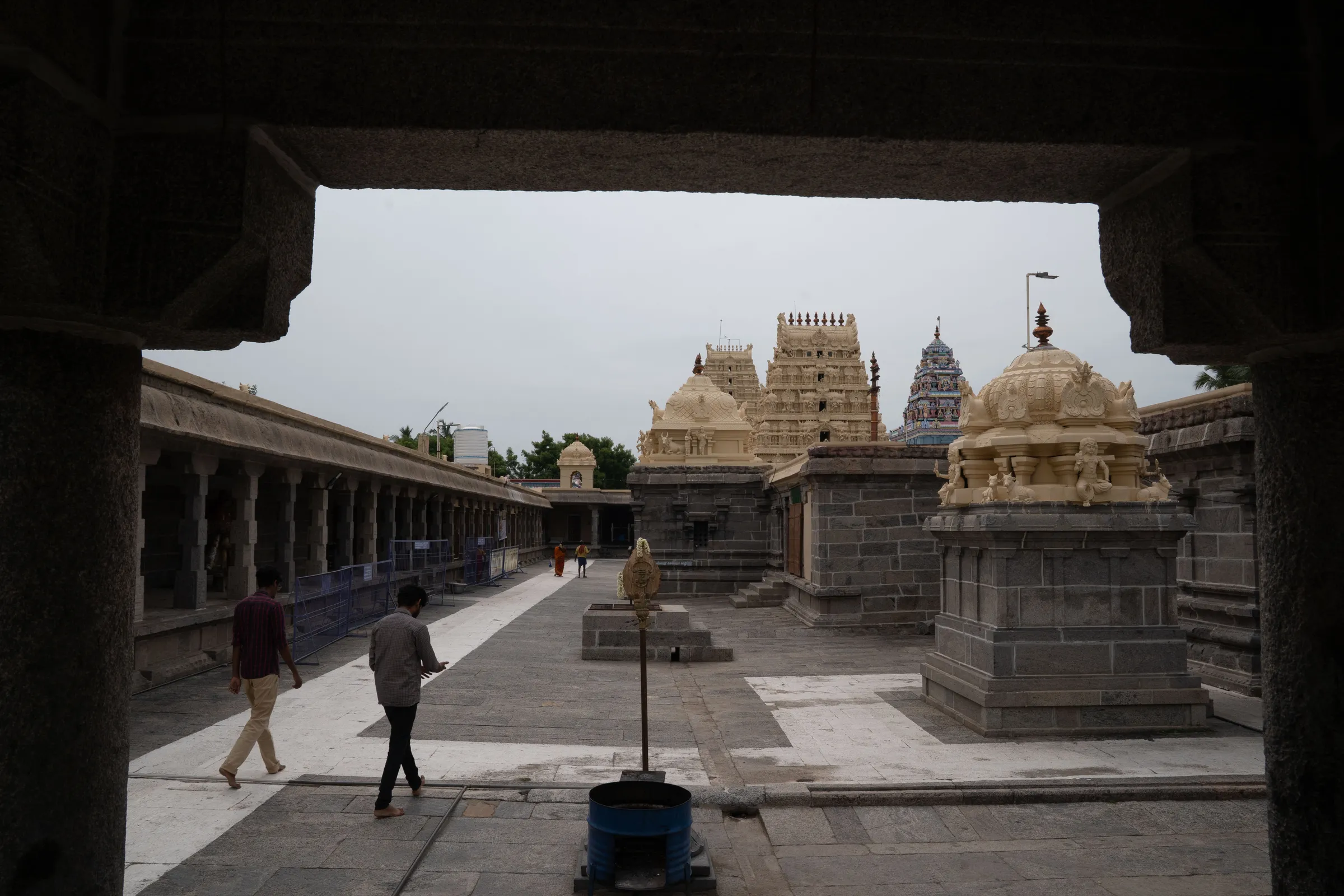
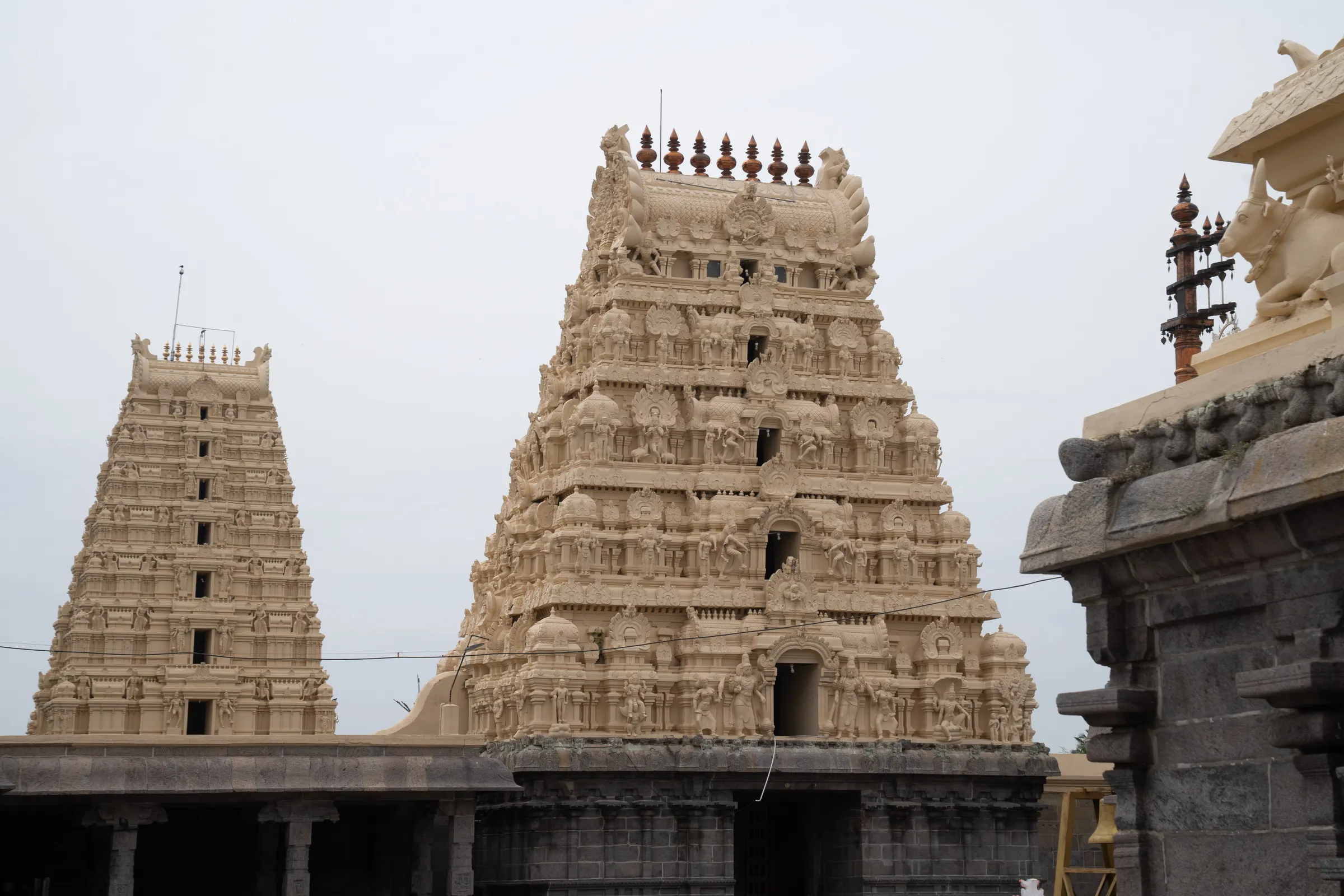
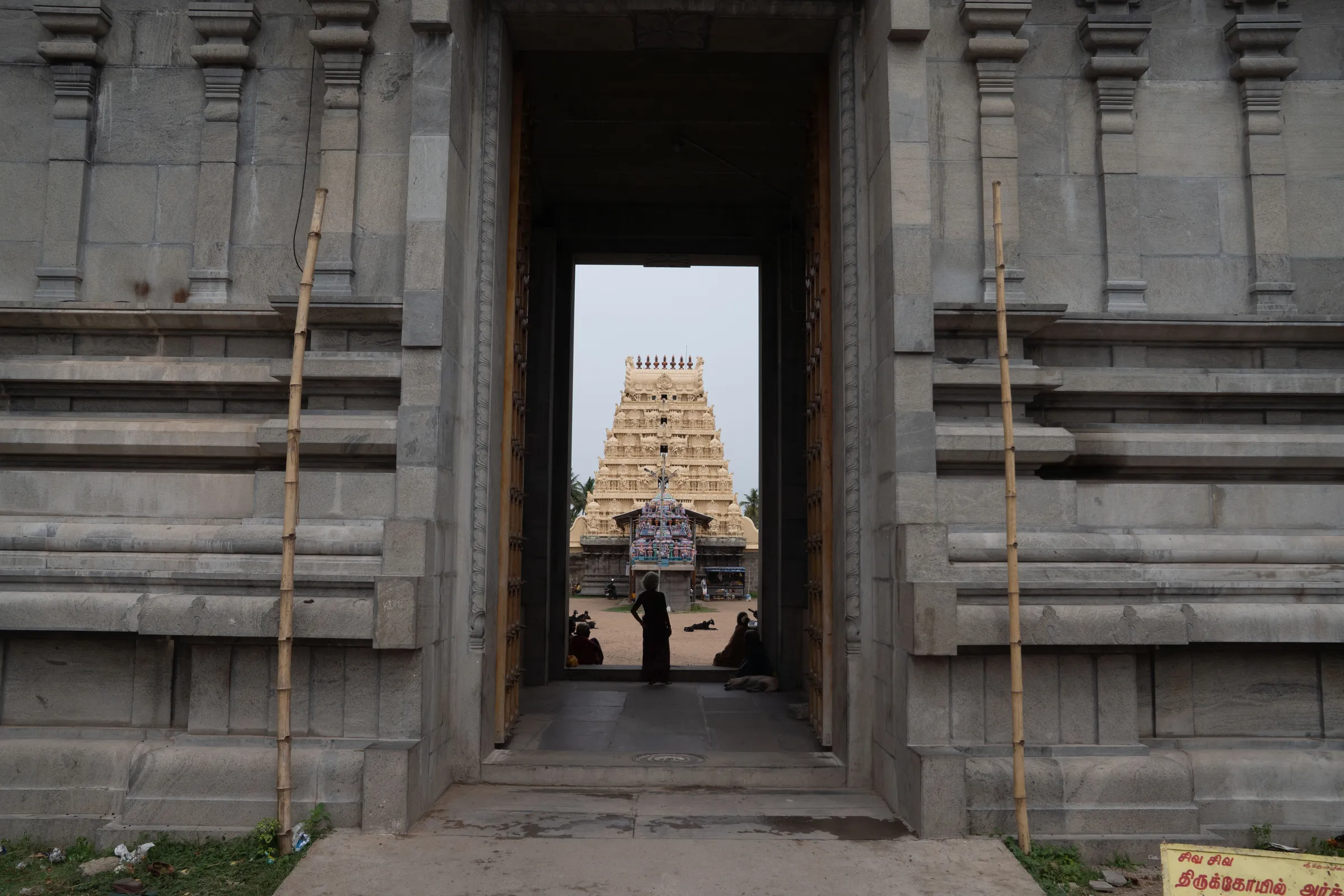
Thaduthat Konda Nathar Temple, photograph
← Thondaimandalam
Entry 026

Thaduthat Konda Nathar Temple

Tiruvennainallur · Villupuram · Chōḷa, with later Pallava gopuram

The Śiva temple at Tiruvennainallur where the boy Sundarar, stopped on his way to be married, was claimed by the lord as his own. The deity is named Thaduthu Aat Kondar, the one who stopped and subsumed him.

This entry documents the temple across three registers, held deliberately apart: the architectural reading of what stands, the archaeological reading of what can be dated and cited, and the mythological reading of what is told.

The photographs

Plates · 8

Thaduthat Konda Nathar Temple, photograph
© Sai Sanjay Prasath · All rights reserved
Thaduthat Konda Nathar Temple, photograph
© Sai Sanjay Prasath · All rights reserved
Thaduthat Konda Nathar Temple, photograph
© Sai Sanjay Prasath · All rights reserved
Thaduthat Konda Nathar Temple, photograph
© Sai Sanjay Prasath · All rights reserved
Thaduthat Konda Nathar Temple, photograph
© Sai Sanjay Prasath · All rights reserved
Thaduthat Konda Nathar Temple, photograph
© Sai Sanjay Prasath · All rights reserved
Thaduthat Konda Nathar Temple, photograph
© Sai Sanjay Prasath · All rights reserved
01

Architectural

structure & vocabulary

The main temple has beautiful Koshta images, especially of Bhikshatanar when Śiva disrupted the yagna of the sages, and a decorative window carved entirely of stone. The outside mandapa has a unique shrine for Sundarar at an elevation, probably built in the time of Raja Raja II. The shrine for Lakshmi originally had a shrine for Jyestha, her elder sister, the Goddess of dirt and disease, a feared and worshipped deity who lost popularity by the 11th century.

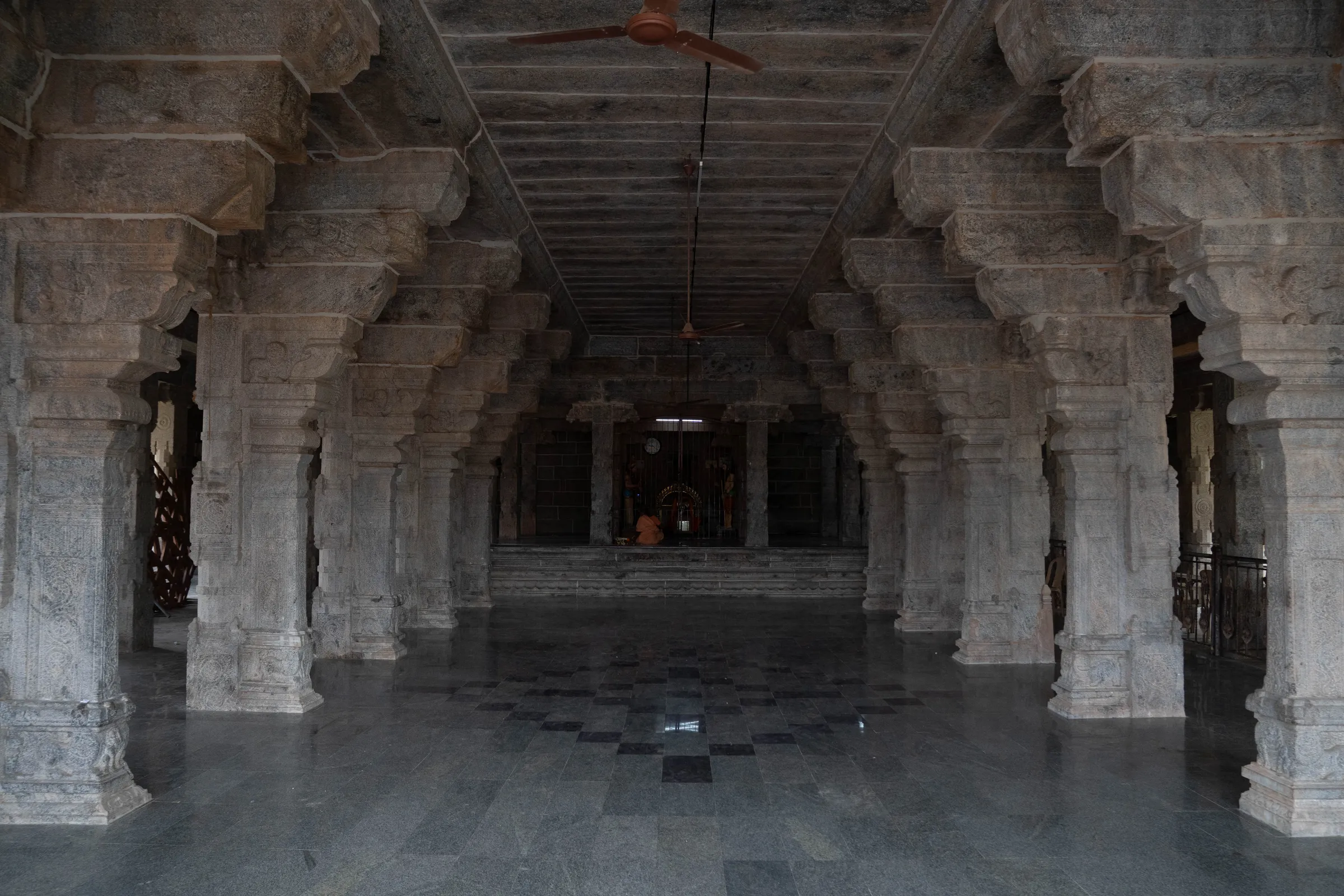
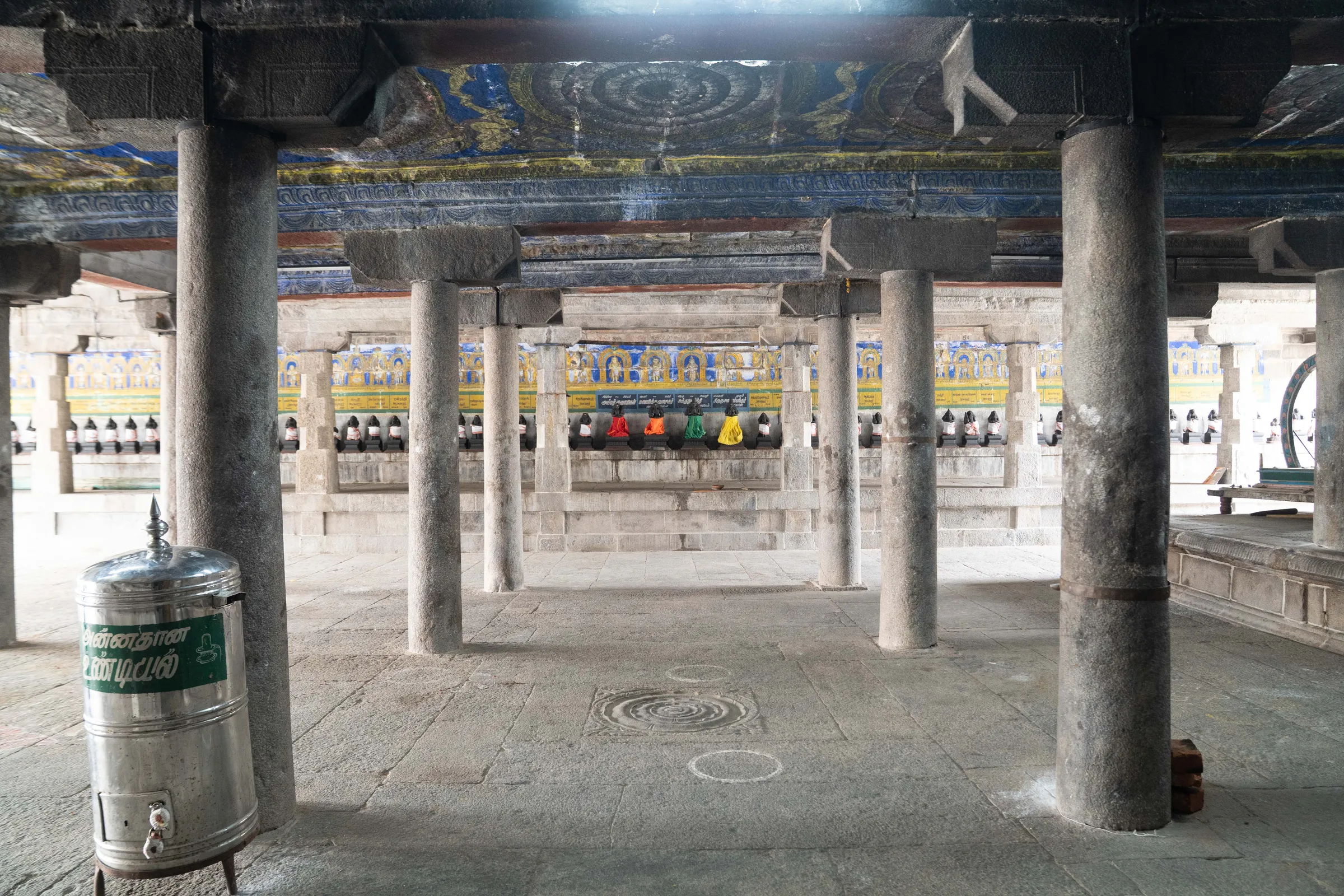
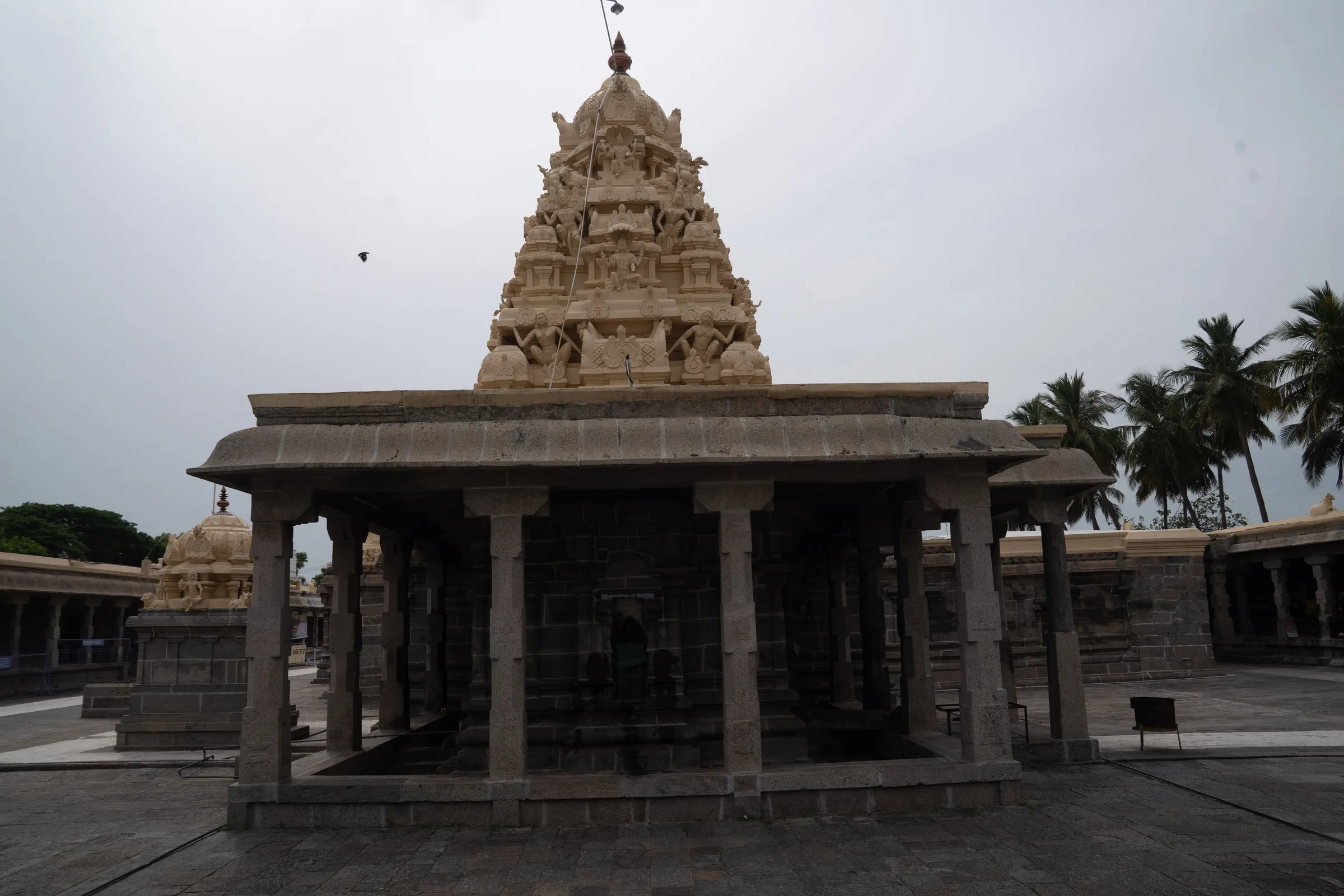
The 62-pillared hall was originally a 100-pillared hall and is said to be the place where the debate between the elder and Sundarar happened. The five-tiered gopuram was built by a later Pallava chief, Kadavarayan, circa 1181 CE. There is a pillared corridor, the tiruchuttru maaligai, that surrounds the temple.

02

Archaeological

dated & cited

The temple is closely tied to the Chōḷas: Sundarar was important for Raja Raja Chola, and in the big temple his life story is featured, the wedding scene in particular vividly shown with the vessels and textiles of those days. An inscription from 1153 CE, in the reign of Kulottunga II, records how the spot where the debate happened had a mandapa belonging to another person; the temple exchanged some of its own land for it and took control of that mandapa. Another inscription notes a gift of land to fund the cost of serving appams to the Vinayaka deity daily.

The five-tiered gopuram was built by the Pallava chief Kadavarayan circa 1181 CE. Inscriptions from the 12th century show Sundarar was already revered as a saint in the temple, and even devadasi women were gifted lands to make ritual offerings of food and Adaikai amuthu, betel leaves. This was the time when Sekizhar composed the Peria Puranam, and roads in the town were named after Sundarar. Around the 13th century, Meikandar authored the Siva Gnana Bodham, twelve aphorisms embodying the crux of the Saiva Sidhanta school of philosophy.

Dating

Outside mandapa probably built under Raja Raja II (1150-1173 CE); inscription of 1153 CE in the reign of Kulottunga II; five-tiered gopuram built by the Pallava chief Kadavarayan circa 1181 CE.

03

Mythological

as transmitted

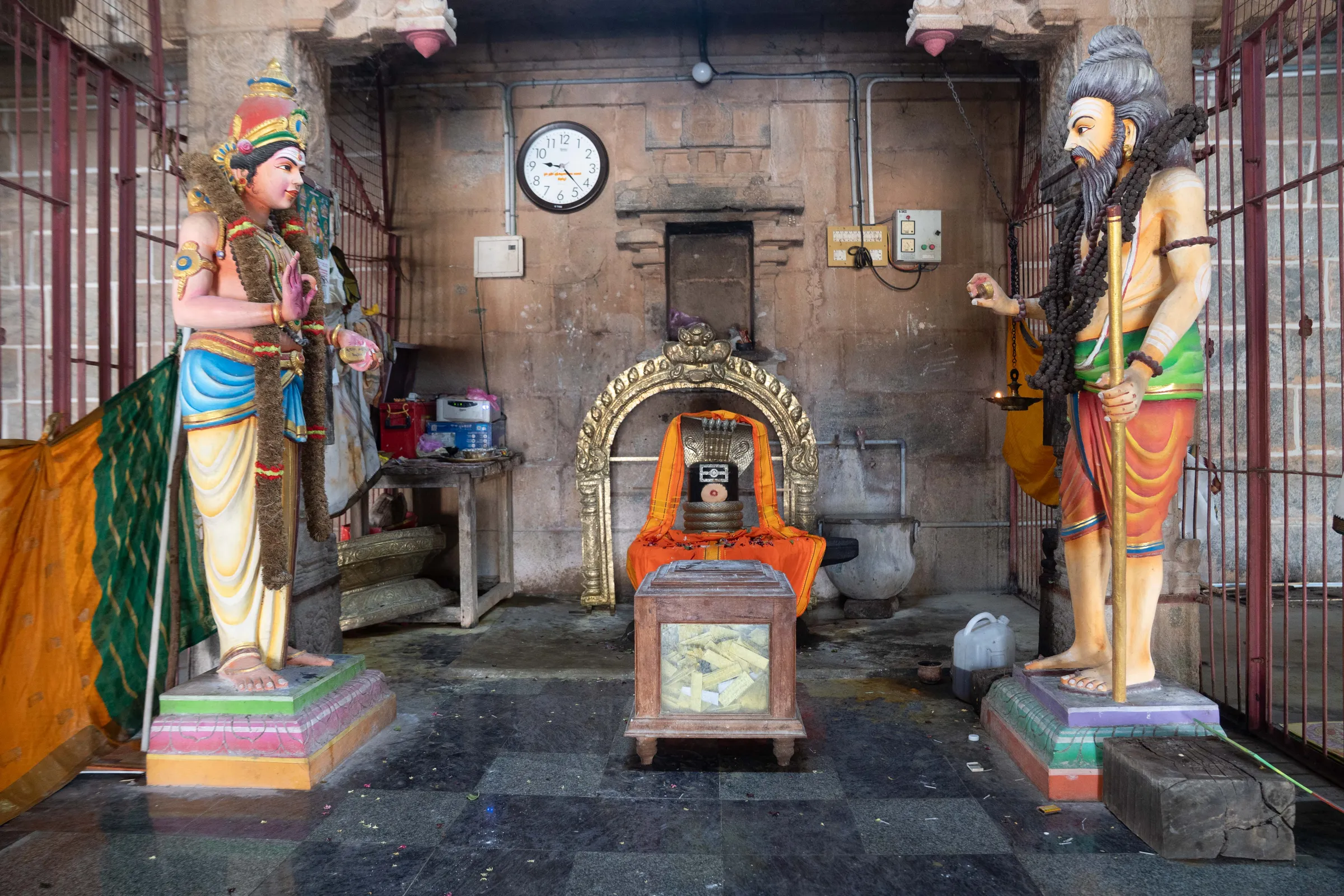
Sometime in the 7th century CE a boy was born to Sadaya Nayanar and Isaignaniyar, both temple priests, and the local chieftain adopted him. As his marriage was being fixed in the village of Puttur, an old man appeared claiming Sundarar had no right to marry because his ancestor had declared that he and his descendants were the old man's bonded slaves, producing the agreement on a palm leaf. The wedding party, with an angry Sundarar who had already called the old man a madman, followed him to the Śiva temple at Tiruvennainallur, where the old man miraculously disappeared into the sanctum. Sundarar took this as a sign of Śiva wanting his service, called off the wedding, and asked the Śiva liṅga how he should praise him; a voice within said, you called me a madman, why don't you start with that?

Overcome with devotion, Sundarar sang Pitha pirai soodi, his first of about 100 songs enshrined in the 7th Tirumurai of the 12 Tirumurai books sacred to Saivism. Many of his verses are posers and arguments to Śiva, so he is called Van Thondar, the argumentative devotee. His life after this was not easy: he married Paravai in Tiruvarur, then Sangili in Tiruvotriur, broke his promise never to leave her and lost his sight, finally regaining it. His life is closely connected with that of another Nayanar, Cheraman Perumal. From this episode the deity took the name Thaduthu Aat Kondar, the one who stopped and subsumed.

Register interest in prints Buy the book
Improve this entry

This is an open, reviewed record. If you have spotted an error or have something to add — a correction, a date, a source, a name in another script — propose it. Every change is reviewed before it joins the record.

“Suggest an edit” opens this entry on GitHub and turns your change into a pull request. “Share feedback” opens a short form. Both go through review.