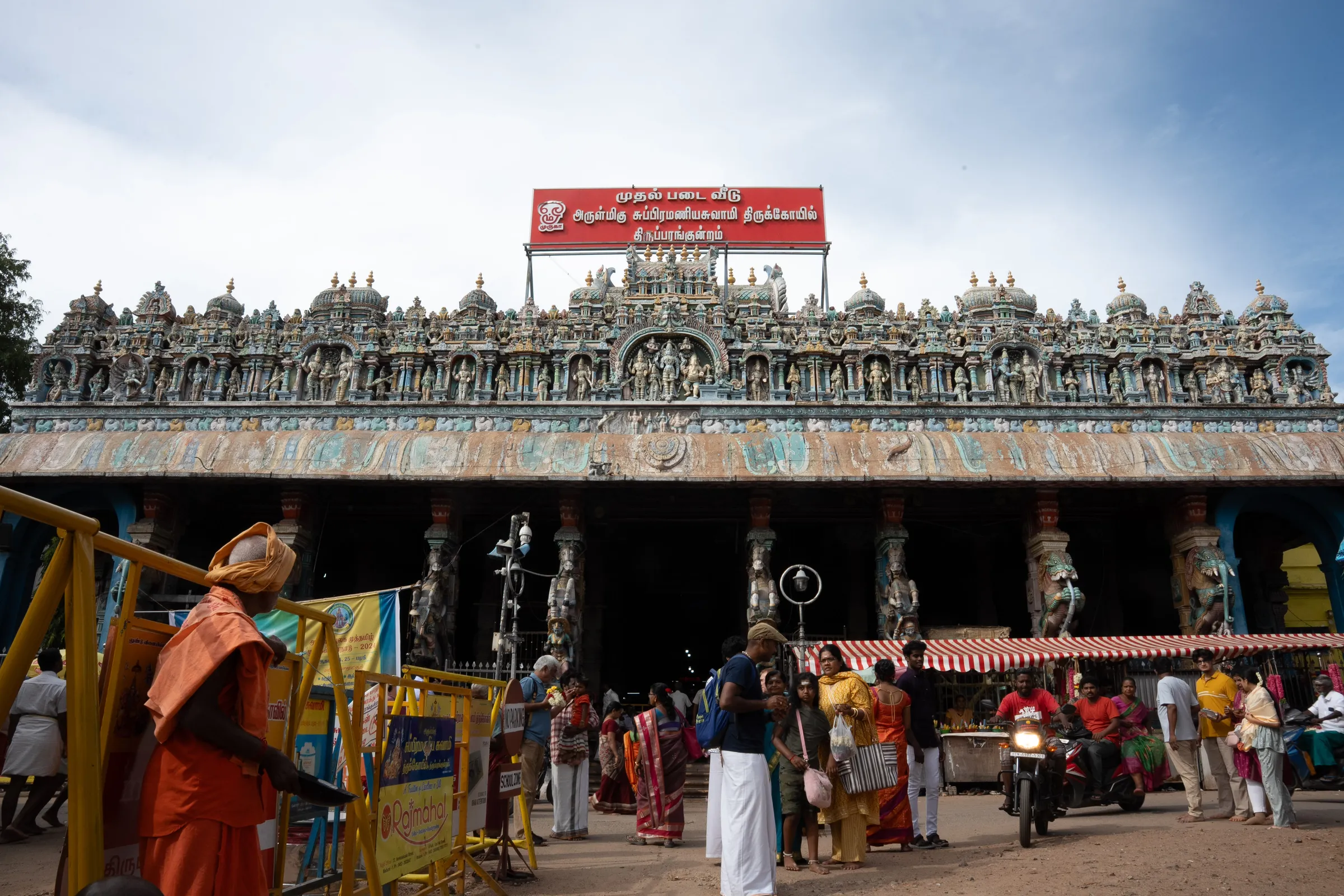
Subramanya Swami Temple, photograph
← Pandya Nadu
Entry 098

Subramanya Swami Temple

Tiruparankundram · Madurai · Early Pandya, with Nayaka additions

The first of the six Arupadaiveedu abodes of Muruga, a rock-cut hill temple at Tiruparankundram where Subramanya is seated with Devayanai, with reliefs held to be among the oldest such images in southern Tamil Nadu.

The Subramanya Swami temple at Tiruparankundram is the first of the six Arupadaiveedu abodes of Muruga, a rock-cut hill temple where Subramanya is seated with Devayanai. This entry holds three registers apart: what stands, what can be dated and cited, and what is told.

The photographs

Plates · 9

Subramanya Swami Temple, photograph
© Amar Ramesh and team · All rights reserved
Subramanya Swami Temple, photograph
© Amar Ramesh and team · All rights reserved
Subramanya Swami Temple, photograph
© Amar Ramesh and team · All rights reserved
Subramanya Swami Temple, photograph
© Amar Ramesh and team · All rights reserved
Subramanya Swami Temple, photograph
© Amar Ramesh and team · All rights reserved
Subramanya Swami Temple, photograph
© Amar Ramesh and team · All rights reserved
Subramanya Swami Temple, photograph
© Amar Ramesh and team · All rights reserved
Subramanya Swami Temple, photograph
© Amar Ramesh and team · All rights reserved
01

Architectural

structure & vocabulary

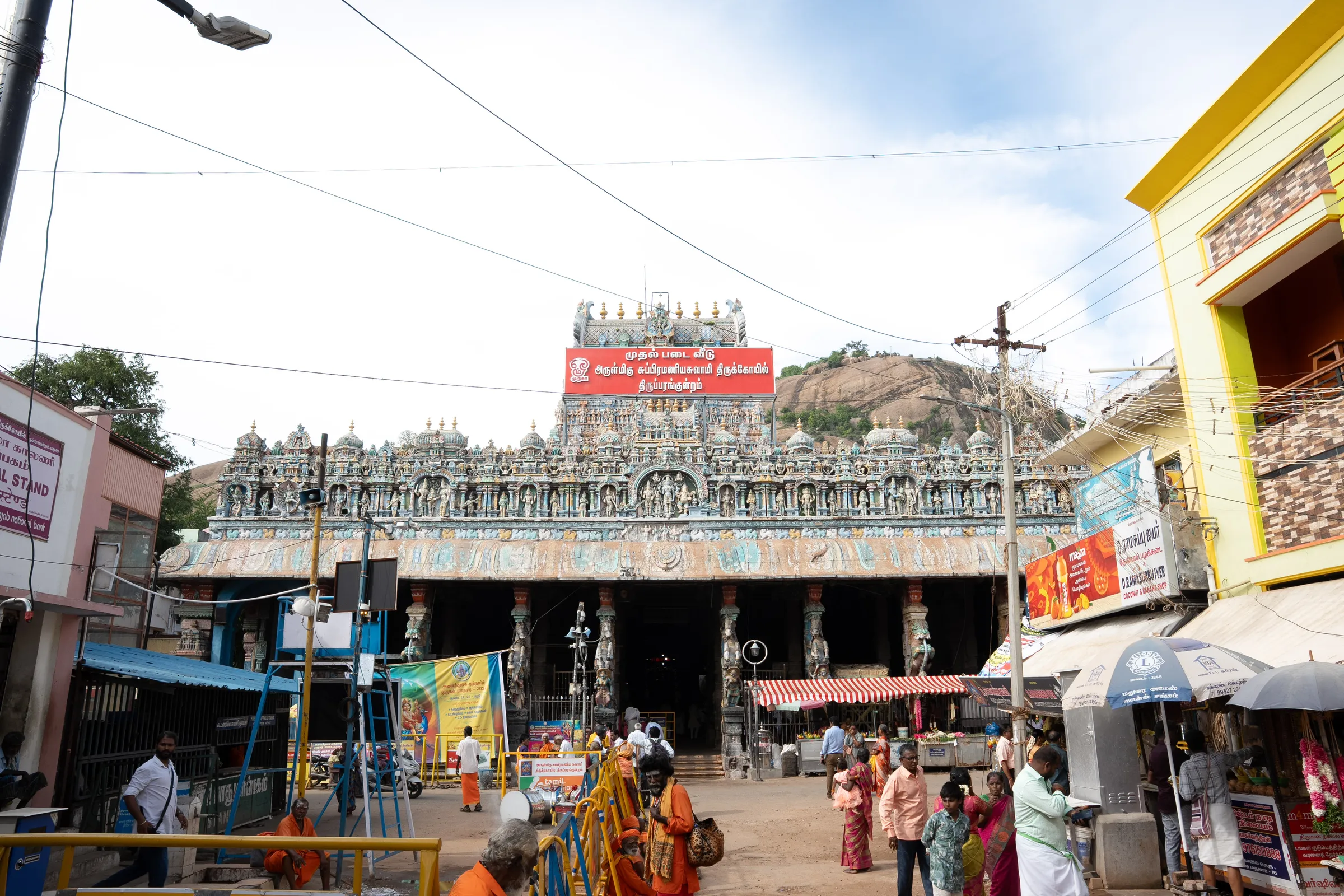
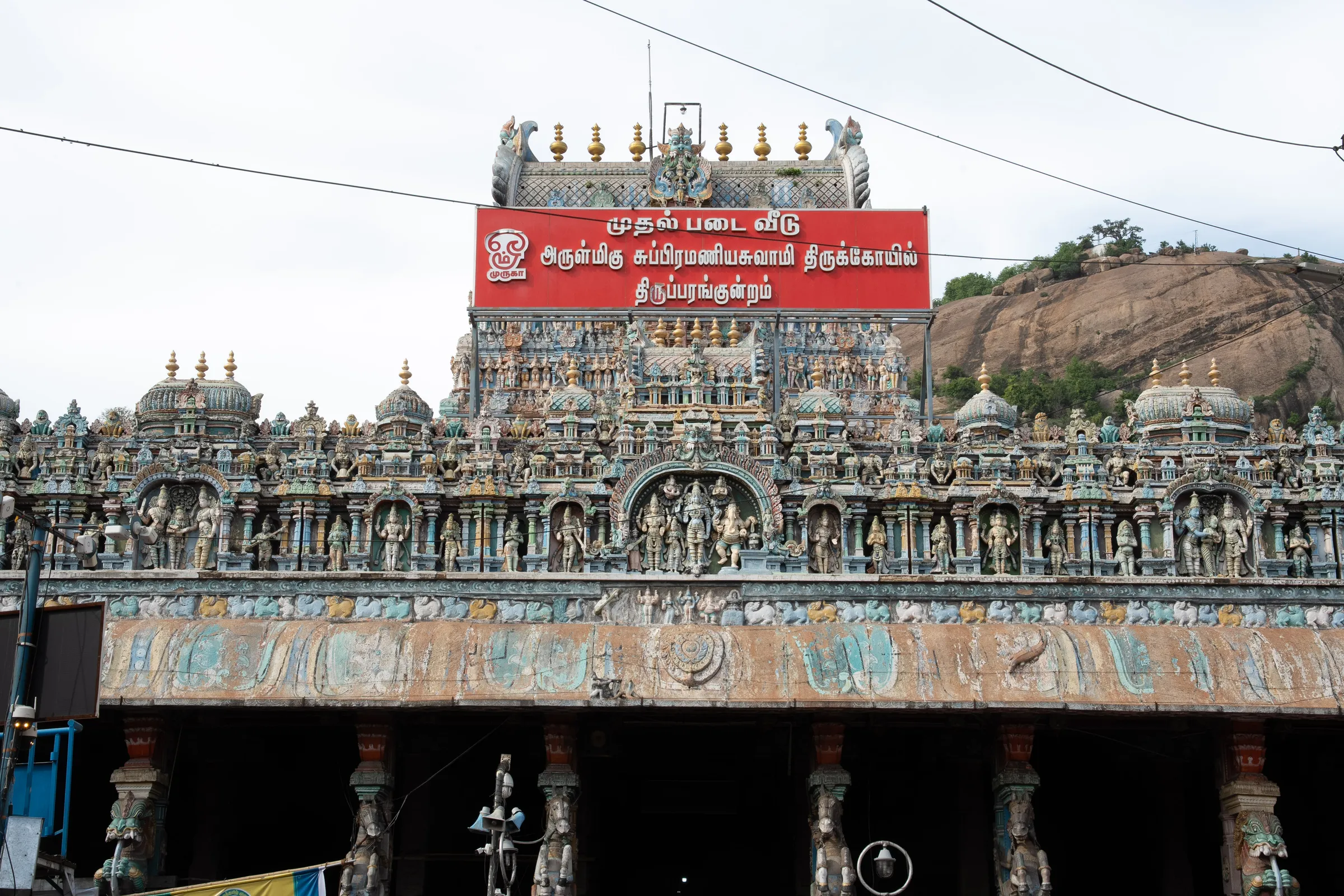
This is the first in order of the Arupadaiveedu, the six abodes of Muruga, and here he is seated with Devayanai rather than standing, with Indra, Narada, Brahma, Sarasvati, Surya and Chandra beside him and his mounts, an elephant and a goat, below. The hill, shaped like a lingam, is known also as Tenparankundram, Parangiri, Kandamalai and Sathyagiri, and the temple was anciently called the Parangiri Nadhar temple. Satyagireeswara, or Parangiri Nadhar, is the principal deity on whose mast the festival flag is hoisted. There is no vimana or prakara, this being a rock-cut temple.

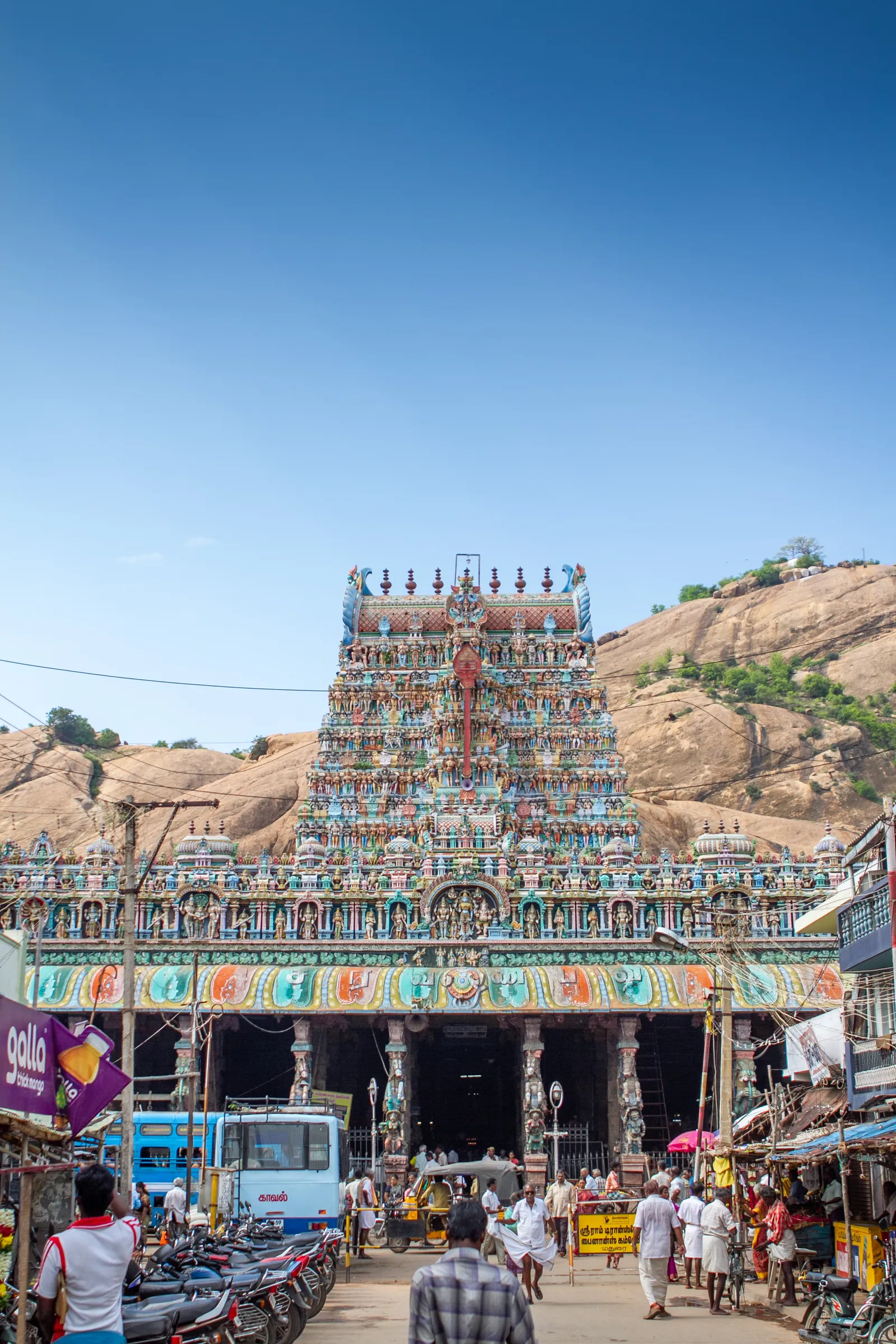
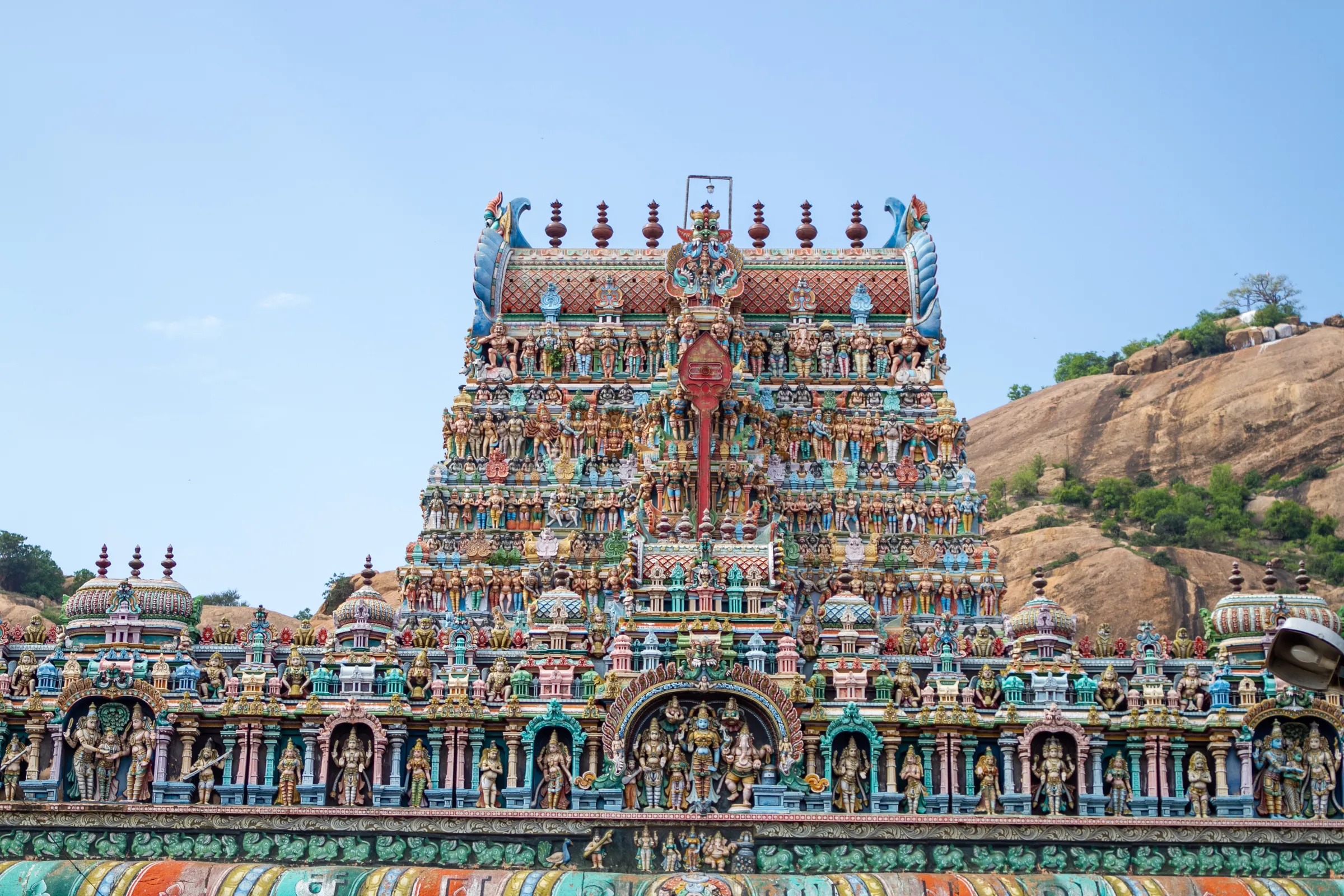
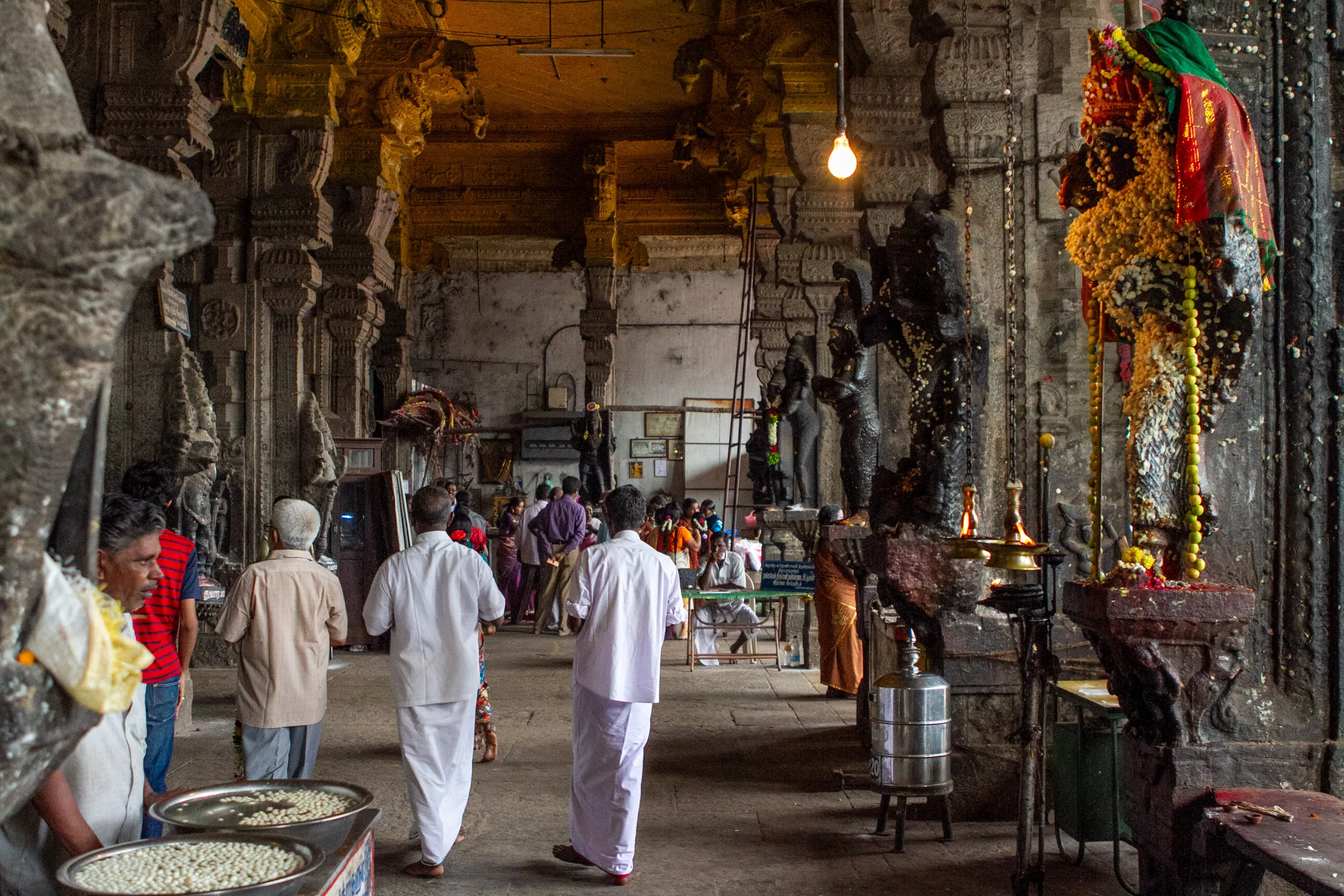
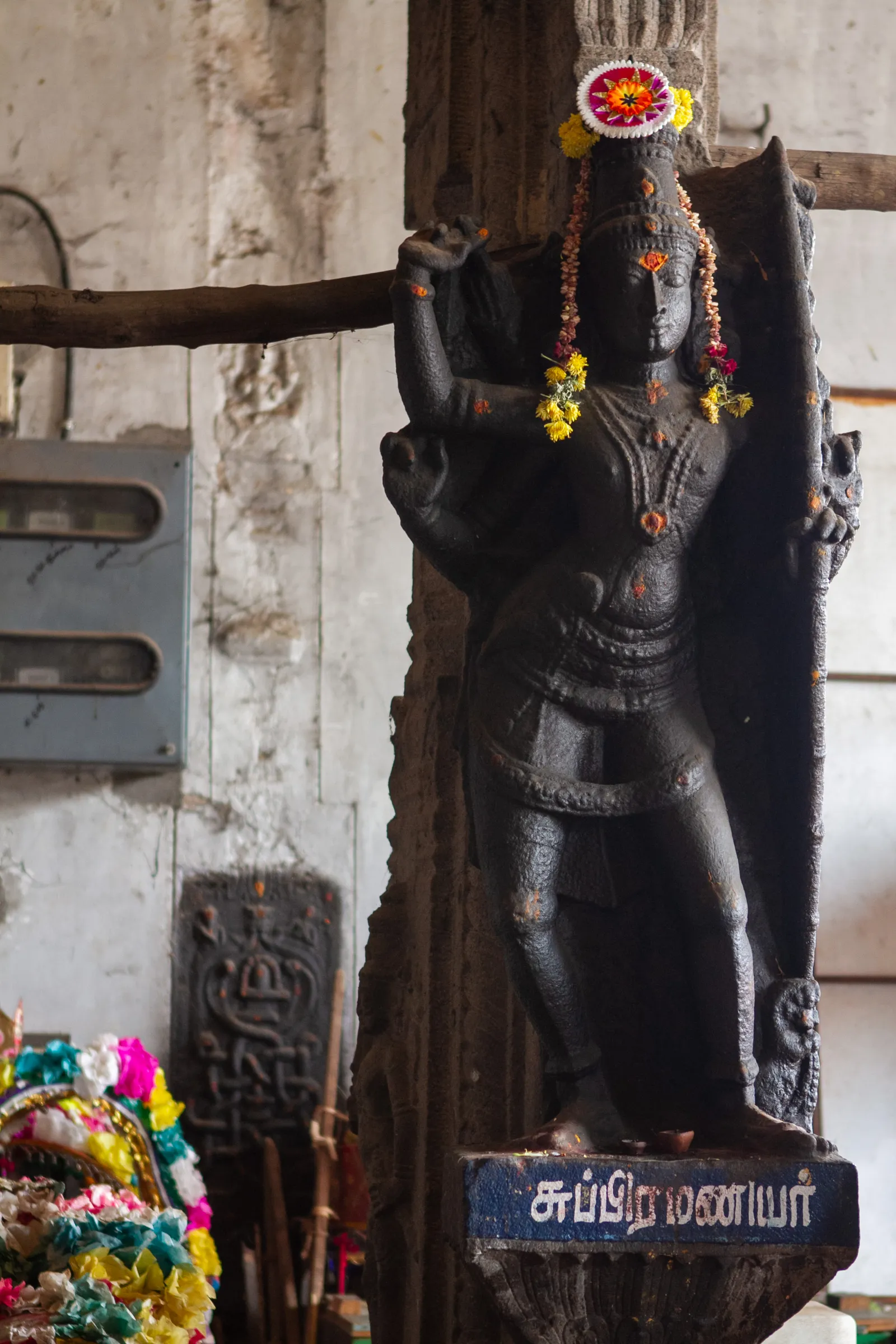
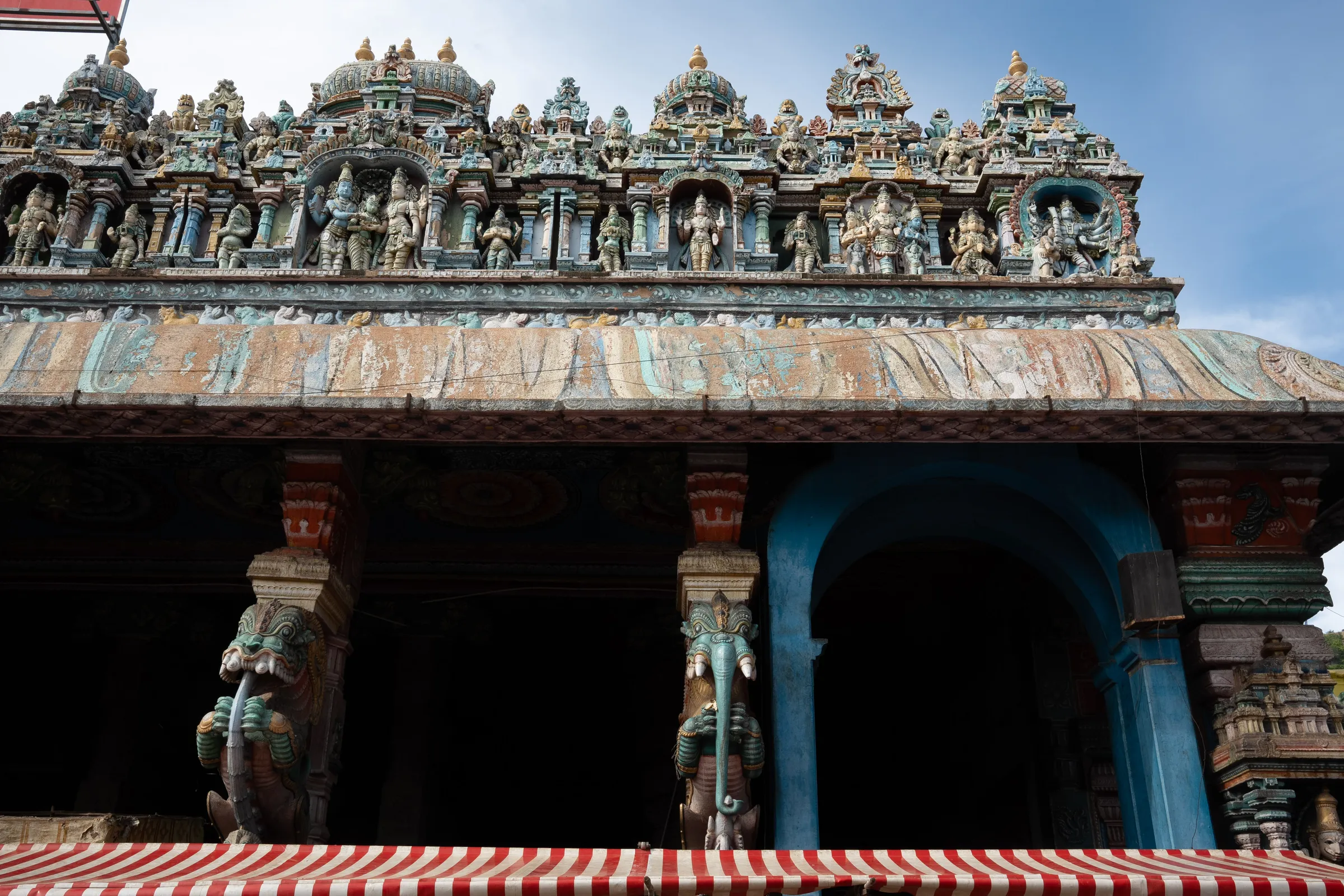
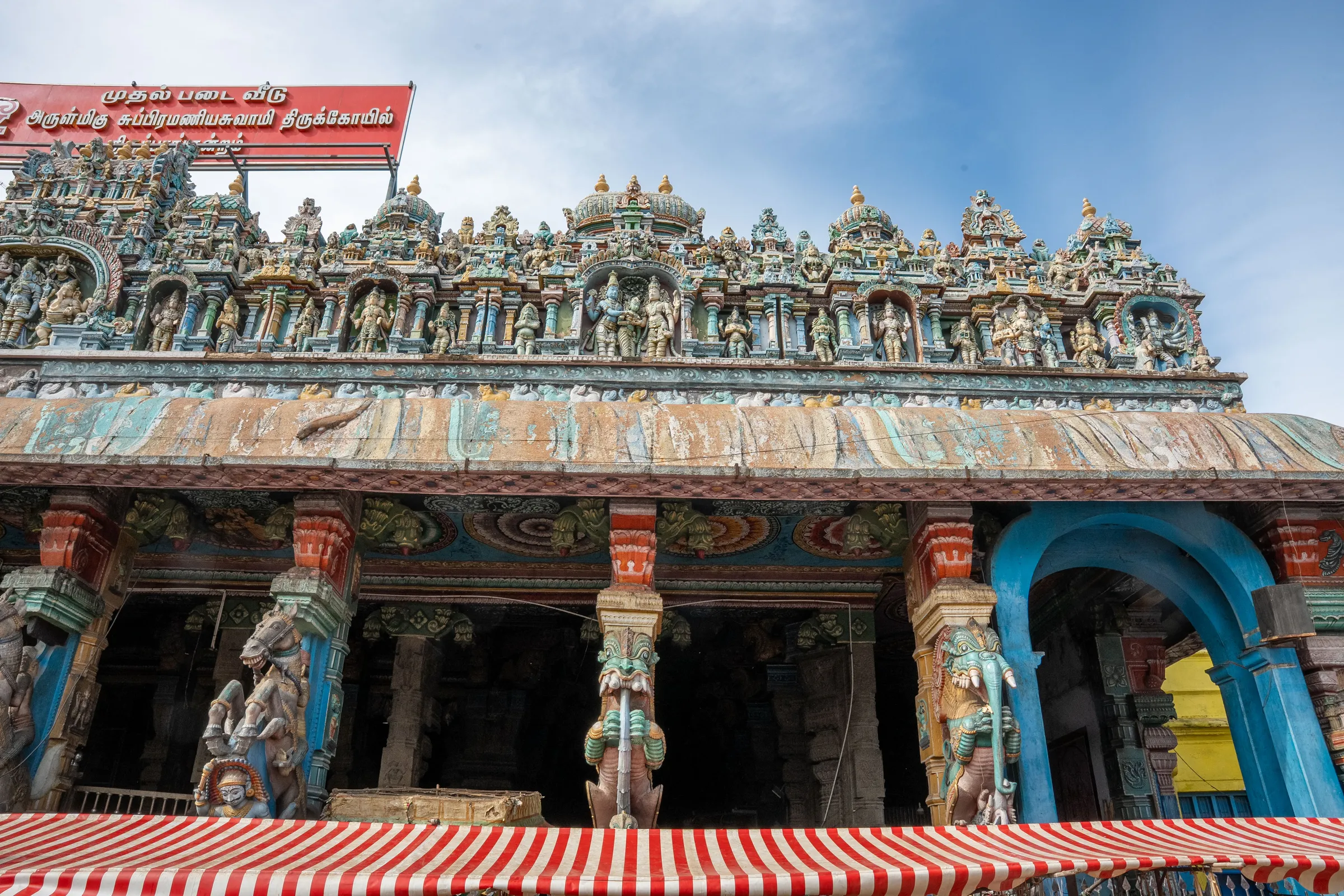
Before the Northern Gateway is the 48-pillared Asthana (Golu) Mandapa, built by Tirumalai Nayaka, its pillars carved with Nayaka soldiers, the marriage of Subramanya and Devayanai, Veerabahu, a dancing Ganesha, and Subramanya with a bow against Surapadhman, in a style close to the Meenakshi temple. Beyond are the seven-tiered Raja gopuram and the Kalyana Mandapa, also called Kudhiraipadi (horse steps) Mandapa, where two carved horses seem to pull it, an illusion of movement seen at Darasuram and Kumbakonam. The Kodi Mandapa is named for the flag mast, which Tirumalai Nayaka (1623 to 1659 CE) covered in gilded copper plates.

After the Kodi and Maha Mandapas comes the Ardha Mandapa, reached by six steps called the Shadkshara steps; the Ardha Mandapa and sanctum are rock-cut. The sanctum holds five shrines, for Vishnu (the west-facing Pavalakanivai Perumal, seated with Sridevi), Durga (worshipped with Nandi before her as Sivaswarupini), Karpaga Vinayaga, Satyagireeswara (Shiva, facing Vishnu), and Subramanya marrying Devayanai. The high-relief figures are not of hard stone, so they are anointed with oil and herbal mixes and never bathed with water; all pujas and abhishekam are done only to the Vel of Subramanya. On the hilltop is the temple of Kasi Vishwanatha and Visalakshi, with a statue of Nakkirar and the Kasi Theertham.

02

Archaeological

dated & cited

An inscription records that the gopuram and outer wall were built in 1583 CE by Veerappa Nayaka. The construction of the 48-pillared Asthana Mandapa by Tirumalai Nayaka is often wrongly credited to Sundara Pandyan; its sculptures include Rani Mangamma and Chokkanathar Nayaka. The high-relief figures of the sanctum and their neighbours are held to be of the early Pandya period and among the oldest images of these deities in southern Tamil Nadu. Five rock-cut beds, the Pandavar Padukkai, remain from an earlier Jain use of the site.

Dating
BegunBefore the 6th century CE · by tradition · inferred

The core sanctum and reliefs are placed in the early Pandya period; the gopuram and outer wall are dated by inscription to 1583 CE.

Protection & condition
ConditionIn worship
03

Mythological

as transmitted

The hill was worshipped by Sambandar and Sundara, and the Sangam poet Nakkeerar celebrated the temple in his Tirumurugatrupadai, where he likens Muruga to the sun rising from the ocean and names him husband to Devayanai; Arunagirinadhar too has sung of it. Legend holds that all deities and celestial beings gathered for the wedding of Subramanya and Devayanai at Parangiri. It is said the temple existed before the 6th century, was turned into a Jain temple, and was re-converted into a Hindu temple in the 8th century, the five rock-cut beds of the Pandavar Padukkai remaining from that Jain connection.

Register interest in prints Buy the book
Improve this entry

This is an open, reviewed record. If you have spotted an error or have something to add — a correction, a date, a source, a name in another script — propose it. Every change is reviewed before it joins the record.

“Suggest an edit” opens this entry on GitHub and turns your change into a pull request. “Share feedback” opens a short form. Both go through review.