Architectural
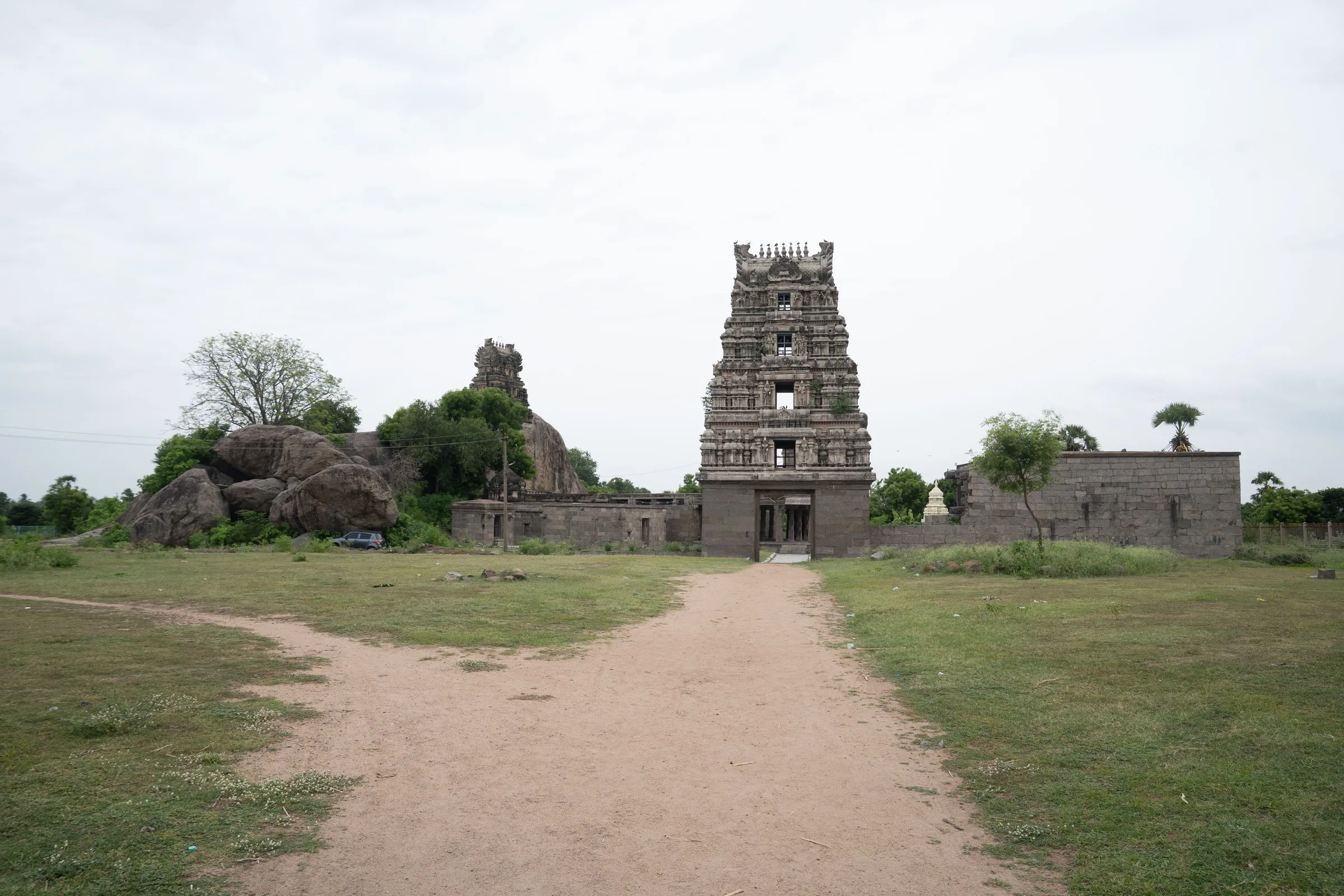
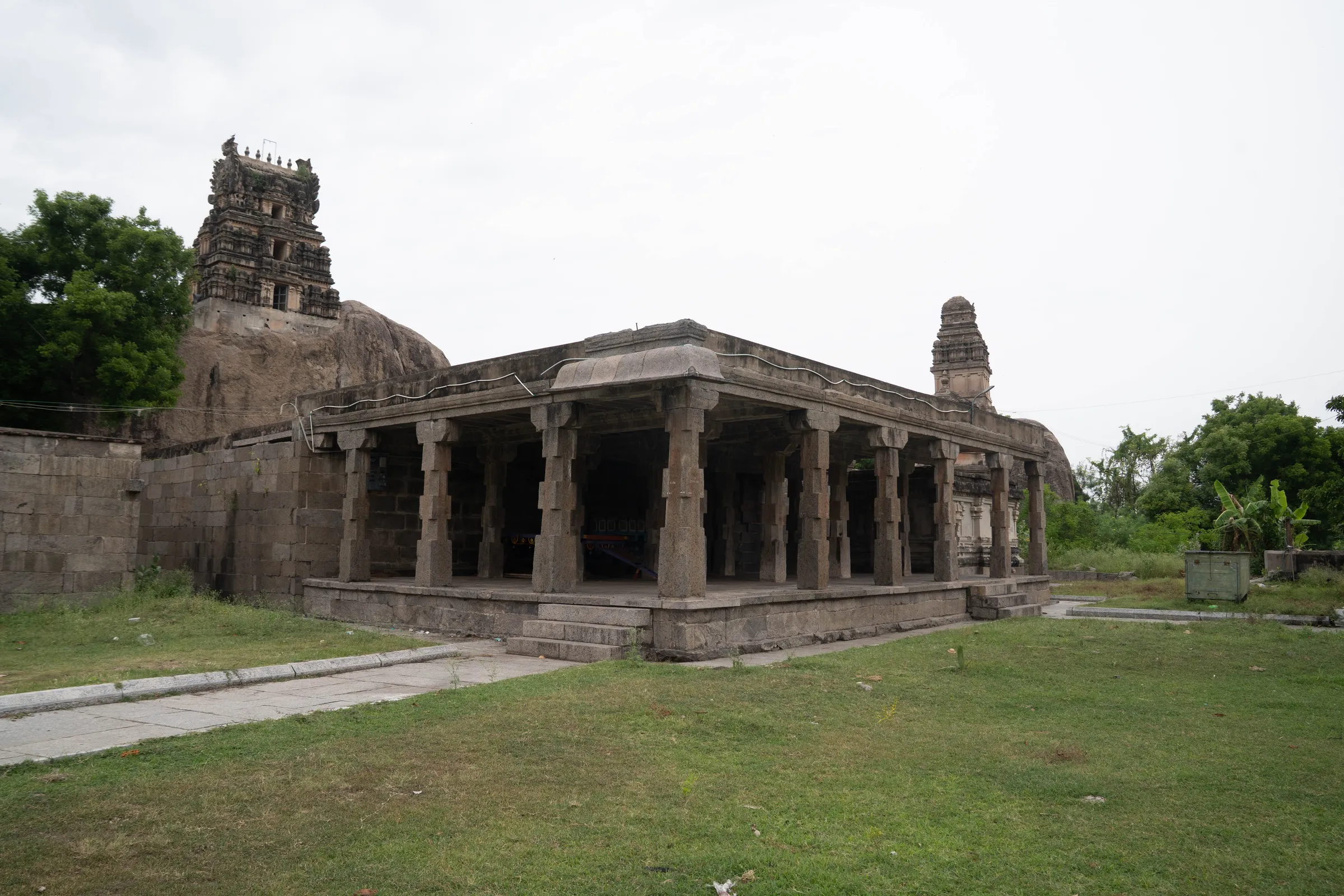
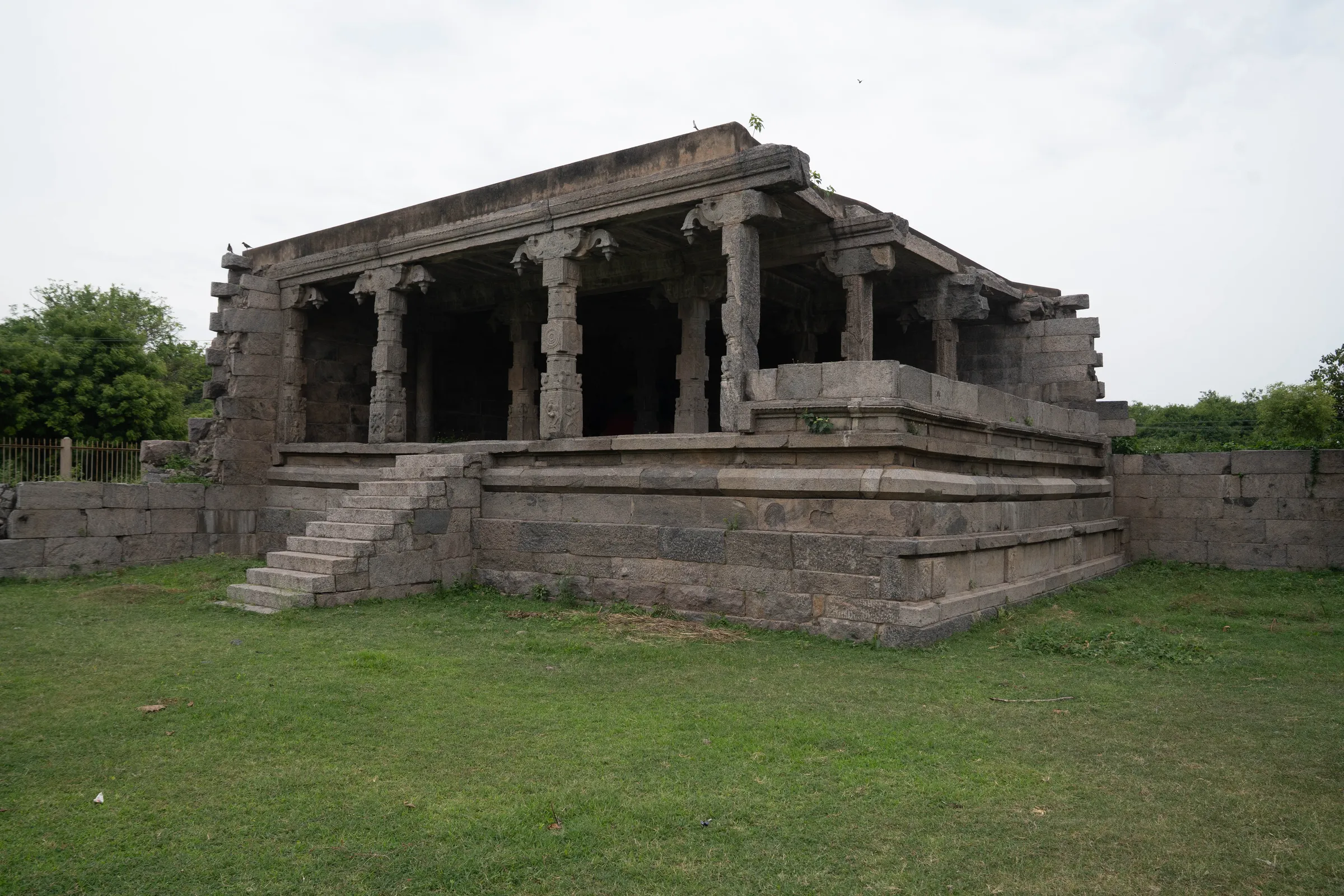
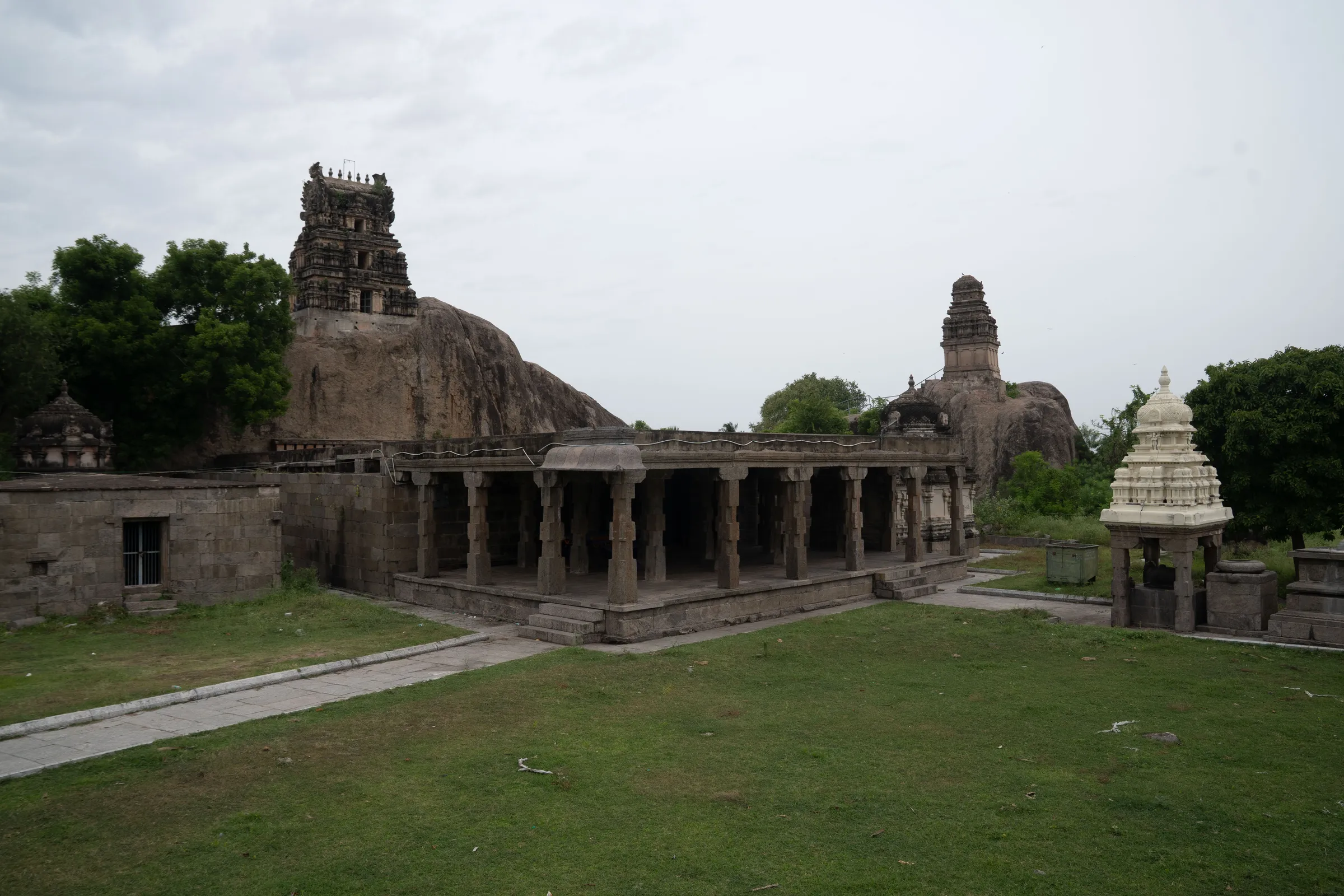
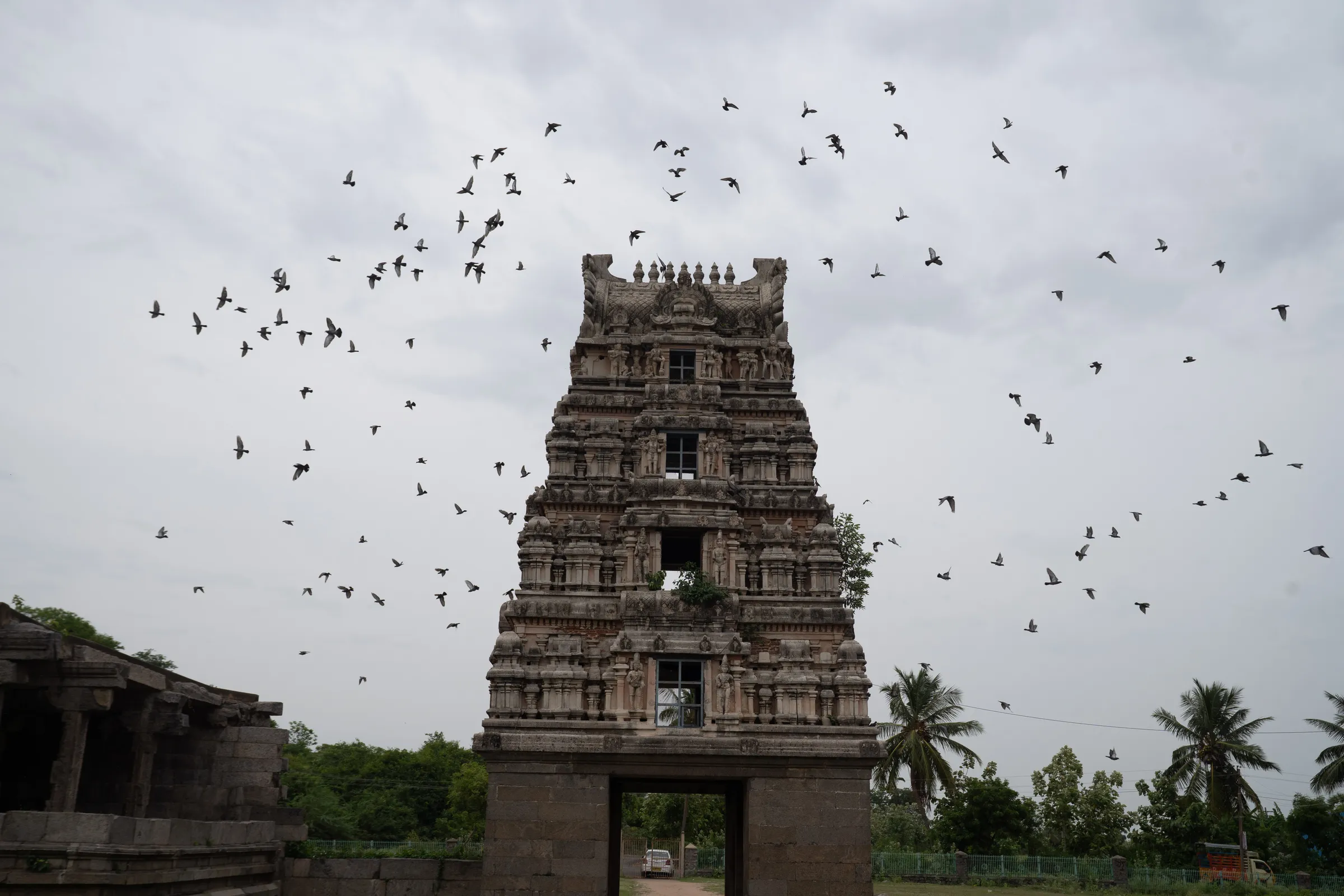
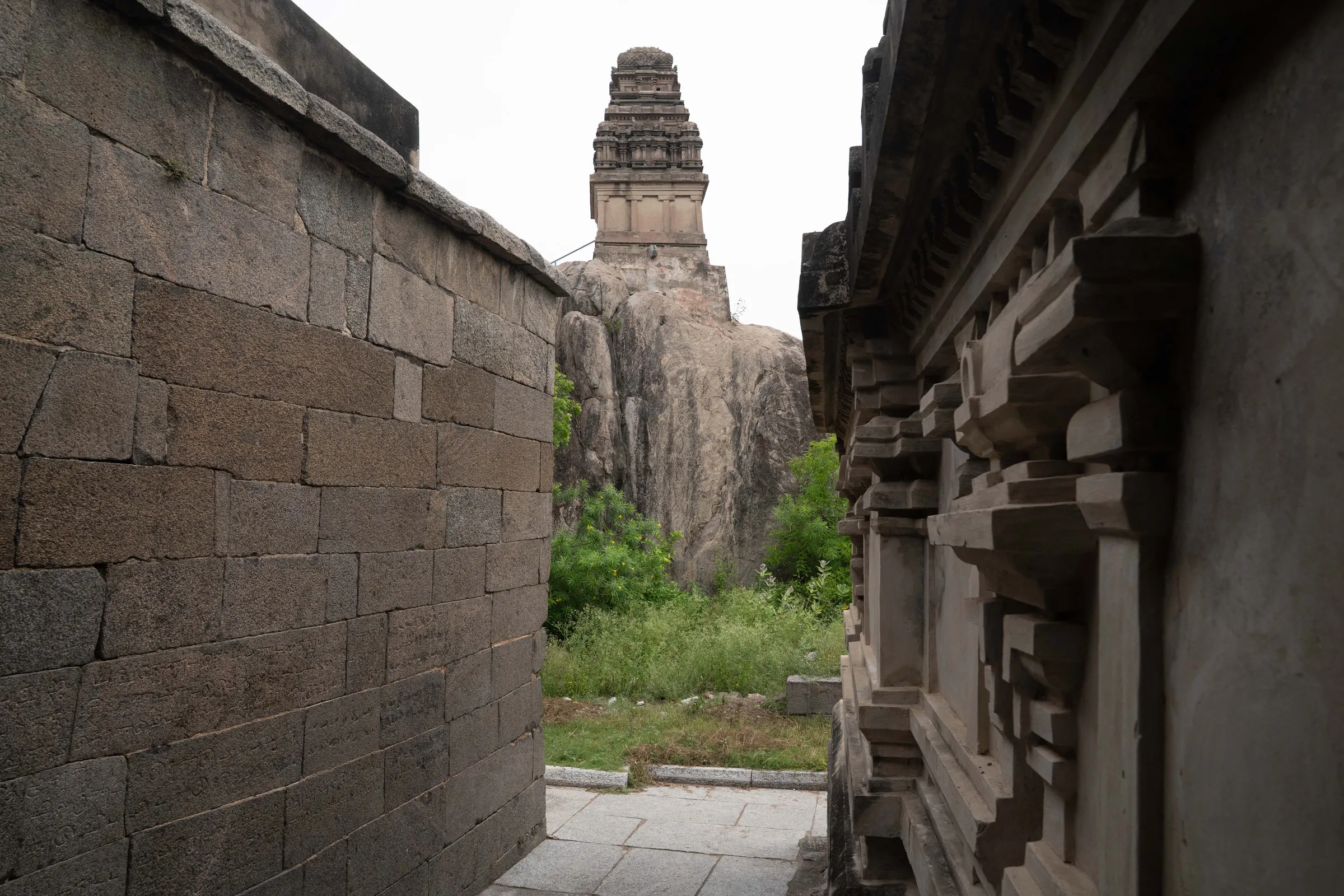
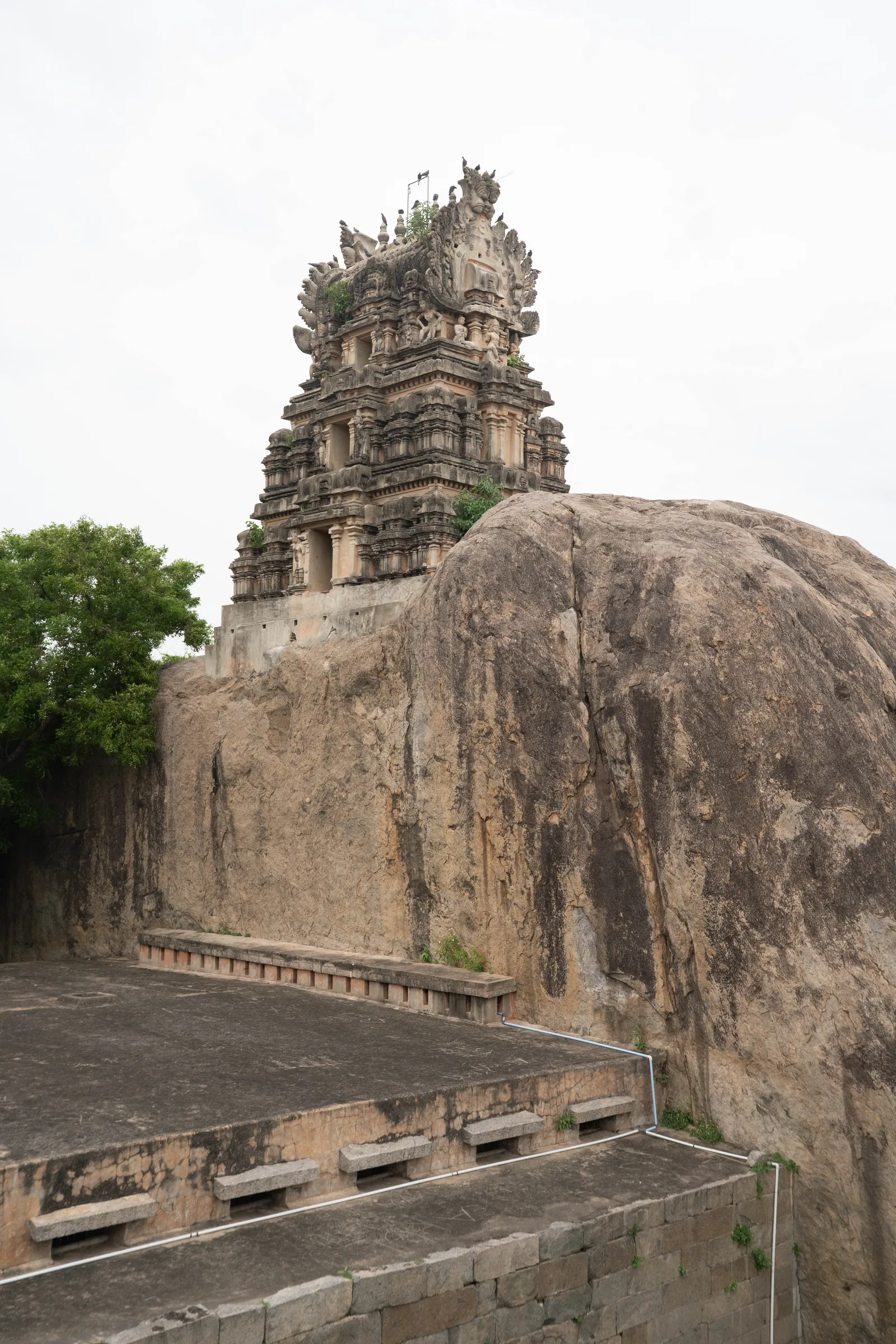
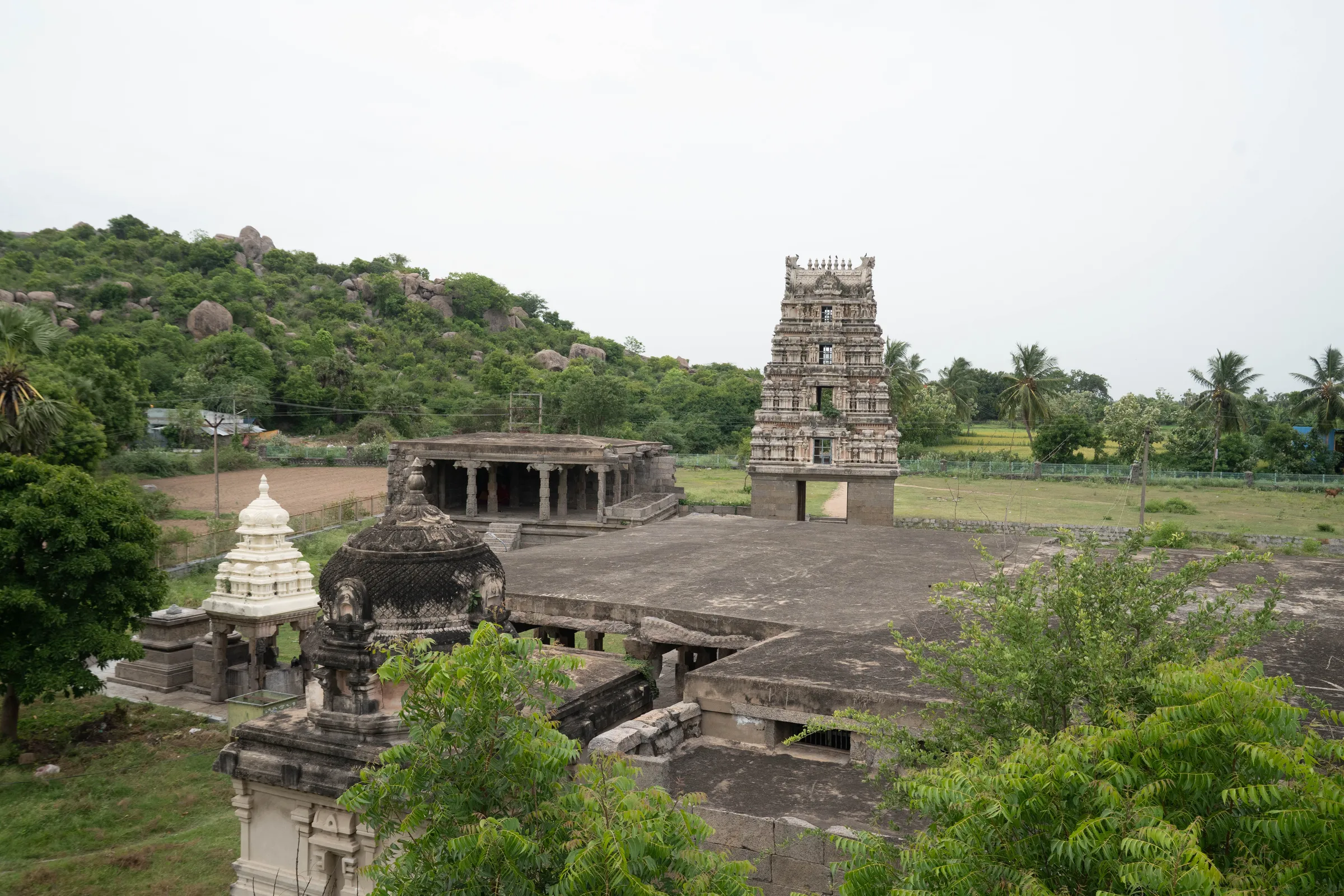
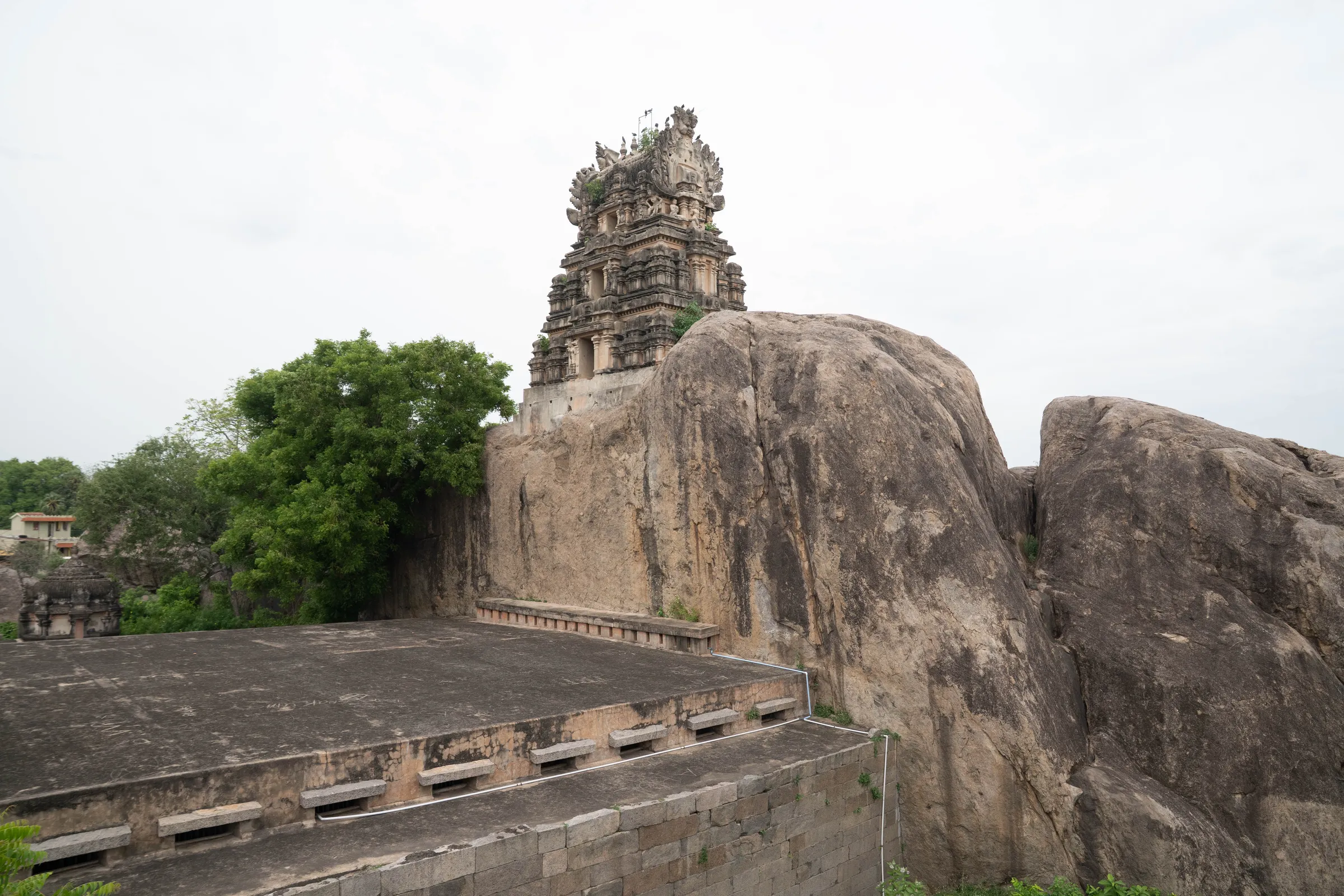
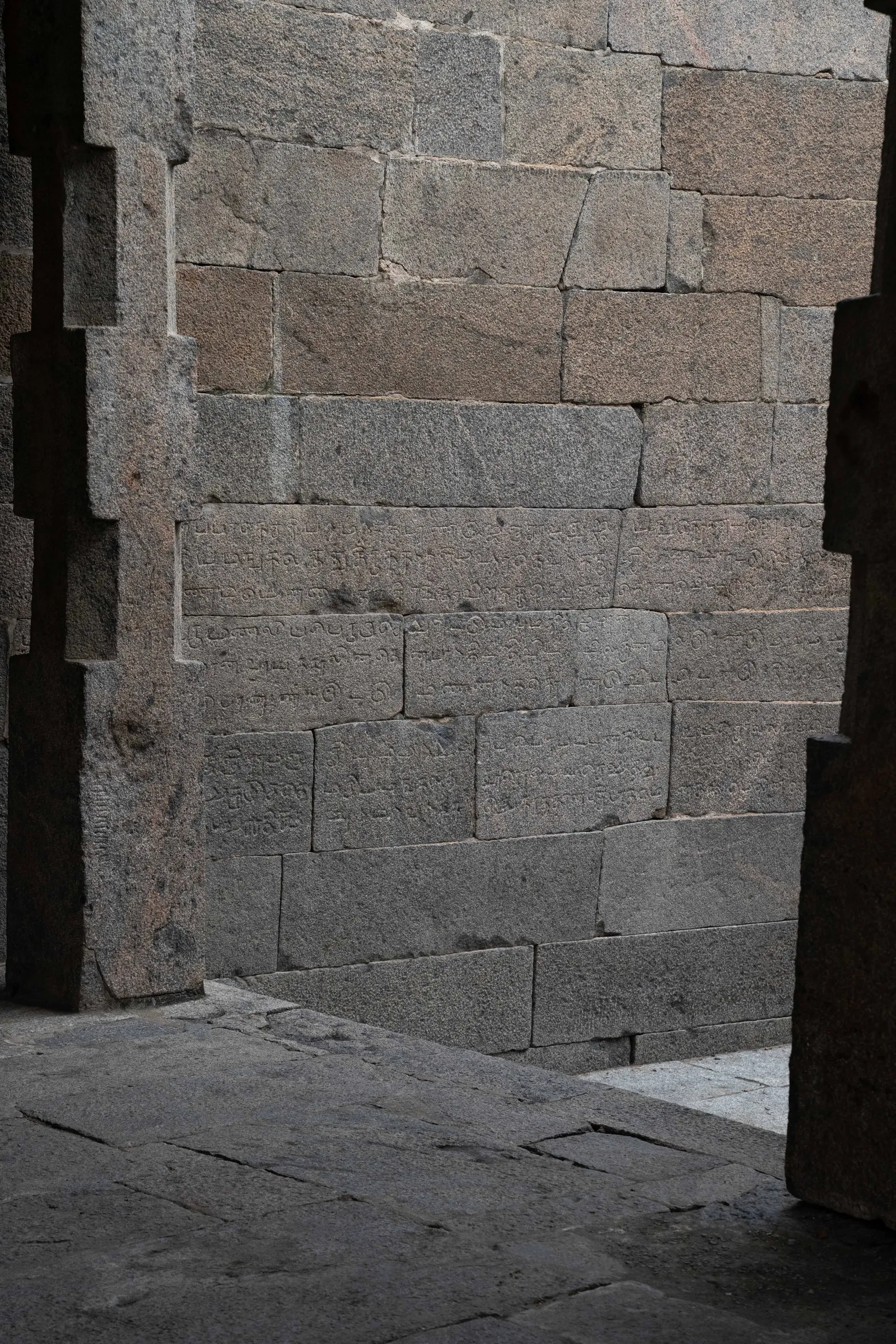
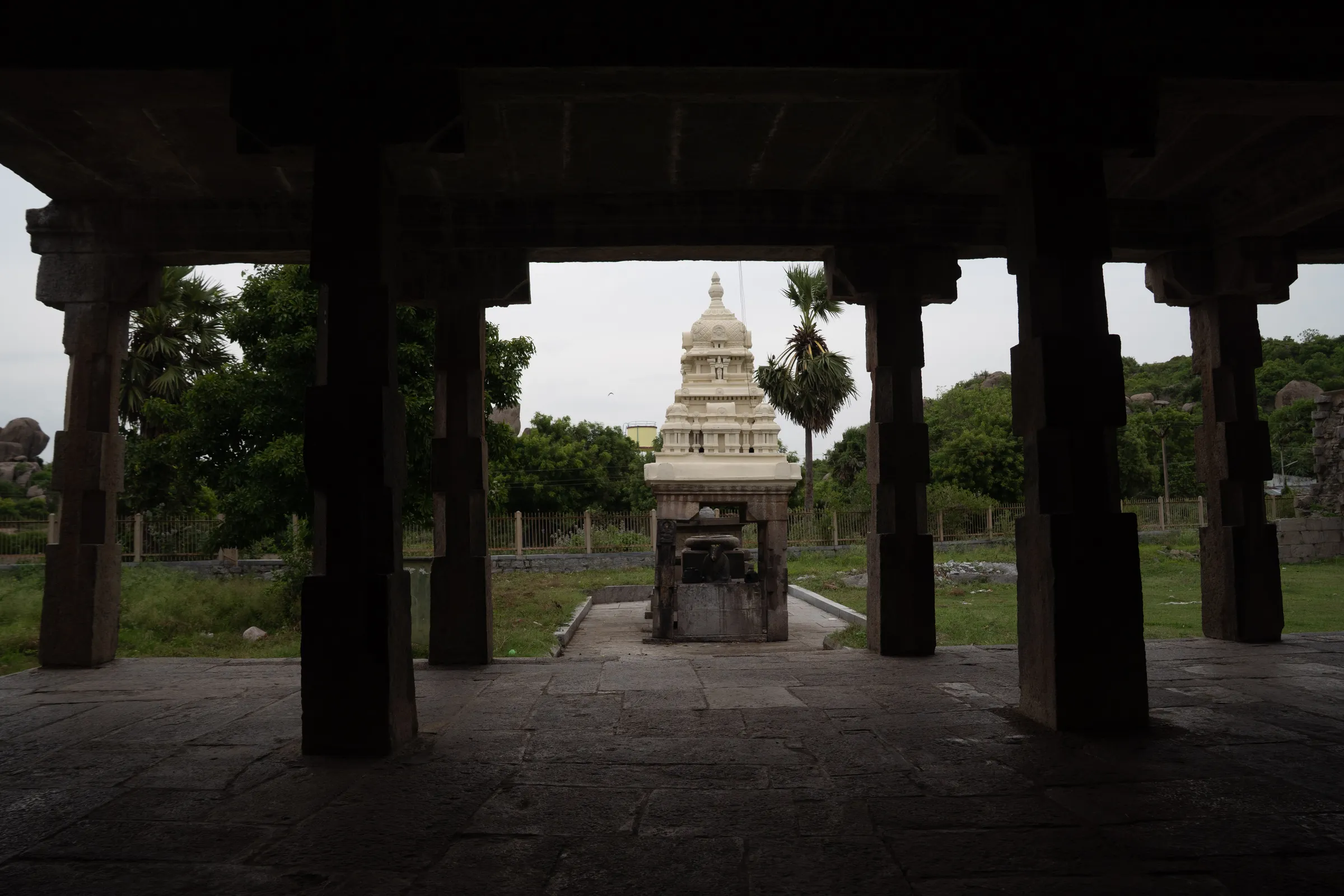
structure & vocabularyThe Śiva temple is hewn out of a large boulder lying on a north-east-south-west axis. The main cave has a square sanctum with a large Śiva liṅga, two door guardians flanking the entrance. Hewn from the same boulder is a small rectangular mandapa with two rows of pillars, four complete and others as half pillars into the rock. A later closed room of cut stones from the late Pallava and Chōḷa periods holds shrines for Parvathi and a small Nandi. Other structures around the boulder include the entrance gopuram and a four-storeyed building. The town's tall upright boulder in the large reservoir gave the deity the name Stambeswara, in Tamil Tumandar, one who is like a pillar.
The most spectacular bas-reliefs are on the half pillars furthest from the sanctum. The northern panel shows Śiva as Vrishabantika with Parvathi and Nandi. The other is what scholars believe to be South India's oldest representation of Nataraja: four-armed, dancing the ananda-tandava, but with no apasmara, the demon of ignorance, beneath his feet, his swirling left leg a cobra showing its hood, holding the bowl of fire and a parasu. Missing is the prabhavali of fire typical of later Nataraja images.
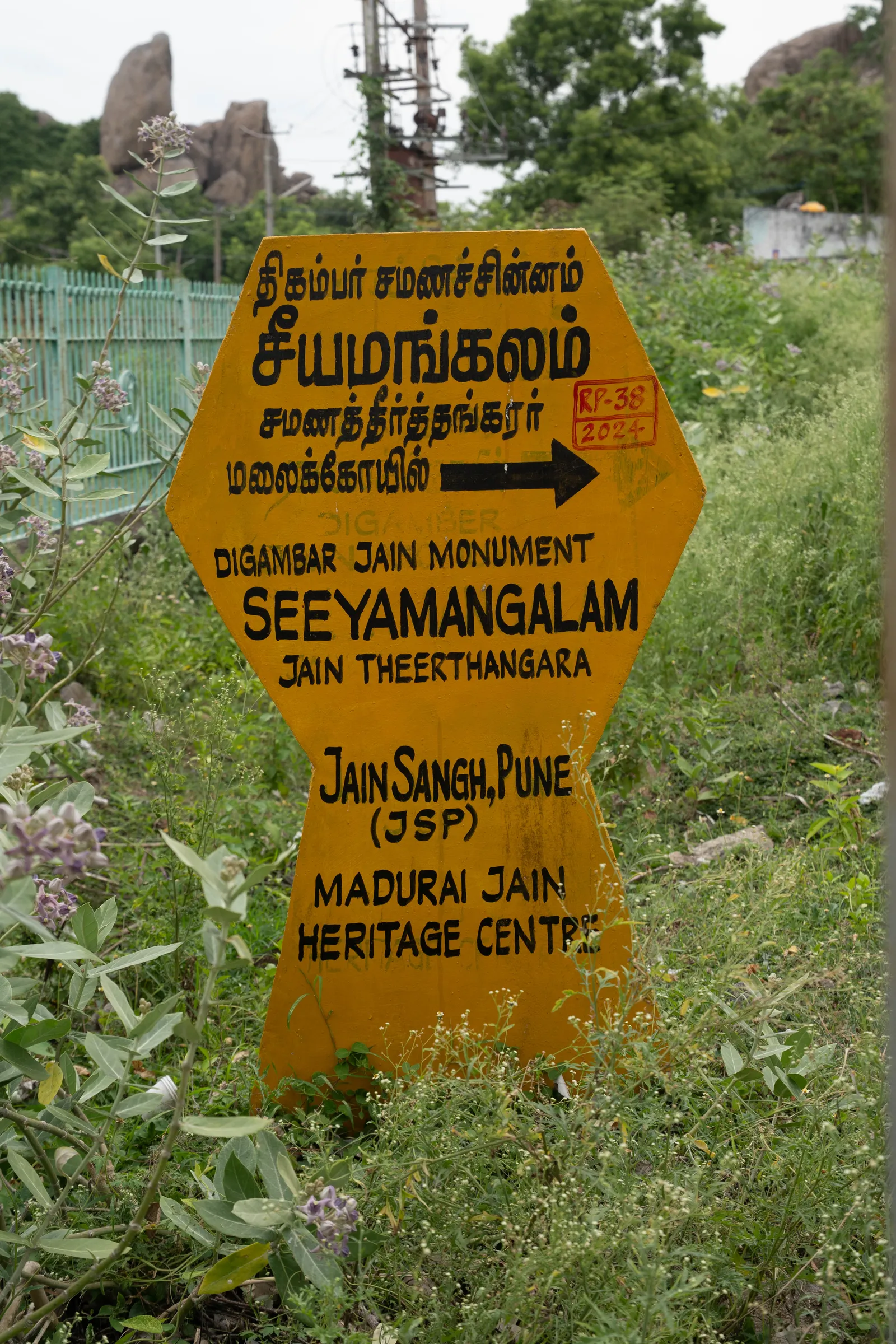
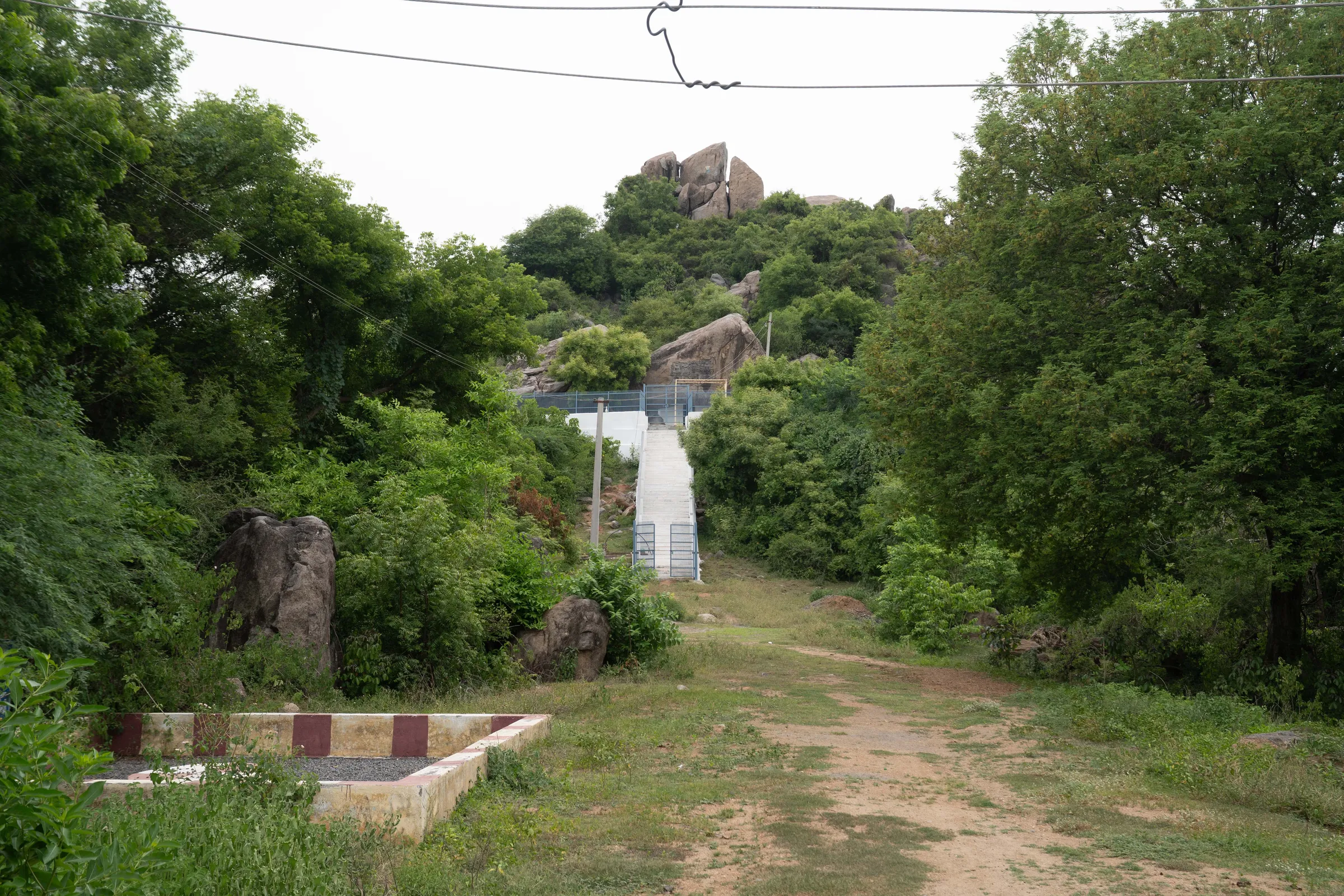
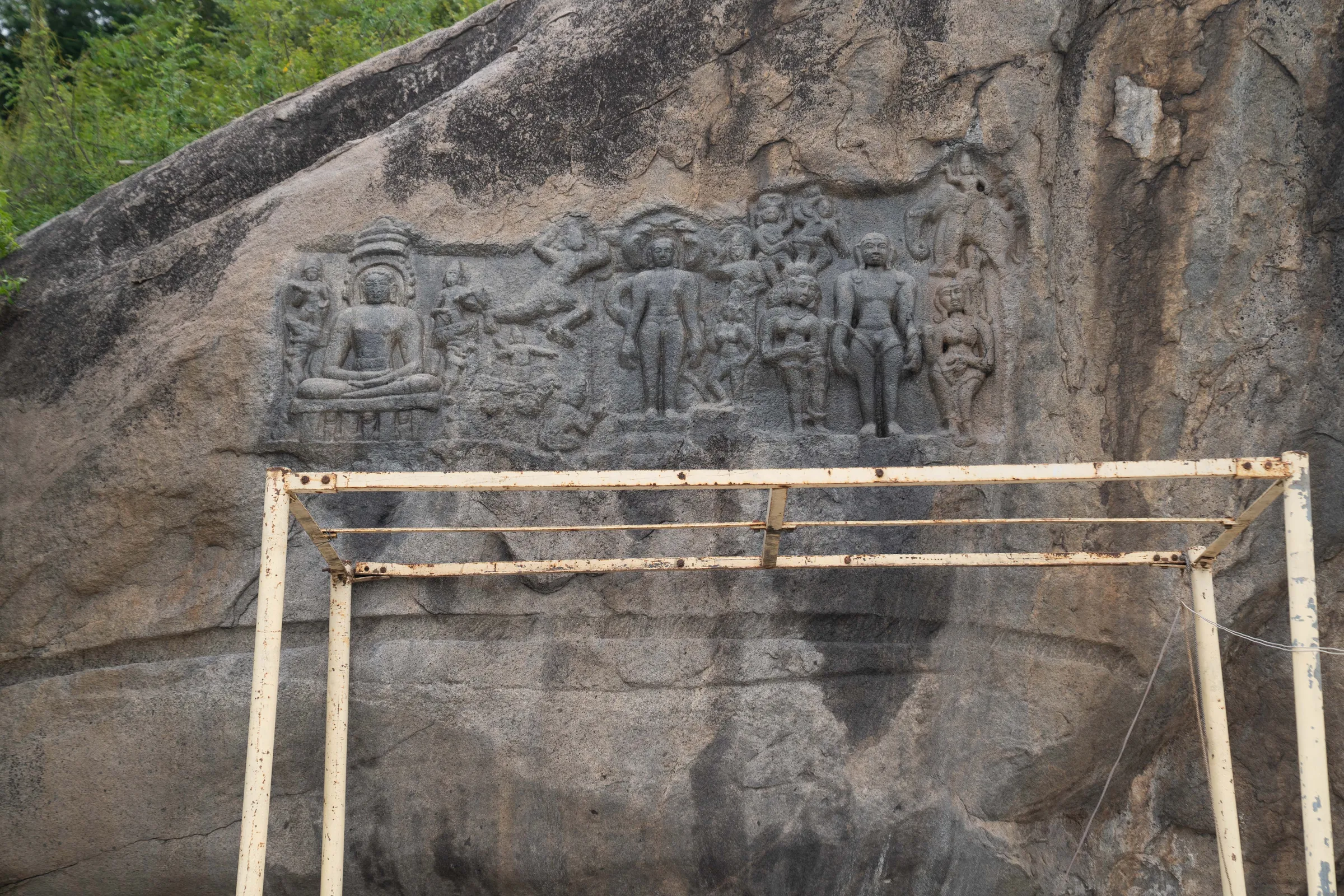
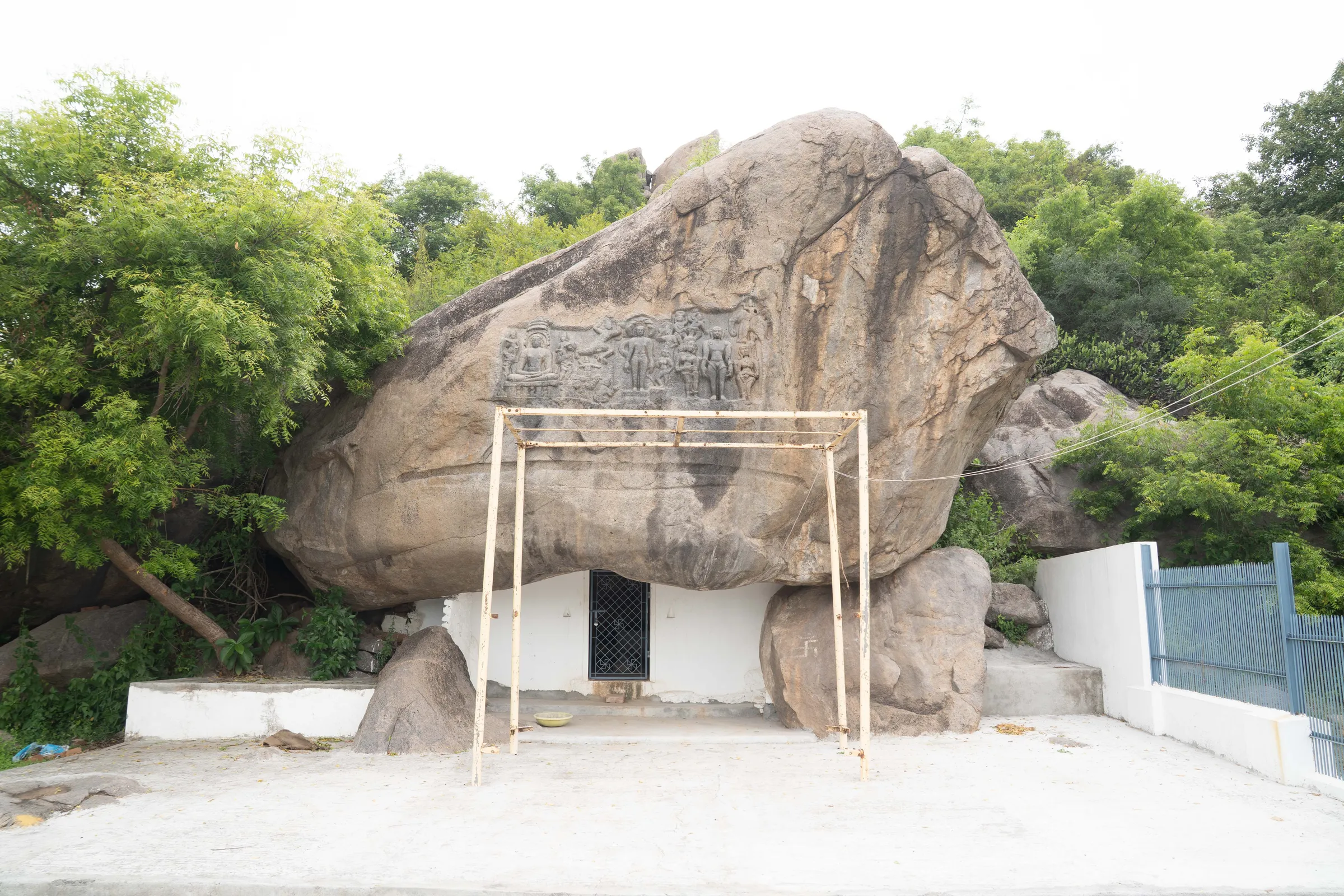
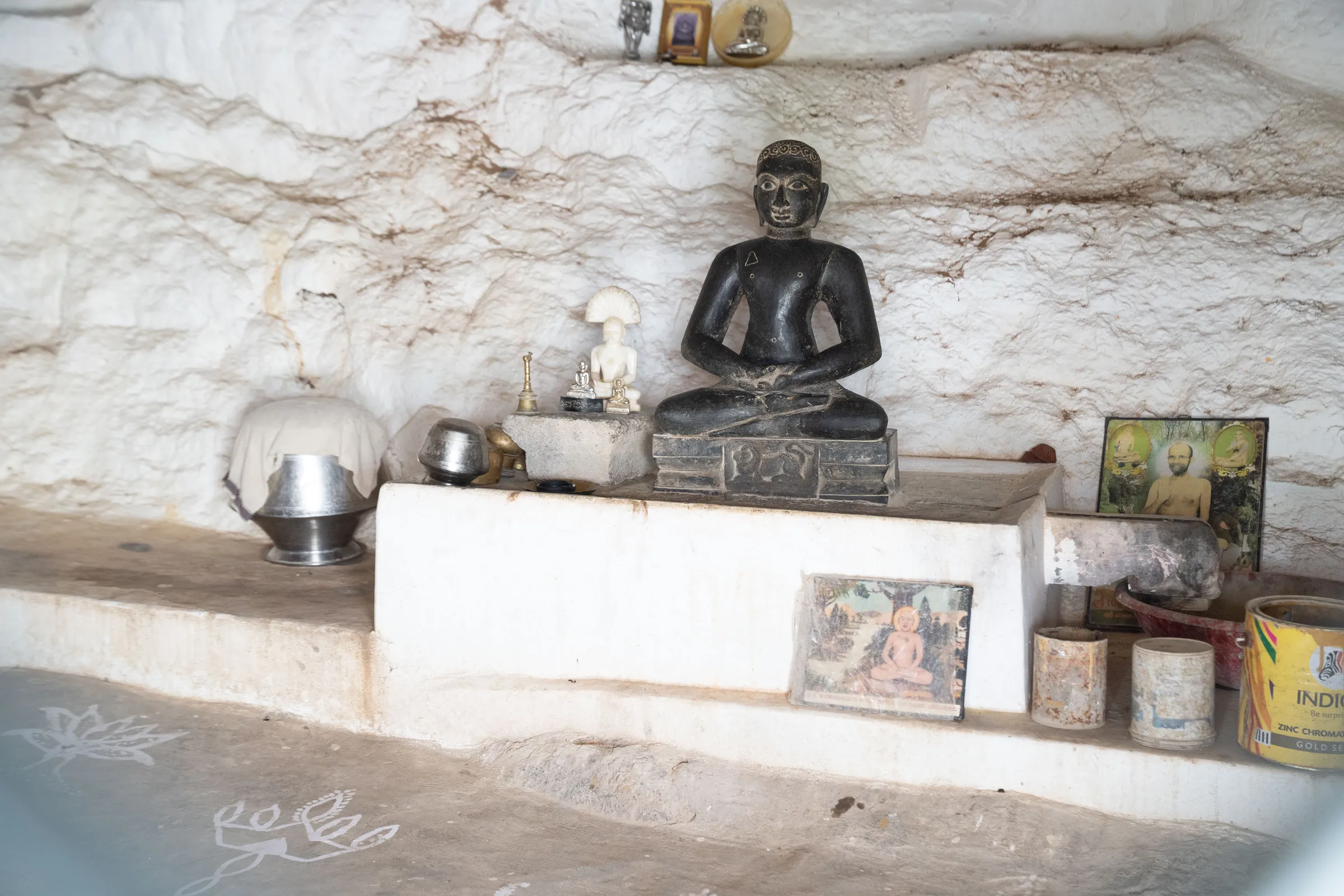
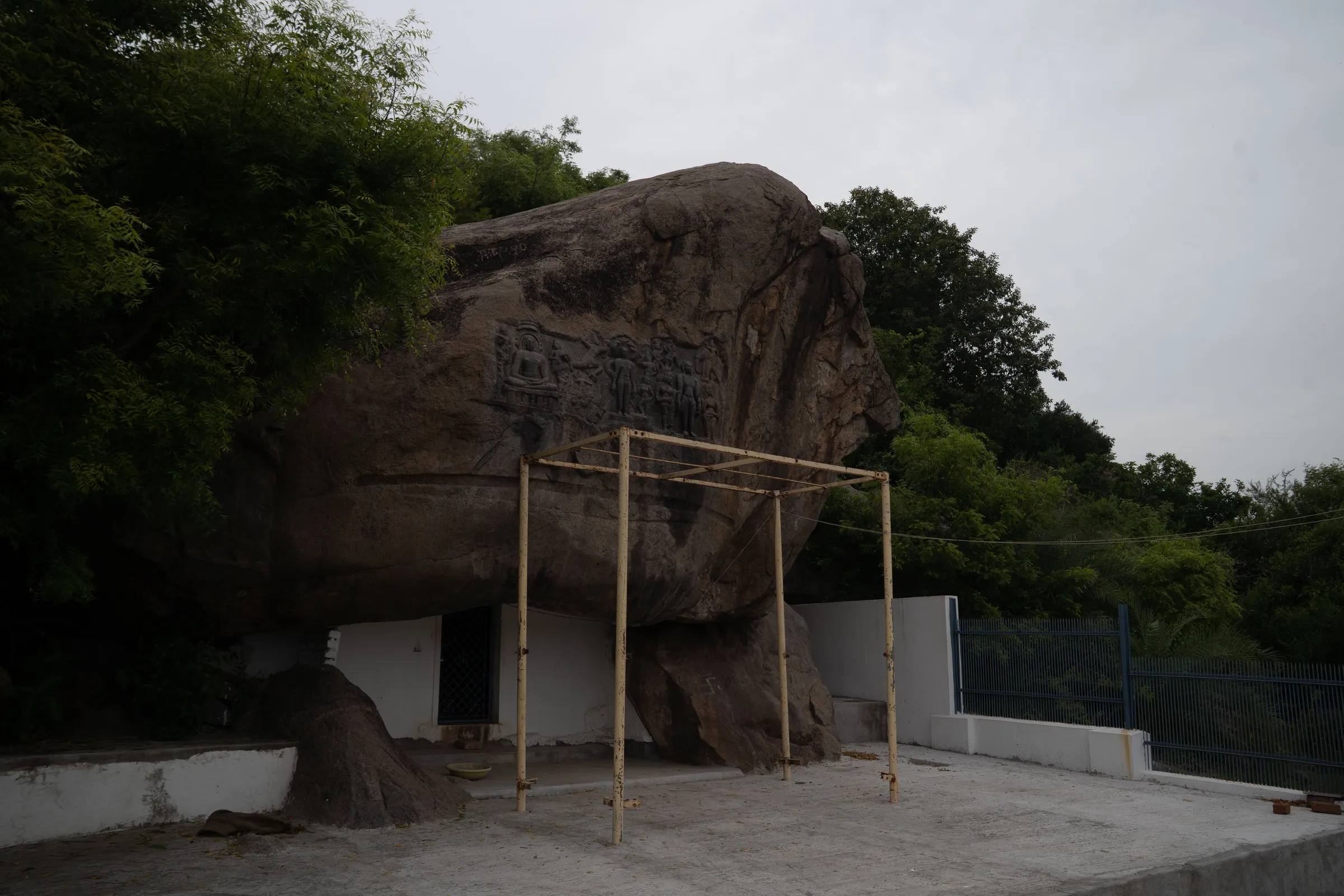
The Jain cave temple is on a small hill called Vijayadri, 300 metres north. The cave has a recently placed Mahavira statue, but the object of interest is the bas-relief on the outcrop above, open to the elements yet magnificent in preservation. It shows the Jain Mahavira, Parsvanatha, Bahubali and the Tirthankaras, with a few inscriptions.