01 Architectural
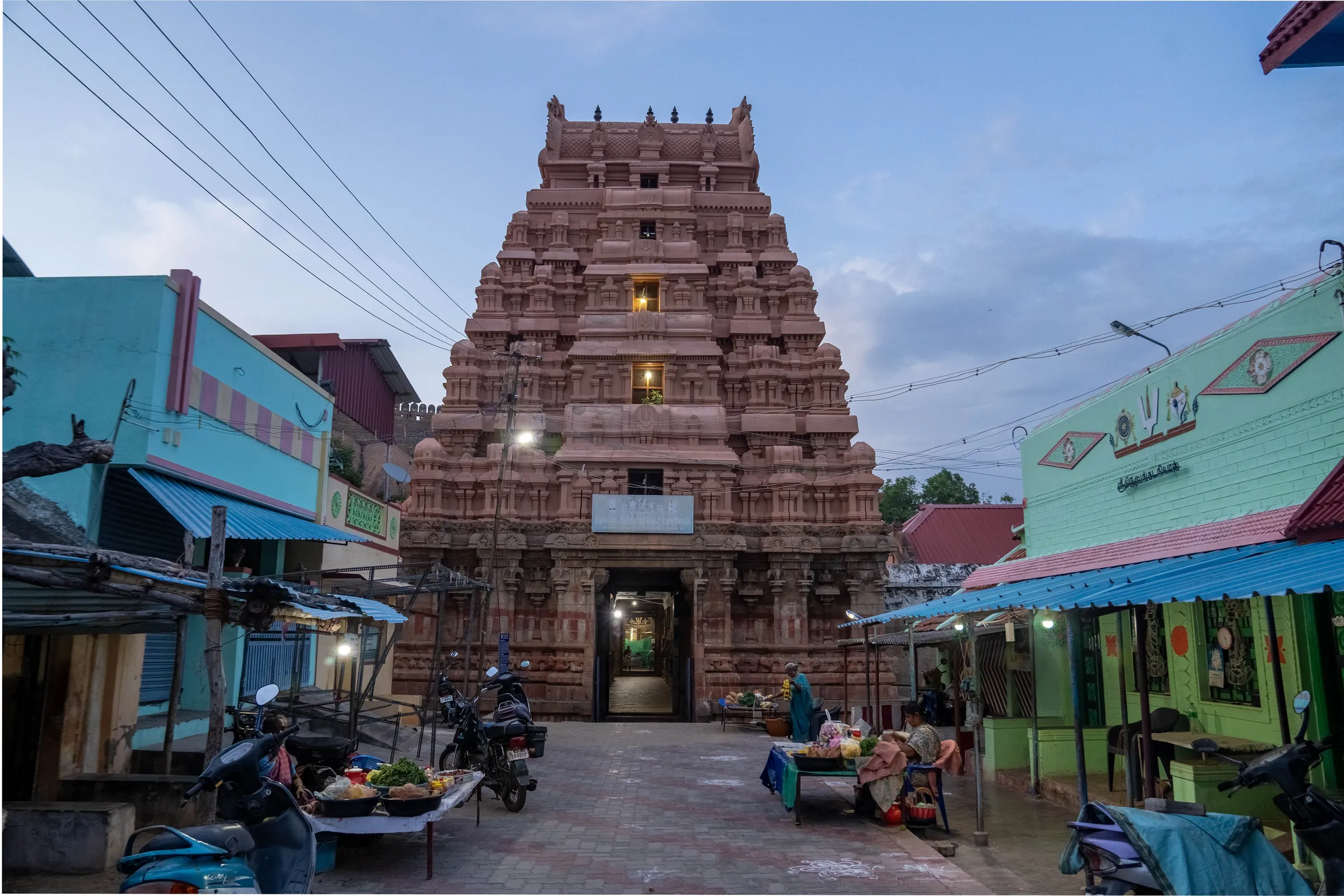
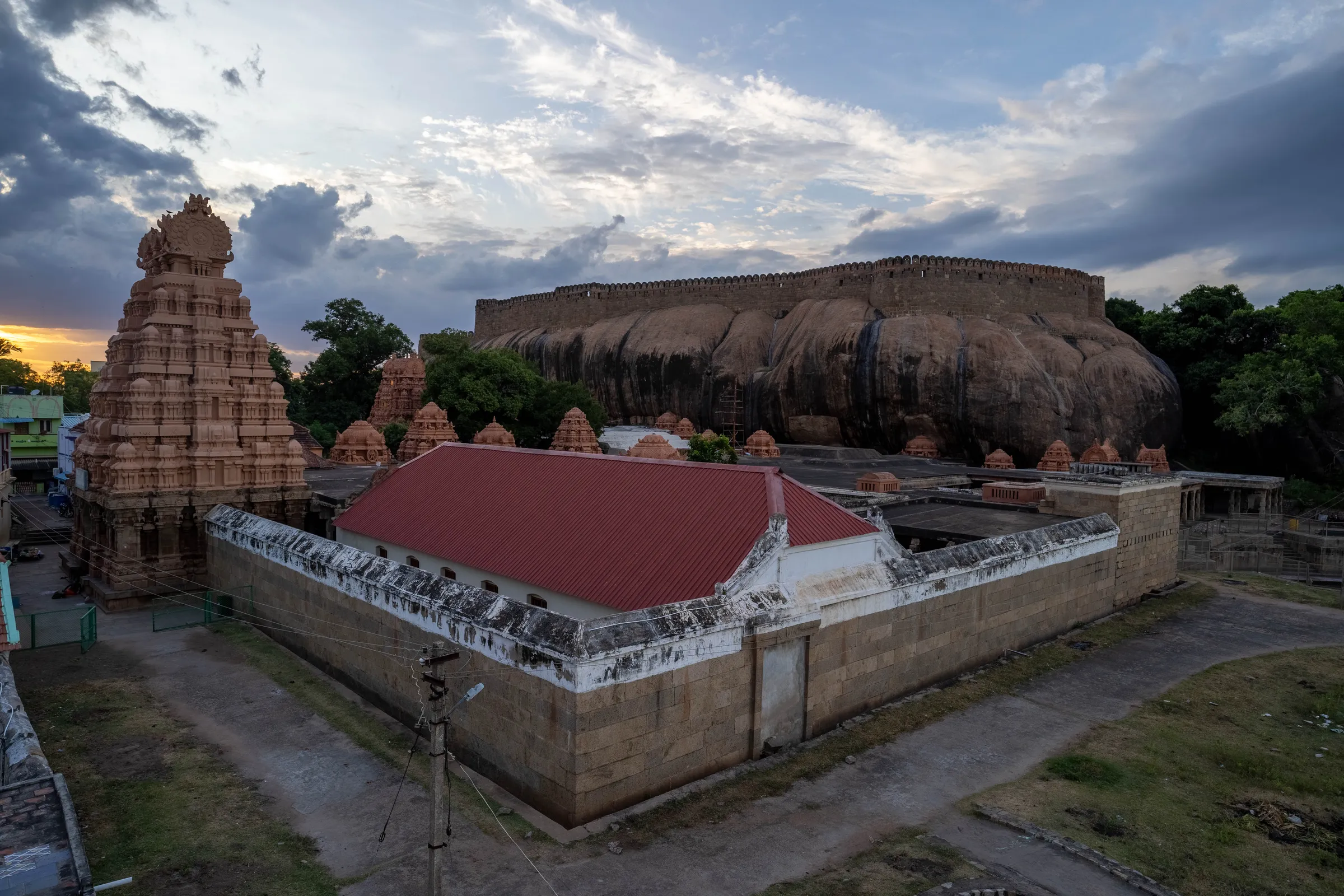
structure & vocabulary Tirumeyyam has three monuments of interest: the hillock fort, the Śiva cave temple known as Sathyagirisvara, and the Vishnu cave temple known as Sathyamurthi Perumal. The cave temples bear a striking resemblance to the Pallava rock-cut temples. The Vishnu and Śiva shrines lie at the foot of the hillock on the south, the Vishnu temple nearer the road with its octagonal tank, the Satyapushkarani, visible from it.
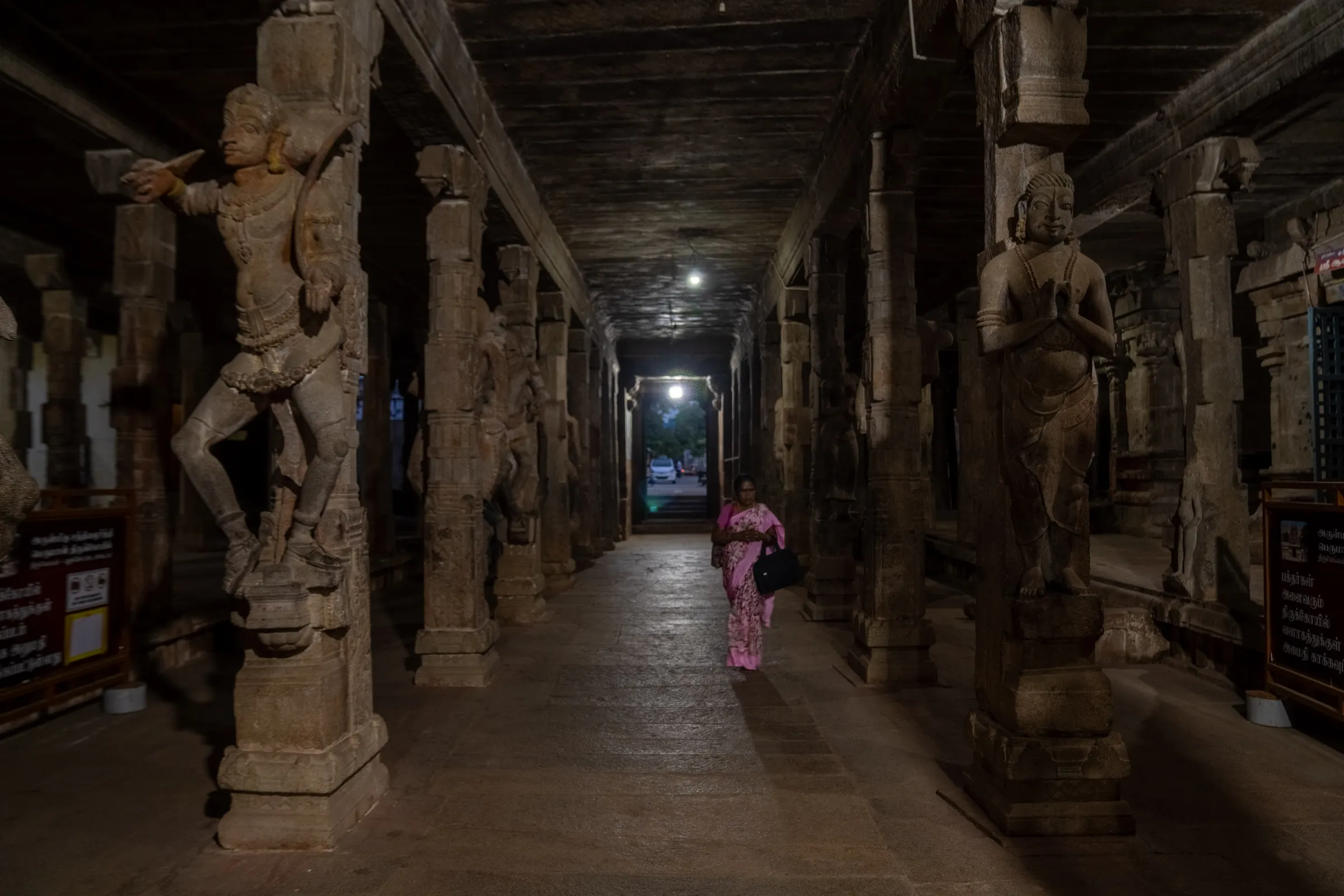
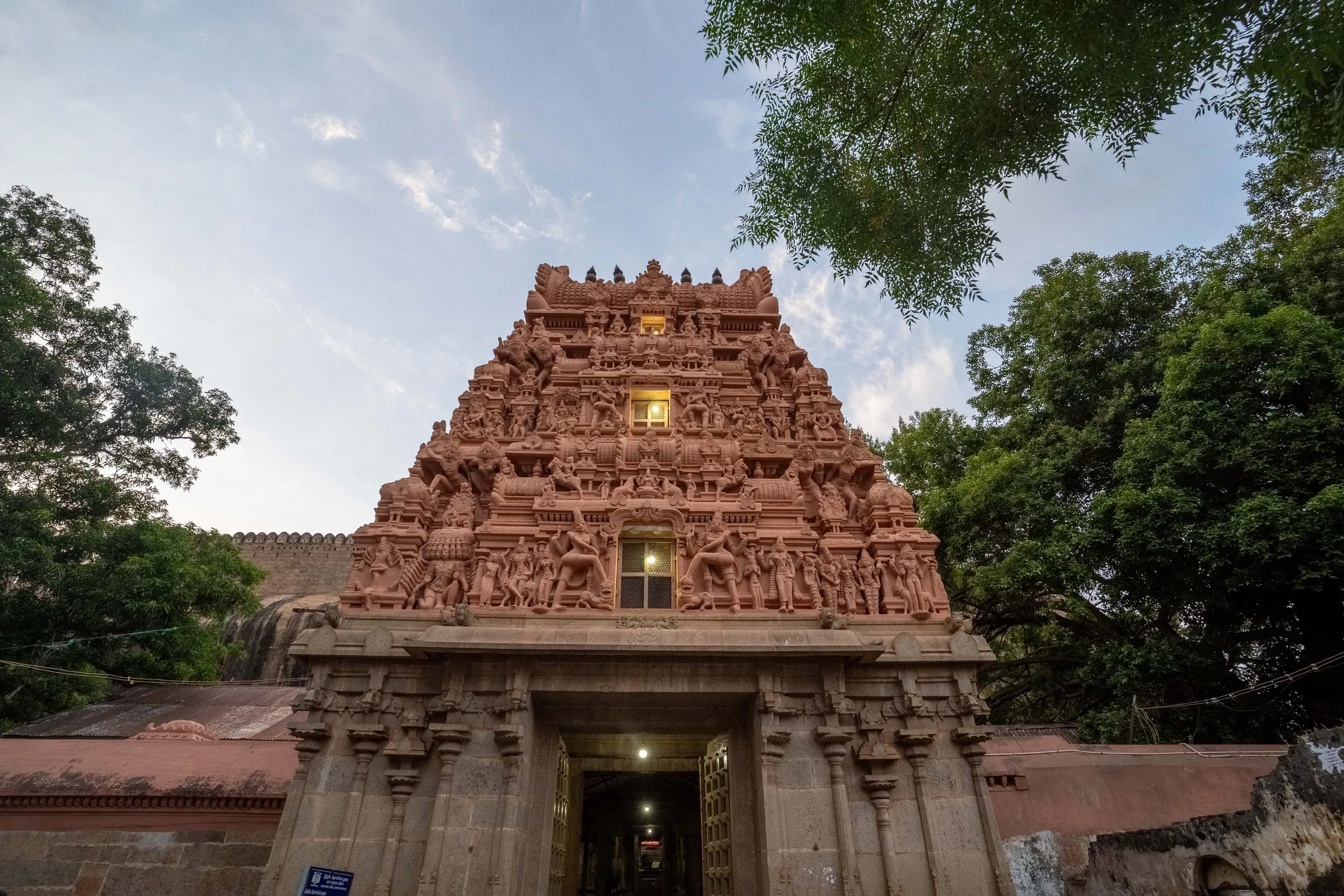
The Sathyagirisvara rock-cut shrine sits above a mandapa, its garbhagriha facing east, a cubical chamber cut into the western wall. The lingam and the yoni within, with Nandi, the Lingothbava and the Dwarapalakas, are all cut from the same rock. The front gopuram is modern but a good imitation of a late Pandya, 13th century, structure; just past it, to the left, is a Ganesha shrine with an ardha-mandapa.
In the Vishnu temple the cave with the reclining Vishnu is the oldest part. Many celestials surround the Lord, including Garuda, Chitragupta, Markandeya, Brahma, the Devas, the Vasus and the Kinnaras; near the eastern wall are the two demons Madhu and Kaithabha, and sheltered near the Lord's feet is Bhumi-Devi, the Earth Goddess.
02 Archaeological
dated & cited Tirumeyyam formed part of the territories of the imperial Cholas. In the 12th and 13th centuries the Hoysalas ruled here, first as allies of the Cholas and later of the Pandyas. There are also inscriptions of the Pandyas, the Vijayanagara, and the Sethupathis of Ramanad.
The Śiva rock-cut temple is the earliest monument at Tirumeyyam, attributable to the 7th century AD from its architectural style and epigraphs, in the same way as the cave temples of Kudumiyamalai. On the northern wall of the inner mandapa are obliterated musical inscriptions and the famous Appanna Danda-nayaka tribunal verdict, one of the largest inscriptions in South India, recording the settlement of a long dispute between the trustees of the Śiva and Vishnu temples over the share of the produce of the temple lands, the tribunal presided over by the Hoysala general Appanna Dandanayaka.
Dating
Begun7th century CE · Śiva cave, inferred from style and epigraphs
The Śiva rock-cut temple is the earliest monument here, attributed to the 7th century from its style and inscriptions, as with the cave temples of Kudumiyamalai. The Vishnu cave with the reclining figure is the oldest part of that temple.
Inscription · Northern wall of the inner mandapa, Sathyagirisvara temple
The Appanna Danda-nayaka verdict, one of the largest inscriptions in South India, records the settlement of a long-standing dispute between the trustees of the Śiva and Vishnu temples over the share of the produce of the temple lands. The special tribunal was presided over by the Hoysala general Appanna Dandanayaka, on his return from a victorious march to Rameswaram.
03 Mythological
as transmitted The name Tirumeyyam derives from Thiru-meyyam, the place of truth in Tamil. It is from satya-kshetra, the field of truth, that the two deities take their names. Sathyamurthi Perumal and his presiding deity were praised by Thirumangai Alvar, who sings of the Lord who stays in the Tirumeyyam hills carrying a conch, dark as the ocean and the rain cloud, and of how hands that have not worshipped him are not truly hands.
An unauthenticated tradition holds that at the time of the Poligar War of 1799 the famous Kattabomman and his brother took refuge in the jungles of the Tondaiman territory near Thirukkalambur, were captured, and were long imprisoned in the Tirumeyyam fort.