Architectural
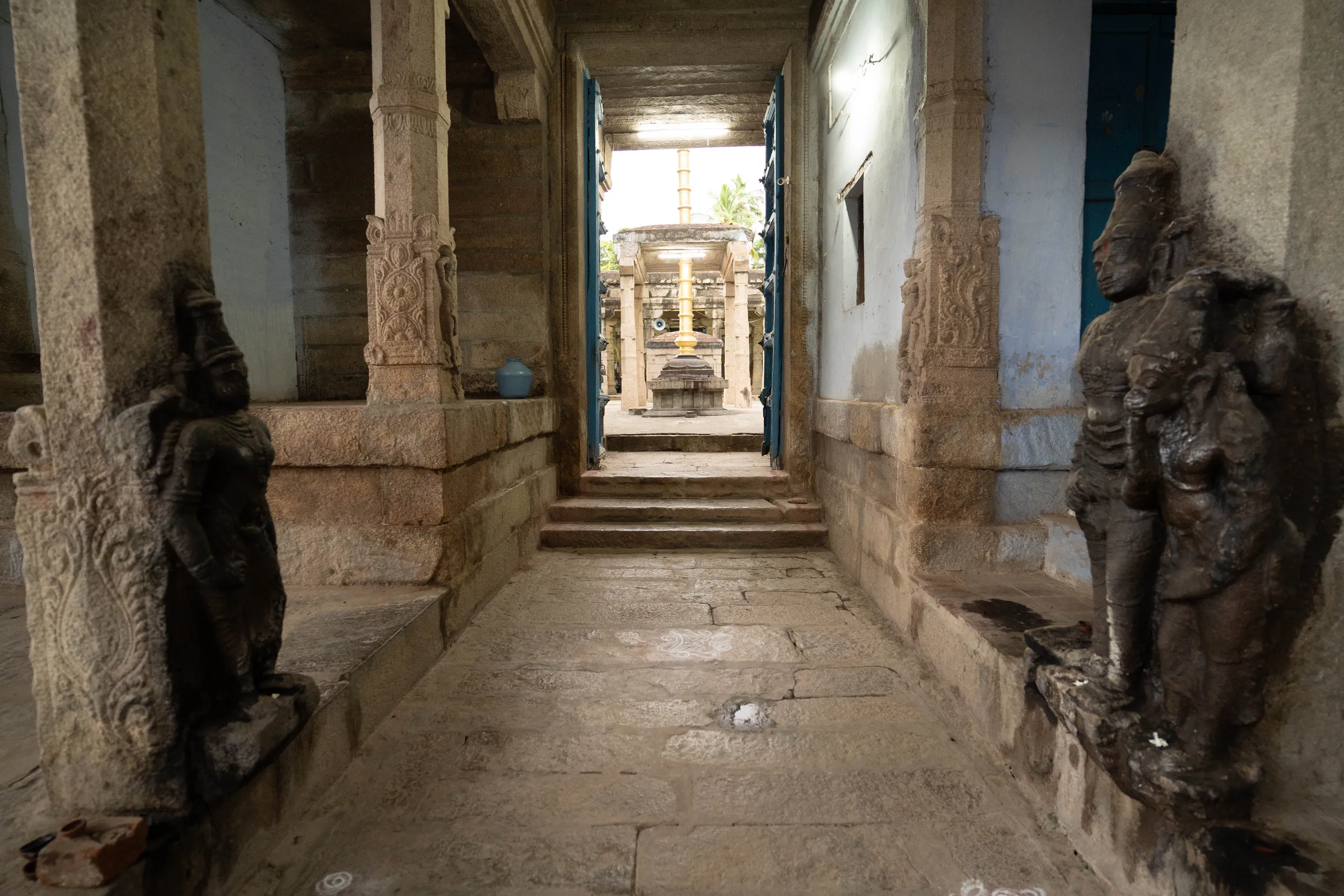
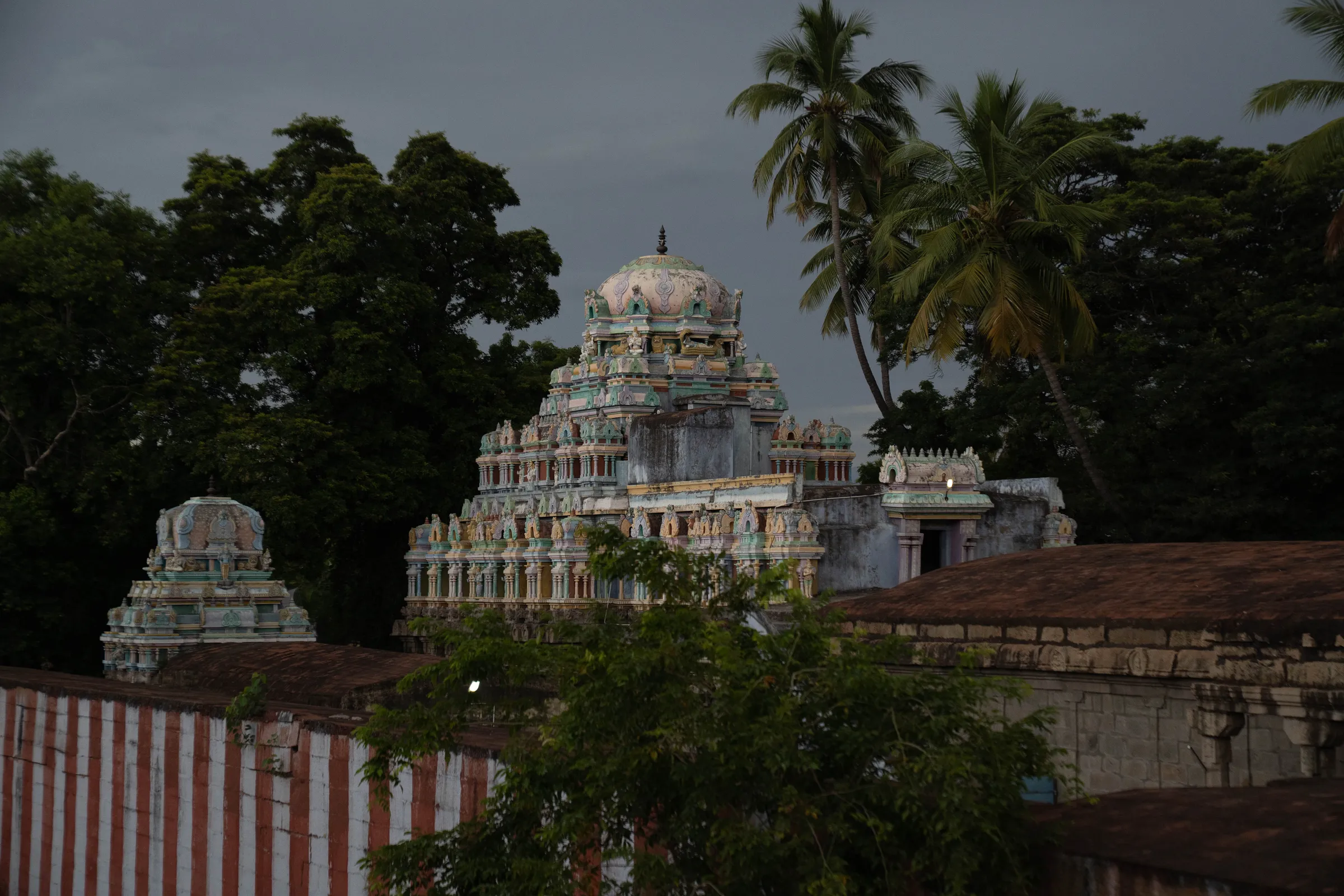
structure & vocabularyThe temple is one of the three-storeyed Vishnu shrines called Ashtanga Vimana, most of which are found in the Pandya region, alongside Tirukoshtiyur, Madurai, Mannar Koil and others. The entrance carries a sculpture of Rama placing his hand on Hanuman; to the right is a later Hanuman shrine. In front is a carved mandapa with many yali sculptures, its lintels bearing scenes from the lives of Krishna and Rama, with monkeys carved on the eave.
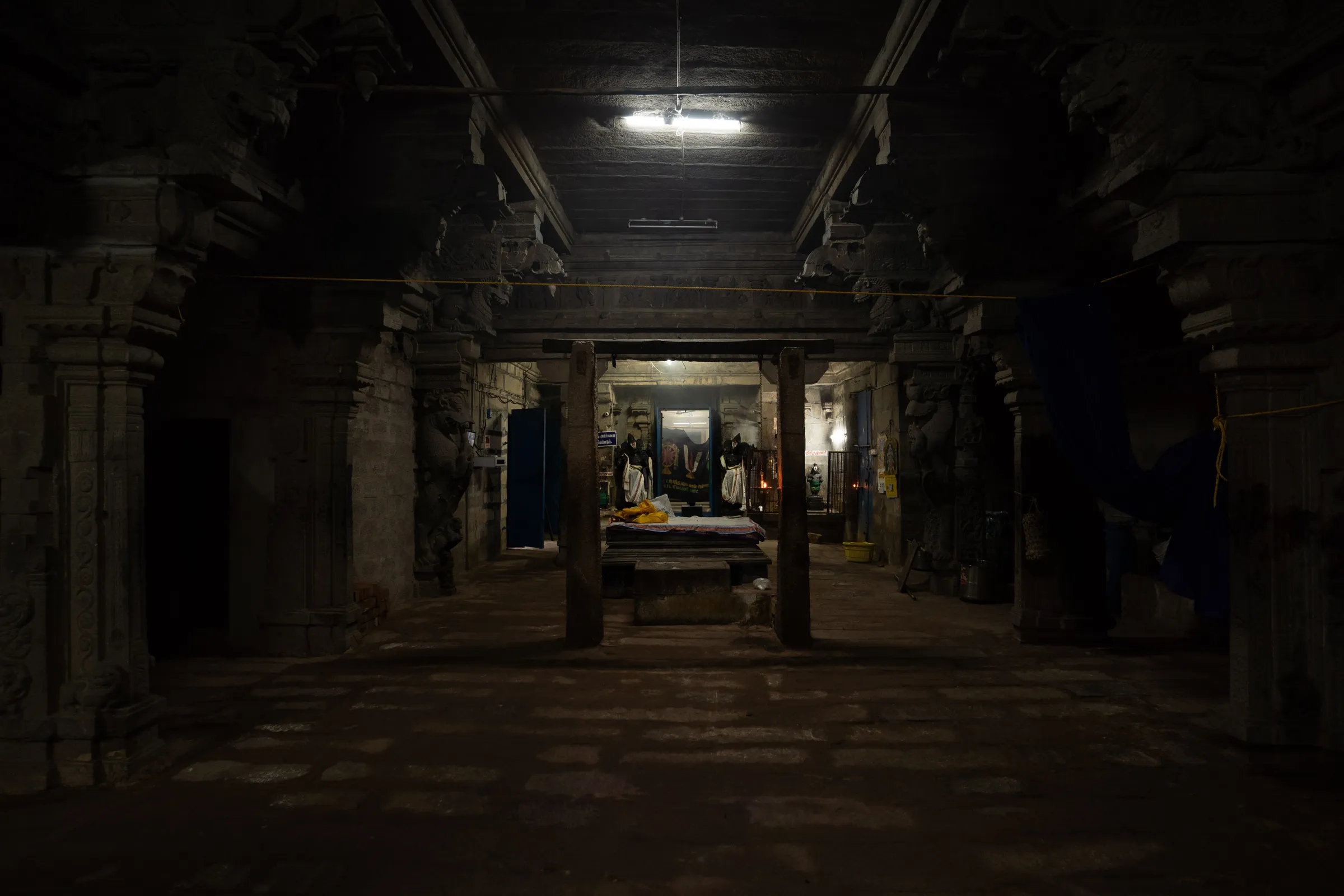
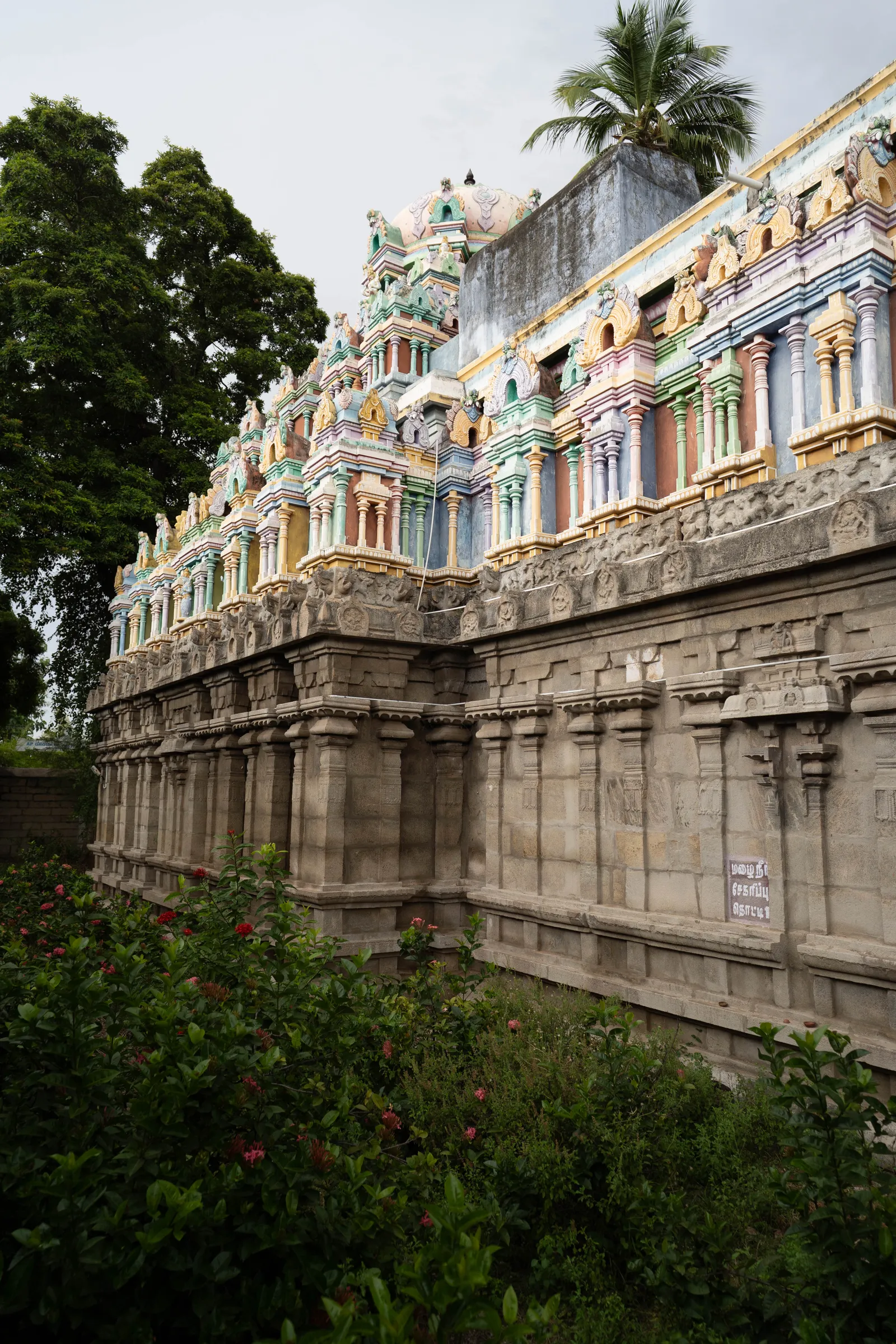
Inside the long maha mandapa, two cut-stone windows carry the chakra and shanka, and a carved wooden mandapa stands at the centre. Behind are two large later-Pandya Dwarapalakas. Beyond them is the Rama group, made in the 13th century to Chola design, the main shrine for a standing Vishnu. The main deities are on this level; the two levels above are of stucco, in poor shape but slightly restored. Many wall paintings have been damaged or badly repainted. The climb to the first floor is easy and to the second harder, but the view of the deities rewards the effort.