
Rajagopalaswamy Temple, photograph
← Pandya Nadu
Entry 082

Rajagopalaswamy Temple

Mannarkoil · Tirunelveli · Chōḷa (built by a Chera subordinate)

A three-storeyed Vishnu temple at Mannarkoil on the Ghatana river, the rare Ashtanga vimāna form, whose inscribed walls record a medieval village's self-rule.

At Mannarkoil on the banks of the Ghatana, this Vishnu temple was raised in the early 11th century as the Rajendra Vinnagar, named for Rājendra Chōḷa I and built by a Chera subordinate of the Chōḷas. Its rare three-storeyed Ashtanga vimāna holds images of Vishnu seated, standing and reclining, and its inscribed walls preserve a remarkably full record of a medieval village governing itself through the temple.

The photographs

Plates · 13

Rajagopalaswamy Temple, photograph
© Sai Sanjay Prasath · All rights reserved
Rajagopalaswamy Temple, photograph
© Sai Sanjay Prasath · All rights reserved
Rajagopalaswamy Temple, photograph
© Sai Sanjay Prasath · All rights reserved
Rajagopalaswamy Temple, photograph
© Sai Sanjay Prasath · All rights reserved
Rajagopalaswamy Temple, photograph
© Sai Sanjay Prasath · All rights reserved
Rajagopalaswamy Temple, photograph
© Sai Sanjay Prasath · All rights reserved
Rajagopalaswamy Temple, photograph
© Sai Sanjay Prasath · All rights reserved
Rajagopalaswamy Temple, photograph
© Sai Sanjay Prasath · All rights reserved
Rajagopalaswamy Temple, photograph
© Sai Sanjay Prasath · All rights reserved
Rajagopalaswamy Temple, photograph
© Sai Sanjay Prasath · All rights reserved
Rajagopalaswamy Temple, photograph
© Sai Sanjay Prasath · All rights reserved
Rajagopalaswamy Temple, photograph
© Sai Sanjay Prasath · All rights reserved
01

Architectural

structure & vocabulary

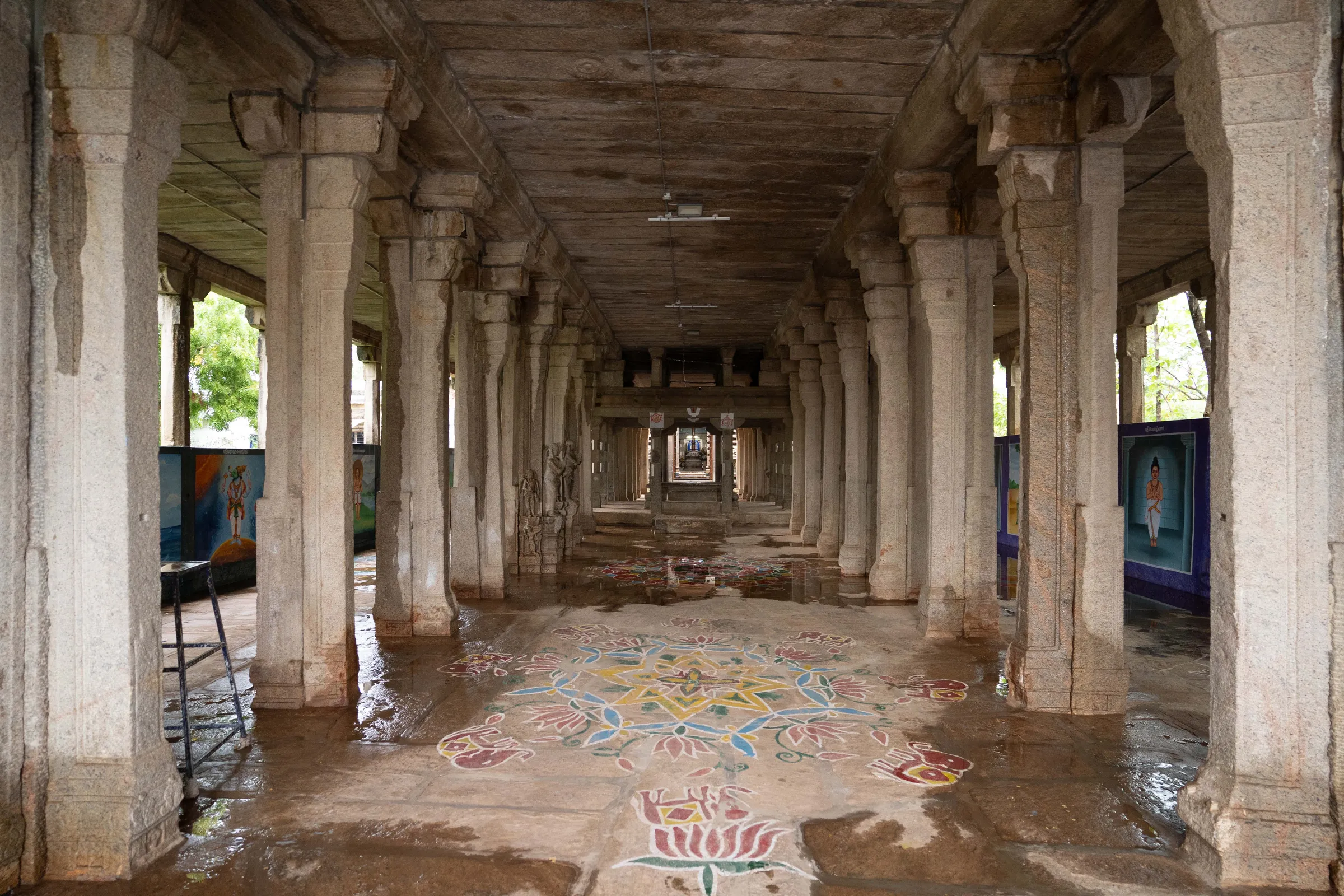
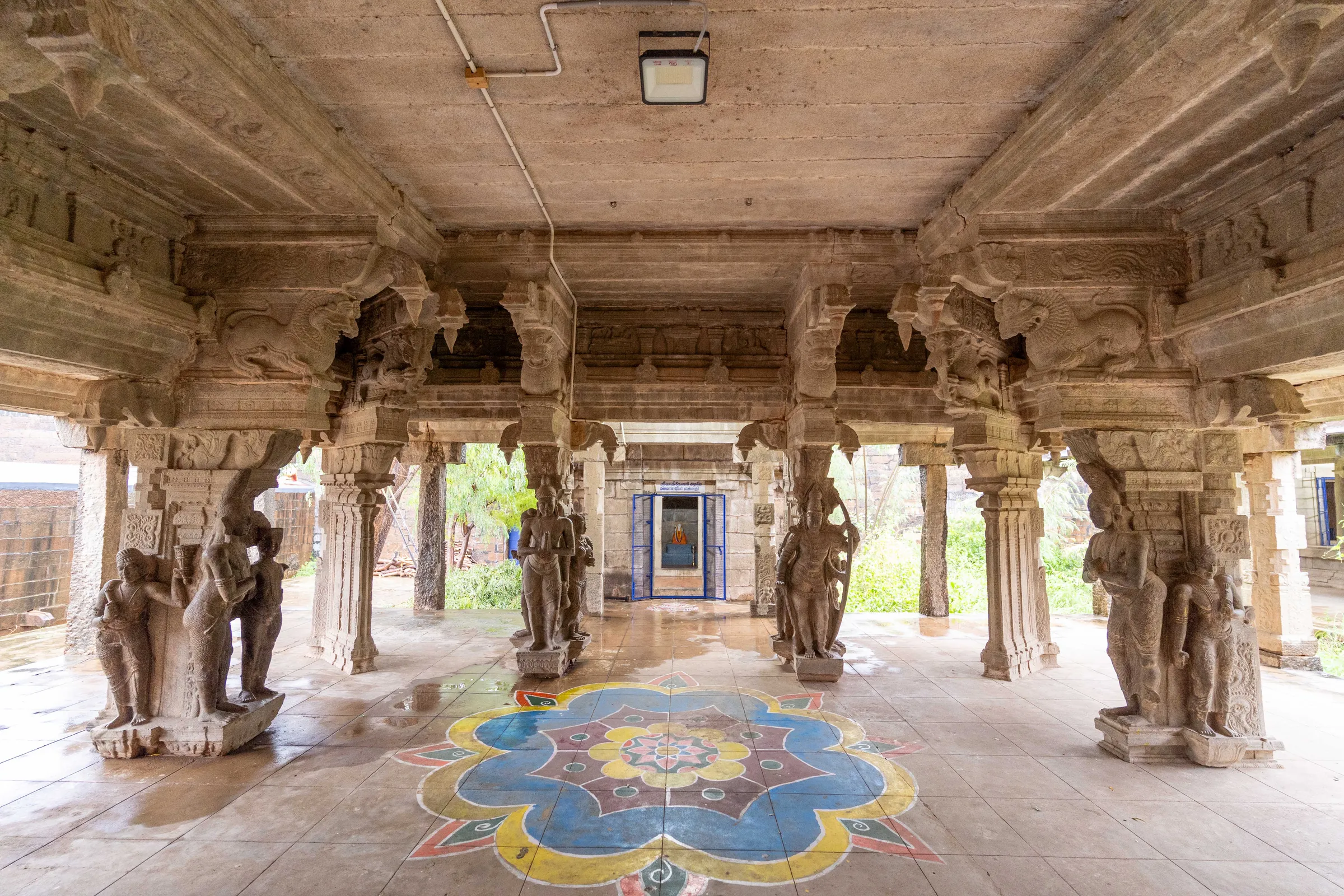
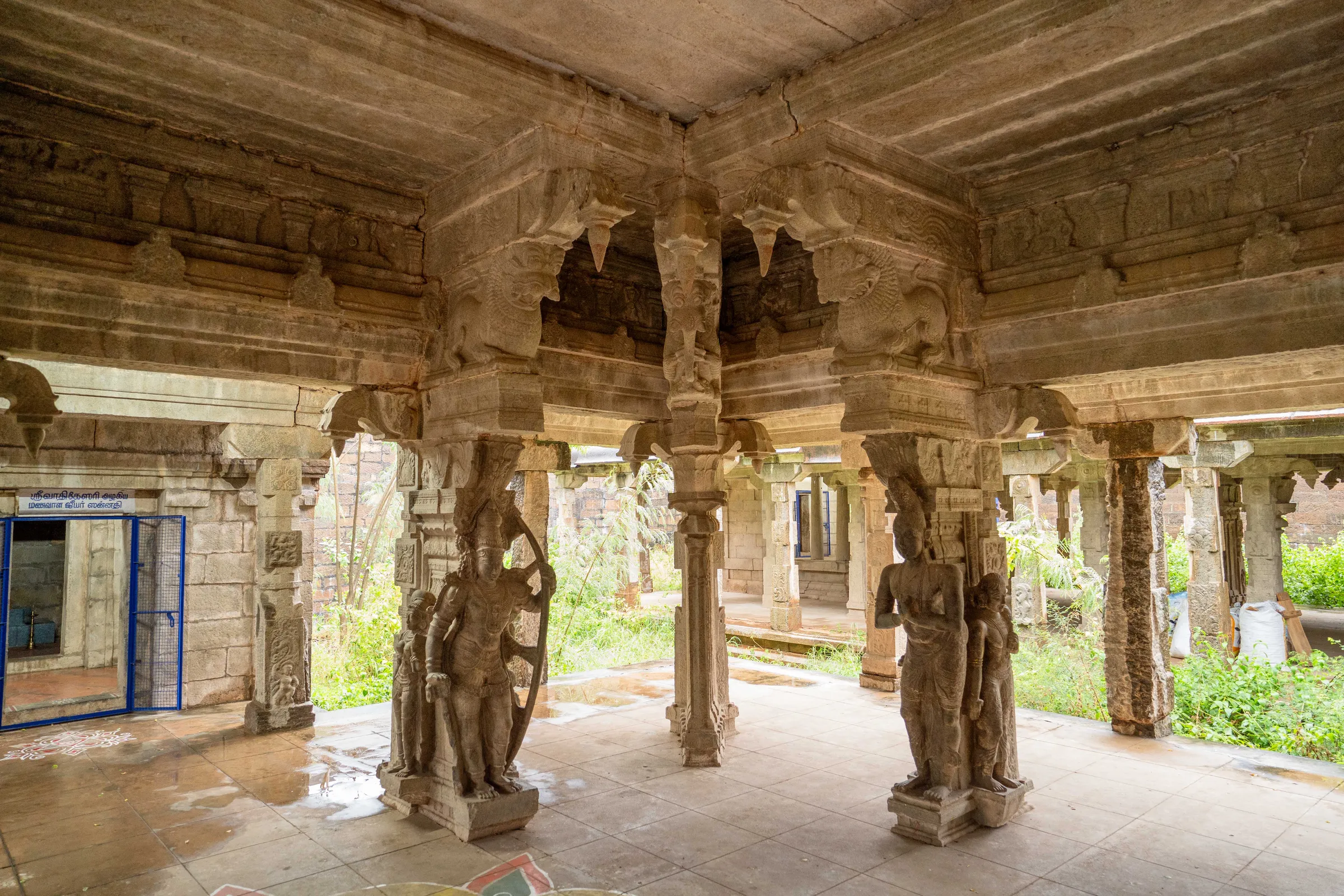
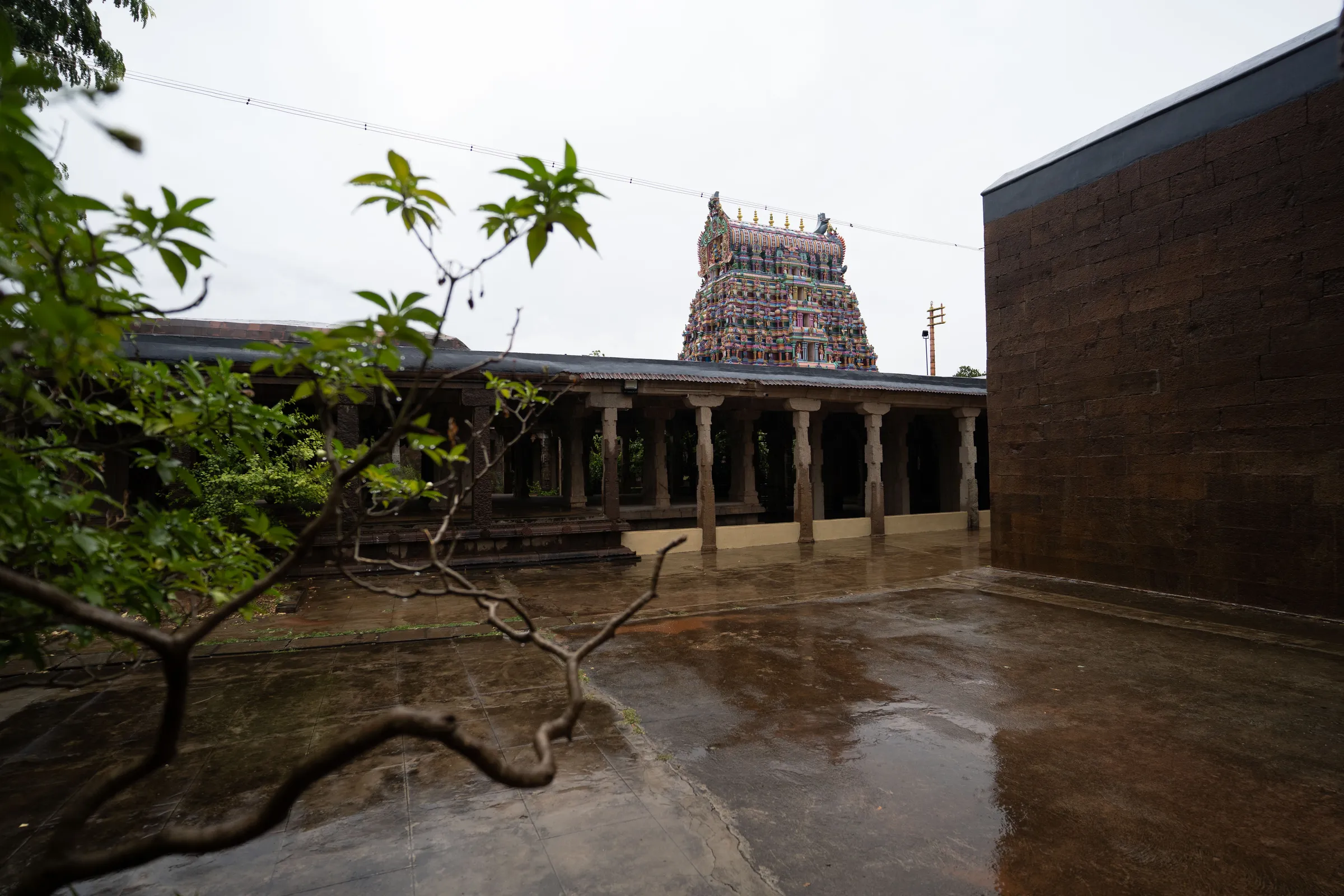
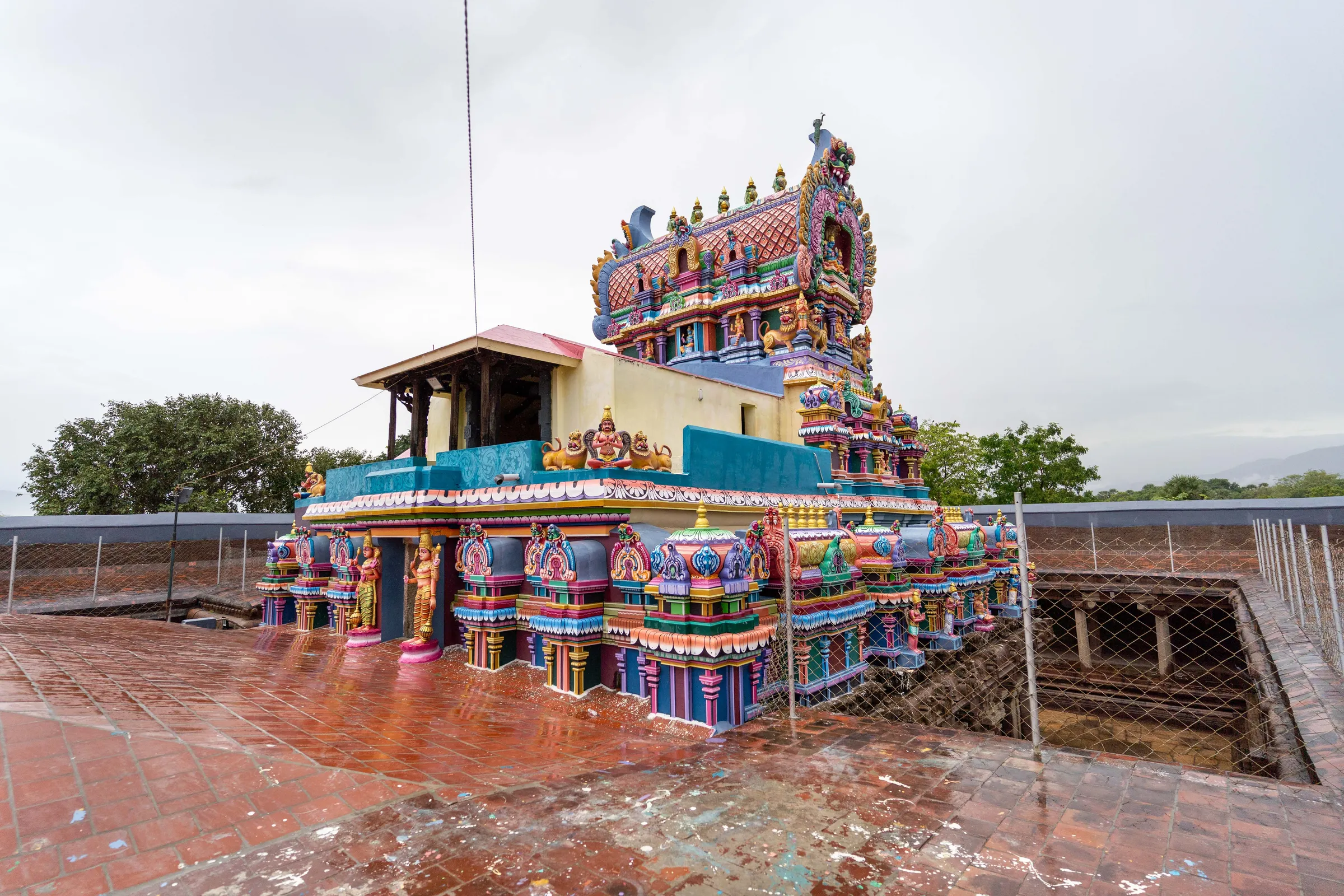
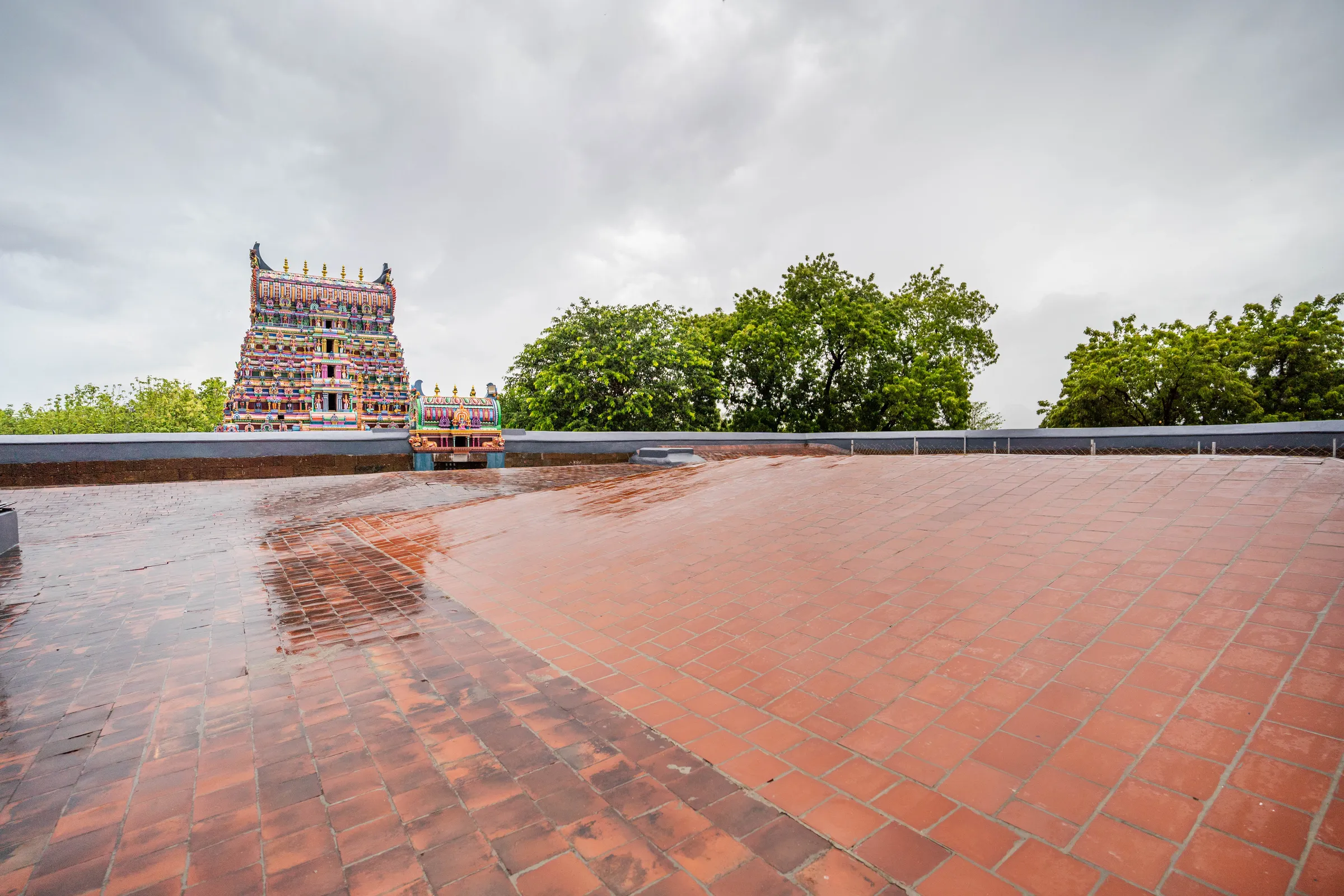
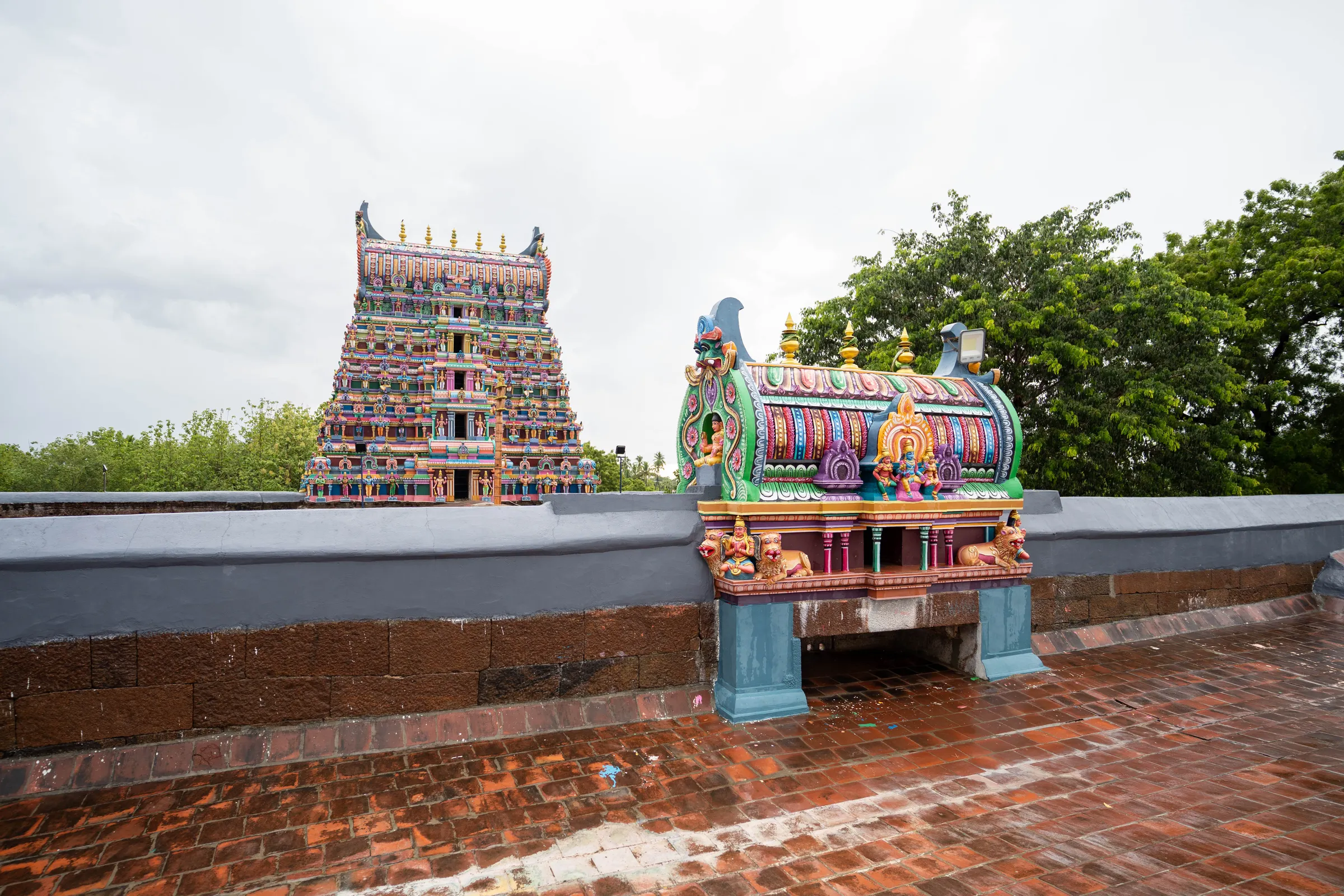
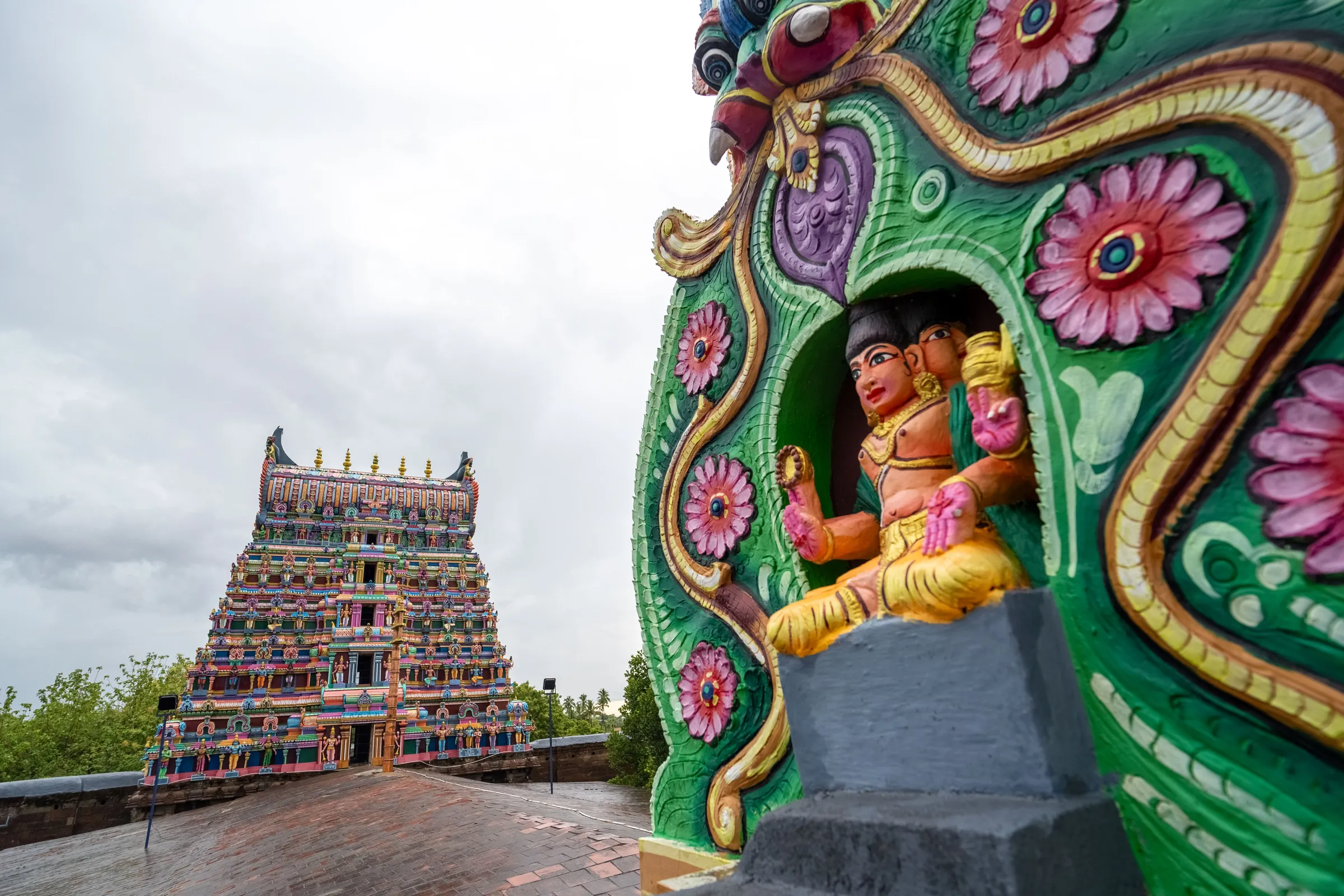
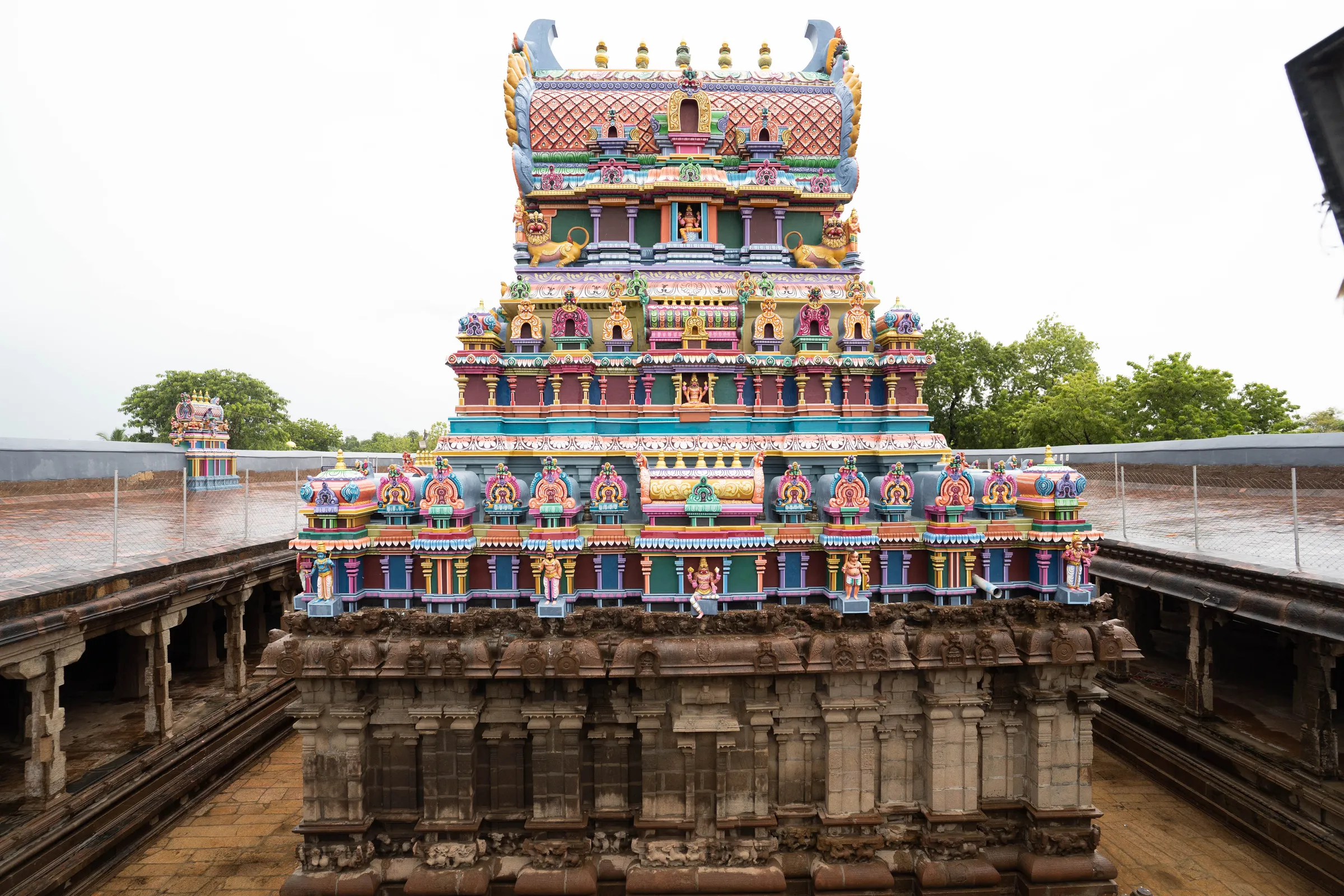
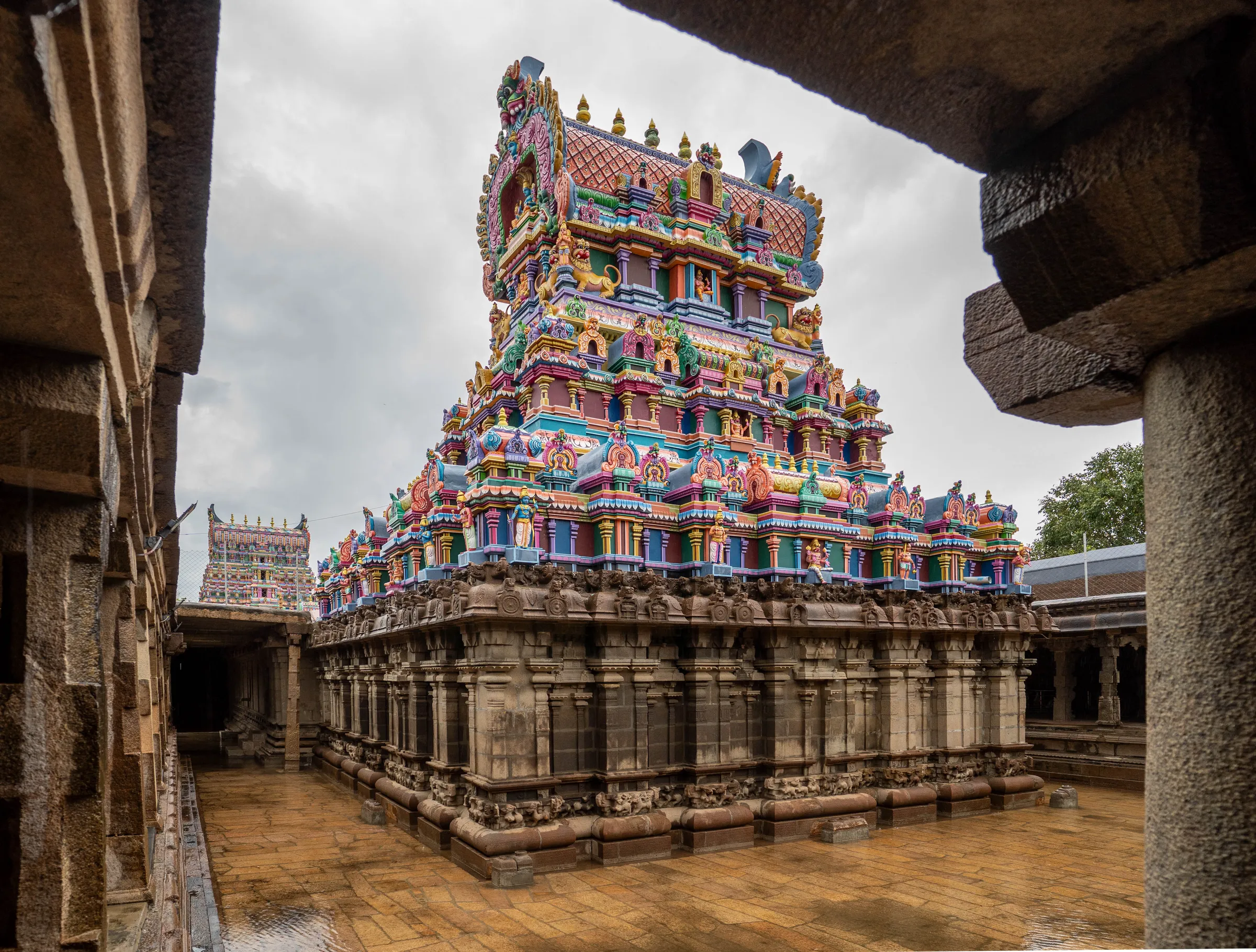
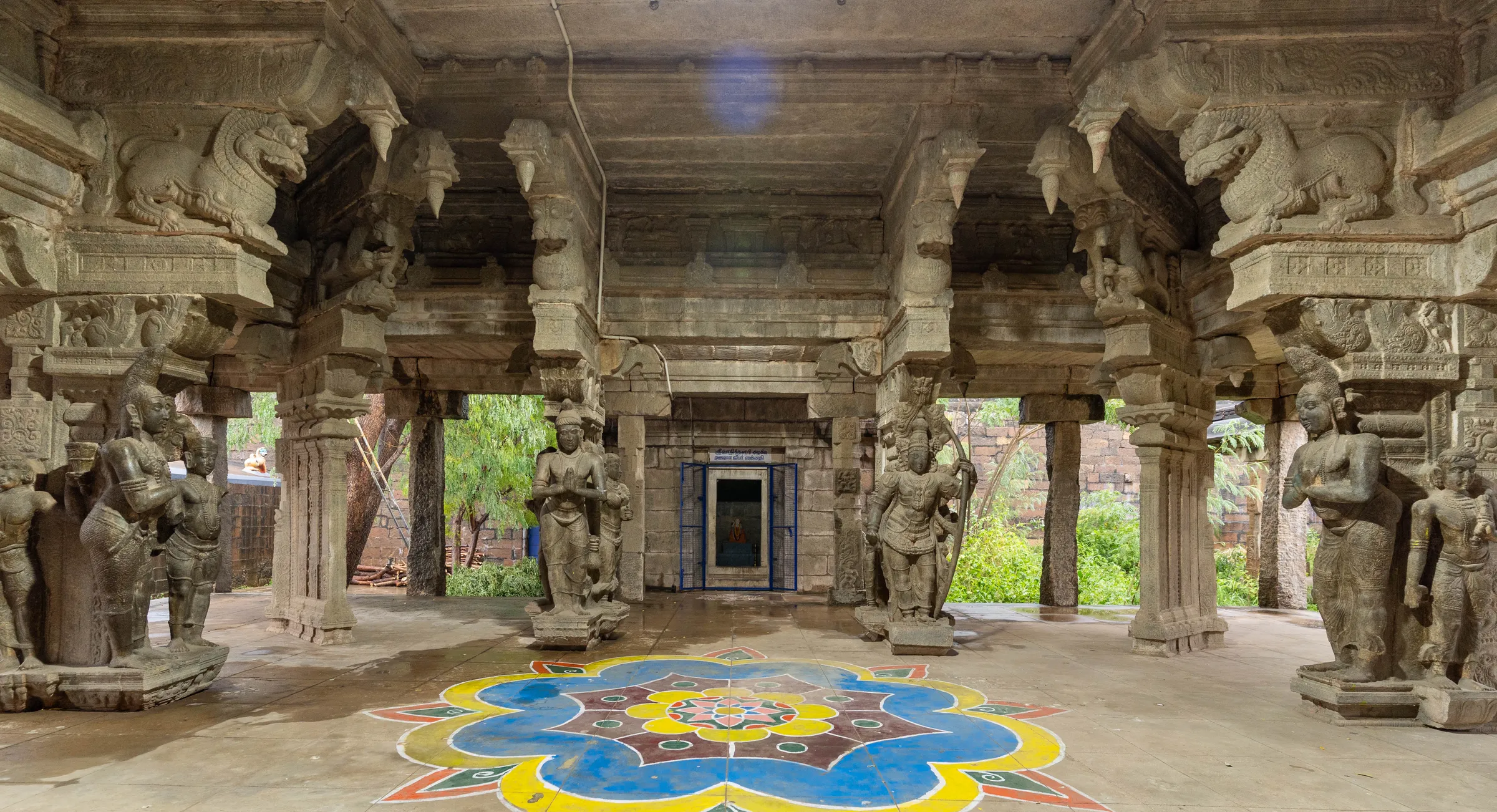
The complex spreads across three acres and is entered by an impressive gopuram. Within a pillared hall stands the central shrine, raised over ground, first and second floors; each floor holds a sanctum with a stucco image of Vishnu, seated, standing or reclining. Such three-storeyed Ashtanga vimāna temples are rare.

The temple holds rare works in metal and wood. The Sesha vahana is a single cast bronze disc in the form of a Tree of Life, locally called a Jedi, filled with animals of remarkable realism. Adjoining the Tiruvaimozhi maṇḍapa is a grand door of finely carved wooden panels. Close by is the resting place of Kulasekhara Alwar, the Kerala king who composed the Perumal Tirumozhi, from the early-13th-century Pandya period.

02

Archaeological

dated & cited

The book gives the deity as Vishnu as Veda Narayana and the 11th-century name as Rajendra Vinnagar, after the Chōḷa king Rājendra I (1014 to 1044), built by a Chera king subordinate to the Chōḷas. From its inscriptions it places construction in the early 11th century, with Pandya additions in the early 13th century.

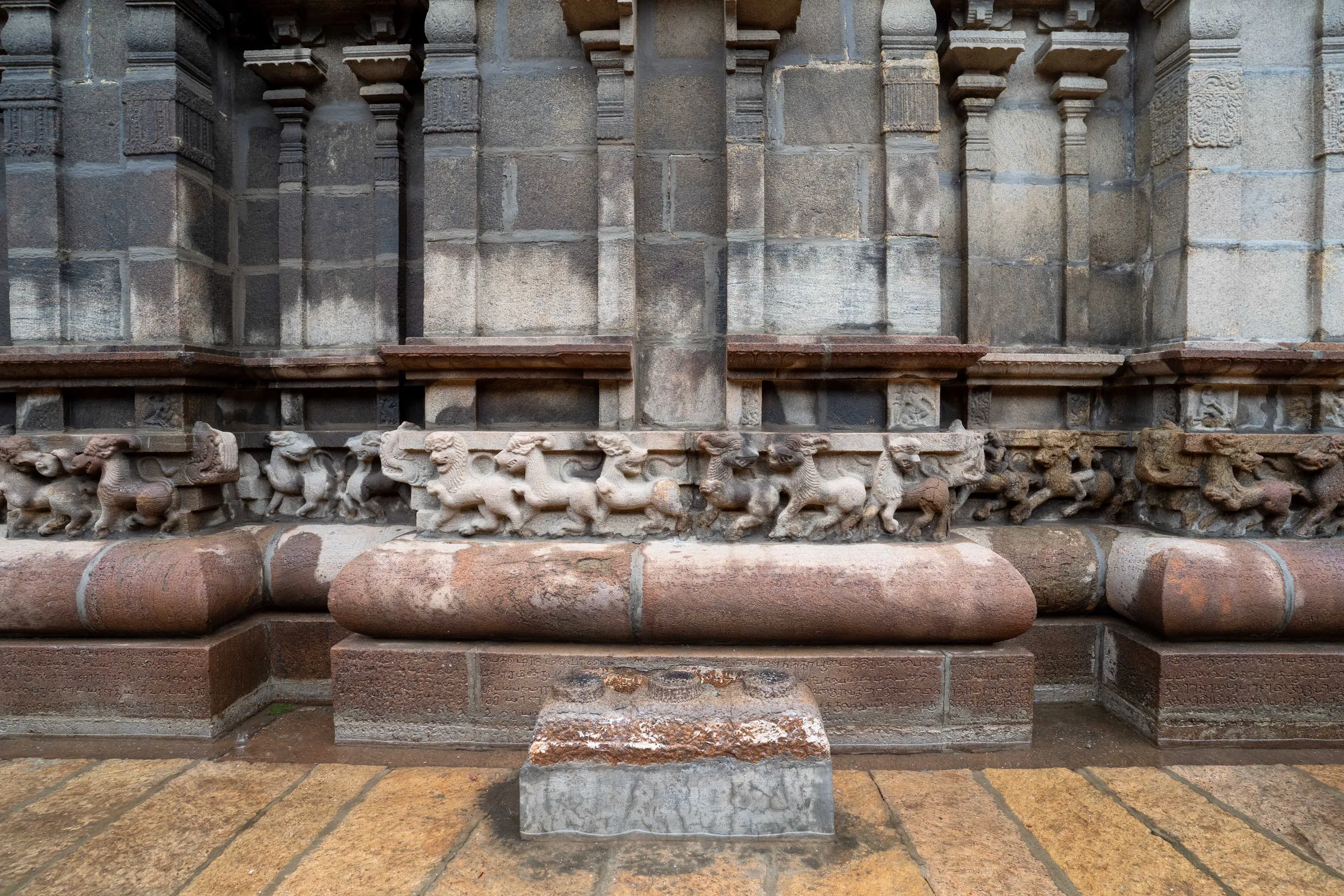
The walls record the temple's society in detail. Land transactions ran through the temple's Mahasabha, an assembly with representatives from each of twelve Ceri, elected by local landowners rather than nominated by the king. A record of 1024 CE lists the temple's gardeners, pipers, labourers, shepherds and dancing women, or Devaradiar. Inscriptions show tax-free temple land, Pandya viceroys issuing orders under Chōḷa rule, a boundary dispute settled on documentary proof, and a 1221 CE agreement on careful sharing of irrigation water. A later Chera record of 1523 notes the appointment of dancing girls. The book cites Tirumalai 1980.

Dating
Begunearly 11th century · inferred from inscriptions

The 11th-century name was Rajendra Vinnagar, after Rājendra I (1014 to 1044). Pandya additions were made in the early 13th century.

03

Mythological

as transmitted

Today the Garuda shrine outside the walls is held very powerful; many come there to make a vow and break a coconut when it is fulfilled.

Sources
  • Tirumalai (1980)
Register interest in prints Buy the book
Improve this entry

This is an open, reviewed record. If you have spotted an error or have something to add — a correction, a date, a source, a name in another script — propose it. Every change is reviewed before it joins the record.

“Suggest an edit” opens this entry on GitHub and turns your change into a pull request. “Share feedback” opens a short form. Both go through review.