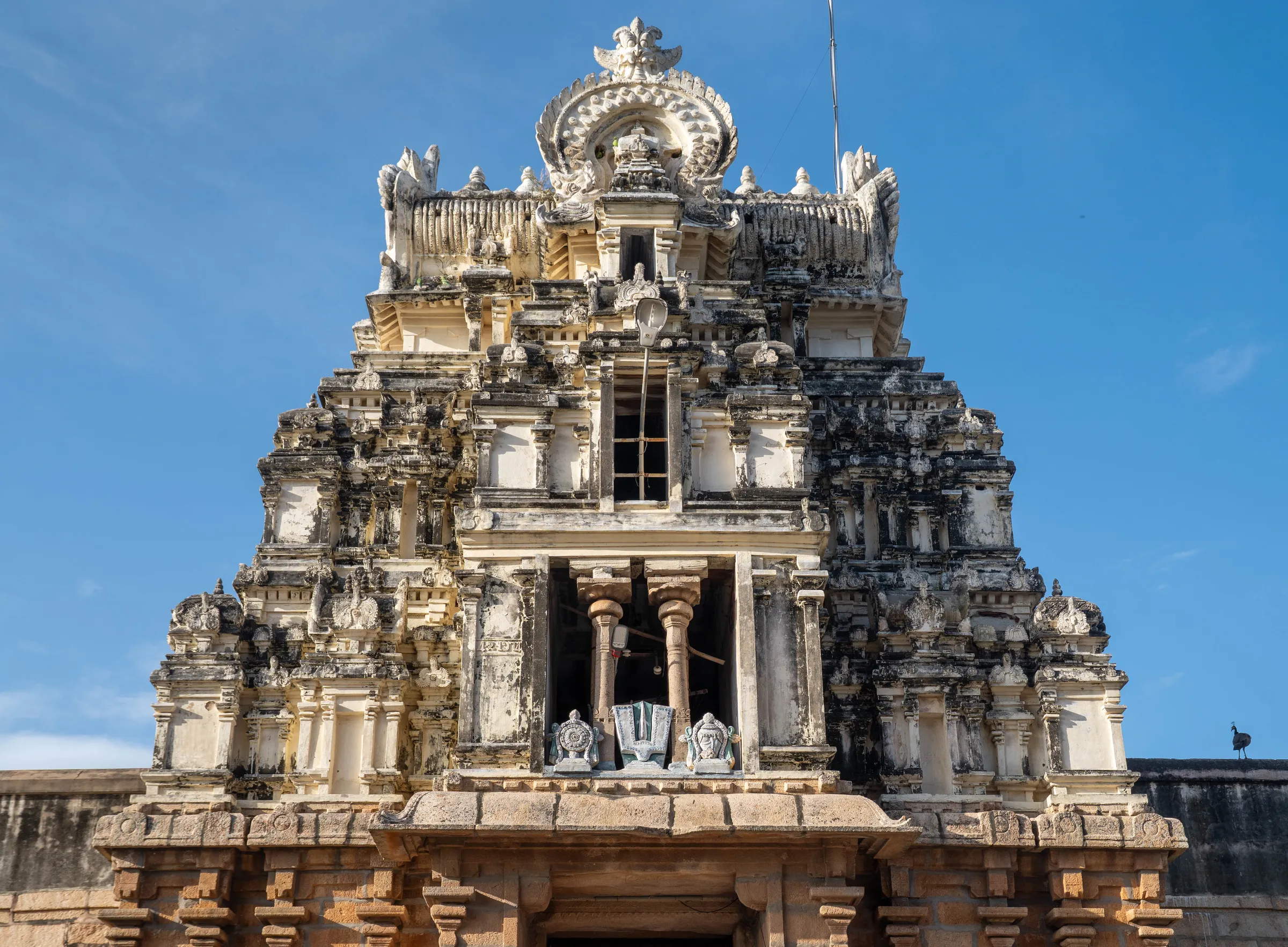
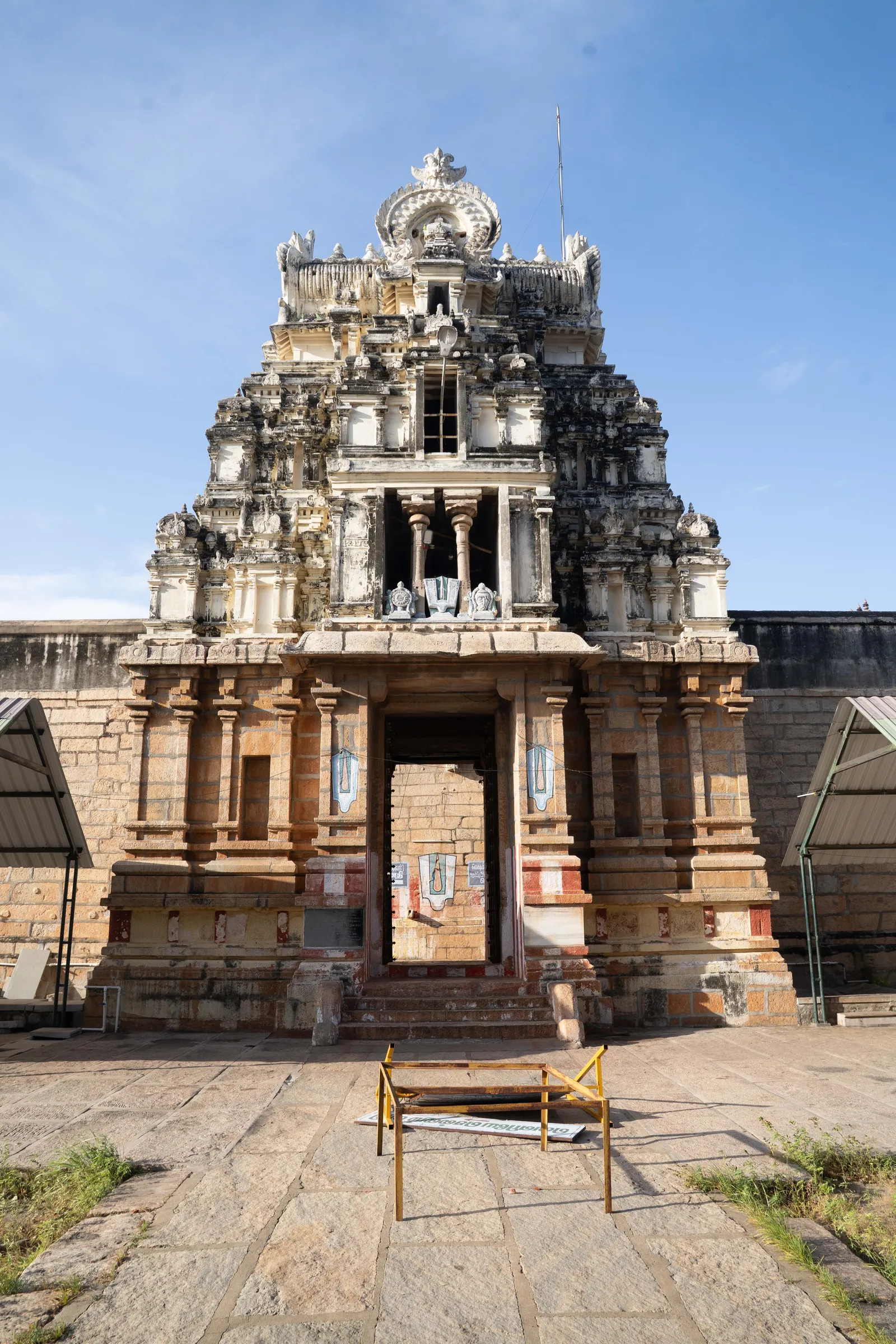
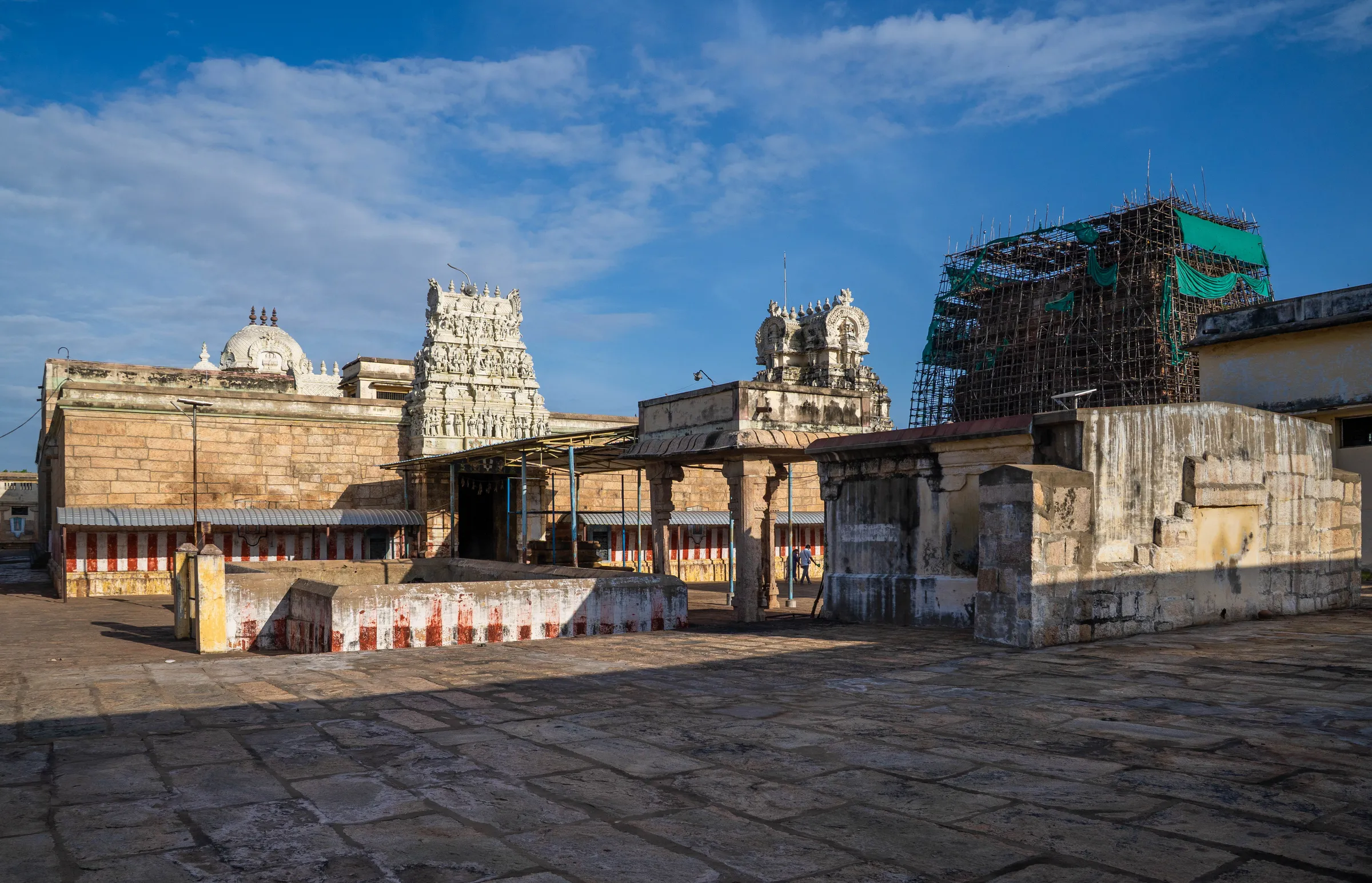
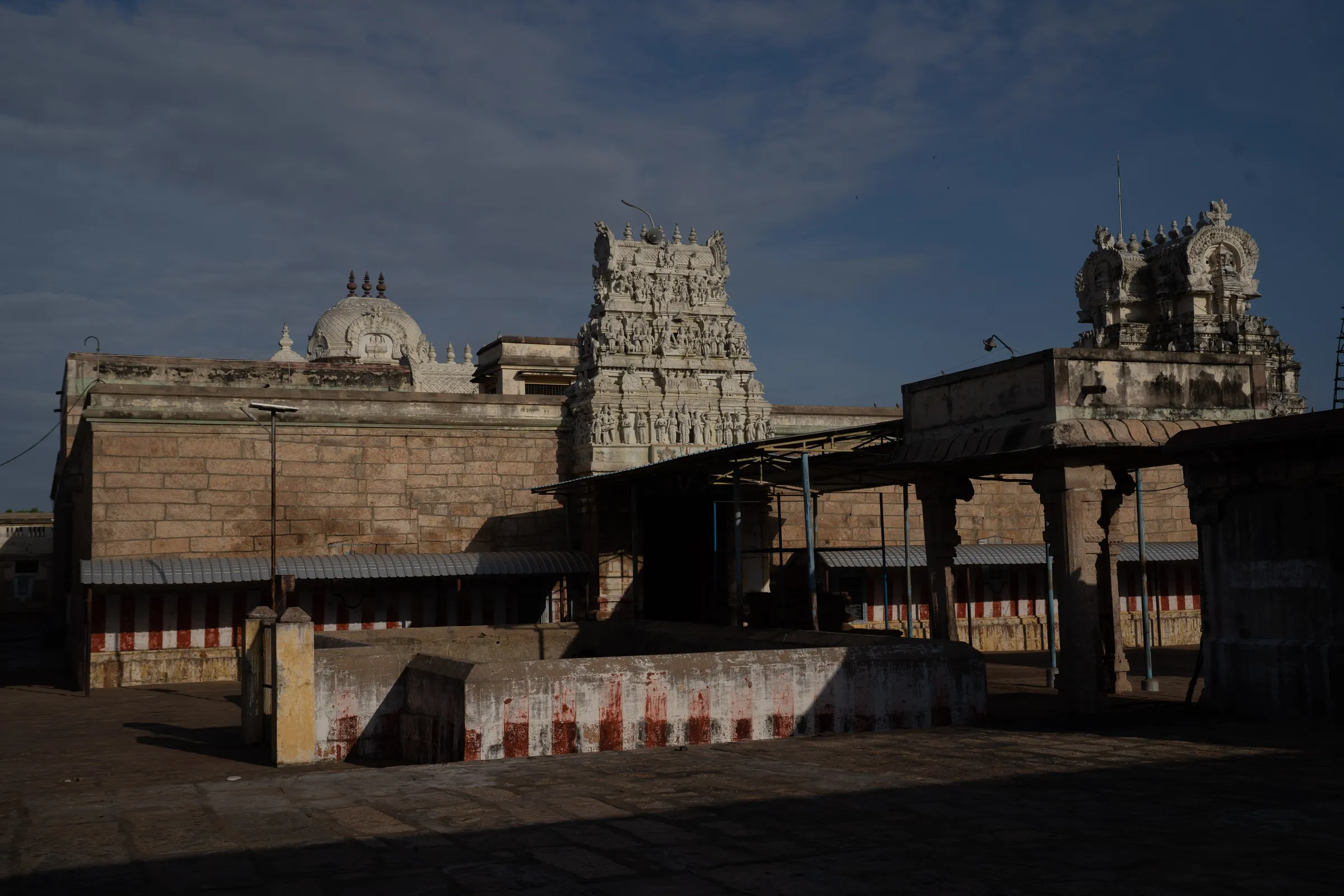
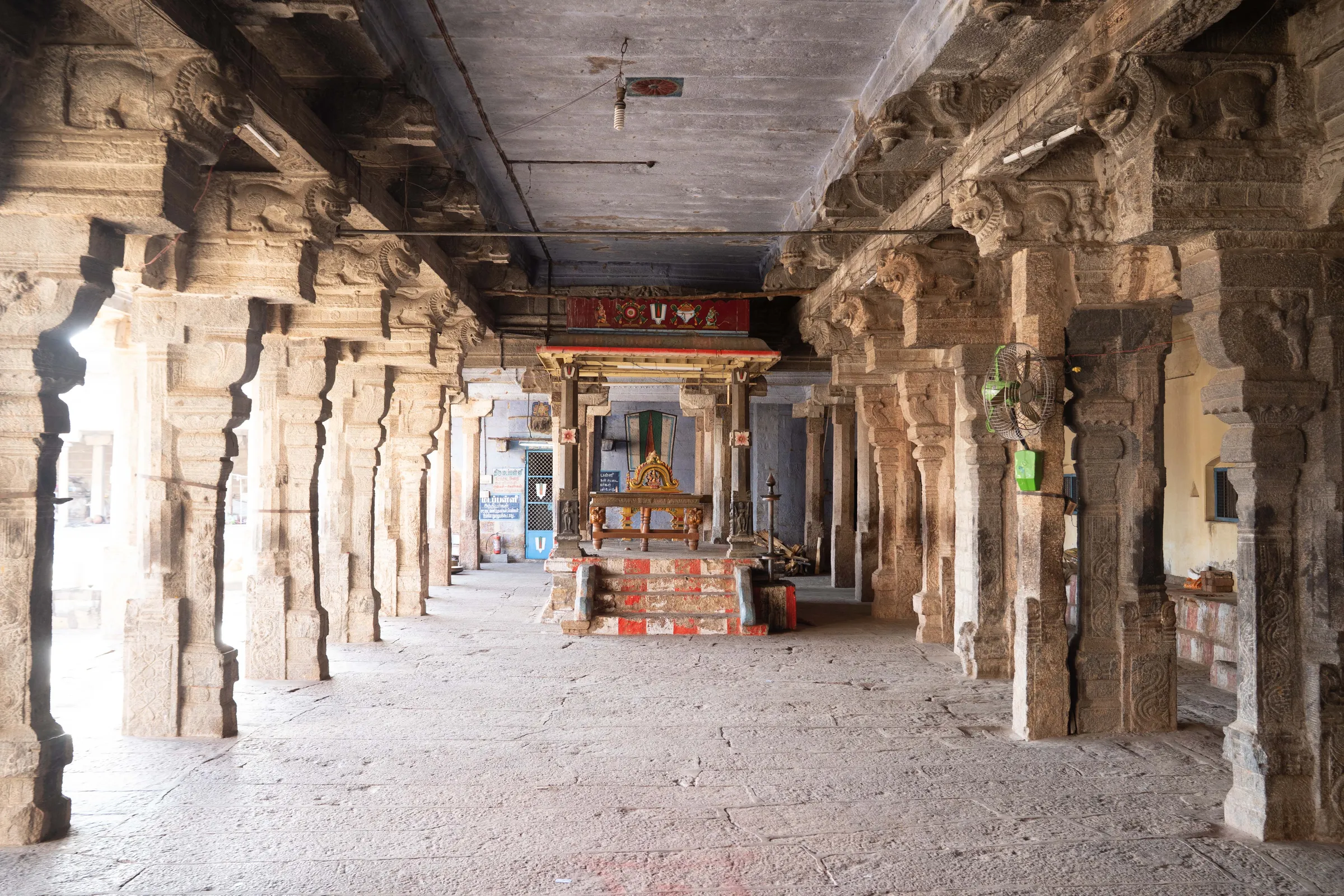
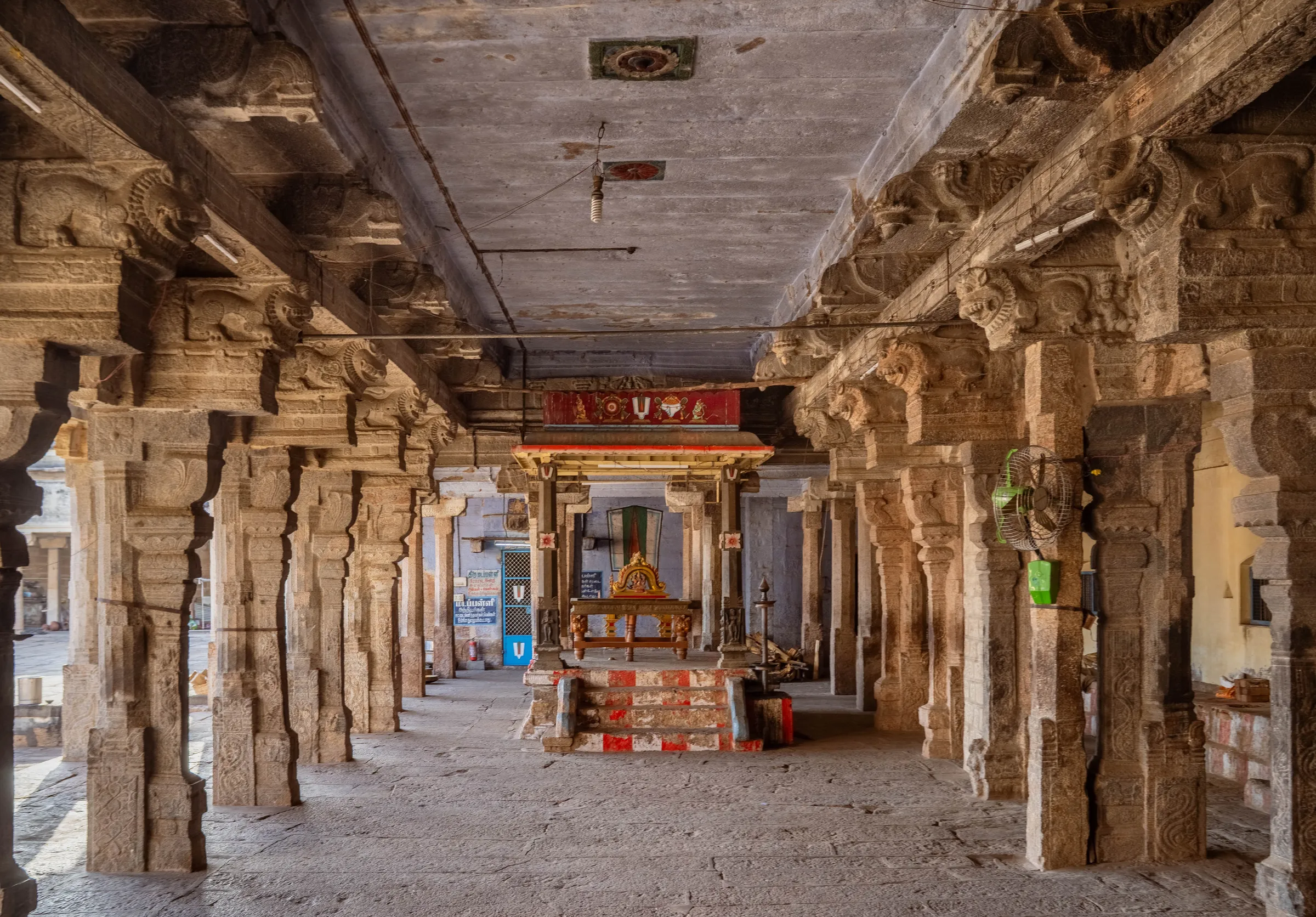
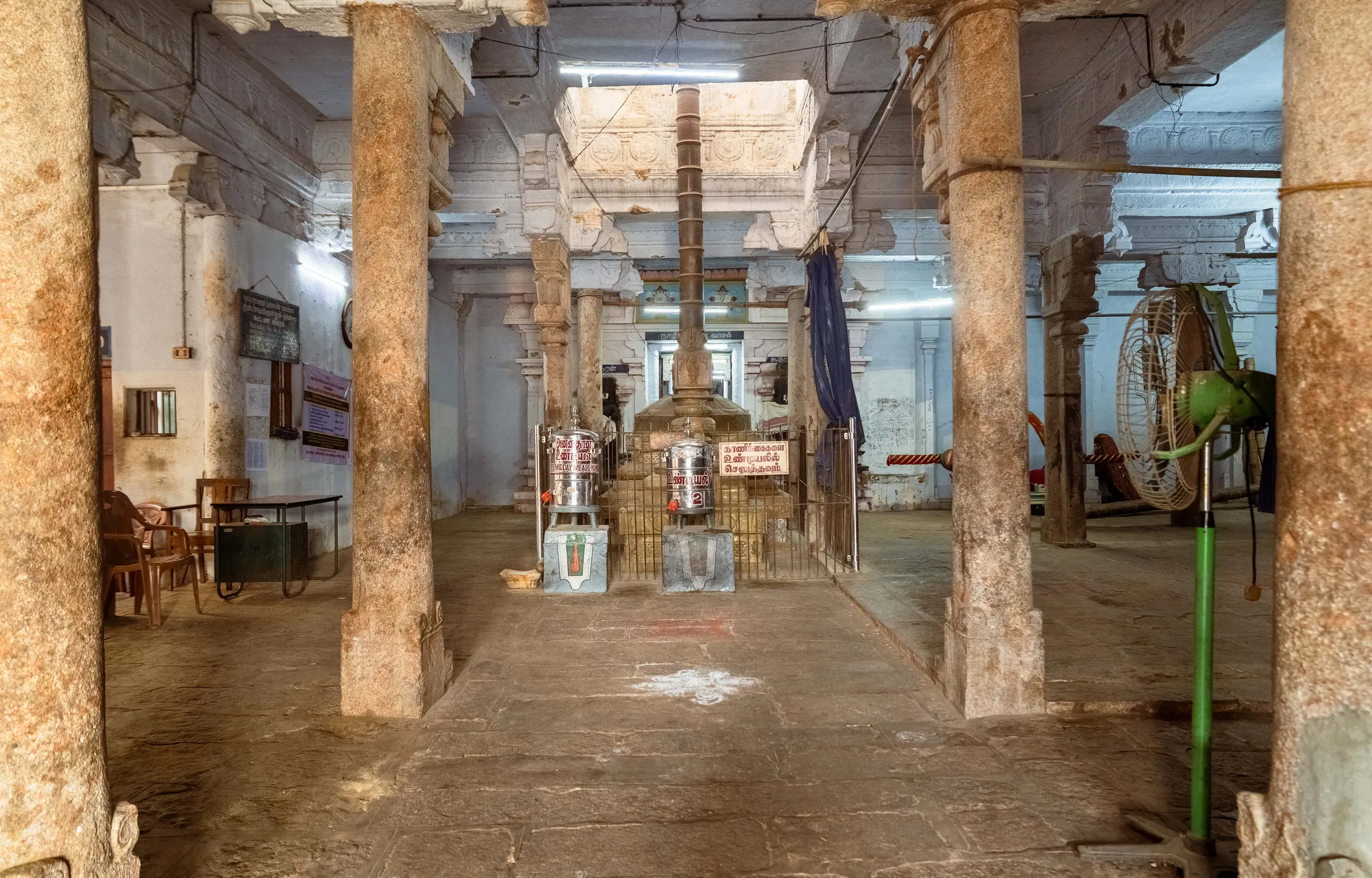
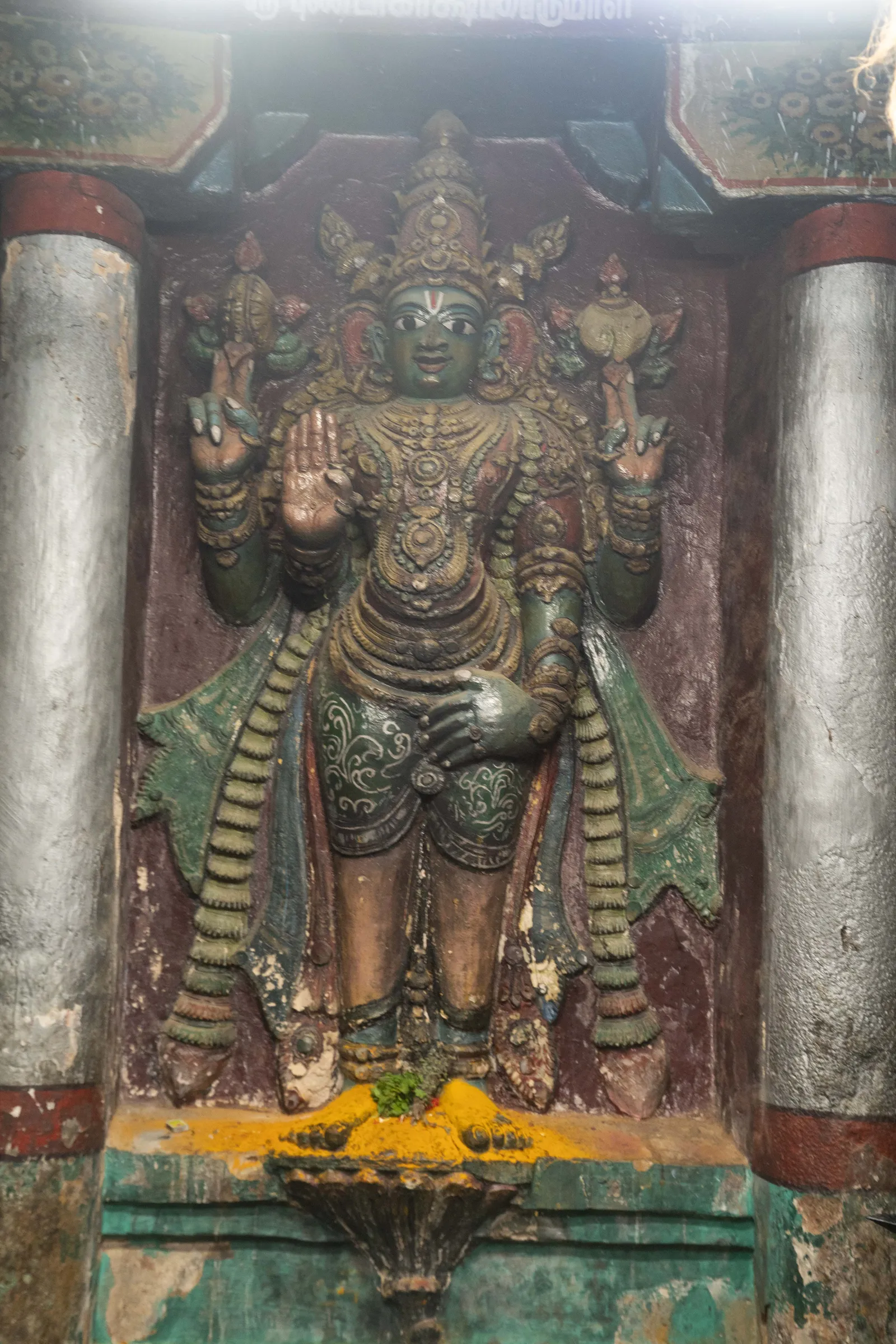
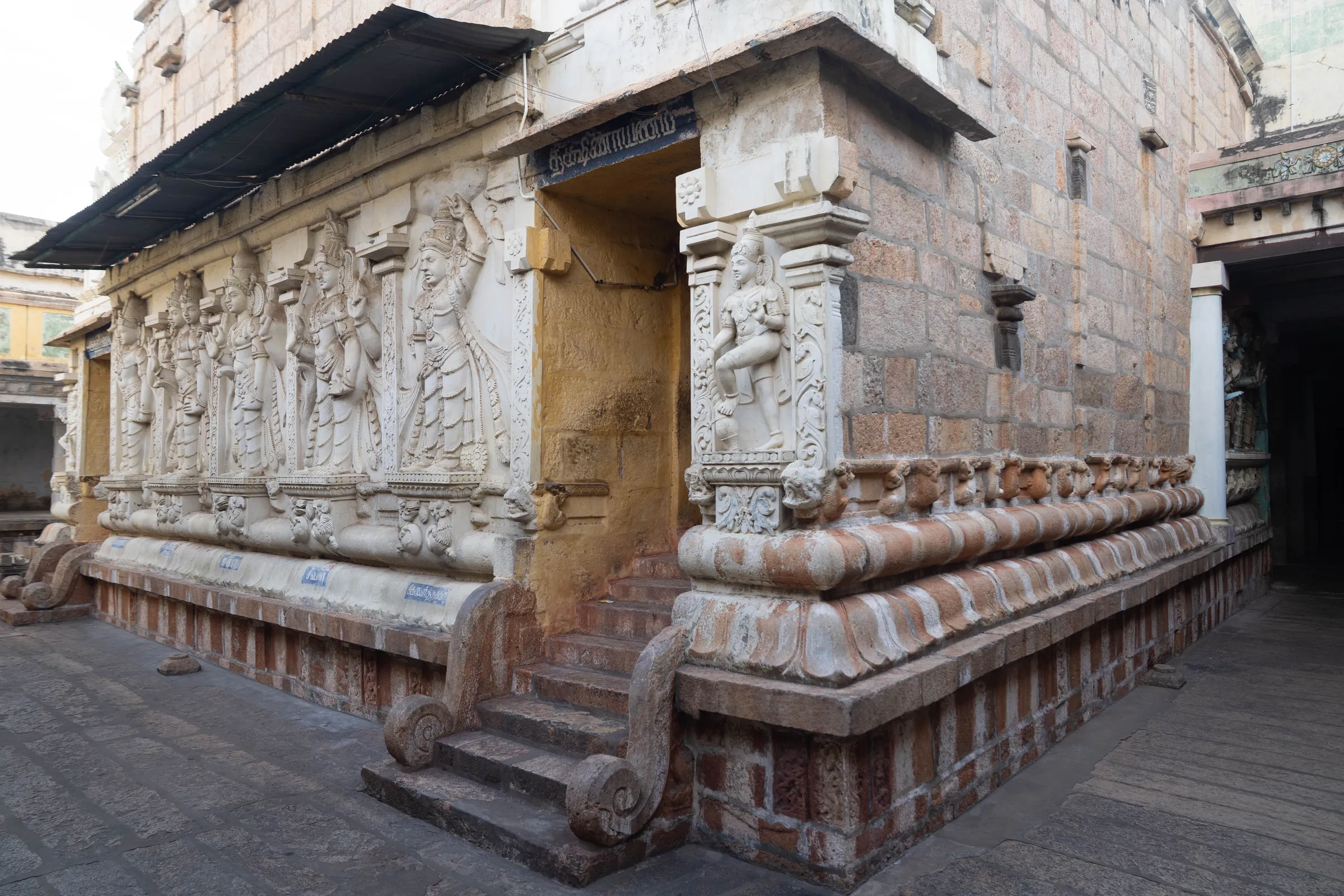
A Viṣṇu temple set high on whitish rock at Tiruvellarai, with a cave temple beneath that many miss and a swastika shaped sacred pond. Its inscriptions reach back to Pallava times and record a long musical and dance tradition.
Arai is rock and vellai is white; the rocks here have a whitish tinge, hence the name. The temple stands in an elevated position with a cave temple underneath, easily missed, that carries bas reliefs. The fort like walls rise more than 30 feet. The temple is surrounded by sacred ponds, the most famous the swastika shaped pond holding rare sculptures and designed so that bathers on the remaining sides cannot be seen.
02
Archaeological
dated & cited
An inscription of 801 CE records that the swastika pond was excavated in the reign of Pallava Dantivarman and called Marpidugu Perunginaru, and the northern steps carry numerals in Pallava script. In the reign of Āditya II (942 to 971) inscriptions mention a music and dance form, Tiruvellarai Chakkayar Koothu, still alive in Kerala but extinct in Tamil Nadu.
From the reign of Uttama Chōḷa (970 to 985), dated 978 CE, is an inscription for burning a lamp for Kṛṣṇa and Rukmiṇī, the earliest reference to the worship of these deities so far found in South Indian inscriptions. A 13th century inscription of the Pāṇḍya king Māravarman Sundara Pāṇḍya records his victory over Kulōttuṅga III.
Protection & condition
GroupDivya Dēśam (Āḻvār shrine)
ConditionIn worship
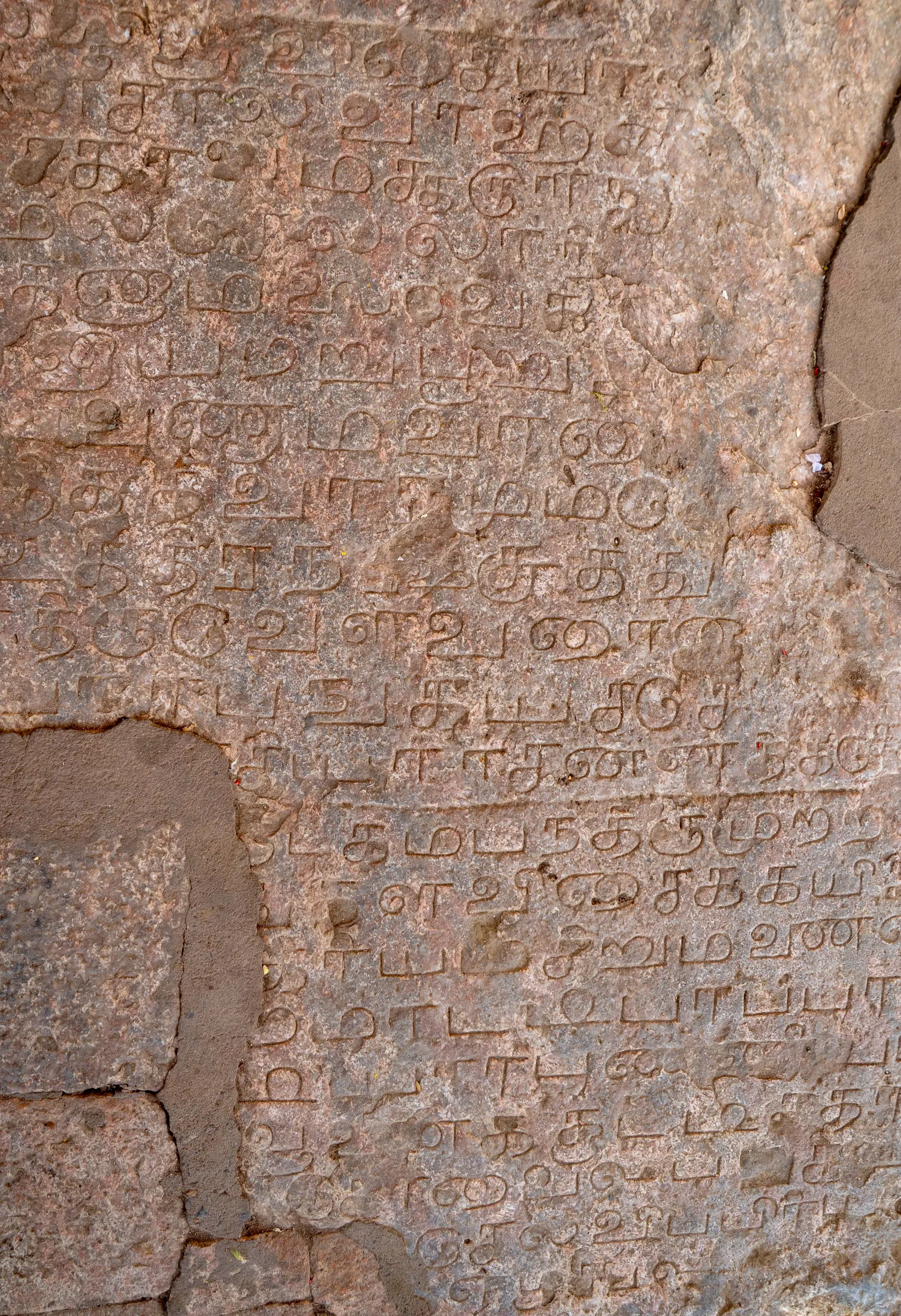
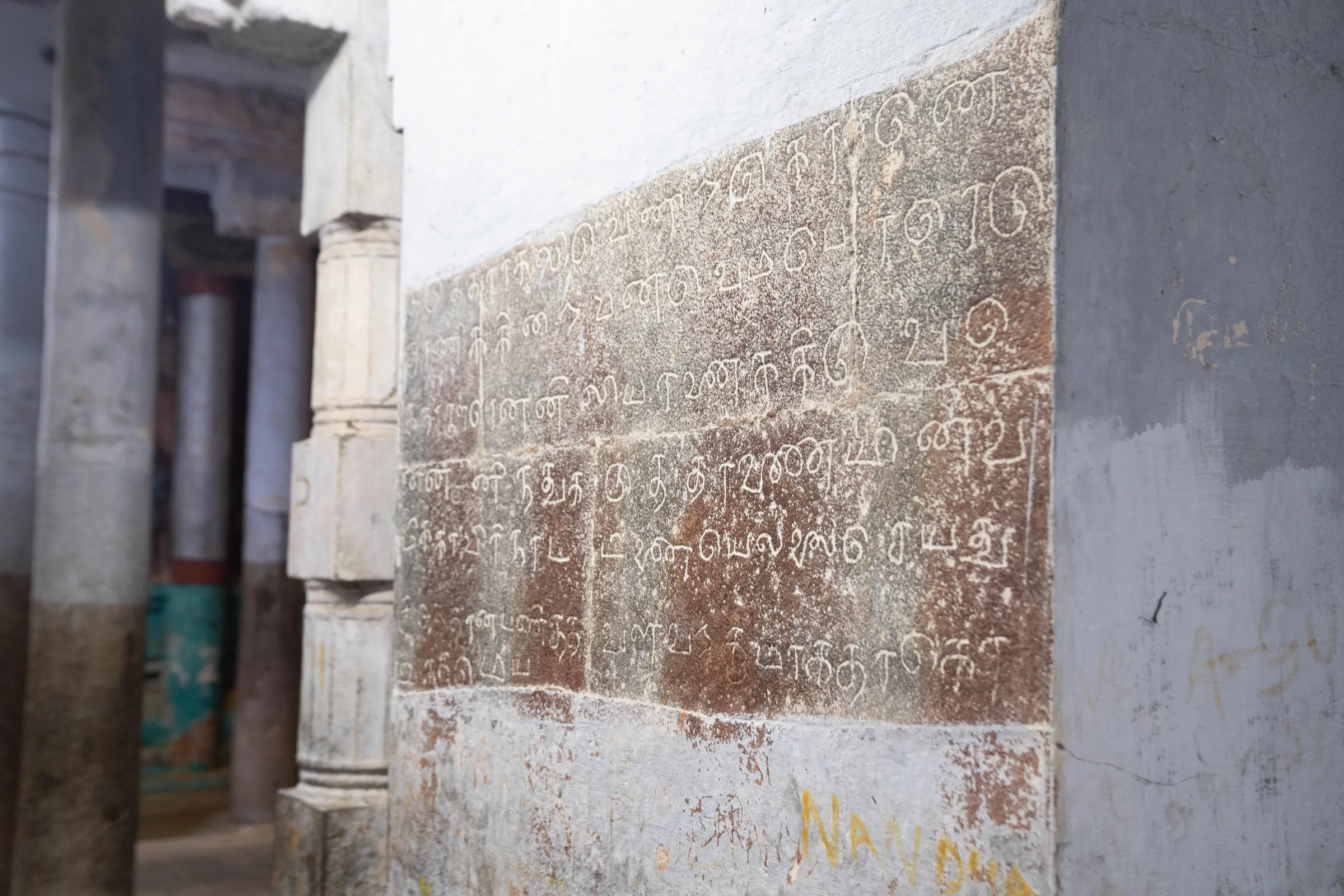
Inscription · Innermost doorway before the Perumāḷ shrine, right side
வெறியார் தளவத் தொடைச் செயமாறன் வெகுண்ட தொன்றும் …
The Pāṇḍya king Māran, broad shouldered and wearing fragrant garlands, attacked the Sembiyan Chōḷa who ruled the banks of the Kāvēri while he was in his palace. In this surprise attack he destroyed every building, leaving one hall of fourteen pillars standing, which a Chōḷa king had given to Katiyalur Uruthirankannanar. He frames the war as revenge, with no enmity to a fellow patron of Tamil, and on meeting the Chōḷa at Pon Amaravati returns the kingdom on condition that the heir take his name and the Chōḷa flag fly beneath the Pāṇḍya flag.
Pradeep Chakravarthy, 100 Timeless Tamil Nadu Temples
03
Mythological
as transmitted
Several Āḻvārs of the Vaiṣṇava tradition have sung of this temple, and Rāmānuja, the great Vaiṣṇava saint, lived here for a while, so it is on the pilgrim route. Some of the sacred ponds are said to have been excavated by the legendary Chōḷa king Sibi. The town was known in Sangam times under the brave Maḻavar, whose chief Valvil Ōri was famed for generosity.
Sources
Pradeep Chakravarthy, 100 Timeless Tamil Nadu Temples
This is an open, reviewed record. If you have spotted an error or have
something to add — a correction, a date, a source, a name in another script —
propose it. Every change is reviewed before it joins the record.
You are suggesting an edit. Click any highlighted paragraph to change it.
“Suggest an edit” makes this entry editable right here — change the text, tell us how to reach you, and send it. No account needed. “Share feedback” opens a short form. Both go through review before anything is published.