A Viṣṇu temple at Thiruvindalur, near Mayavaram, famous above all for its literature: the ten verses Tirumaṅgai Āḻvār sang here when he found its doors shut against him.
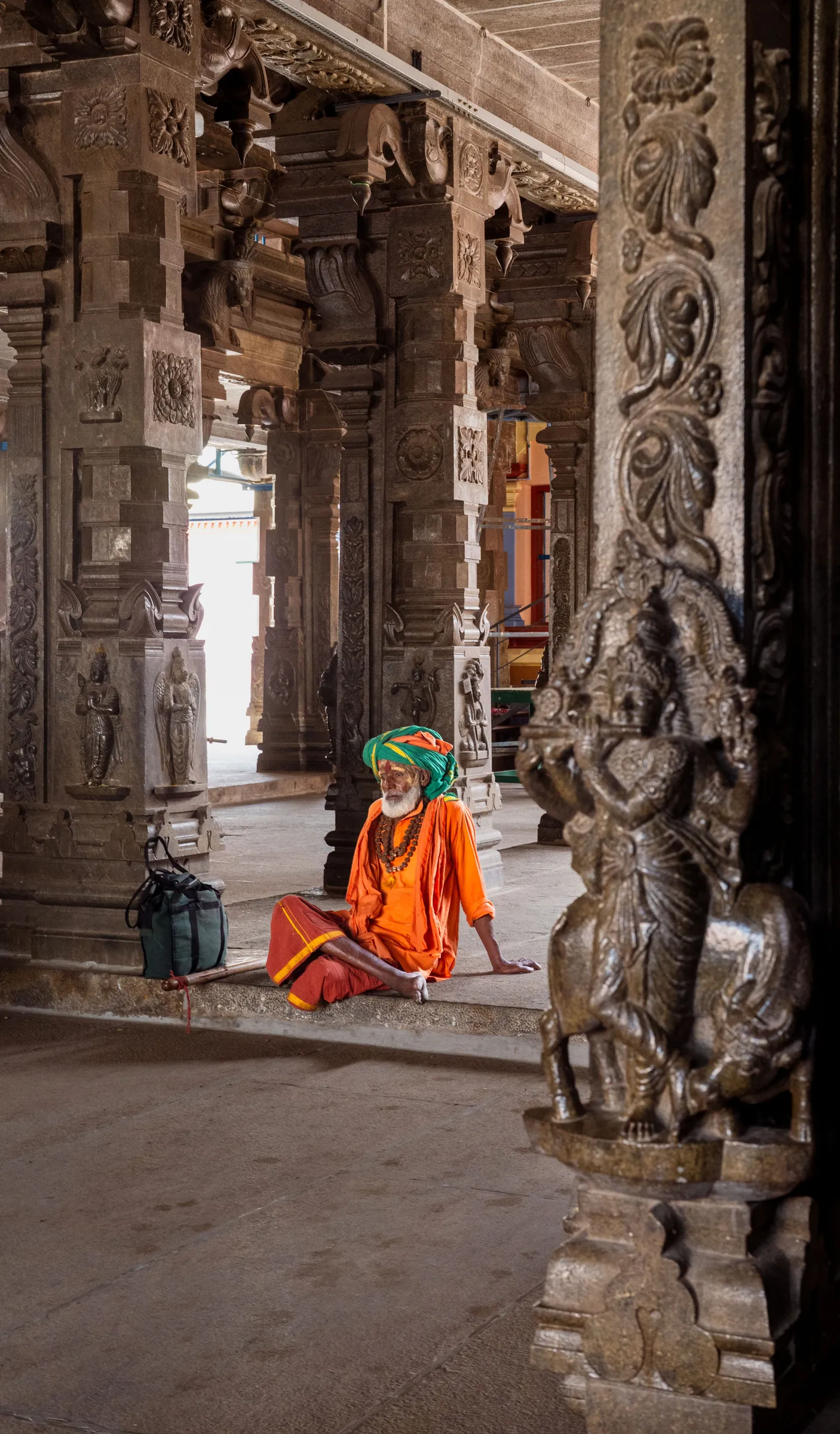
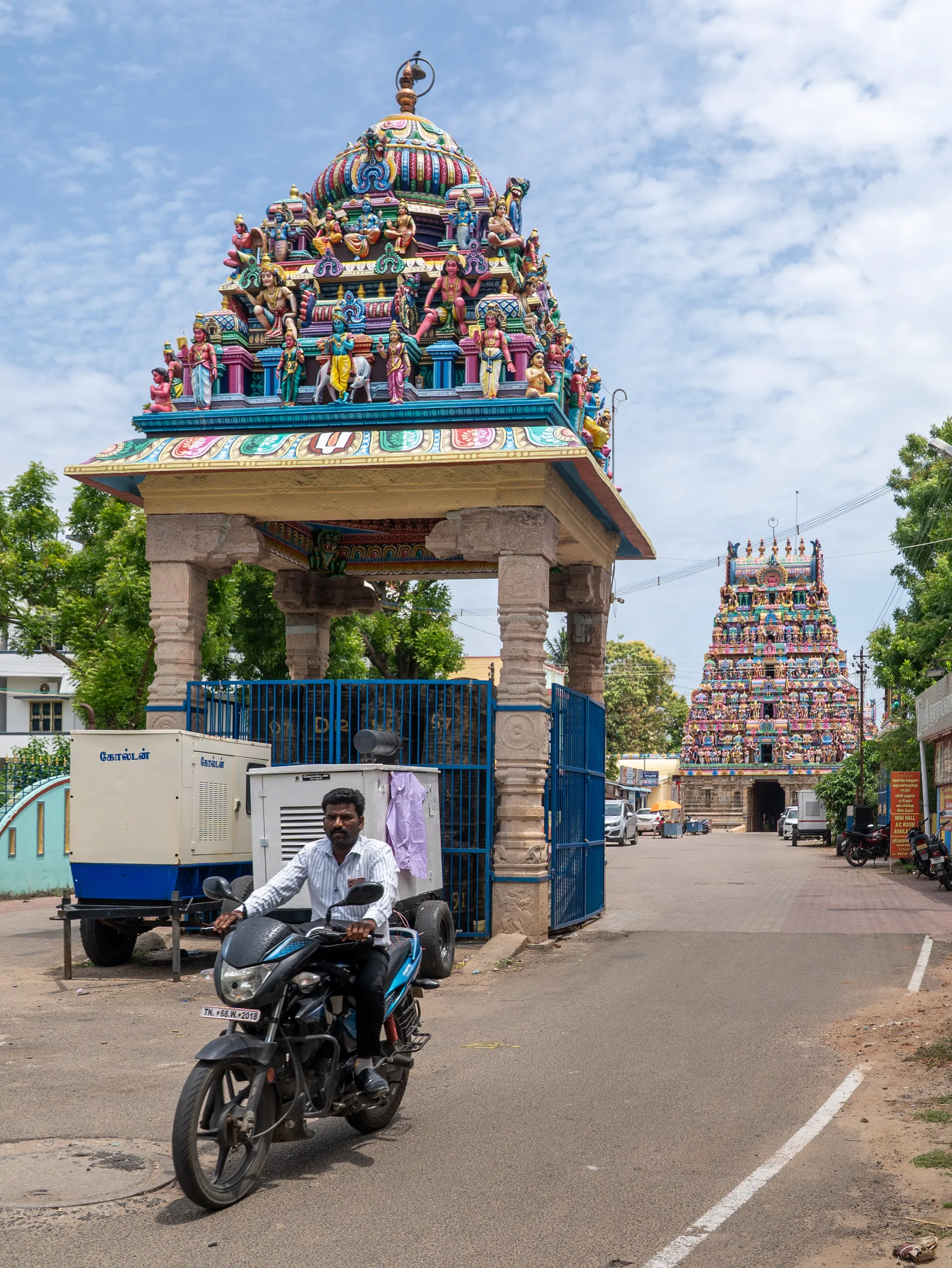
The temple has a grand entrance and corridors of beautifully carved pillars showing scenes from the life of Kṛṣṇa and the other avatāras. The place is held sacred by those who wish to propitiate the Moon, Chandra or Indu, which gives the town its old name. The shrine of Brahmā may also be found within the temple.
03
Mythological
as transmitted
The temple is famous through the 8th century poet-saint Tirumaṅgai Āḻvār. Born Nīlan, he was the chief bandit of the Sirkazhi region until a couple he tried to rob, whose toe ring he could not remove, revealed themselves as no ordinary beings and taught him the eight-syllable mantra. He became a tireless traveller, the most prolific of the Āḻvārs, his Periya Tirumozhi carrying verses on many temples.
When the Āḻvār reached this shrine its doors were shut. The ten verses he then sang speak of devotees longing to see the Lord while Viṣṇu would not reveal himself. In the first he asks: Lord of Indalur, we worship your lotus feet. Why do you not wake and ask after our well-being, and walk a few steps before us, that our spirits might rise? (Periya Tirumozhi 4.9.1). Commentators, explaining the verses in prose, add the replies of Lord Parimaḷa Raṅganātha, turning the hymn into a dialogue on how true, unconditional devotion is surely answered.
This is an open, reviewed record. If you have spotted an error or have
something to add — a correction, a date, a source, a name in another script —
propose it. Every change is reviewed before it joins the record.
You are suggesting an edit. Click any highlighted paragraph to change it.
“Suggest an edit” makes this entry editable right here — change the text, tell us how to reach you, and send it. No account needed. “Share feedback” opens a short form. Both go through review before anything is published.