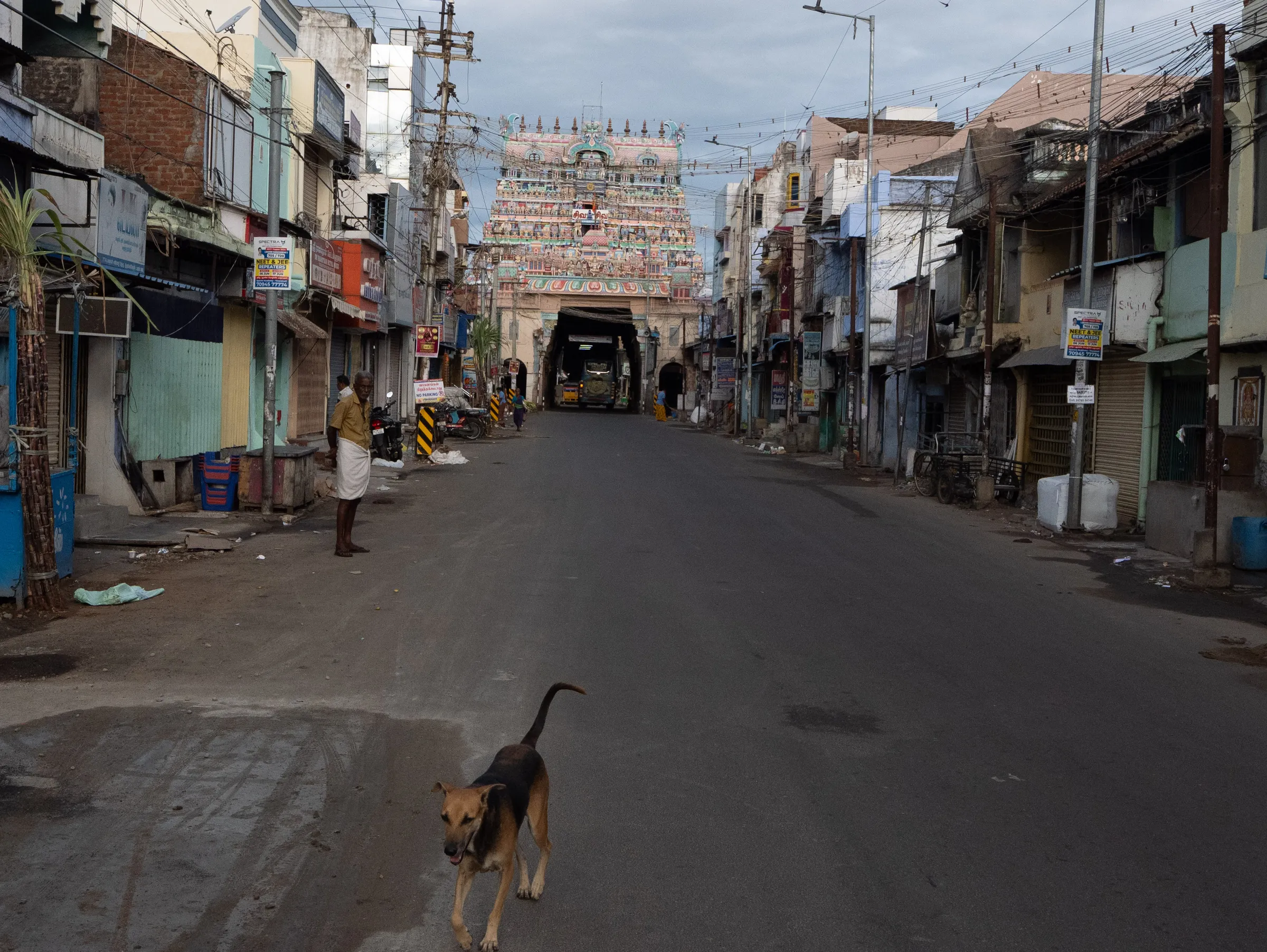
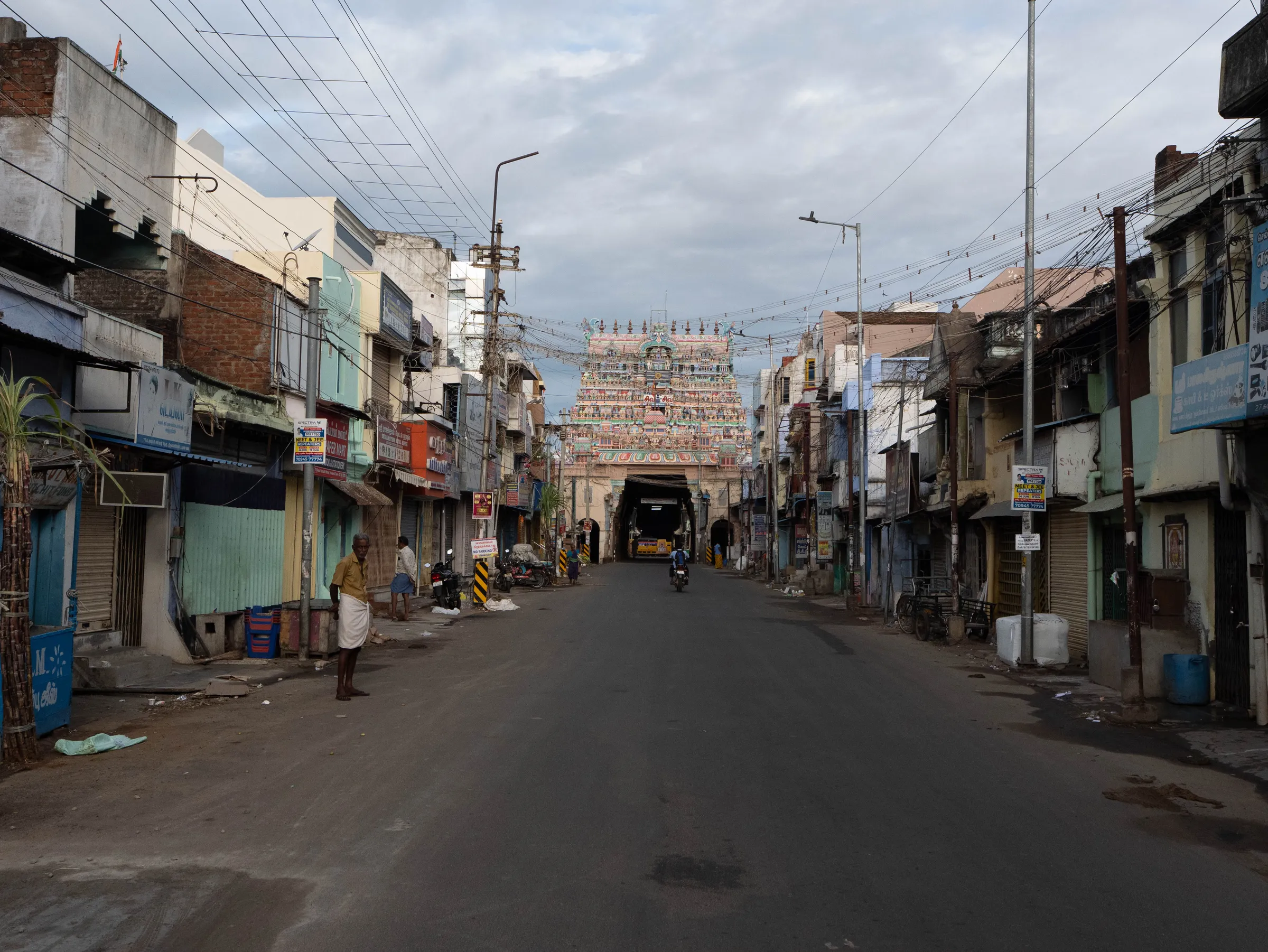
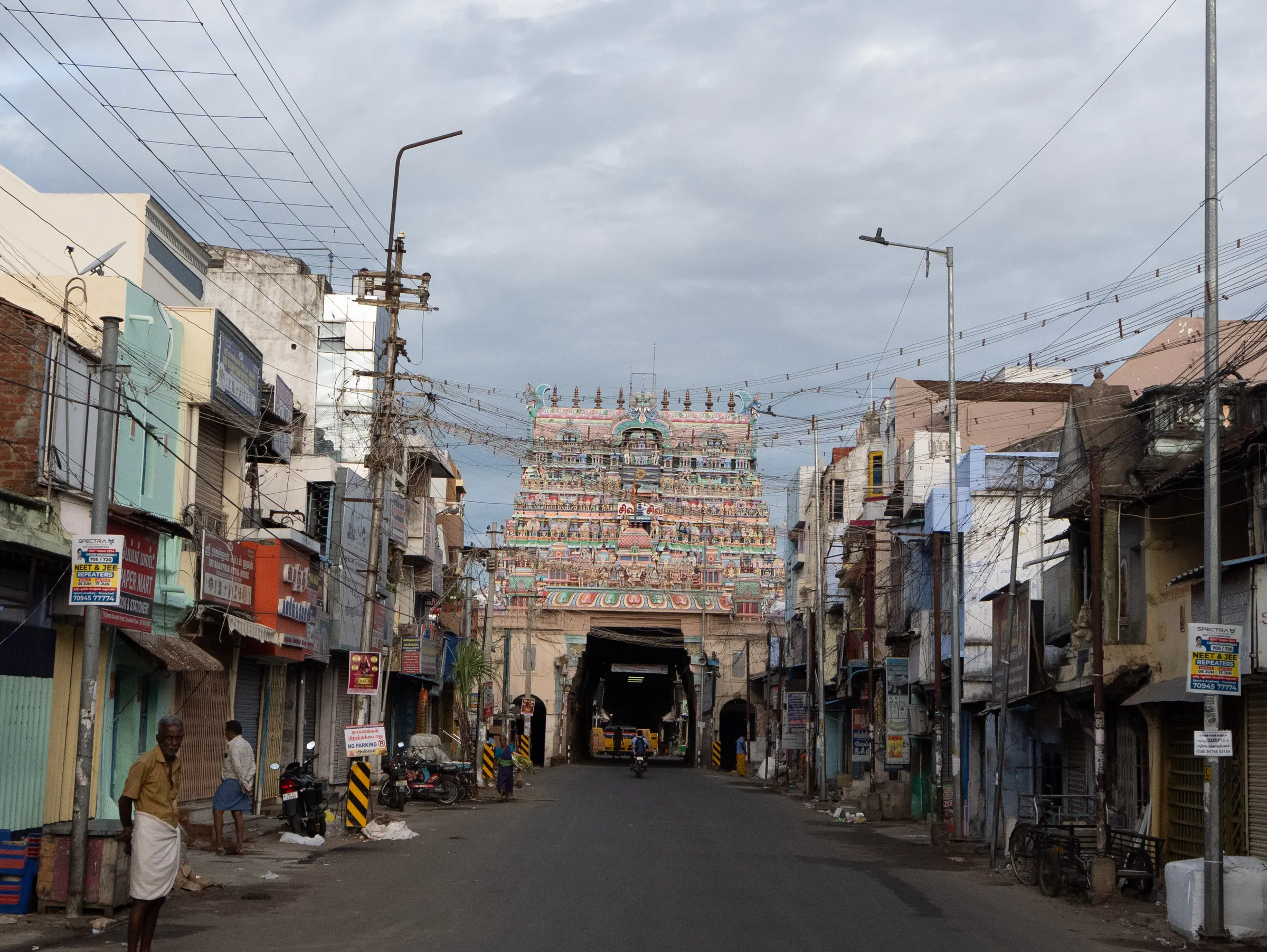
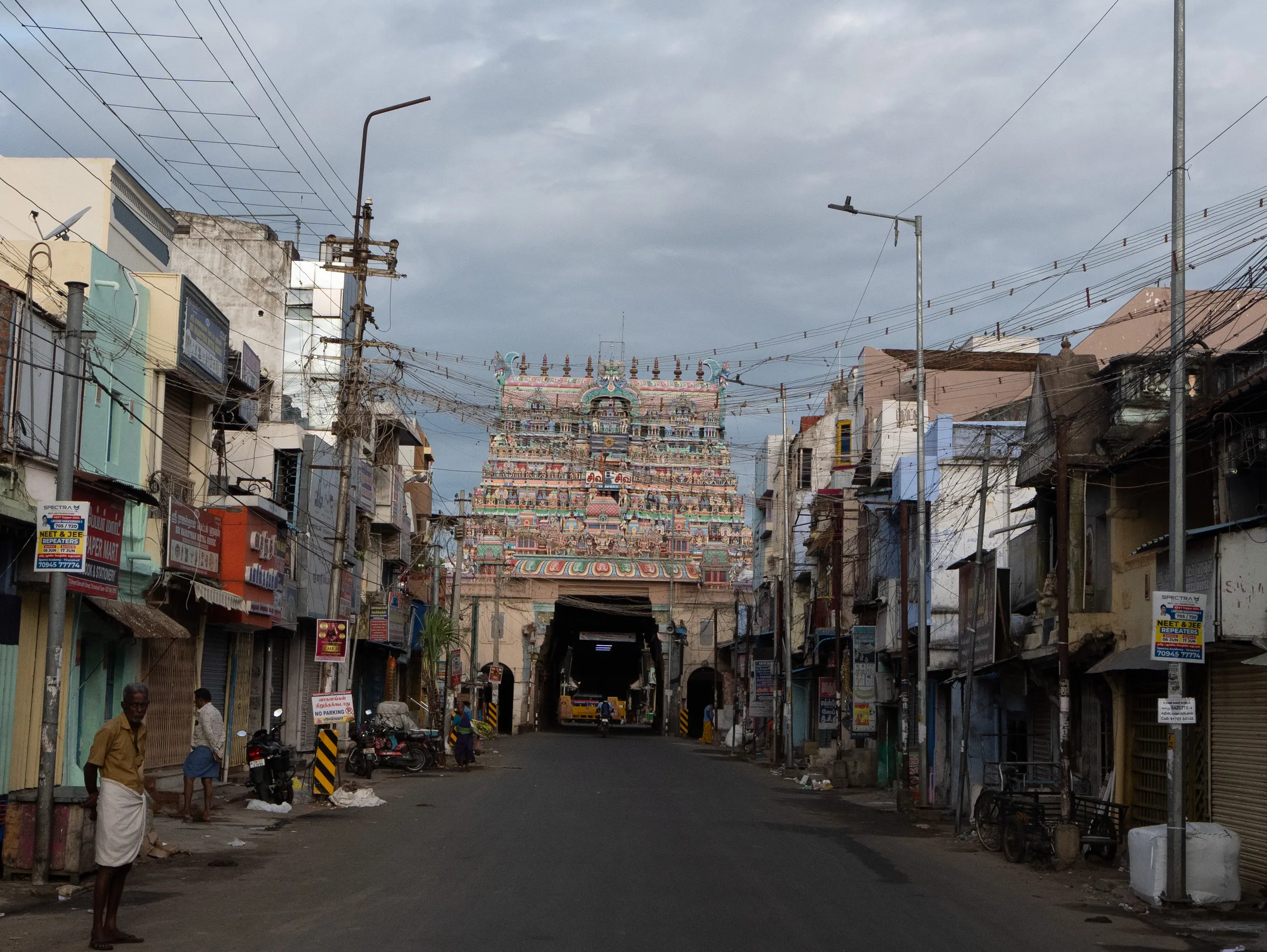
Nellaiappar Temple, photograph
← Pandya Nadu
Entry 096

Nellaiappar Temple

Tirunelveli · Tirunelveli · Pandya, with later additions

A massive Shiva temple on the northern bank of the Thamirabarani at Tirunelveli, larger than the Meenakshi temple of Madurai, dedicated to Shiva and Parvathi as Nellaiappar and Kanthimathi, and famous for its musical pillars.

The Nellaiappar temple stands on the northern bank of the Thamirabarani at Tirunelveli, a massive temple dedicated to Shiva and Parvathi as Nellaiappar and Kanthimathi, famous for its musical pillars. This entry holds three registers apart: what stands, what can be dated and cited, and what is told.

The photographs

Plates · 4

Nellaiappar Temple, photograph
© Amar Ramesh · All rights reserved
Nellaiappar Temple, photograph
© Amar Ramesh · All rights reserved
Nellaiappar Temple, photograph
© Amar Ramesh · All rights reserved
01

Architectural

structure & vocabulary

Covering 5.9 hectares, the temple is larger than the Meenakshi temple of Madurai. The Rajagopuram, about 59 metres tall, is among the tallest gopurams in the state. The main shrine of Nellaiappar has a sanctum, ardha mandapa, maha mandapa and mani mandapa, with Vishnu set unusually as Anantha Sayana Padmanabha to its left. The temple faces east with a seven-tier Rajagopuram and a large white stucco Nandhi at the east entrance.

The second prakara holds Adhikara Nandhi, Thiagarajar, the 63 Nayanmars, Jwara Devar (three-faced, three-legged, three-handed), Muruga with Valli and Devayanai, and many more. The third prakara holds Samaya Kuravar Nalvar, Subramanya, Dakshina Murthy, the six-faced Arumuga Nayanar set so that all six faces can be seen, and Vinayaga. The mani mandapa leads to the maha mandapa with the famous musical pillars: forty-eight small pillars that sound notes on being tapped surround a central pillar, though many have lost their tone. The Kanthimathi temple has two musical pillars with squirrel carvings.

From 1647 CE the devotee Tiru Vadamalaiyappa Pillaiyar built the Sangili Mandapa connecting the Nellaiappar and Kanthimathi temples; to its west a flower garden was set up in 1756 CE by Tiruvengadakrishna Mudaliyar, with the hundred-pillared Vasantha Mandapa at its centre. Twenty-four pillars with yalis support the Oonjal (swing) mandapa of the Kanthimathi temple, built by Chera Kulam Piravi Perumal Pillaiyar in 1635 CE. A thousand-pillar mandapa was described as a forest of pillars by a British traveller. The bas-relief of Ravana lifting Kailasa is assigned to the 8th century.

02

Archaeological

dated & cited

The temple grew in stature from the 7th century CE, confirmed by inscriptions in and near it. The old Moola Mahalingar shrine carries half-buried Vatteluttu inscriptions traced to the 7th-century Pandyas. The inscriptions of Mara Varma Sundara Pandyan (1216 to 1238 CE) call the Lord Woodaiyar and his consort Nachiyar. Inscriptions of Kulasekara Pandyan (1268 to 1308 CE) record that he defeated the Chera, Chola and Hoysala rulers and, from the spoils, built the outer walls of the temple.

A custom of reciting padhigams from the Tirumurai is held from the days of Raja Raja Chola (10th century CE), who set ragas for the hymns and recruited dancing girls and musicians for the temple. The dancer Nakkan Urimai Alagiya Perumal Talaikoli offered bronzes of Subramanya, Valli and Devayanai and donated lands for puja; another dancer, Bagavathi Erutiruvudaiyal, was given land for her service.

Dating
Begun7th century CE · traced by Vatteluttu inscriptions · inferred

The temple grew in stature from the 7th century CE; the old Moola Mahalingar shrine carries half-buried Vatteluttu inscriptions traced to the 7th-century Pandyas.

03

Mythological

as transmitted

The processional deity carries a kamandalam and is shown giving away his sister Parvathi to Shiva, a ritual known as dharai varthal. The temple is one of the five sabhas depicting the dance of Shiva; the dance here, in the Tamra (copper) sabha, is called Muni Thandava or Gnana Thandava. Tirugnana Sambandar and Appar, poets of the 7th century, sang Tevaram praising Nellaiappar, and Sundara of the 8th century sang ten Tevaram hymns. Muthuswamy Dikshitar composed a song on Kanthimathi in the rare raga Hemavathi, and Arunachala Kavirayar's Venuvana Puranam and Chokkanathar Pillai's Kanthimathi Padhigam mention the temple.

Register interest in prints Buy the book
Improve this entry

This is an open, reviewed record. If you have spotted an error or have something to add — a correction, a date, a source, a name in another script — propose it. Every change is reviewed before it joins the record.

“Suggest an edit” opens this entry on GitHub and turns your change into a pull request. “Share feedback” opens a short form. Both go through review.