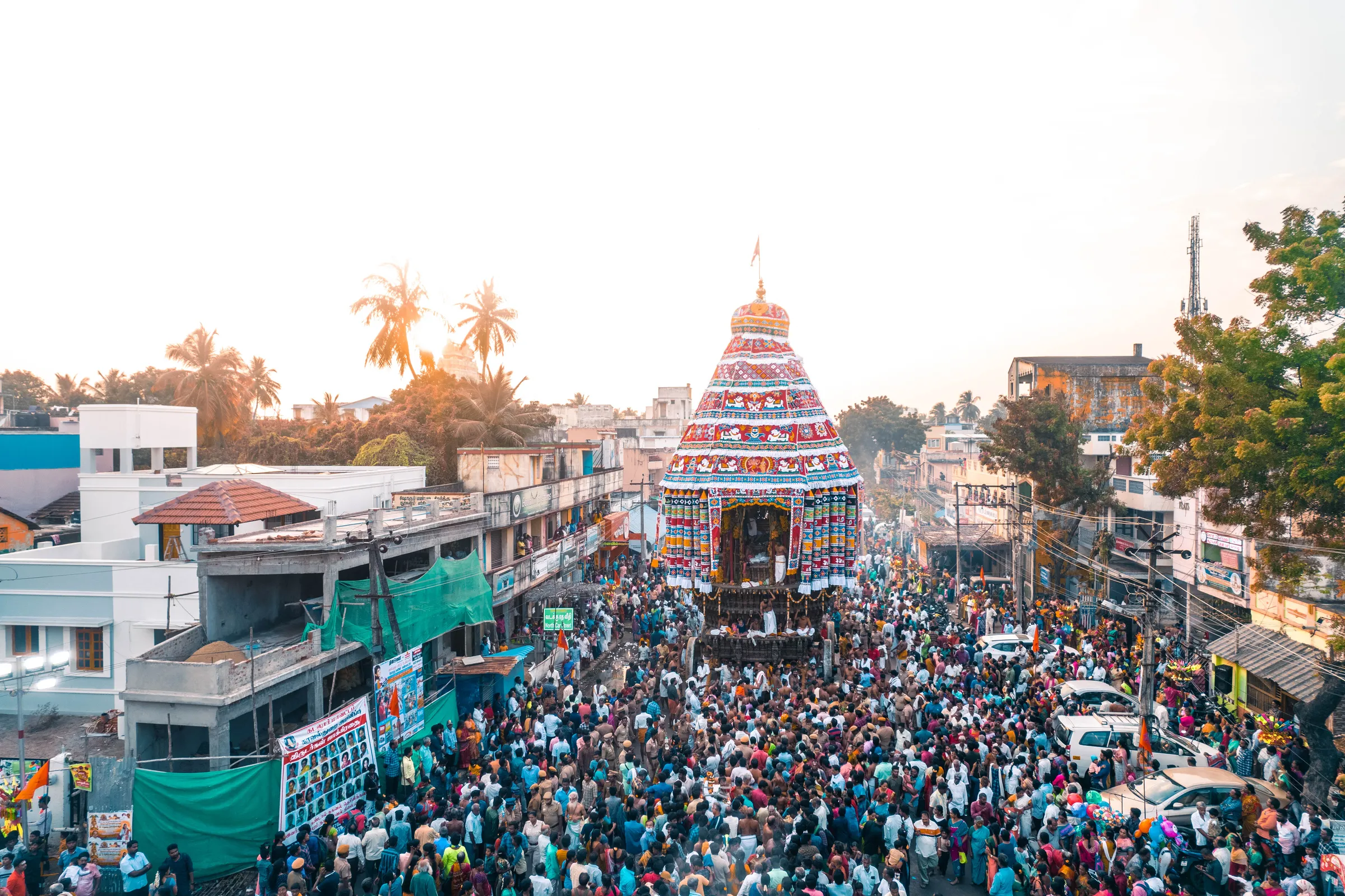
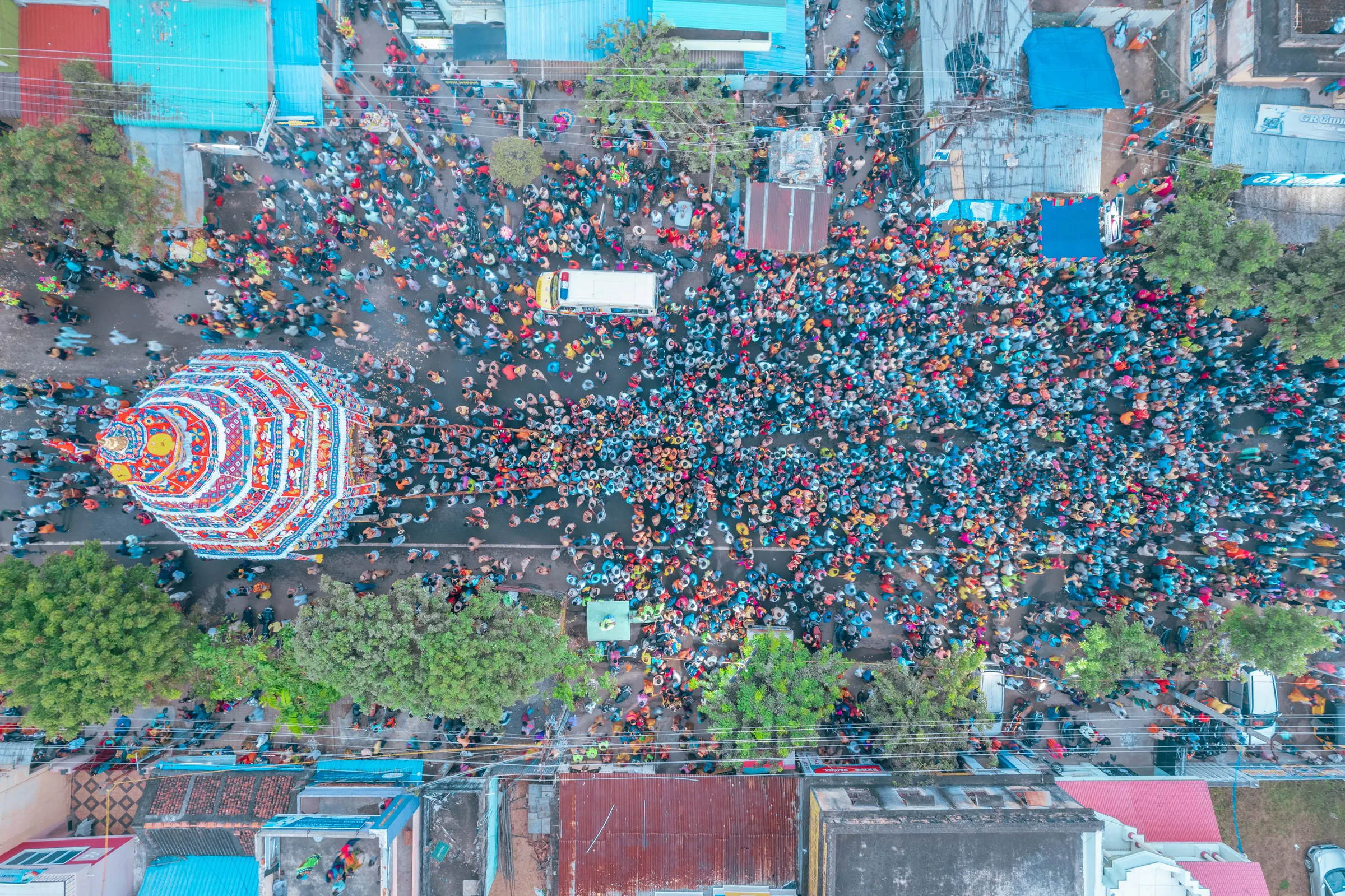
Architectural
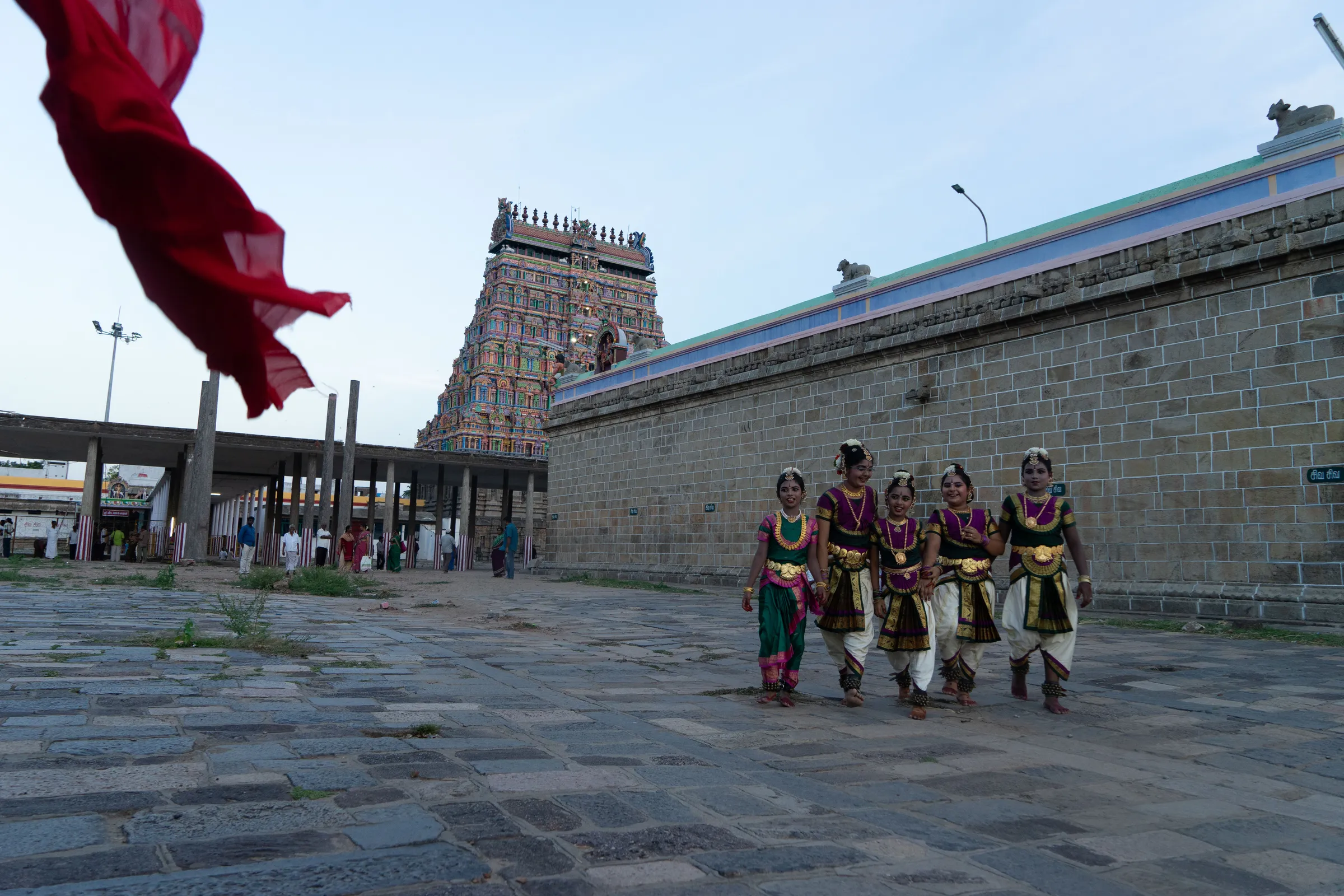
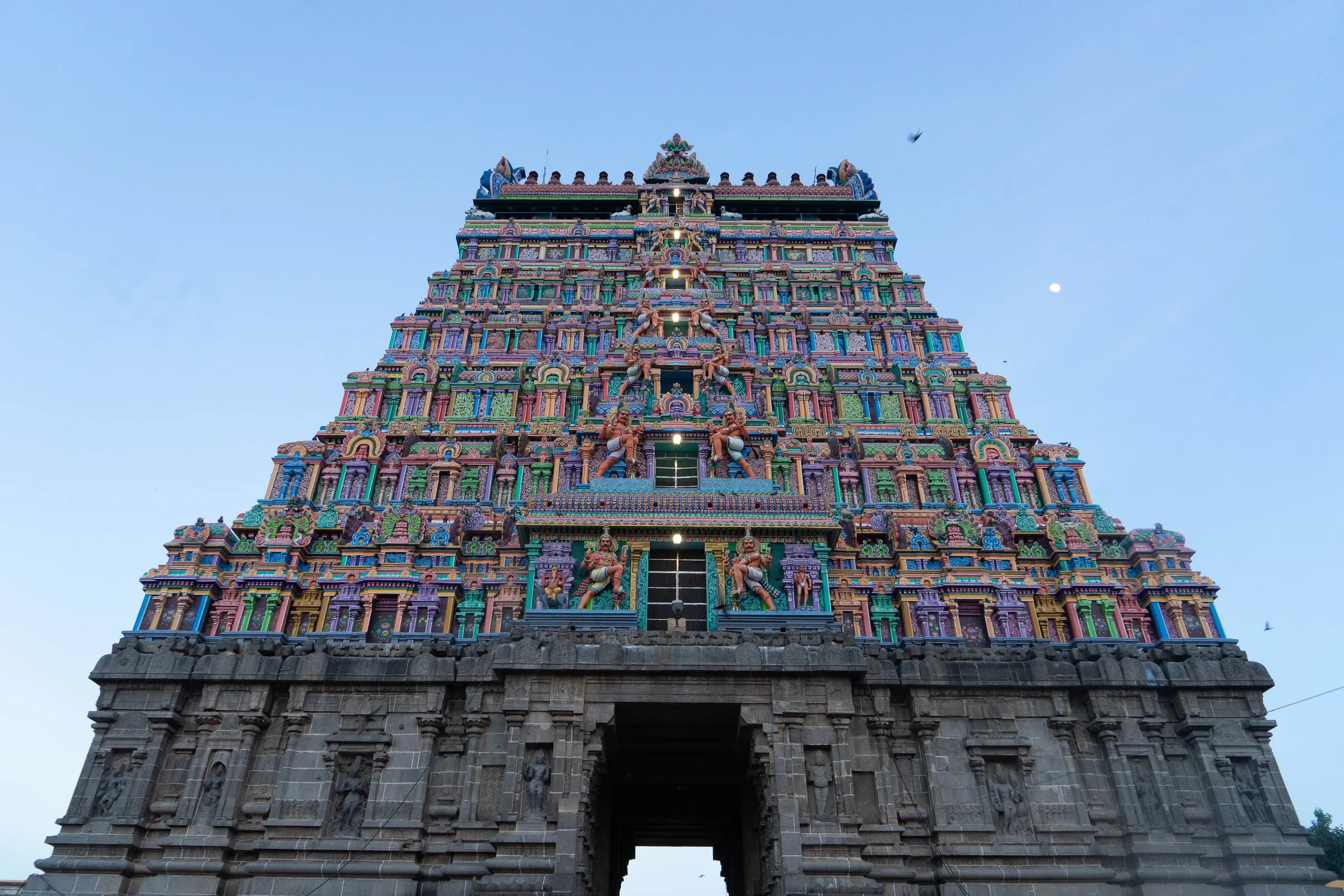
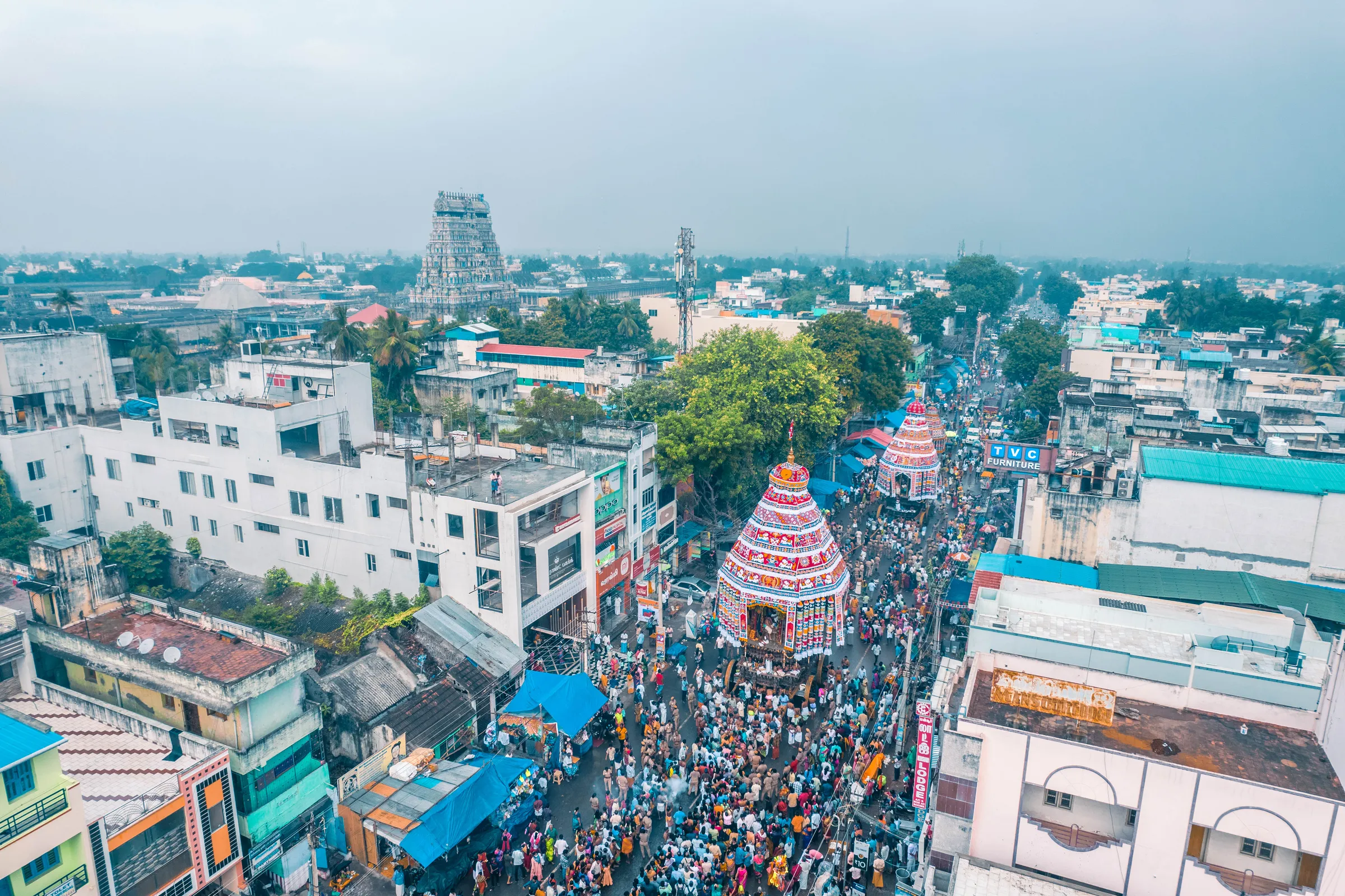
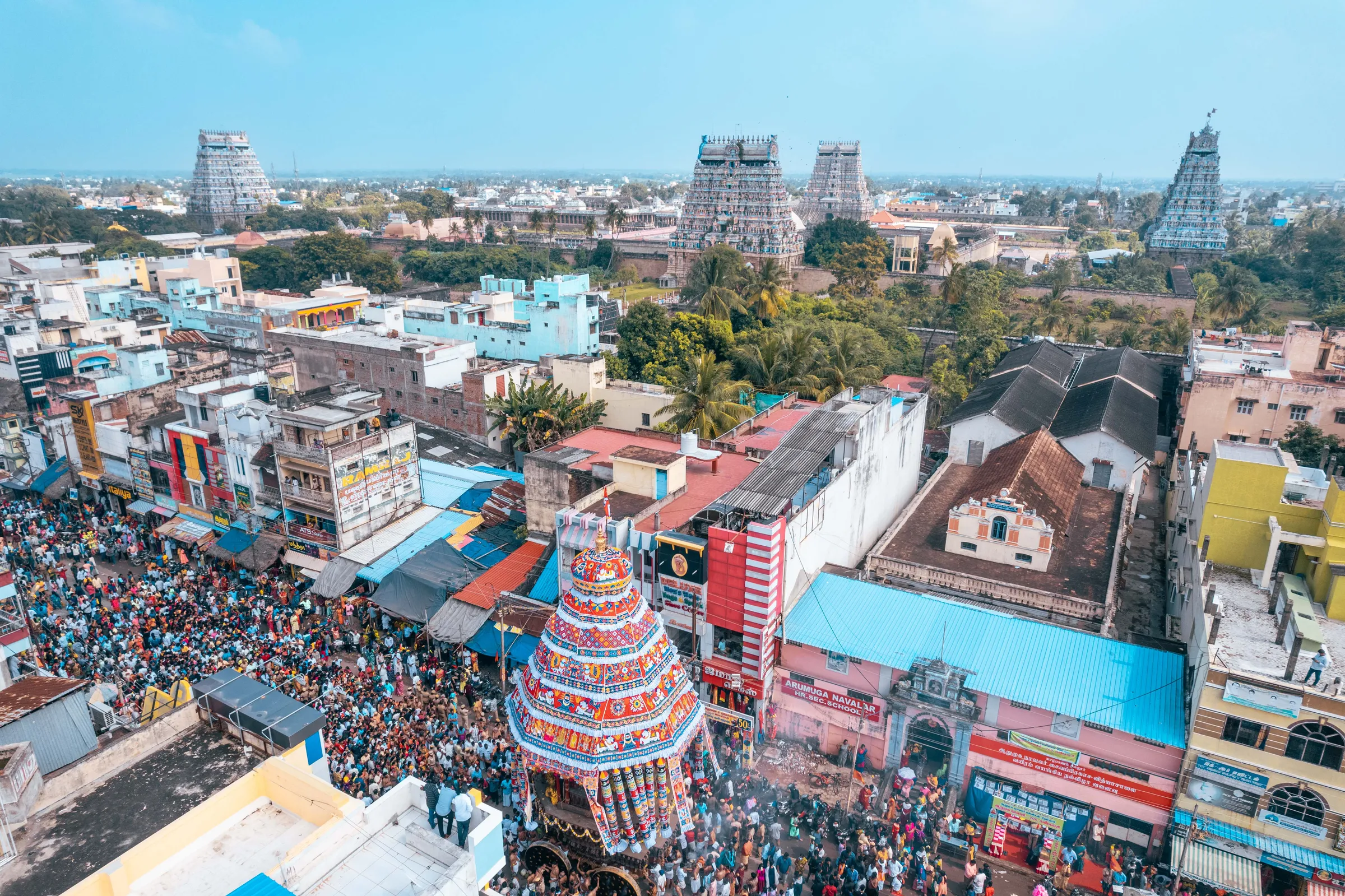
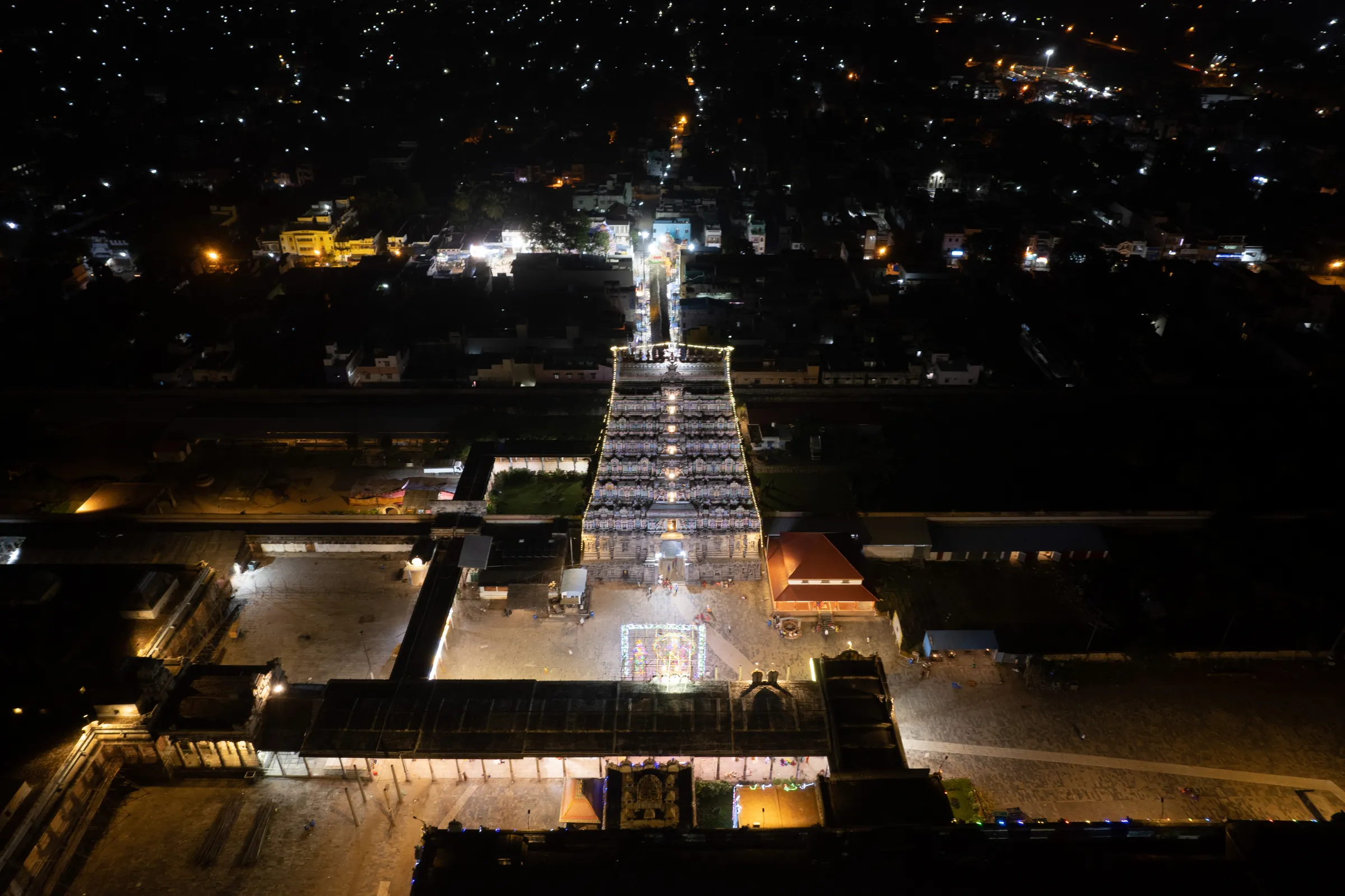
structure & vocabularyThe temple has nine entrances, said to represent the nine openings of the human body, and four gopurams. It has five sabhas of which the chit sabha is the oldest and the nucleus, equated with the sanctum, the others being Kanaka, Deva, Nritya and Raja. The sanctum, sabhas and pillared halls are all square. The Sivaganga teertham is a large rectangle with four lingams around it. The roofs of the chit sabha and the kanaka sabha before it are covered in gold, and five silver clad steps between them denote the Panchakshara.
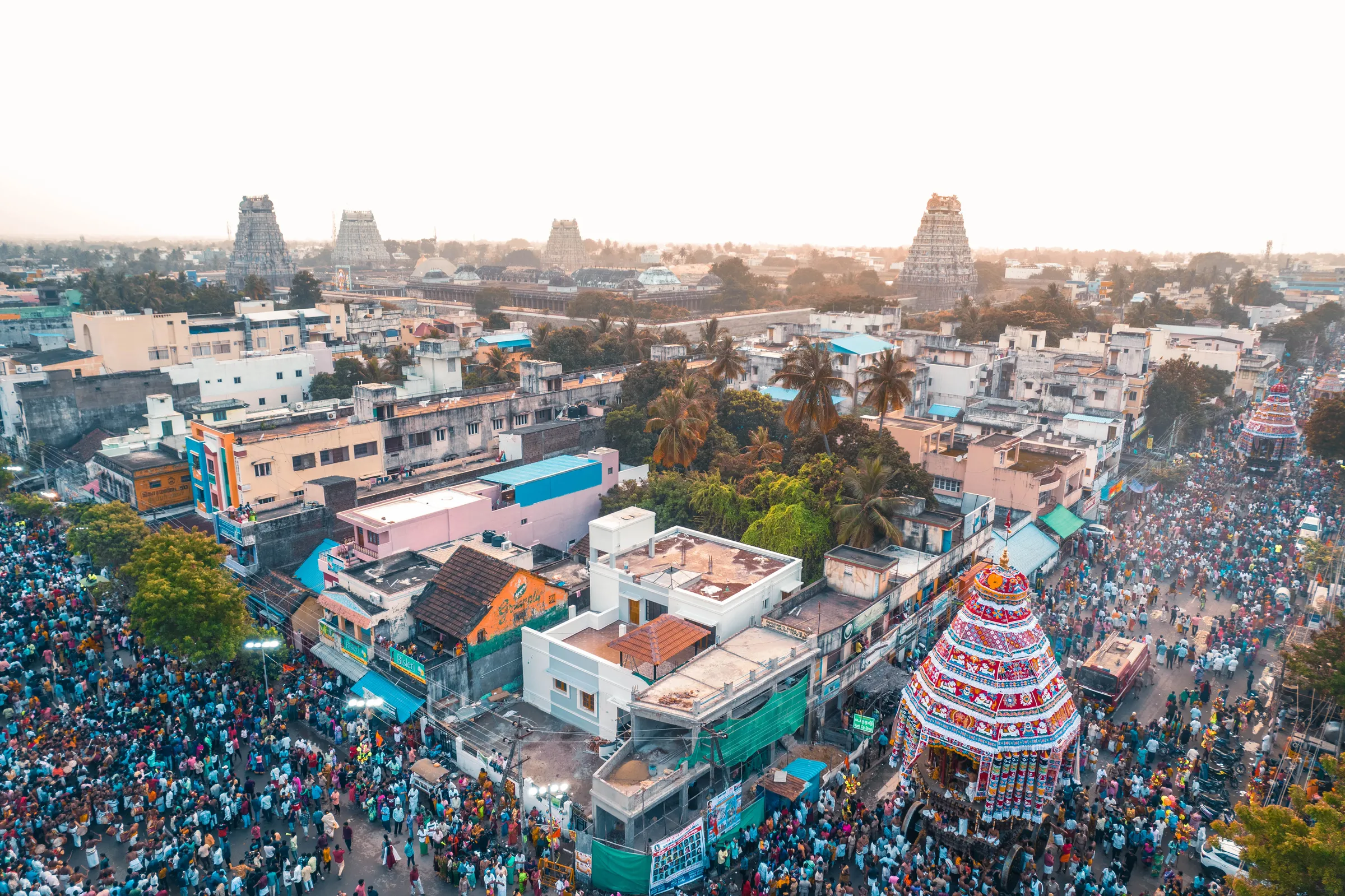
The gopurams carry superb artwork, probably built between 1150 and 1300 CE, damaged and rebuilt many times. The western tower holds inscriptions under each figure naming what it represents, which is rare, and the eastern tower has 108 reliefs of the Karana dance poses of the Natya Shastra facing the sanctum, credited by epigraphy to Koperunjingan II, who ruled 1243 to 1279 CE. The south tower, bearing the Pāṇḍya fish insignia, was likely their work. In the chit sabha the icons of Nataraja as Ananda Thandavam stand with Sivakami to his left and the curtained Rahasya chamber, the Chidambara Rahasya, to his right.