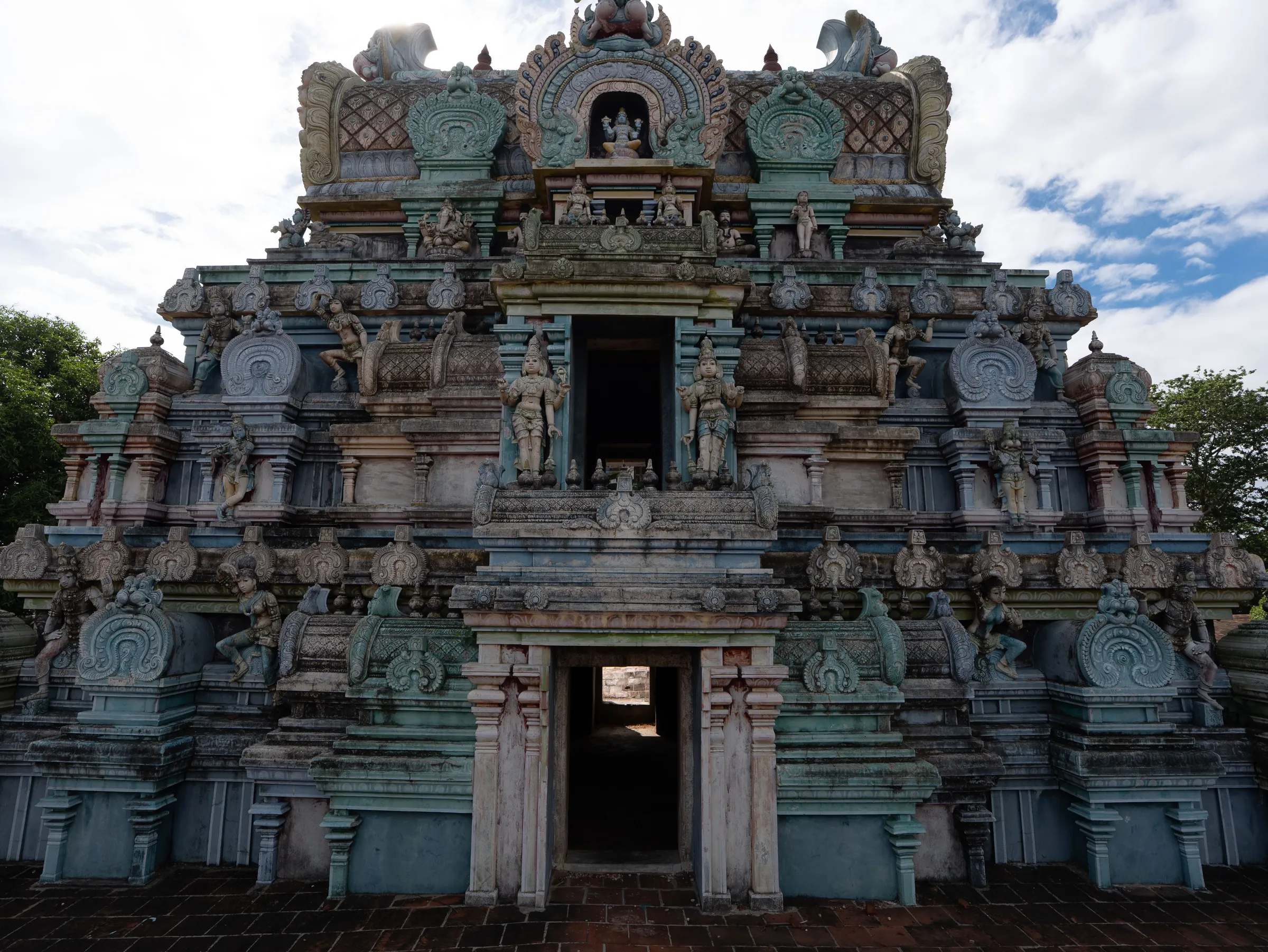
Architectural
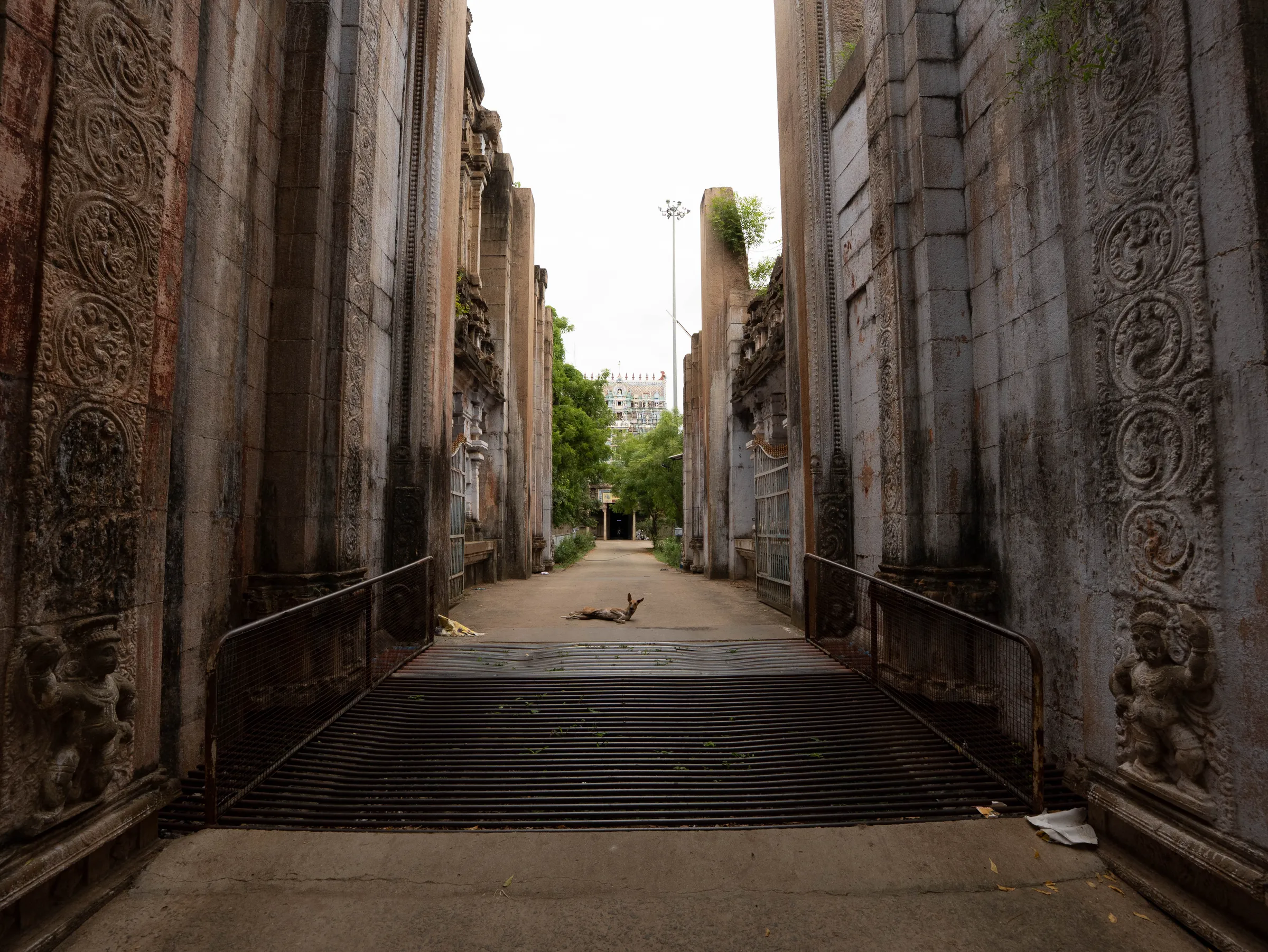
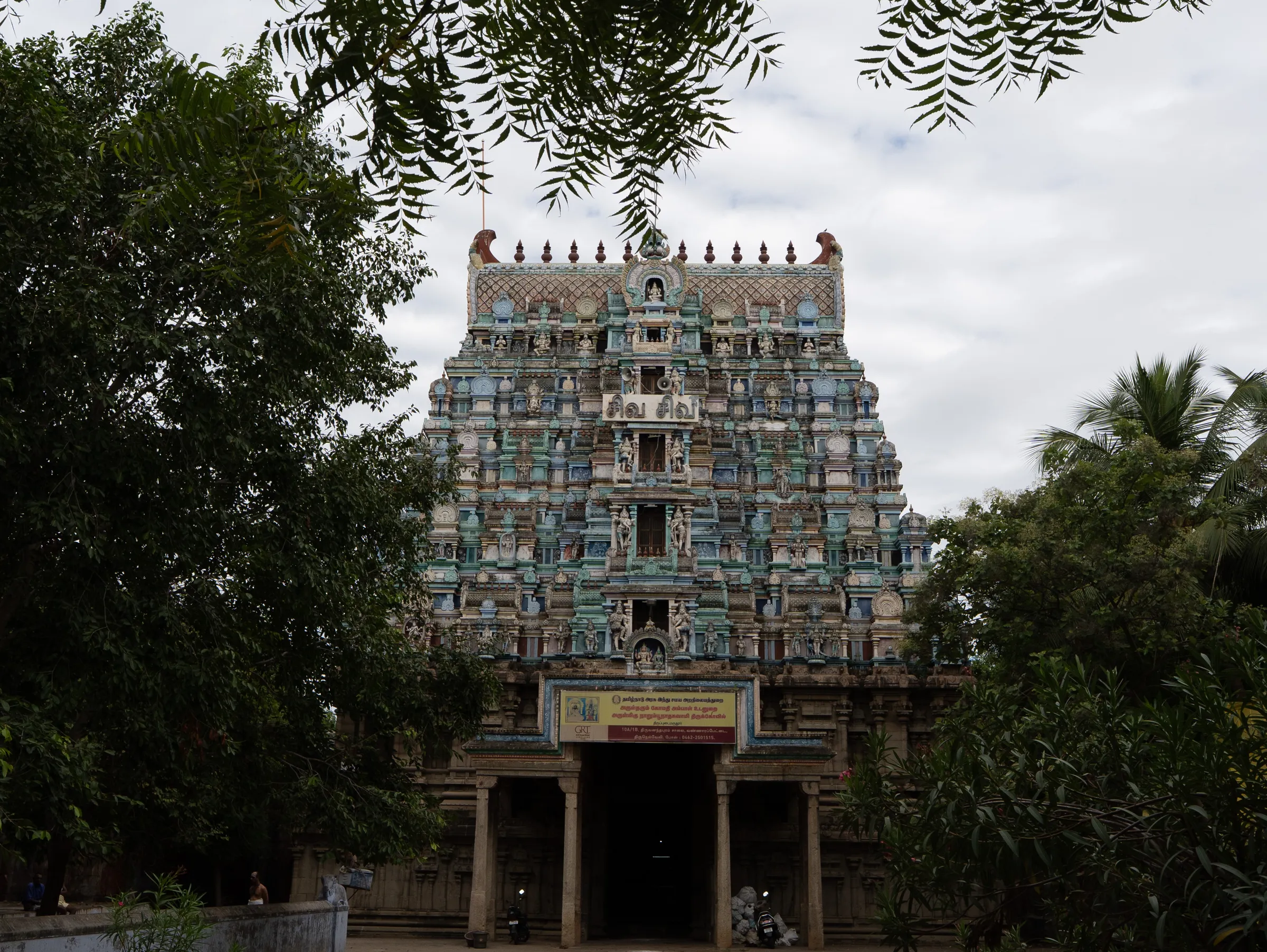
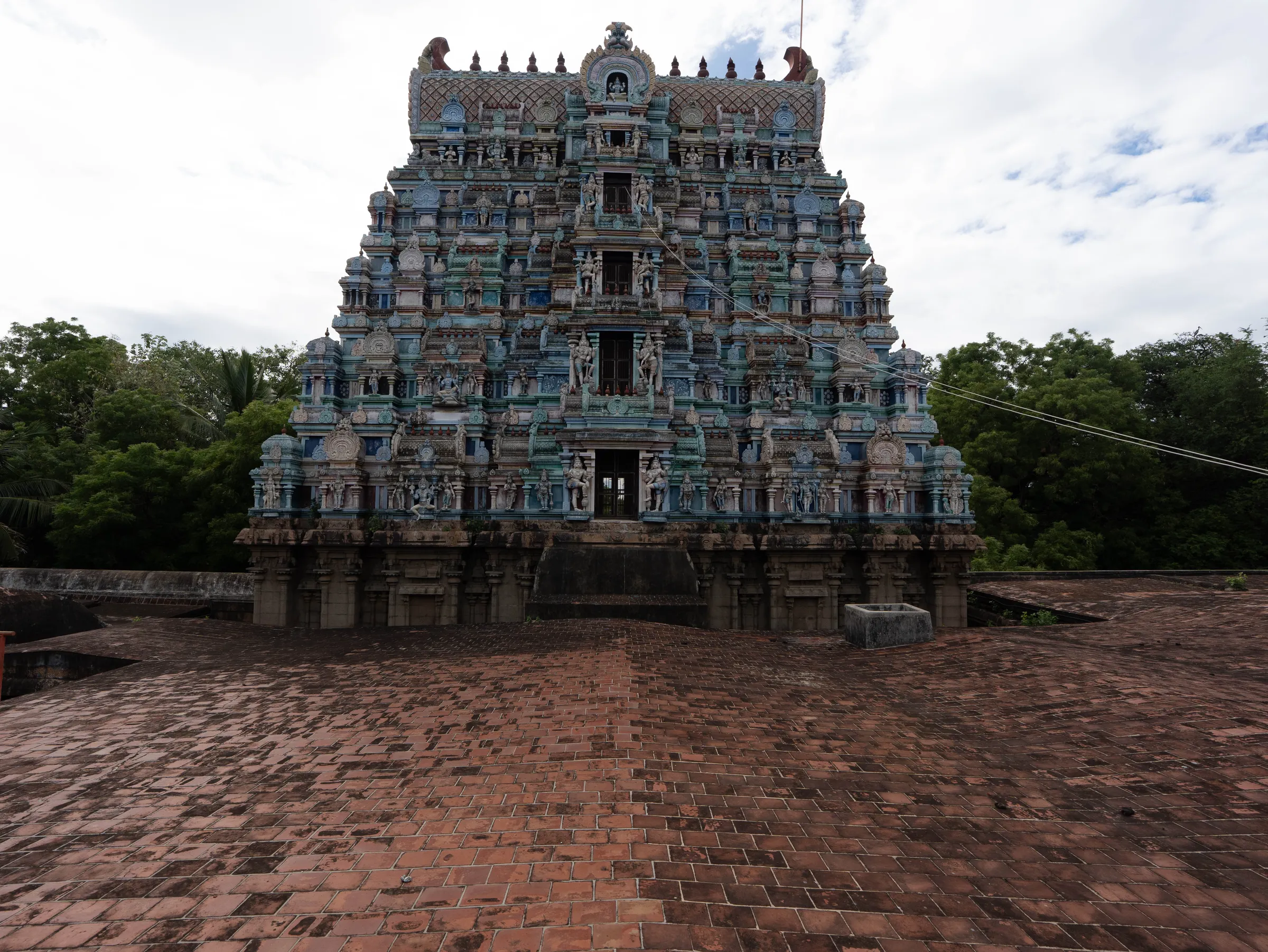
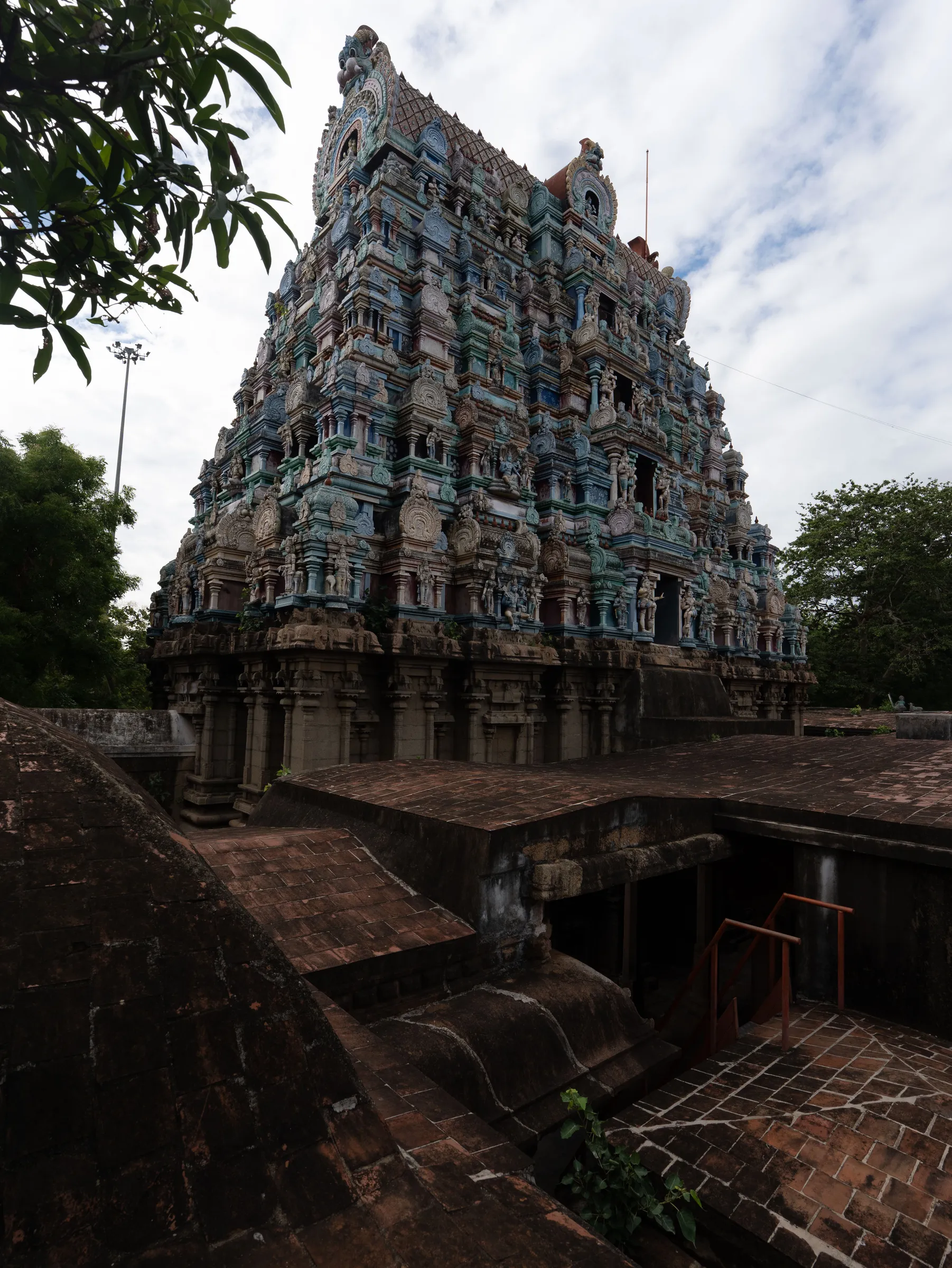
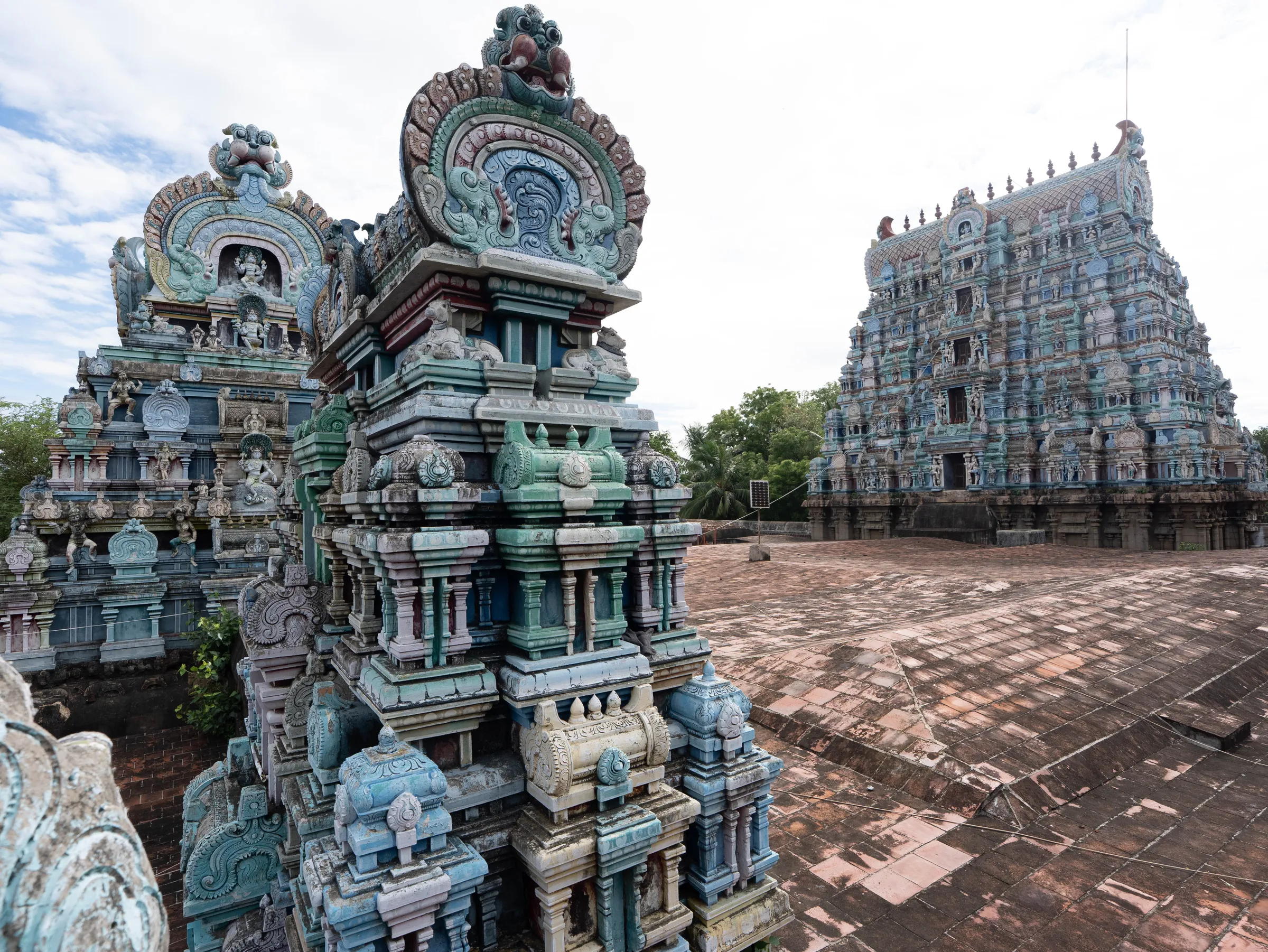
structure & vocabularyThe temple stands beside a whirlpool on the banks of the Tambraparni and covers about nine acres, the goddess being Gomathi, with Marudu trees growing in plenty. The outer courtyards once served as barracks. The main gopuram, five tiers tall, holds excellent mural paintings and woodcarvings, both dating from the 14th to 17th centuries, and is the reason to visit.
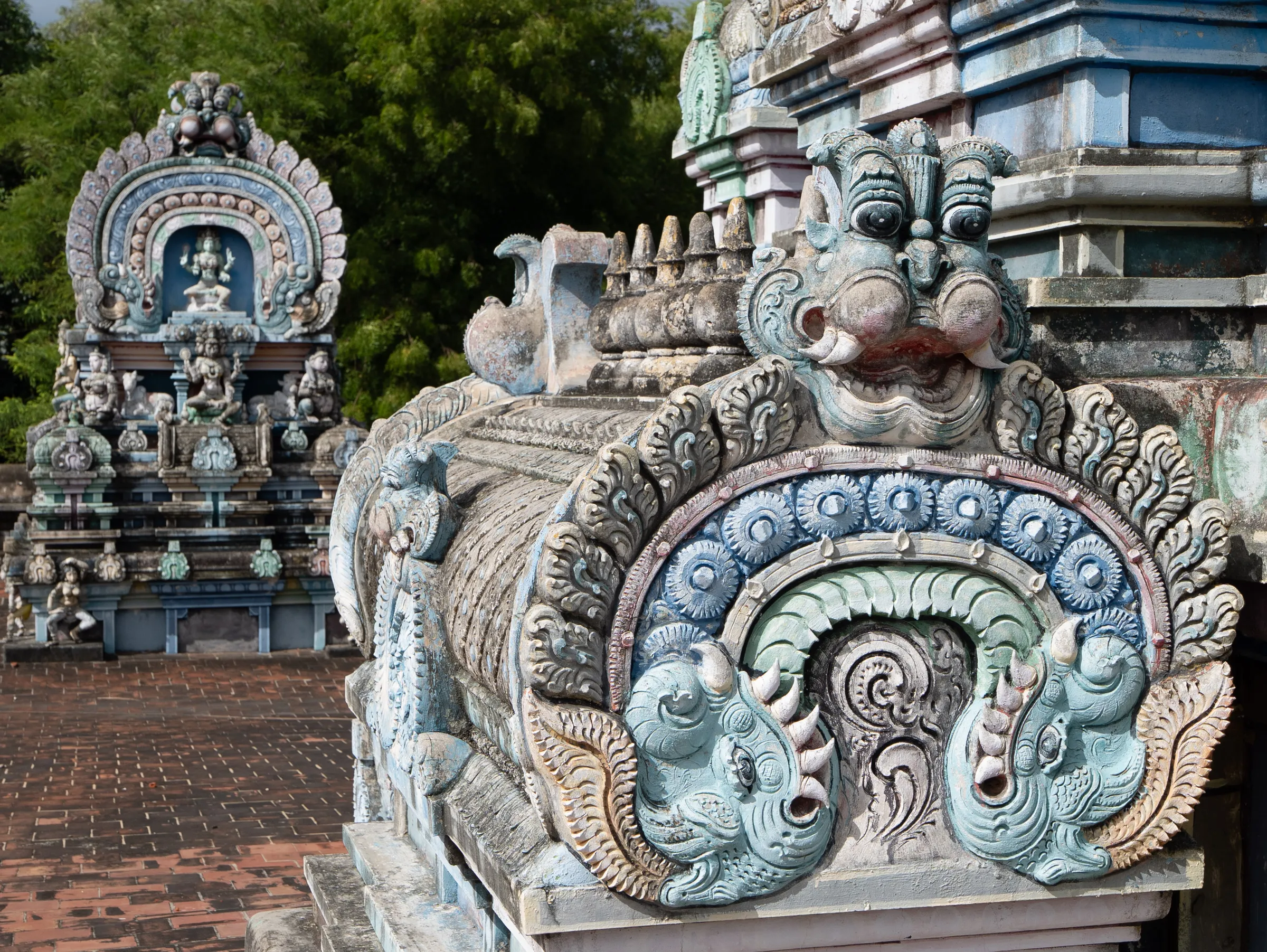
On the left as one enters is a tall sculpture of a Kerala king, with no inscription to name him; a similar statue stands in nearby Athazhanallur. The gopuram murals run across several levels: warriors and Ramayana scenes; the Narasimha avatara and the war of the rebel king Sellappa against the Vijayanagara king; scenes from the Tirupudaimarudur Sthala Purana and the Tiru Vilayadal; and panels of Kumari Bhagavathi, Subramanya and Bhadrakali. The sala-shaped roof suggests how boats and ships of the time were built. Each tier carries woodcarvings, with Portuguese warriors and endless-knot designs of special interest.