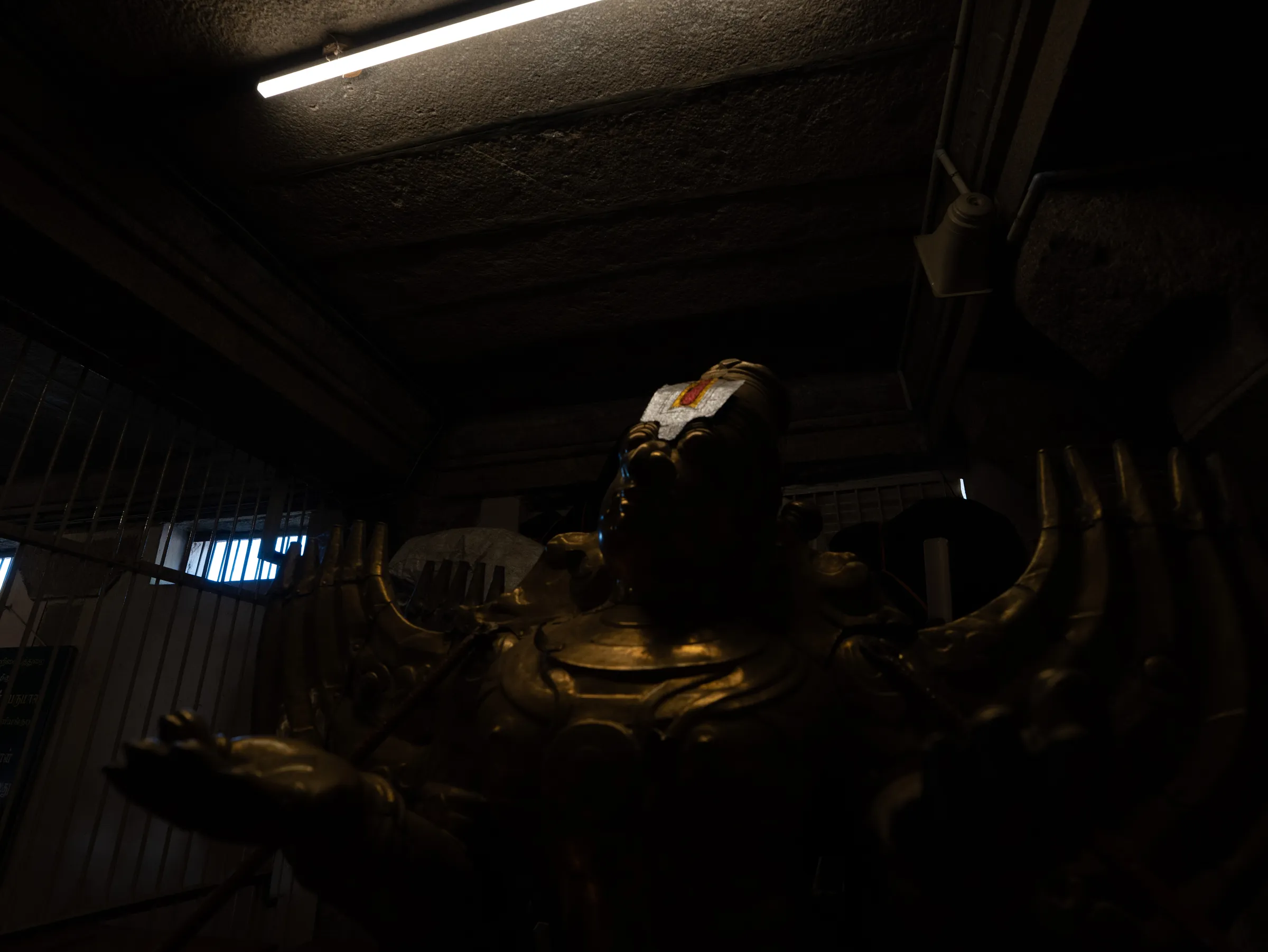
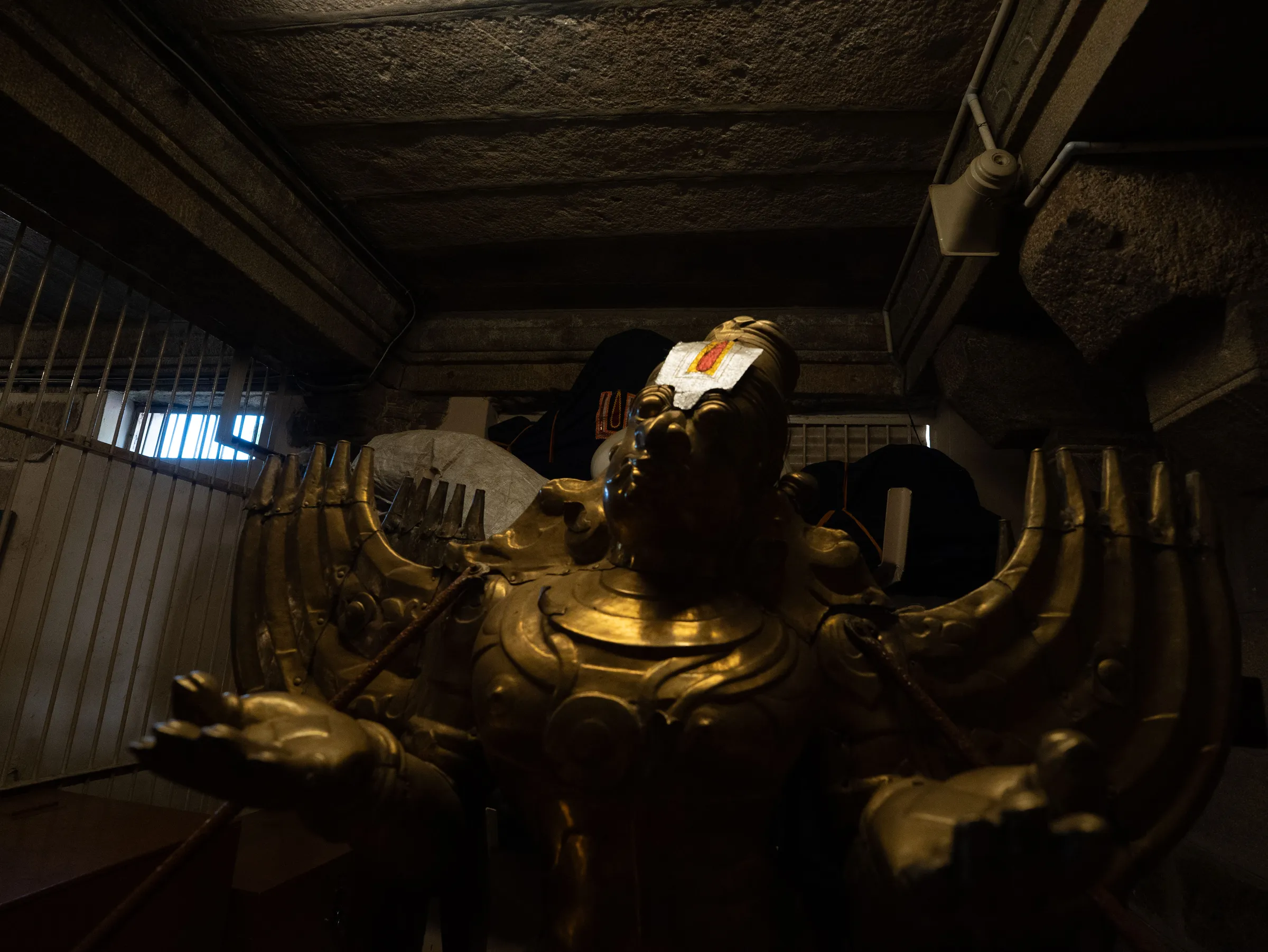
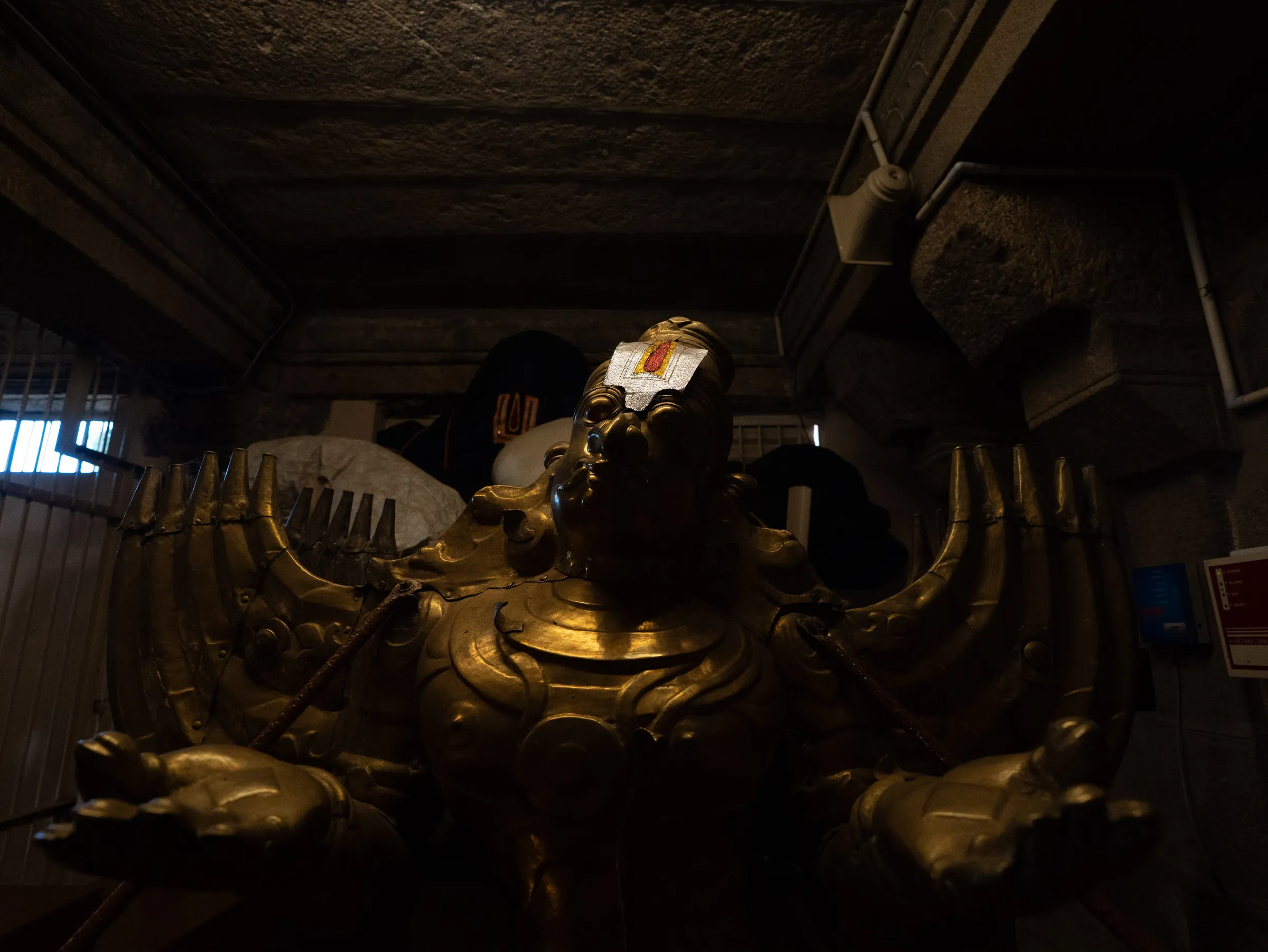
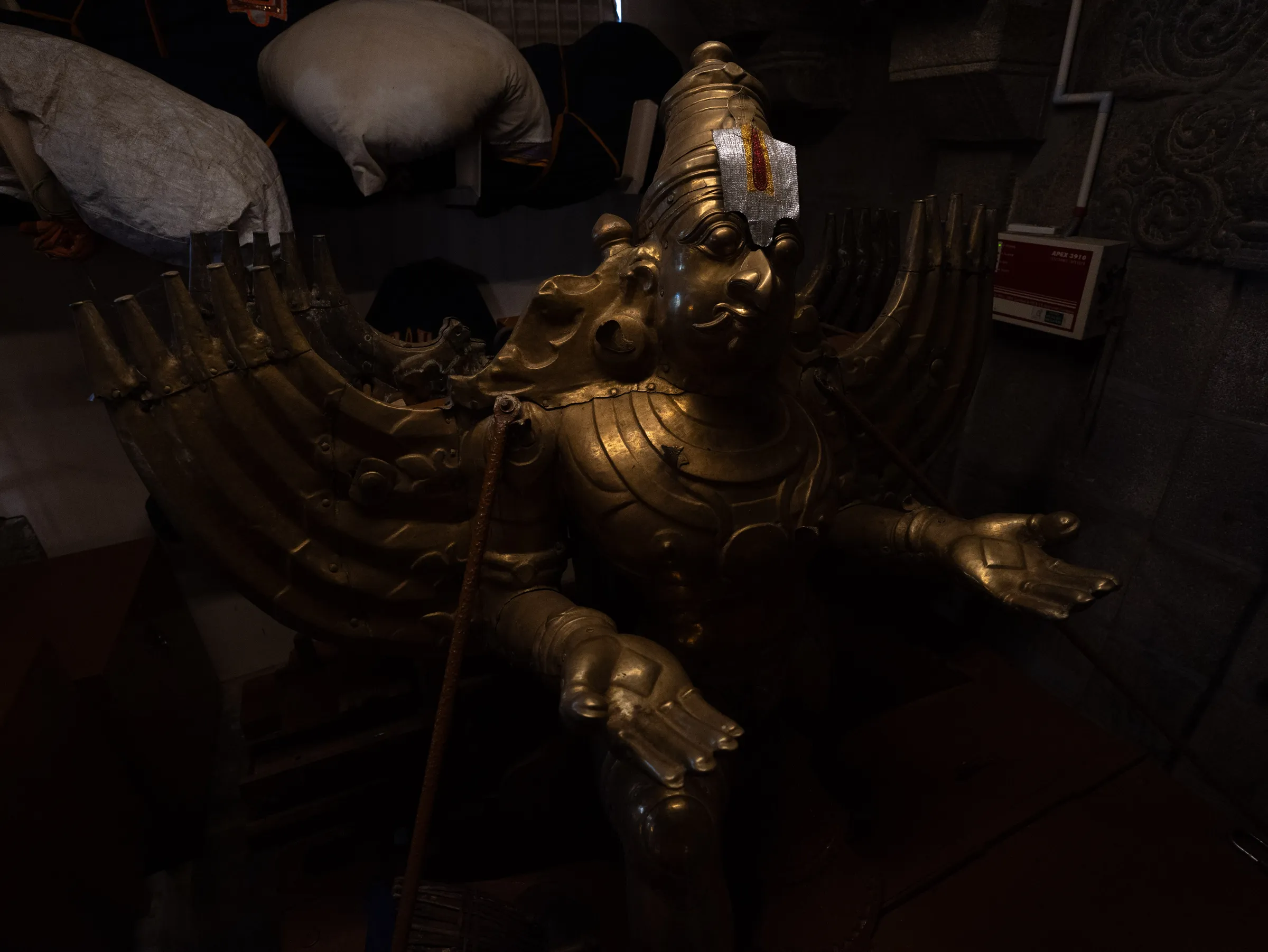
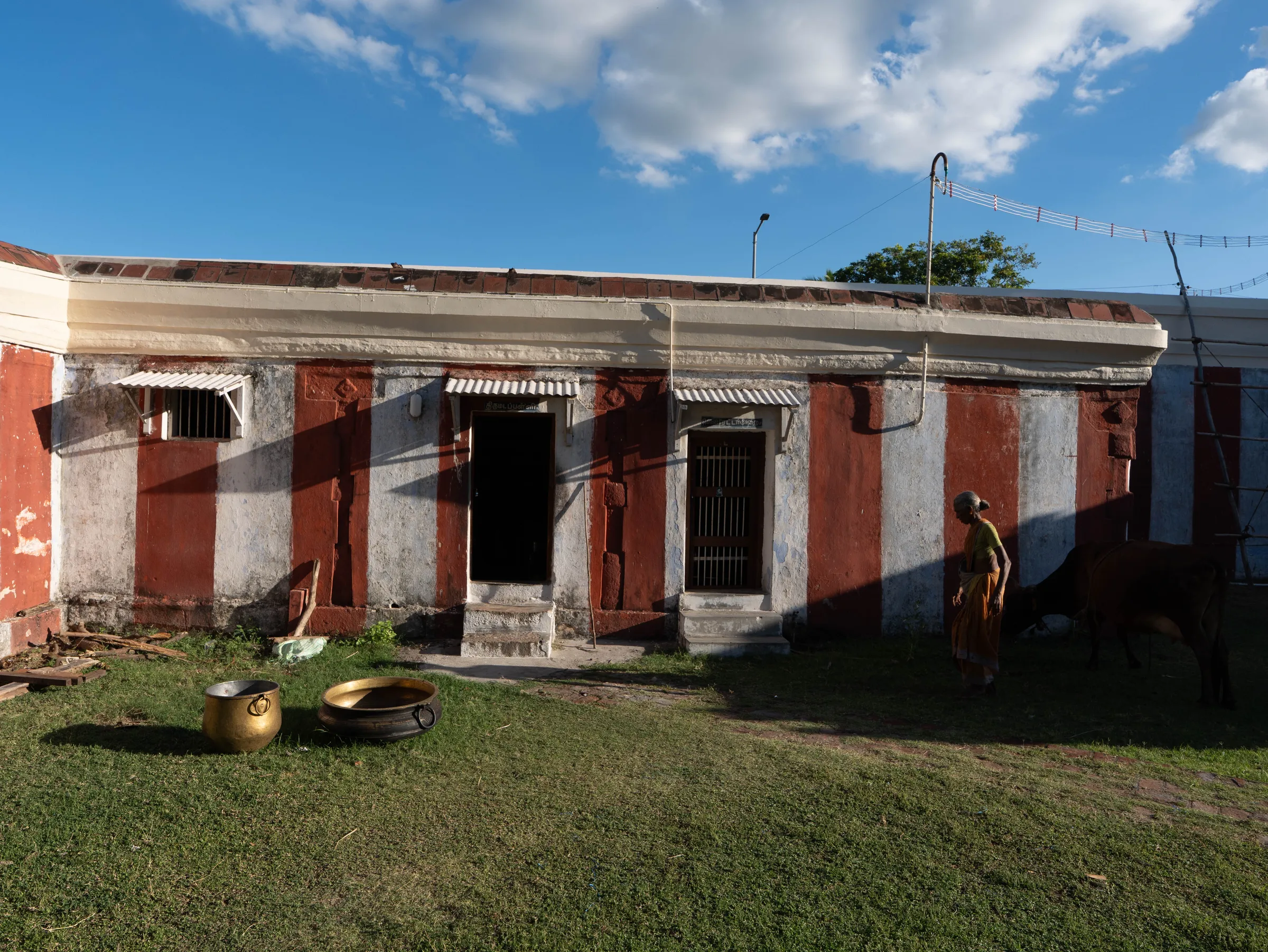
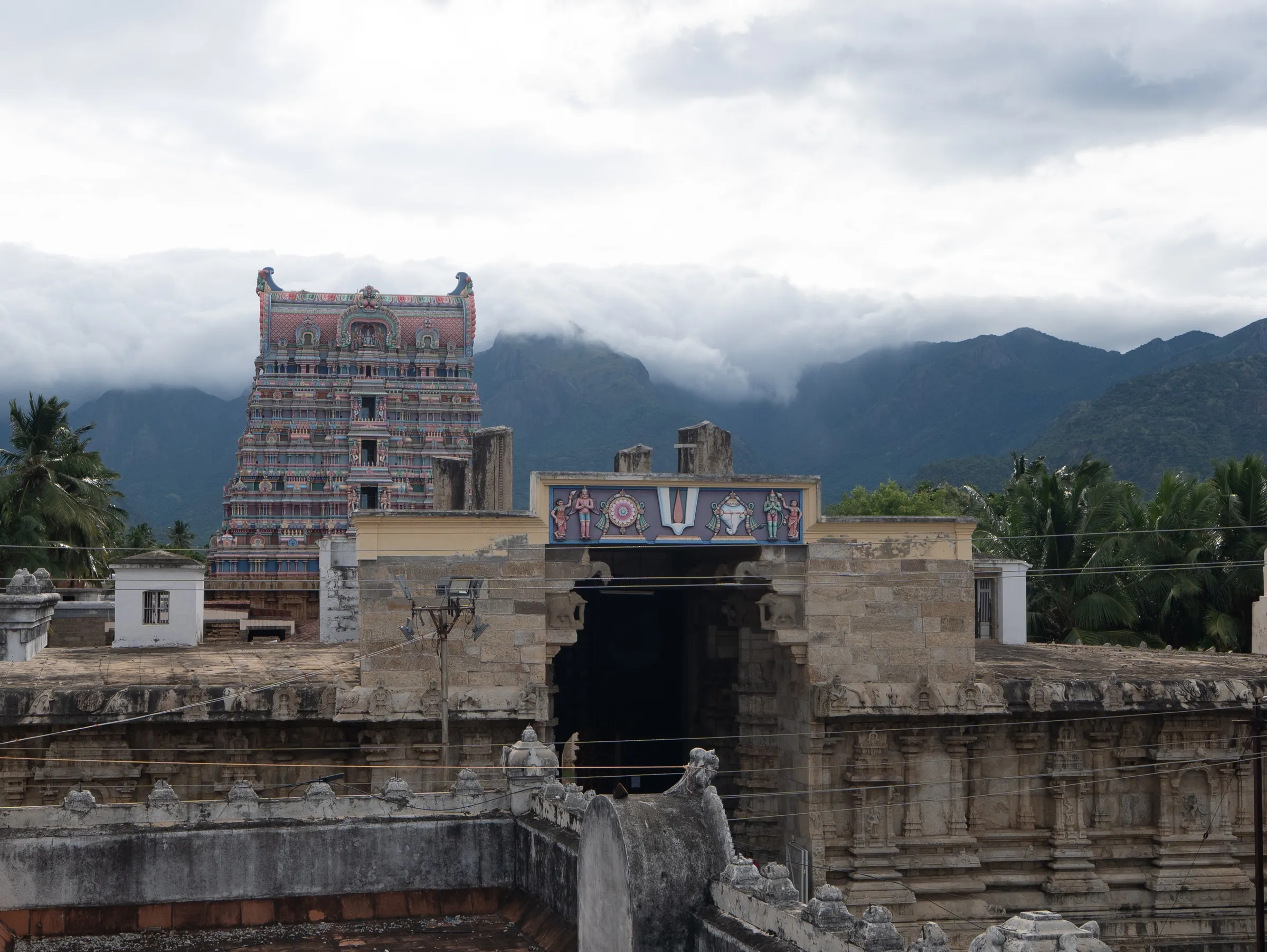
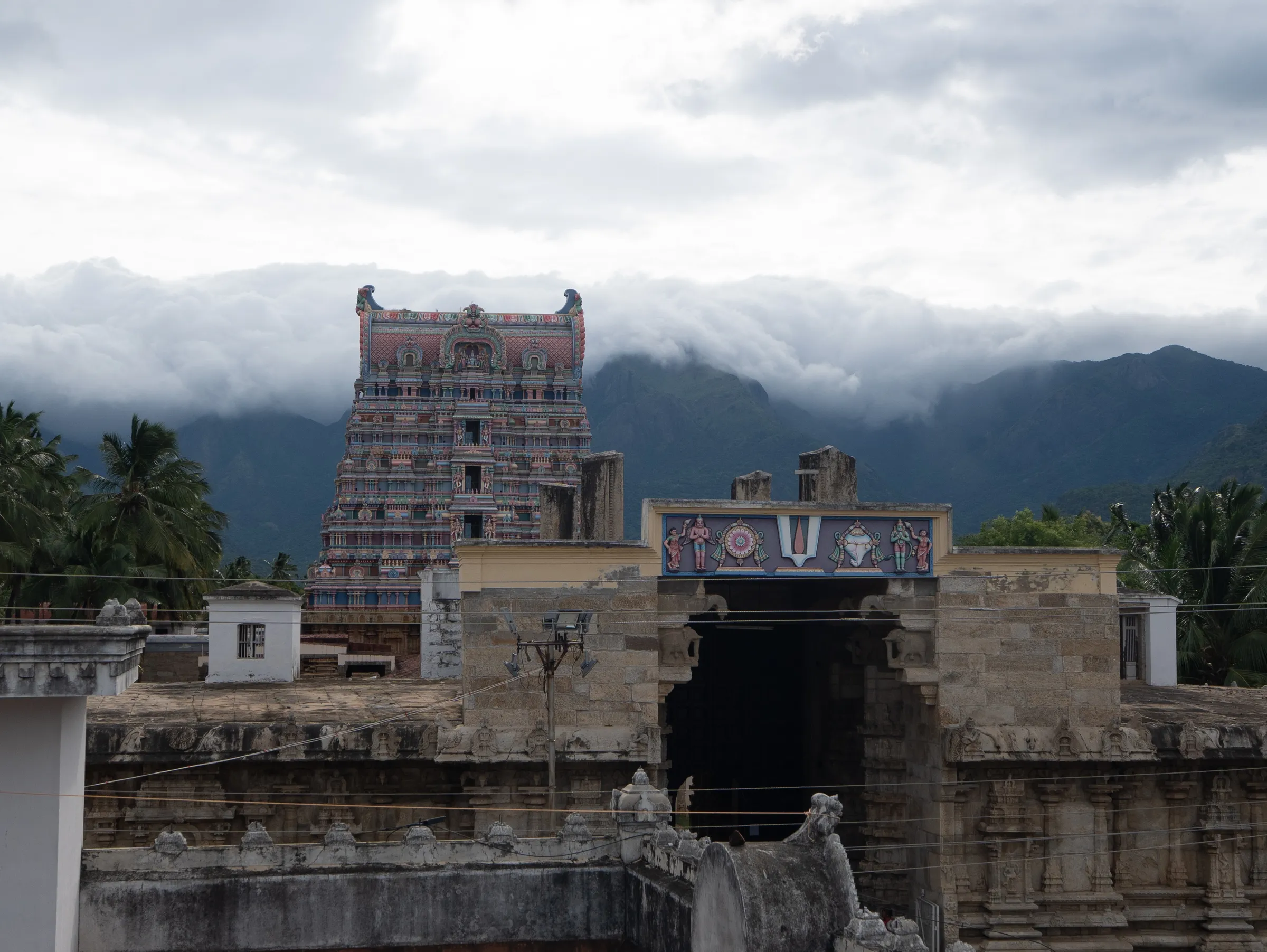
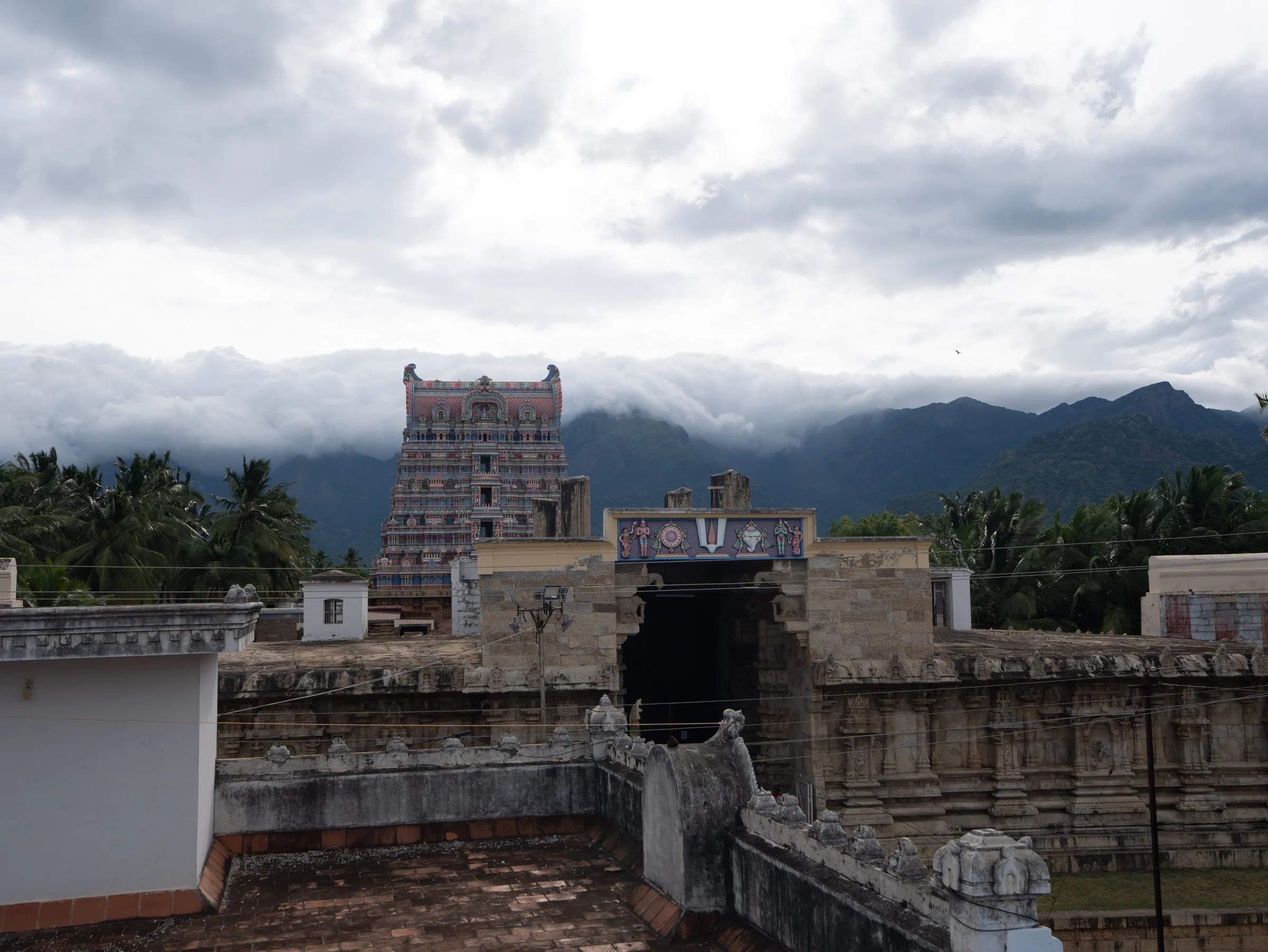
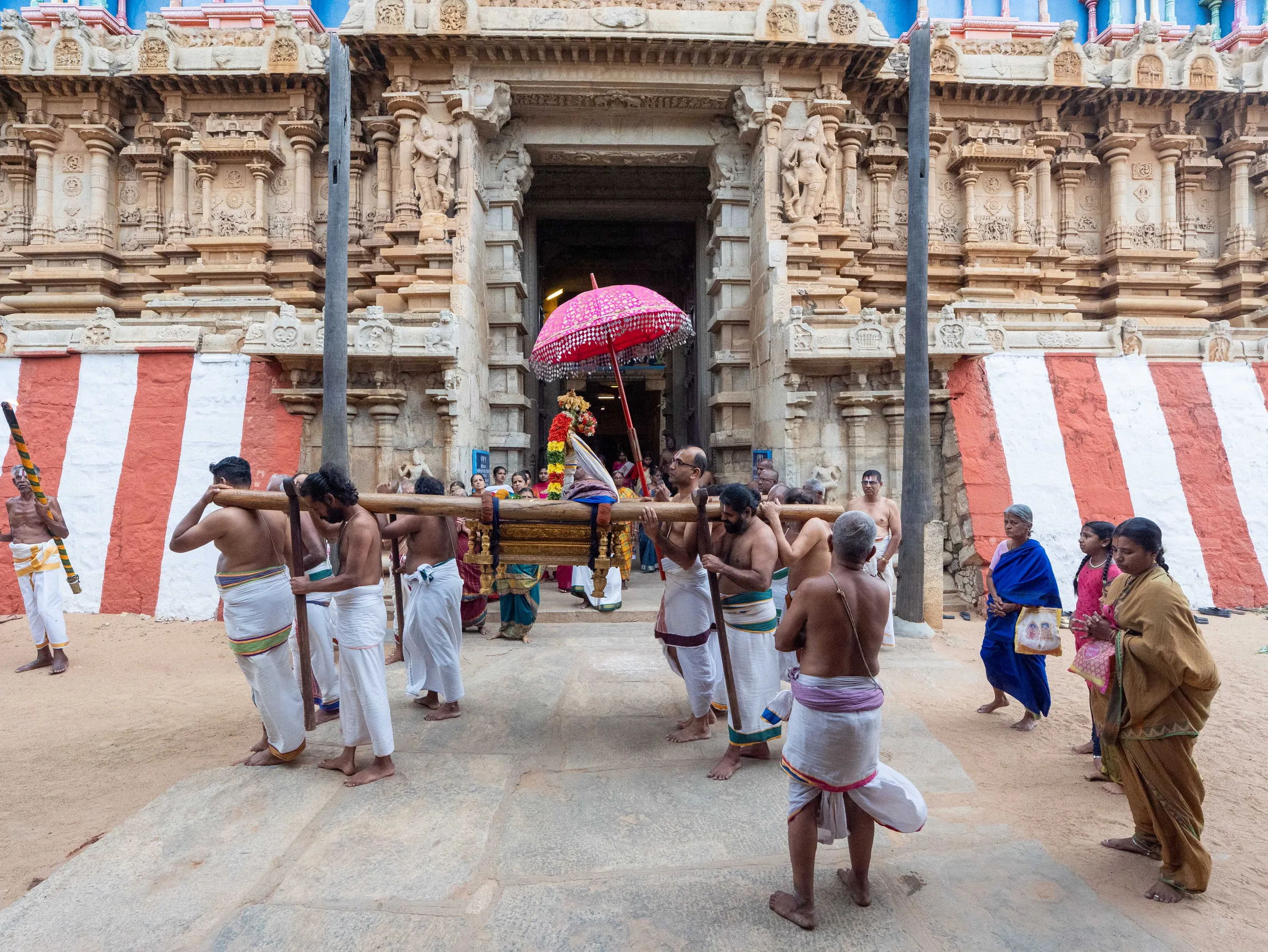
Nambi Temple, photograph
← Pandya Nadu
Entry 090

Nambi Temple

Tirukurungudi · Early shrines of the 8th century; later Nāyaka building

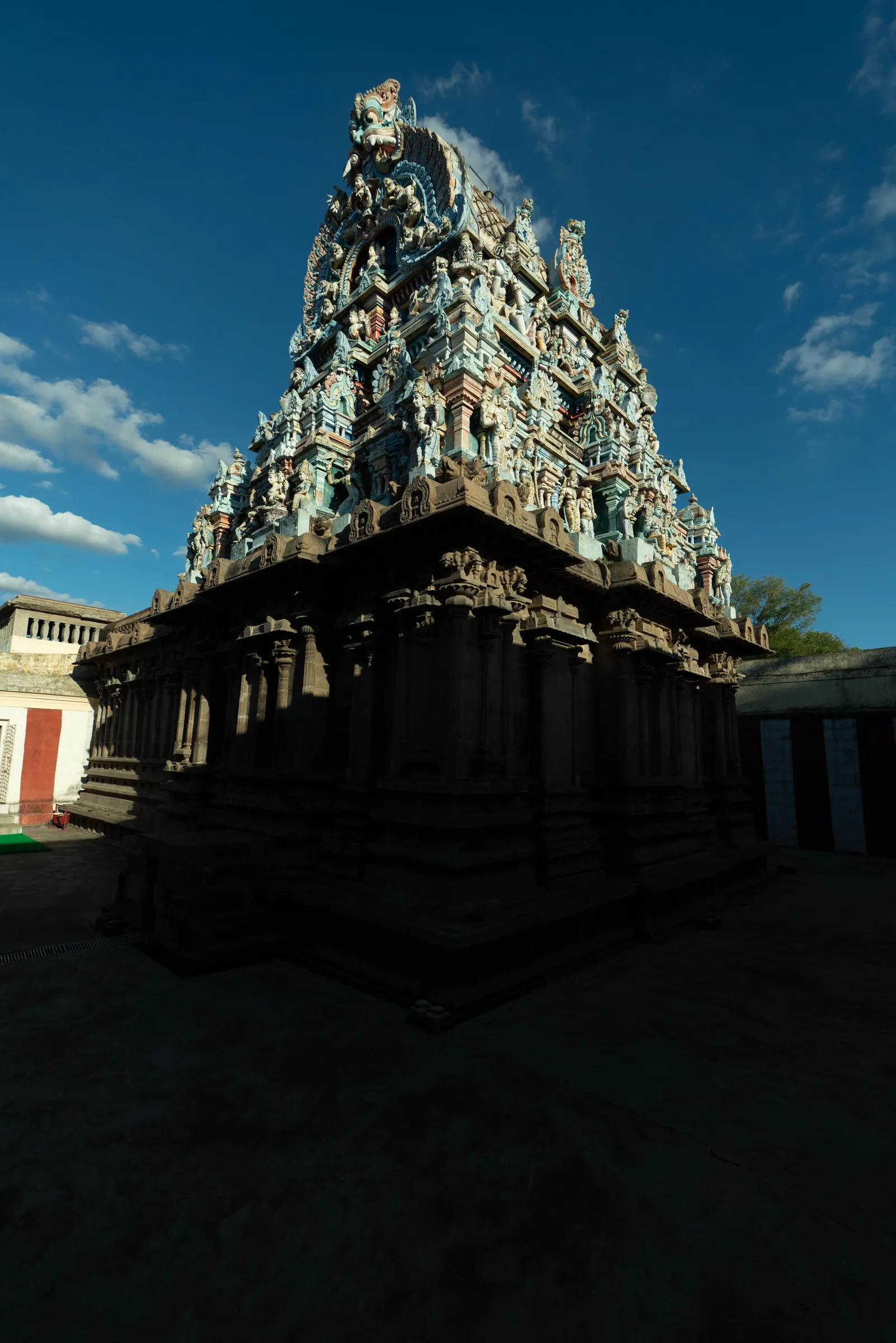
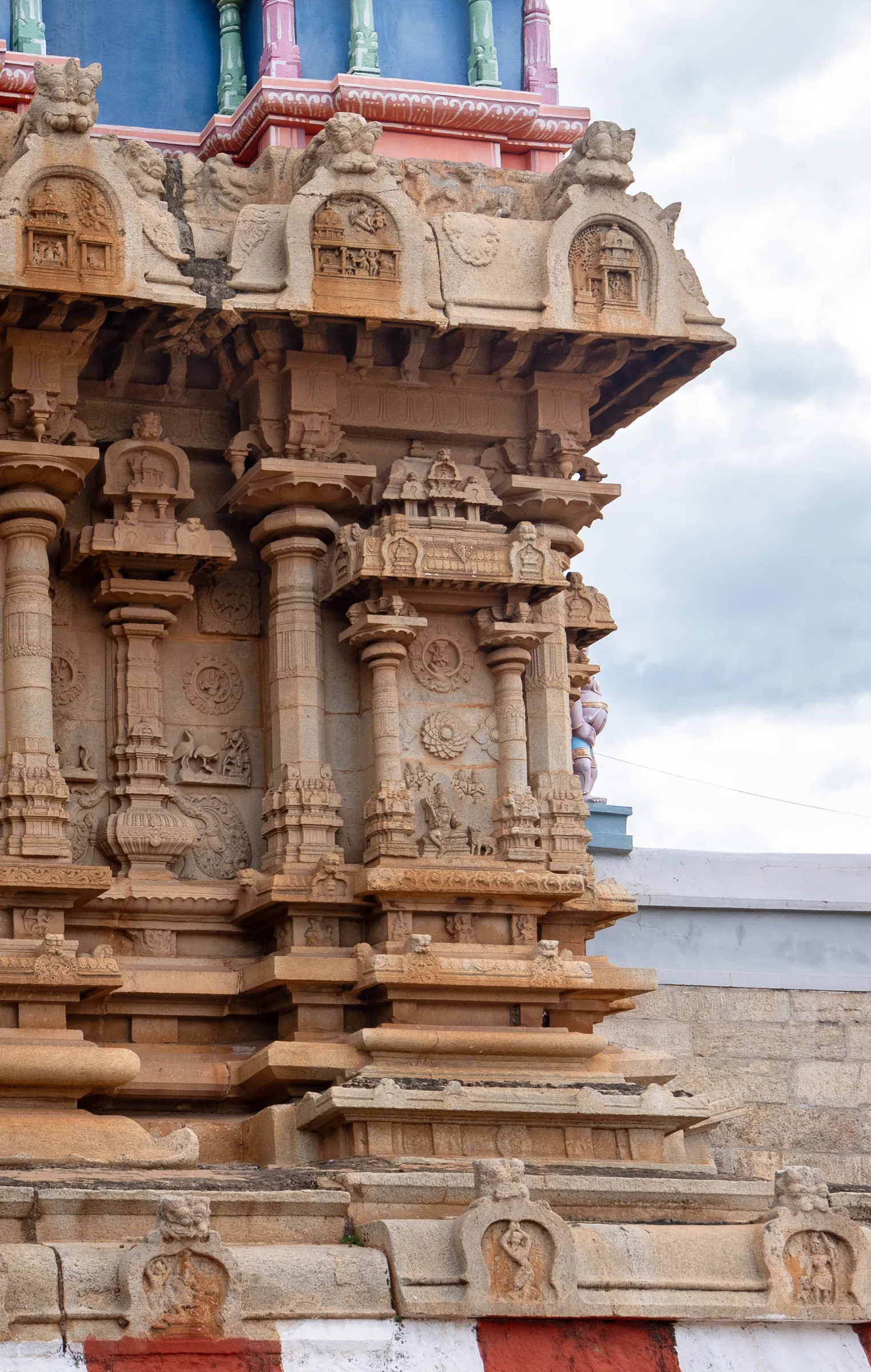
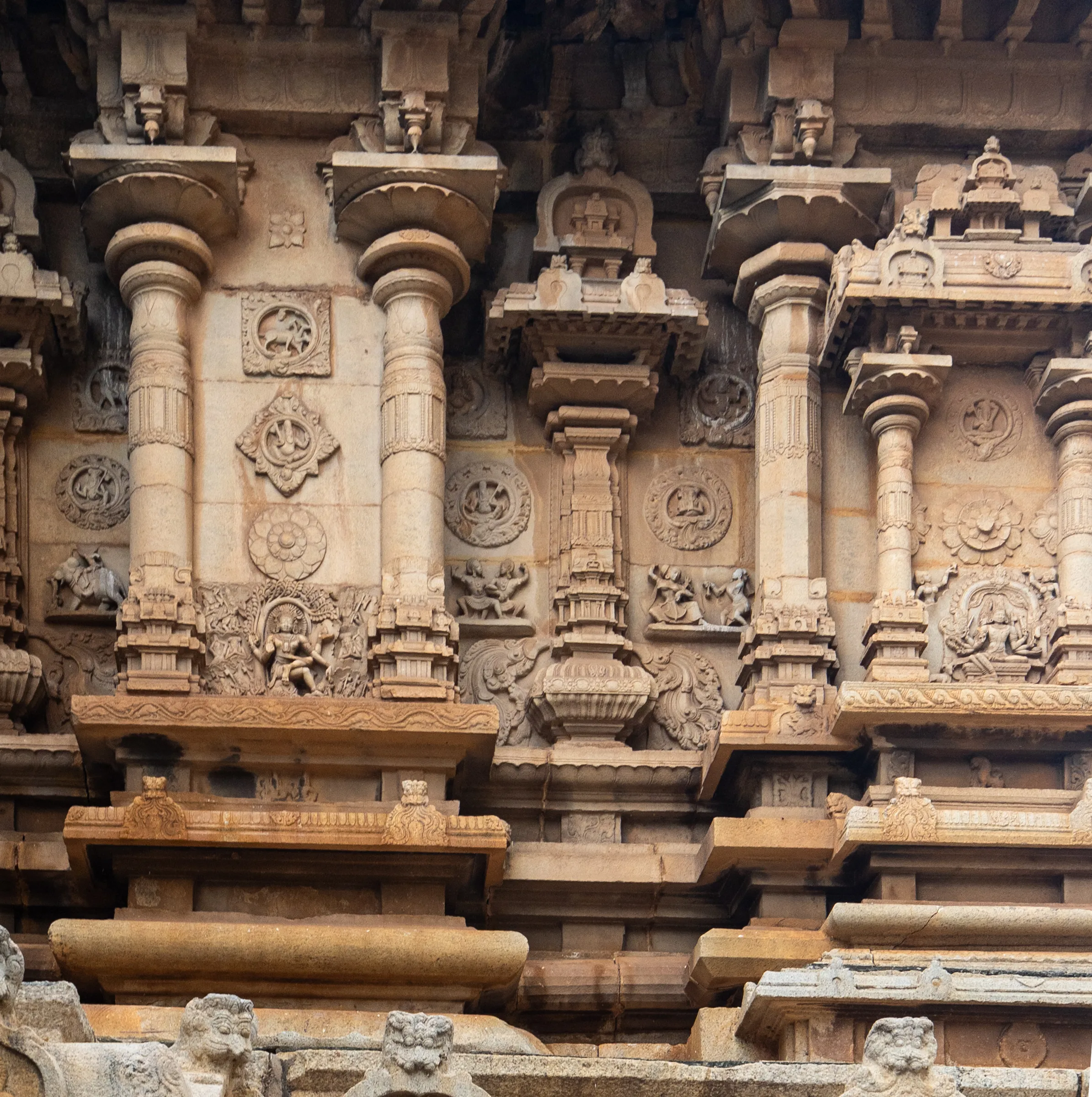
A Vishnu temple at Tirukurungudi by the Nambi River, against the Western Ghats on the Tamil Nadu and Kerala border, one of the Nava Tirupati group. Its Chitra Gopuram is among the finest works of wood and stone sculpture of the Nāyaka age.

The Nambi temple at Tirukurungudi stands by its river against the Western Ghats, one of the Nava Tirupati. Its eighth-century Viṣṇu shrines and its Nāyaka Chitra Gopuram of wood and stone carry the record; the inscriptions trace a fourteenth- century dam and its seventeenth-century repair, and the rare Kaisika Natakam holds the temple’s living myth.

The photographs

Plates · 33

Nambi Temple, photograph
© Amar Ramesh and team · All rights reserved
Nambi Temple, photograph
© Amar Ramesh and team · All rights reserved
Nambi Temple, photograph
© Amar Ramesh and team · All rights reserved
Nambi Temple, photograph
© Amar Ramesh and team · All rights reserved
Nambi Temple, photograph
© Amar Ramesh and team · All rights reserved
Nambi Temple, photograph
© Amar Ramesh · All rights reserved
Nambi Temple, photograph
© Amar Ramesh · All rights reserved
Nambi Temple, photograph
© Amar Ramesh · All rights reserved
Nambi Temple, photograph
© Amar Ramesh · All rights reserved
Nambi Temple, photograph
© Amar Ramesh · All rights reserved
Nambi Temple, photograph
© Amar Ramesh · All rights reserved
Nambi Temple, photograph
© Amar Ramesh · All rights reserved
Nambi Temple, photograph
© Amar Ramesh · All rights reserved
Nambi Temple, photograph
© Amar Ramesh · All rights reserved
Nambi Temple, photograph
© Amar Ramesh · All rights reserved
Nambi Temple, photograph
© Amar Ramesh · All rights reserved
Nambi Temple, photograph
© Amar Ramesh · All rights reserved
Nambi Temple, photograph
© Amar Ramesh · All rights reserved
Nambi Temple, photograph
© Amar Ramesh · All rights reserved
Nambi Temple, photograph
© Amar Ramesh · All rights reserved
Nambi Temple, photograph
© Amar Ramesh · All rights reserved
Nambi Temple, photograph
© Amar Ramesh · All rights reserved
Nambi Temple, photograph
© Amar Ramesh · All rights reserved
Nambi Temple, photograph
© Amar Ramesh · All rights reserved
Nambi Temple, photograph
© Amar Ramesh · All rights reserved
Nambi Temple, photograph
© Amar Ramesh · All rights reserved
Nambi Temple, photograph
© Amar Ramesh · All rights reserved
Nambi Temple, photograph
© Amar Ramesh · All rights reserved
Nambi Temple, photograph
© Amar Ramesh · All rights reserved
Nambi Temple, photograph
© Amar Ramesh · All rights reserved
Nambi Temple, photograph
© Amar Ramesh · All rights reserved
Nambi Temple, photograph
© Amar Ramesh · All rights reserved
01

Architectural

structure & vocabulary

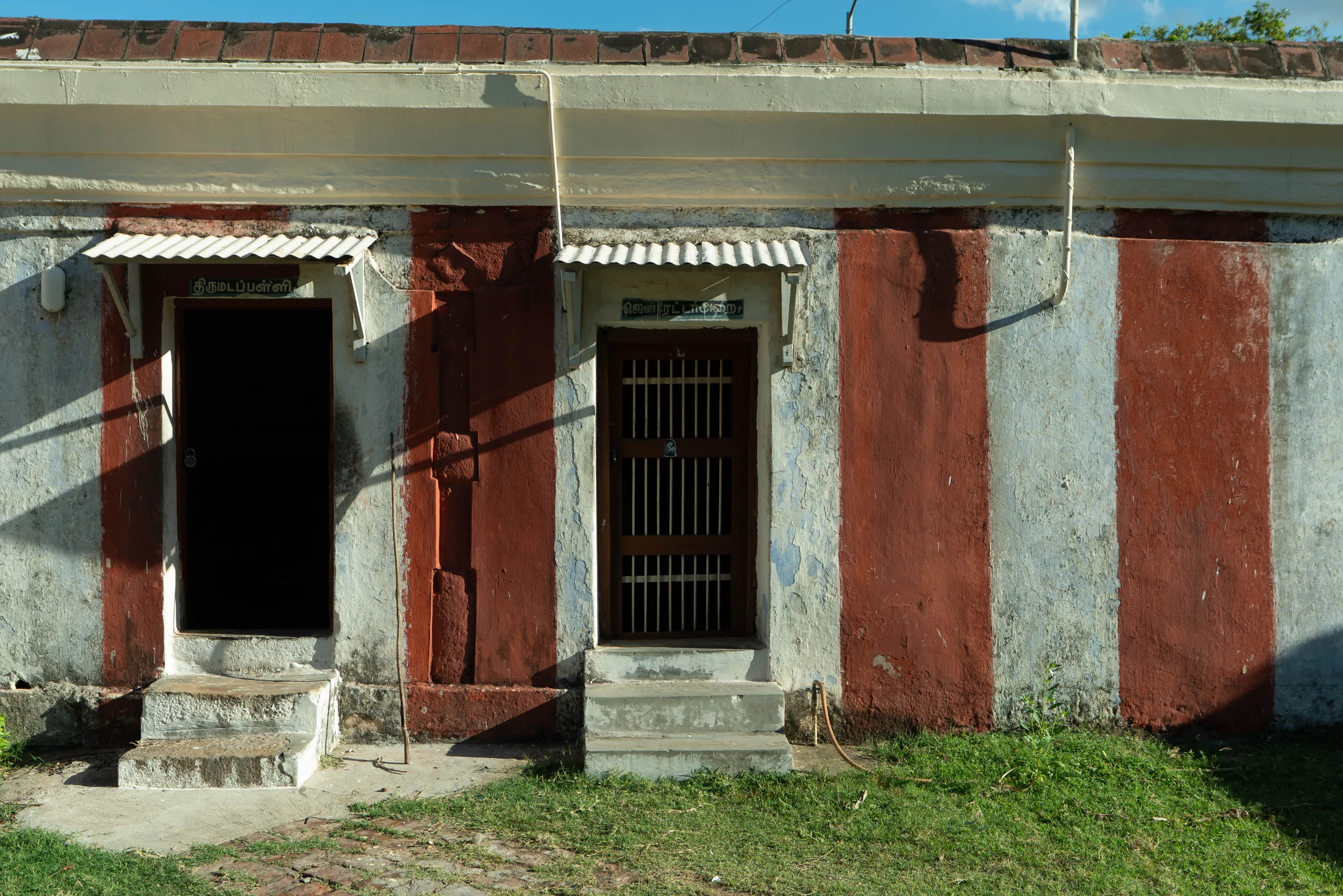
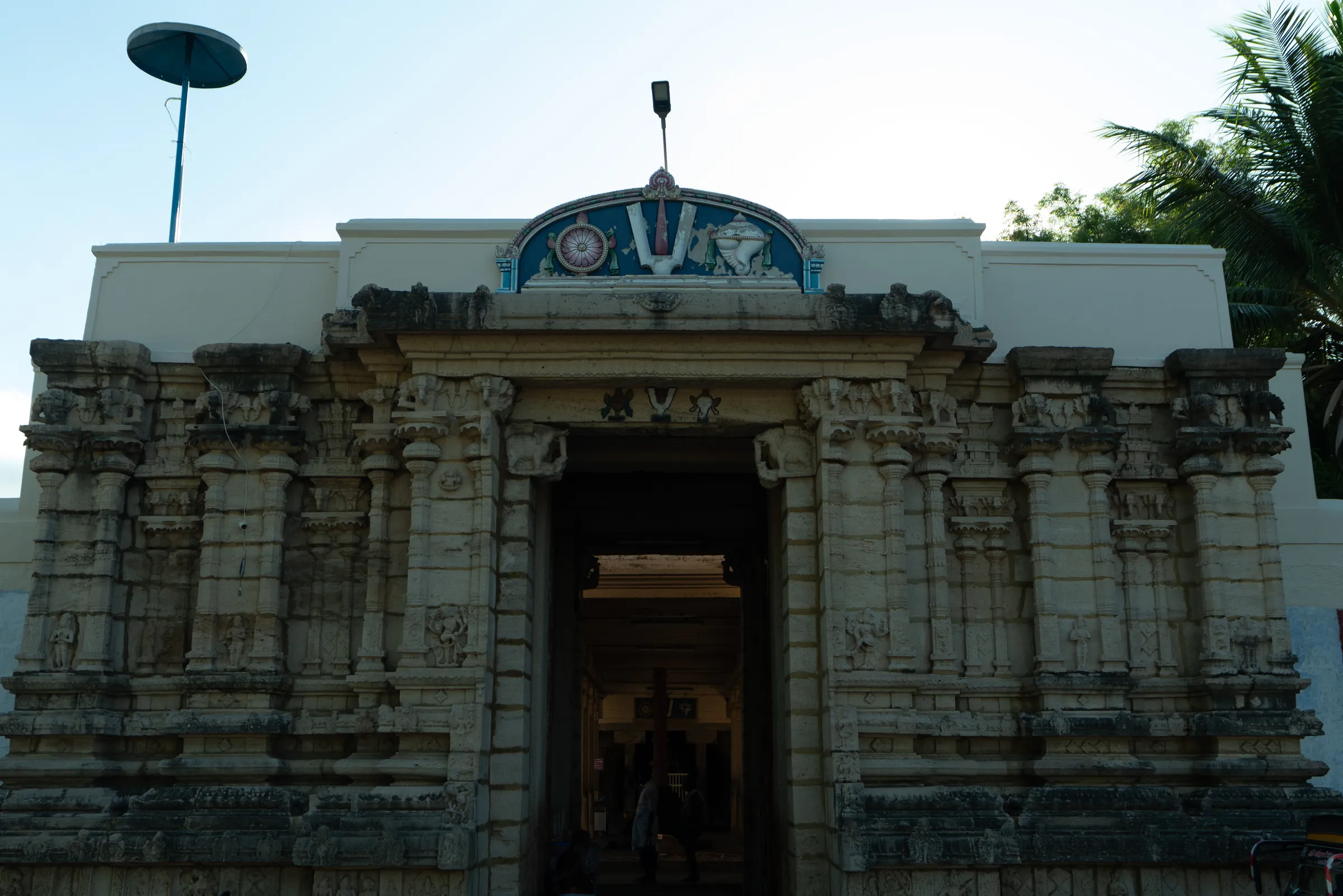
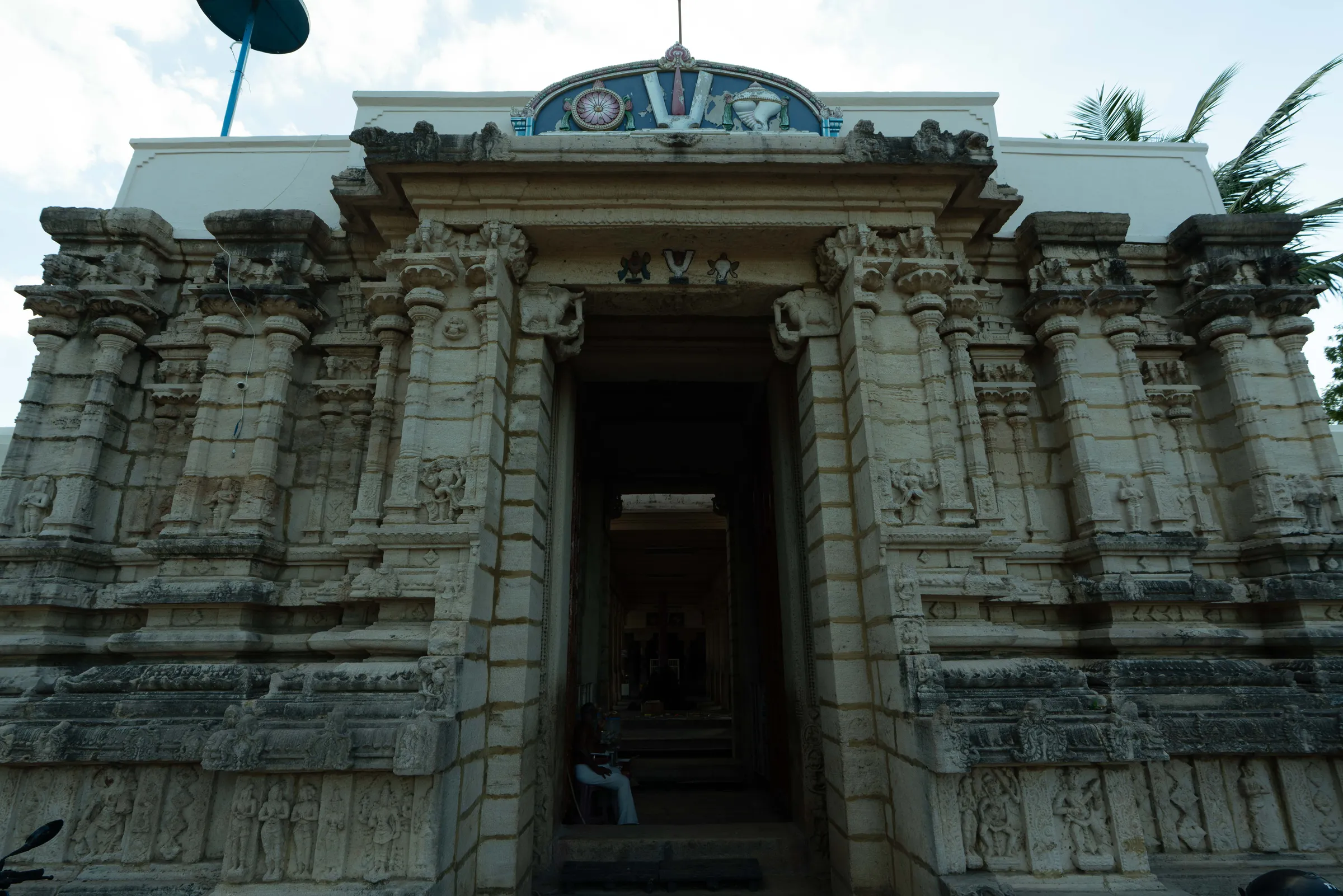
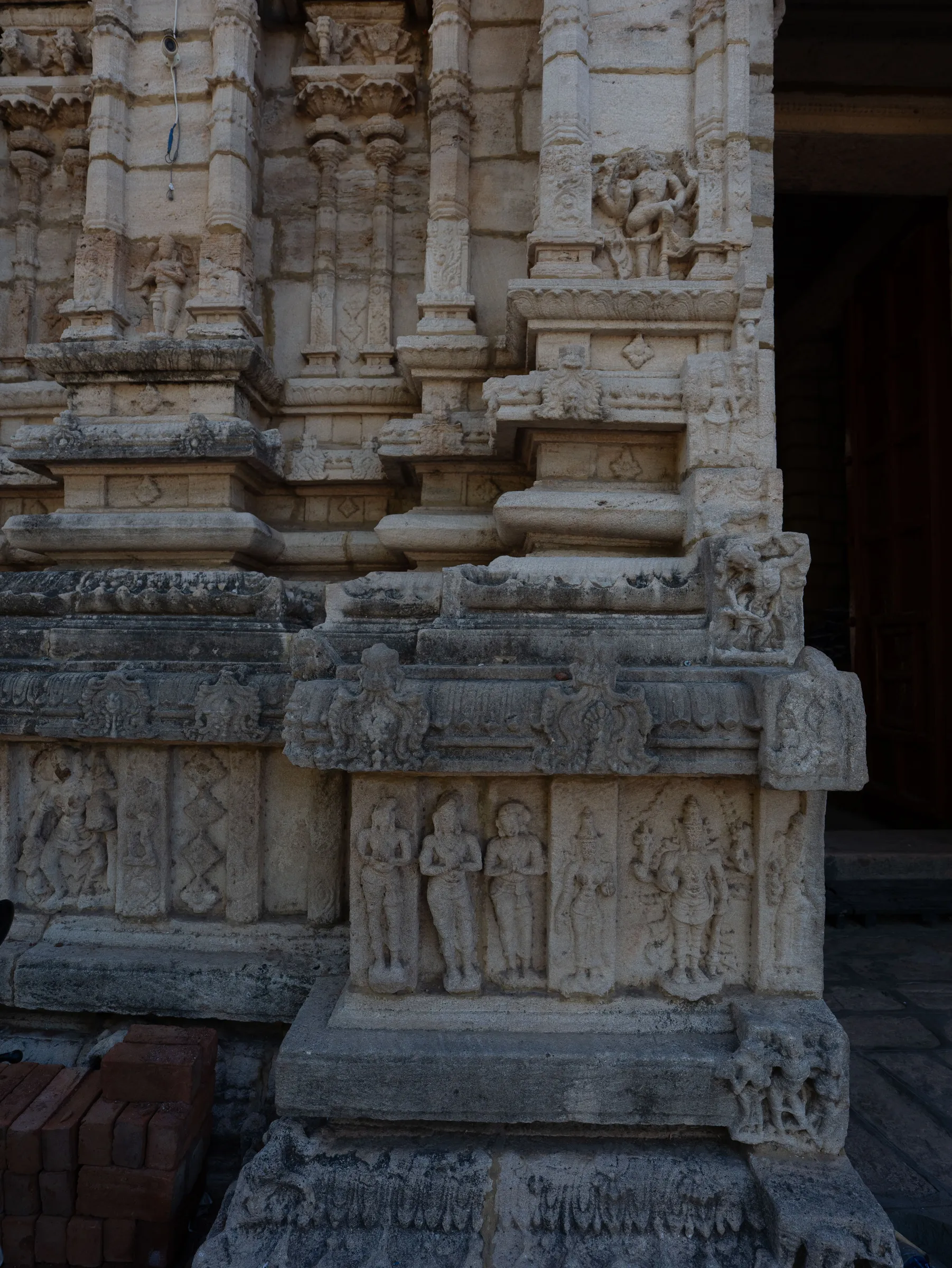
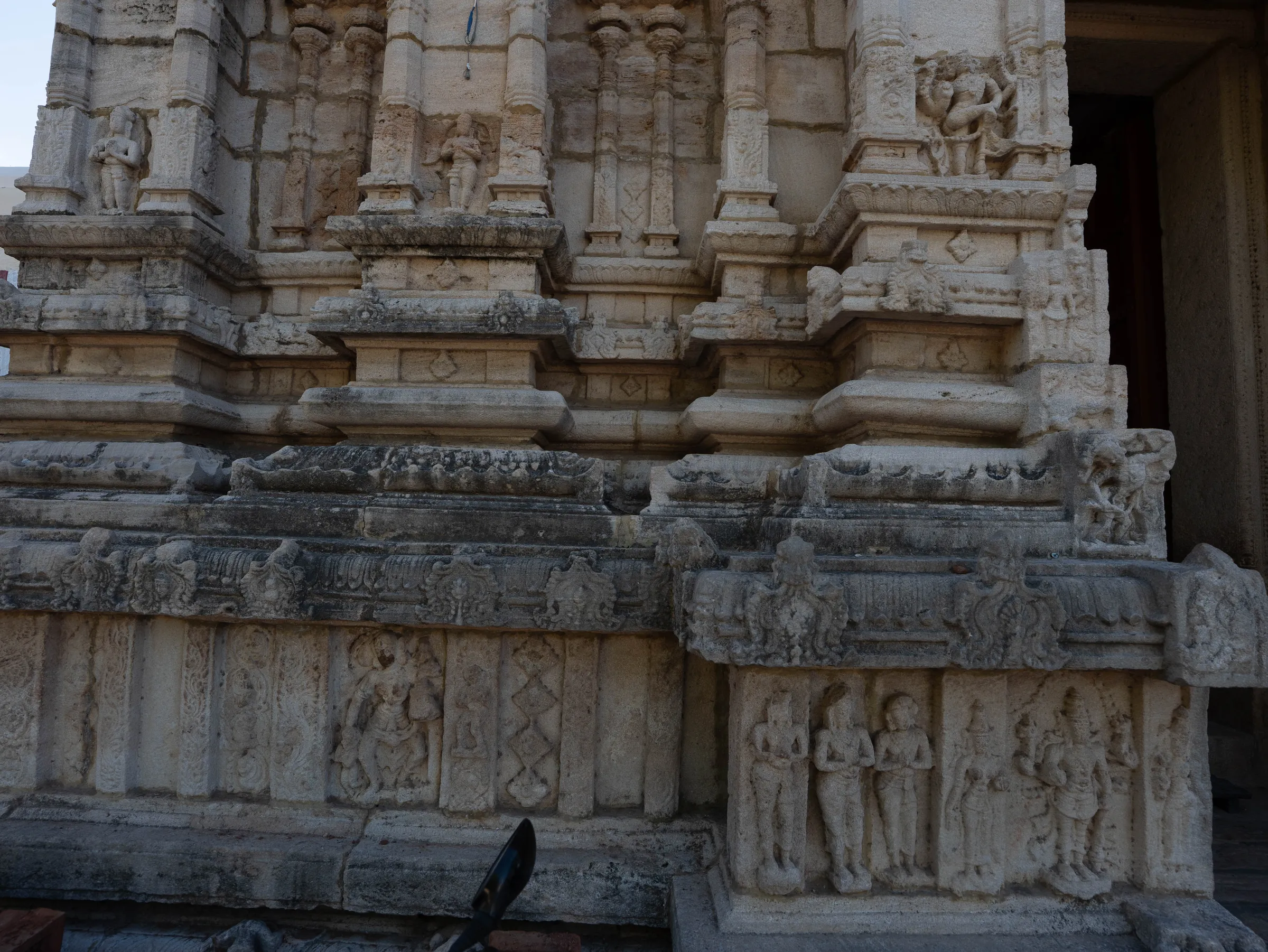
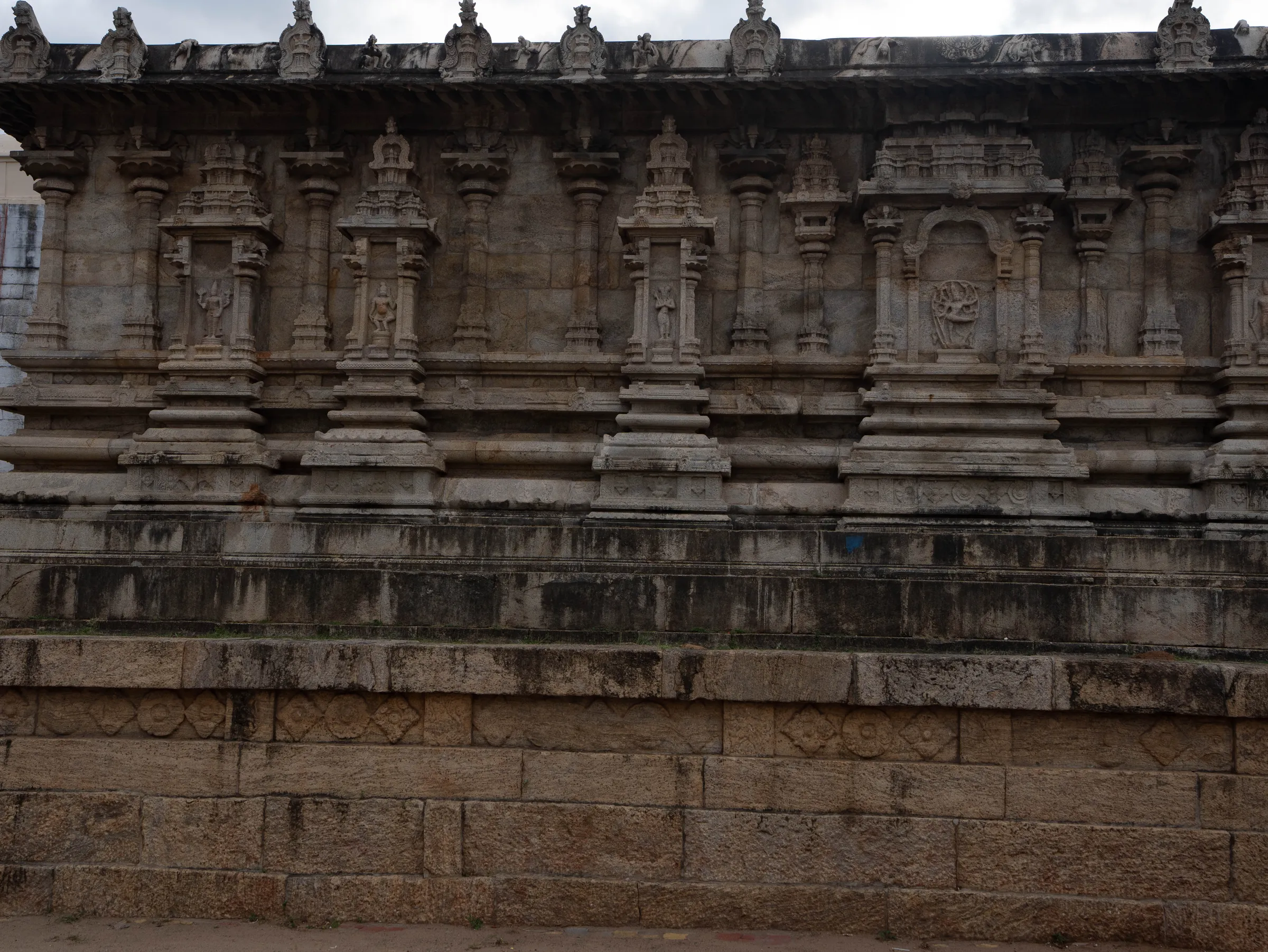
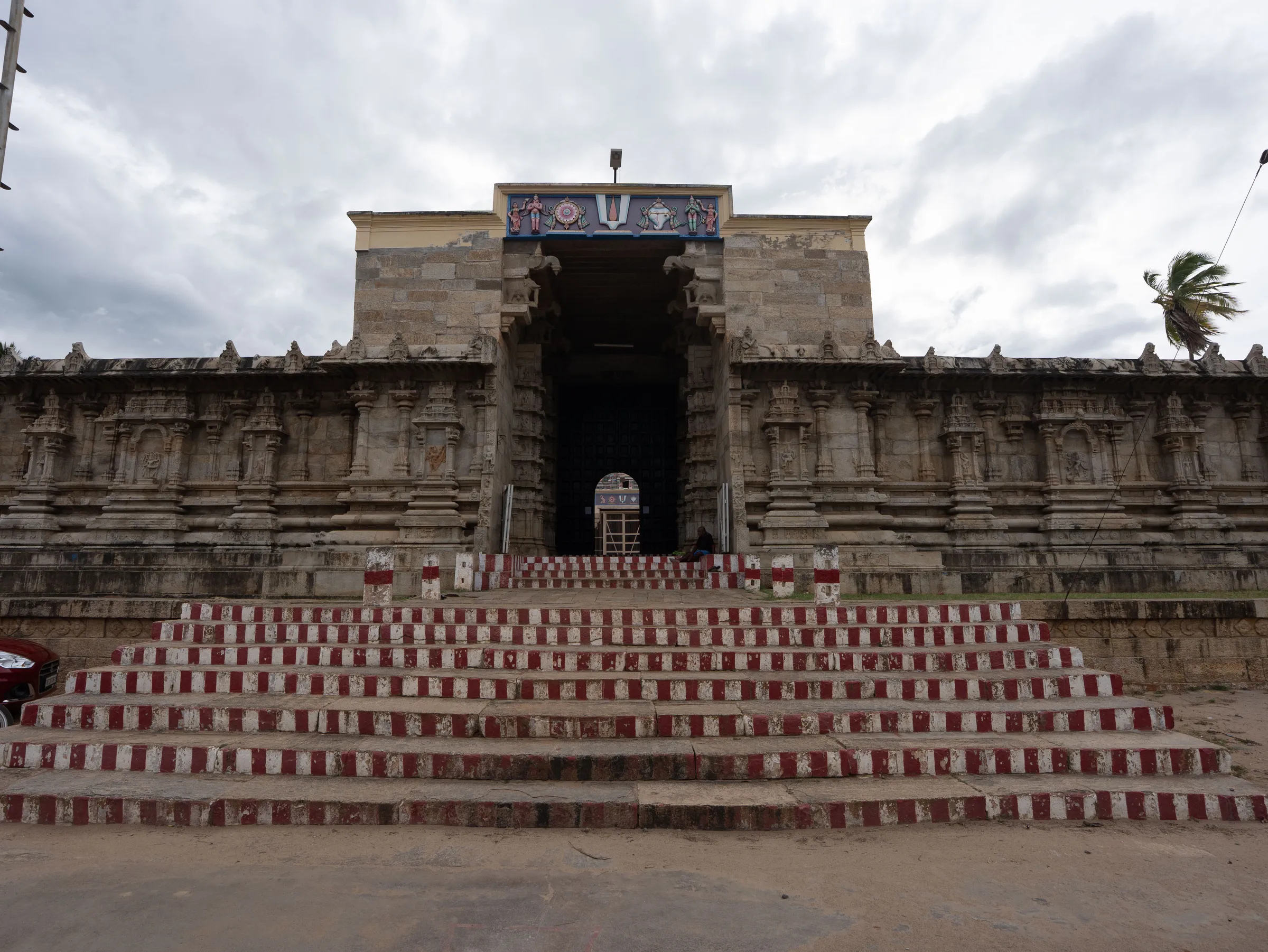
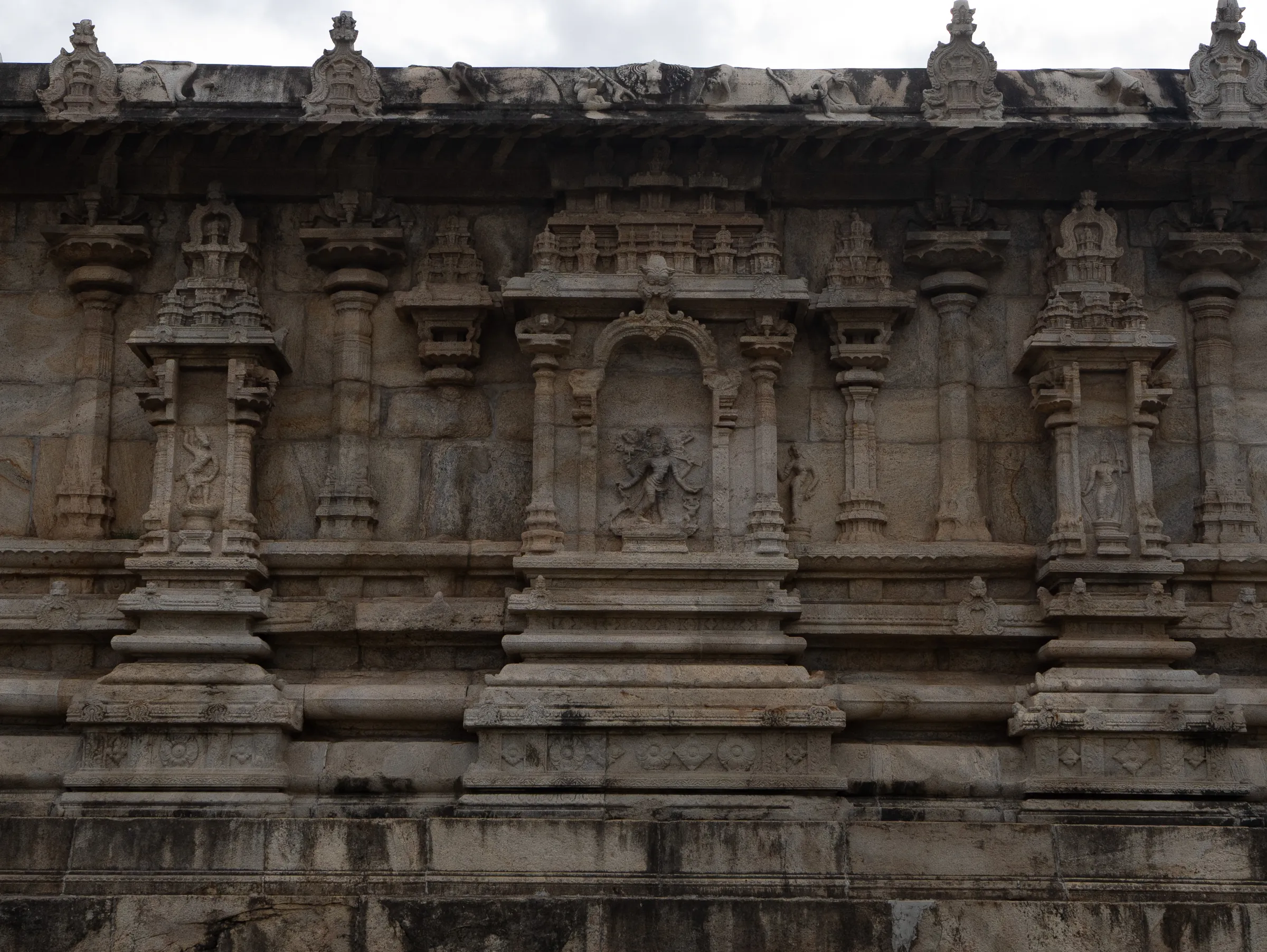
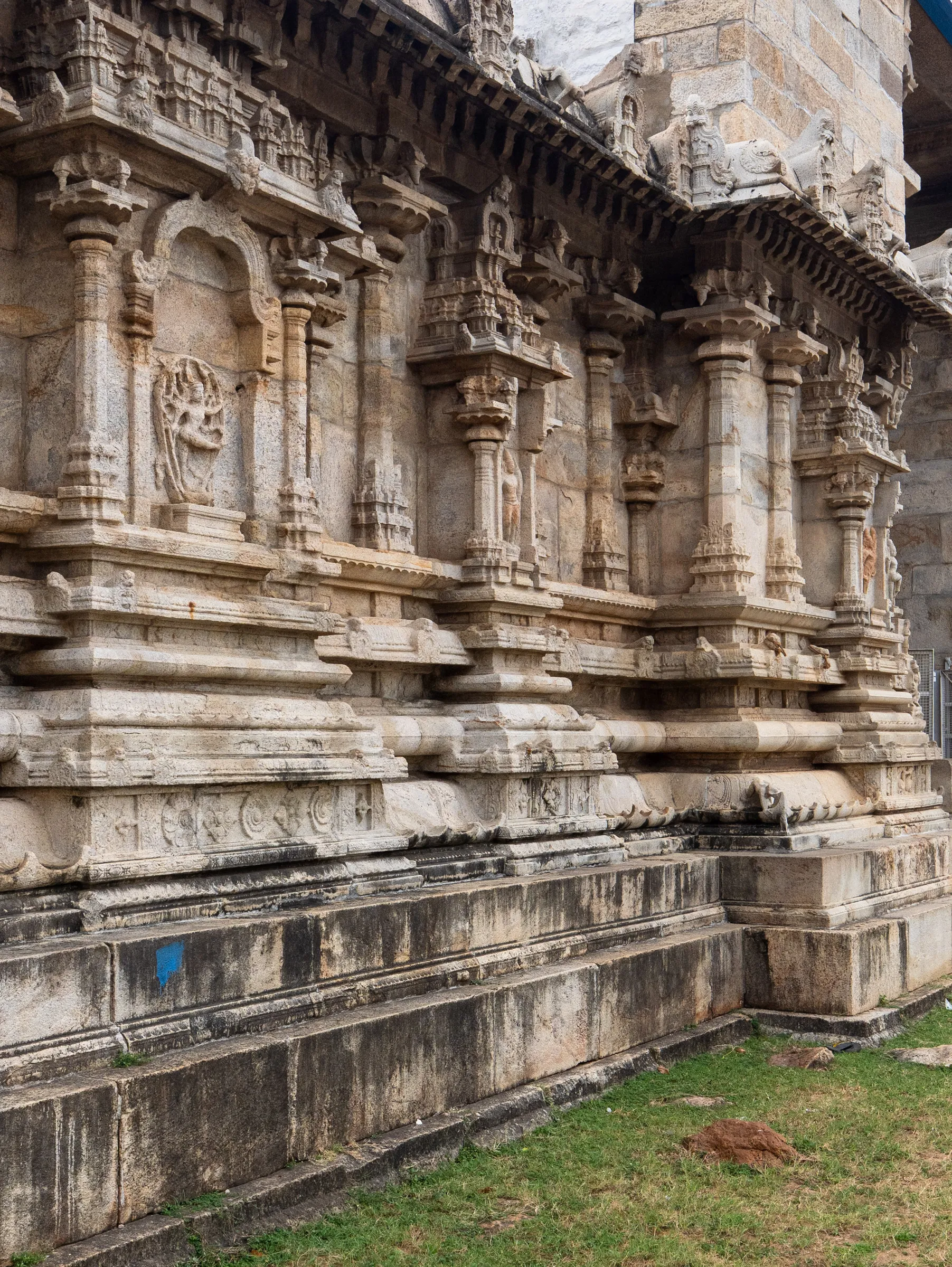
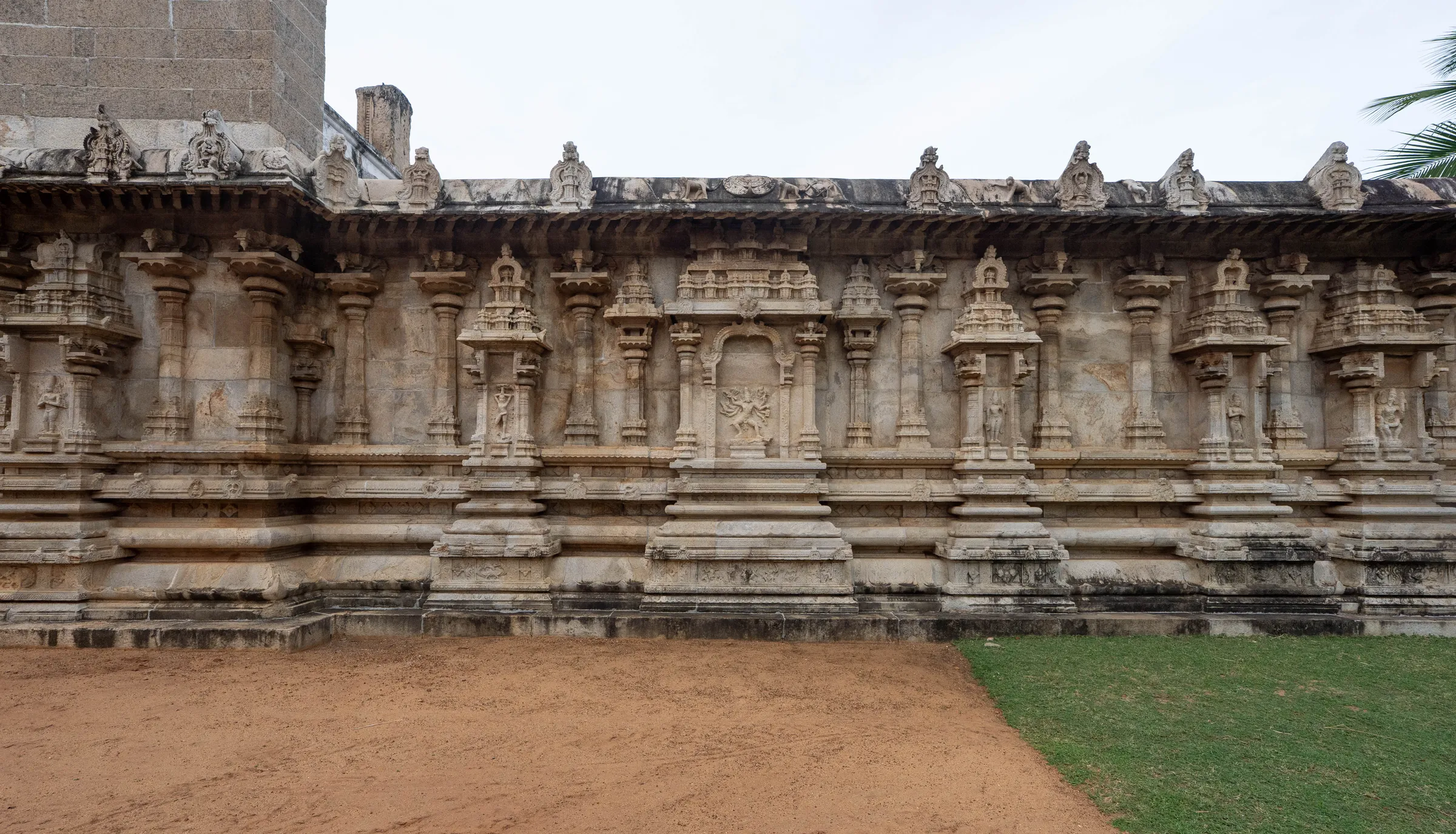
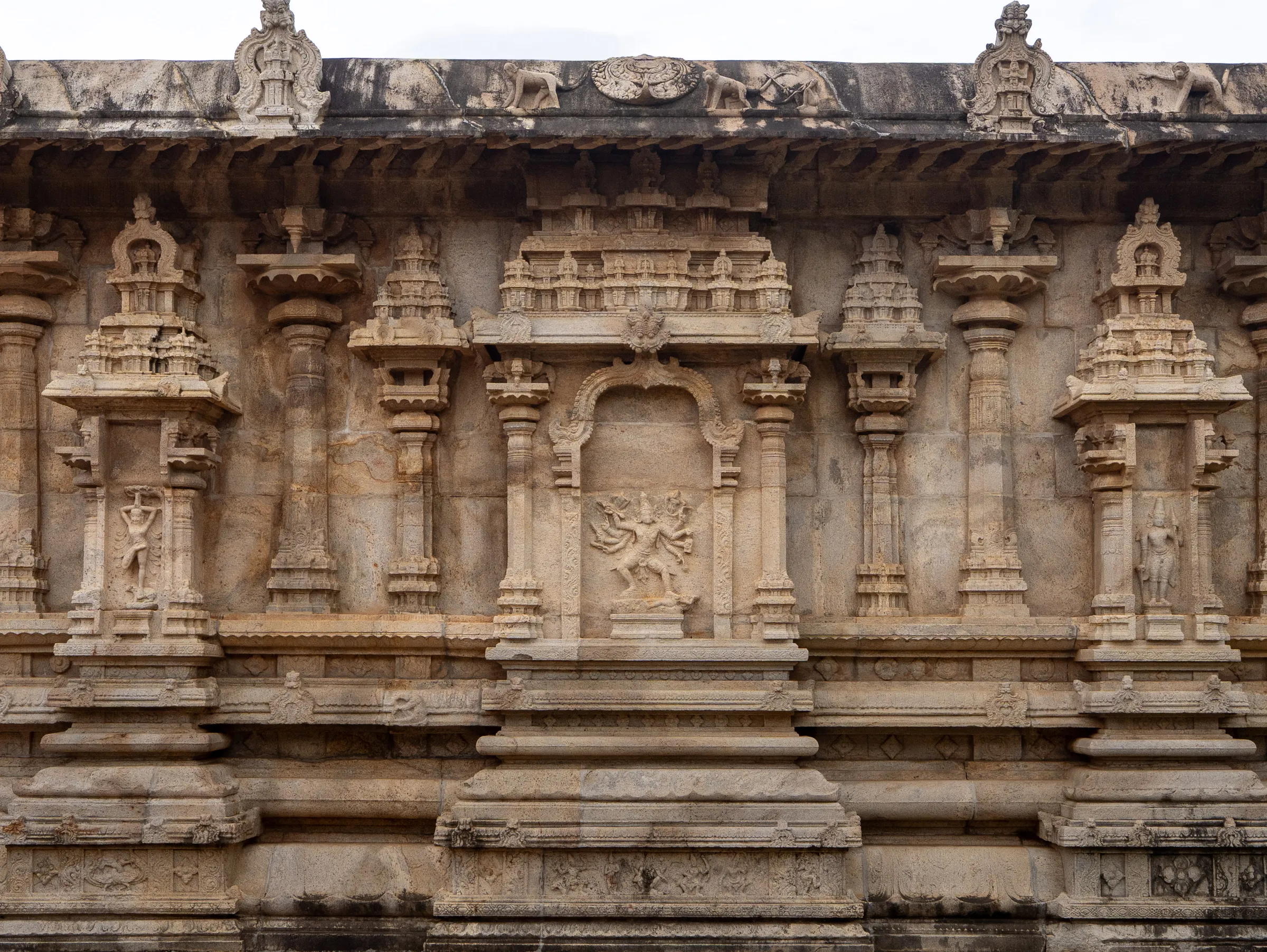
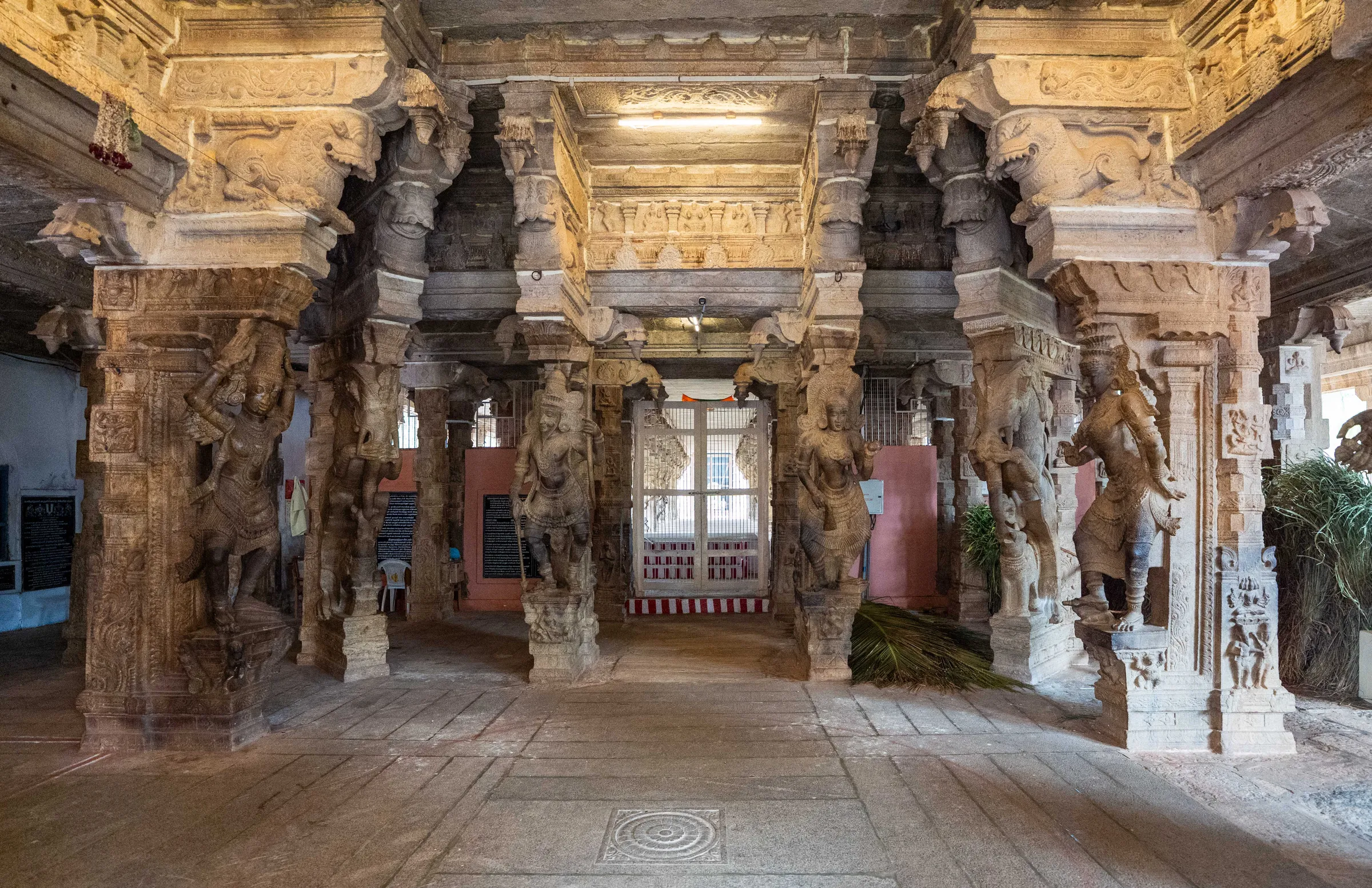
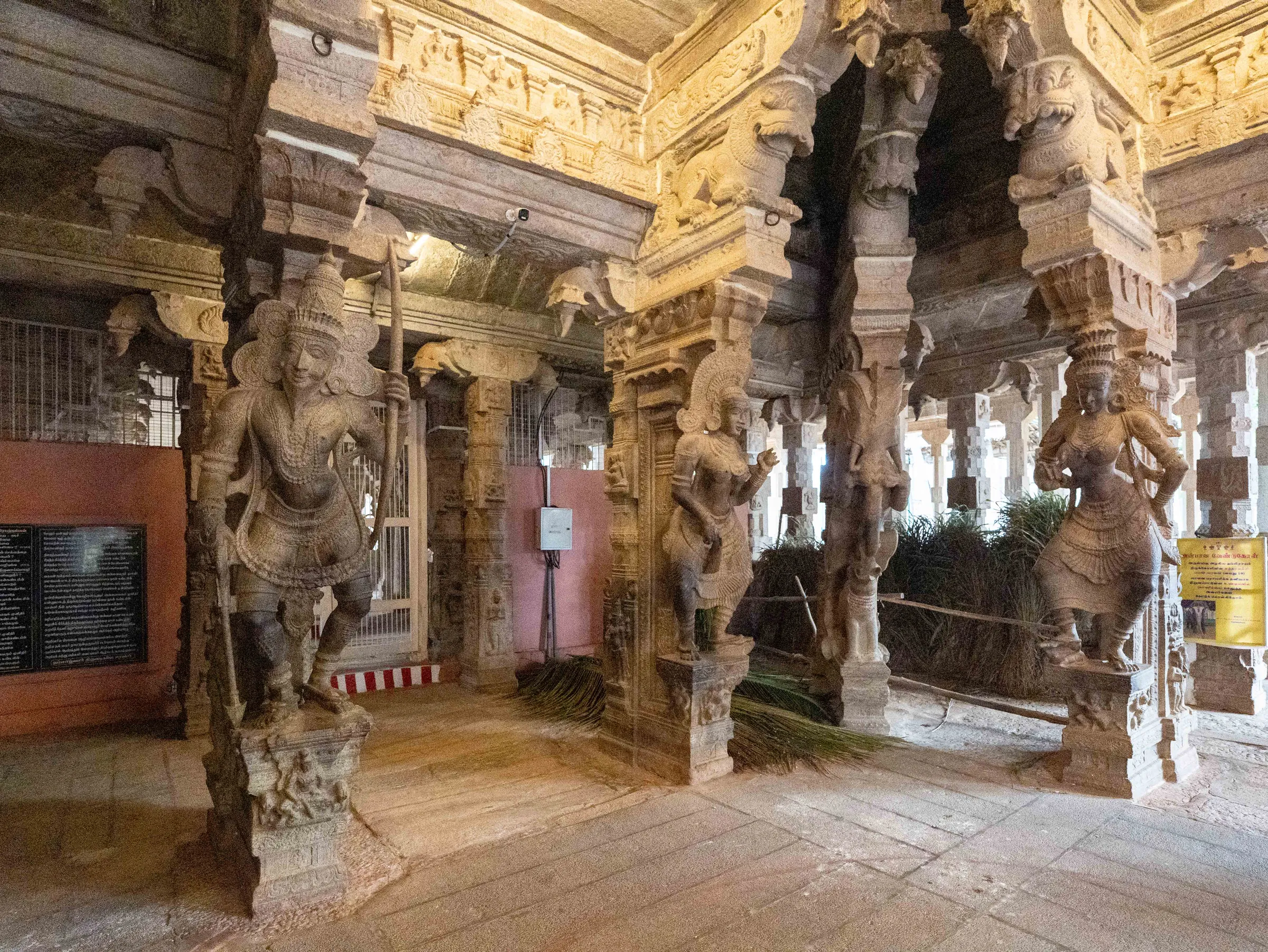
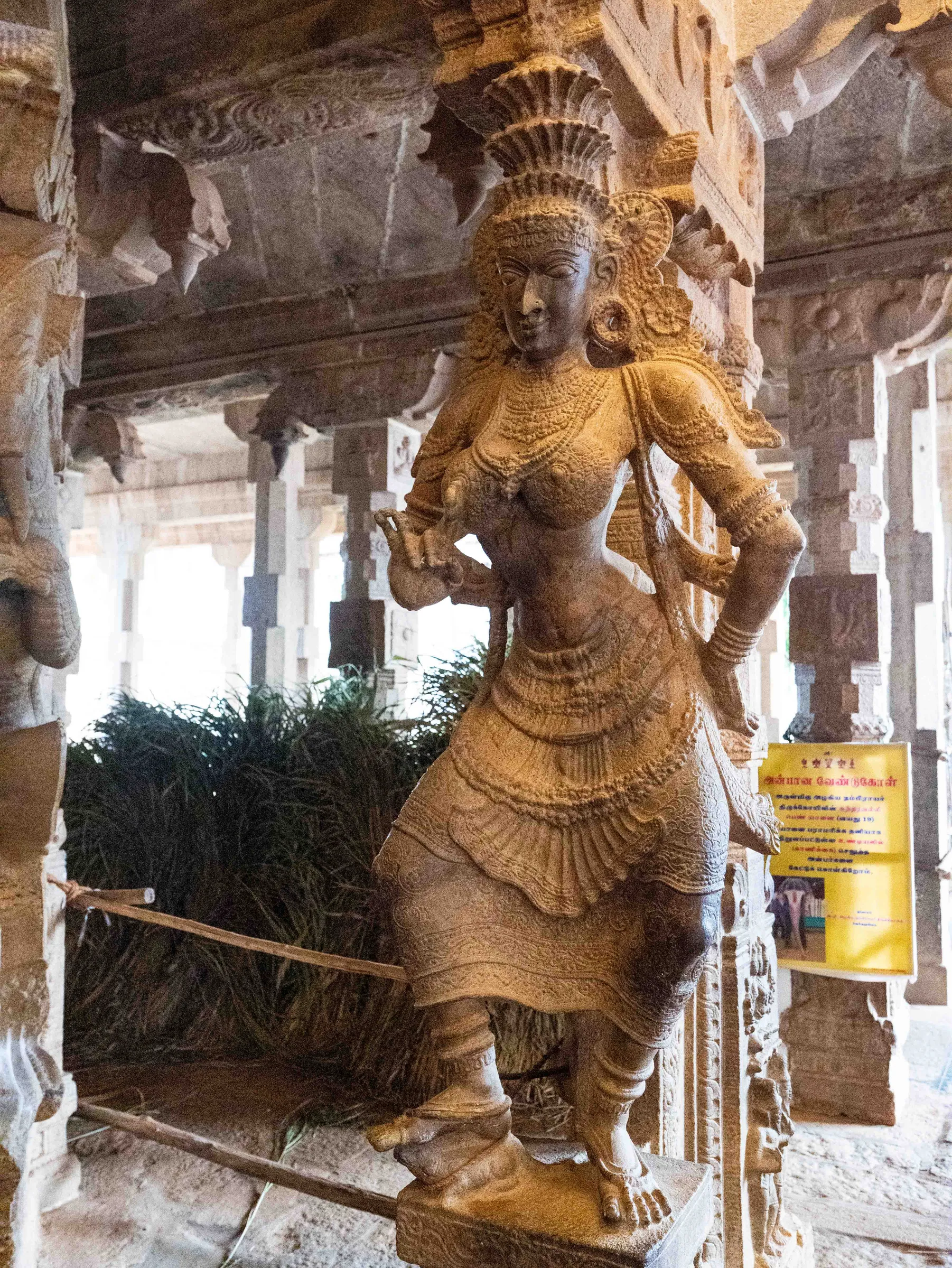
The temple stands in a scenic setting by the Nambi River, with a nearby hill Vishnu temple, the Malai Mel Nambi. The towering gopuram is unfinished, but its door-opening mechanism and the wall sculptures repay a long look. A long pillared portico carries a rare image of Saneeswara (Saturn); a hall beyond holds eight sculptures of the Pandavas, Rati and Manmatha, with the Tiru Jeeyar monastery that administers the temple to the right.

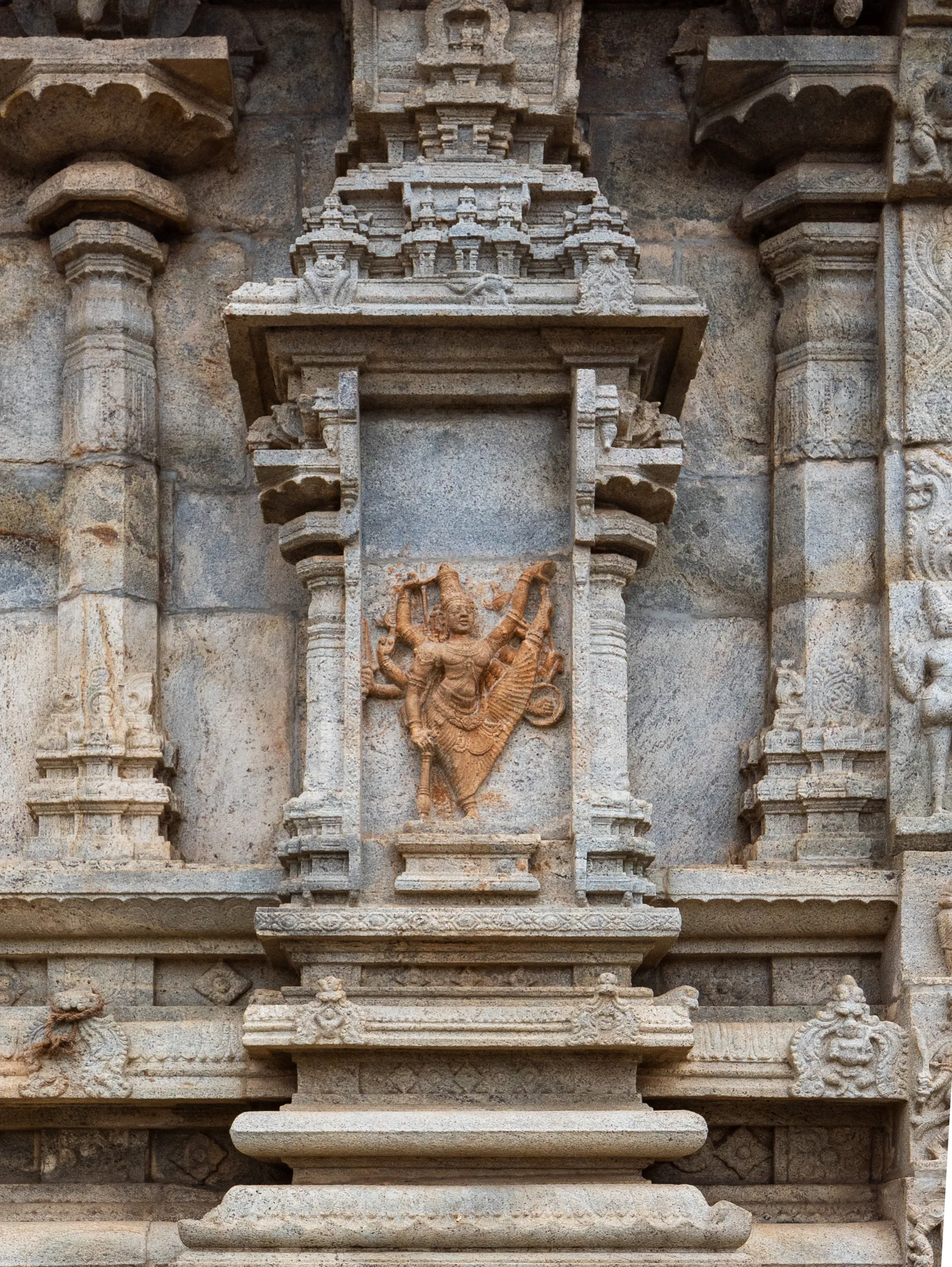
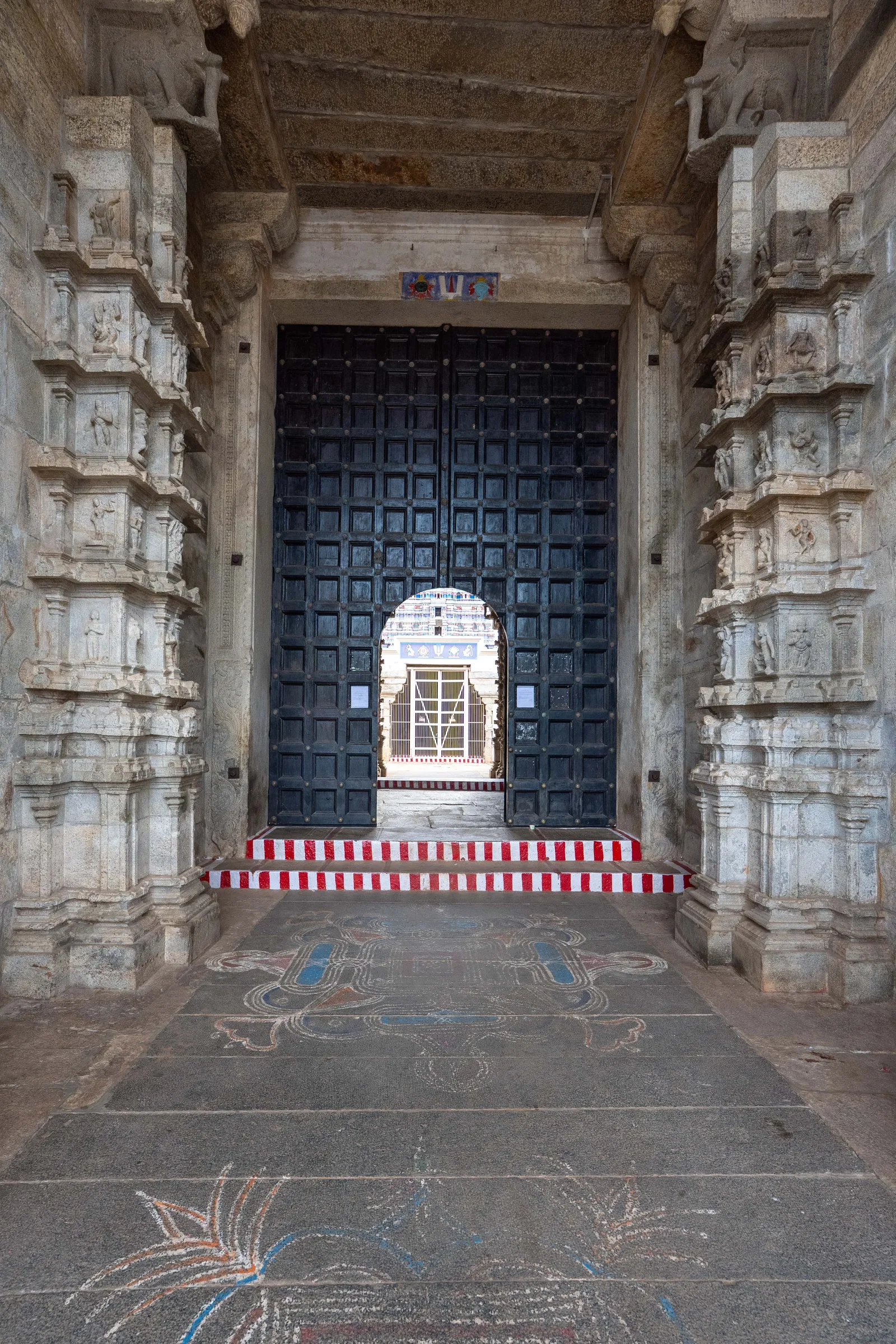
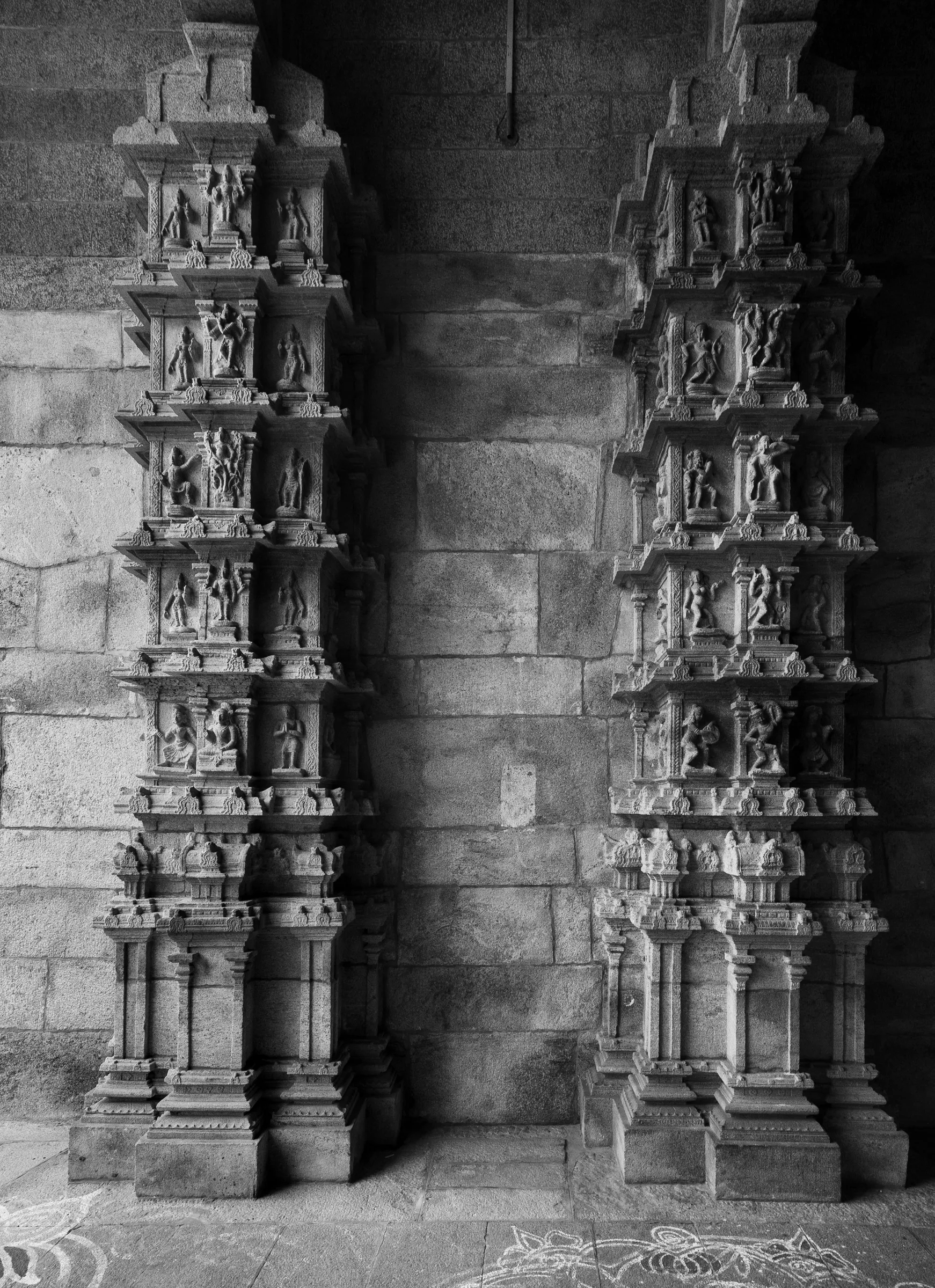
The Chitra Gopuram is held to be one of the most creative structures of the Nāyaka period, its outside in stone and its inside in wood. Its upper walls carry panels of Arab merchants bringing trade on camels, the lifecycle of a bird, Rama threatening the sea god with his bow, Krishna stealing butter from suspended pots, Bhima failing to lift Hanuman's tail, and Garuda carrying the tree with four meditating sages. The kudu horseshoe arches on the first-level roof hold remarkable miniatures.

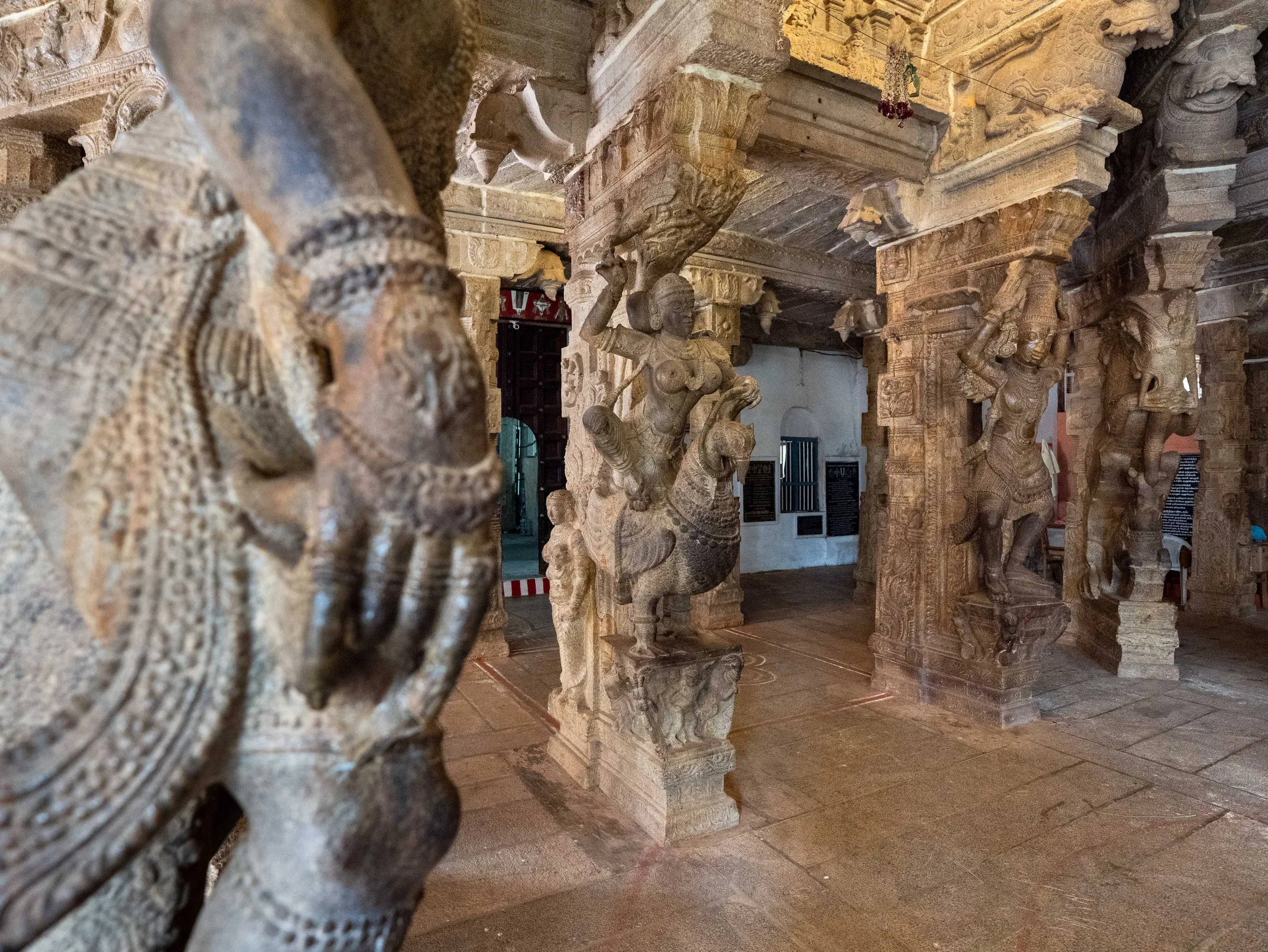
Within, each floor carries wooden sculpture, the ceilings split into compartments of six or nine panels of Viṣṇu, Devi, Ganesha, Lakshmi, Śiva and Parvathi, with carved beams and freestanding wooden wall brackets. The Veerappa Nāyaka mandapa, perhaps named after Muthu Virapa Nāyaka (1609 to 1623), holds 9.5-foot carvings of two Narasimhas, a Bhima and a Purushamriga, and a pair of yali with freely rotating stone balls carved from the same stone.

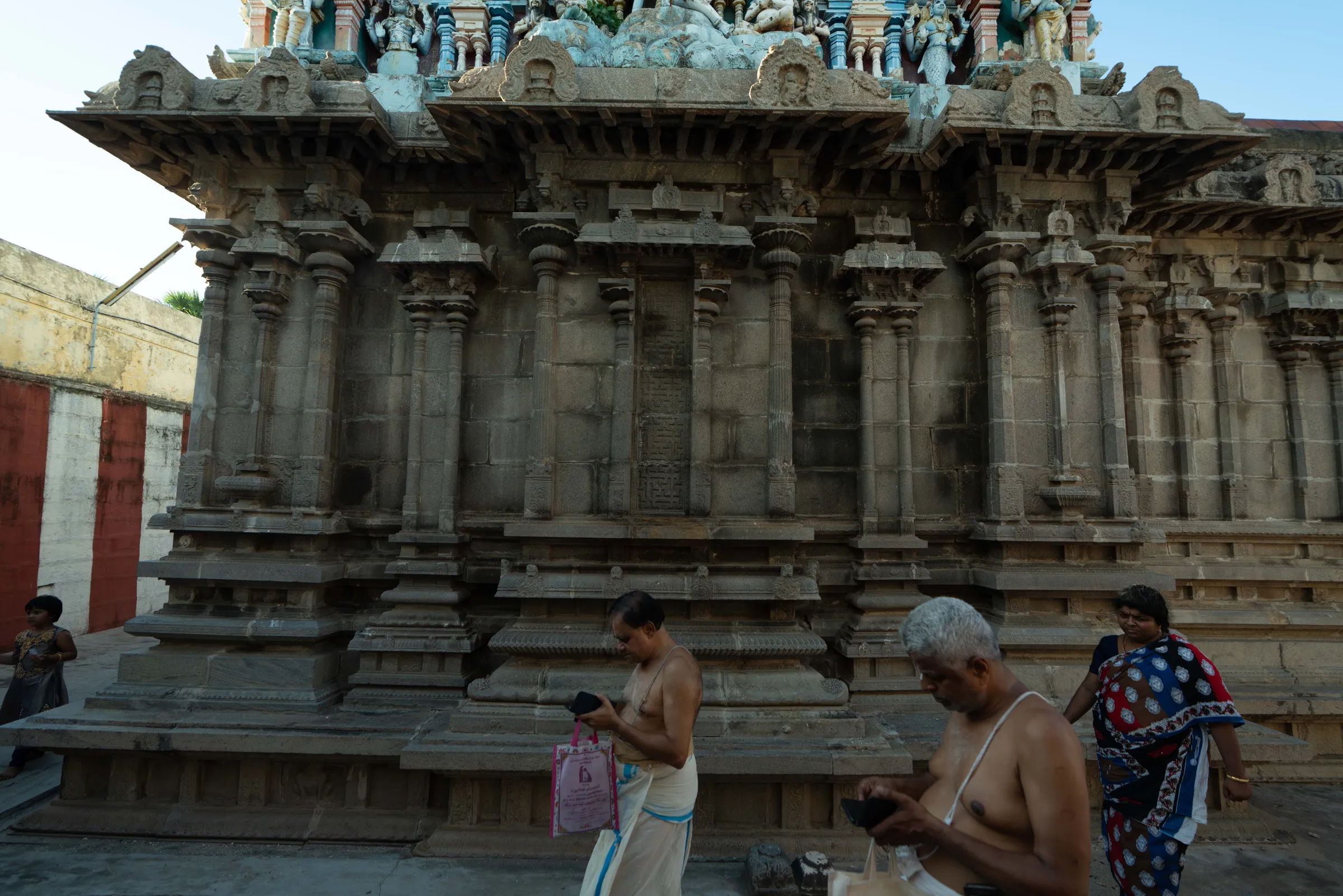
Three independently standing shrines for Viṣṇu, standing, seated and reclining, are the oldest structures and date surely from the 8th century, the main deities of stucco and painted. Subsidiary shrines for Śiva and Bhairava adjoin them. By old custom the food offering to the main Viṣṇu shrine passed only after the priest of the adjacent Śiva shrine confirmed it had first been offered there.

02

Archaeological

dated & cited

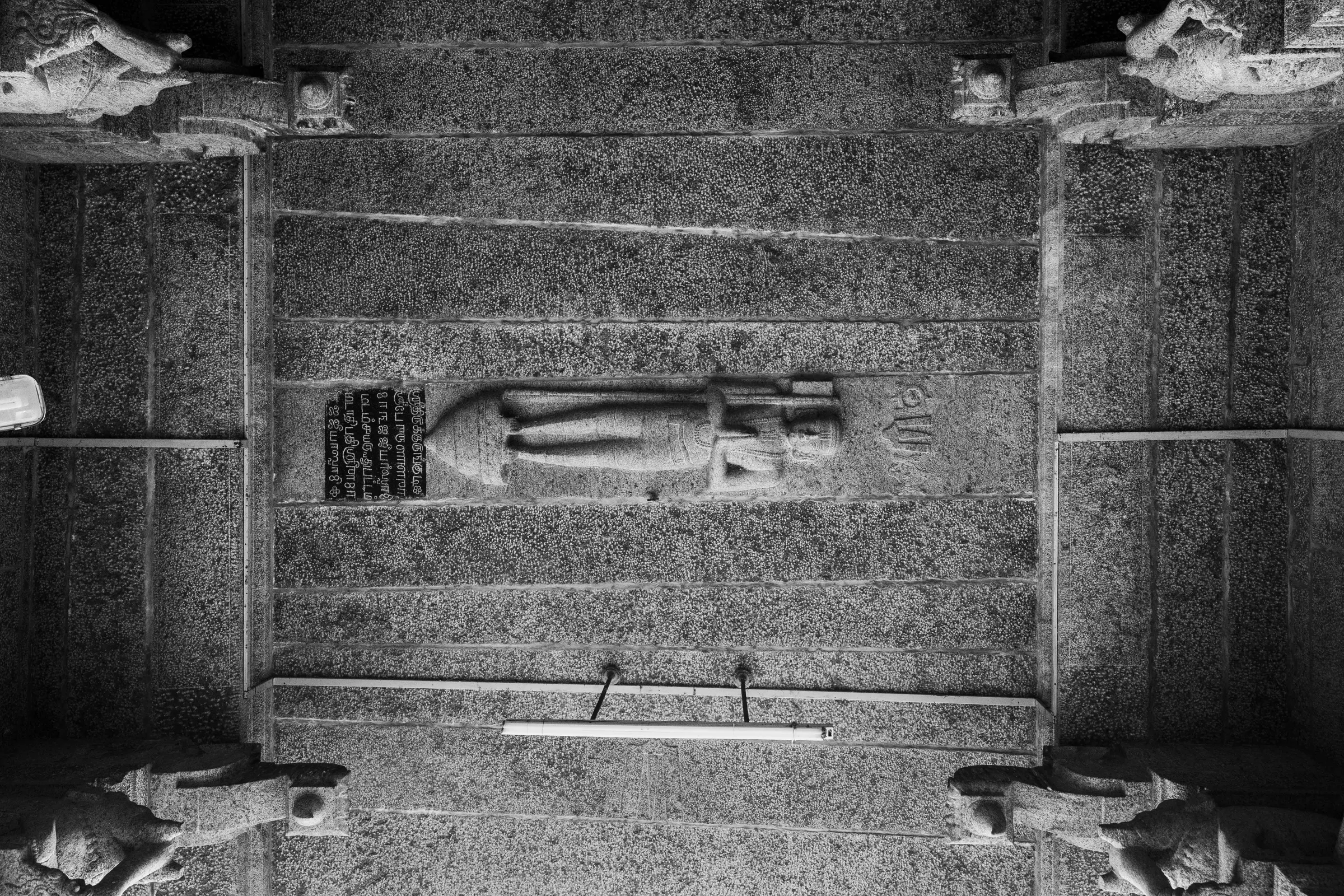
The temple was already important in the 8th century, and the 18-acre complex reached its present size in the 17th century. A long inscription on the Chitra gopuram entrance records that water from Uchi Malai flowed through the Paralai River; in 1313 a stone dam was built to divert it to the Northern River with a canal at Kalakad. By 1673 this had fallen into disuse, and the temple officer (Maniyam) Ayyapillai Ayyan deputed Tirumalai Servaikaran and Tirumalai Asari to repair the dam and clean the canal, a 17th-century work.

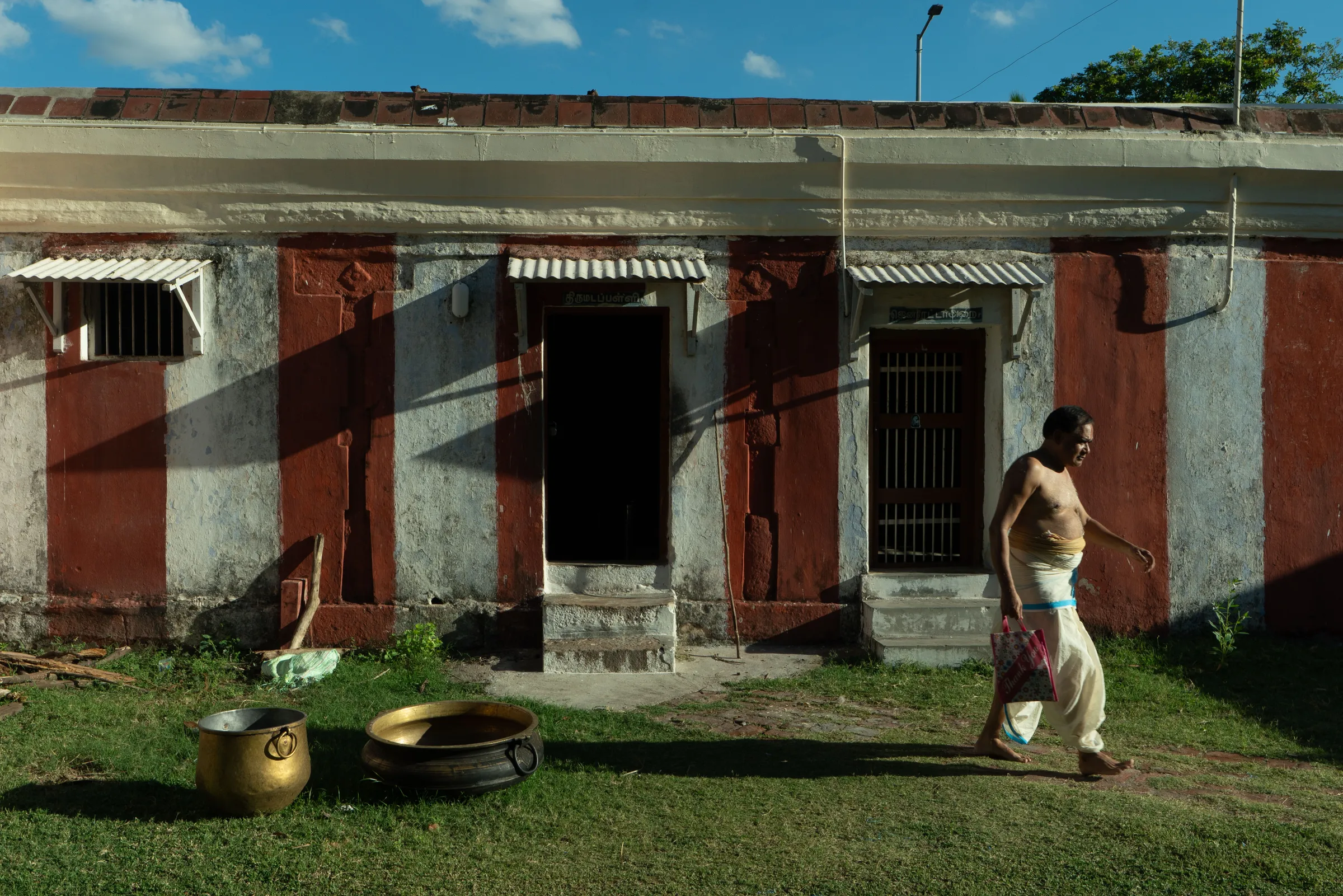
The administering monastery was created in the 14th century as the Tirumangai Matam, with offerings for Tridandi Sanyasis. Several inscriptions have only recently been published, and the book notes there is no scholarly book on them or on the temple. The temple follows the Kerala custom that male devotees enter bare-chested.

Dating

Three core shrines date surely from the 8th century; present size reached in the 17th century

Protection & condition
ConditionTowering gopuram unfinished; richly sculpted and in worship
03

Mythological

as transmitted

Nambi means one who is an ideal and handsome man. A verse of Tiru Mazhisai Azhwar on the temple praises a crow that pecked a palm fruit, held on, and perished as the fruit fell into a river, a figure for the persistence needed in seeking Viṣṇu. In the month of Kartika, on Ekadashi, the temple holds the five-hour dance drama Kaisika Natakam, told nowhere else, in which a Dalit devotee, Nam Paduvan, wins moksha for a Brahmin through his devotion, and in its climax names the most heinous sins a person can commit.

Register interest in prints Buy the book
Improve this entry

This is an open, reviewed record. If you have spotted an error or have something to add — a correction, a date, a source, a name in another script — propose it. Every change is reviewed before it joins the record.

“Suggest an edit” opens this entry on GitHub and turns your change into a pull request. “Share feedback” opens a short form. Both go through review.