01 Architectural
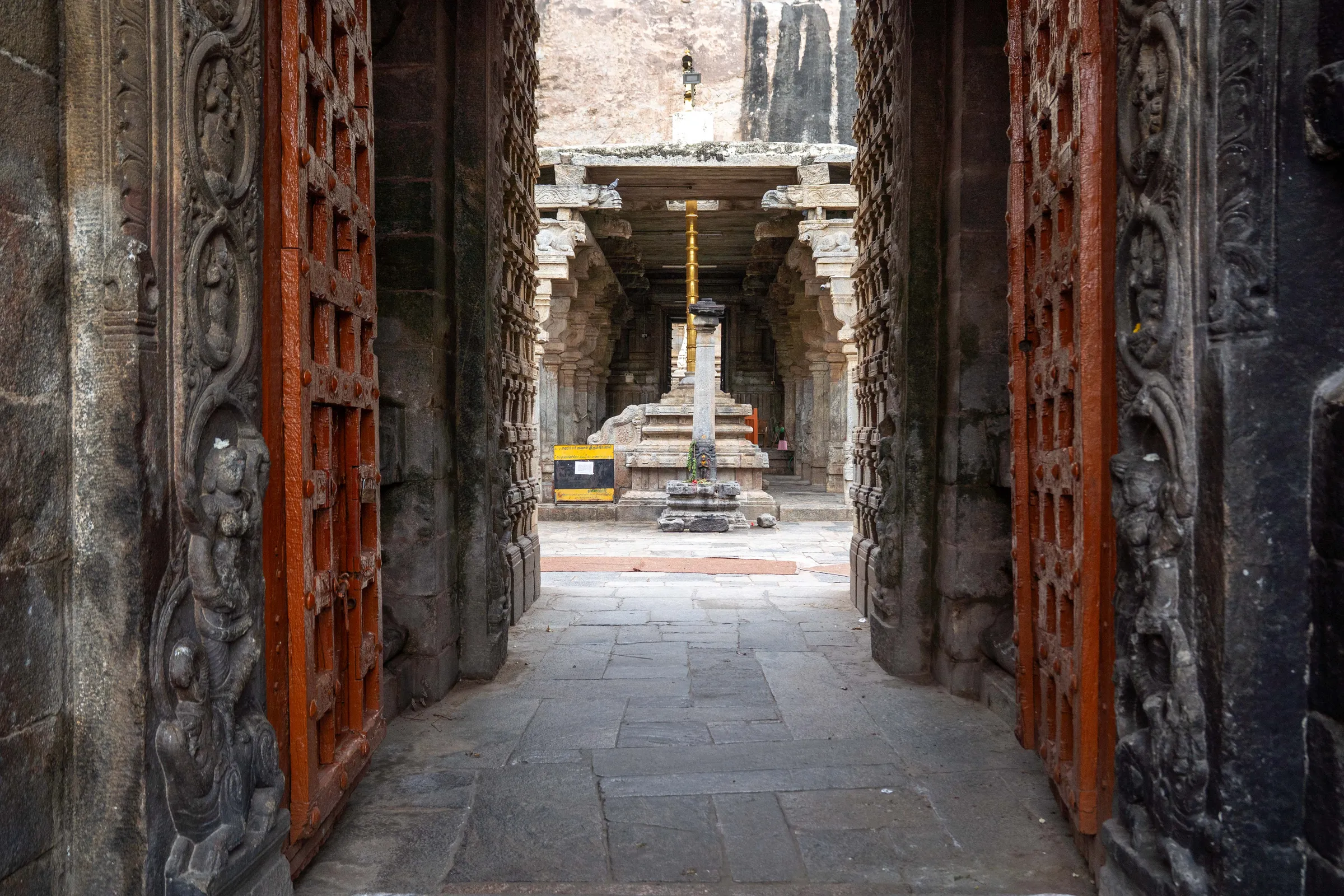
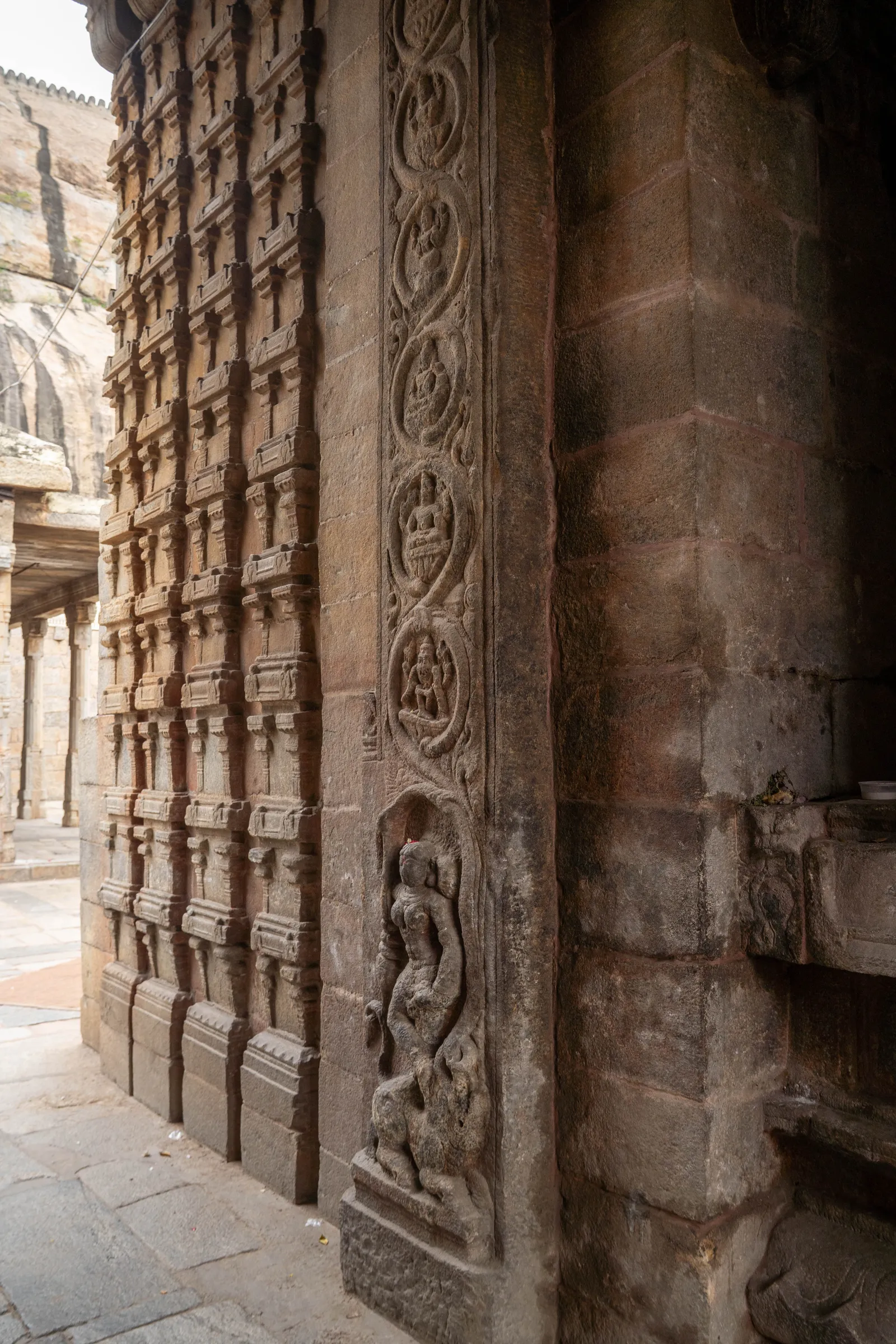
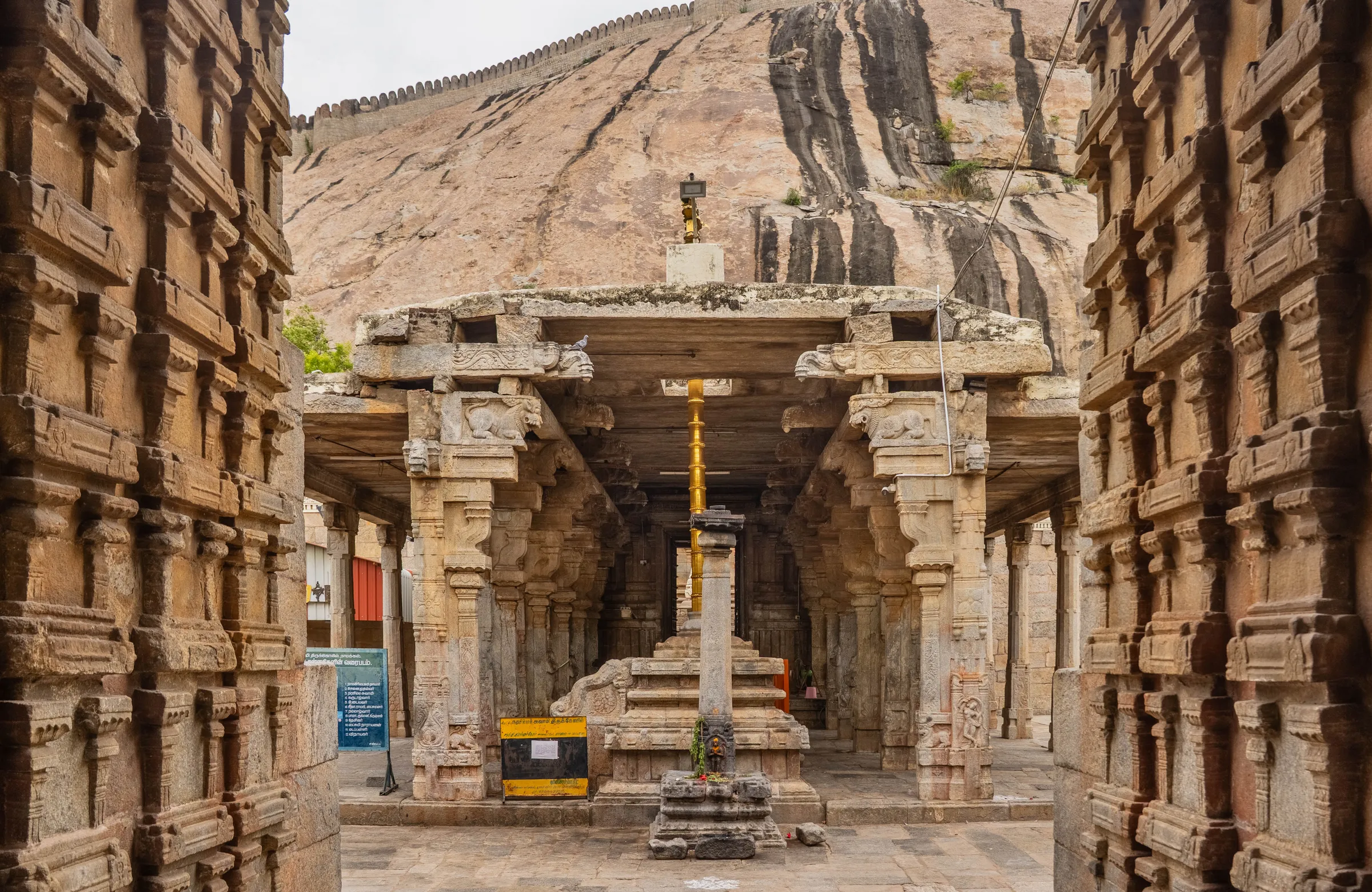
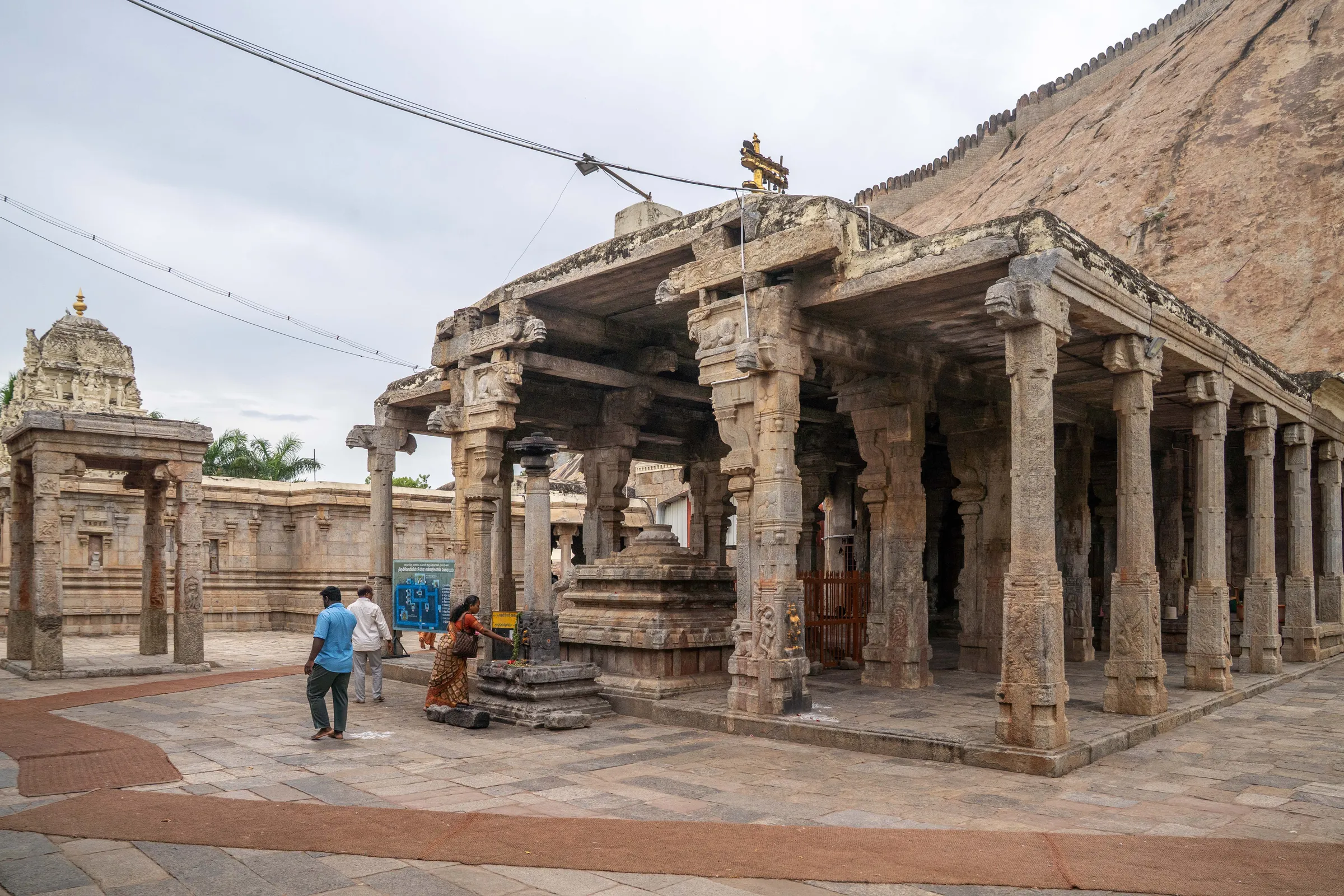
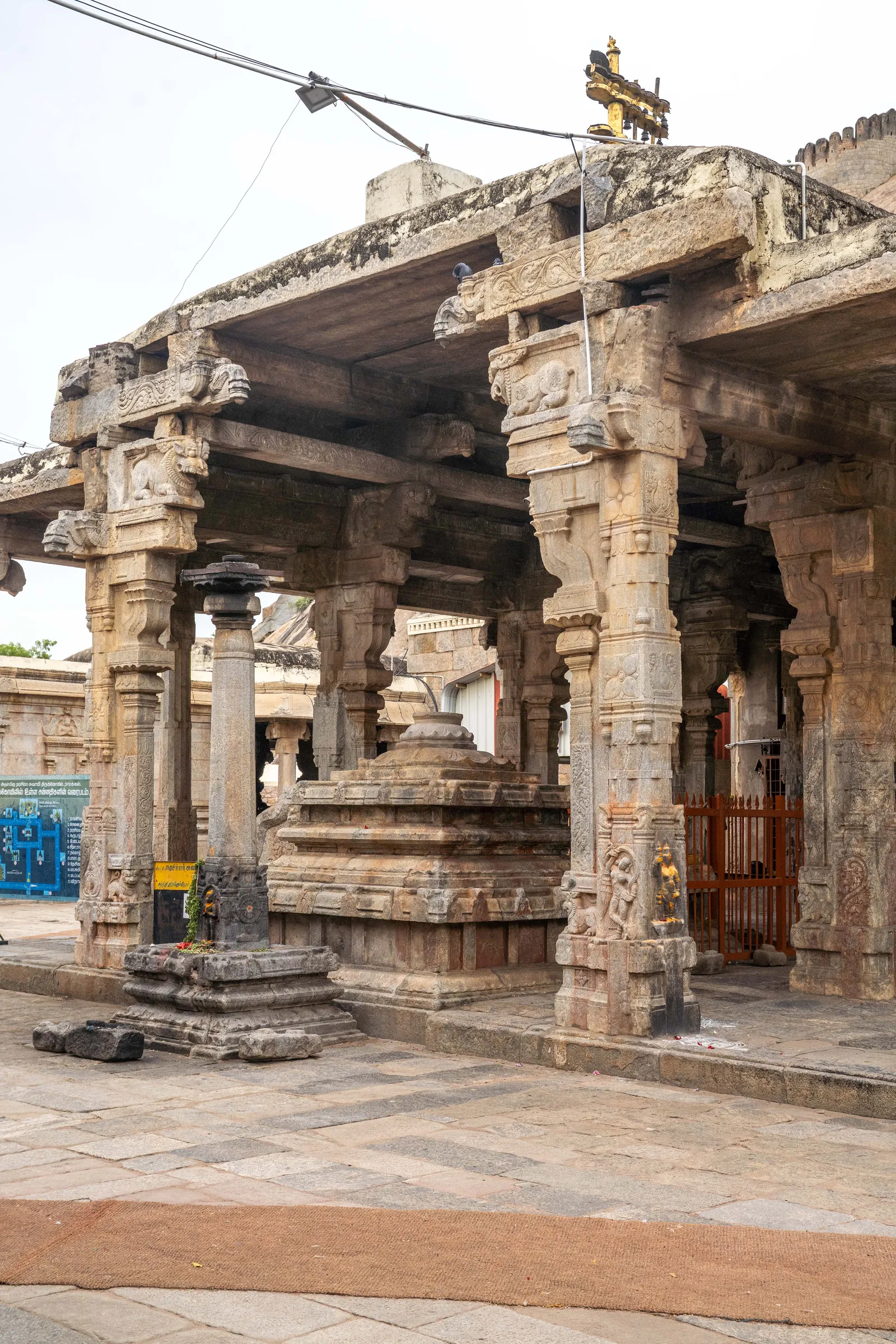
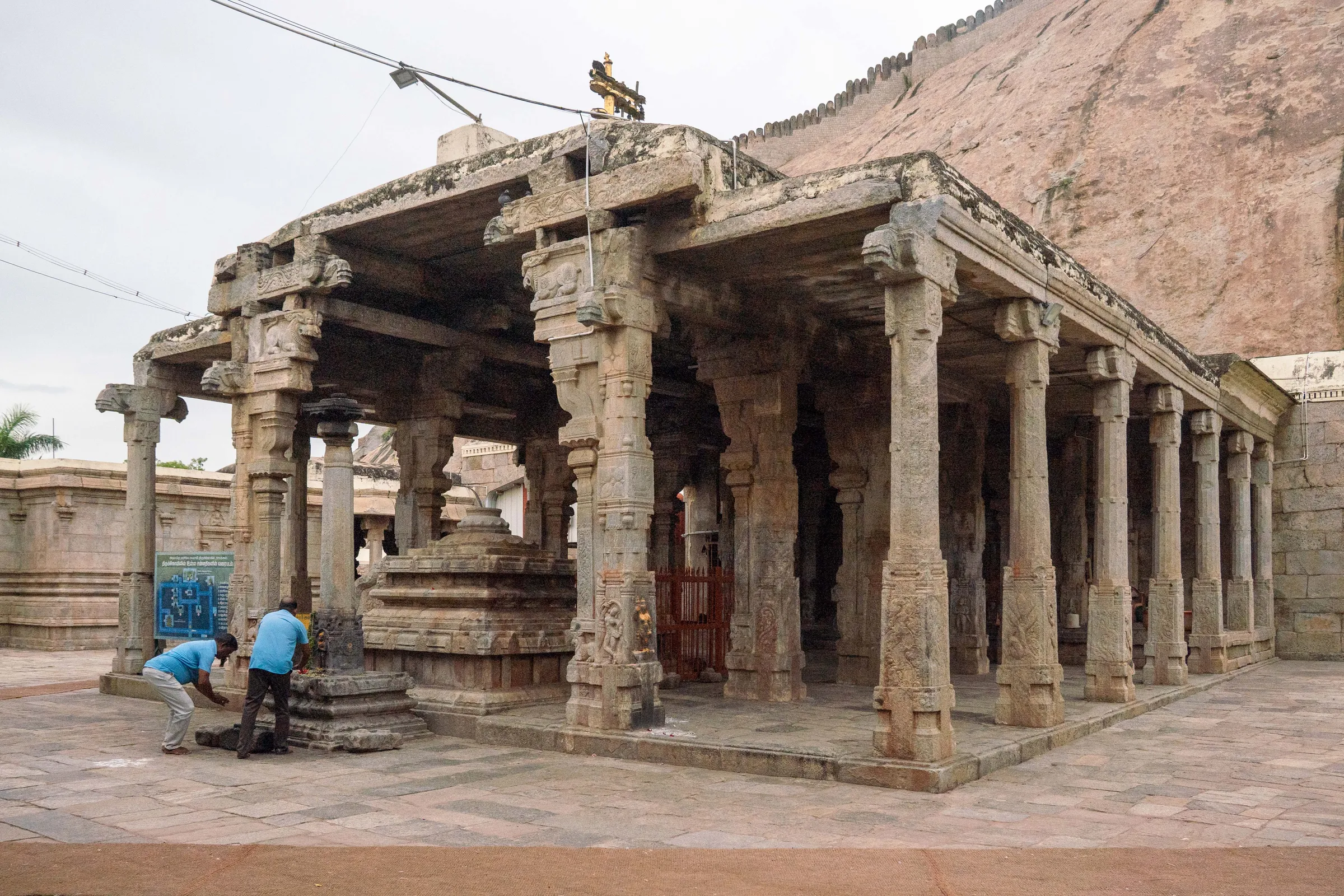
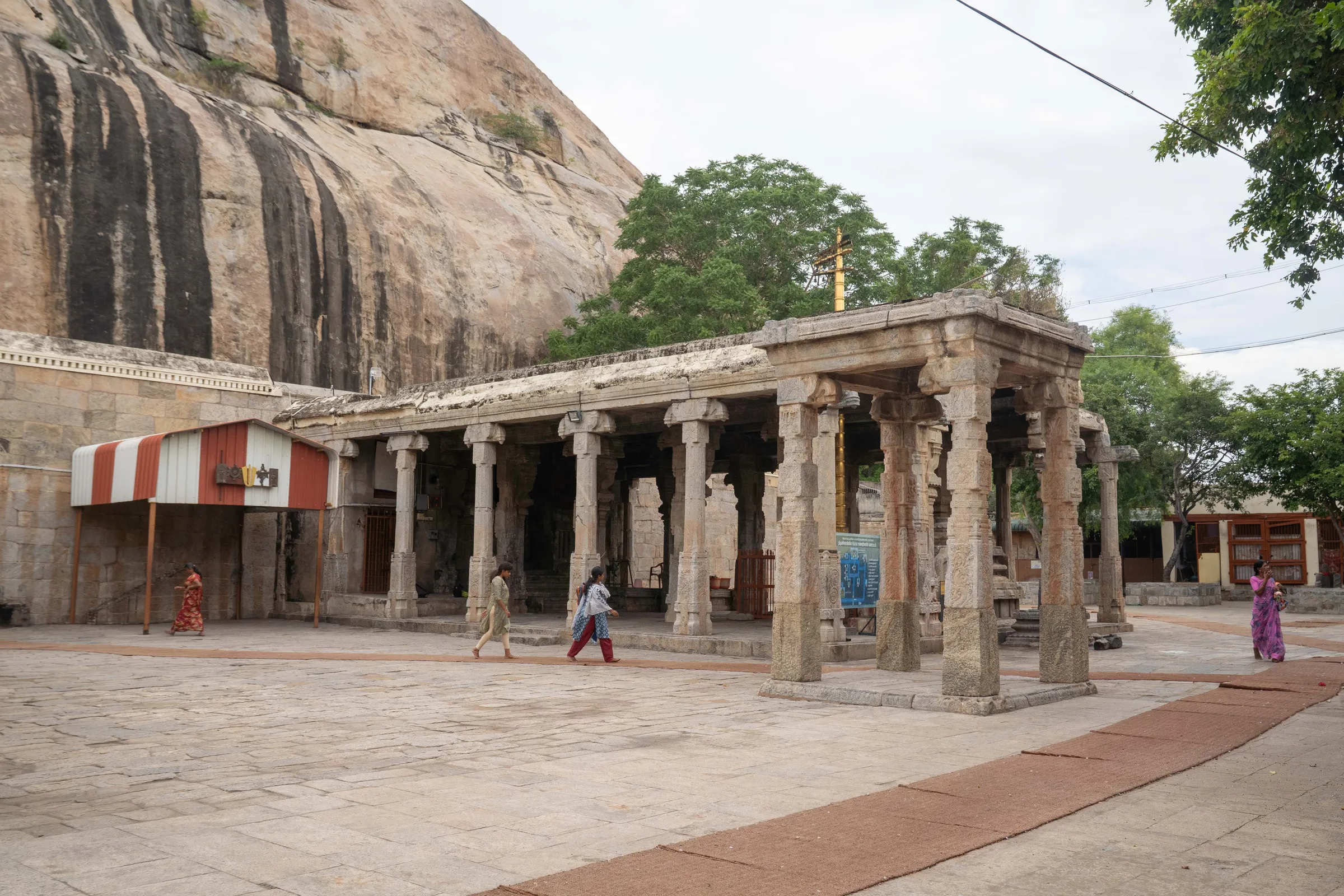
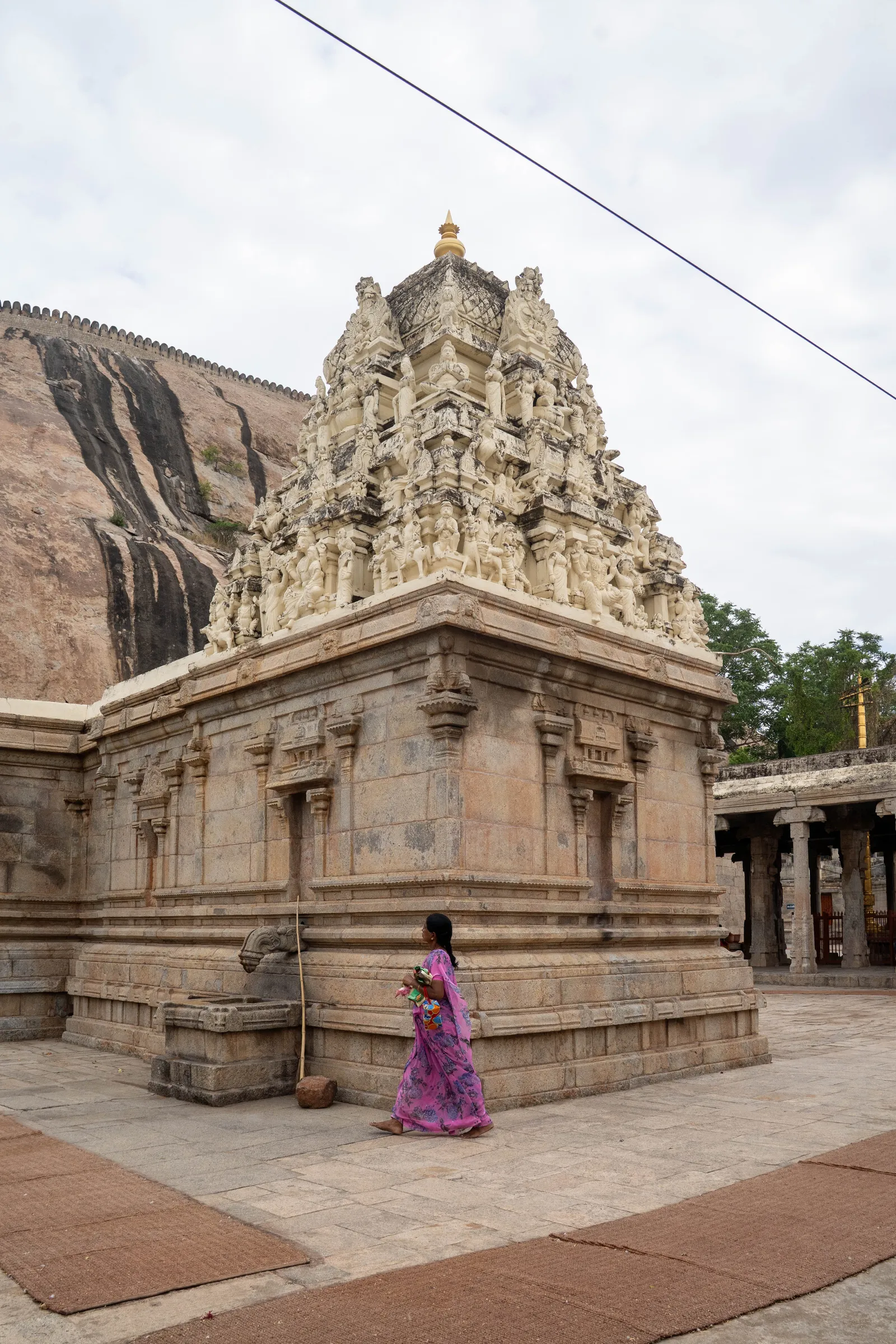
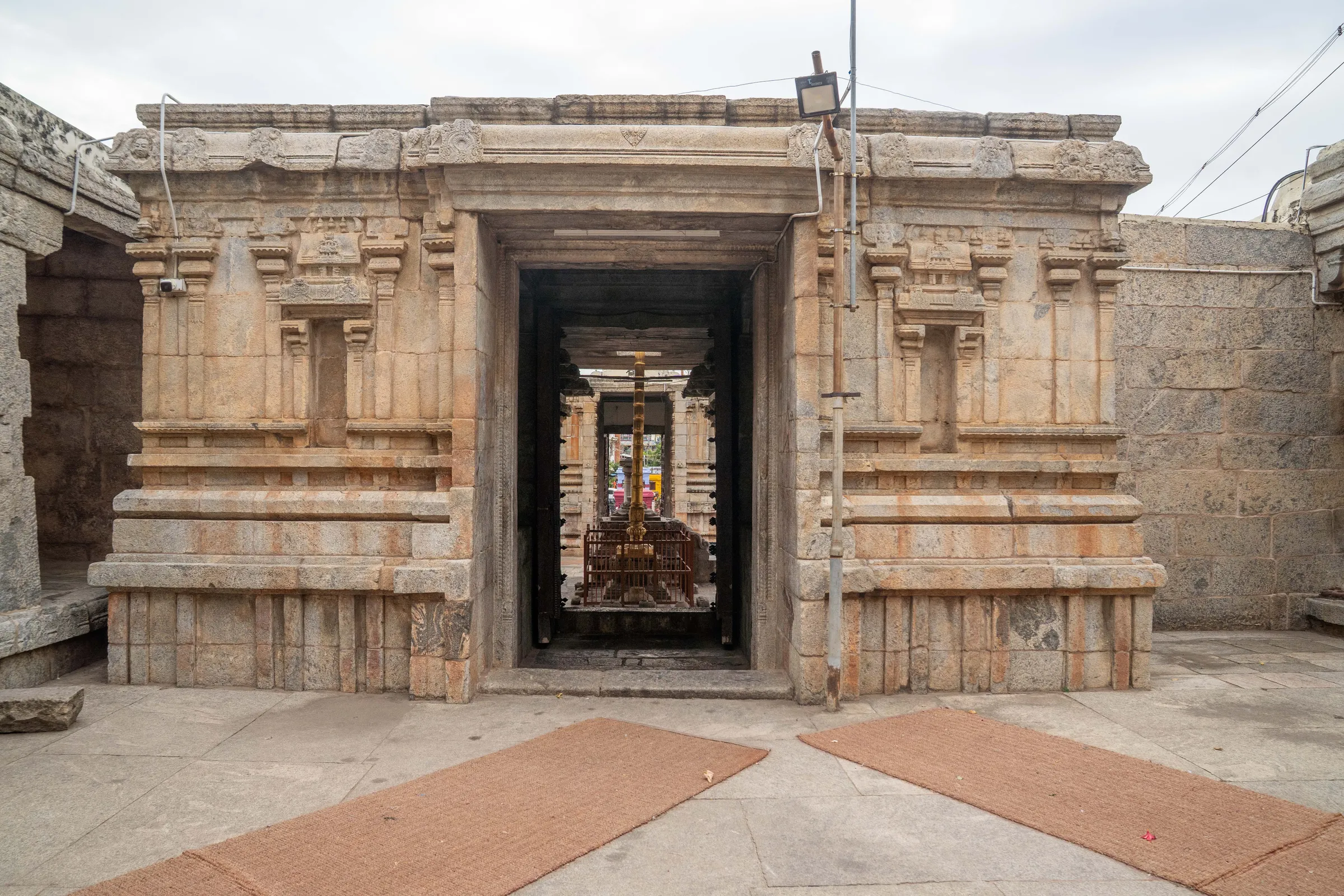
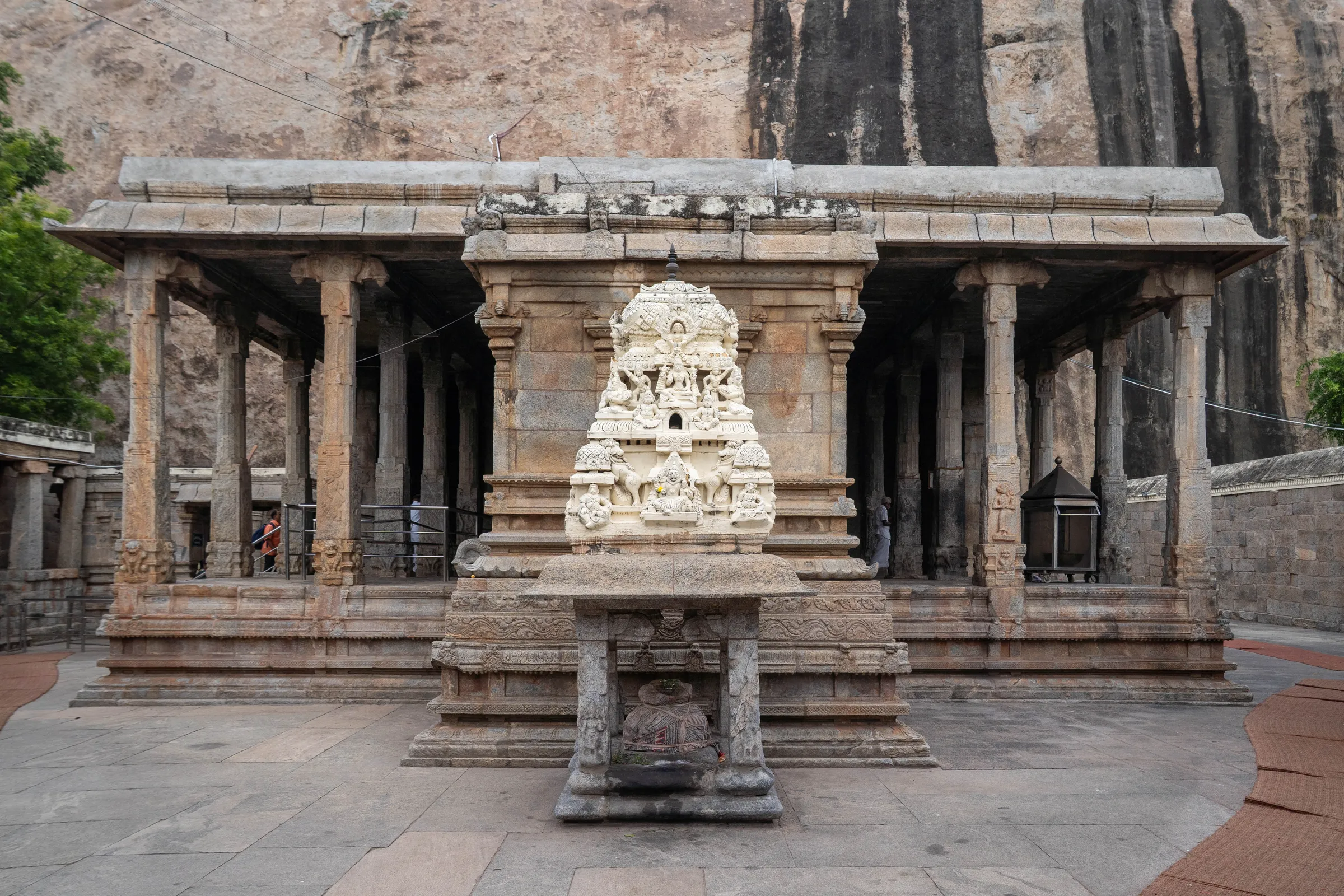
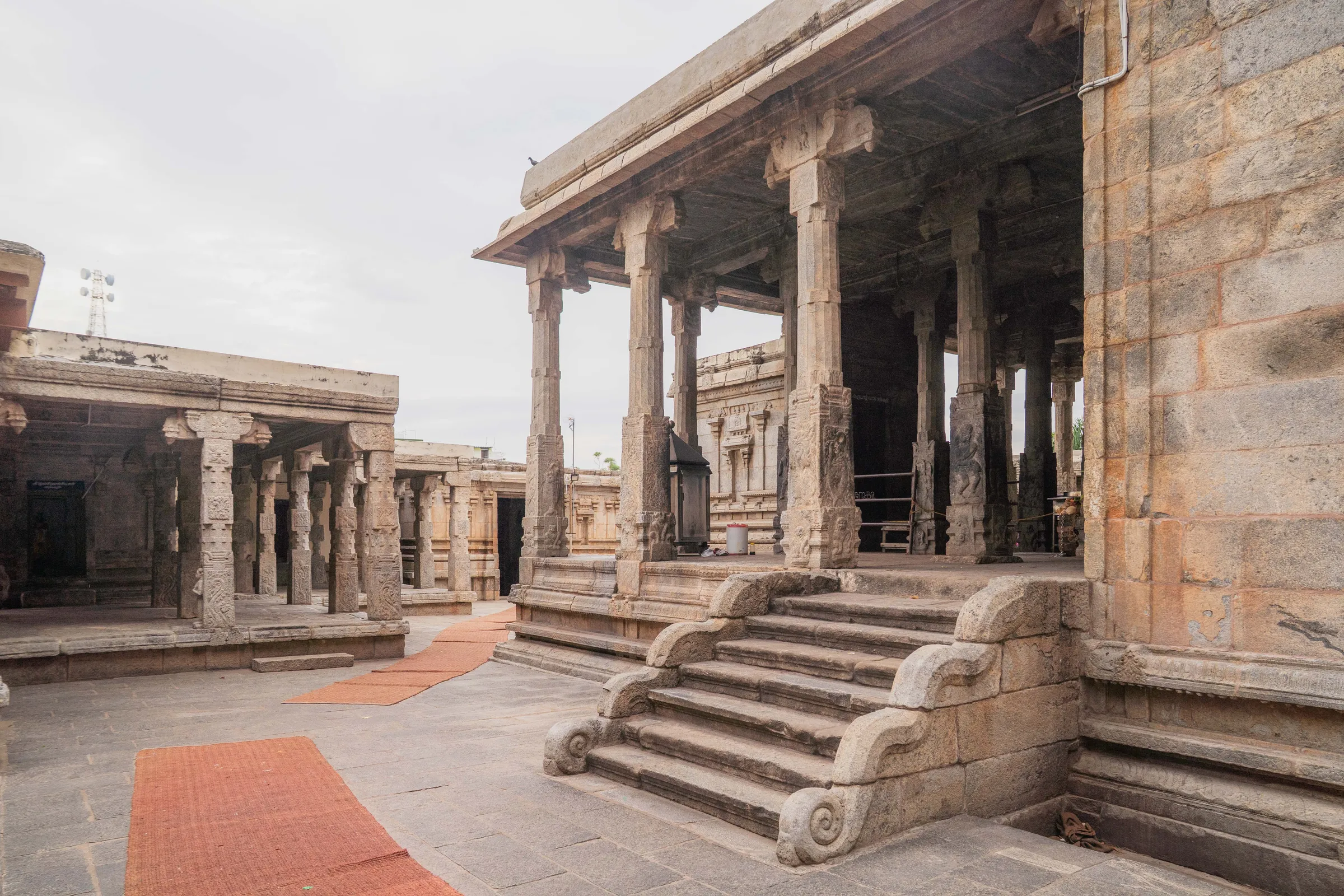
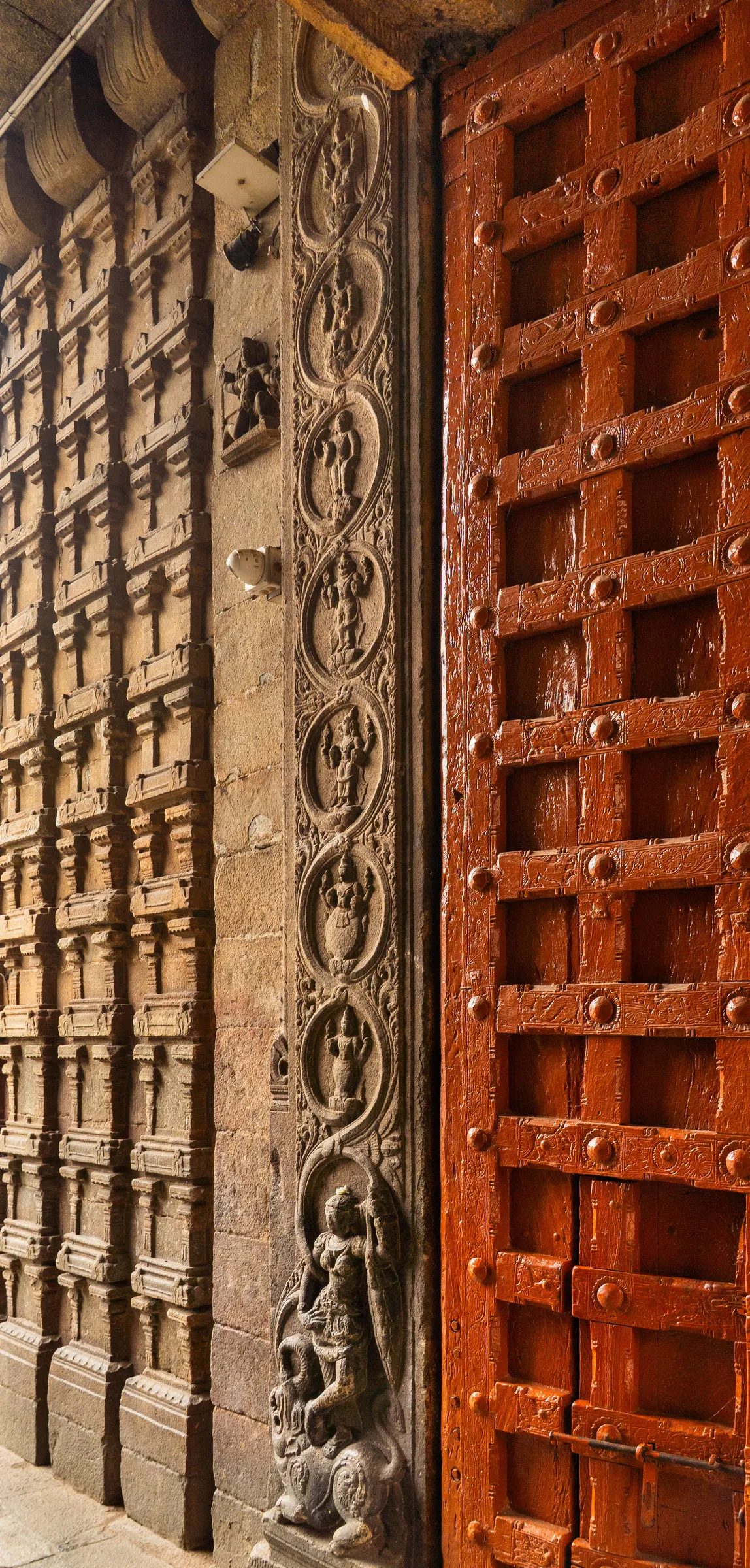
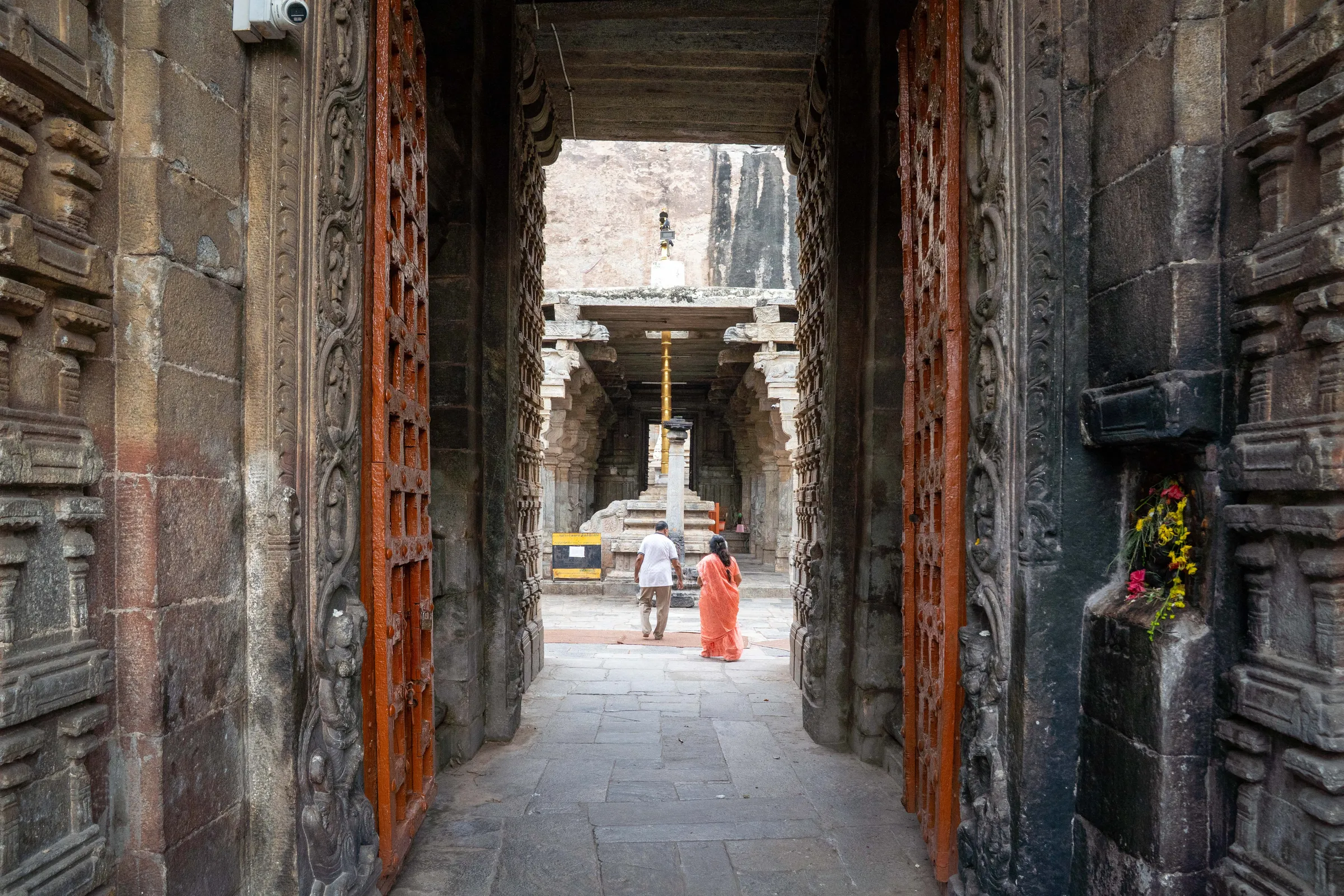
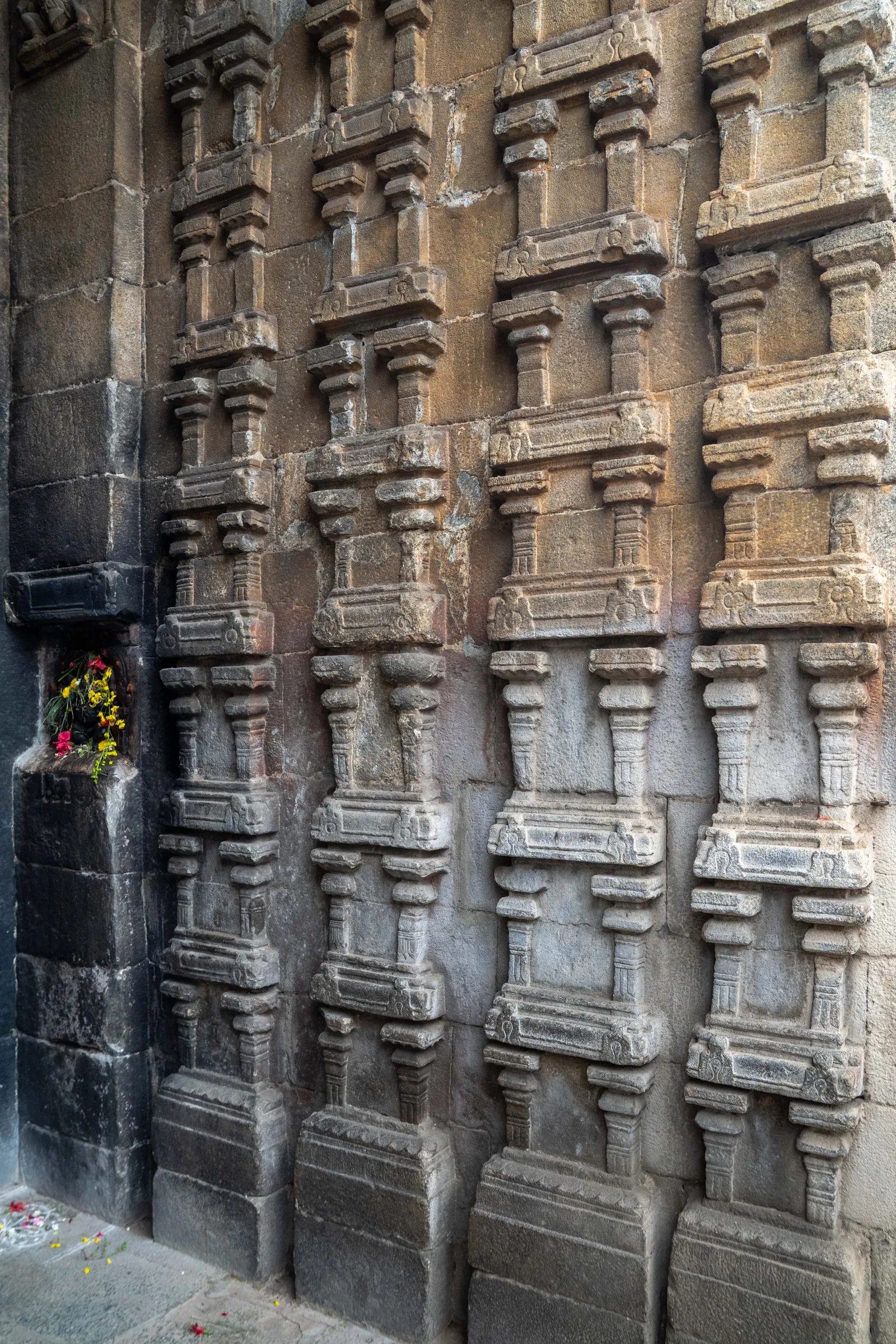
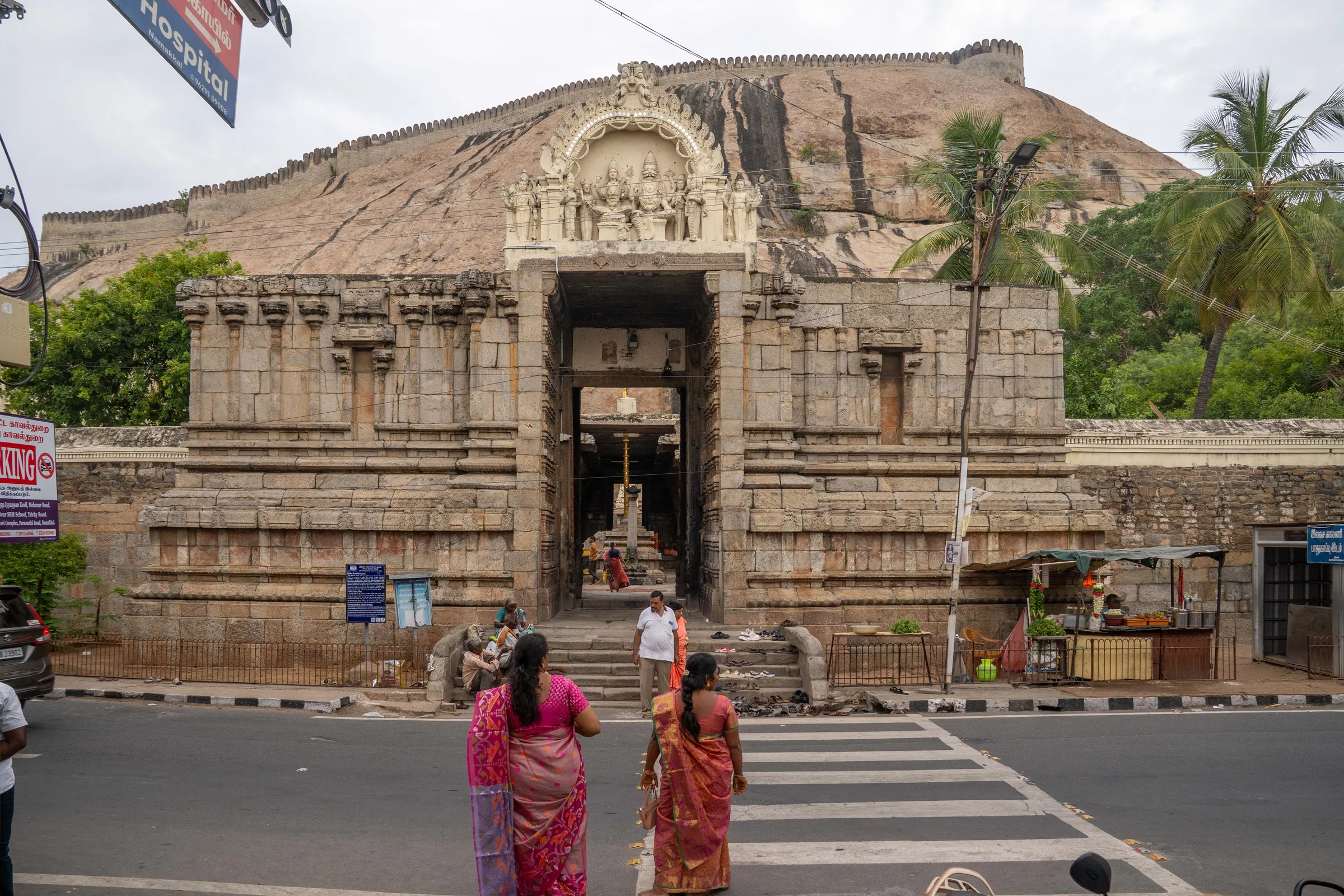
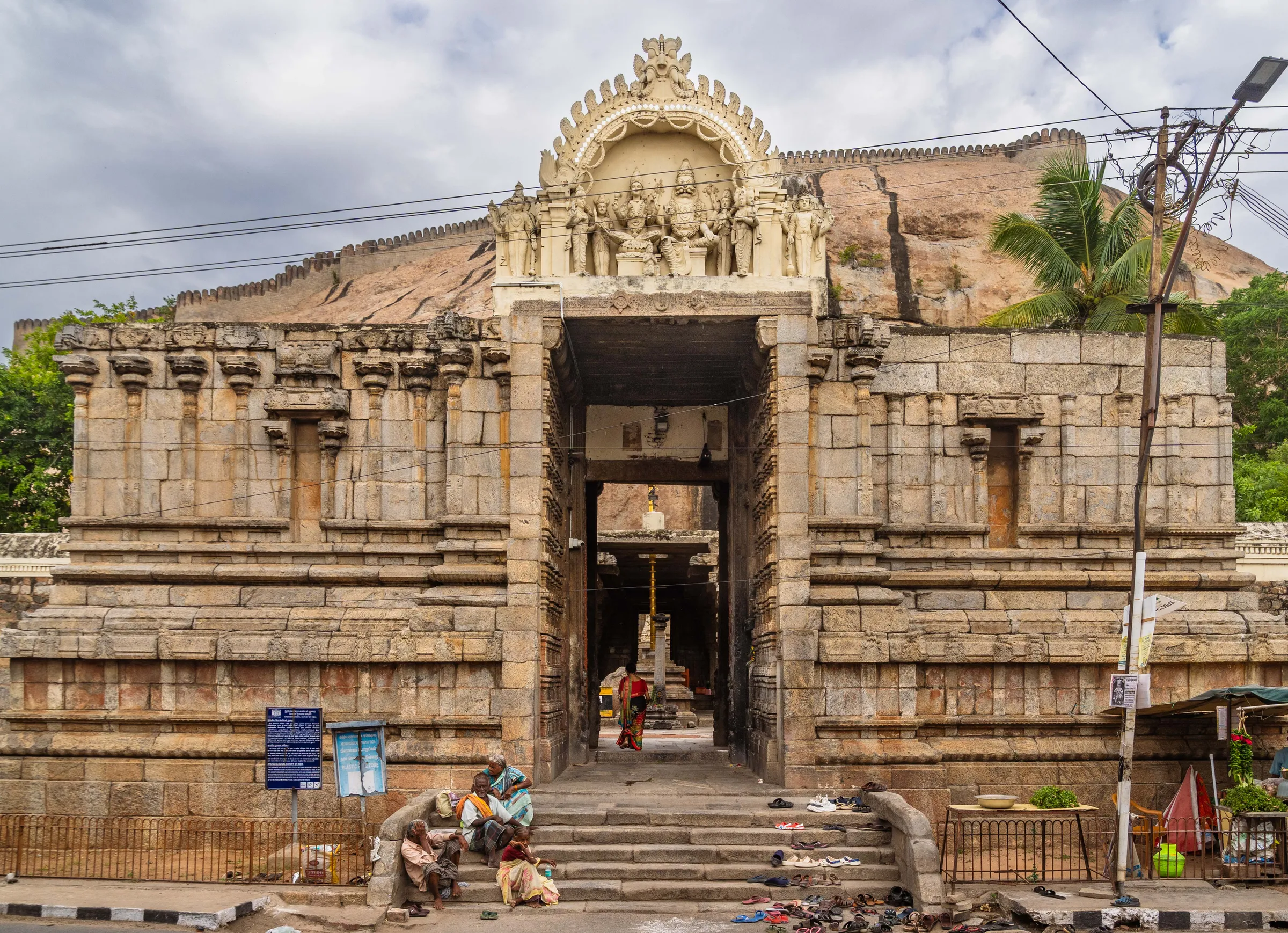
structure & vocabulary Namakkal has two temples. The simpler is for a reclining Vishnu, here set on Karkotaka, most ferocious of serpents, whose hoods bear the faces of lions. The other is in worship for Narasimha and is entirely excavated from the mother rock of the hill. Its stout pillars are square and octagonal, a classic style of Pandya and Pallava cave temples, and the pillars nearer the shrine carry an attractive Taranga bodhini corbel with curved, wave-like endings. The main deity is under worship; a metal kavacha hides the original stone, but the size and composition are grand, and Narasimha is seated between Shiva and Brahma.
Once the eyes adjust to the light the other images appear. A relaxed Vishnu is seated on Ananta, the Sun and Moon praying from above and Shiva and Brahma on either side, marking Vishnu as the primary god of this space. In front kneel a Devi, a man and a smaller Narasimha, perhaps Leelavati and Prahlada, whose hand is in the Vismaya hasta of wonder. On the back wall a more ferocious Narasimha sets his hands on the chest of the limp asura. On the other side is Varaha, having rescued Bhoomi Devi, his nostrils close to her. High up are the four sages Sanaka, Sanandhana, Sanatkumara and Sanatana, and at the bottom Adisesha and his wife.
Another panel shows Vamana, the dwarf, receiving a boon from Mahabali despite the protests of Sukracharya, a horse marking it as an Ashvamedha yagna; then the towering Vishnu as Trivikrama measuring the skies, with Trishanku shown falling and Jambavan above singing his praises. The Anantasayi cave temple repeats some of these images and holds a rare, early image of Harihara, a combination of Shiva and Vishnu.
02 Archaeological
dated & cited The temples are dated to the eighth century CE. The kings who cut them were not great empire builders like the Pallavas or Chalukyas, and little is known of them; their territory must have comprised the modern Kongu region, parts of Karnataka and perhaps Kerala. The Adiyamans ruled from Tagadur, the modern Dharmapuri, and were well known to the poet Avvaiyar, through whom several poems on them survive.
The temple has just four inscriptions. One names it Atiyanatha Vishnu Griham, the temple of the Vishnu of the Adiya family; another says Gunasila of that family built it; a third, damaged, says that Soma is the son (dauhitra) of a woman of royal lineage. In the Anantasayi an inscription on the beam of the main sanctum lists the deities of the great reclining-Vishnu sculpture, and the pillars carry nine birudus or titles of Gunasila, among them Madana Vilasa (god of love), nara deva (god among men), naya para (exceeding wisdom), prakriti priya (fond of nature), nara vahana (with a man as his vehicle) and Utpala karnika (ears like water lilies).
Dating
Eighth century CE; cave-cutting in Tamil Nadu dates from the 3rd century BCE onward.
Protection & condition
ConditionRarely visited; main deity under worship, the original stone hidden by a metal kavacha
Inscription · Beam of the main sanctum, Anantasayi cave; and the pillars
Atiyanatha Vishnu Griham, the temple of the Vishnu of the Adiya family. One record states that Gunasila of that family built it. The pillars carry nine titles of Gunasila, among them Madana Vilasa, nara deva and Utpala karnika.
100 Timeless Tamil Nadu Temples (Pradeep Chakravarthy)
03 Mythological
as transmitted The temple is famous for the mathematical genius Srinivasa Ramanujam, who said it was the goddess here who, in a dream, wrote out certain complex equations.