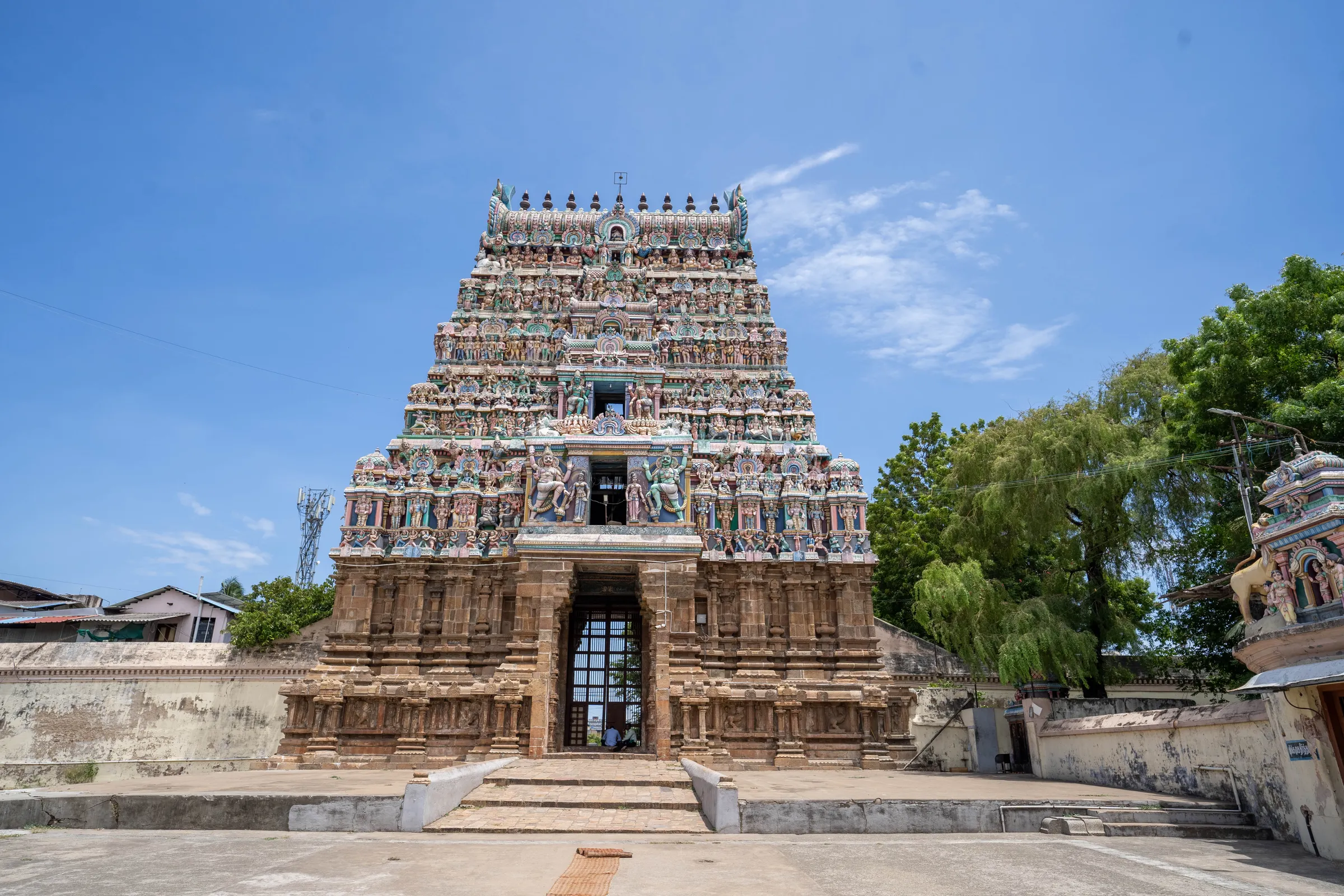
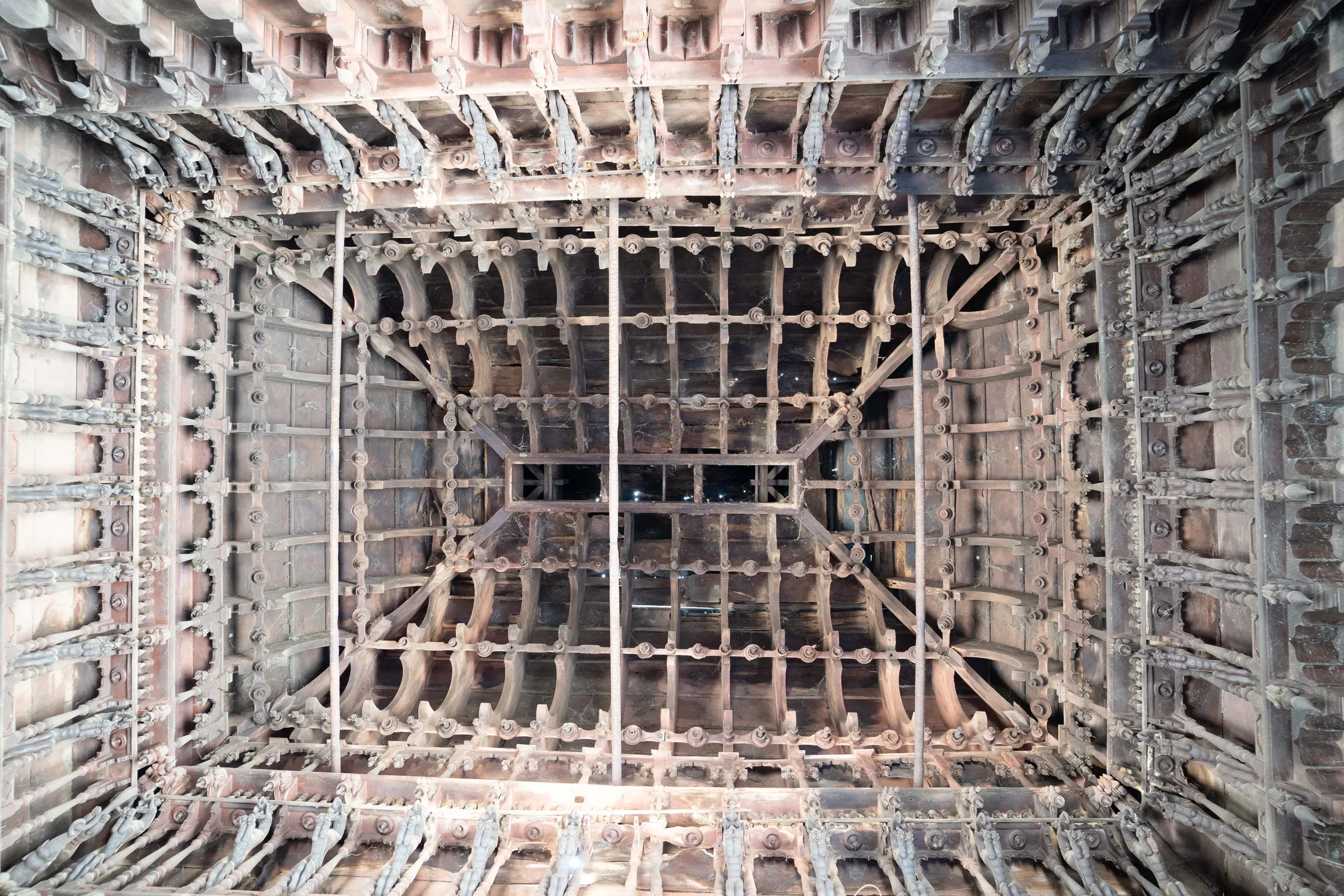
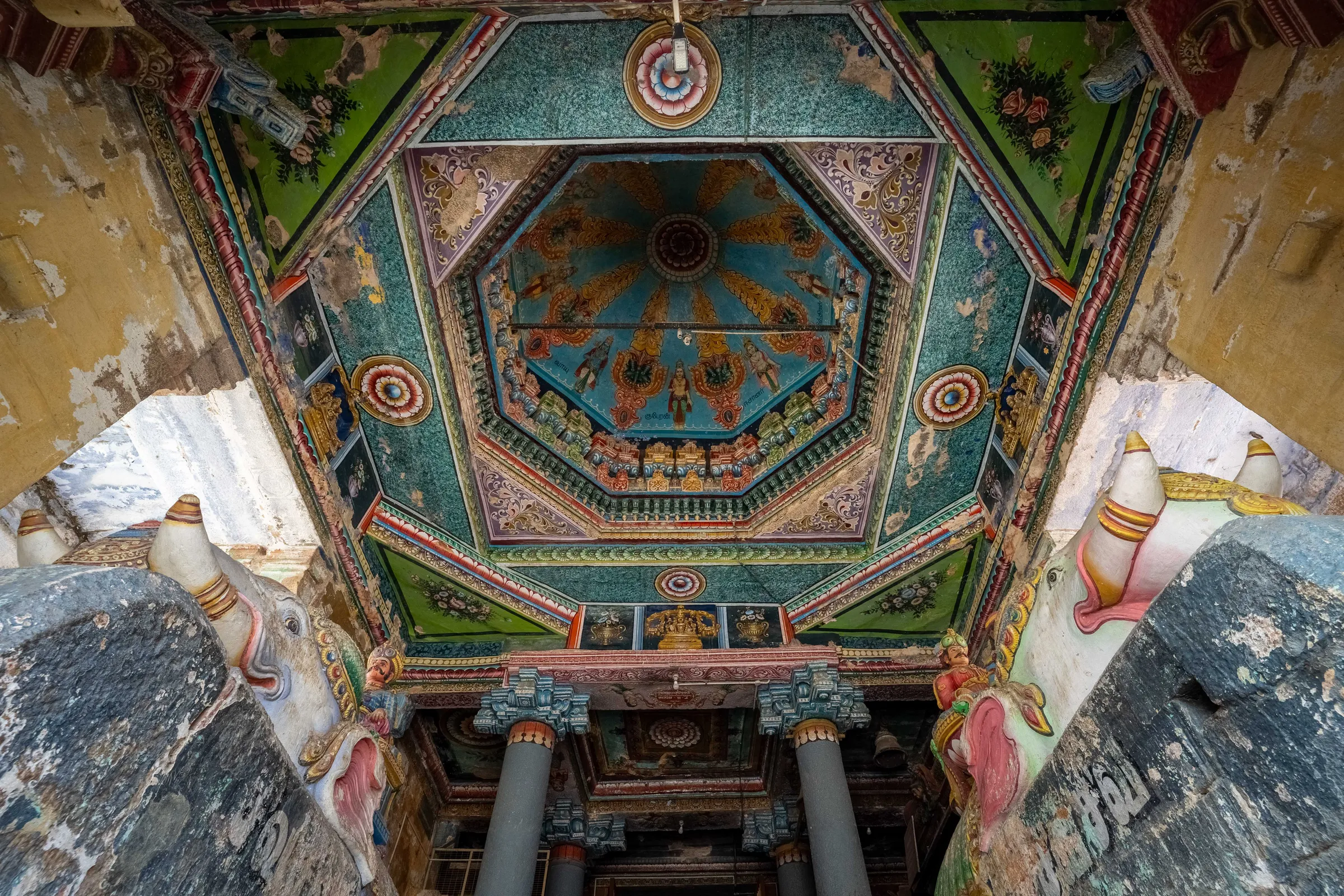
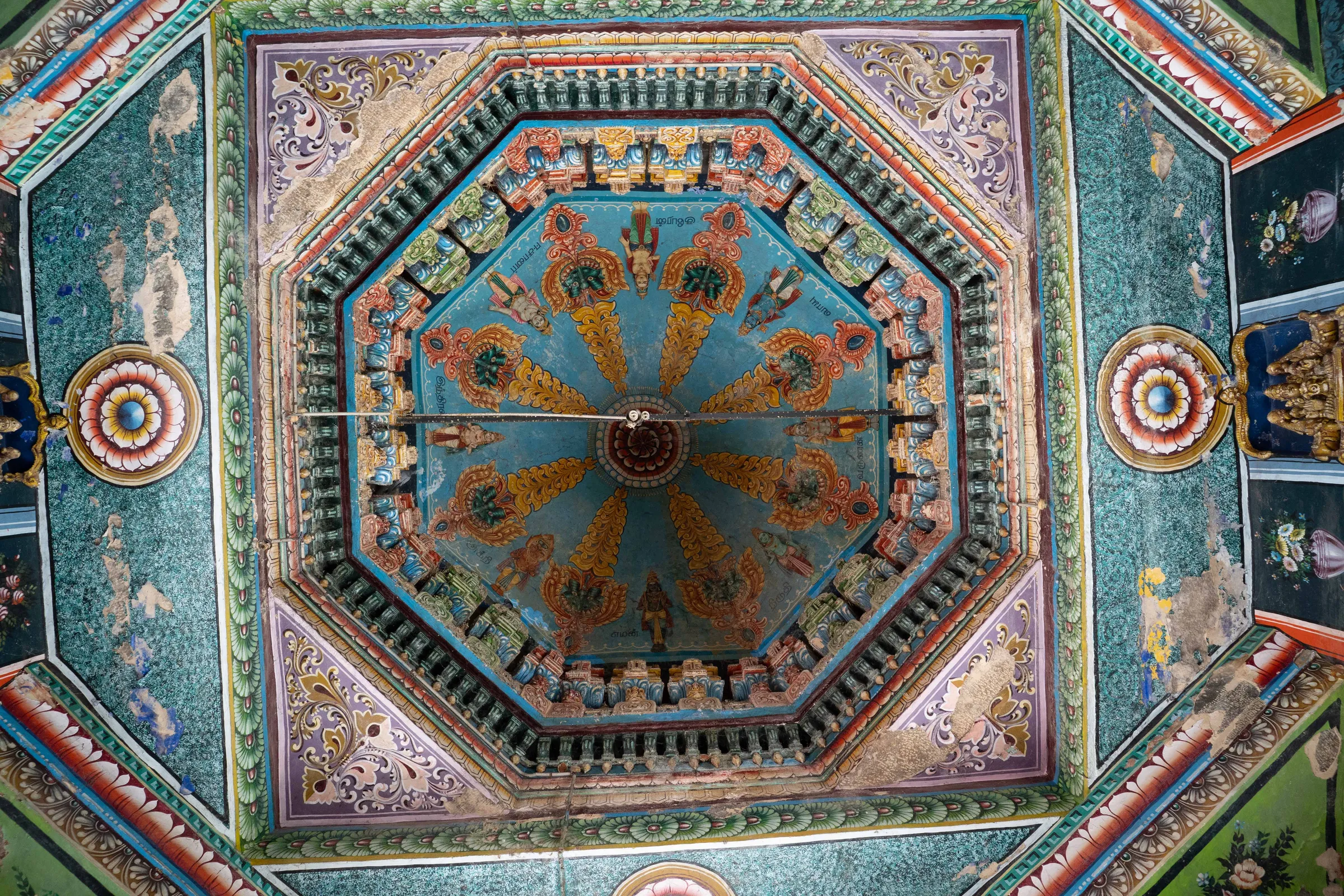
An early Chōḷa Śiva temple at Kudanthai Kilkottam in Kumbakonam, close to the Mahāmaham tank, celebrated for the finest early Chōḷa wall sculpture and for miniature Rāmāyaṇa panels of exceptional detail.
The main shrine carries fine early Chōḷa sculpture on its outer wall. Dakṣiṇāmūrti, Ardhanārīśvara, Brahmā, Bhikṣāṭana and Durgā are present in fine form, some dated to the 9th century. The Ardhanārīśvara is especially beautiful, showing the balance of female and male energy. The temple also has royal portraits, whose subjects are unknown, carved in difficult three quarter profile with very few lines.
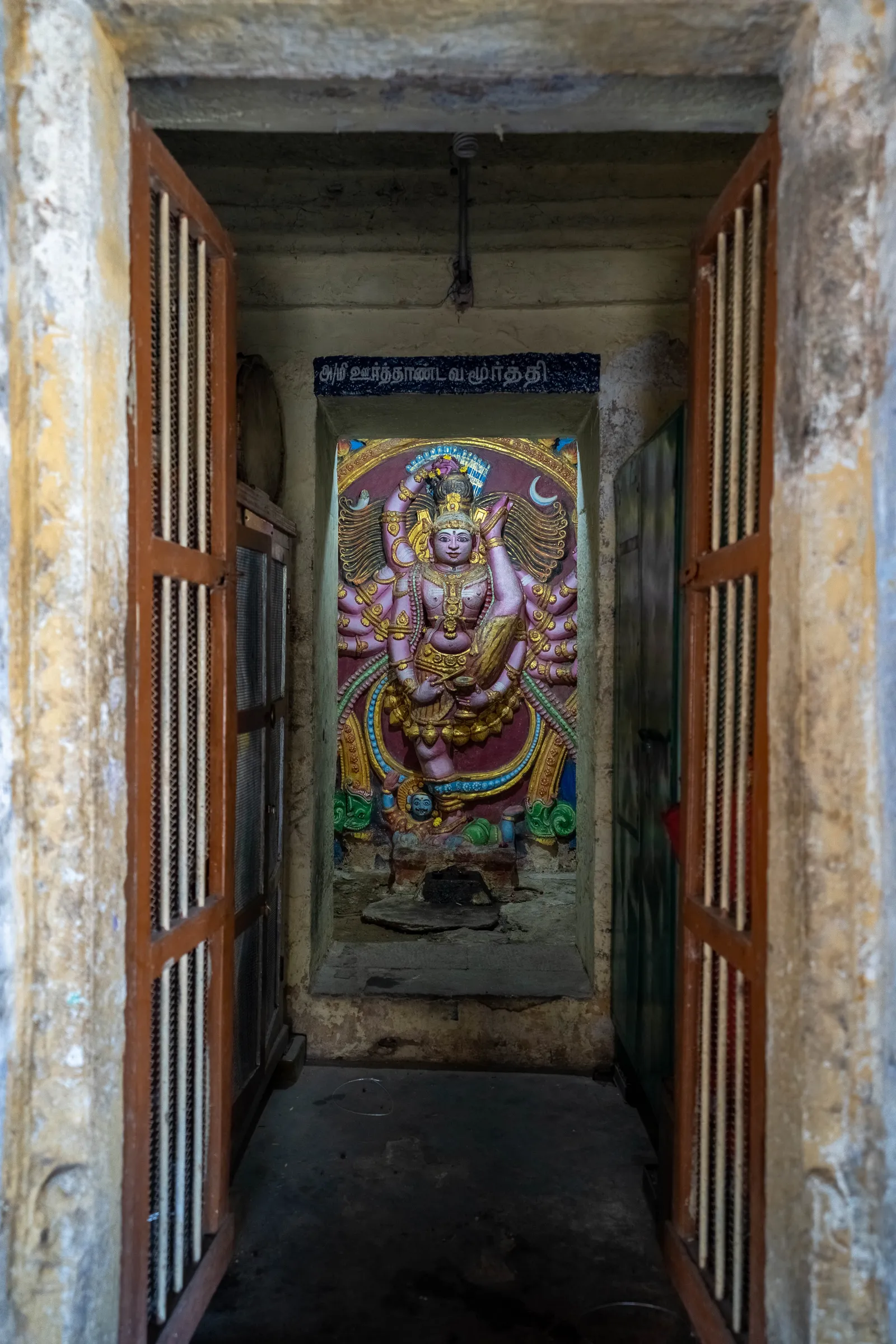
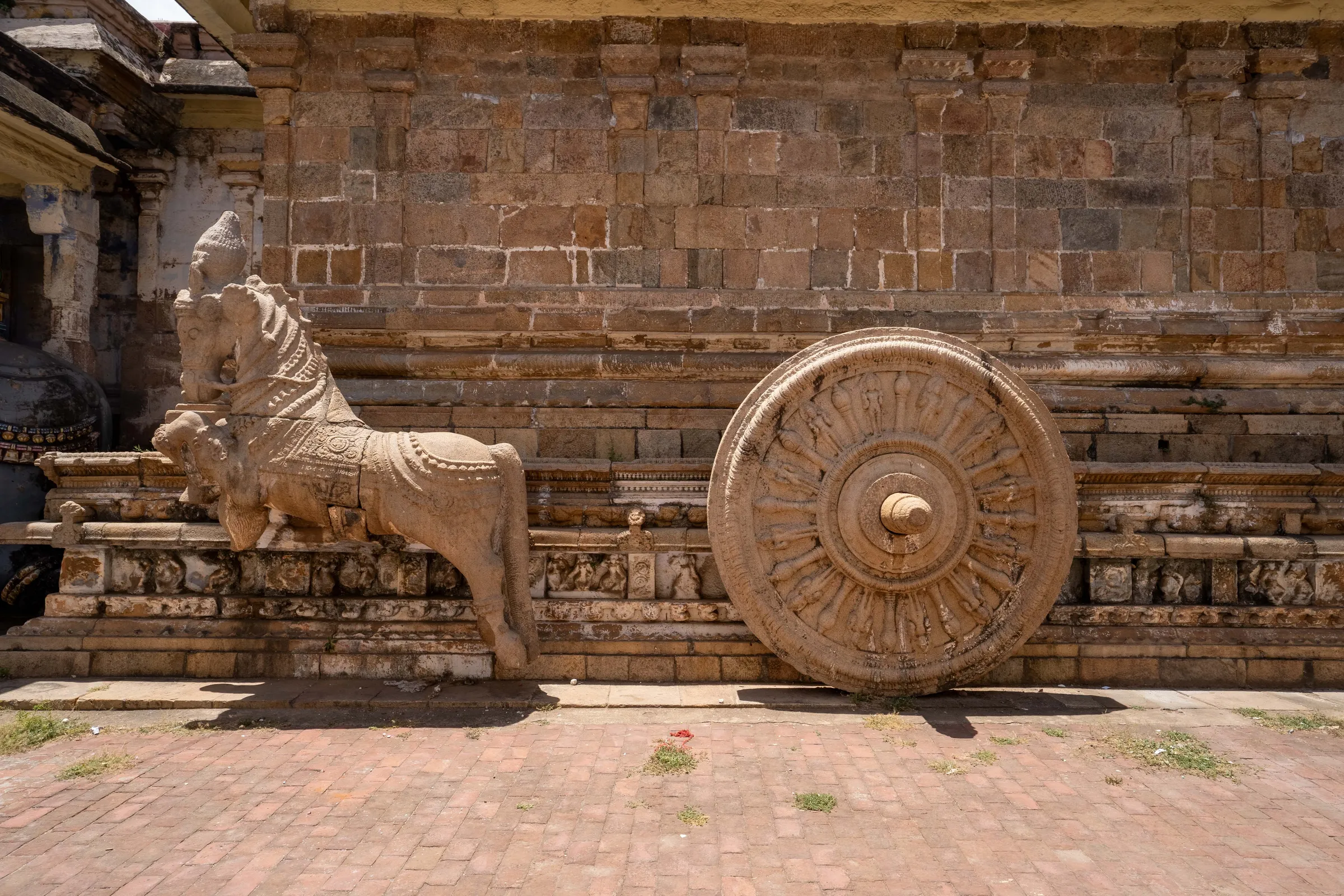
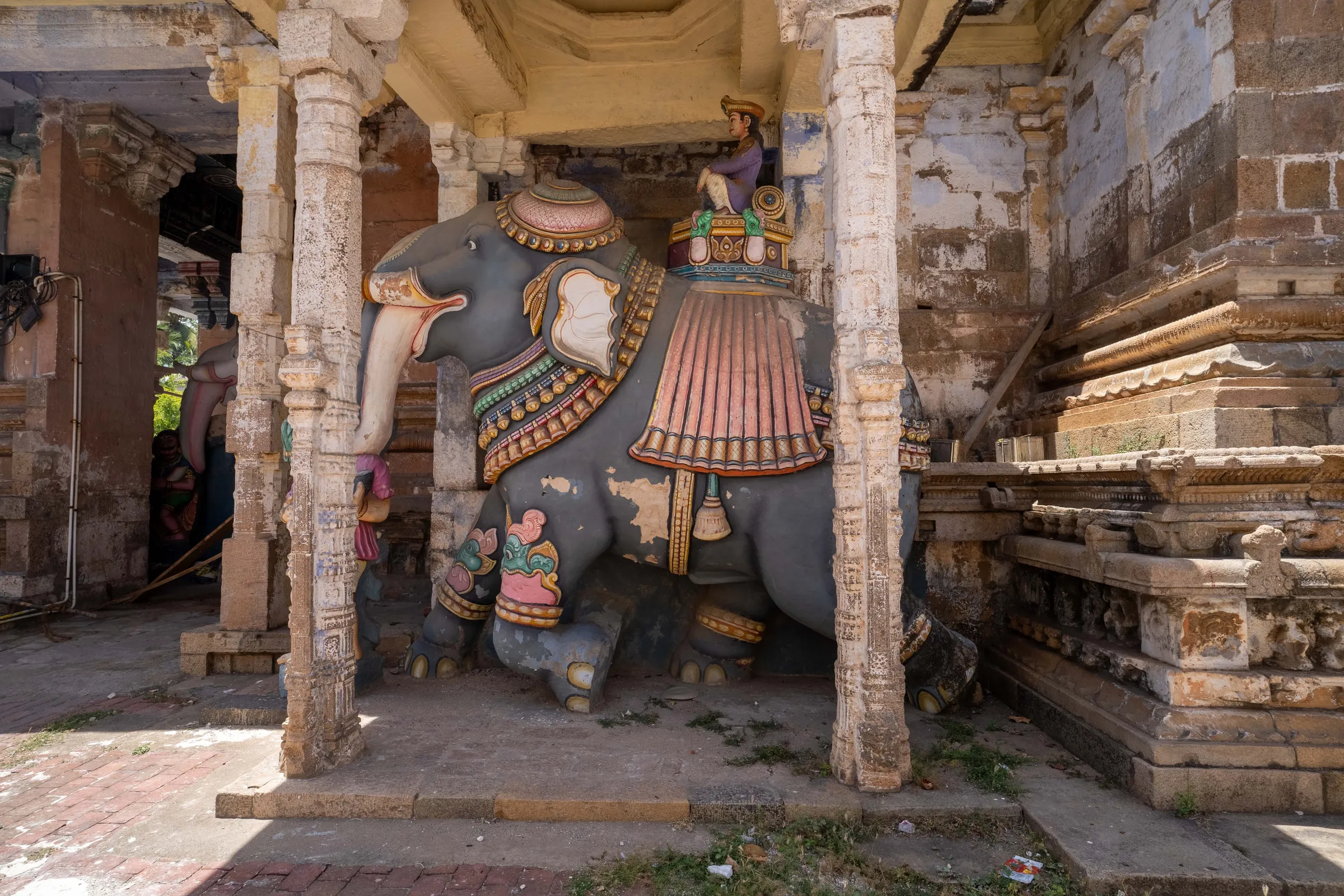
At the base of these sculptures are miniature Rāmāyaṇa panels, each about six by four inches and among the most detailed of their kind, also found at Pullamangai, Kandiyur, Tirukkarugavur, Punjai and Tiruvarur. The panels show Ṛśyaśṛṅga performing the Putrakāmēṣṭi yajña, Viśvāmitra teaching Rāma the bow, Hanumān attacking Laṅkinī and Rāvaṇa reclining with Mandōdarī. The Naṭarāja shrine, called the Perambalam and dated to the 12th century, is designed like a chariot drawn by horses and elephants, with the Naṭarāja in Ānanda Tāṇḍava and nearby shrines for Ūrdhva Tāṇḍava, Kālī and Vināyaka.
02
Archaeological
dated & cited
The walls are filled with inscriptions. One, dated 945 CE, calls Kumbakonam by the name Kudanthai in the time of Aditya Karikāla (942 to 971). The inscriptions span the reigns of Parāntaka I, Aditya Karikāla II, Uttama Chōḷa, Rāja Rāja I and Rājēndra I, so the temple was important from the 9th century. The fine wall sculpture is dated from the reign of Āditya I (871 to 970).
Dating
Begunearly Chōḷa, from the reign of Āditya I (871 to 970) · inferred
Protection & condition
ConditionIn worship
03
Mythological
as transmitted
The legend is that the bilva leaves from the pot of Amṛta became the Śiva liṅga here. The solar theme of the region continues: Sūrya is said to have worshipped the deity, and in the Tamil month of Chittirai the sun's rays fall directly within the sanctum. Tirunāvukkarasar, or Appar, has sung of the temple, declaring that all forms of light and fire are in Śiva, a way of drawing the local Sun worship into the worship of Śiva.
Sources
Pradeep Chakravarthy, 100 Timeless Tamil Nadu Temples
This is an open, reviewed record. If you have spotted an error or have
something to add — a correction, a date, a source, a name in another script —
propose it. Every change is reviewed before it joins the record.
You are suggesting an edit. Click any highlighted paragraph to change it.
“Suggest an edit” makes this entry editable right here — change the text, tell us how to reach you, and send it. No account needed. “Share feedback” opens a short form. Both go through review before anything is published.