Madurai · Madurai · Pāṇḍya, with later Vijayanagara and Nāyaka building
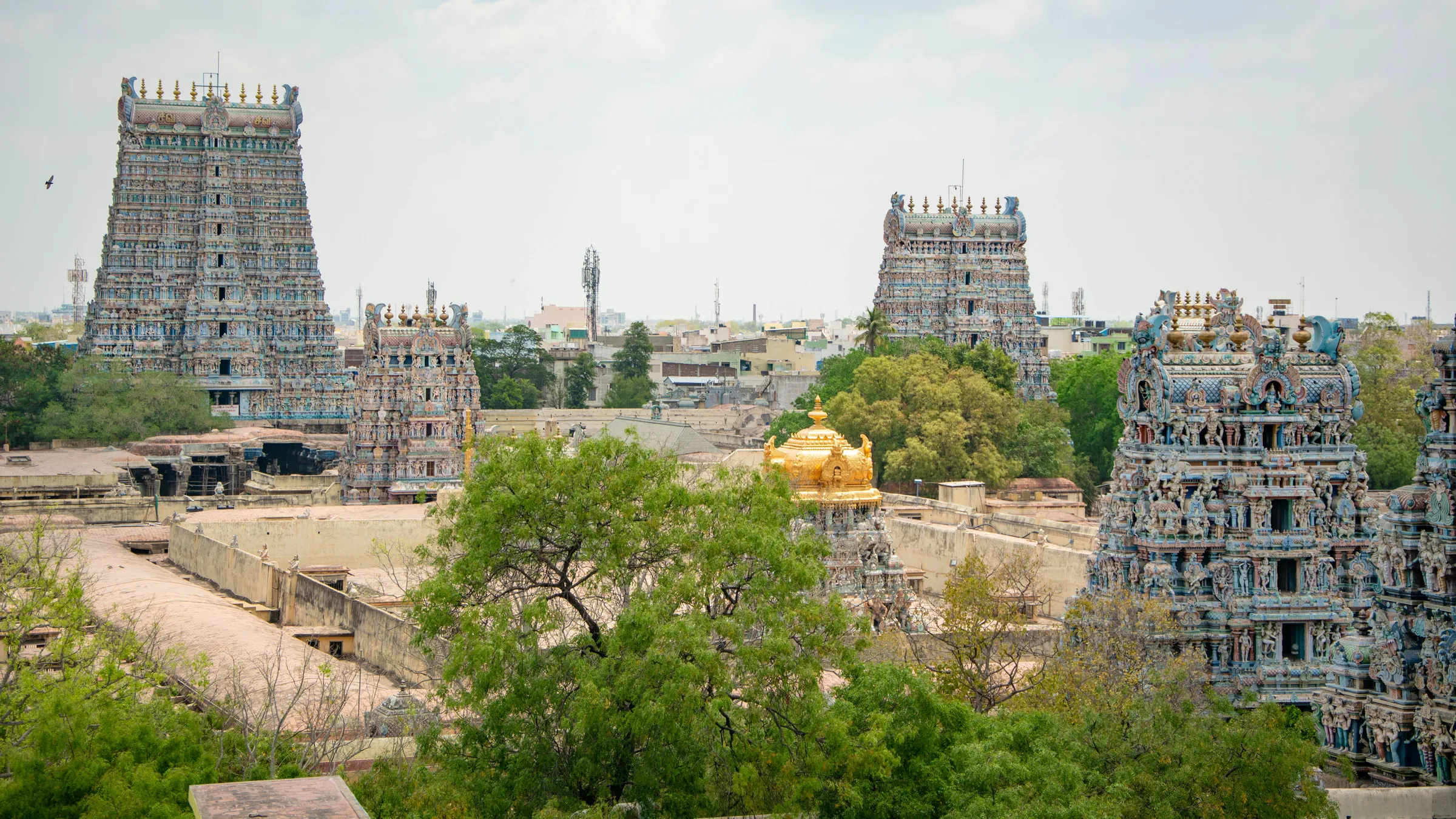
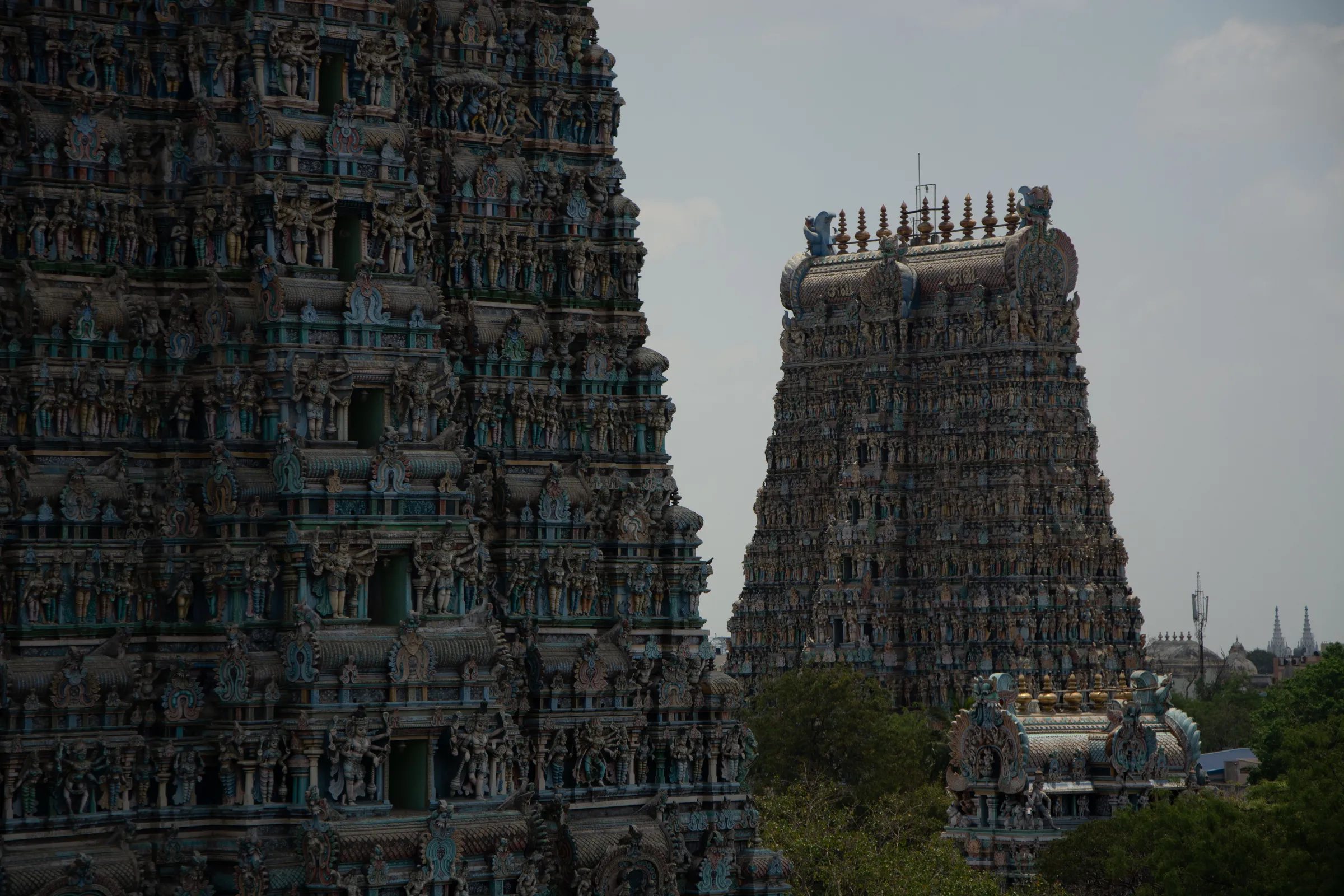
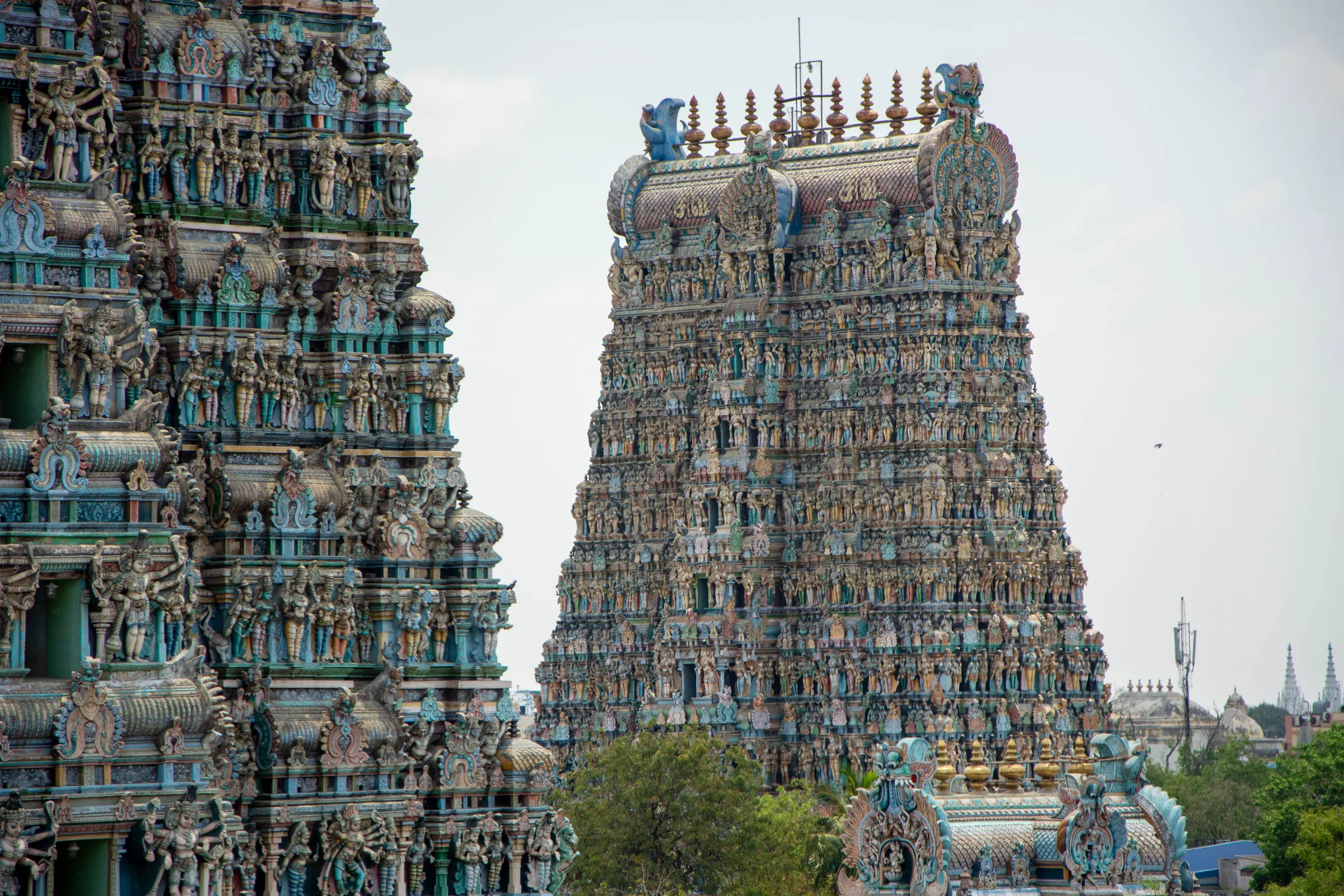
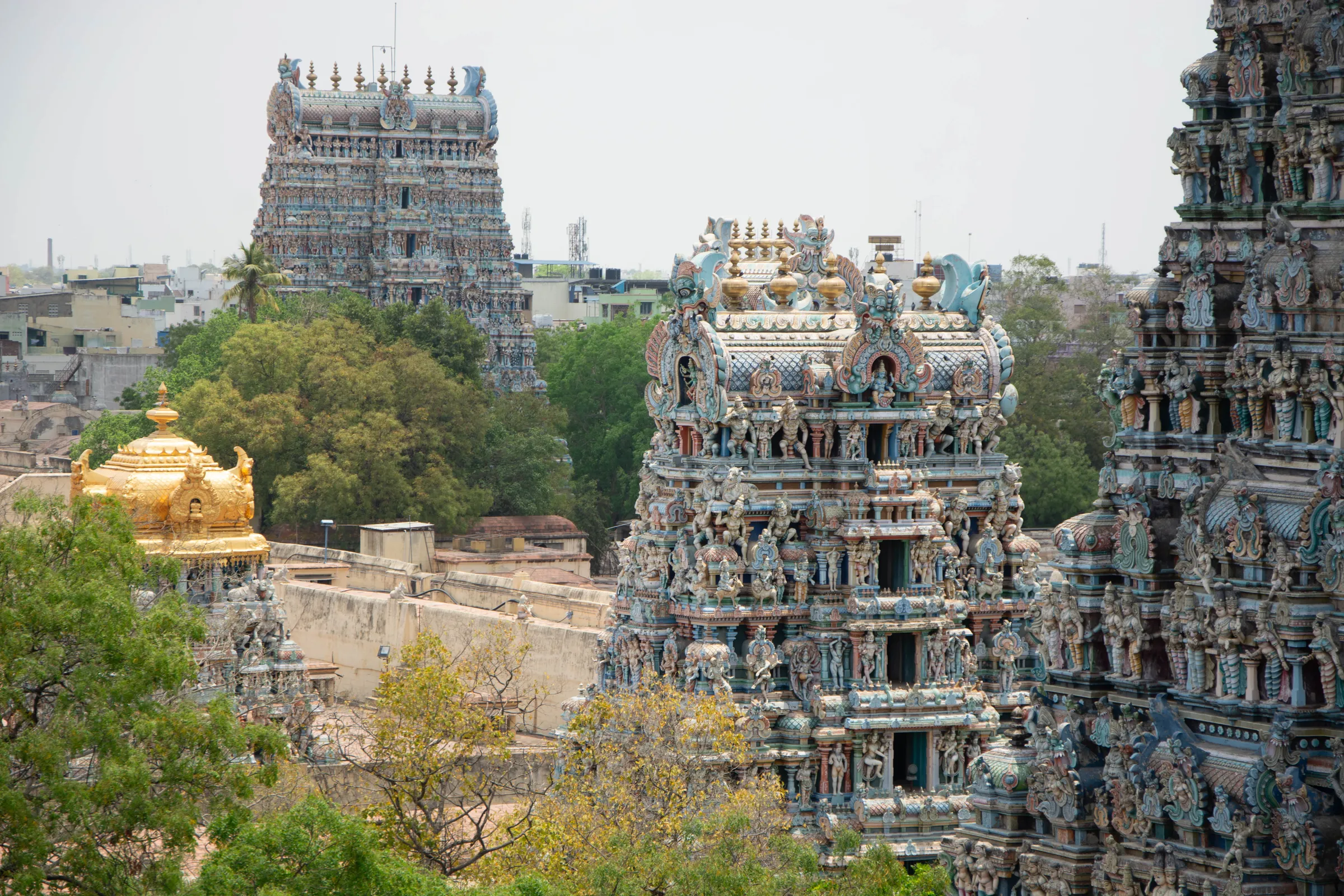
The great temple of Madurai, spread over twelve acres, raised by the Pāṇḍyas around the Swayambhu liṅga of Kadambavana and brought to its present glory by the Vijayanagara and Nāyaka rulers. Meenakshi is worshipped first, then Sundareswaran.
The Meenakshi temple at Madurai is the great Pāṇḍya foundation of the city,
raised around the Swayambhu liṅga of Kadambavana and enlarged across the Pāṇḍya,
Vijayanagara and Nāyaka centuries. The architectural reading sets out its
gopurams and pillared halls; the archaeological reading names the kings and their
dated towers and the sack by Malik Kafur; the mythological reading records the
city’s founding and the marriage of Meenakshi and Sundareswaran.
The temple stands over about twelve acres, with the main deities facing east. Custom is to worship Meenakshi first and then Sundareswaran. Meenakshi, carved of margadha (emerald) stone, stands with slightly bent legs, a lotus and a seated parrot in her right hand and the left hand hanging close to her body. Sundareswaran is in the form of a liṅga with Nandi before him.
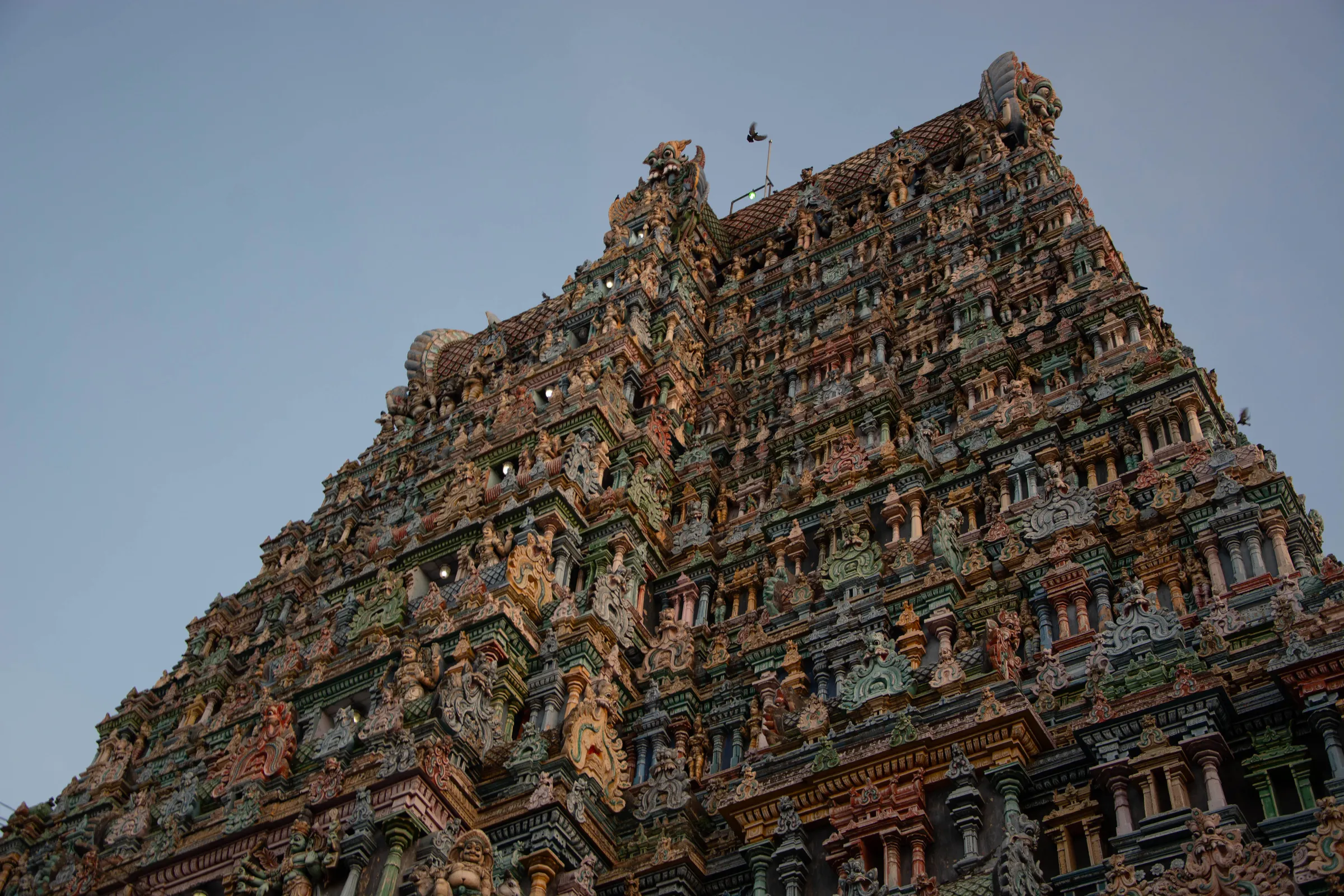
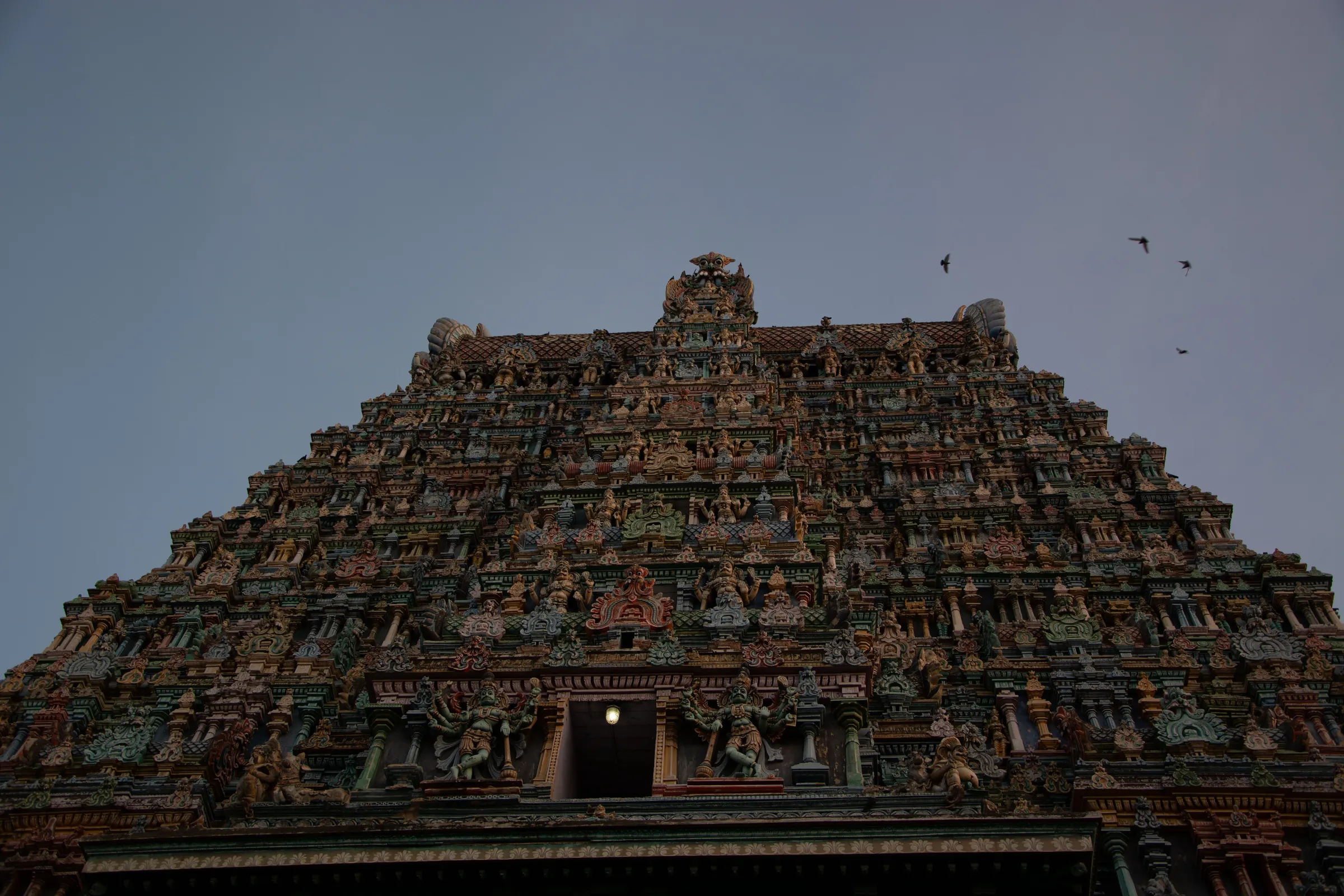
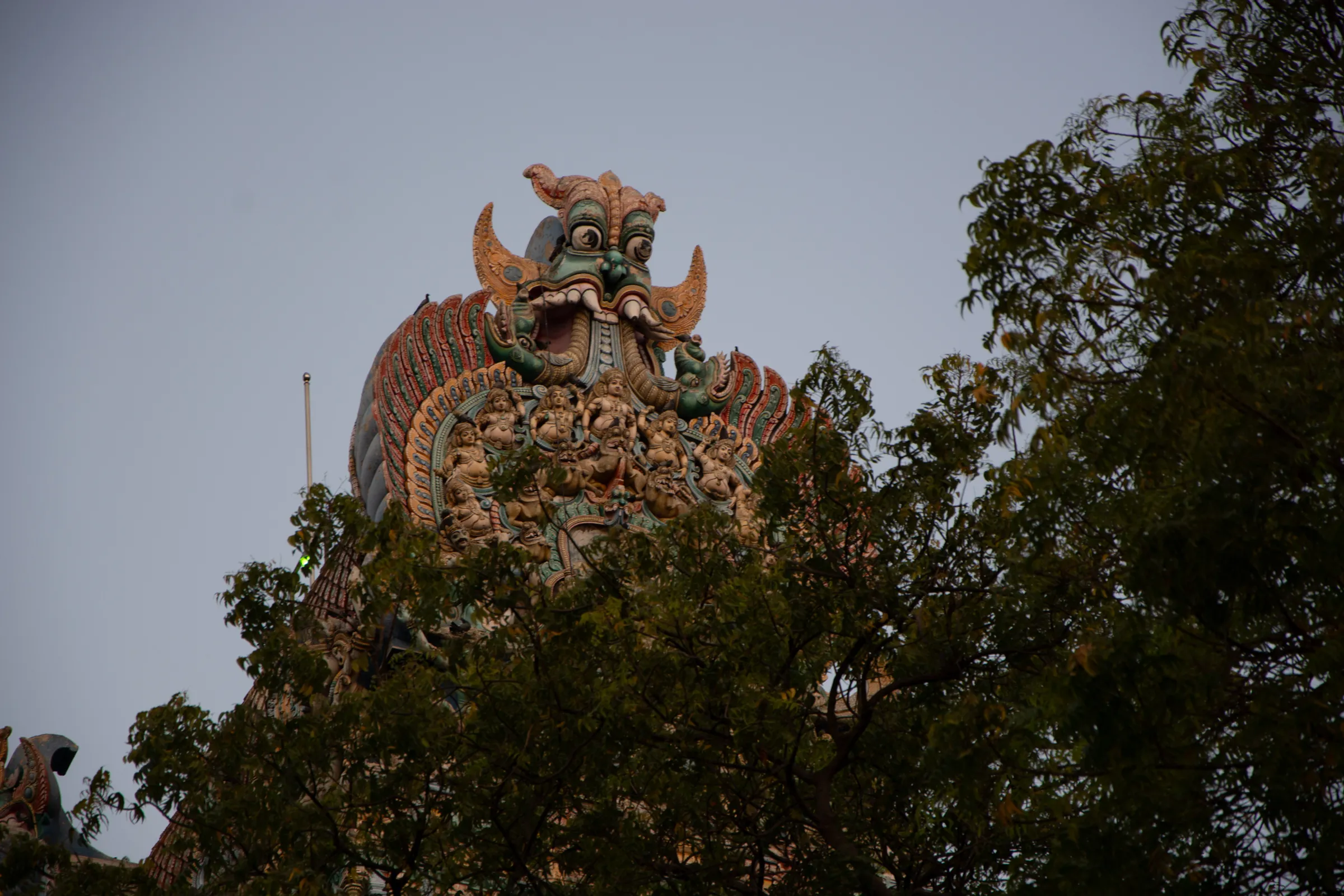
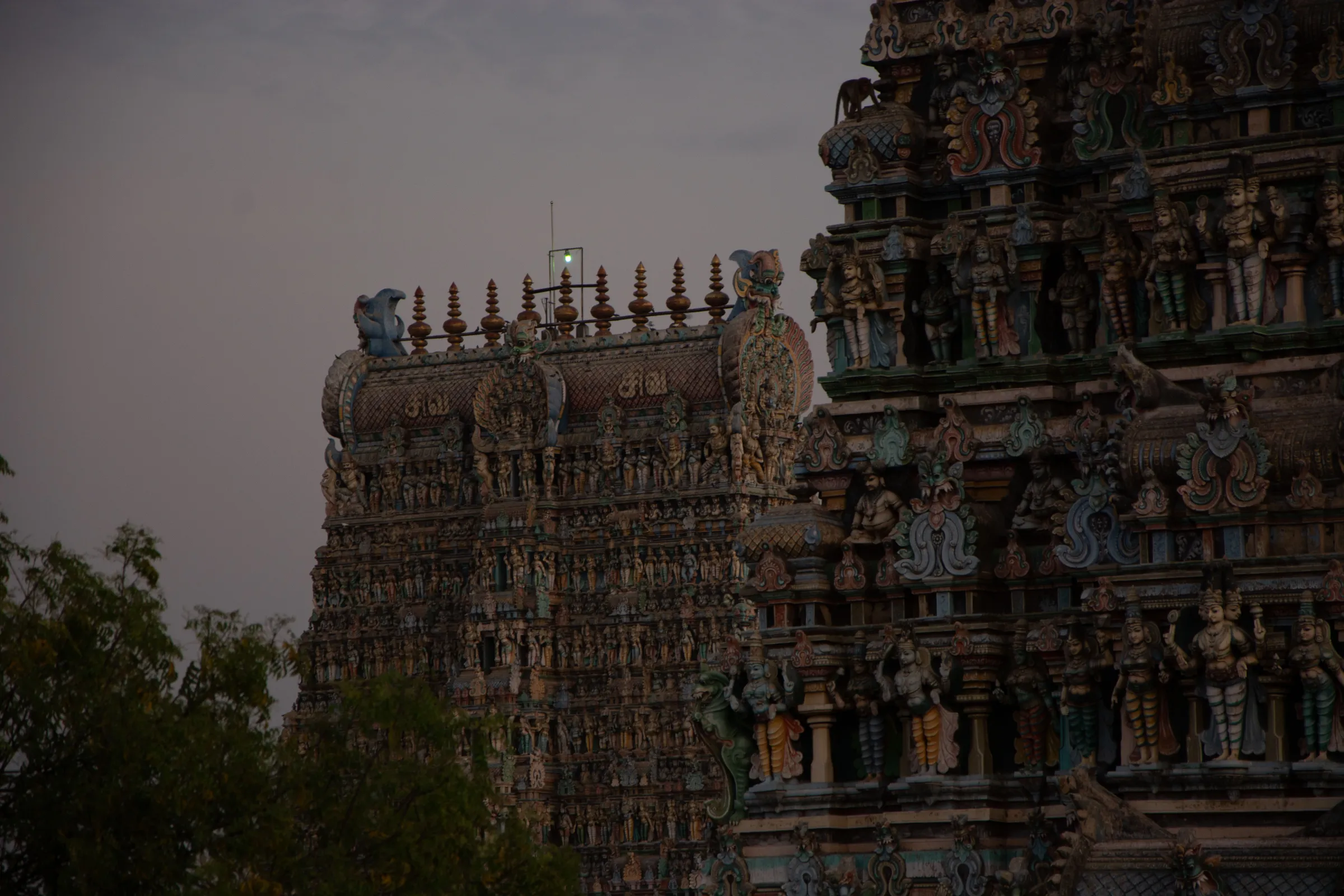
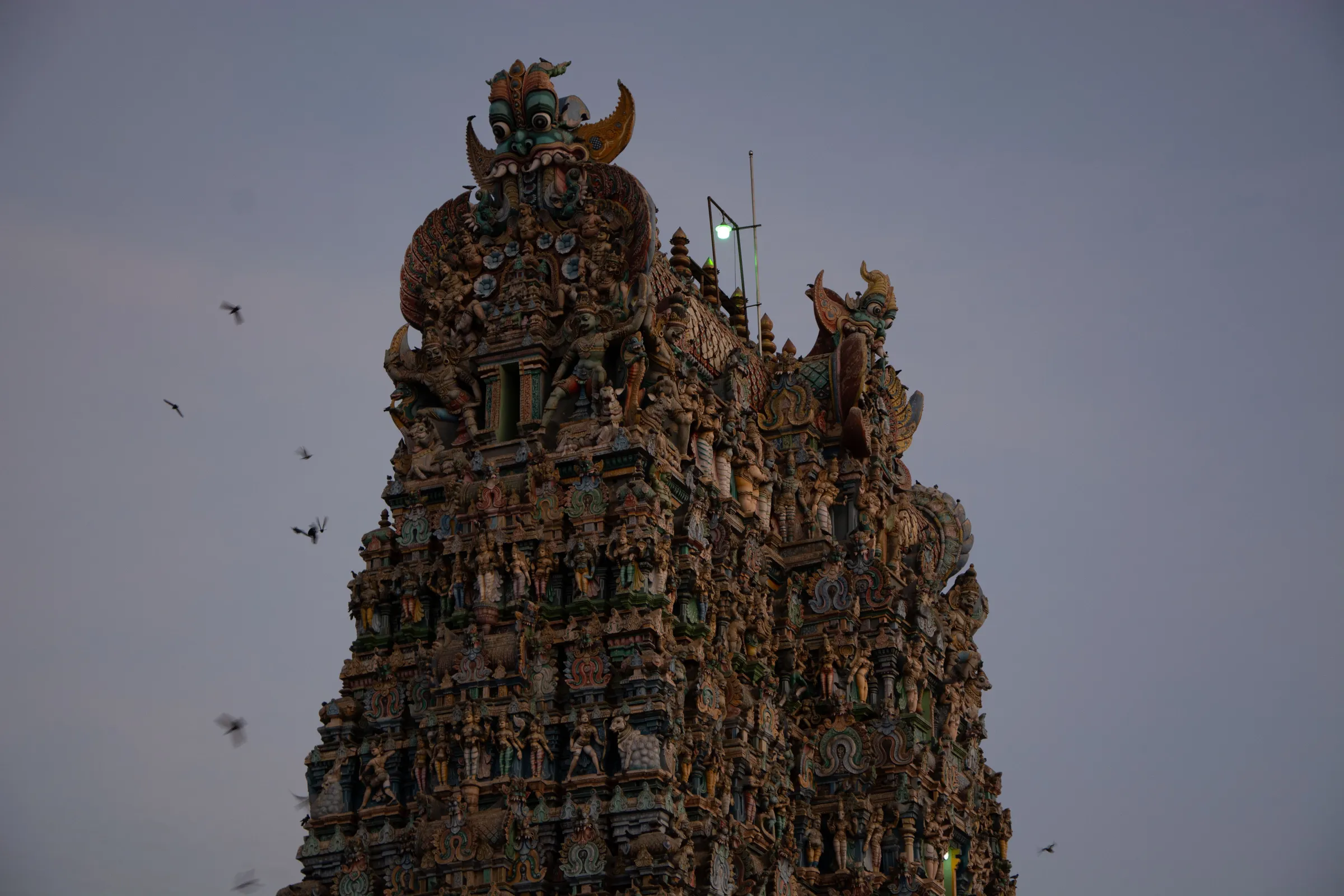
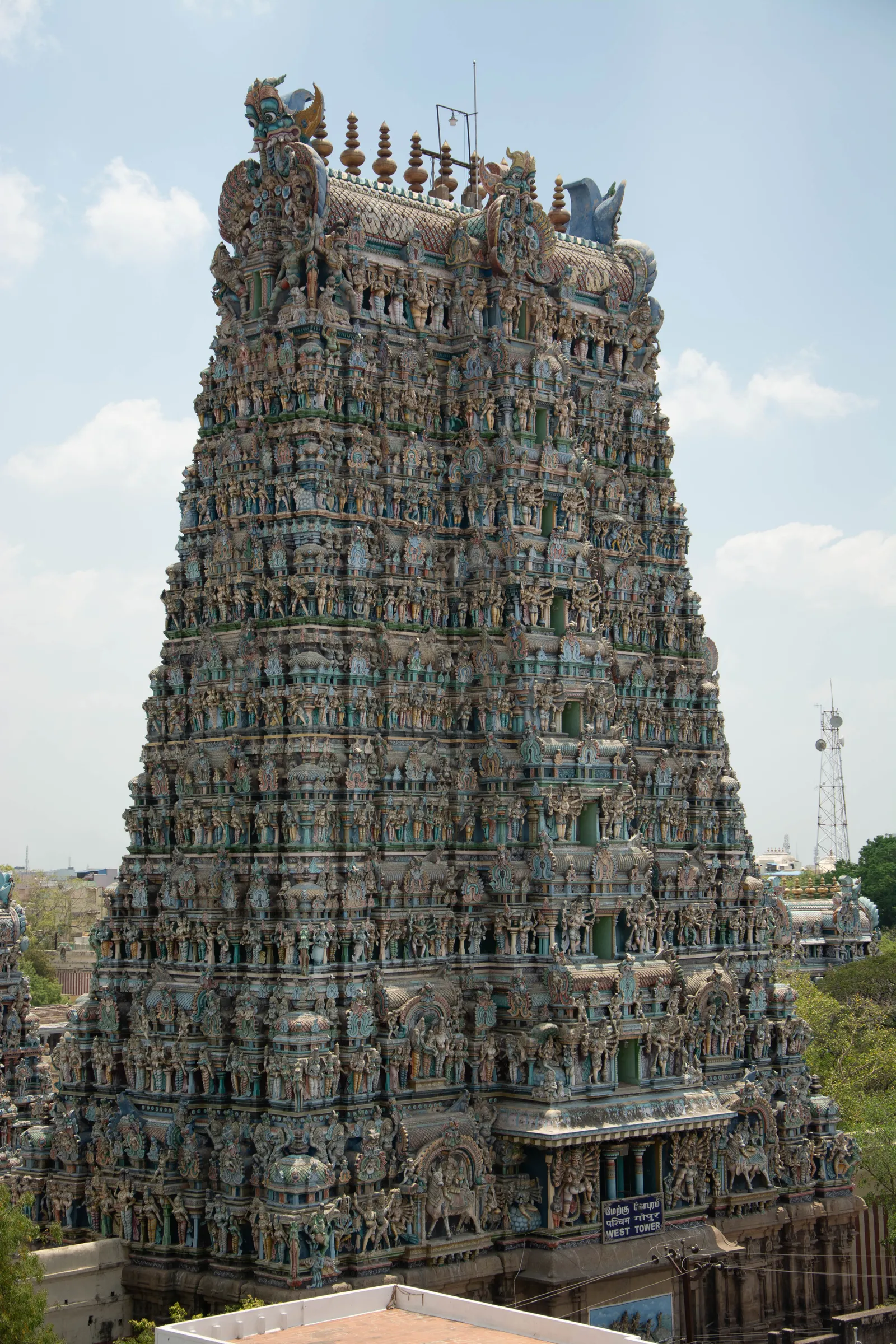
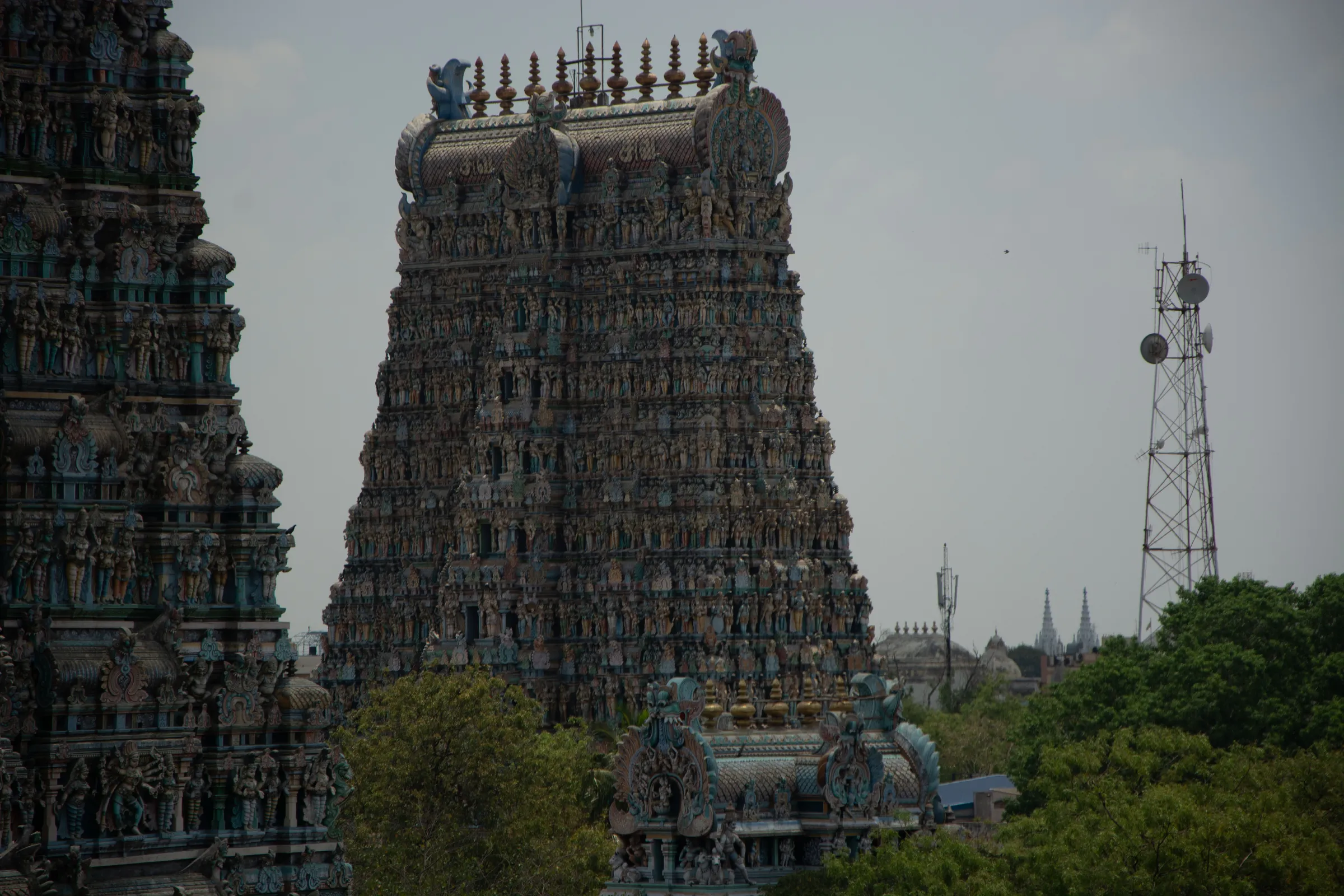
The restored temple has fourteen gopurams, the southern one, about 170 feet, being the tallest. The vimanas of Meenakshi and Sundareswaran are covered in gold, and all the gopurams carry sculpture of mythological scenes and the Saiva saints. The tank called Potramarai Kulam, the Golden Lotus Pond, lies within, its walls and roof painted with scenes from the Tiruvilayadal Purana.
The pillared halls are many. The Ayirankal Mandapa carries 985 carved pillars of yali, women musicians, deities and musical columns. The Kilikoondu Mandapa, once kept with parrots trained to utter Meenakshi, carries Mahabharata figures. The Pudu Mandapa holds sculpture of the Meenakshi Kalyanam, Tripurandakar, Thatathakai and the Tiruvilayadal Purana. The Velli Ambalam or Rajat Sabha, wholly of silver, shows Śiva in the Ananda Thandava with the right leg lifted, unusual among such forms.
Between the Swami and Amman sanctums stands the large Mukkuruni Vinayaga, to whom mukkuruni (about 18 kg) of rice is offered; a great kozhukkattai is made on Ganesh Chaturthi. The twin Irattai Pillaiyar and the Vibhuthi Pillaiyar also stand here. A strong wall surrounds the temple, the interior laid out per the Silpa Shastra.
02
Archaeological
dated & cited
Sadayavarman Kulasekaran I, a Pāṇḍya king of the 12th century, built the three-tiered tower at the entrance to the Sundareswaran shrine and the main portion of the Meenakshi shrine, and shrines for Nataraja, Surya, Ayyanar, Vinayaka, Kali and Kariamalperumal with a Mahamandapa, some surviving today. He is also said to have written the Ambikai Malai in praise of Meenakshi.
Maravarman Sundara Pandyan I built the gopuram called Sundara Pandya Tirukopuram, dated 1231 CE, and Maravarman Sundara Pandyan II a Chitra Gopuram and a pillared corridor to the Sundareswaran shrine. The temple was destroyed and looted by Malik Kafur, commander of the Delhi Sultanate, in the early 14th century, and rebuilt later.
The Vijayanagara and Nāyaka rulers brought it to its present glory, above all Vishwanatha Nāyaka and Tirumalai Nāyaka in the 16th and 17th centuries. Tirugnanasambandar of the 7th century addresses the deity as Alavai Iraivan and Tirualavai Chokkan, and early writings used the names Chokkanathar and Aṅgayarkanni for Sundareswaran and Meenakshi. Madurai is named in ancient Greek and Roman texts and in Sangam works.
03
Mythological
as transmitted
It is told that Indra installed the vimana over the Swayambhu liṅga in Kadambavana, kept in continuous worship, and that the temple grew about it over the centuries. Madurai, first called Alavai, is said to have had its boundaries revealed to a worried king in a dream by the Ala, a serpent. Sangam verse likens the city's plan to a lotus, circular in shape.
Folklore tells that a girl with three breasts emerged from a yagna performed by Malayadvaja Pandya, who sought a child. Wanting a successor, he raised her, Thatathakai, as a boy. She mastered the 64 arts and conquered the rulers of all eight directions. When she neared Śiva as foretold, her third breast vanished, and she took the sign and accepted him. Śiva came as the young Sundareswaran; the couple ruled Madurai long and at last went to Kailasa.
Of the Rajat Sabha it is told that Patanjali and Vyagrapadha, come for Śiva's wedding, would not eat before watching his dance, as they did at Thillai. So Śiva danced for them here, the Ananda Thandava. Of the tank it is said that in the Sangam age new writings were judged by being placed in the water, the worthy cast to the edge and the unworthy sinking.
This is an open, reviewed record. If you have spotted an error or have
something to add — a correction, a date, a source, a name in another script —
propose it. Every change is reviewed before it joins the record.
You are suggesting an edit. Click any highlighted paragraph to change it.
“Suggest an edit” makes this entry editable right here — change the text, tell us how to reach you, and send it. No account needed. “Share feedback” opens a short form. Both go through review before anything is published.