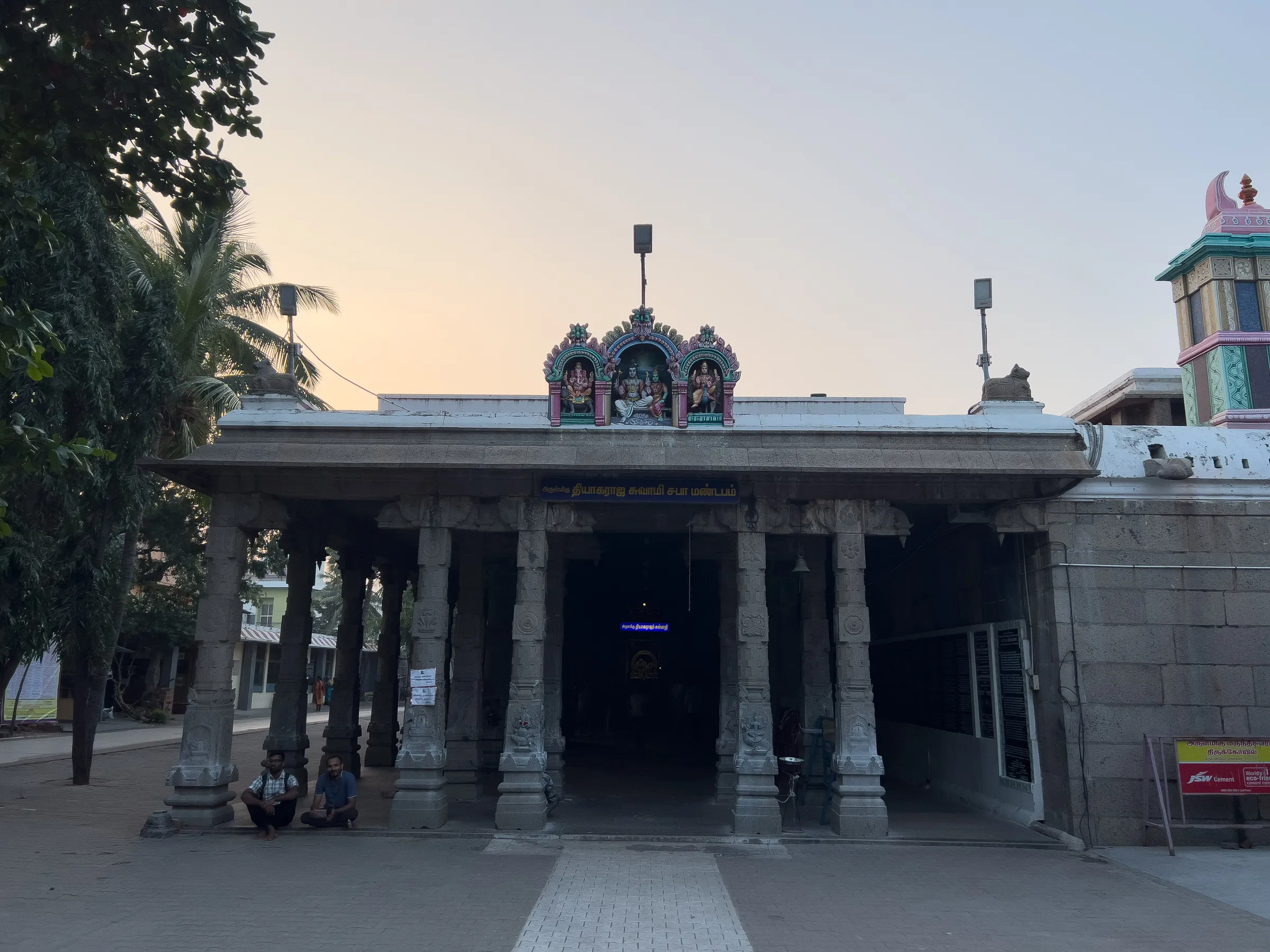
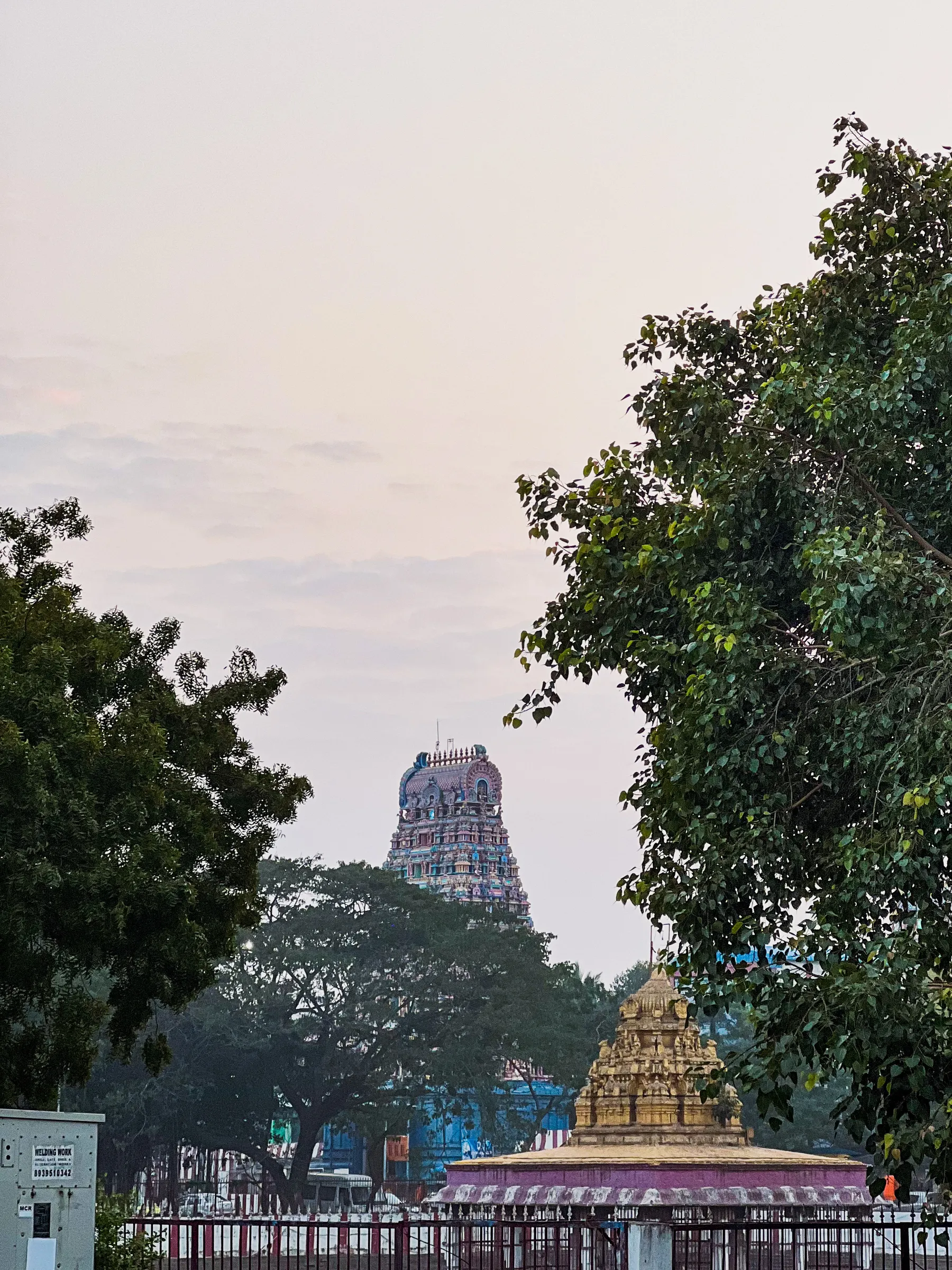
Marundeeswara Temple, photograph
← Thondaimandalam
Entry 003

Marundeeswara Temple

Tiruvanmiyur, Chennai · Chennai · Pallava and Chōḷa

A Paadal Petra Sthalam at Tiruvanmiyur, where Śiva is worshipped as Marundeeswar, the Lord of healing, with traces of both Pallava and Chōḷa work and inscriptions of the Chōḷa age.

Populated from “100 Timeless Tamil Nadu Temples” (book pp. 9 to 10). The three registers are held apart: what stands, what is dated and cited, and what is told.

The photographs

Plates · 6

Marundeeswara Temple, photograph
© Amar Ramesh and team · All rights reserved
Marundeeswara Temple, photograph
© Amar Ramesh and team · All rights reserved
Marundeeswara Temple, photograph
© Amar Ramesh and team · All rights reserved
Marundeeswara Temple, photograph
© Amar Ramesh and team · All rights reserved
Marundeeswara Temple, photograph
© Amar Ramesh and team · All rights reserved
01

Architectural

structure & vocabulary

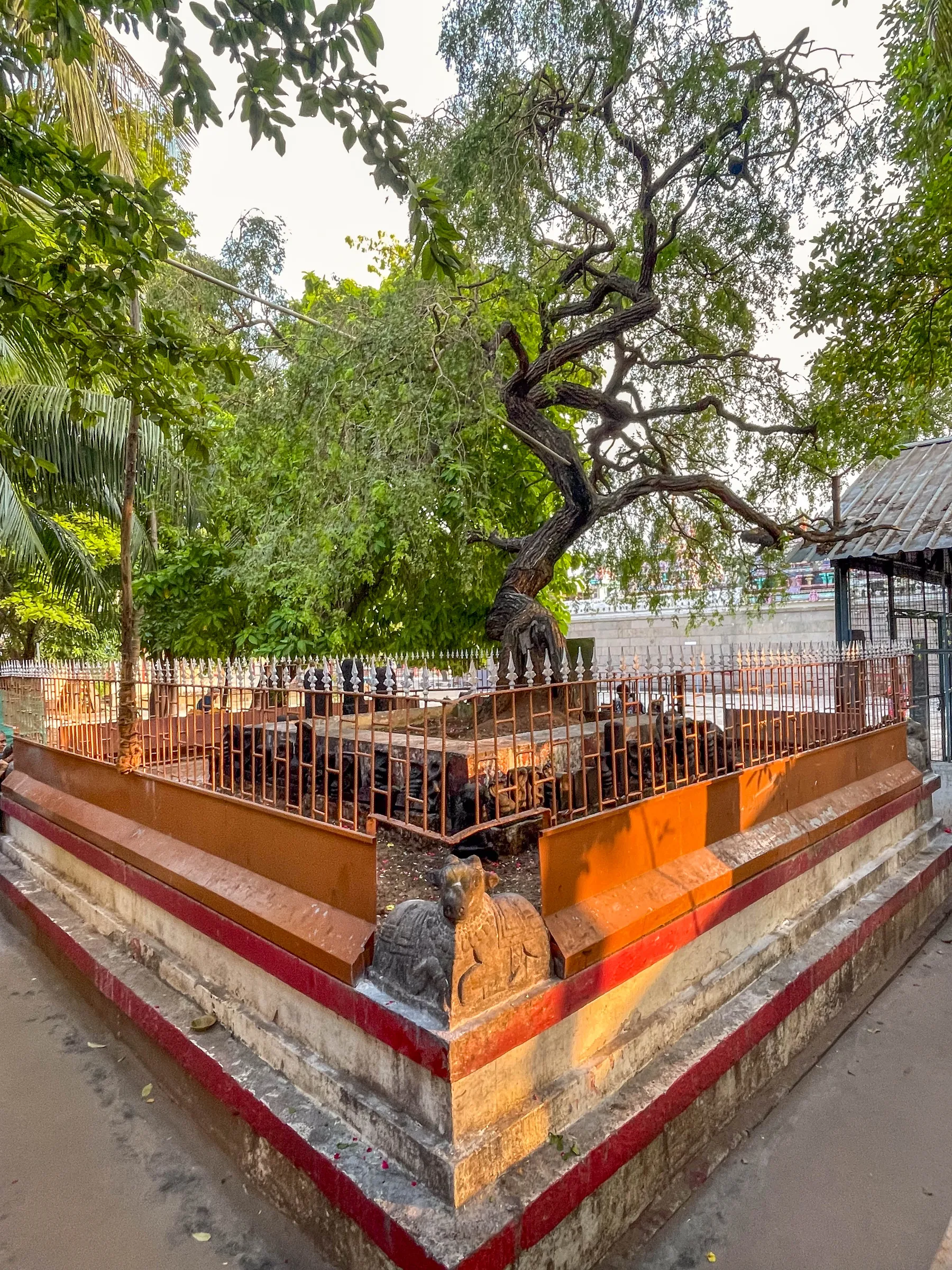
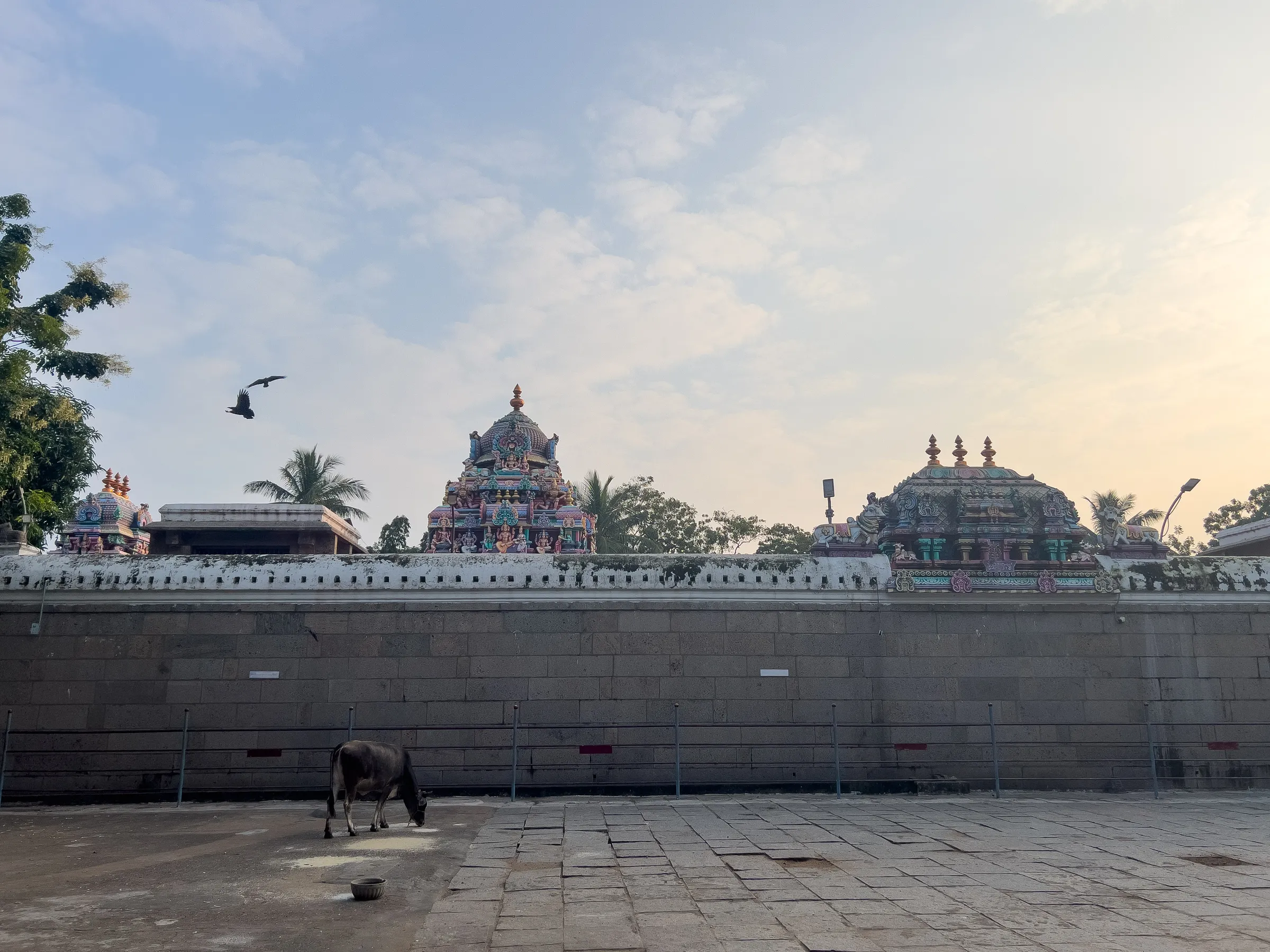
The temple occupies around an acre of land and has two entrances with gateway towers. The west tower is on East Coast Road, and the shrine of Valmiki is housed there. The presiding deity is Marundeeswar and his consort is Tirupurasundari. The Lingam is Swayambhu. The main shrine holds Marundeeswar, Thyagaraja and Nataraja idols.

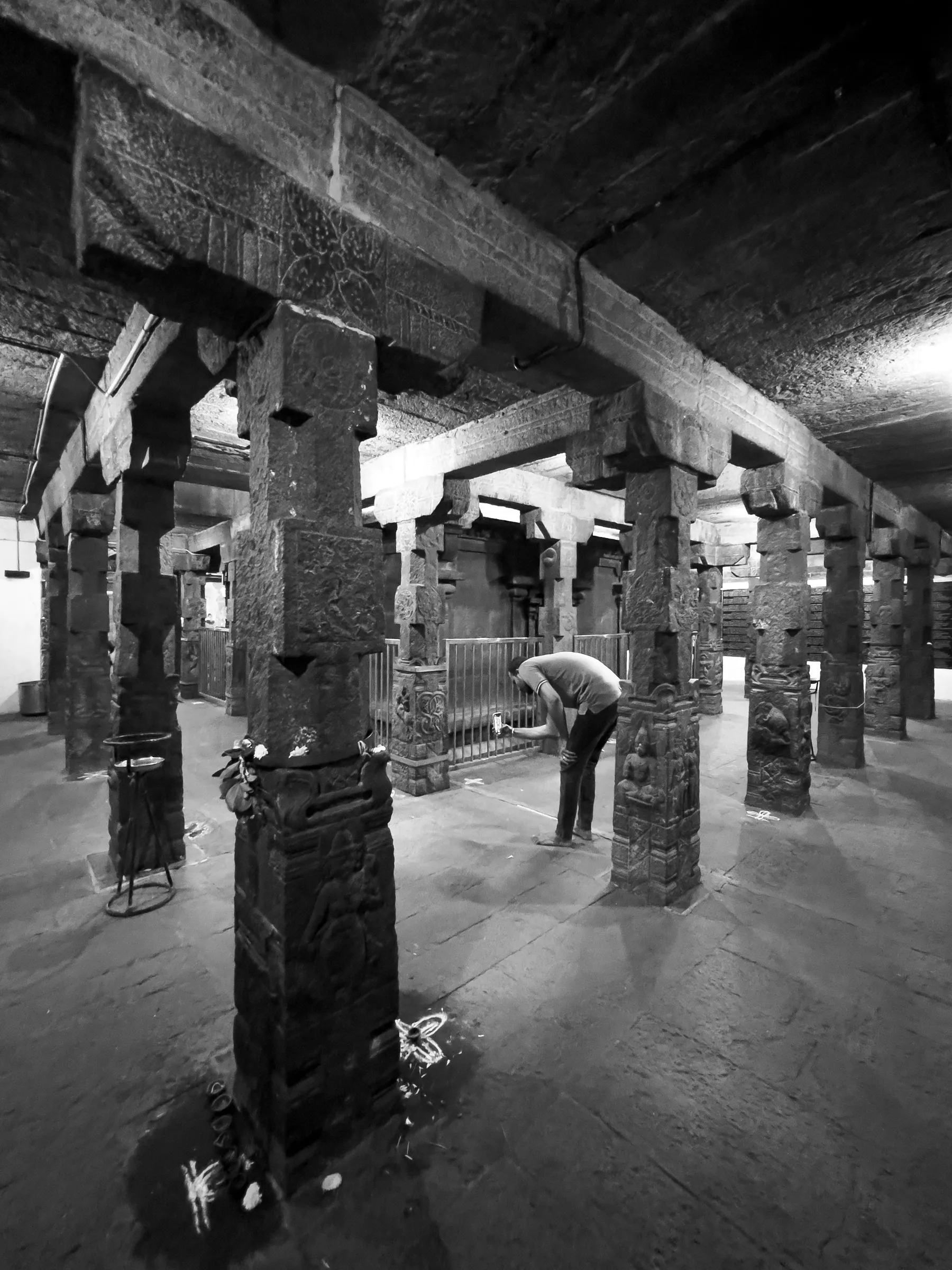
The architecture has traces of both Pallava and Chōḷa styles. The mandapa housing Somaskanda has 36 finely carved pillars. The Devasriya Mandapa holds Saiva Siddhartha lectures every evening, and from the Tirumurai Mandapa Tirumurai has been recited for the past 12 years. Next to the three Ganesha shrines is the Vedagama Patasala.

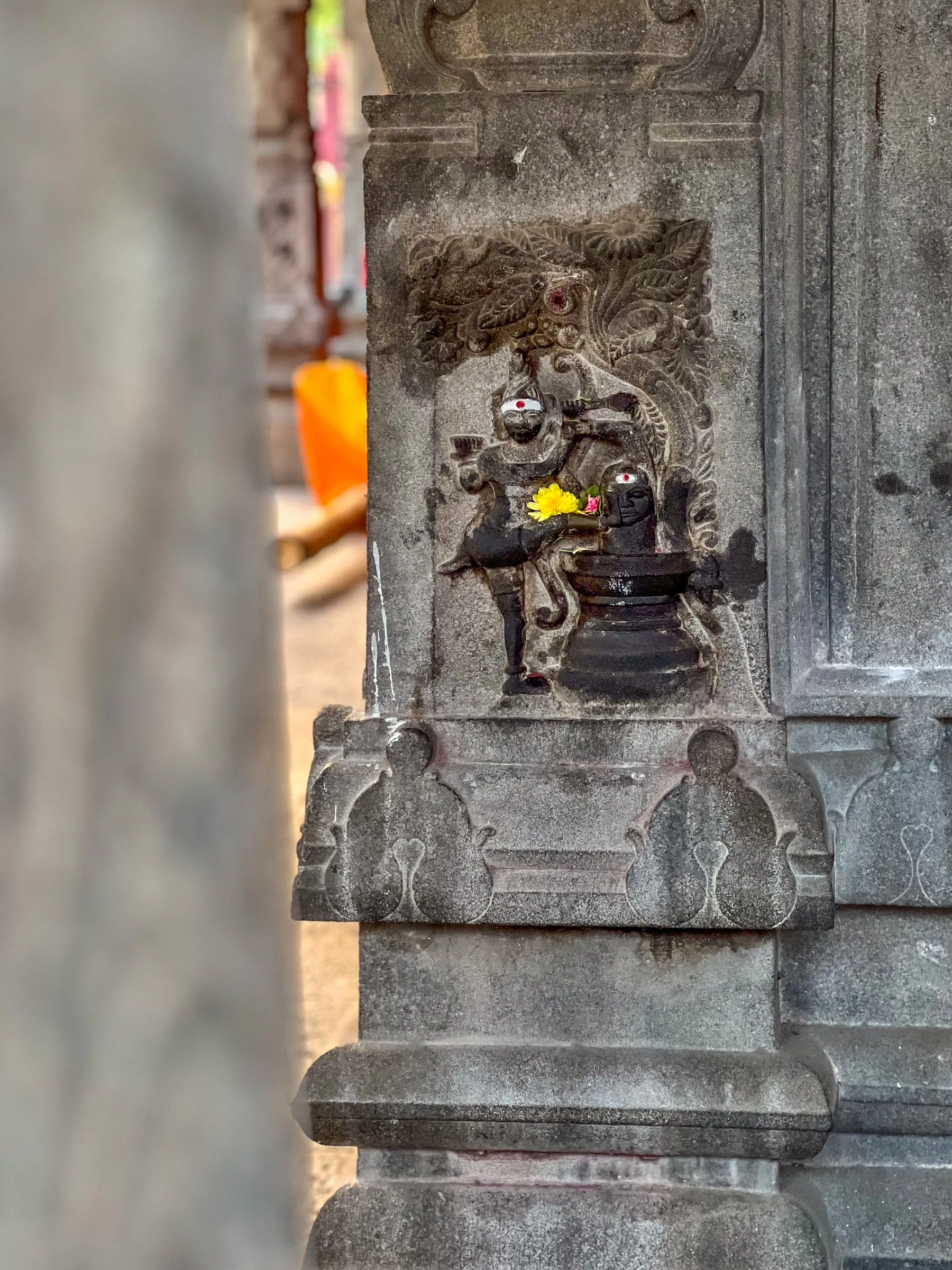
The motifs on some pillars are intriguing. One pillar carries three identical overlapping equilateral triangles around a four-petal flower, and a snake knotting itself into three parts is another motif, both around the Tirupurasundari sanctum. A recent study by Arul Lakshmi Narayan reads these geometric designs as mathematical motifs connecting universal symbolism, science and mathematics, and as expressions of the irreducible trinity of divinity.

02

Archaeological

dated & cited

East Coast Road was known as Vadagaperuvazhi during the Chōḷa period of the 11th century CE, because it gave access to both Thanjavur and Andhra. Inscriptions in the Tripura Sundari Amman shrine relate to Rajendra Chōḷa's period, 1011 to 1043 CE. One inscription traced to the 14th year of Rajendra mentions that Tiruvanmiyur is the devadana land of Kotturnadu of Puliyur Kottam.

It is likely the temple existed even during the Pallava period of the 7th to 8th centuries CE. Sambandar of the 7th century admired the great mansions and wealth of the place and the observance of the Vedas by the Brahmins here, and Arunagirinadhar of the 15th century CE visited the temple and hailed Subramanya.

Dating

Traced to the early 7th century by the hymns of Appar and Sambandar; inscriptions relate to Rajendra Chōḷa's period, 1011 to 1043 CE; likely existed in the Pallava period of the 7th to 8th centuries CE.

Protection & condition
GroupPadal Petra Sthalam
03

Mythological

as transmitted

The original name of Tiruvanmiyur was Thiruvaimikiyur in honour of Sage Valmiki, said to have worshipped here. This is one of the Padal Petra Sthalams, with both Appar and Sambandar singing its glory. Appar's words Vaattam Theerthidum Vanmiyur Eesane, Vanmiyur Eesan who removes lassitude, trace the temple to the early 7th century.

Another name for Śiva here is Palvanna Nadhar. Legend has it that the sacred cow Kamadhenu did oblation on the Lingam with her milk. It is believed that Sage Agastya was taught about the medicinal herbs by Śiva here, hence the name Marundeeswar. Indira worshipped the Lingam to be rid of his curse, the Lingam that Hanuman prayed to, and the one for which Sage Bhardwaj performed pooja, are all here.

Register interest in prints Buy the book
Improve this entry

This is an open, reviewed record. If you have spotted an error or have something to add — a correction, a date, a source, a name in another script — propose it. Every change is reviewed before it joins the record.

“Suggest an edit” opens this entry on GitHub and turns your change into a pull request. “Share feedback” opens a short form. Both go through review.