Kutralanadhar Temple, photograph
← Pandya Nadu
Entry 068

Kutralanadhar Temple

Kutralam (Courtallam) · Tenkasi · Pandya; later Chola, Travancore and modern additions

An ancient Shiva temple at Kutralam on the Western Ghats, some 8 km from Tenkasi, built in the shape of a conch and famous for its Chitra Sabha, one of the Pancha Sabhas, with its painted Nataraja hall.

The Kutralanadhar temple at Kutralam, conch-shaped and set on the Western Ghats, is famed for its naturally-formed lingam and for the painted Chitra Sabha, one of the Pancha Sabhas.

The photographs

Plates · 18

Kutralanadhar Temple, photograph
© Sai Sanjay Prasath · All rights reserved
Kutralanadhar Temple, photograph
© Sai Sanjay Prasath · All rights reserved
Kutralanadhar Temple, photograph
© Sai Sanjay Prasath · All rights reserved
Kutralanadhar Temple, photograph
© Sai Sanjay Prasath · All rights reserved
Kutralanadhar Temple, photograph
© Sai Sanjay Prasath · All rights reserved
Kutralanadhar Temple, photograph
© Sai Sanjay Prasath · All rights reserved
Kutralanadhar Temple, photograph
© Sai Sanjay Prasath · All rights reserved
Kutralanadhar Temple, photograph
© Sai Sanjay Prasath · All rights reserved
Kutralanadhar Temple, photograph
© Sai Sanjay Prasath · All rights reserved
Kutralanadhar Temple, photograph
© Sai Sanjay Prasath · All rights reserved
Kutralanadhar Temple, photograph
© Sai Sanjay Prasath · All rights reserved
Kutralanadhar Temple, photograph
© Sai Sanjay Prasath · All rights reserved
Kutralanadhar Temple, photograph
© Sai Sanjay Prasath · All rights reserved
Kutralanadhar Temple, photograph
© Sai Sanjay Prasath · All rights reserved
Kutralanadhar Temple, photograph
© Sai Sanjay Prasath · All rights reserved
Kutralanadhar Temple, photograph
© Sai Sanjay Prasath · All rights reserved
Kutralanadhar Temple, photograph
© Sai Sanjay Prasath · All rights reserved
01

Architectural

structure & vocabulary

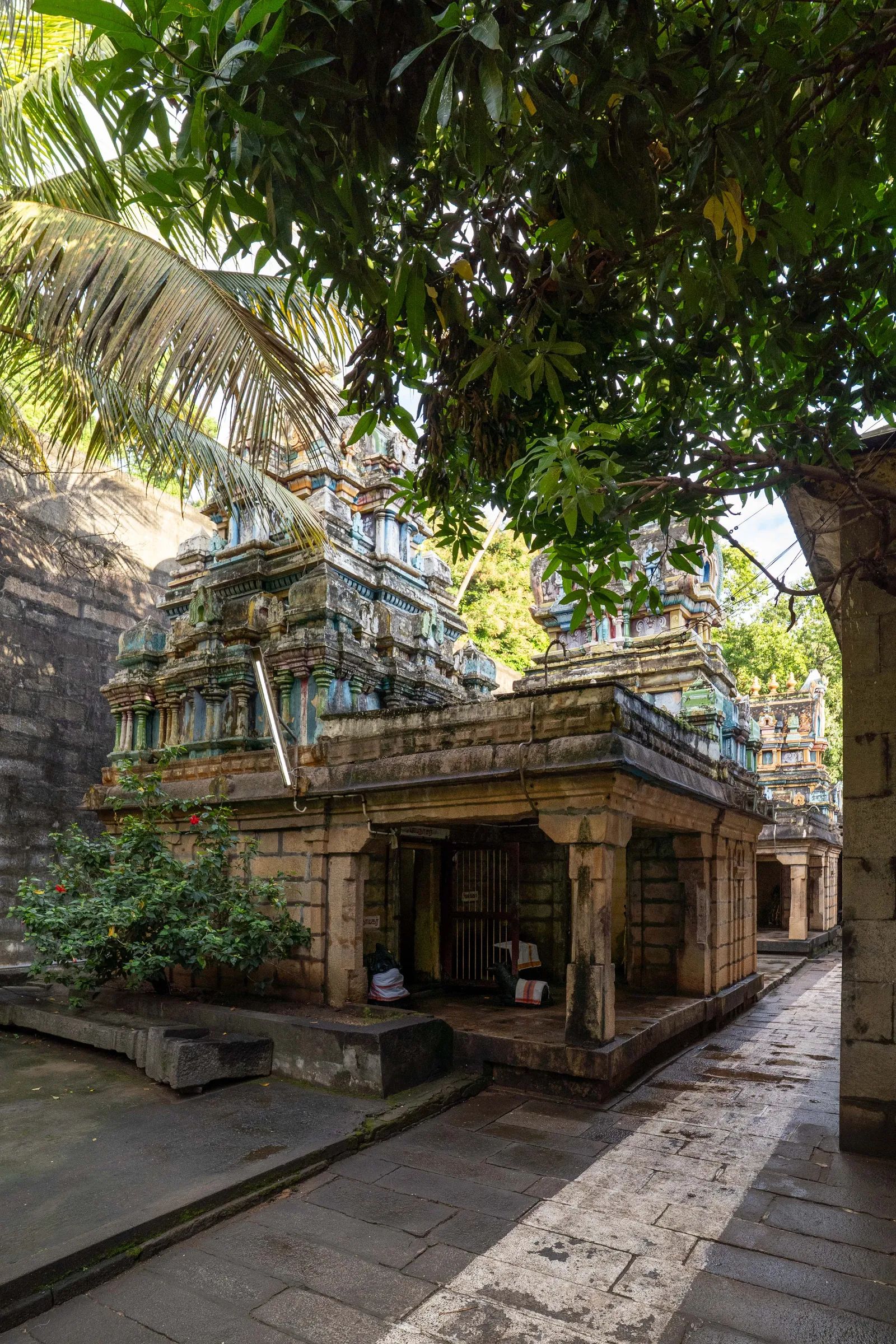
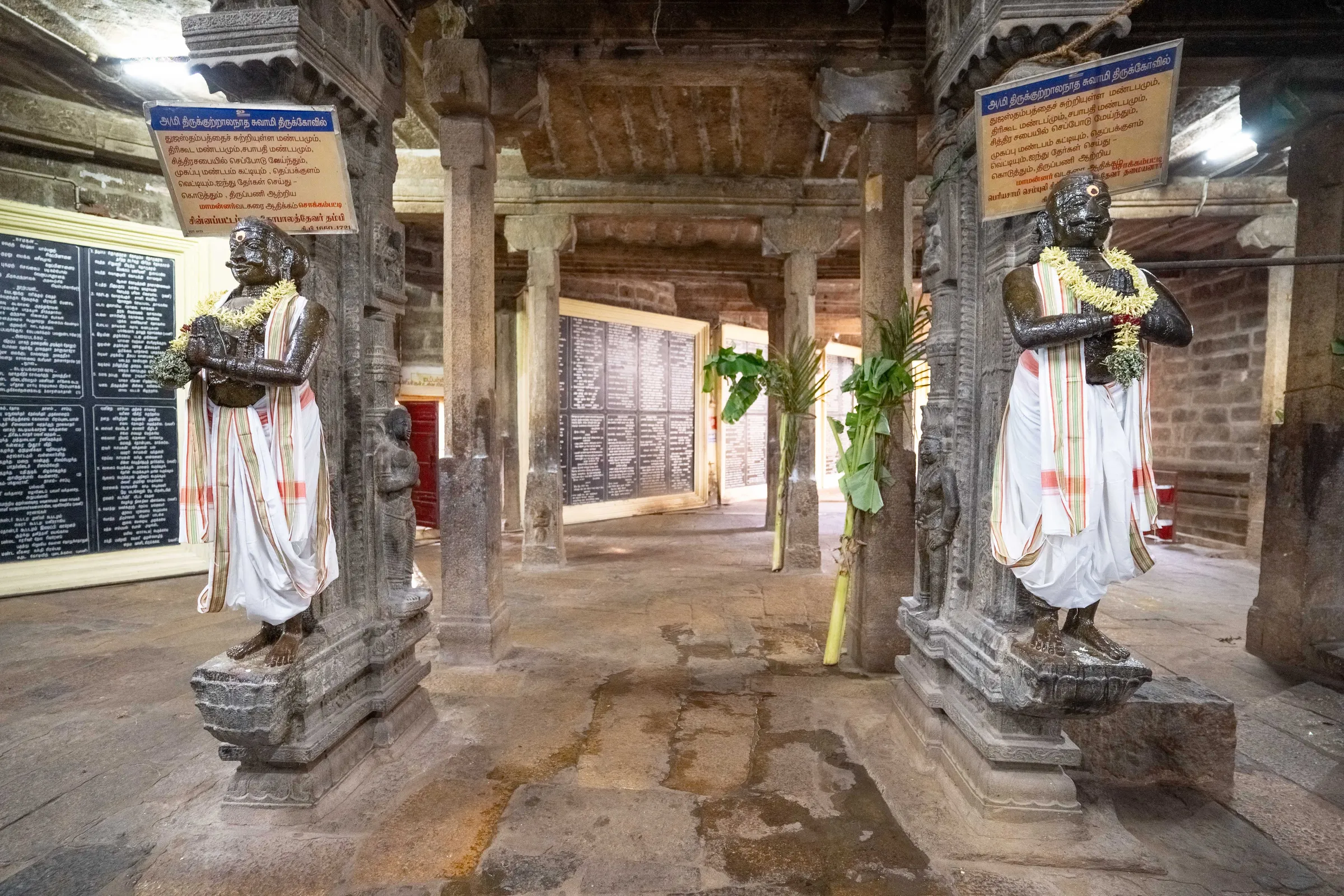
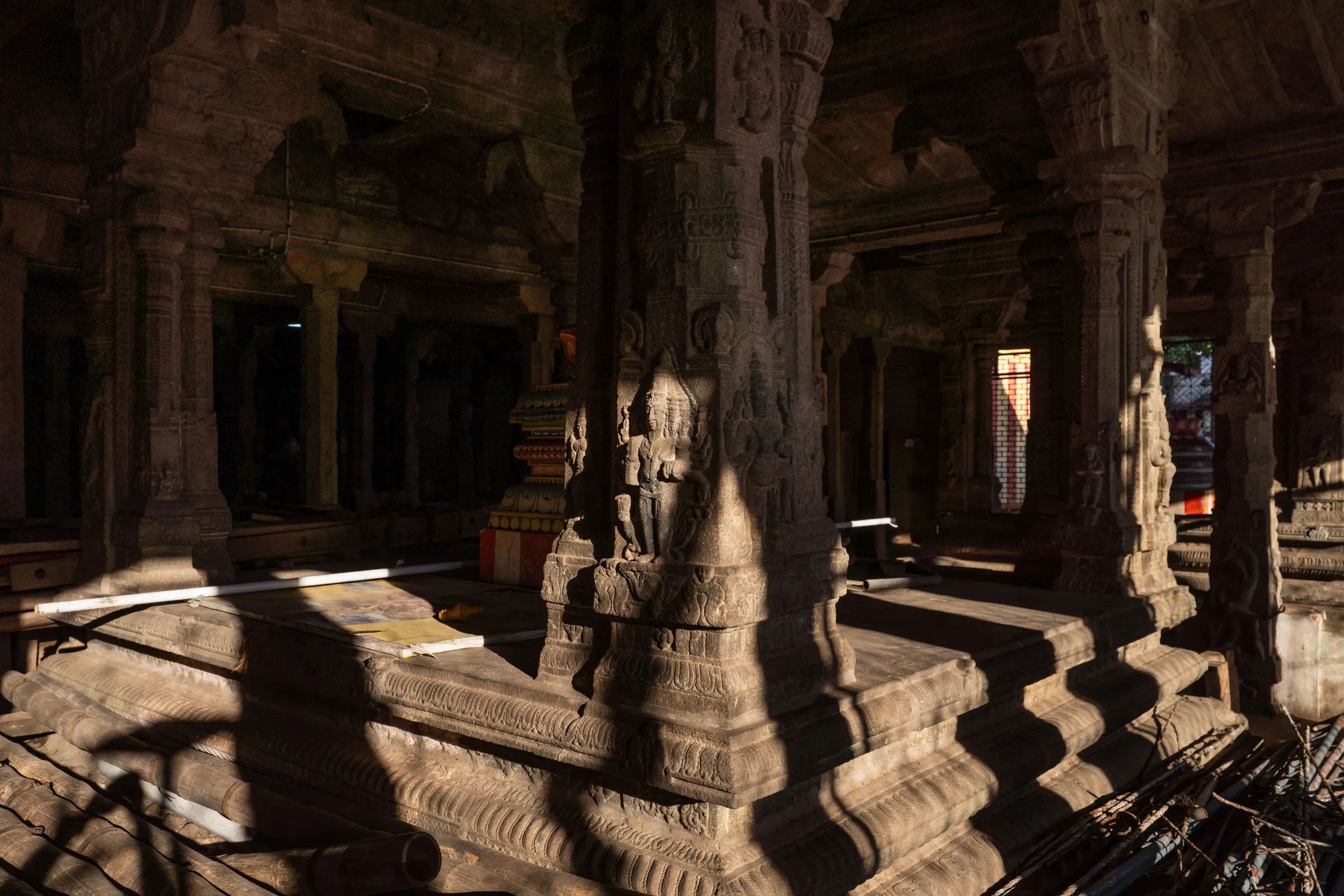
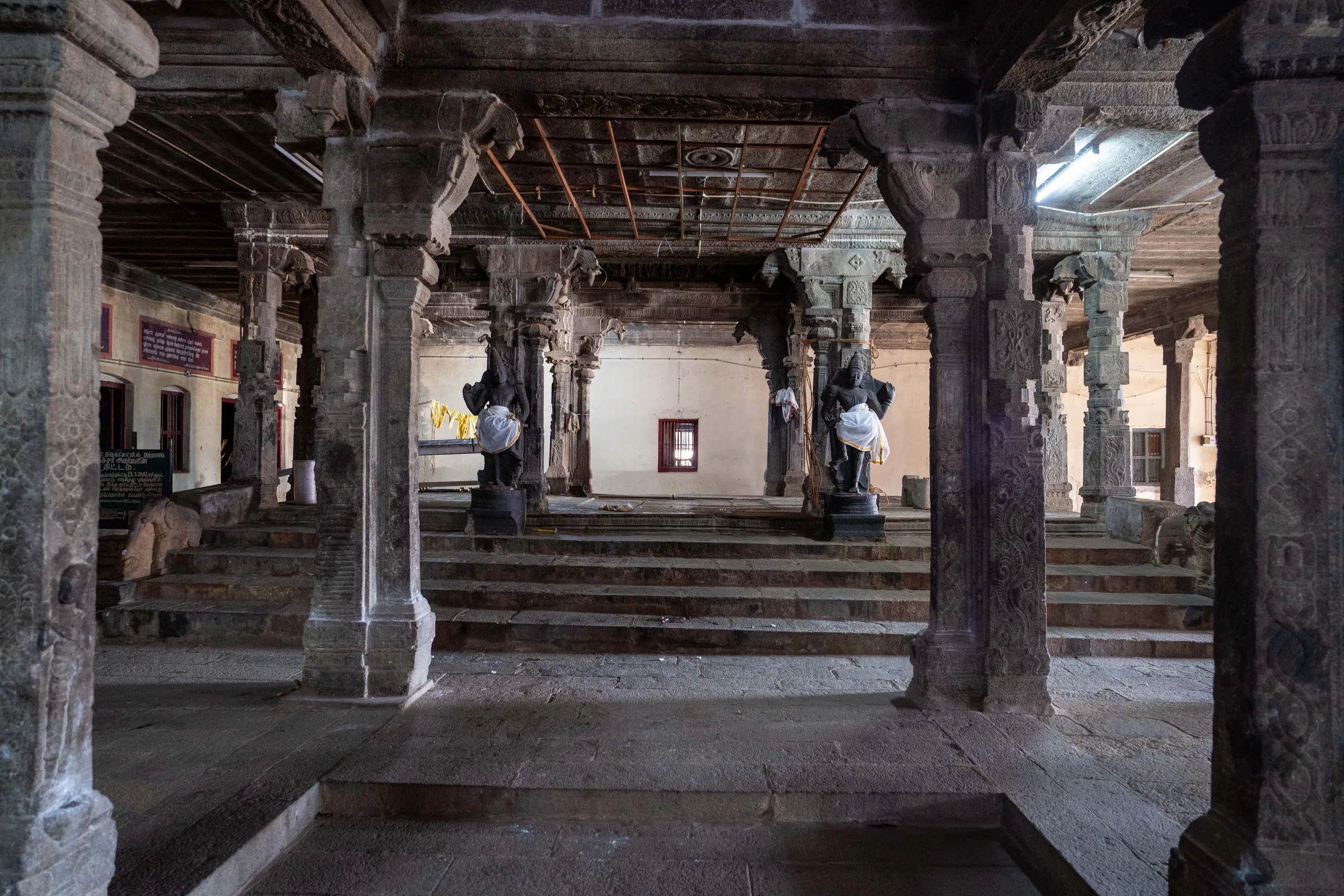
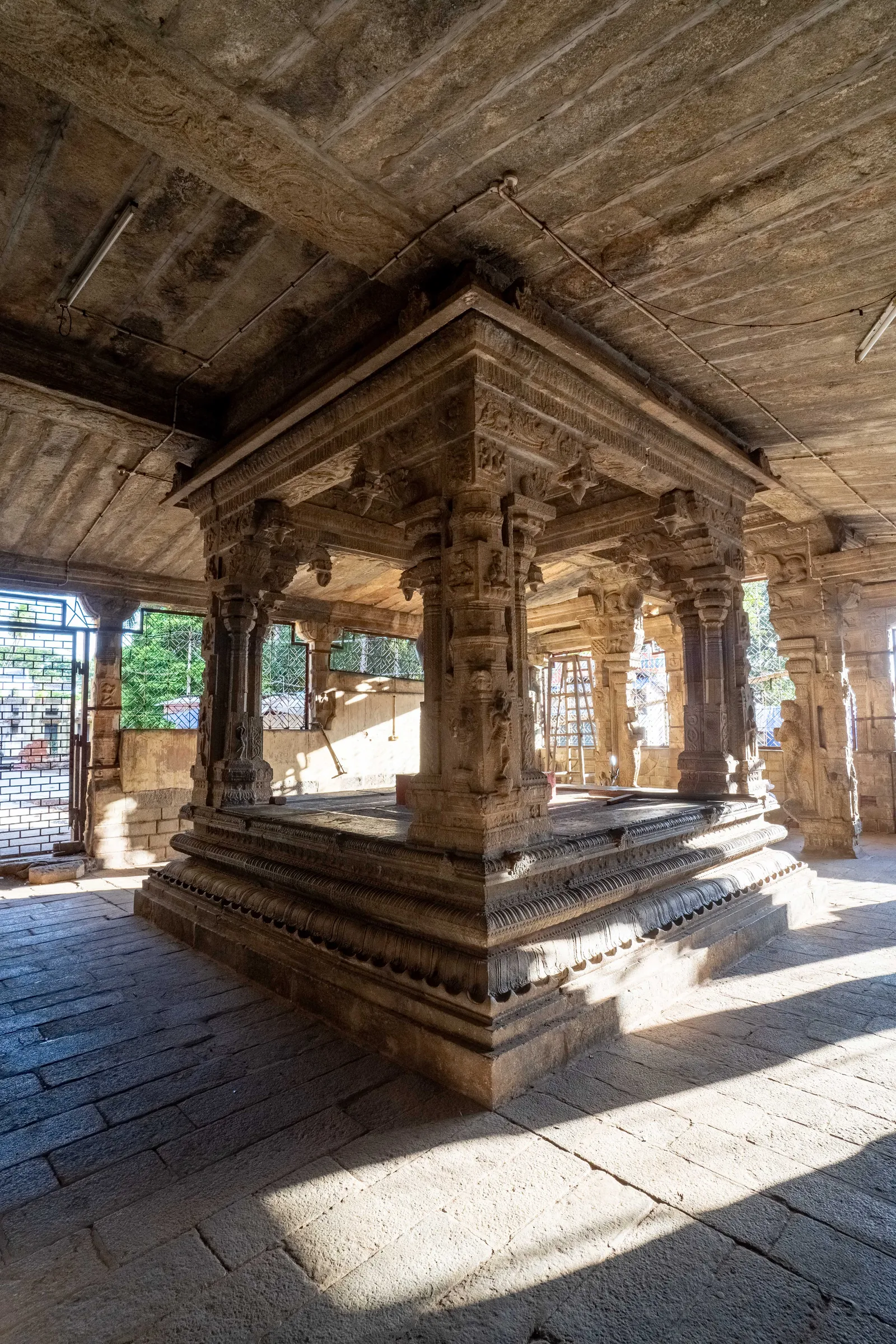
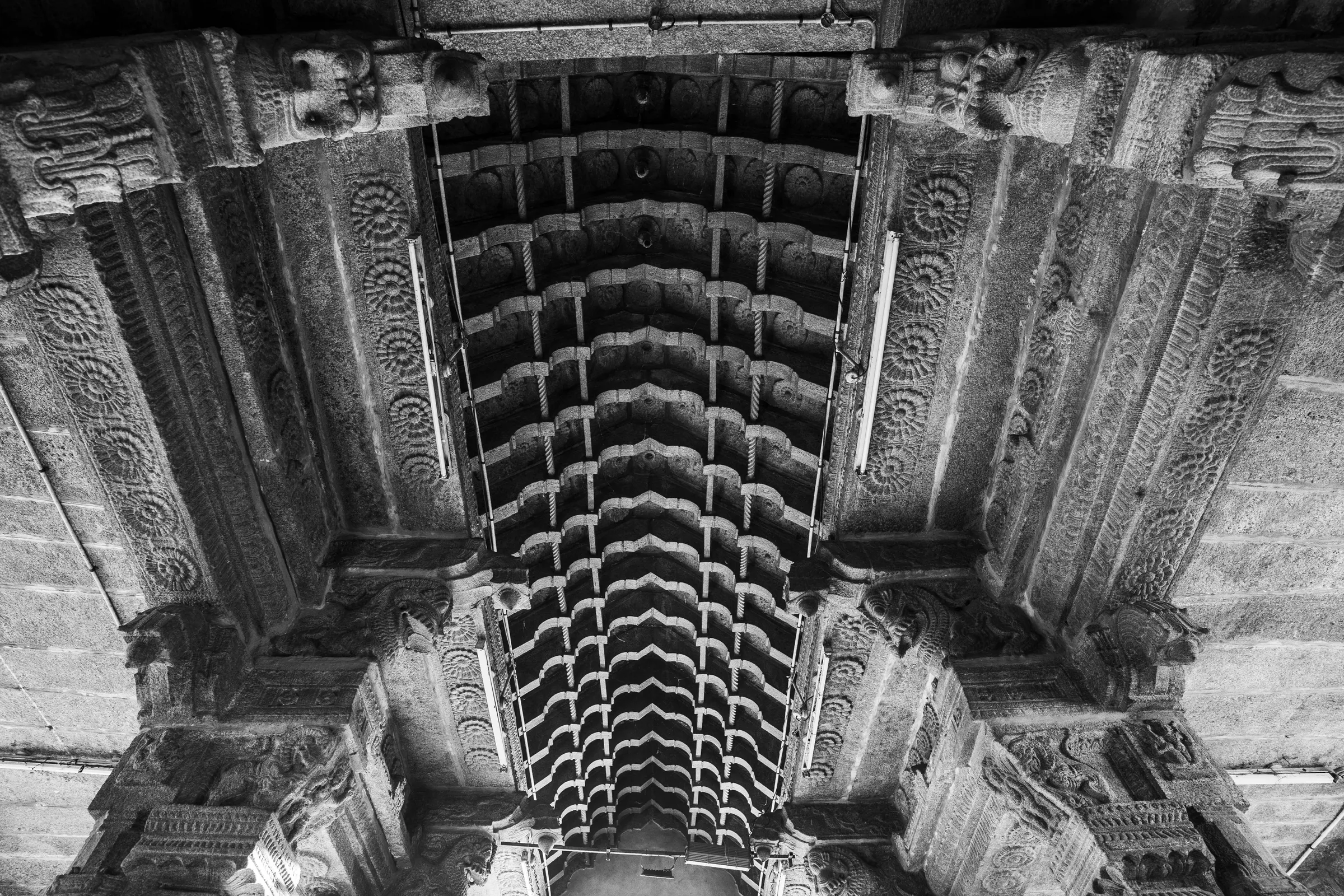
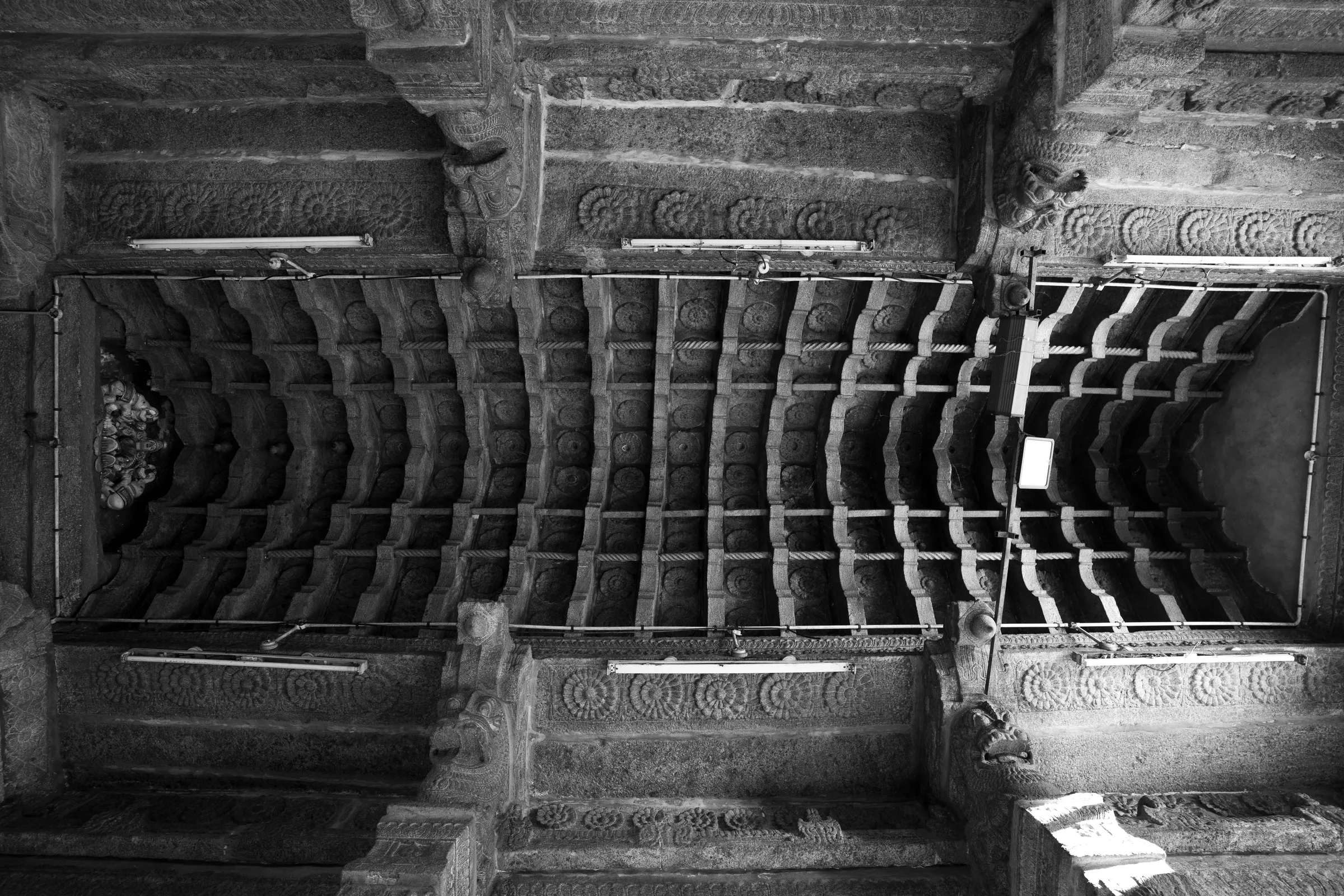
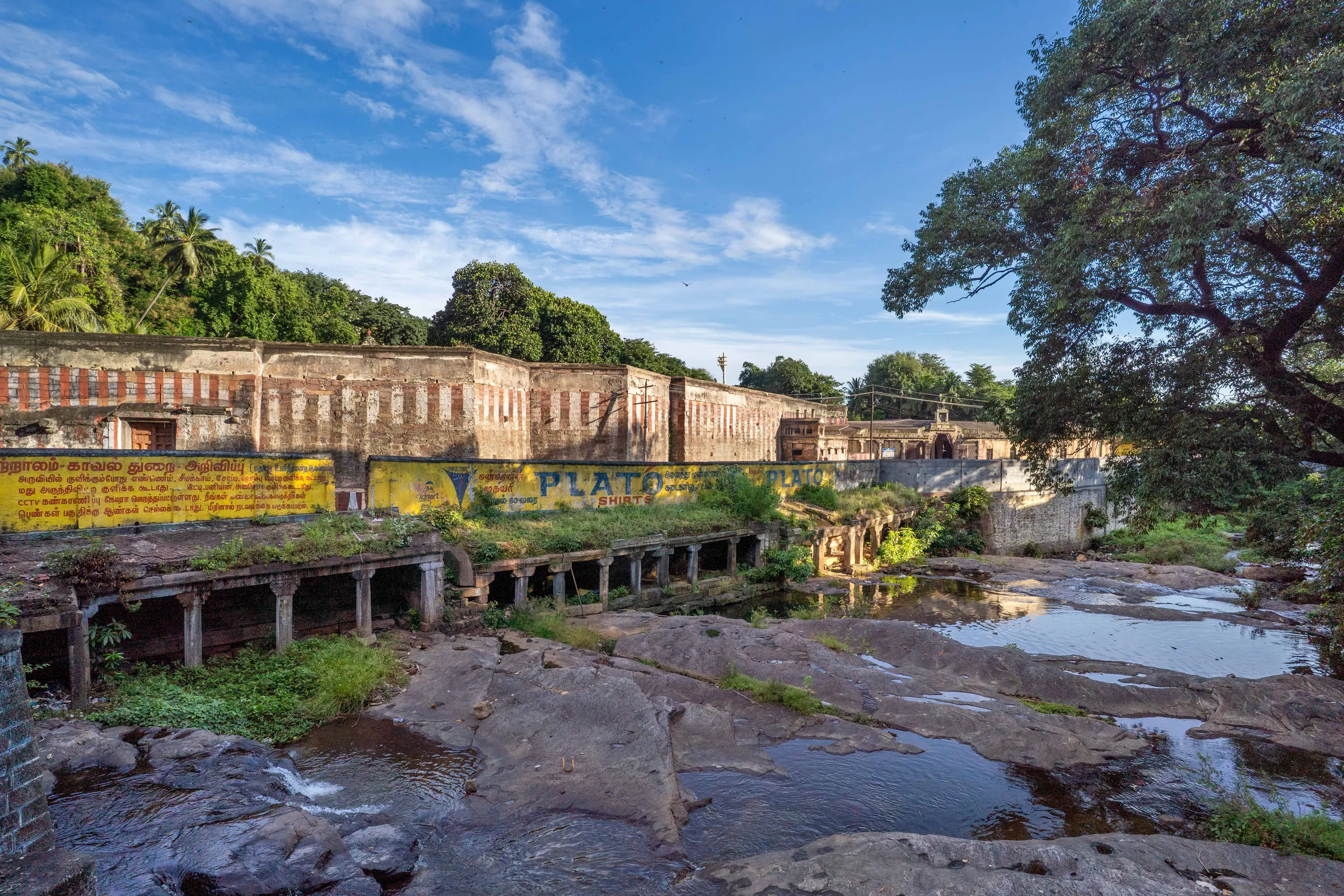
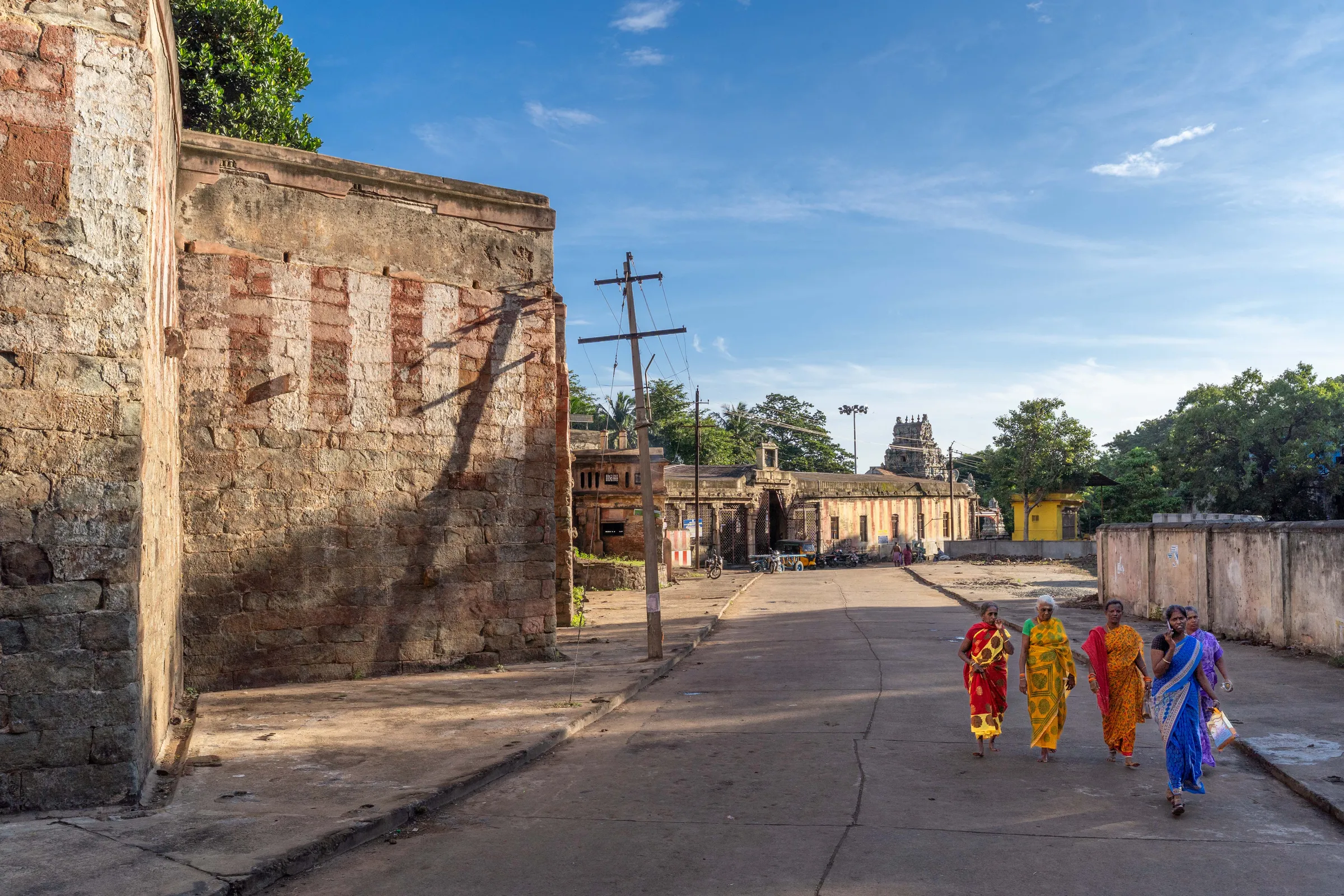
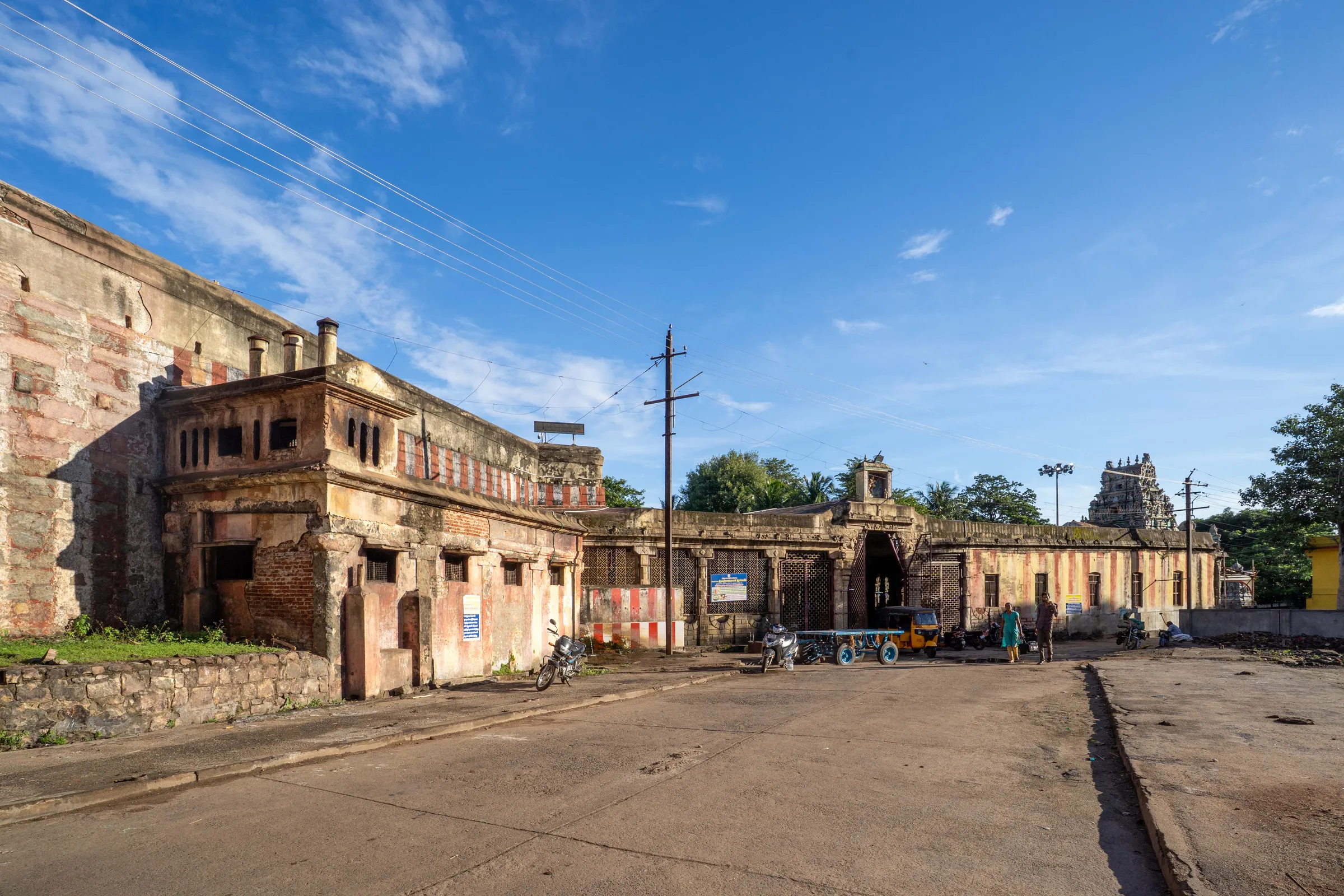
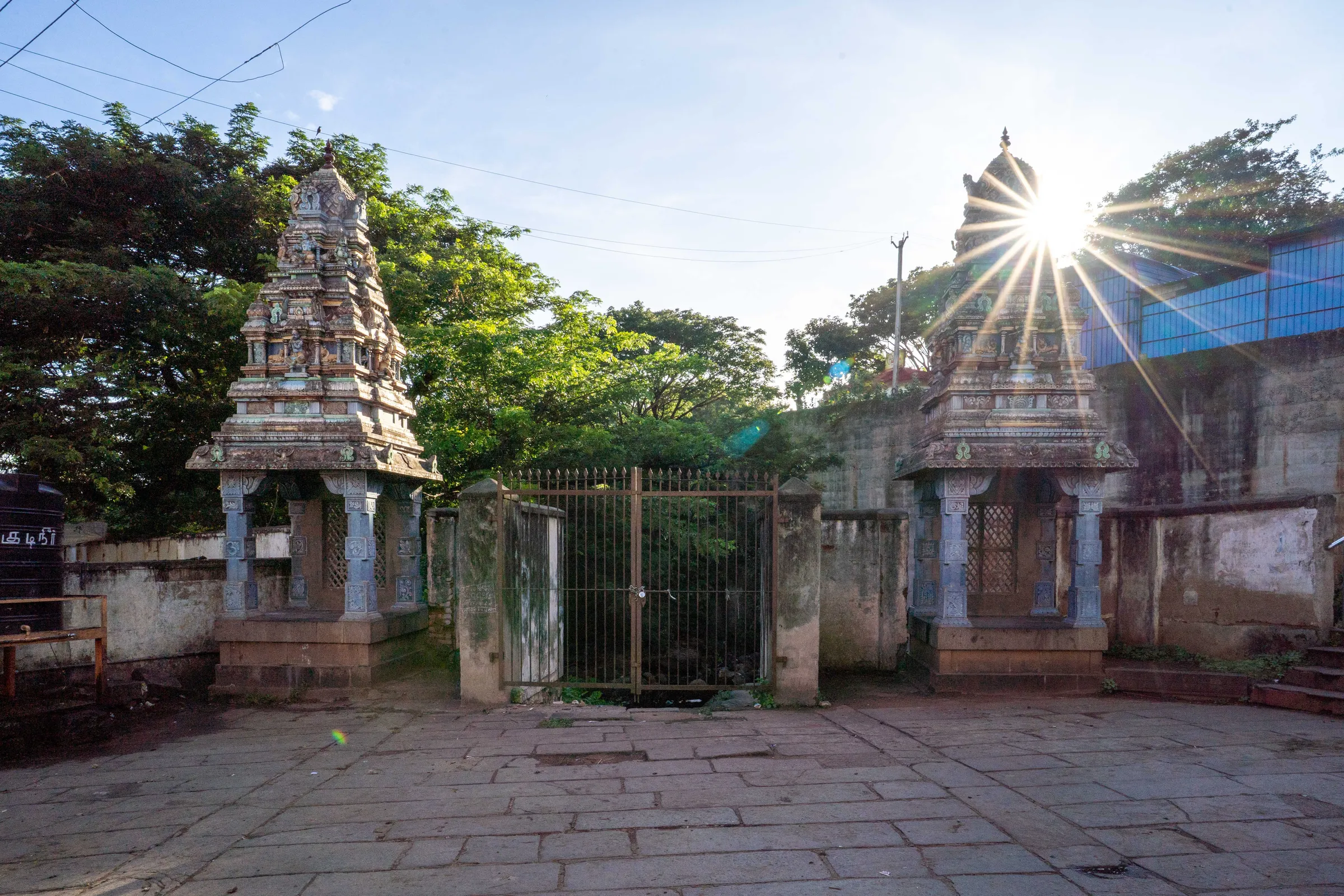
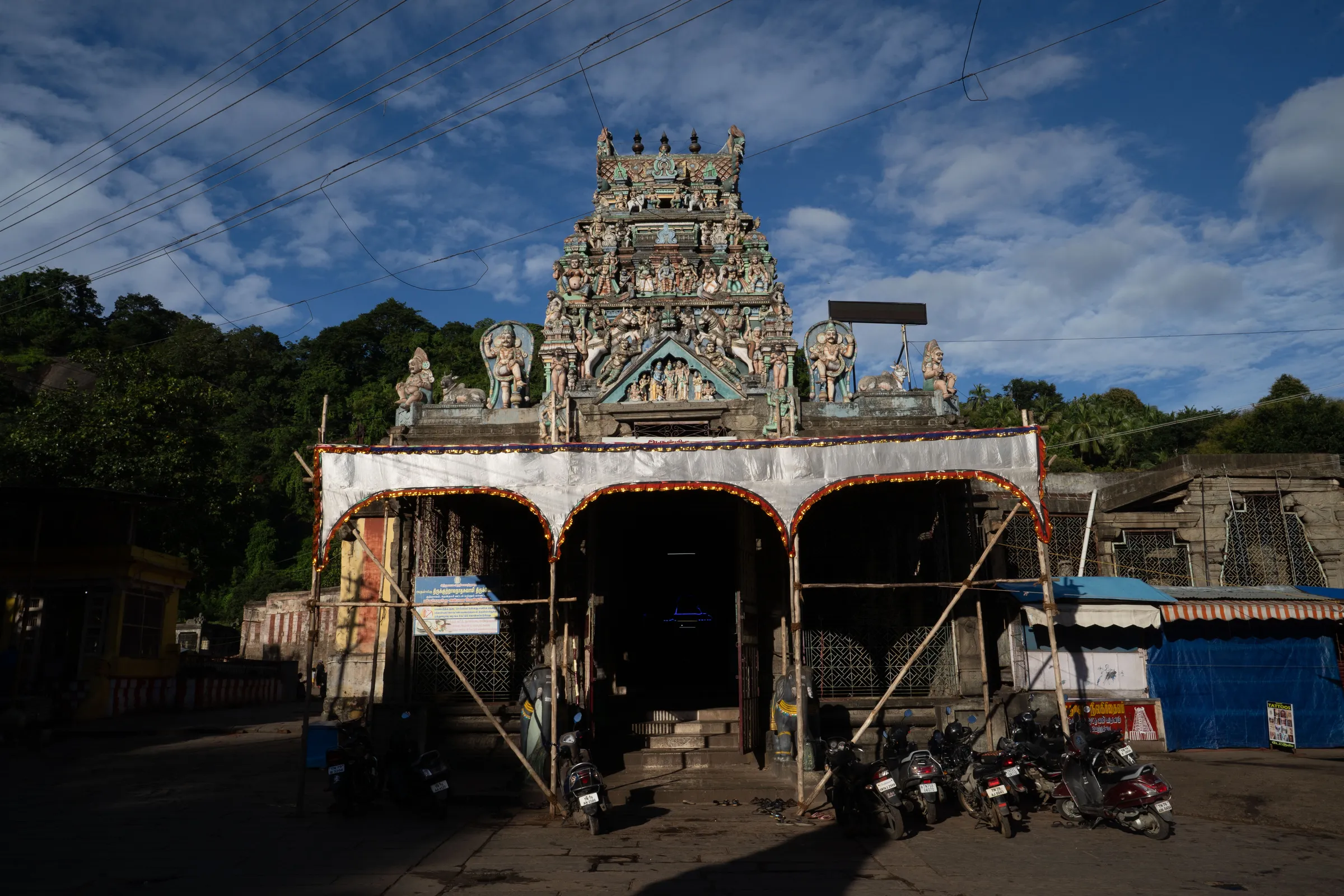
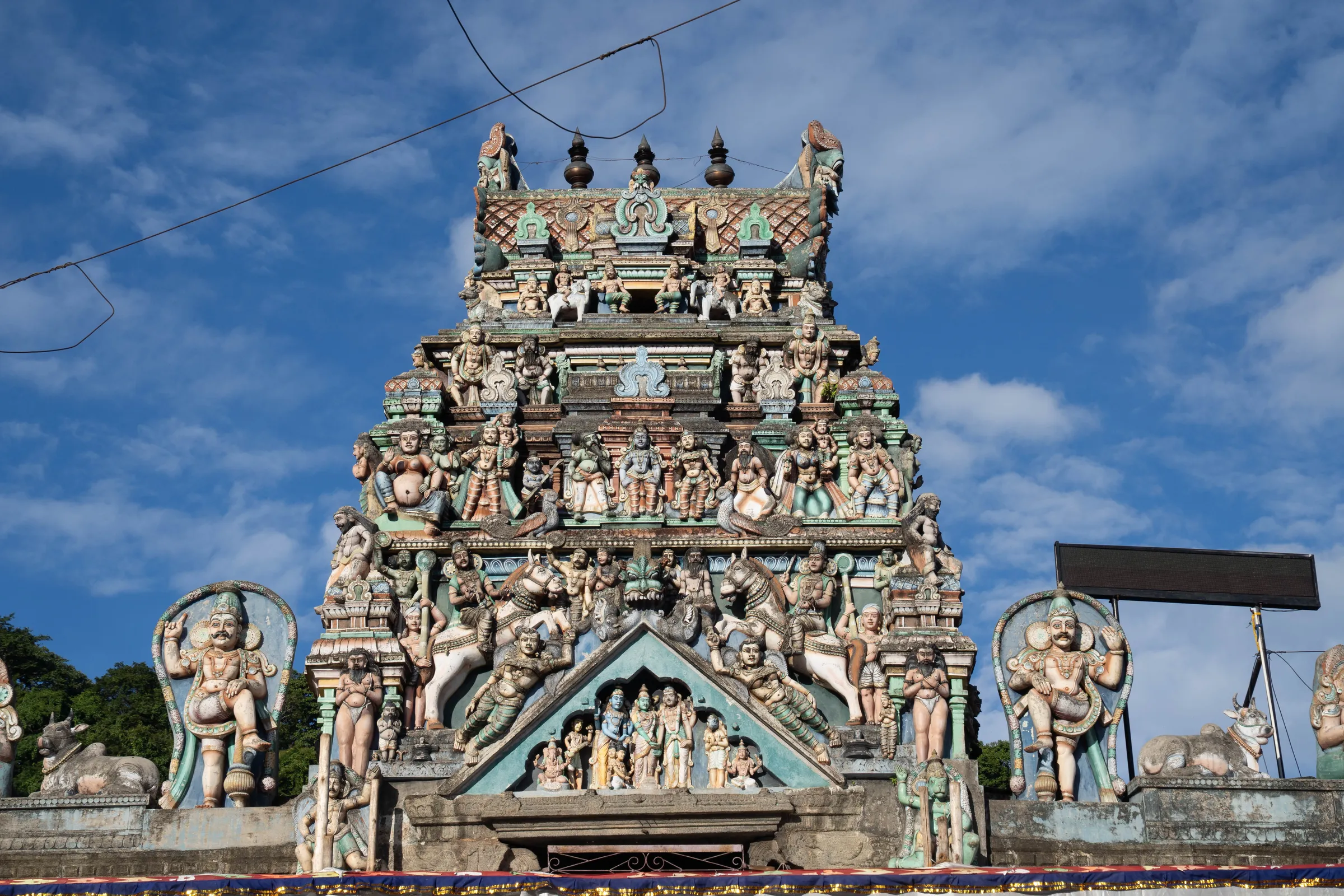
The temple of Tirukutralanadhar has a unique shape, like a conch: the main deity stands at its mouth, the Ganesha shrine at its sharp point, and the streets run along the edges of the conch. It has a three-tiered main gopuram with many stucco images, the chief being the wedding of Meenakshi and Sundareswaran; the main entrance has two large elephants and the second entrance small shrines of Ganesha and Subramanya. The flag mast stands after the wooden gopuram mandapa, with sculptures of Sempulithevan and Chinnanainjanthevan, who commissioned the mandapa, to its south.

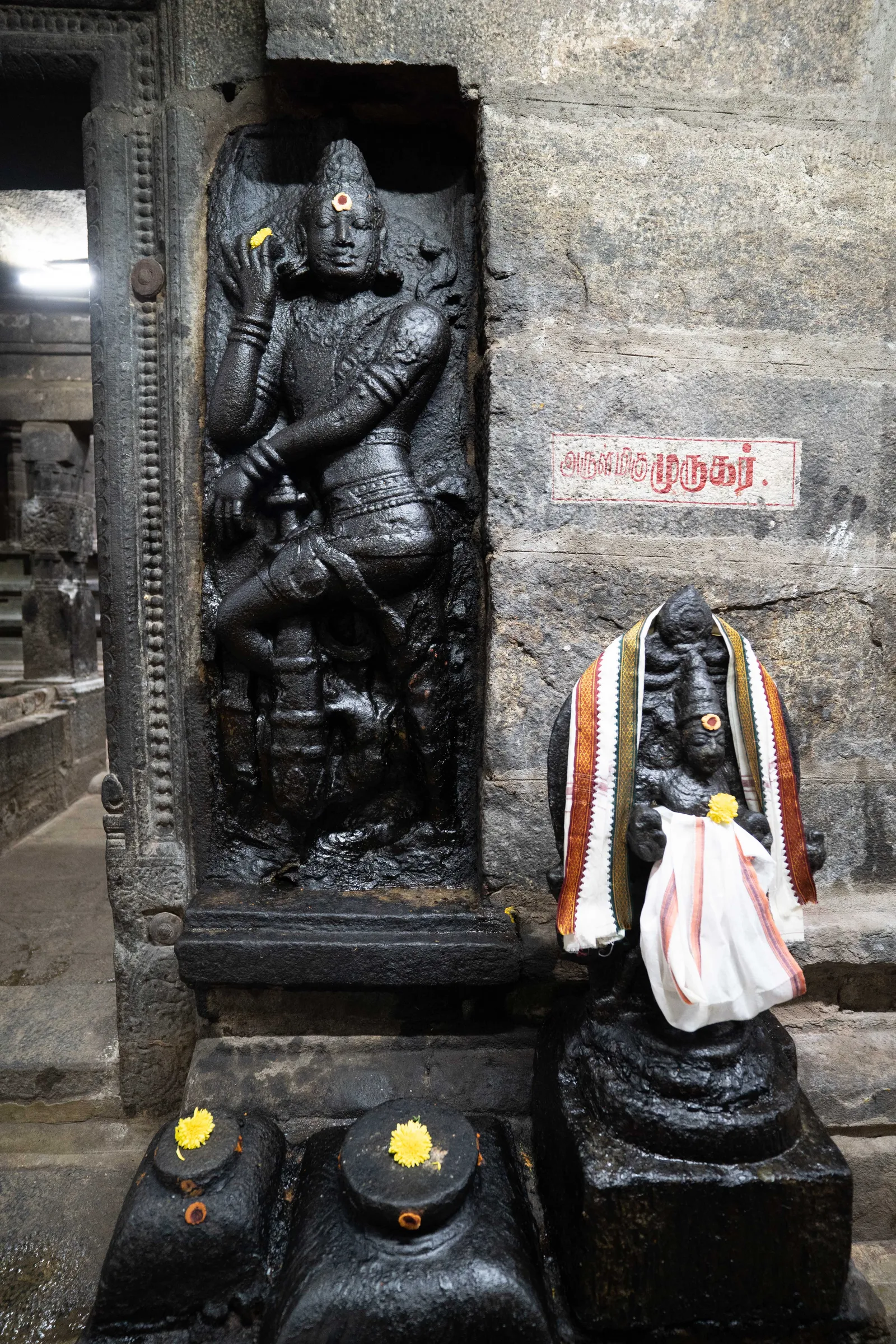
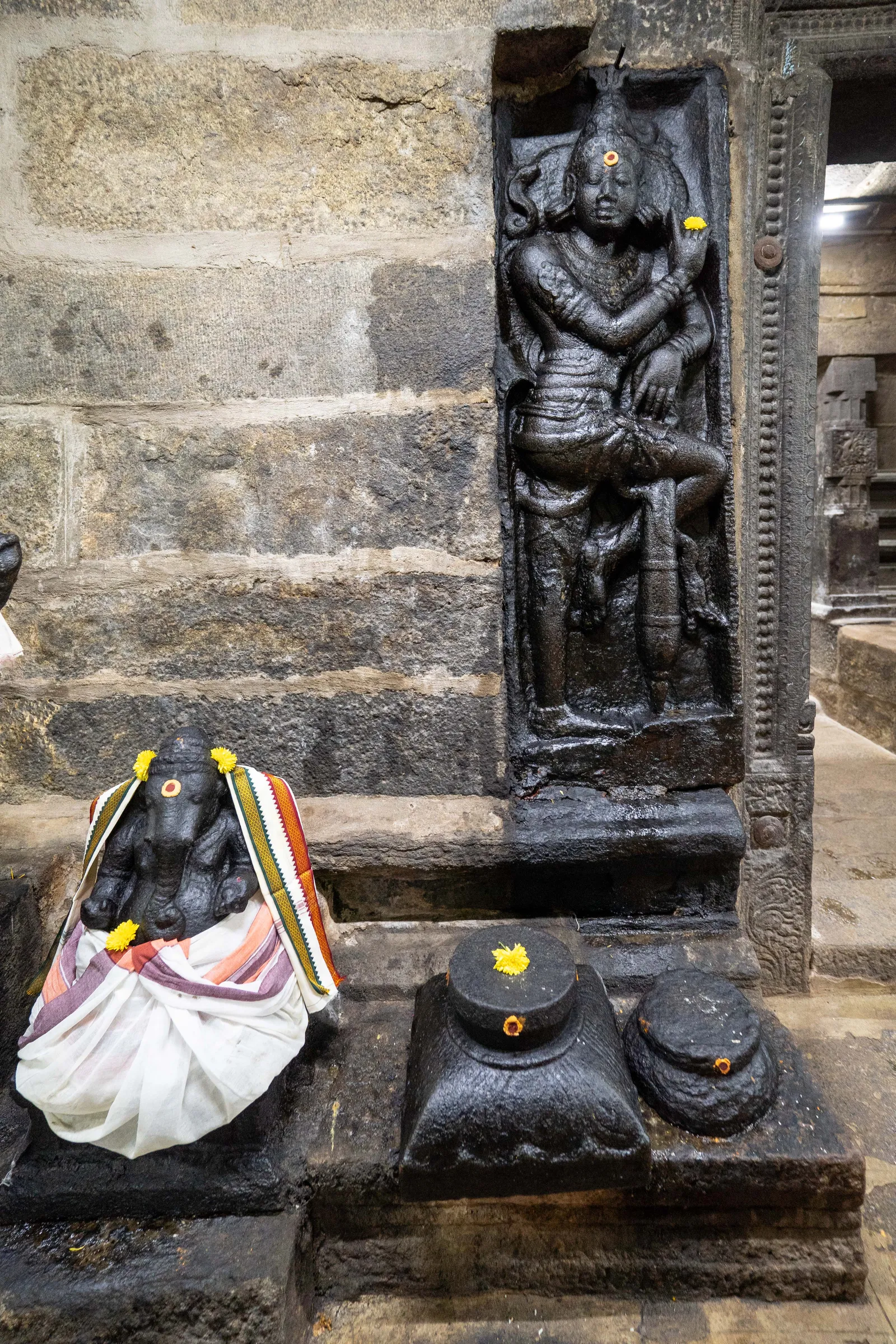
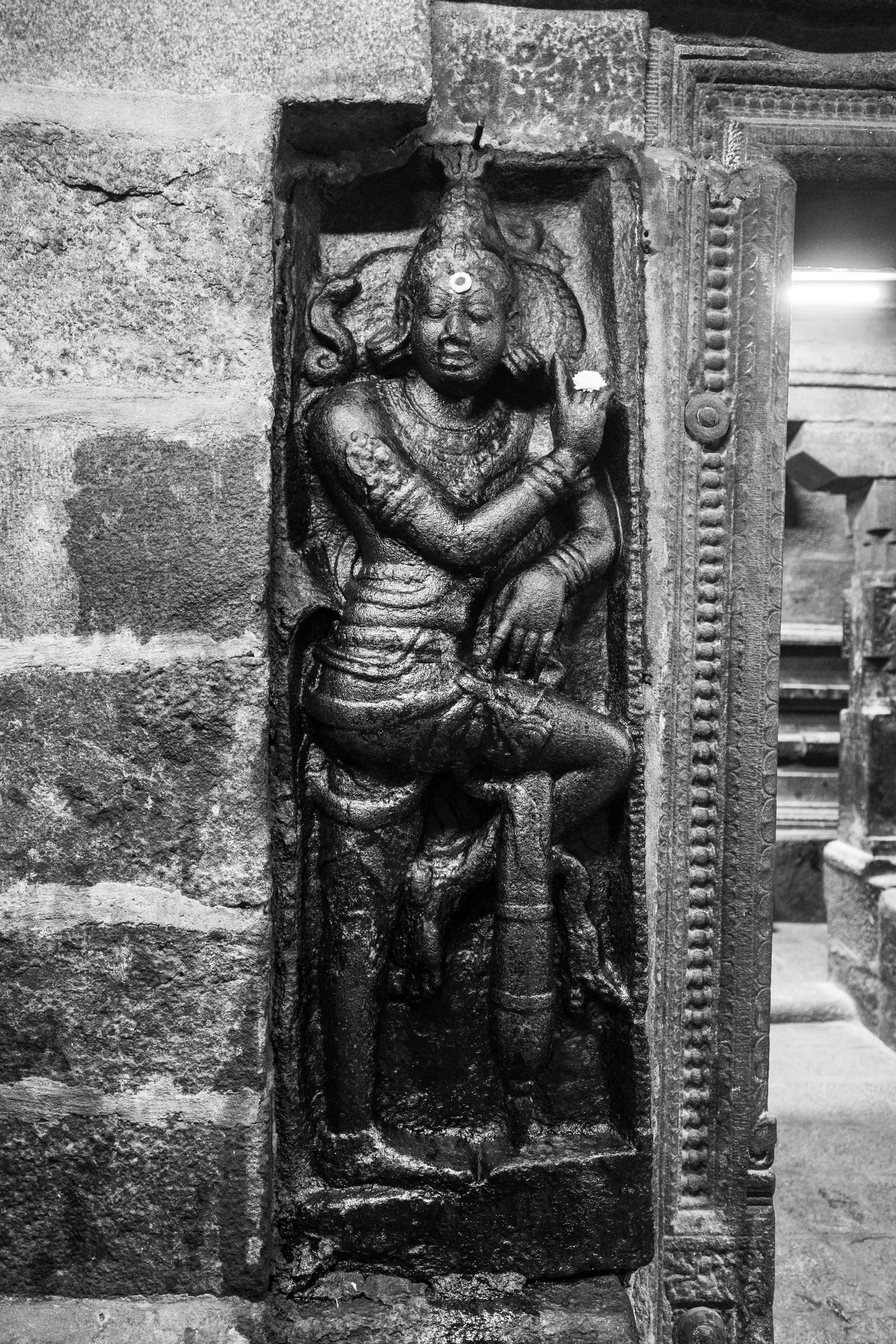
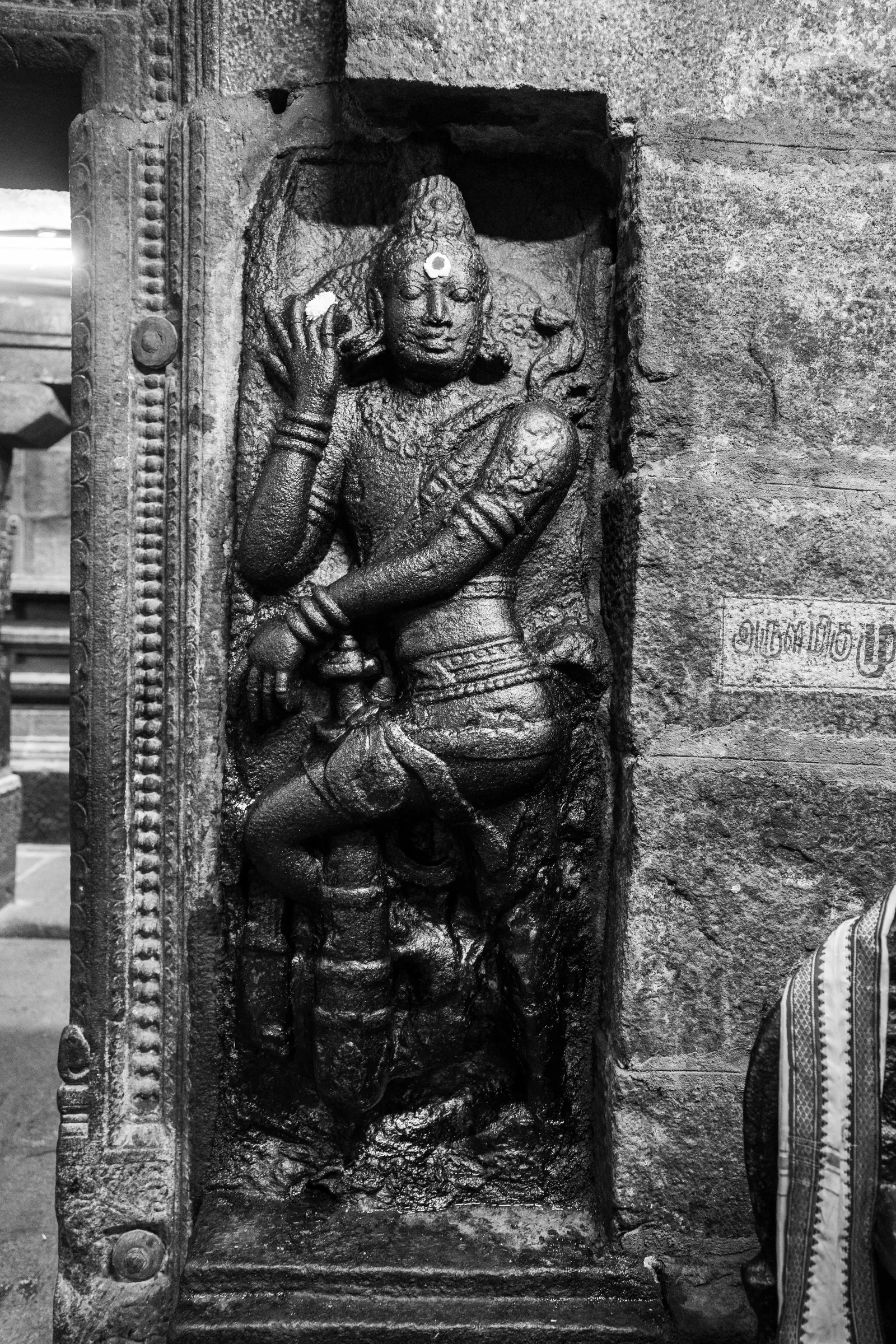
Beyond, the entrance to the Shiva shrine has highly artistic Dwarapalaka statues of the early Pandya period. After the Ardha Mandapa and Maha Mandapa is the shrine of Kutralanadhar, a lingam of natural formation, small in size. Around the Shiva shrine are sculptures of Vishnu, Aiyana, Brahma and others with classic facial features. The outer precinct holds the sthala vriksha, the Kurumpala or jackfruit tree, and a shrine of Vishnu as a Sakthi Pitha, where, characteristically of the Tenkasi Pandyas, the Pitha itself is worshipped as Sakthi without any image.

Kutralam holds one of the Pancha Sabhas: the Nataraja Sabha here, the Chitra Sabha, lies about 500 metres from the temple. Its entrance shows two dancers in inviting pose and Panan the singer with a musical instrument. The mandapa is of stone with a copper roof. On the northern wall of the inner mandapa is an exquisite painting of Nataraja, with the Devas, Brahma, Vishnu and Krishna as spectators; to the west are paintings of the wedding of Meenakshi, the Sakthi Pitha with worshippers, the Trinity on a swing and the Saptha Kannikas, and the south wall shows Meenakshi's winning over the lords of the eight directions.

02

Archaeological

dated & cited

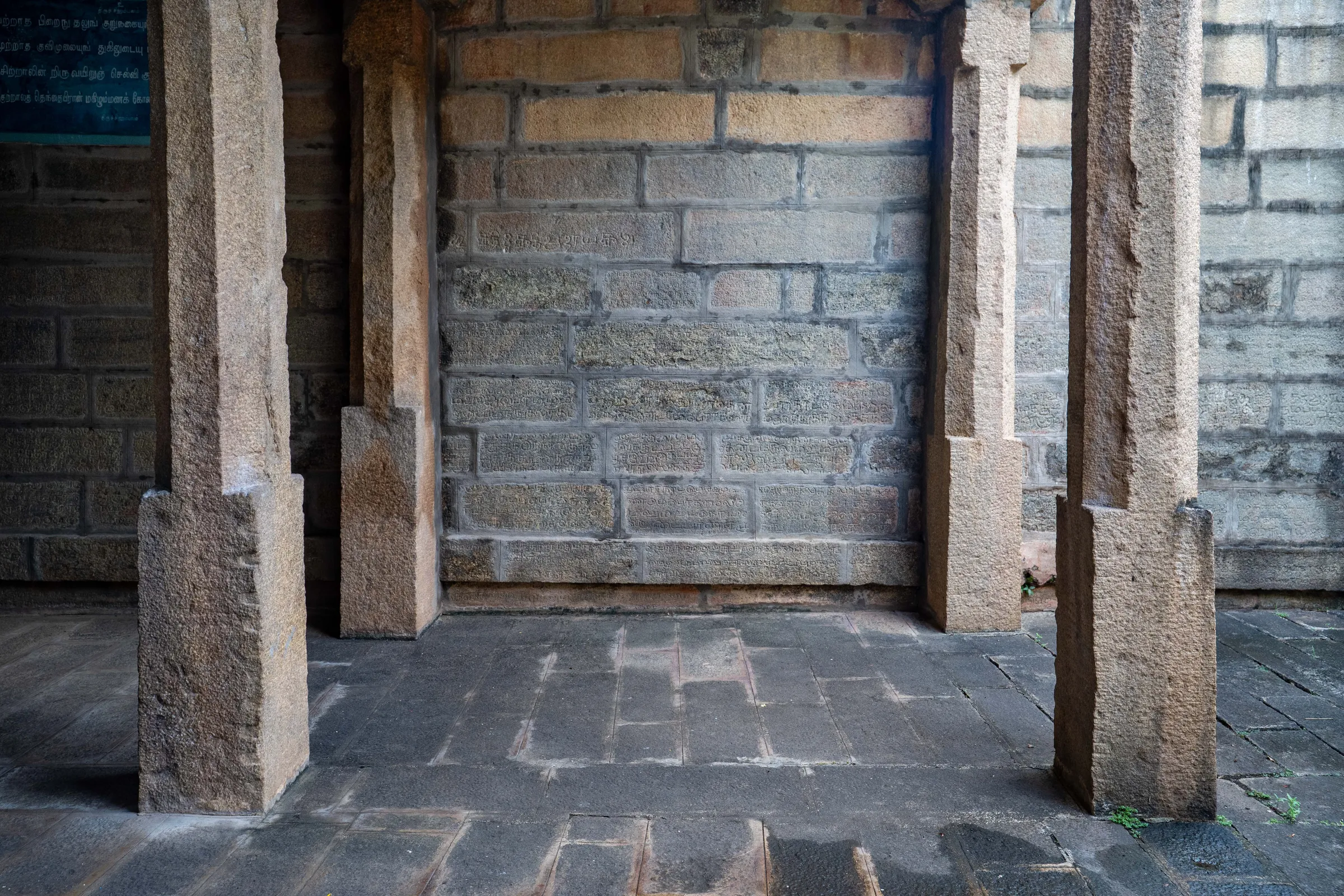
Sculptures around the Shiva shrine are dated by archaeologists to the 8th to 9th century CE. Two inscriptions in the temple, dated 909 CE and 942 CE, refer to the Chola king Parantakan I, who brought the Pandya kingdom under his rule and arranged a perennial lamp. A damaged inscription of Raja Raja Chola I (955 to 1014 CE) survives at Kutralam, with a 13th century replica on the western wall of the precinct; it refers to his recommending the Tamil script in place of Vattezhuthu mixed with Brahmi.

An inscription of 1827 CE relates to Chithirai Tirunal Maharaja of Travancore, a contributor to the temple; the place where it was found is called Ramavarmapuram in his honour. Three copper plates survive: two of 1753 CE from the period of Varaguna Rama Pandya Kulasekara recording donations to temple keepers, and a third of 1778 CE describing the contribution of local Muslim merchants, Ismail Rawuthar and others, for the upkeep of the temple. The consort's shrine to Kuzhalvaimozhi Ammai was rebuilt; work begun by Somasundaram Chettiar in 1925 CE was completed by his son Kasi Viswanatha Chettiar in 1933 CE.

03

Mythological

as transmitted

The temple was sung of by Appar, Sambandar and Manikkavasagar. In the 18th century the Kutrala Kuravanji by Tirikooda Rasappa Kavirayar vividly evoked the beauty of Kutralam, alongside his Tiru Kutrala Ula, Tirukutrala Andhadhi and Kutrala Sthala Purana. A story is also told of Agastya building the temple.

Sources
  • Kutrala Kuravanji, Tirikooda Rasappa Kavirayar
  • Kutrala Sthala Purana
Register interest in prints Buy the book
Improve this entry

This is an open, reviewed record. If you have spotted an error or have something to add — a correction, a date, a source, a name in another script — propose it. Every change is reviewed before it joins the record.

“Suggest an edit” opens this entry on GitHub and turns your change into a pull request. “Share feedback” opens a short form. Both go through review.