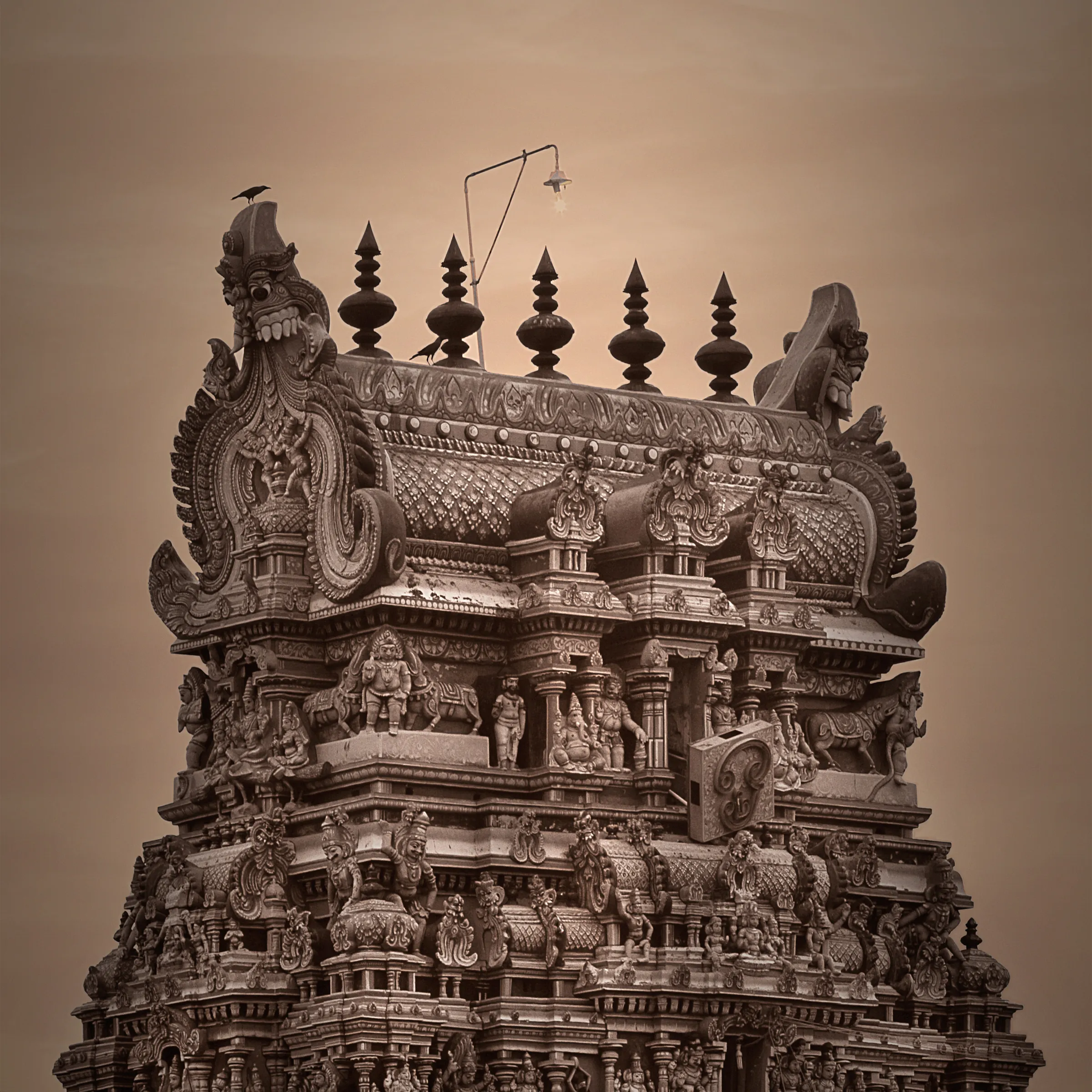
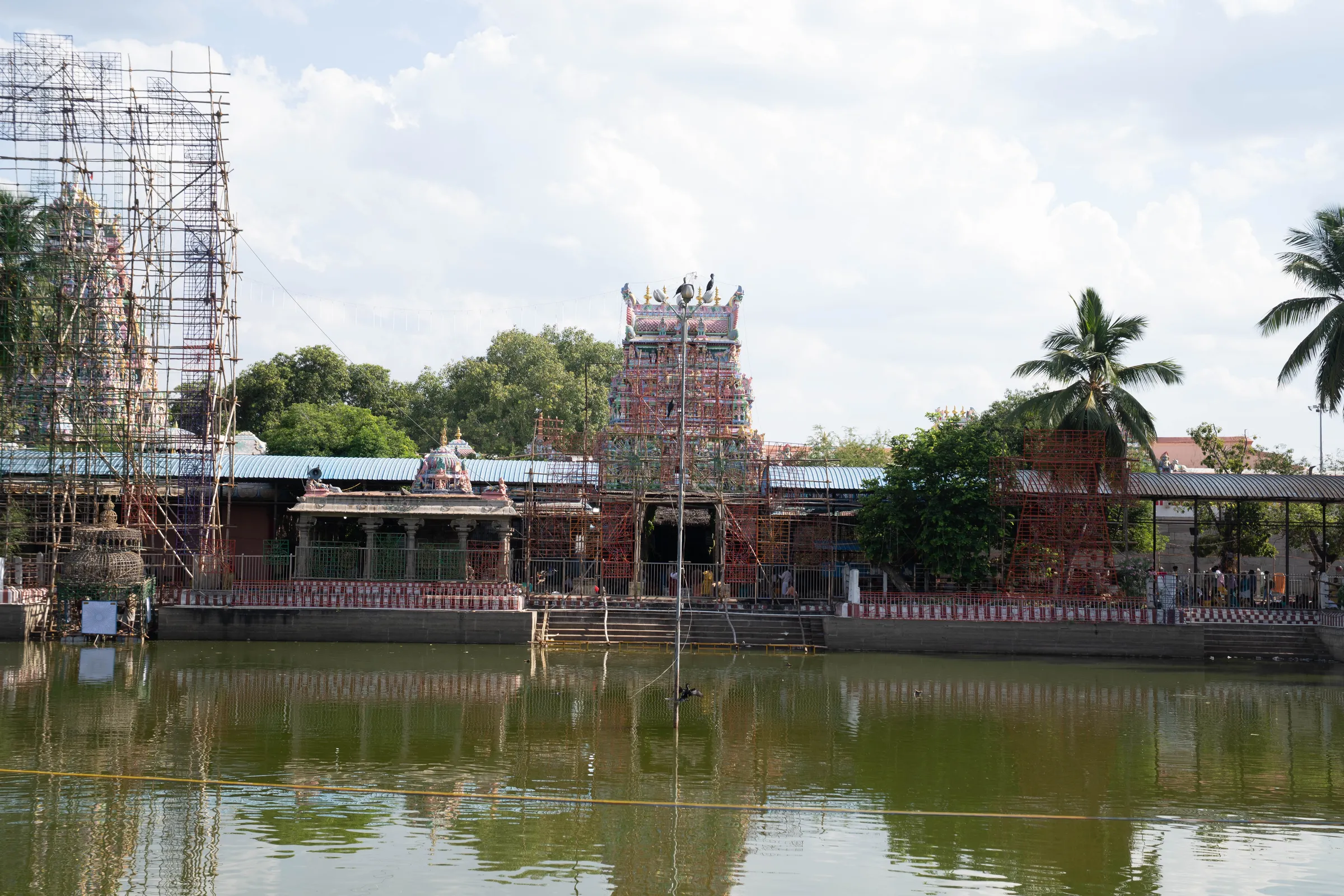
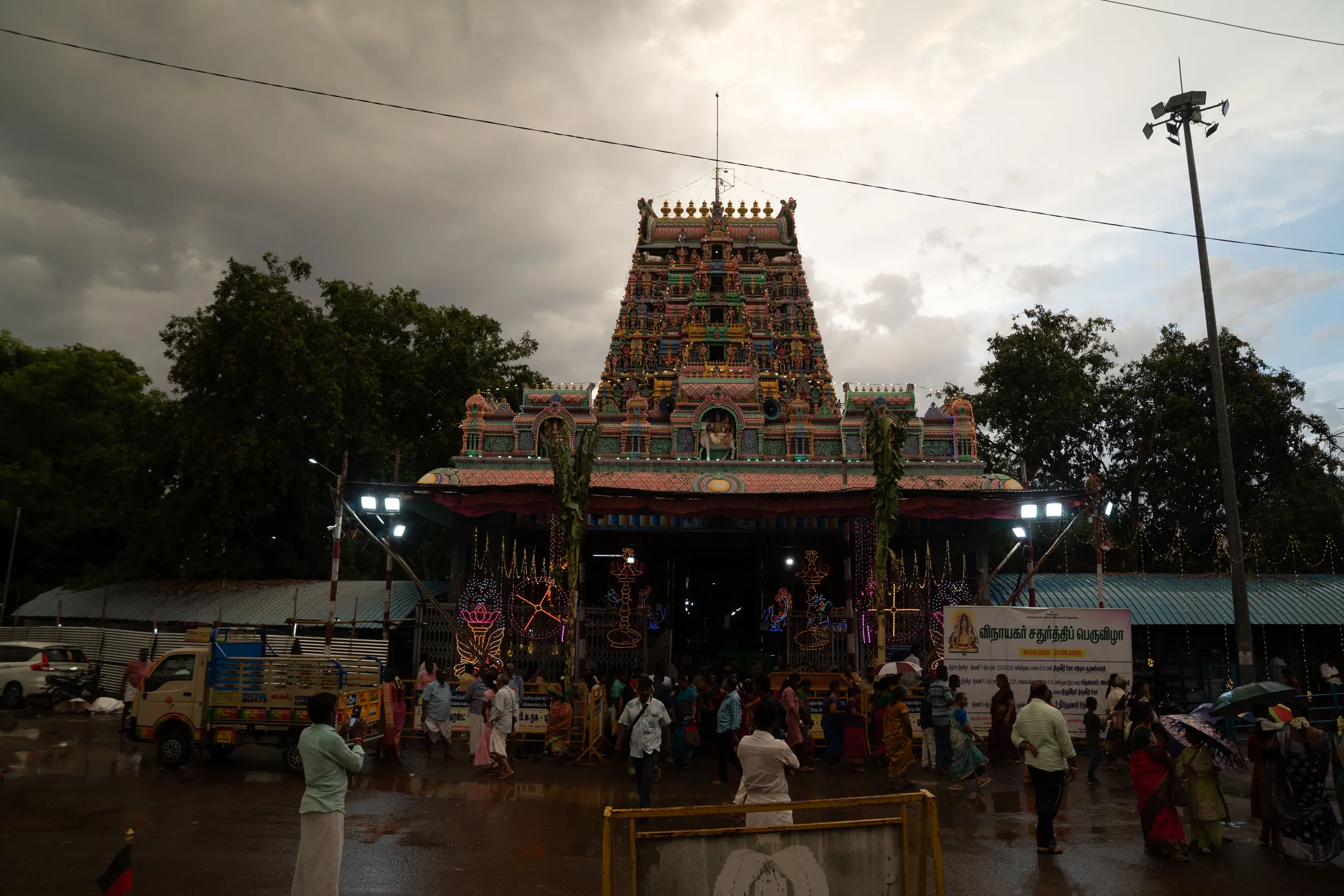
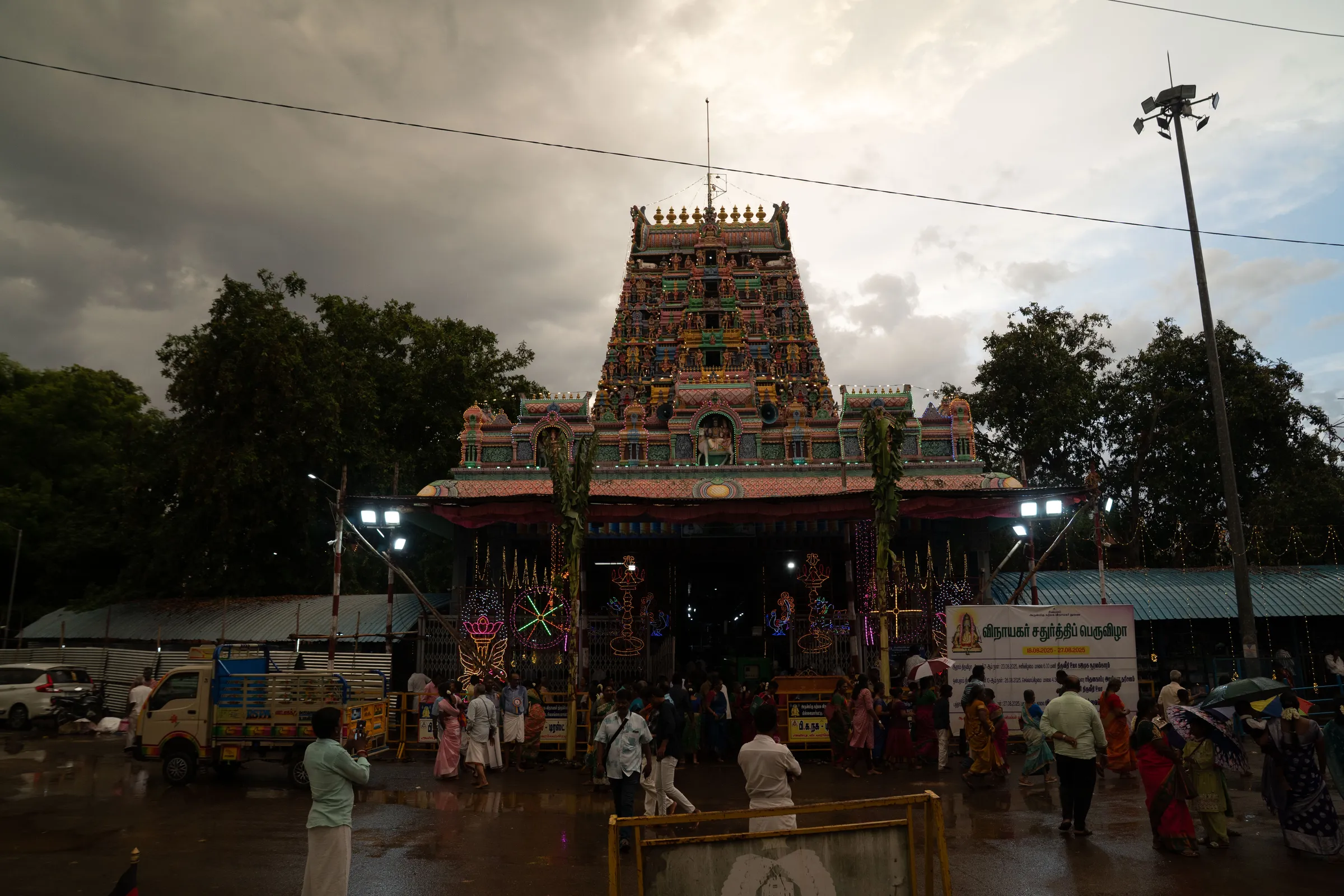
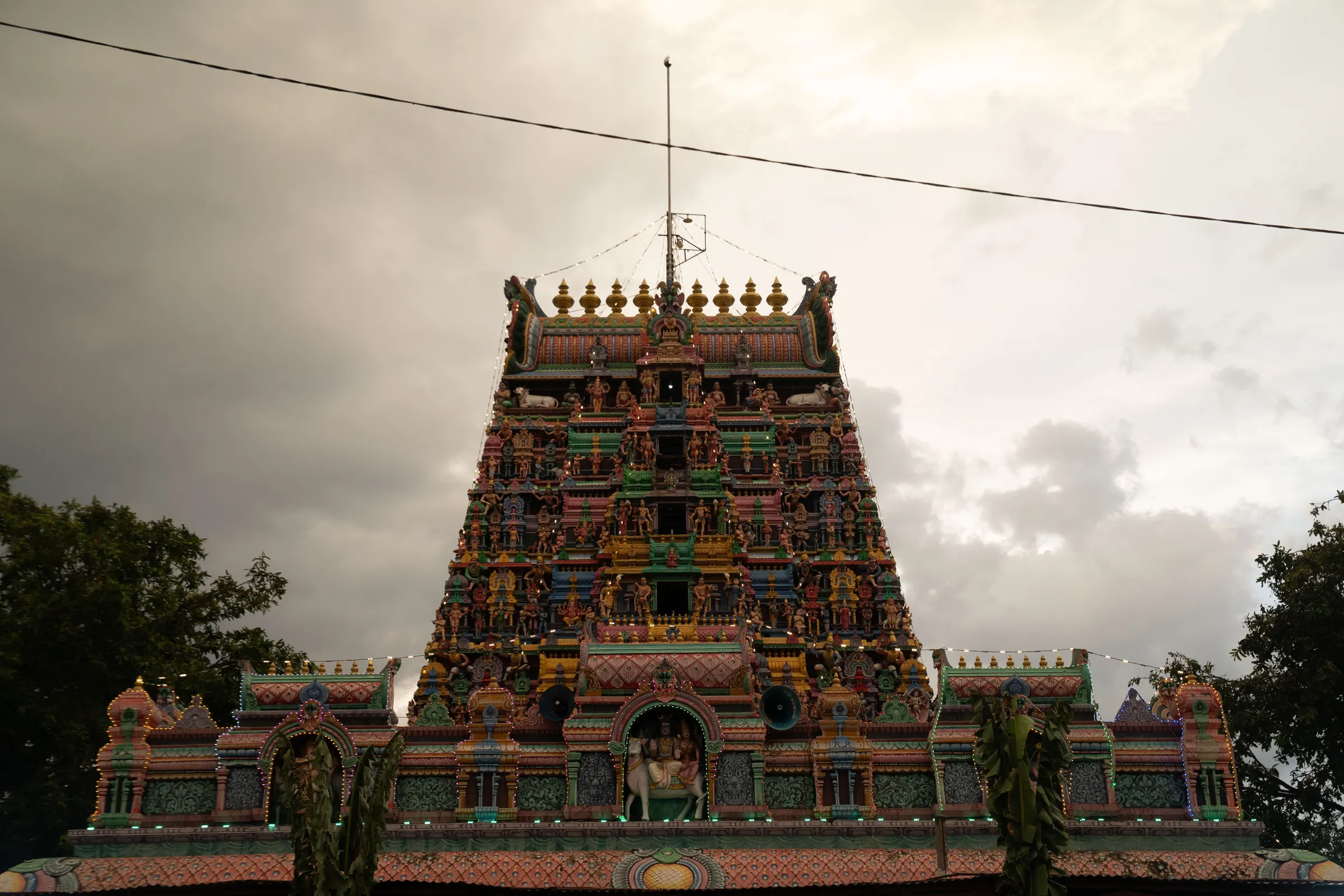
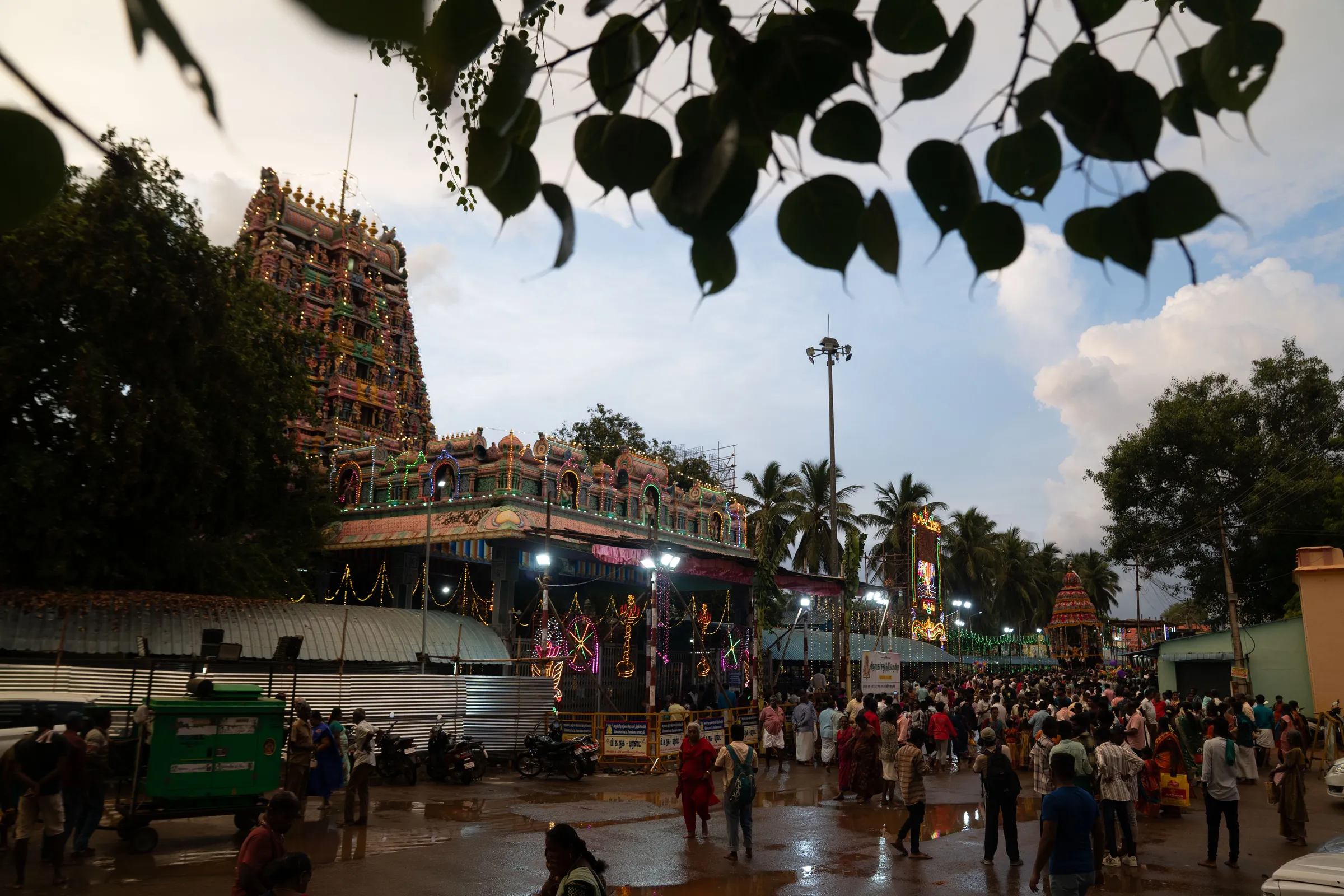
Karpaga Vinayakar Temple, photograph
← Pandya Nadu
Entry 087

Karpaga Vinayakar Temple

Pillaiyarpatti · Sivaganga · Early rock-cut work; later expansion under Pāṇḍyas, Cholas and others

A rock-cut temple at Pillaiyarpatti, considered the first Vinayaka temple in Tamil Nadu and one of the nine important temples of Chettinad, maintained by the Nagarathar.

The Karpaga Vinayaka temple at Pillaiyarpatti is a rock-cut shrine held to be the first Vinayaka temple in Tamil Nadu. Its dated record runs from early Brahmi and sixth-century script through Pāṇḍya and Chola endowment to the Nagarathar who maintain it today; the true main deity is the Śiva liṅga behind the much-loved Vinayaka relief.

The photographs

Plates · 6

Karpaga Vinayakar Temple, photograph
© Sai Sanjay Prasath · All rights reserved
Karpaga Vinayakar Temple, photograph
© Sai Sanjay Prasath · All rights reserved
Karpaga Vinayakar Temple, photograph
© Sai Sanjay Prasath · All rights reserved
Karpaga Vinayakar Temple, photograph
© Sai Sanjay Prasath · All rights reserved
Karpaga Vinayakar Temple, photograph
© Sai Sanjay Prasath · All rights reserved
01

Architectural

structure & vocabulary

The rock-cut temple houses high-relief sculptures of Vinayaka, a Śiva liṅga, and a third figure that may be Ardhanareeswara or Harihara. The Vinayaka is taken erroneously as the main deity. To the west of Vinayaka a mandapa ends in the Śiva liṅga that is the true main deity, facing east, named Tiru Eengaikudi Mahadeva, Eengaikudi being the old name of Pillaiyarpatti. The present arrangement lets one face the Vinayaka shrine at the entrance, since the cave is hard for many to enter, and so hides the shrines of Śiva and Ardhanareeswara.

The Vinayaka relief is unlike later forms. He has only two hands, the modak in the right and the left on his hip, his trunk turned right (valampuri). He wears no sacred thread, carries holy ash on forehead and hands, wears a waist belt and a crown, and his left tusk is broken. Later additions include shrines of Nataraja, Sivakami, Karthikeya with Valli and Devayanai, Bairava and the Navagraha, with a pond, colourful gopurams and frescoed mandapas before the rock-cut temple, which stands behind.

02

Archaeological

dated & cited

The ancient part of the temple is now placed by historians between the 3rd and 6th centuries CE, with the Pāṇḍyas, Cholas and later dynasties doing further expansion. The temple carries many inscriptions in its shrines, on its walls and on the mandapa. One names a Desi Vinayaka, traced to the 7th century CE; another carries paleographic Brahmi close to Tamil and early Vatteluttu scripts.

In the sanctum of Śiva an inscription reads Ikkatturu Kon Perumthachan, taken to name the sculptor of the temple, its script of the 6th century. Maravarman Sundara Pandyan (1216 to 1238 CE) visited three times and gave donations through his vassal Kangeyan. In 1305 CE Kulasekara Pandyan arranged for pittu and paniyaram every Sunday, as the inscriptions record. The panchaloka idols excavated in the 19th century are dated to the 11th century. The Nagarathar have worshipped here since 714 CE and now maintain the temple.

Dating

Ancient part now placed by historians between the 3rd and 6th centuries CE

Inscription · Sanctum of Śiva

Ikkatturu Kon Perumthachan, taken to name the sculptor of the temple; the script is of the 6th century.

Register interest in prints Buy the book
Improve this entry

This is an open, reviewed record. If you have spotted an error or have something to add — a correction, a date, a source, a name in another script — propose it. Every change is reviewed before it joins the record.

“Suggest an edit” opens this entry on GitHub and turns your change into a pull request. “Share feedback” opens a short form. Both go through review.