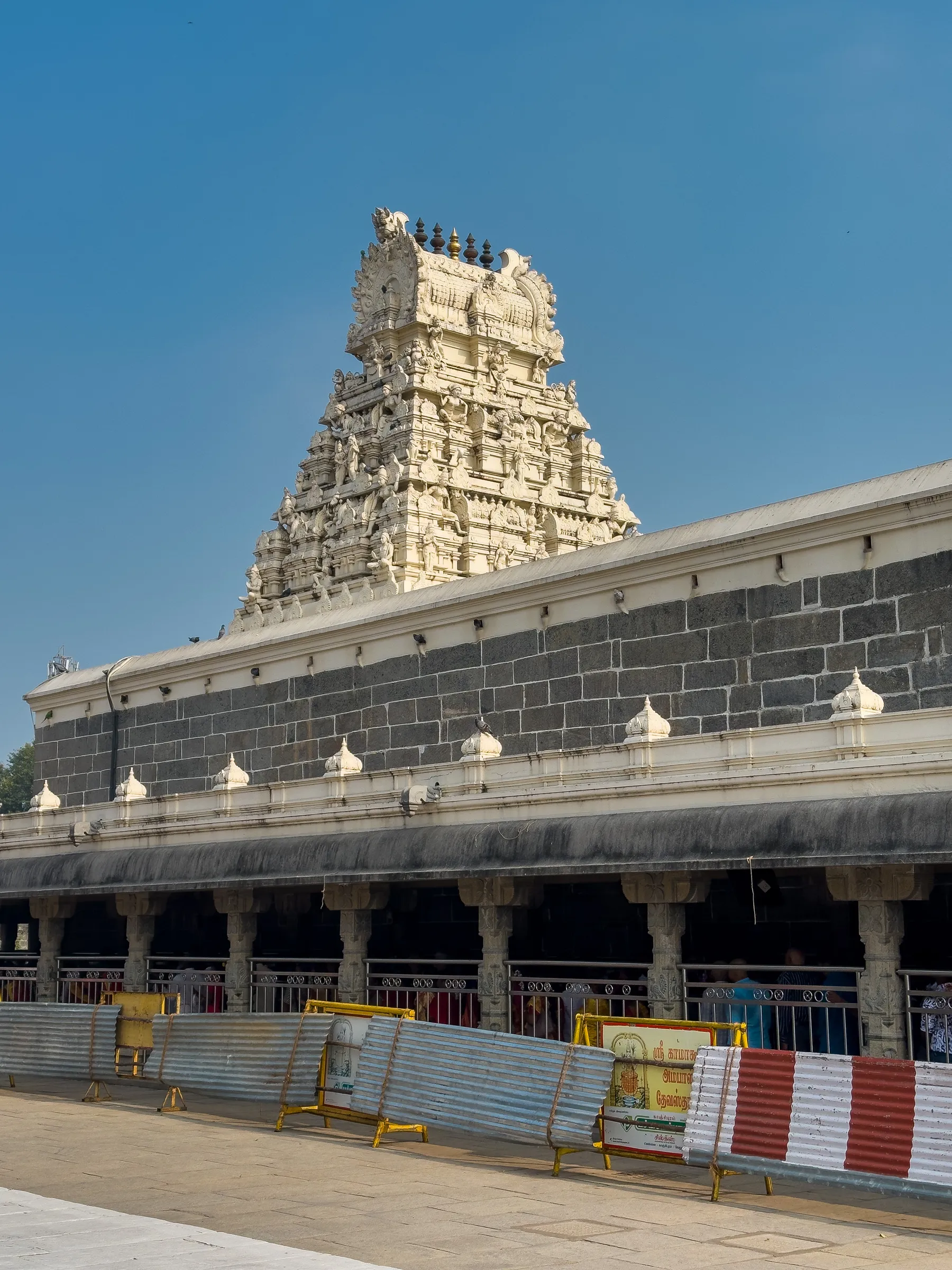
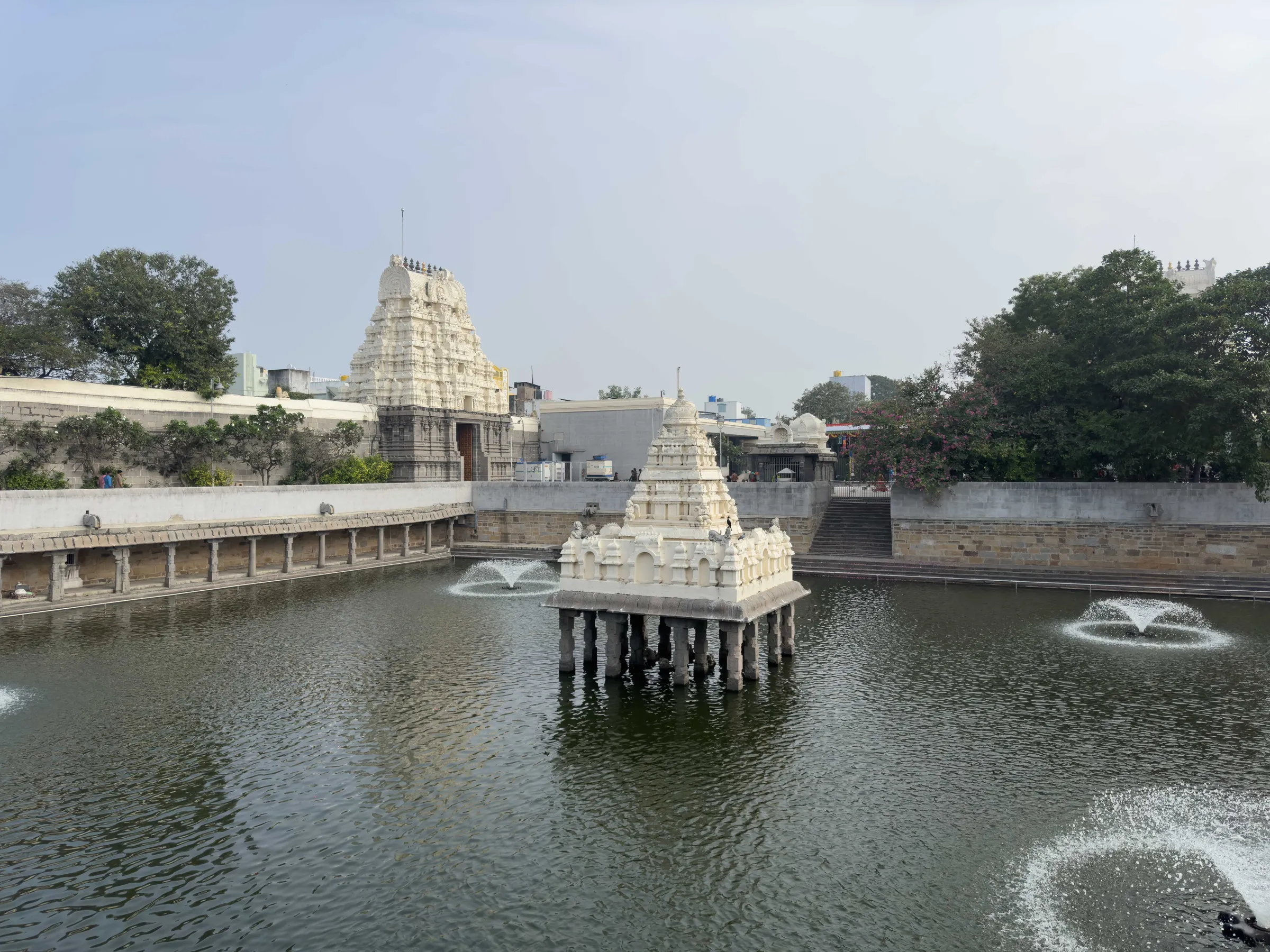
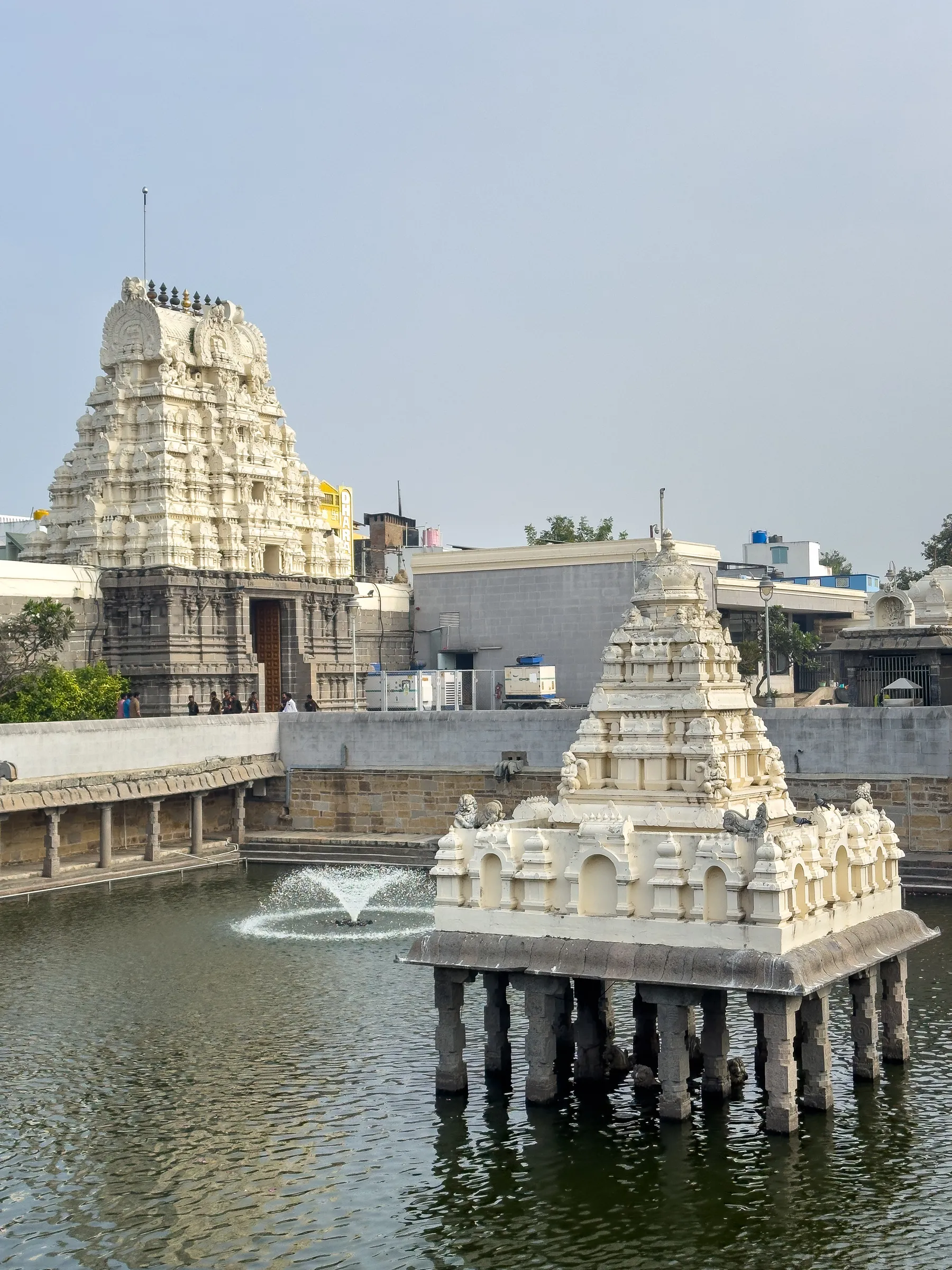
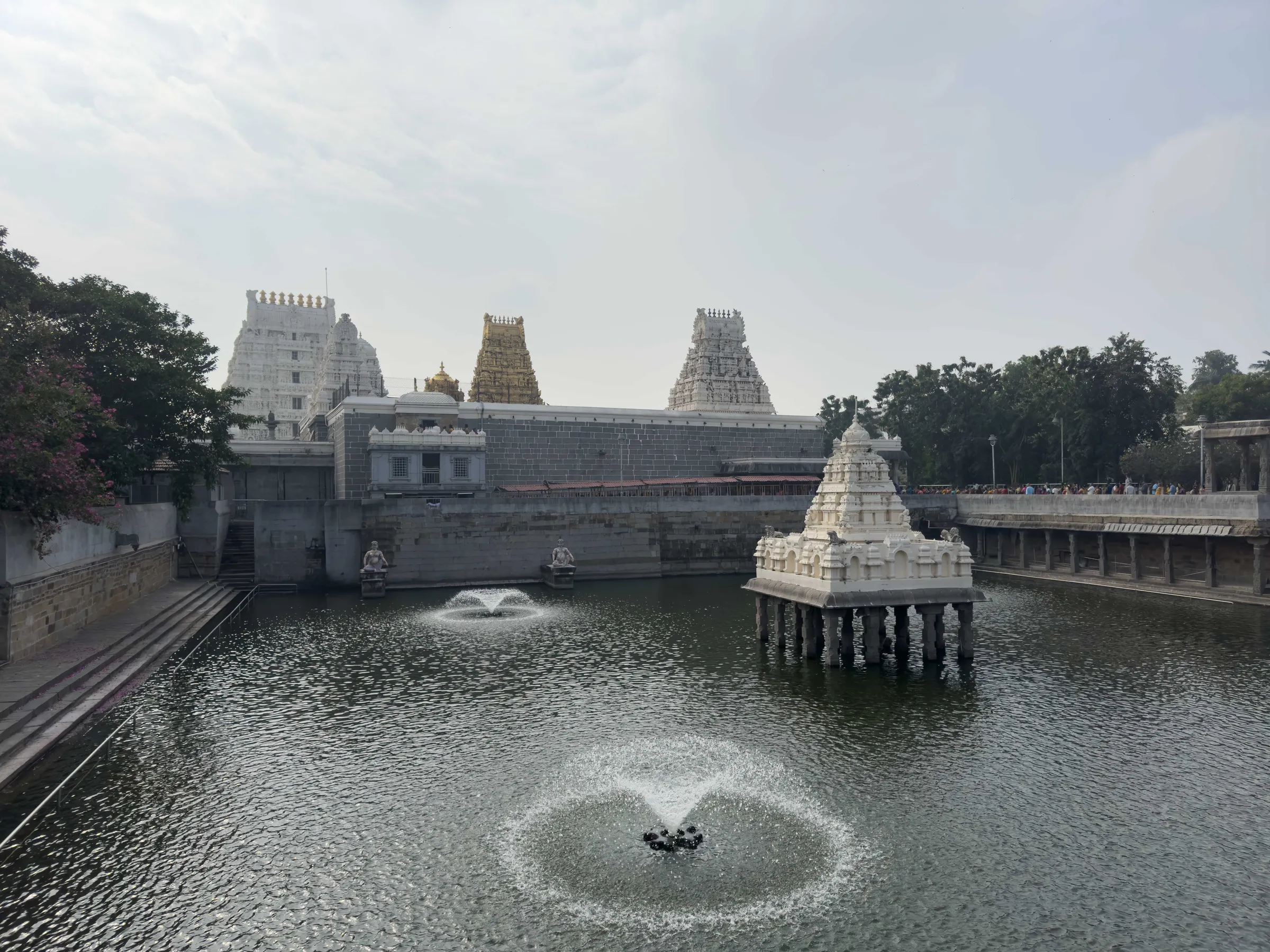
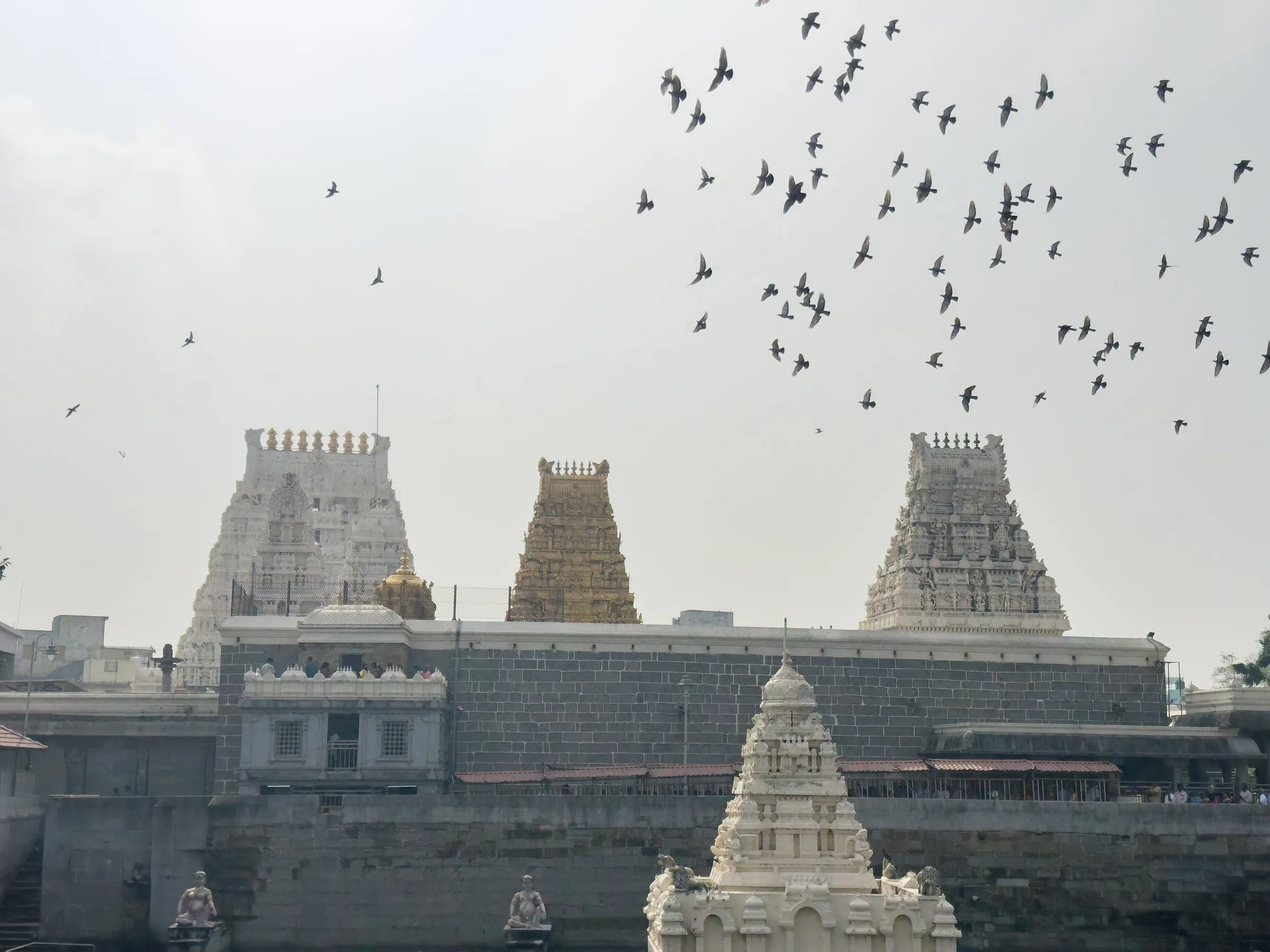
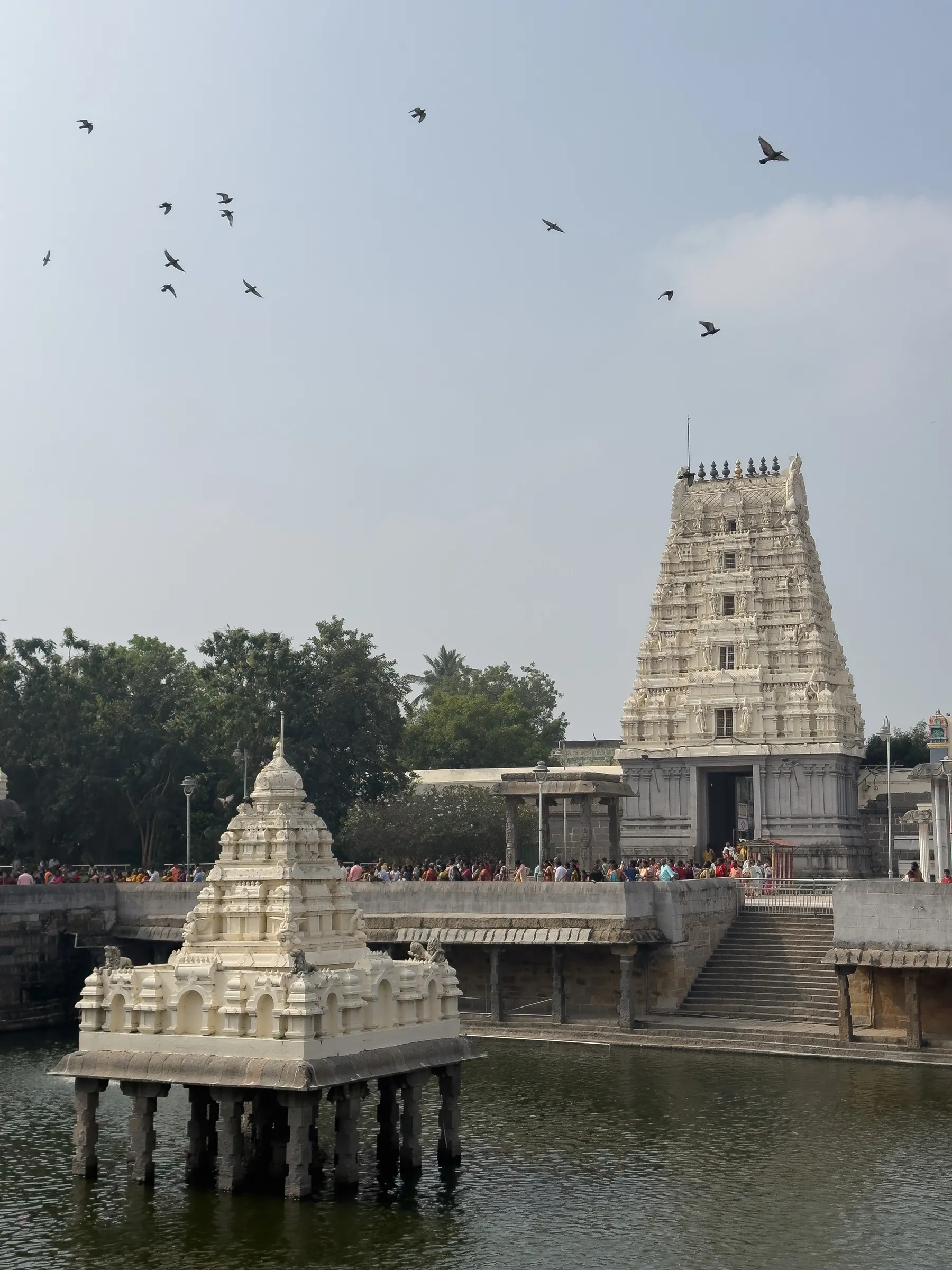
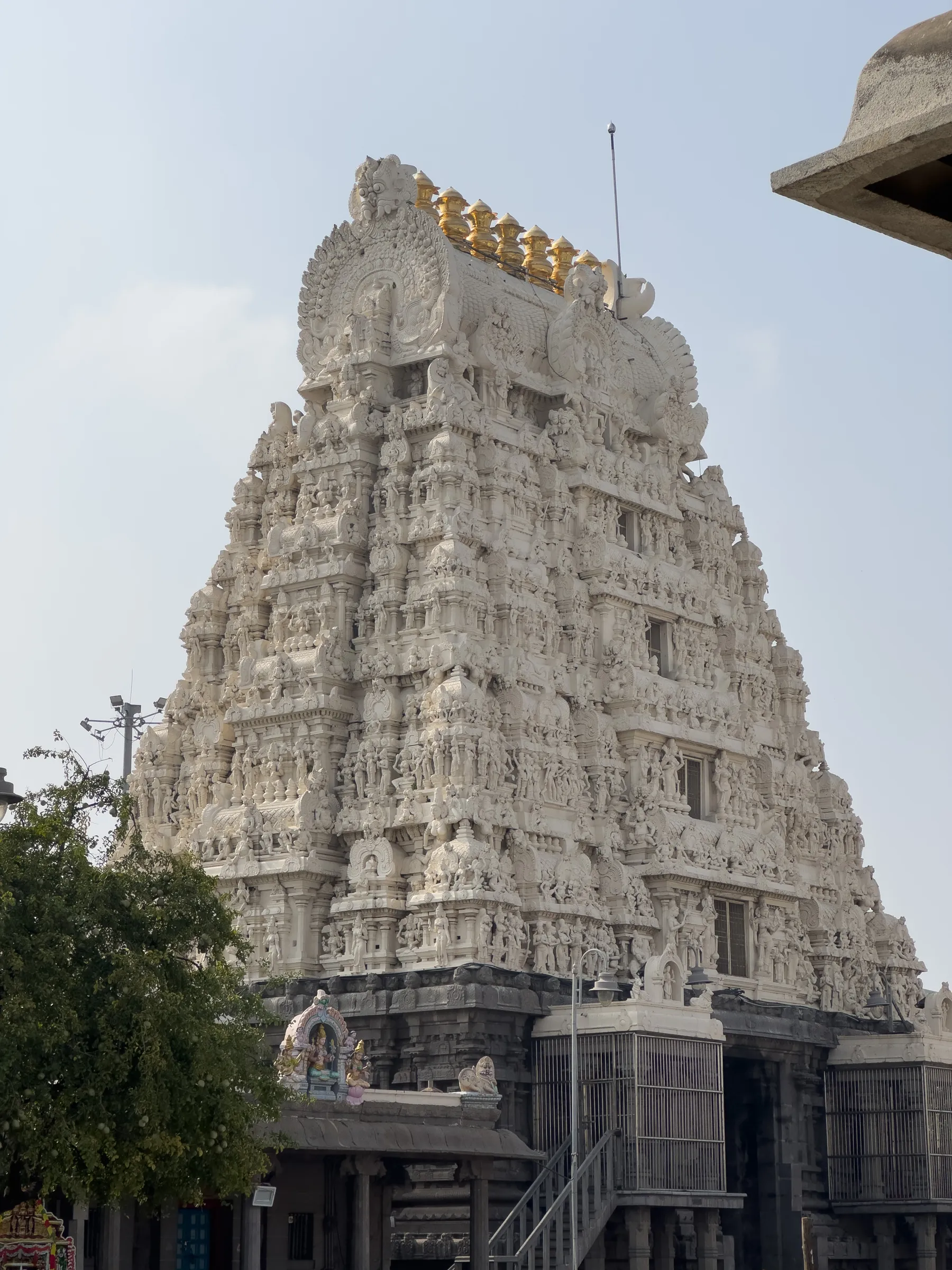
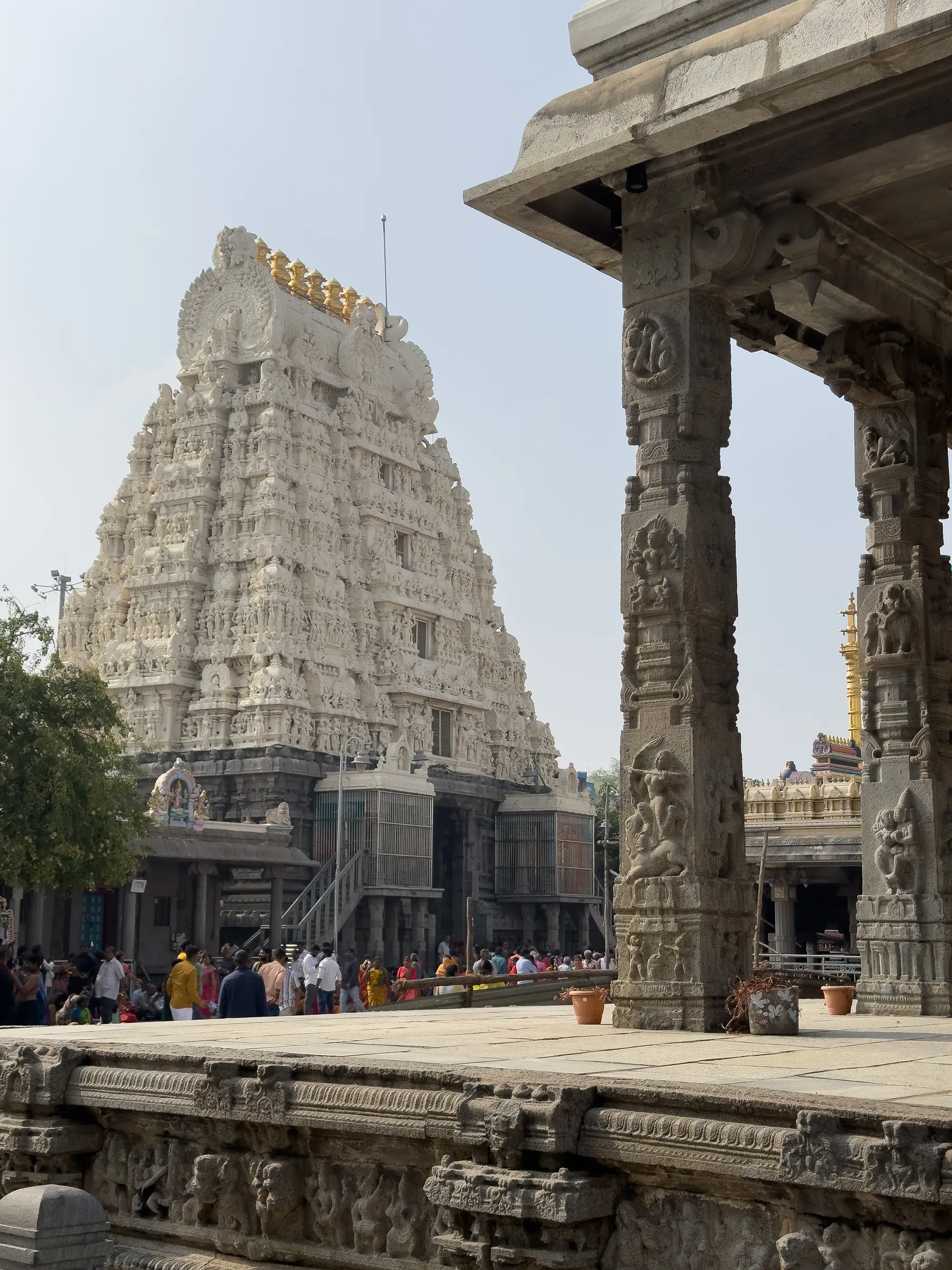
The Goddess at the centre of Kanchipuram, one of the three great Shakti Pithas, where Kamakshi sits in yogic Padmasana and all the other Siva temples of Kanchi face her, none holding a separate shrine for the Goddess.
The Kamakshi Amman Temple stands at the centre of Kanchipuram, the Goddess whom
all the city’s Siva temples face. The three registers below are held apart, as
the book records them.
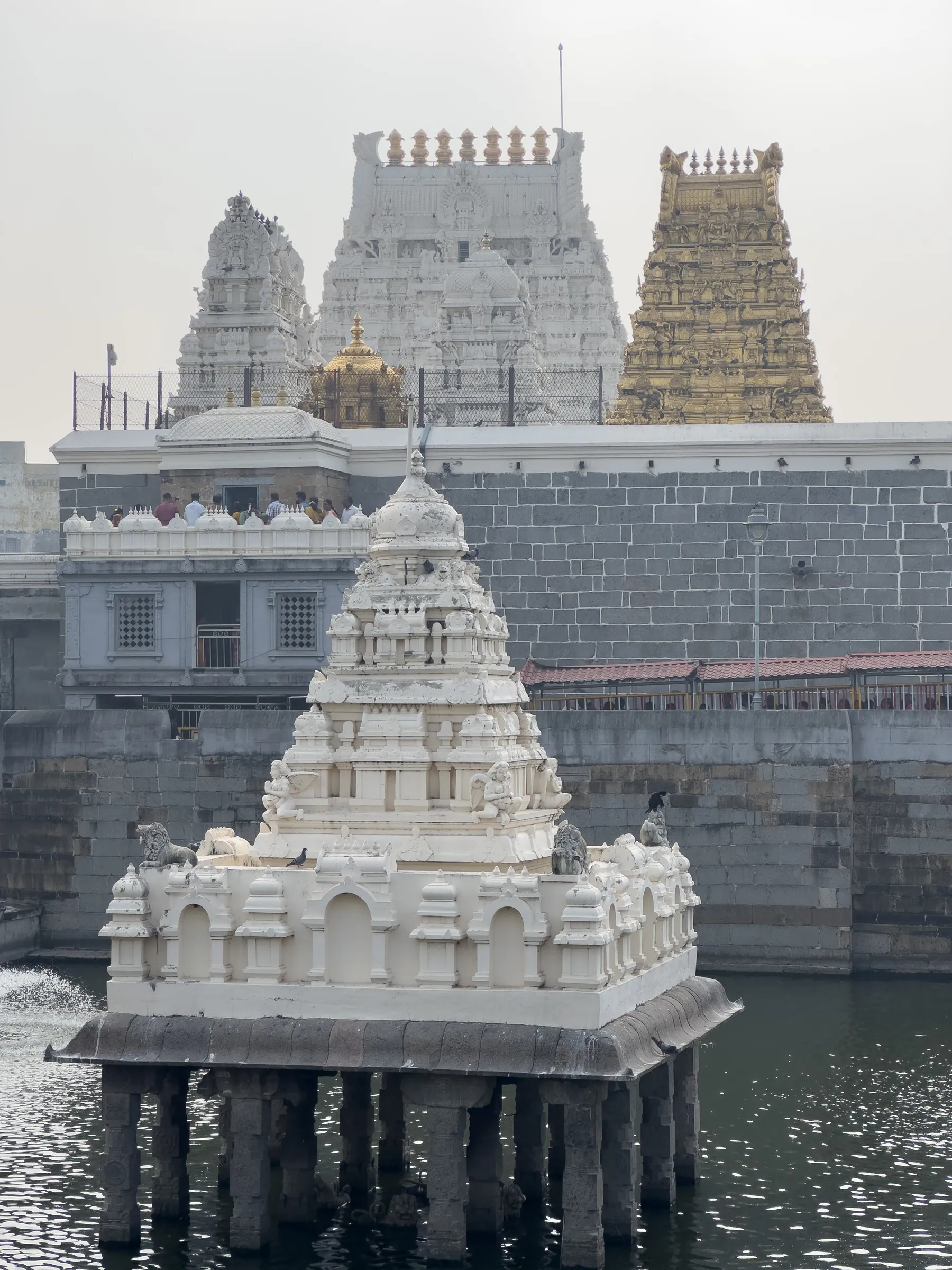
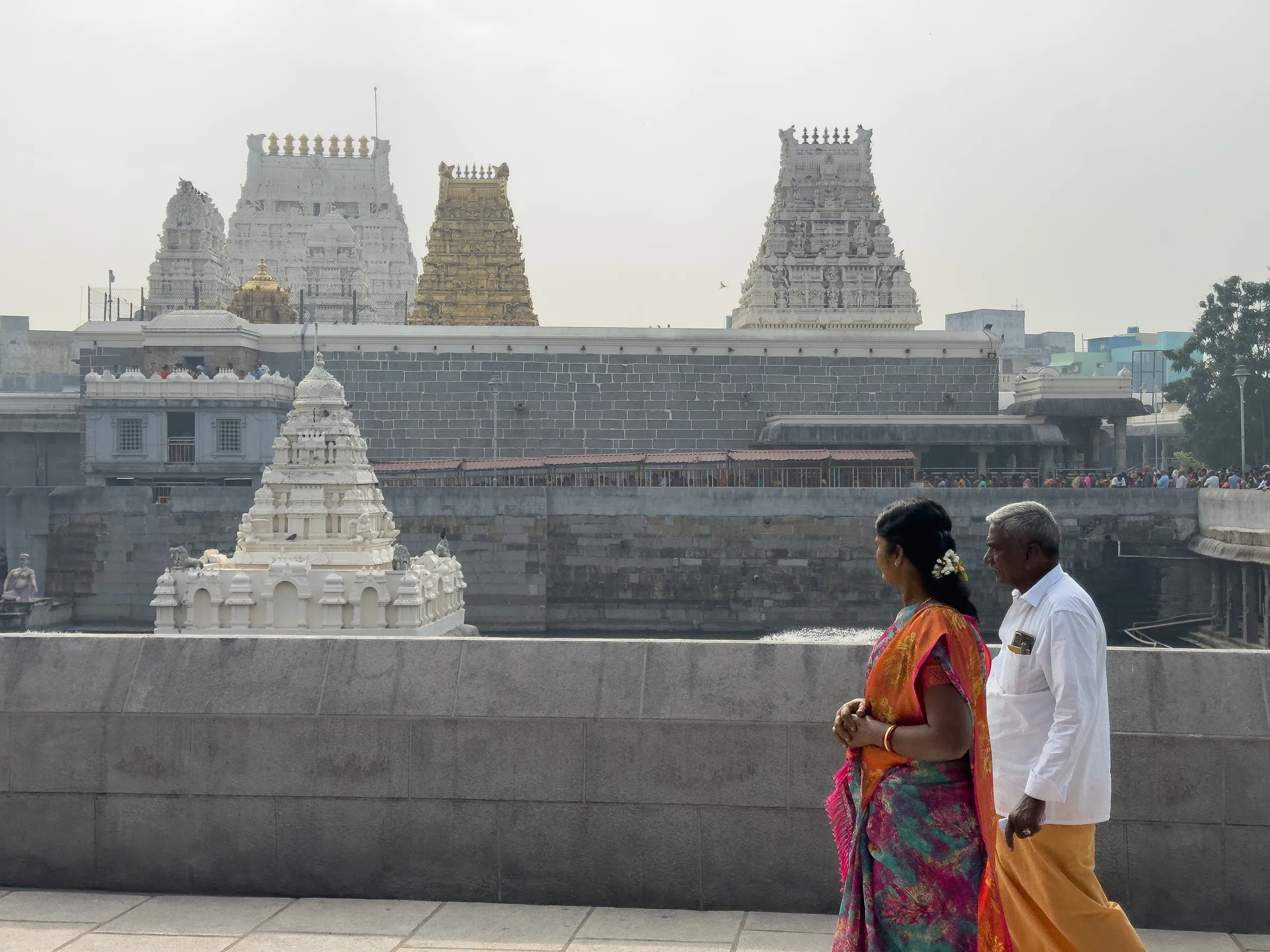
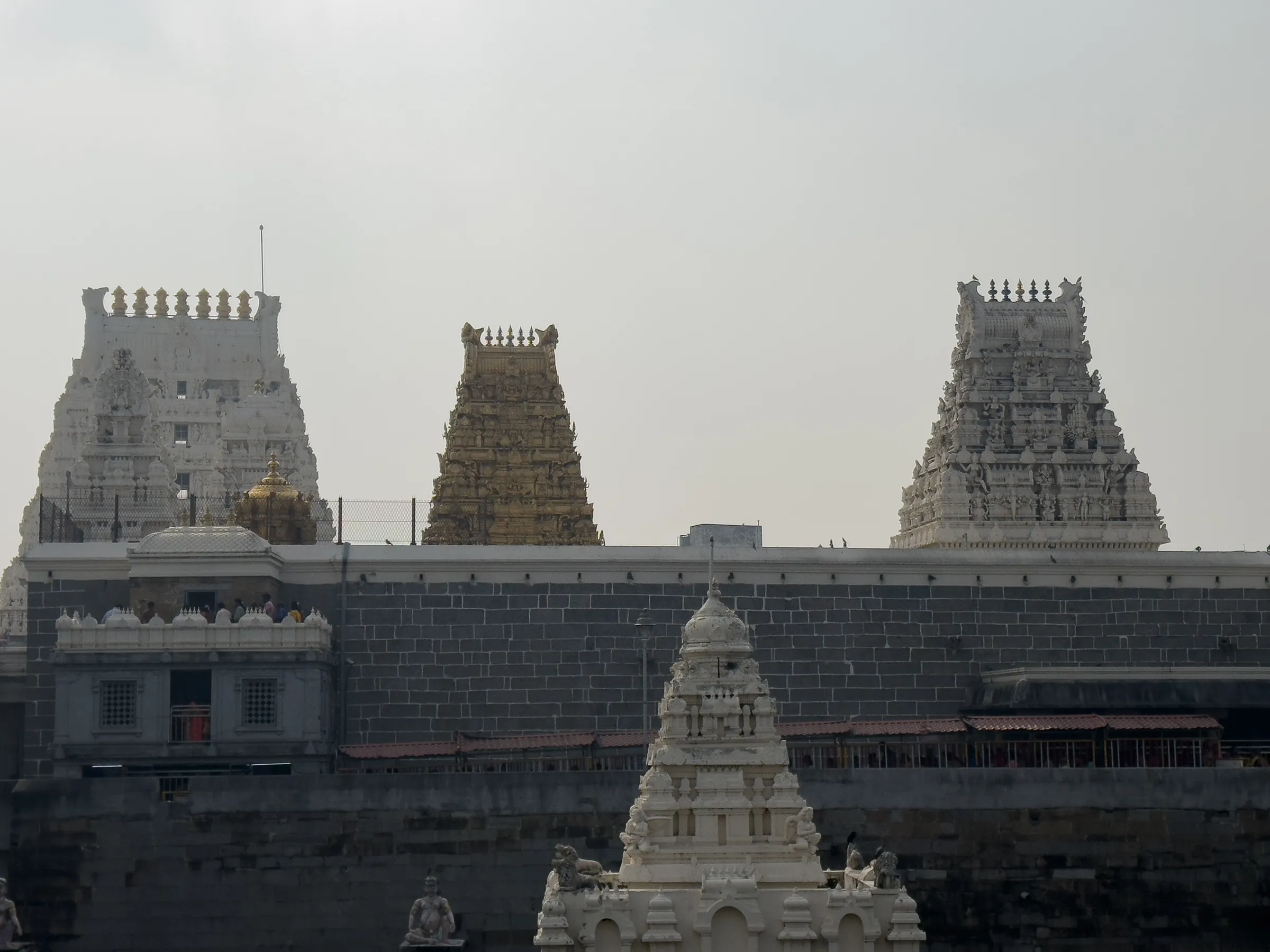
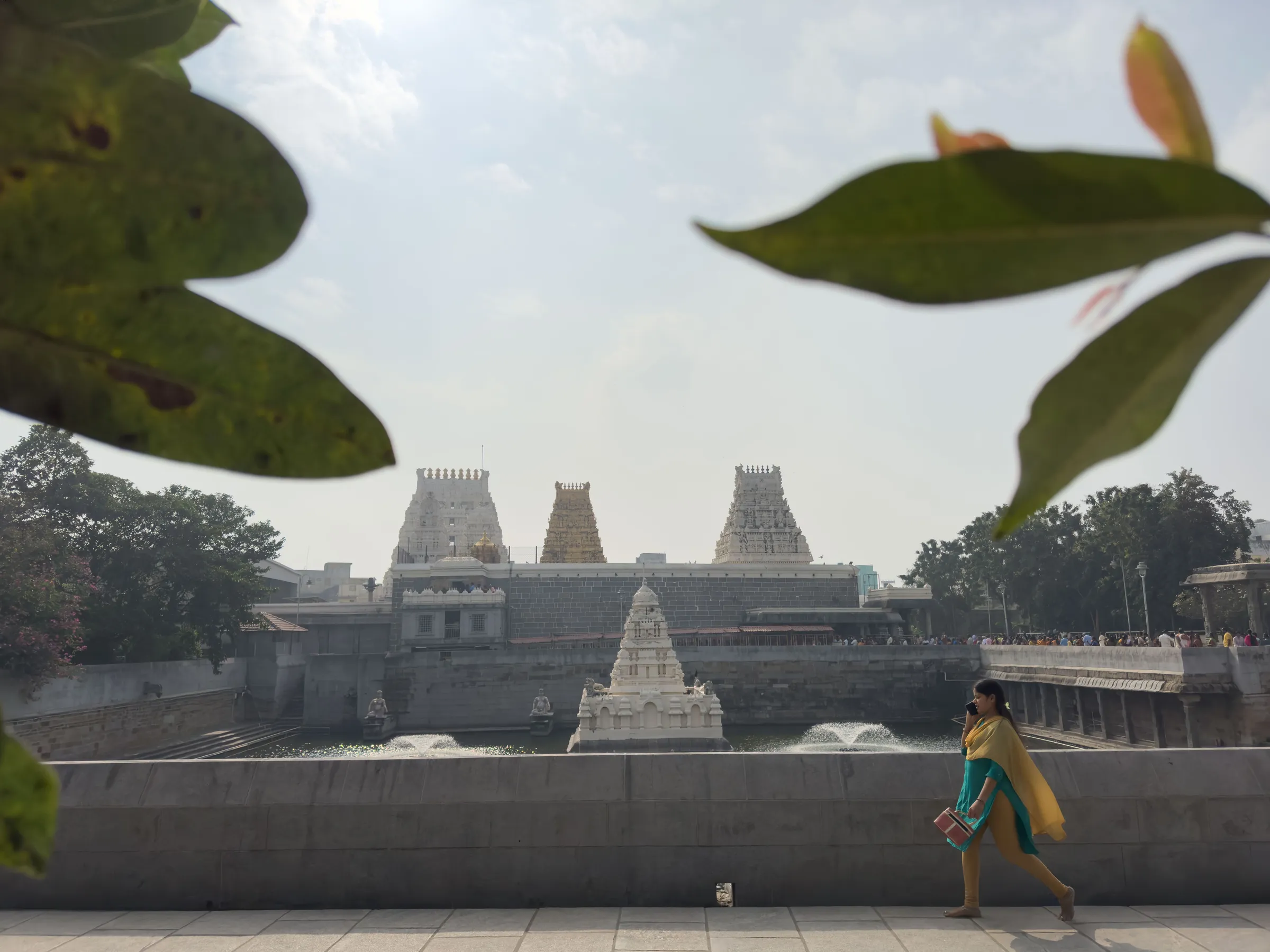
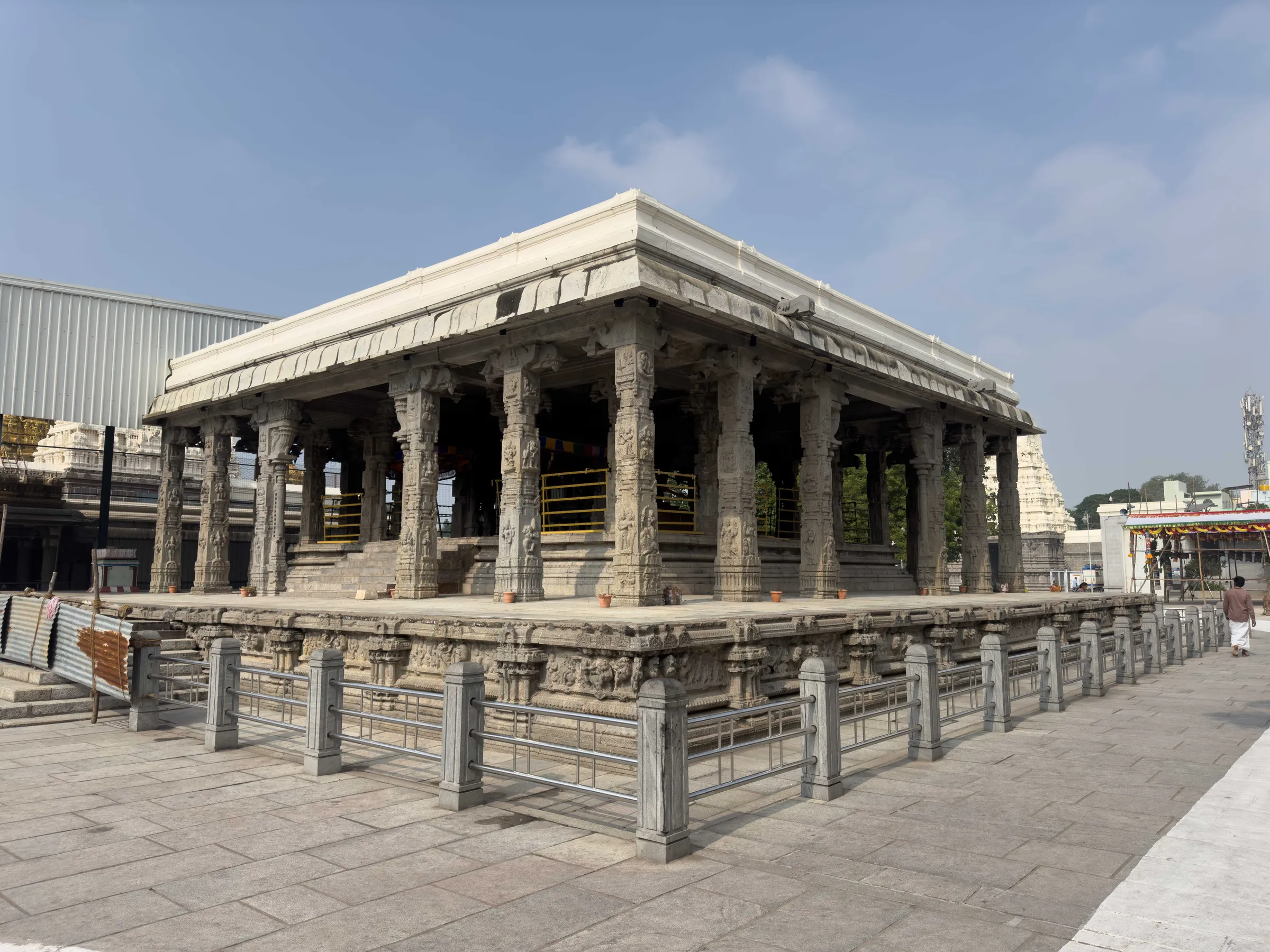
The temple spreads over five acres, with four gopurams facing the cardinal directions, carrying images of gods and celestial beings; the sanctum has its vimana covered in gold. There are many mandapas, the 100-pillared one important, as is the Gayatri Mandapa, with stunning carvings everywhere and an elephant shed within the temple.
There are five shrines for Kamakshi: the main idol in the sanctum in the Gayatri mandapa, in yogic Padmasana posture, her seat called Pancha Brahmasana. She holds Pasa, Angusa, a sugarcane bow and flower arrows in her four hands, with a parrot near her shoulder, and is also known as Sri Lalitha Maha Tripurasundari. The door to the sanctum is called Bilvadwar. Tapa Kamakshi prayed to Ekambareeswara under the mango tree, Anjana Kamakshi is the one Lord Rama worshipped, and Swarna Kamakshi, also known as Ekambika, came from the third eye of Shakti.
In the sanctum is a silver-covered pillar with a hole denoting the navel, where people pray for progeny; King Dasaratha prayed here and was blessed with four sons. On the left of the main deity are the idols of Varahi and the Aroopa Lakshmi, and Vishnu and the Swaroopa Lakshmi on the right. The four walls of the sanctum are believed to be the four Vedas, and the 24 pillars of the Gayatri Mandapa to represent the 24 letters of the mantra. Surrounding the main shrine are the shrines of Ayyapa with his consorts, Poorna and Pushkala, Annapoorni, Sarasvati with eight arms as Kamakshi's minister, and Adi Shankara.
02
Archaeological
dated & cited
The temple is mentioned in Sangam Literature as Perumpanatrupadai, under the name Kamavelkottam. Thondaiman Ilandhiraiyan, ruler of that period, is regarded as the founder of the Pallava dynasty. The temple has acquired its current form over the years.
Adi Shankara (8th century CE) is credited with consecrating the present Sri Yantra sculpture, and it is here that he is said to have composed the Soundarya Lahiri. The original idol, Bangaru Kamakshi, is in the Thanjavur Kamakshi Temple, the golden idol shifted there fearing the Muslim invasion; the Utsava Kamakshi is the processional deity.
Dating
Mentioned in Sangam Literature as Kamavelkottam; the present Sri Yantra sculpture credited to Adi Shankara (8th century CE).
Protection & condition
GroupOne of the trio of Shakti Pithas, with Madurai Meenakshi and Kasi Visalakshi
ConditionIn worship; pujas conducted four times daily
03
Mythological
as transmitted
Ka refers to Sarasvati, Goddess of knowledge, Ma to Lakshmi, Goddess of wealth, and Akshi to kind eyes: the combined form of the holy trinity of the female energy, Kamakshi. Her kind look could make the mute Mooka gain voice, and he sang the Mooka Panchashati.
Legend tells that Sati (Parvathi), daughter of Daksha, married Siva against her father's will. Uninvited and insulted at Daksha's yagna, Sati cursed him and immolated herself in the sacred fire; Siva, full of wrath, stopped the yagna and carried her burnt body about in a frenzy, her body parts falling at different places that became the Shakti Pithas, 51 in all across India, Bangladesh, Nepal and Sri Lanka. At Kanchi fell the navel of Sati, giving it the name Nabhisthaan or Ottiyana pitha.
After killing Bhandasura, the Goddess settled in Champaka Vanam (Kanchi) as Tripurasundari. Kamakshi has three forms: Sthula (Dhyana), Sukshma (Unseen) and Karana (Mantra). Shiva, as Durvasa, worshipped her by chanting the Sri Vidya Tantra and consecrated the Sri Yantra in a trough shaped like a yoni before her; around the Sri Yantra the composers of the Lalitha Sahasranama are seen, as in Manidwipa. The important festivals are Siva and Kamakshi's marriage in March to April with a boat ride, Sharad Navarathri, and the Brahmotsavam in January to February, when Kamakshi rides the Golden Lion and Silver Chariot.
This is an open, reviewed record. If you have spotted an error or have
something to add — a correction, a date, a source, a name in another script —
propose it. Every change is reviewed before it joins the record.
You are suggesting an edit. Click any highlighted paragraph to change it.
“Suggest an edit” makes this entry editable right here — change the text, tell us how to reach you, and send it. No account needed. “Share feedback” opens a short form. Both go through review before anything is published.