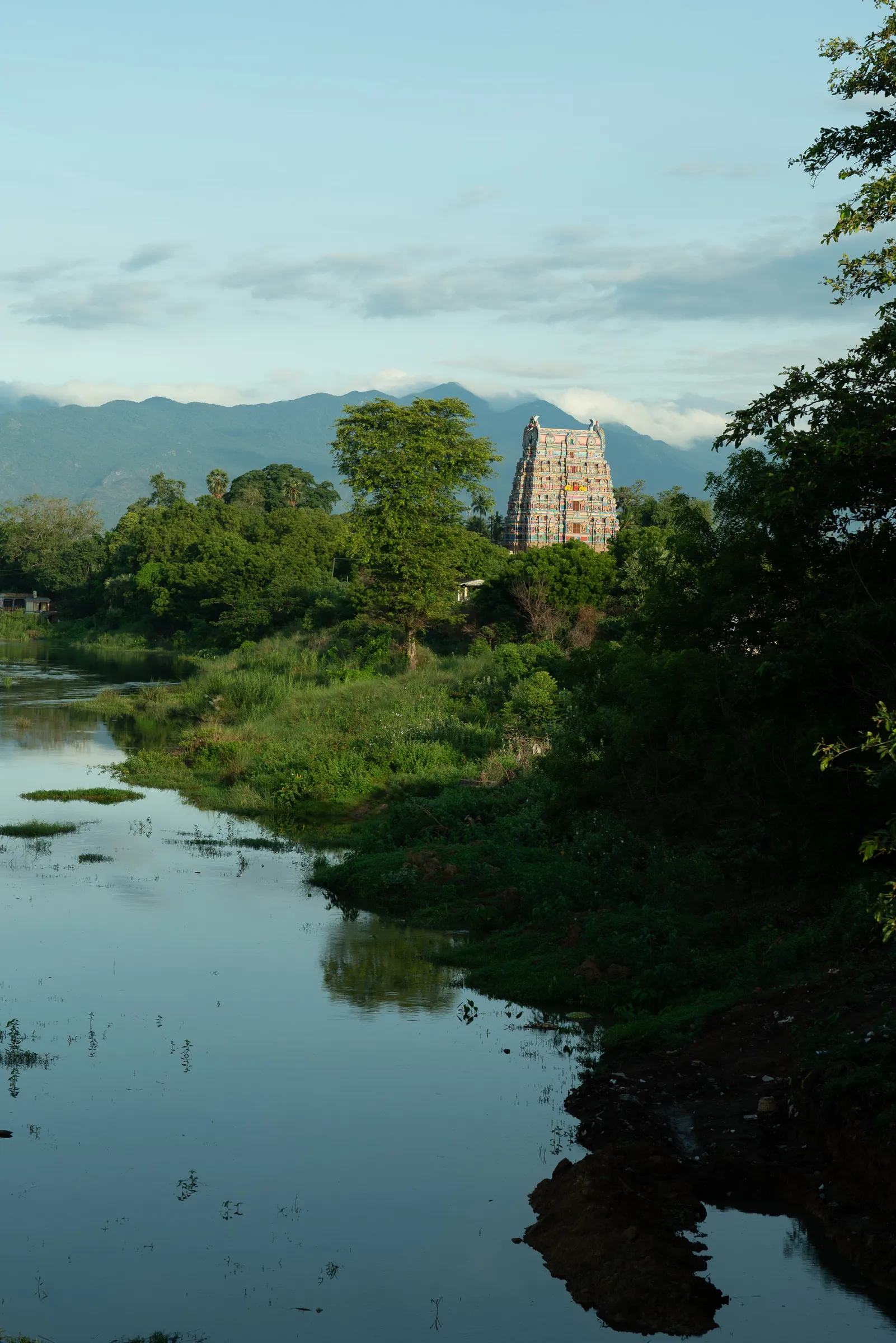
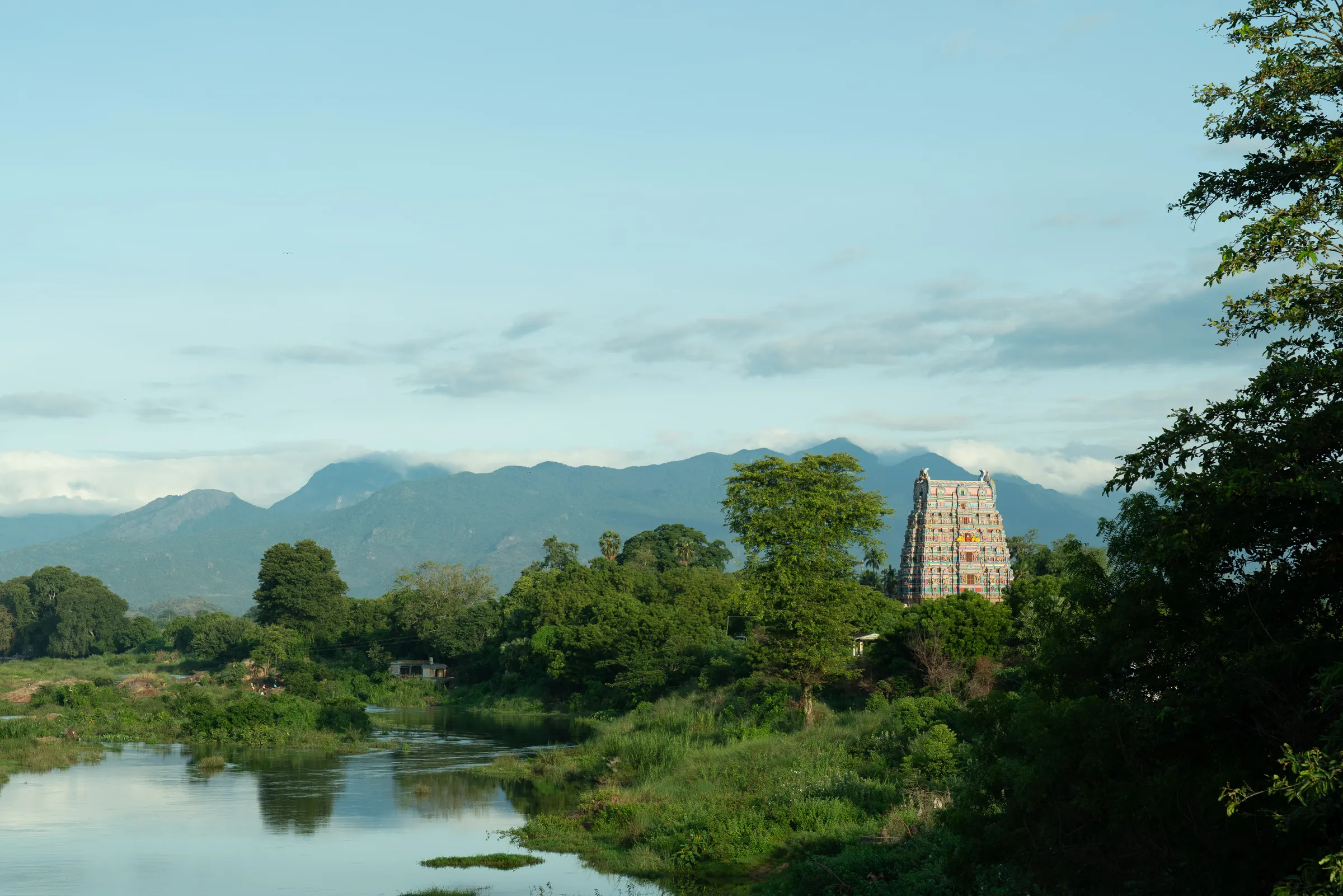
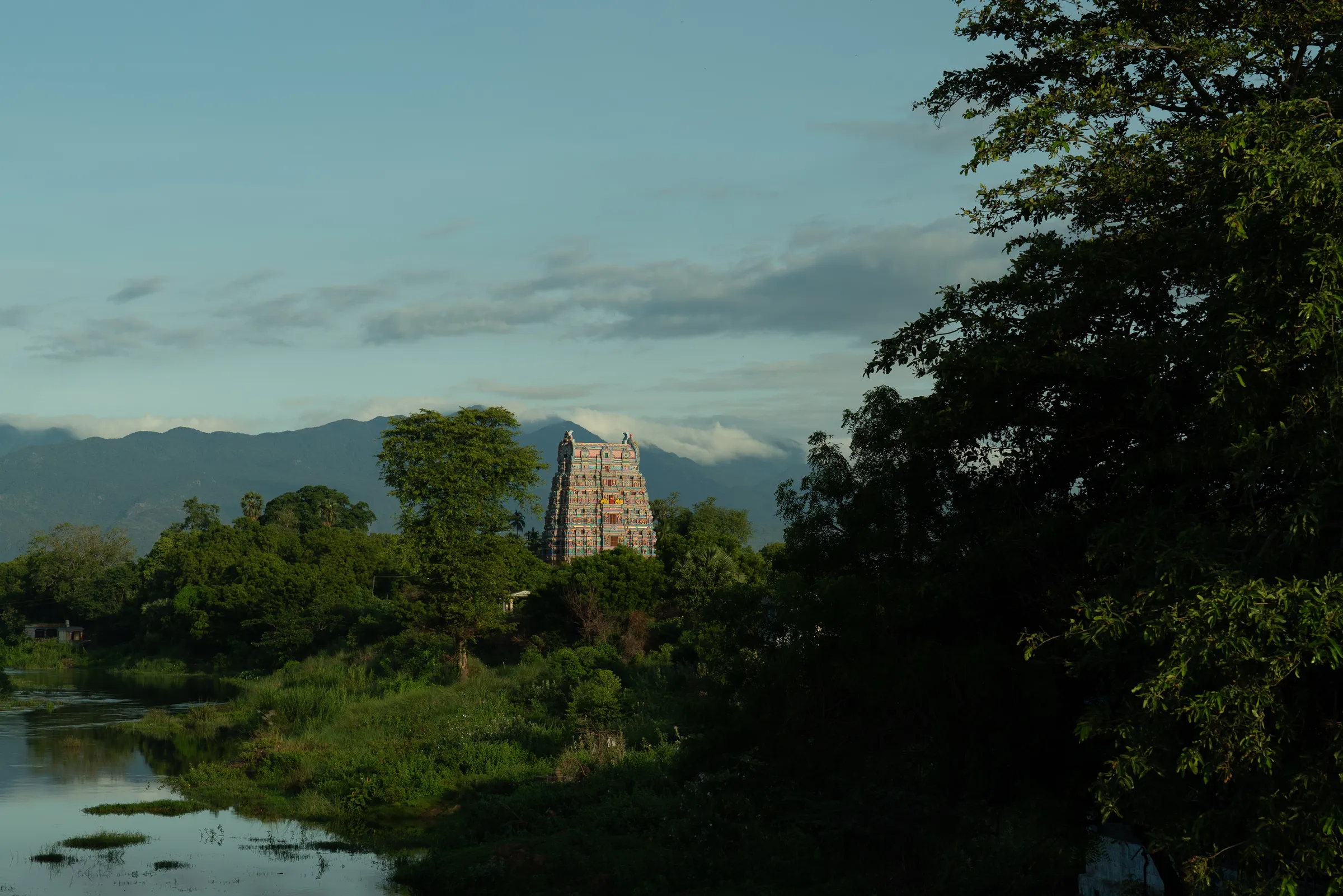
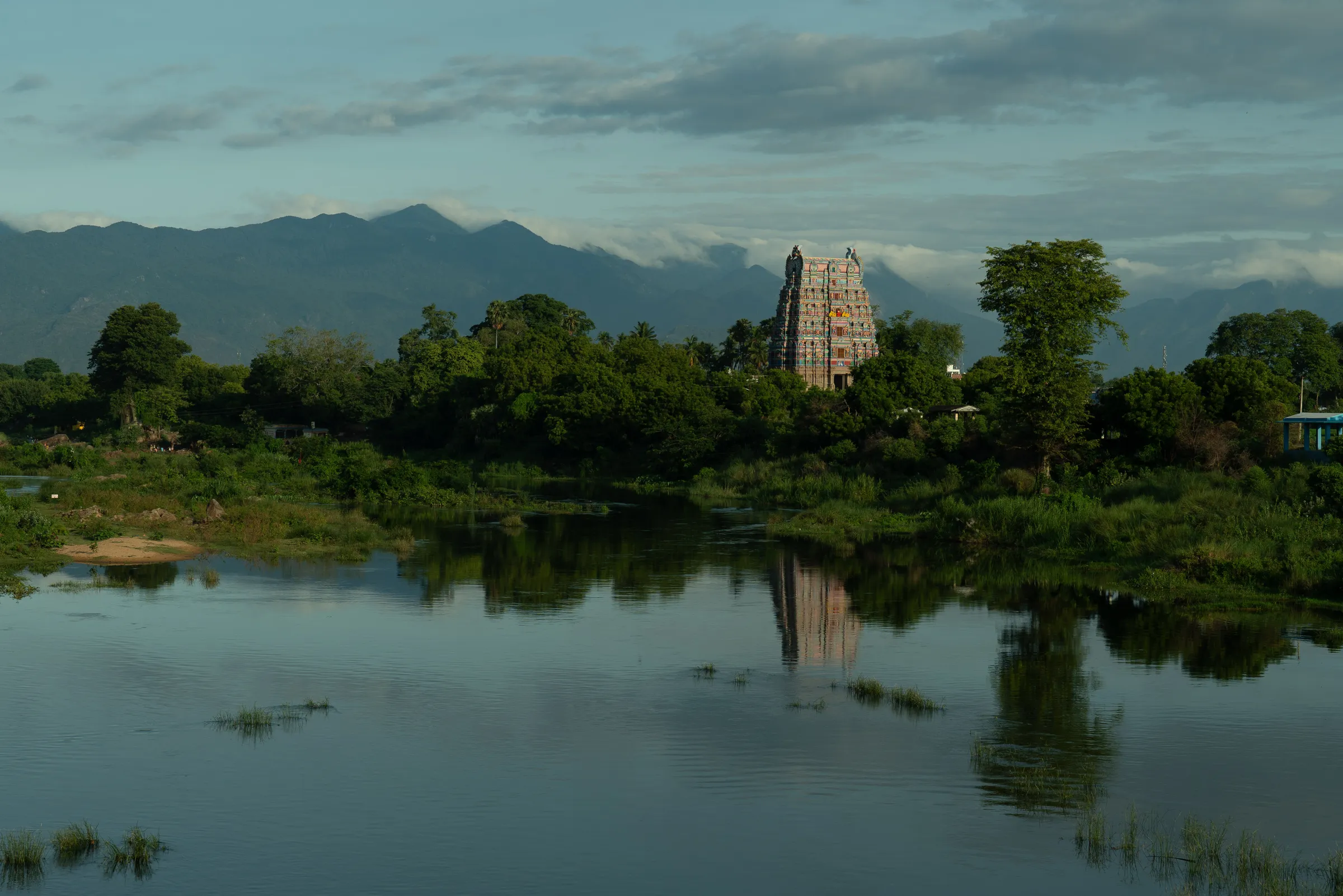
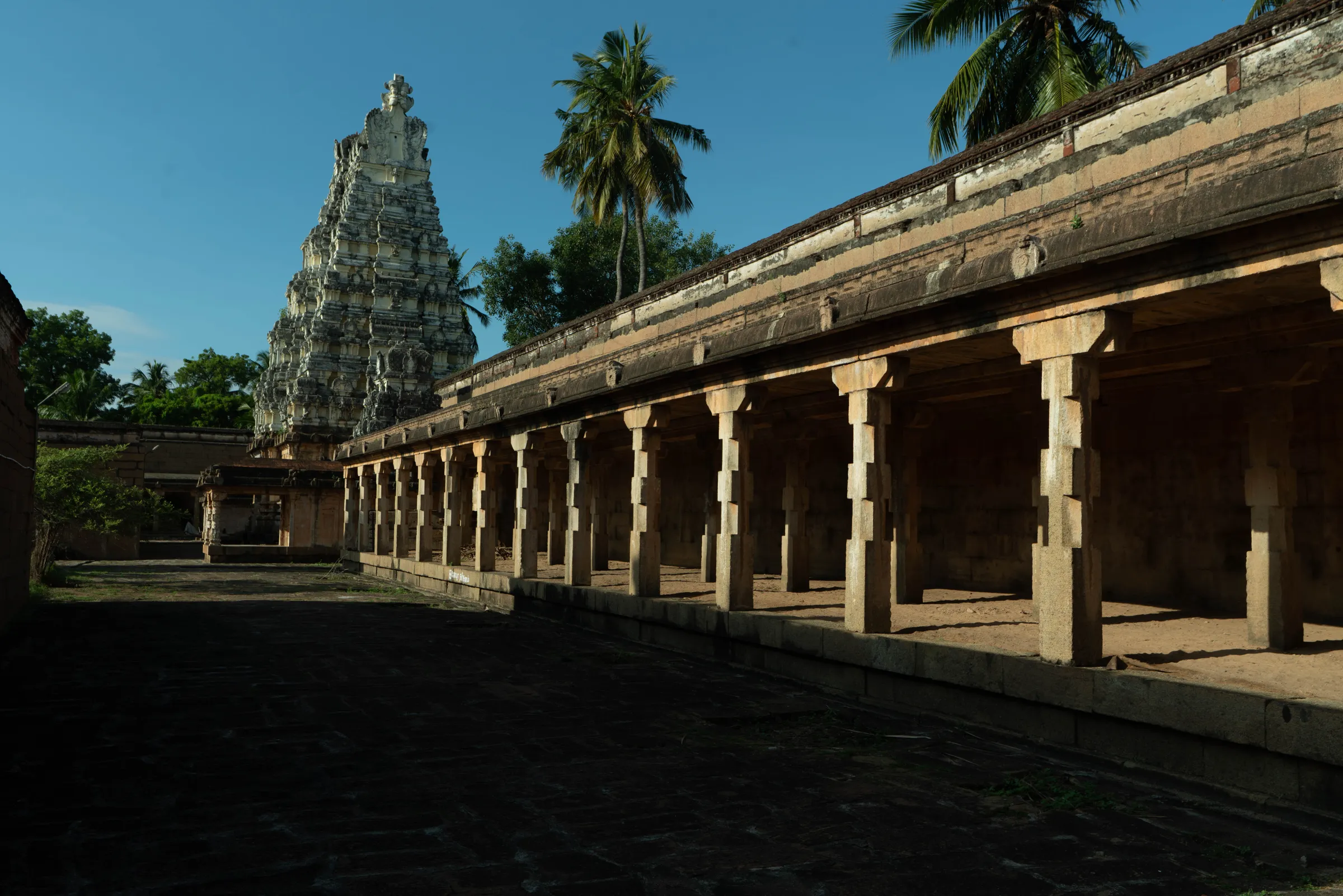
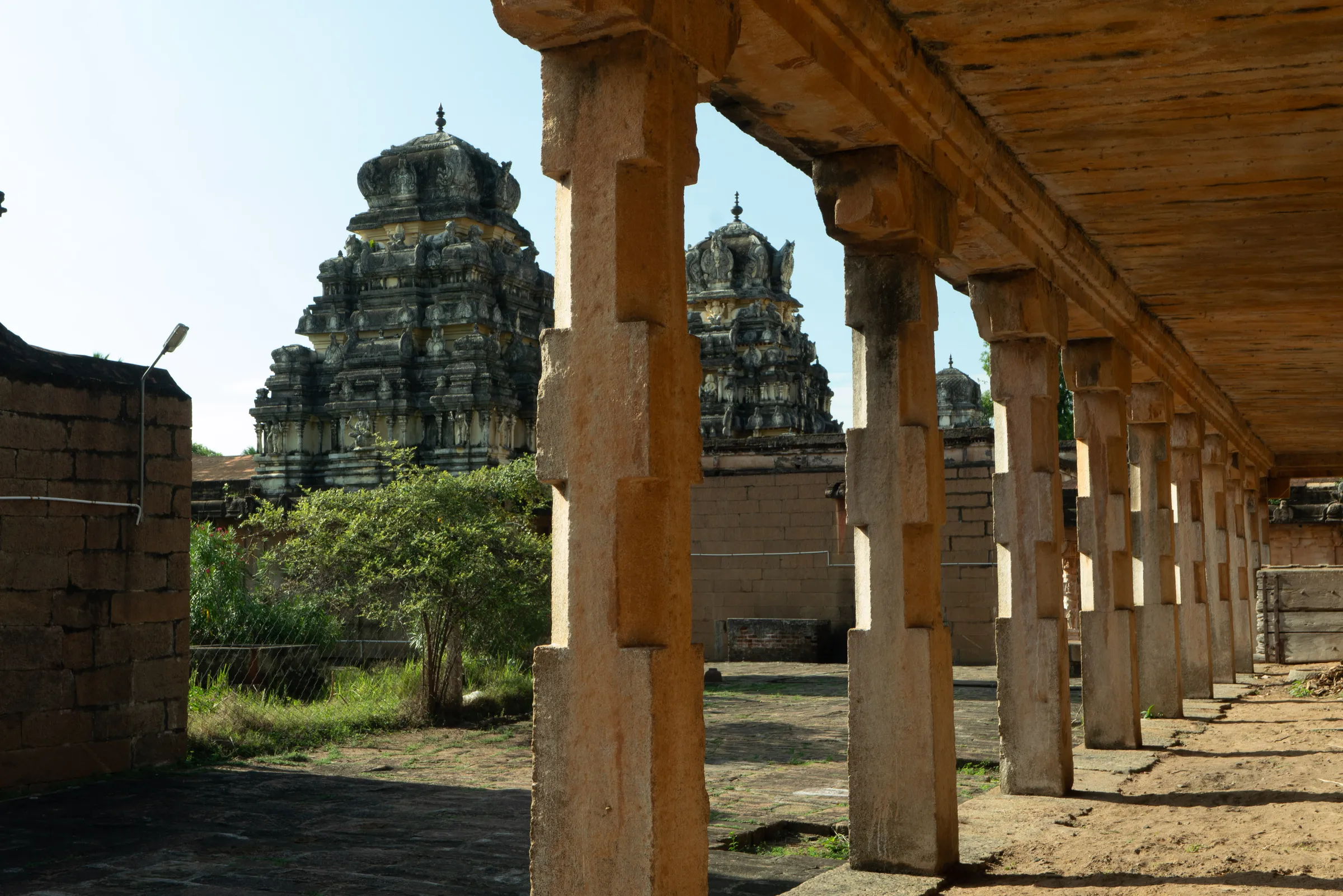
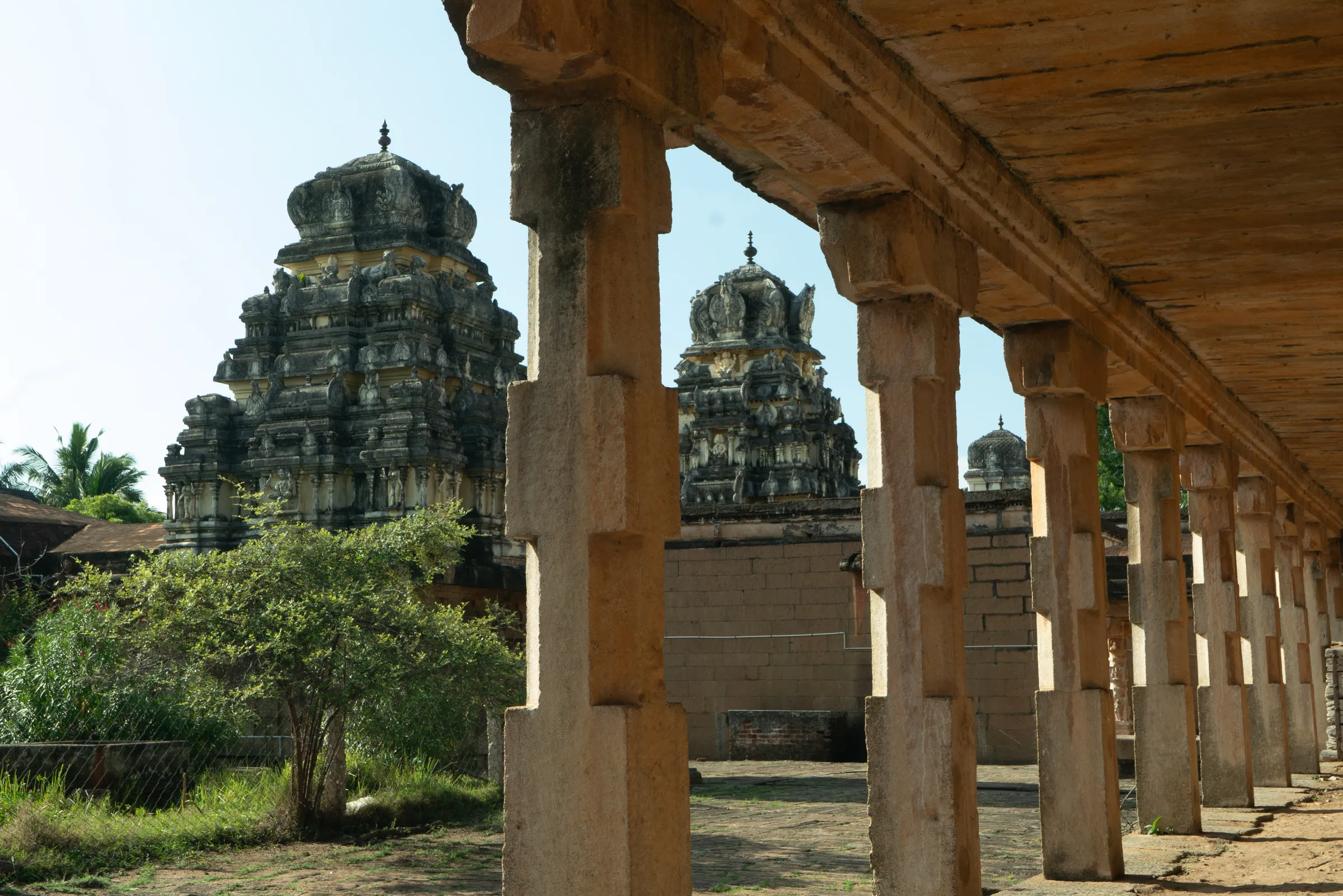
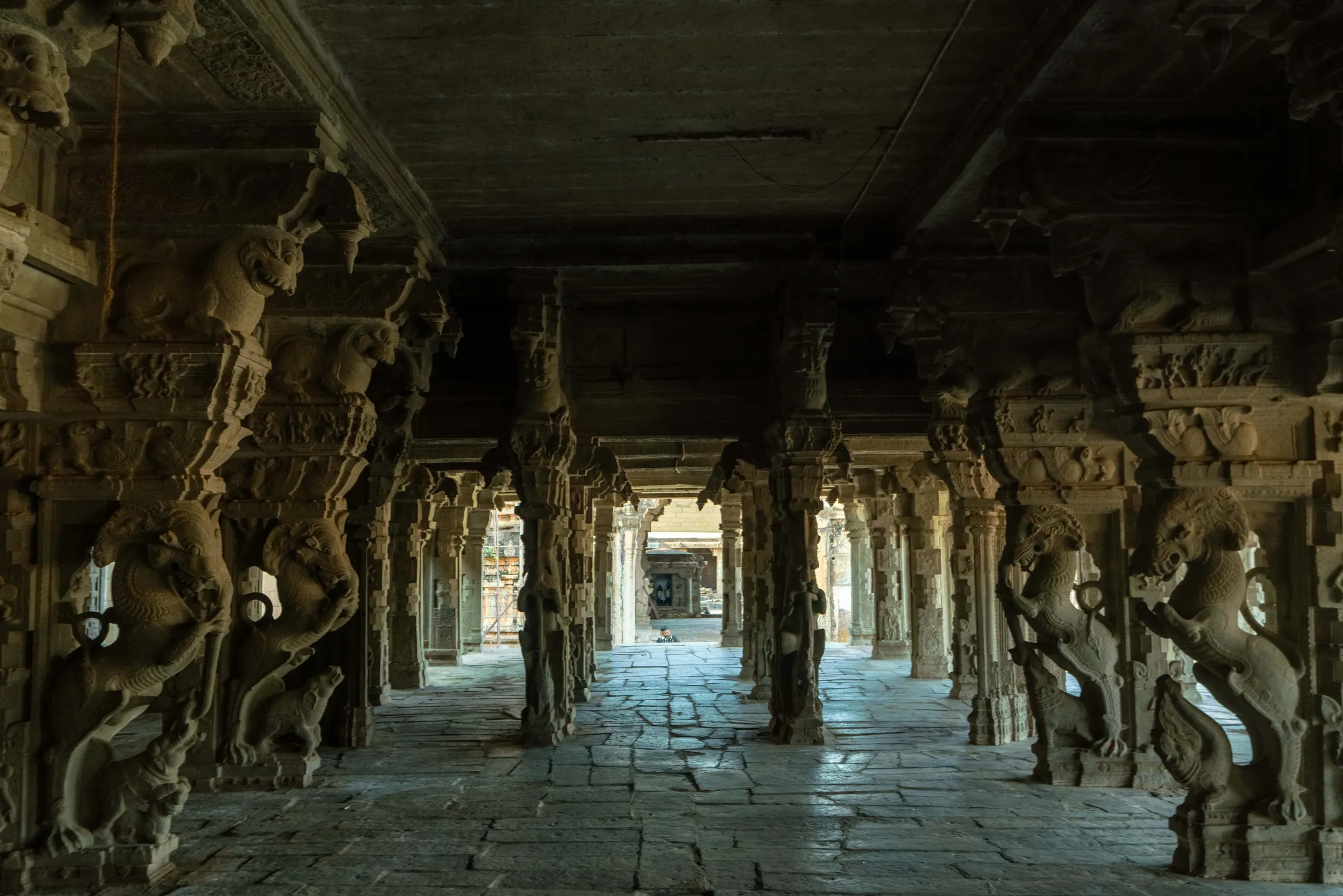
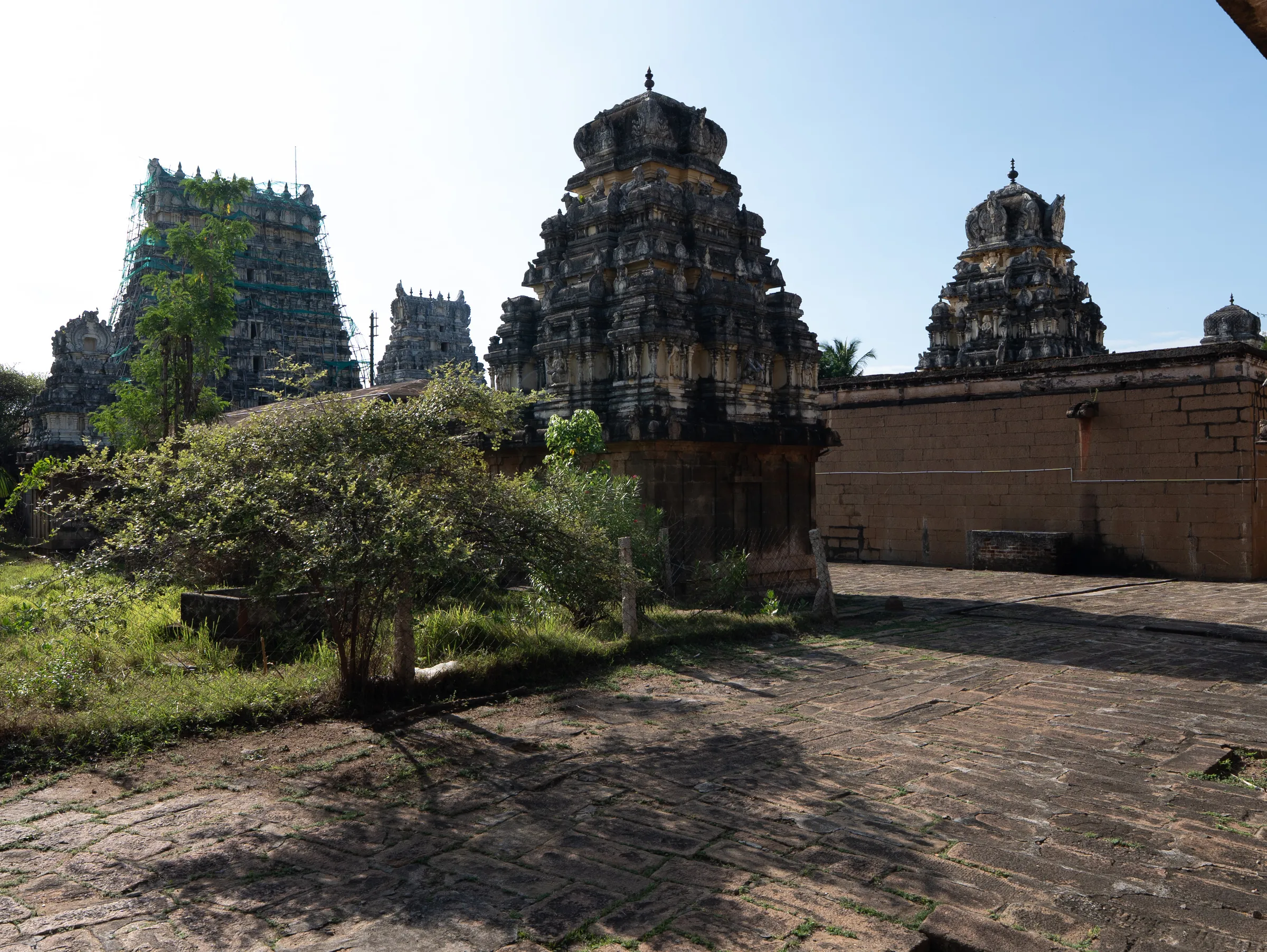
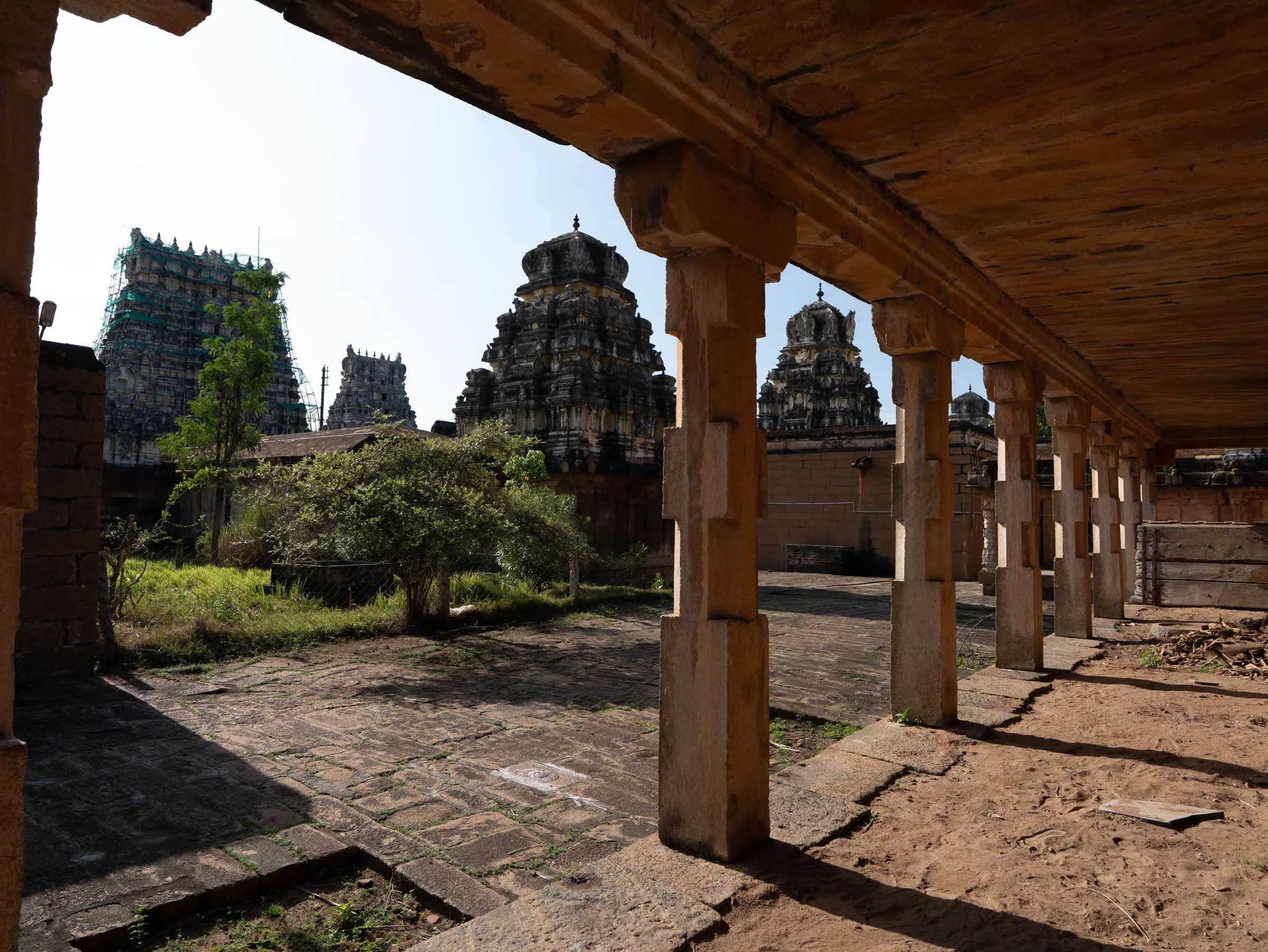
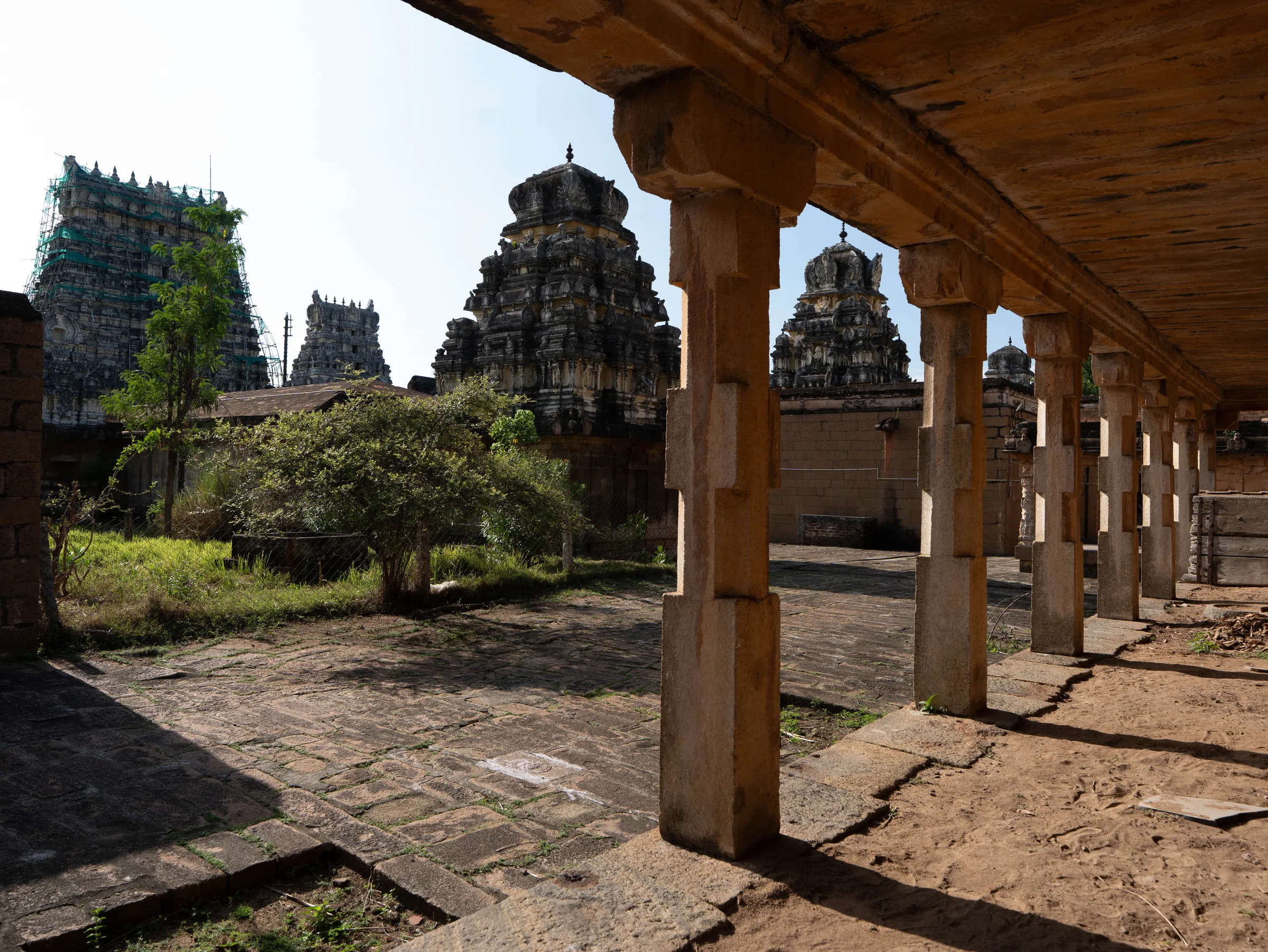
Kailasanatha Temple, photograph
← Pandya Nadu
Entry 091

Kailasanatha Temple

Bramhadesam · Tirunelveli · Chōḷa, with later Vijayanagara and Nāyaka additions

A Chōḷa-founded Śiva temple on the banks of the Ghatana River at Bramhadesam in Tirunelveli, a former Brahmadeya settlement, with a seven-tiered gopuram and one of the largest stone Nandis in the region.

The Kailasanatha temple at Bramhadesam in Tirunelveli is a Chōḷa foundation by the Ghatana River, probably completed under Rajendra Chōḷa in a Brahmadeya town. Its architecture is read through the seven-tiered gopuram, the great Nandi and the Chola yali motifs; its dated record runs from a 1625 Nāyaka writ on the artisan castes through Vijayanagara and merchant endowments.

The photographs

Plates · 27

Kailasanatha Temple, photograph
© Amar Ramesh and team · All rights reserved
Kailasanatha Temple, photograph
© Amar Ramesh and team · All rights reserved
Kailasanatha Temple, photograph
© Amar Ramesh and team · All rights reserved
Kailasanatha Temple, photograph
© Amar Ramesh and team · All rights reserved
Kailasanatha Temple, photograph
© Amar Ramesh and team · All rights reserved
Kailasanatha Temple, photograph
© Amar Ramesh and team · All rights reserved
Kailasanatha Temple, photograph
© Amar Ramesh and team · All rights reserved
Kailasanatha Temple, photograph
© Amar Ramesh and team · All rights reserved
Kailasanatha Temple, photograph
© Amar Ramesh and team · All rights reserved
Kailasanatha Temple, photograph
© Amar Ramesh and team · All rights reserved
Kailasanatha Temple, photograph
© Amar Ramesh and team · All rights reserved
Kailasanatha Temple, photograph
© Amar Ramesh · All rights reserved
Kailasanatha Temple, photograph
© Amar Ramesh · All rights reserved
Kailasanatha Temple, photograph
© Amar Ramesh · All rights reserved
Kailasanatha Temple, photograph
© Amar Ramesh · All rights reserved
Kailasanatha Temple, photograph
© Amar Ramesh · All rights reserved
Kailasanatha Temple, photograph
© Amar Ramesh · All rights reserved
Kailasanatha Temple, photograph
© Amar Ramesh · All rights reserved
Kailasanatha Temple, photograph
© Amar Ramesh · All rights reserved
Kailasanatha Temple, photograph
© Amar Ramesh · All rights reserved
Kailasanatha Temple, photograph
© Amar Ramesh · All rights reserved
Kailasanatha Temple, photograph
© Amar Ramesh · All rights reserved
Kailasanatha Temple, photograph
© Amar Ramesh · All rights reserved
Kailasanatha Temple, photograph
© Amar Ramesh · All rights reserved
Kailasanatha Temple, photograph
© Amar Ramesh · All rights reserved
Kailasanatha Temple, photograph
© Amar Ramesh · All rights reserved
01

Architectural

structure & vocabulary

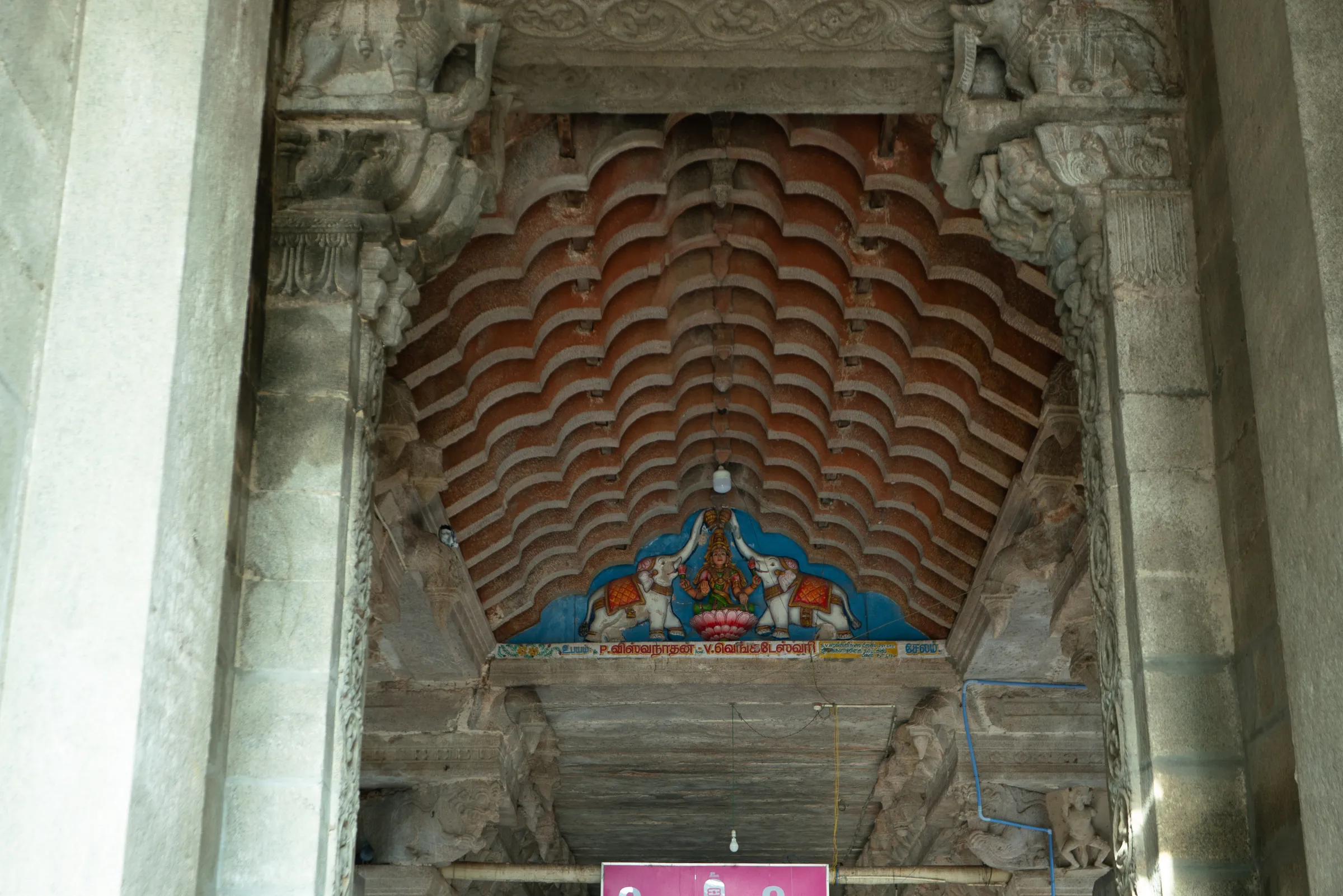
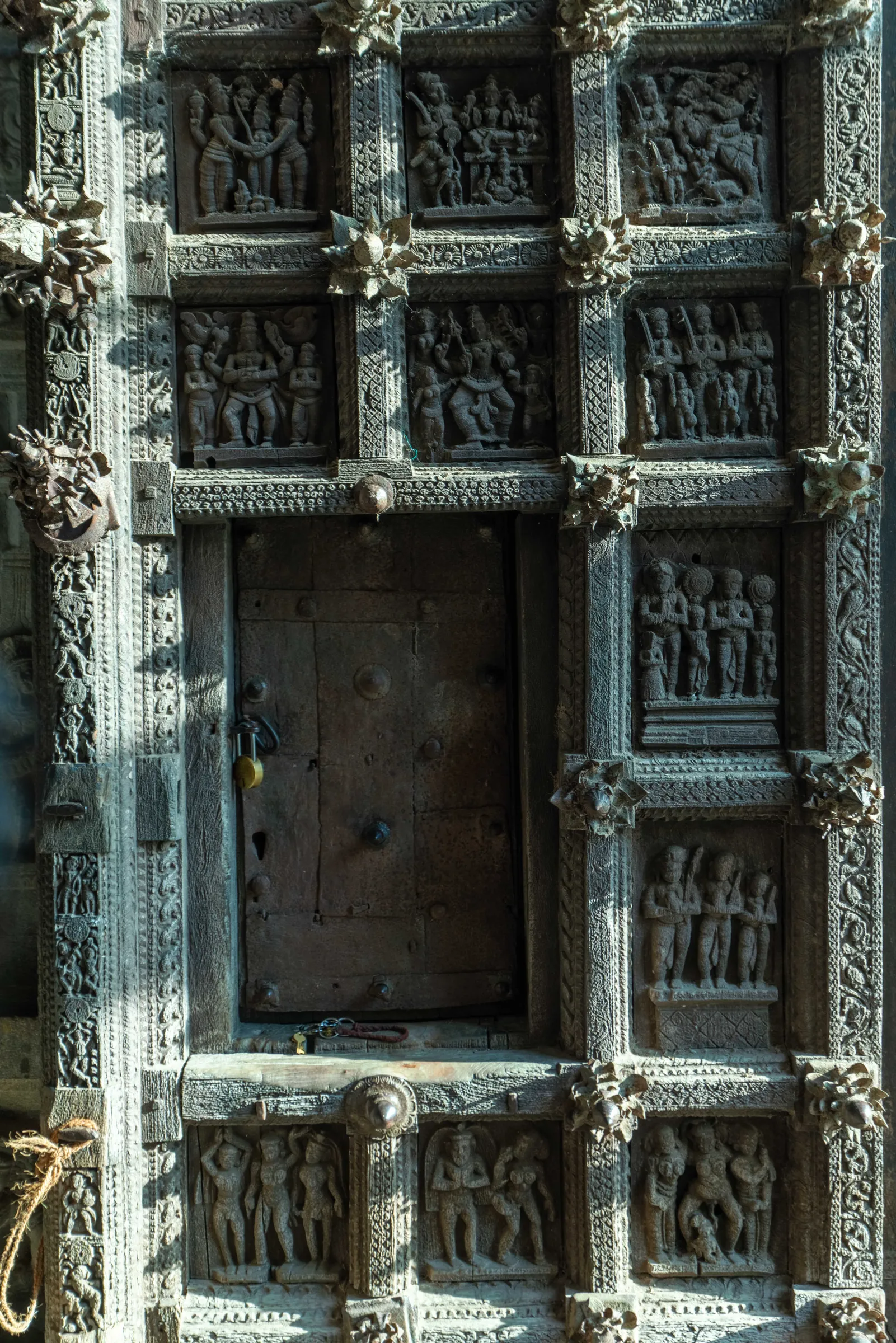
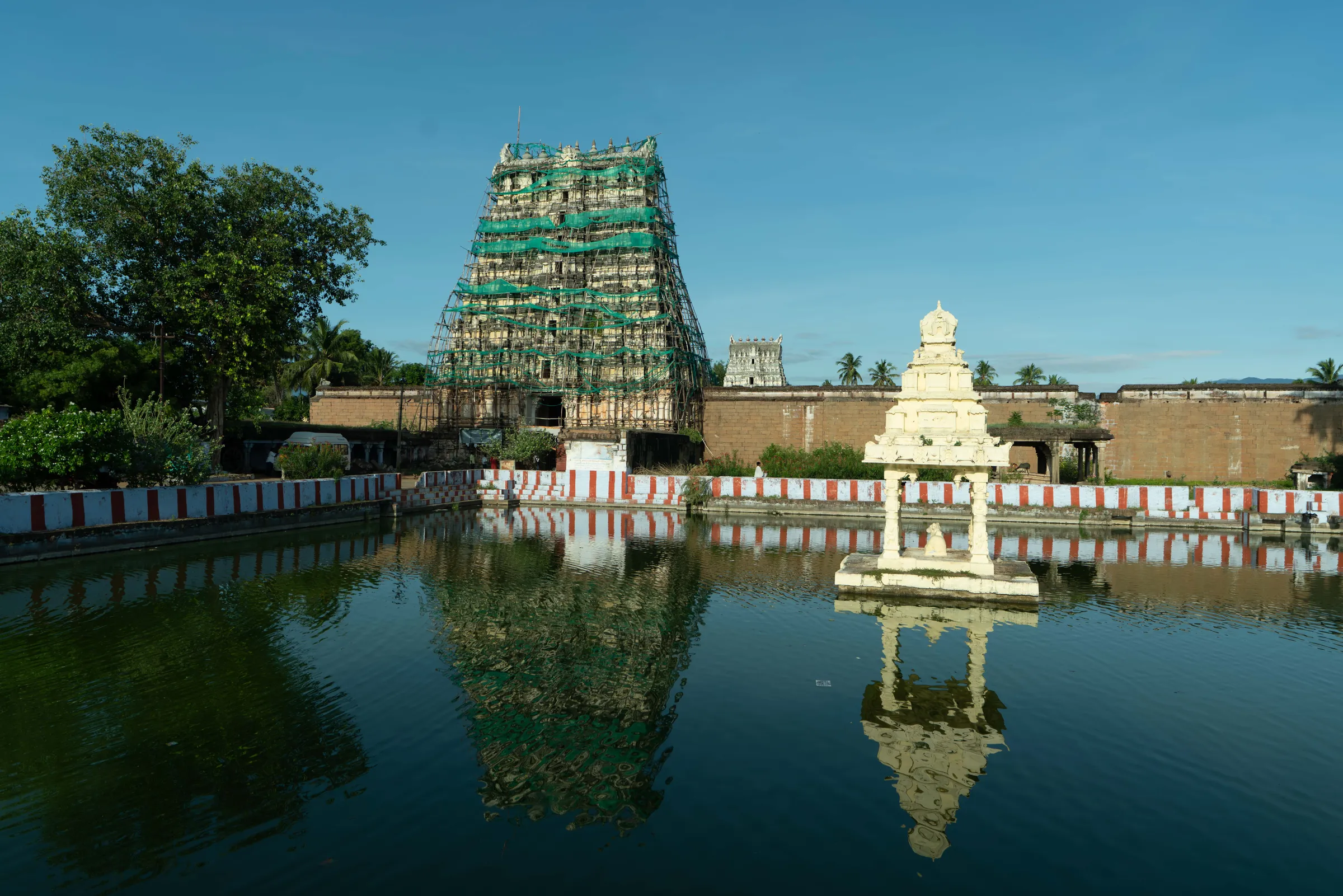
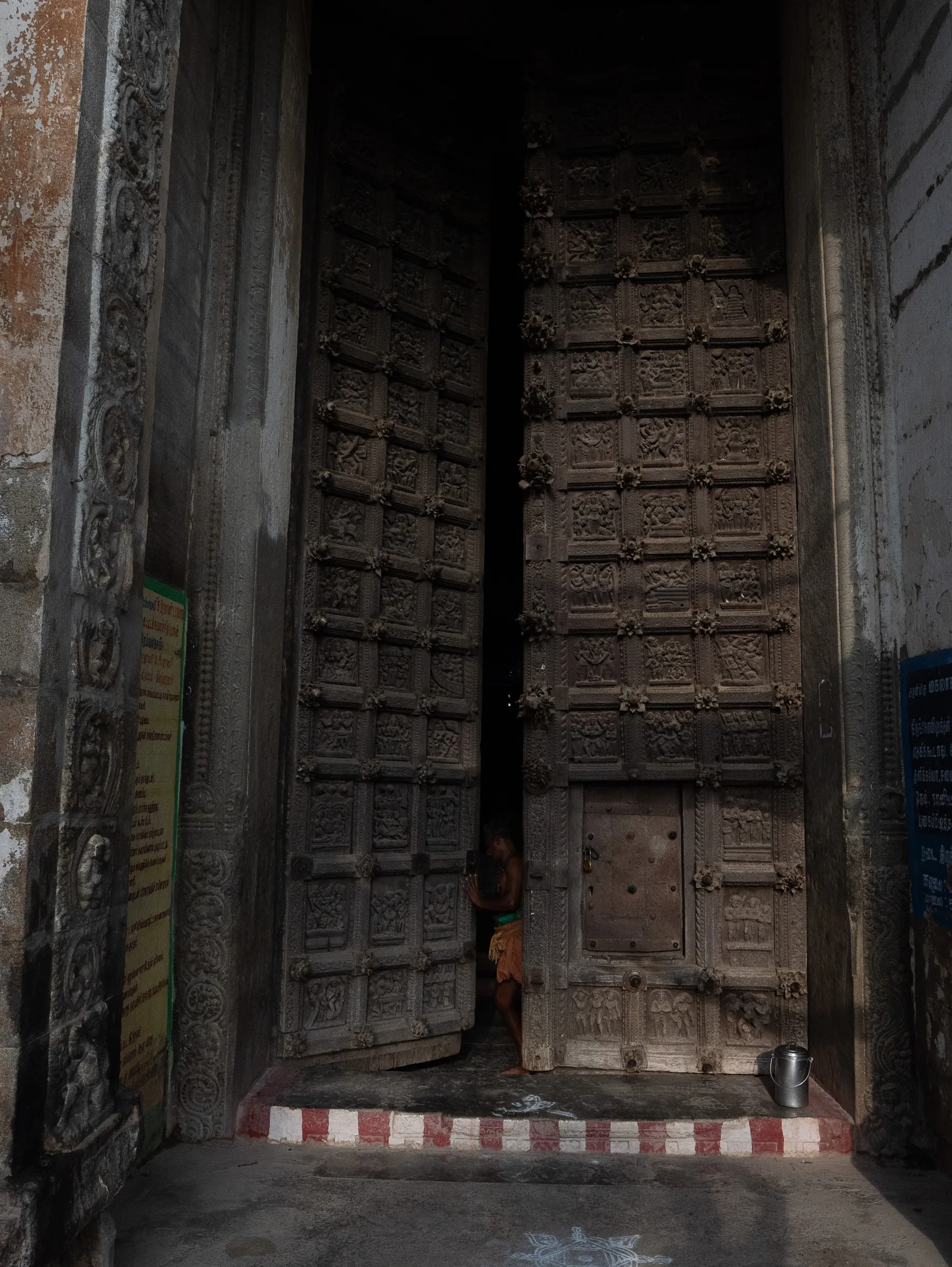
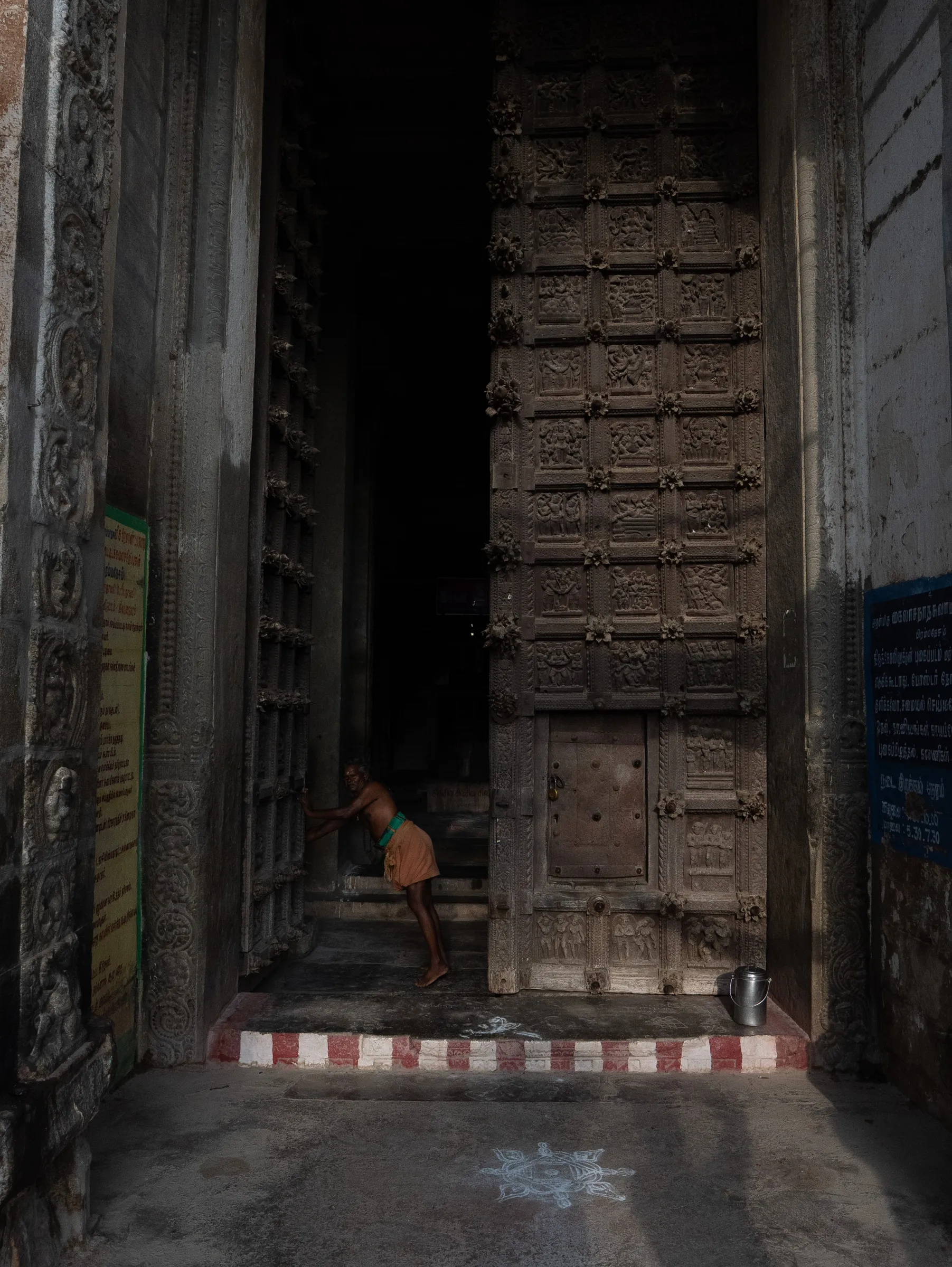
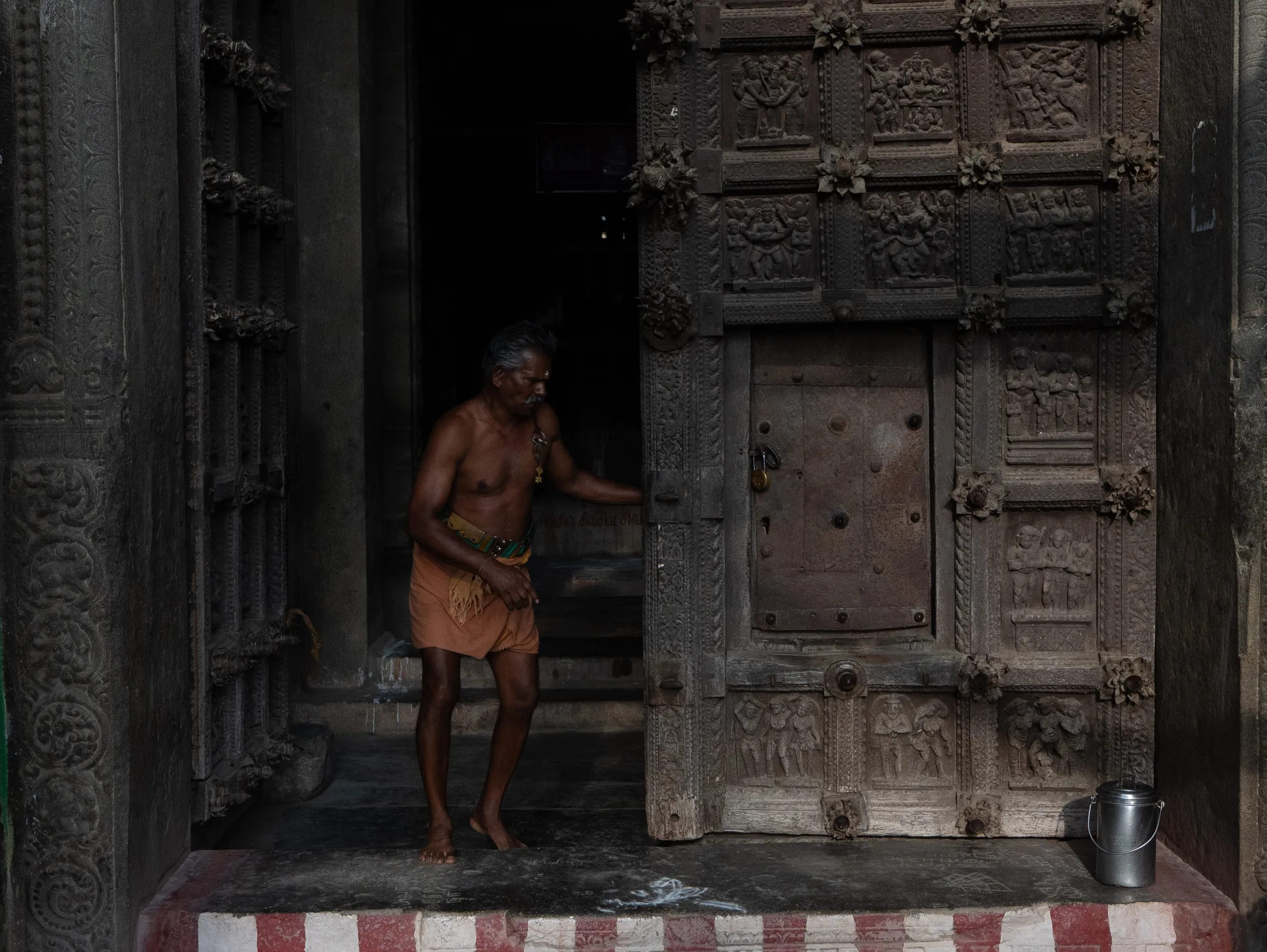
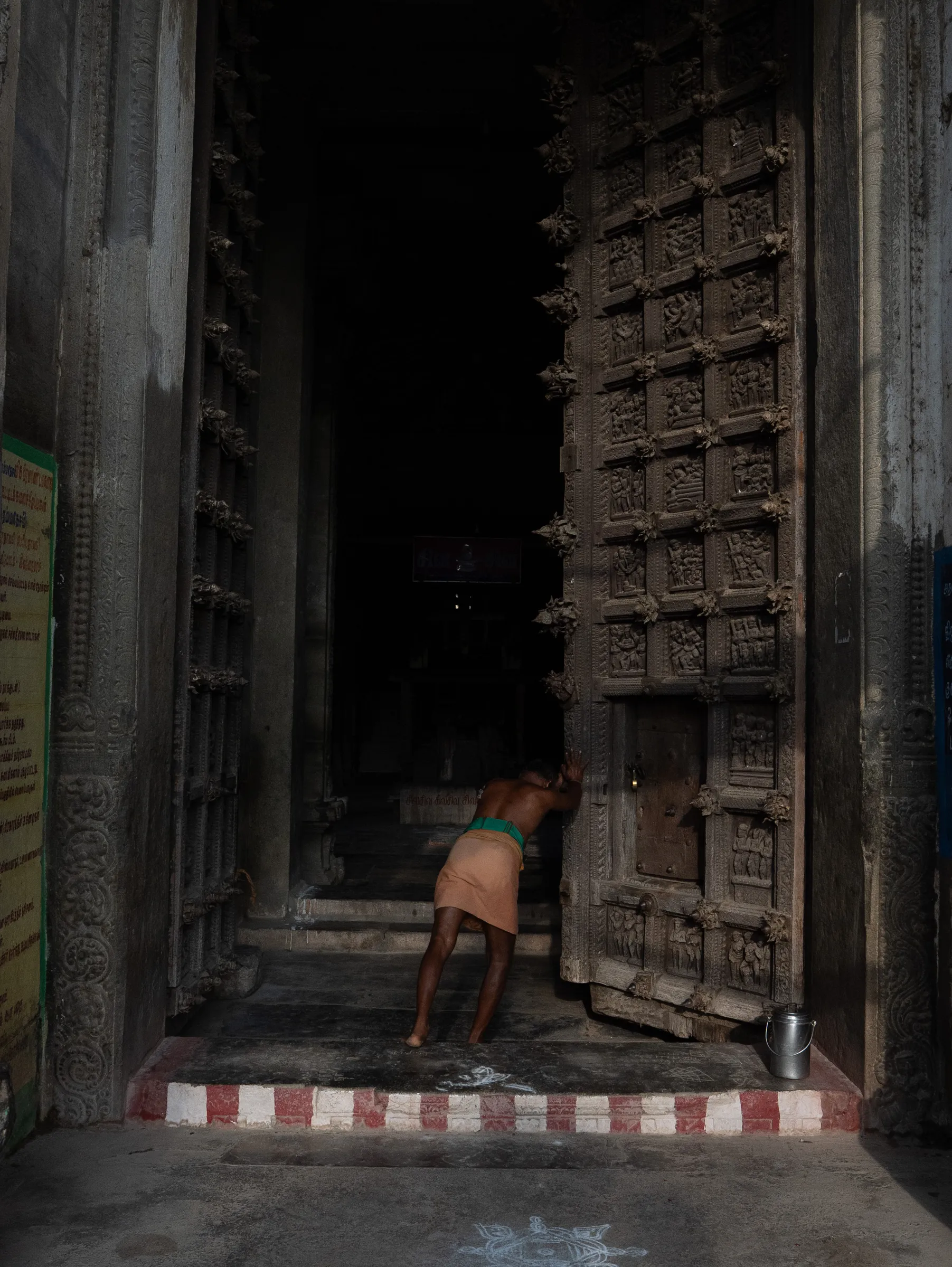
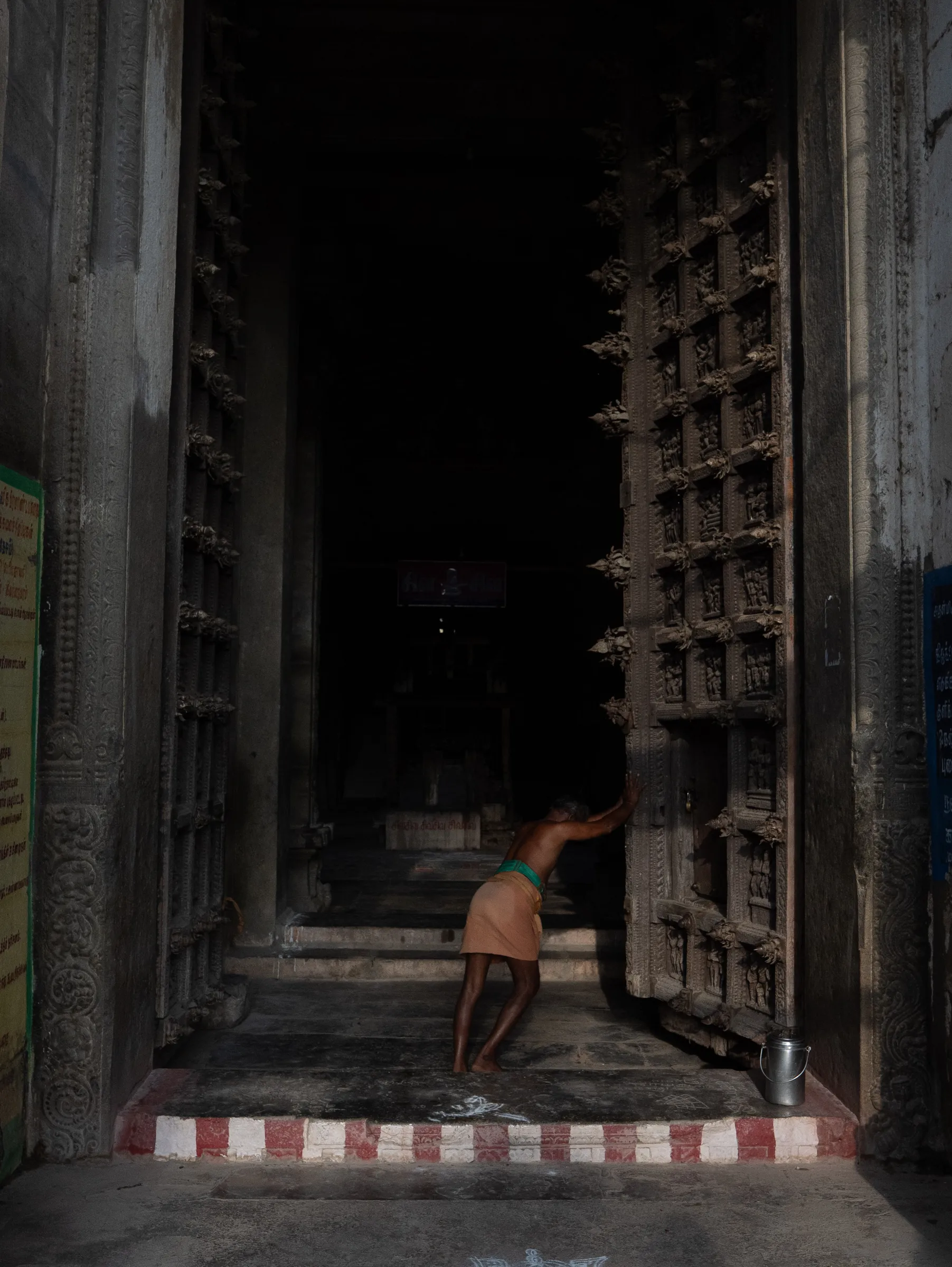
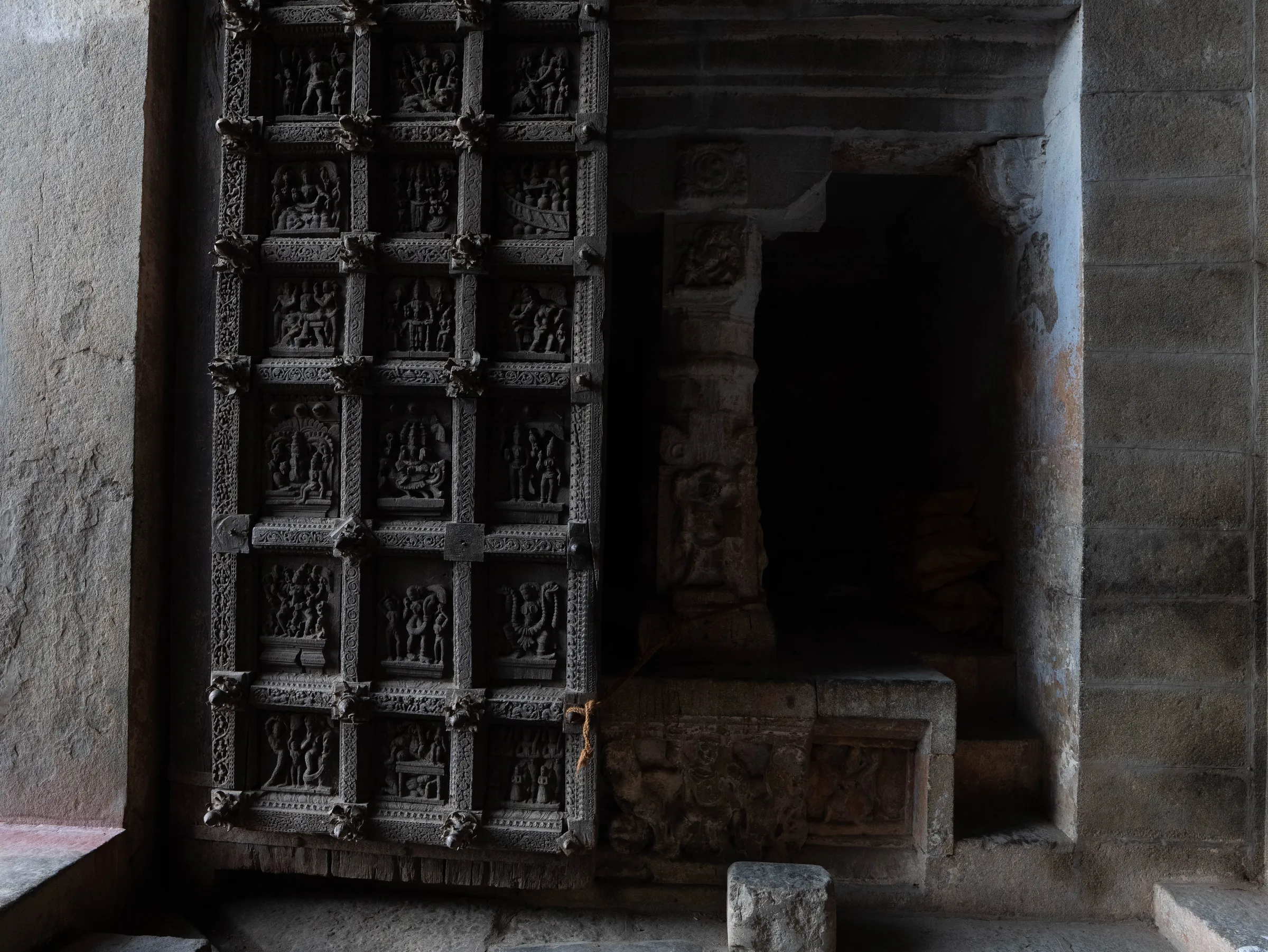
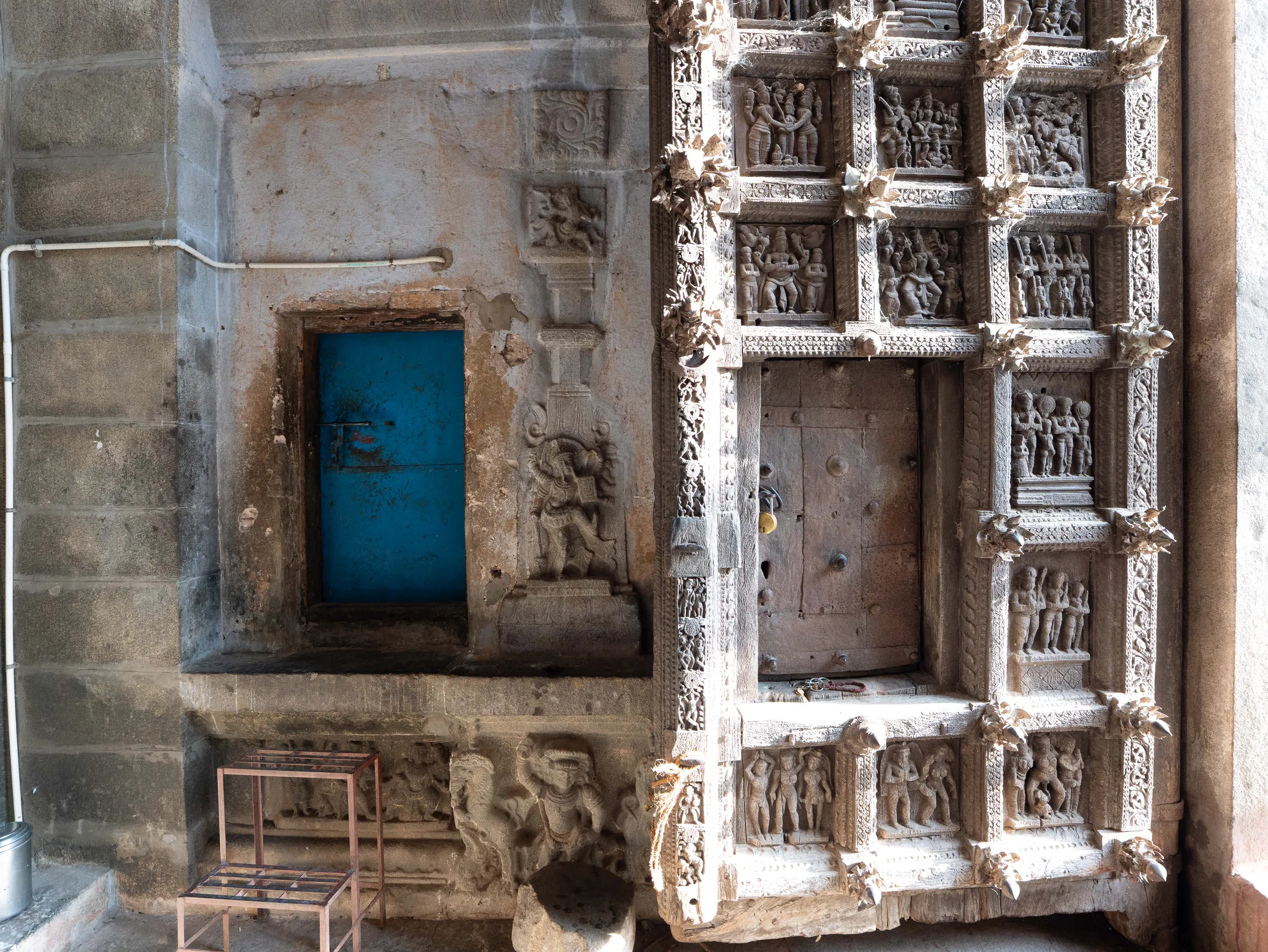
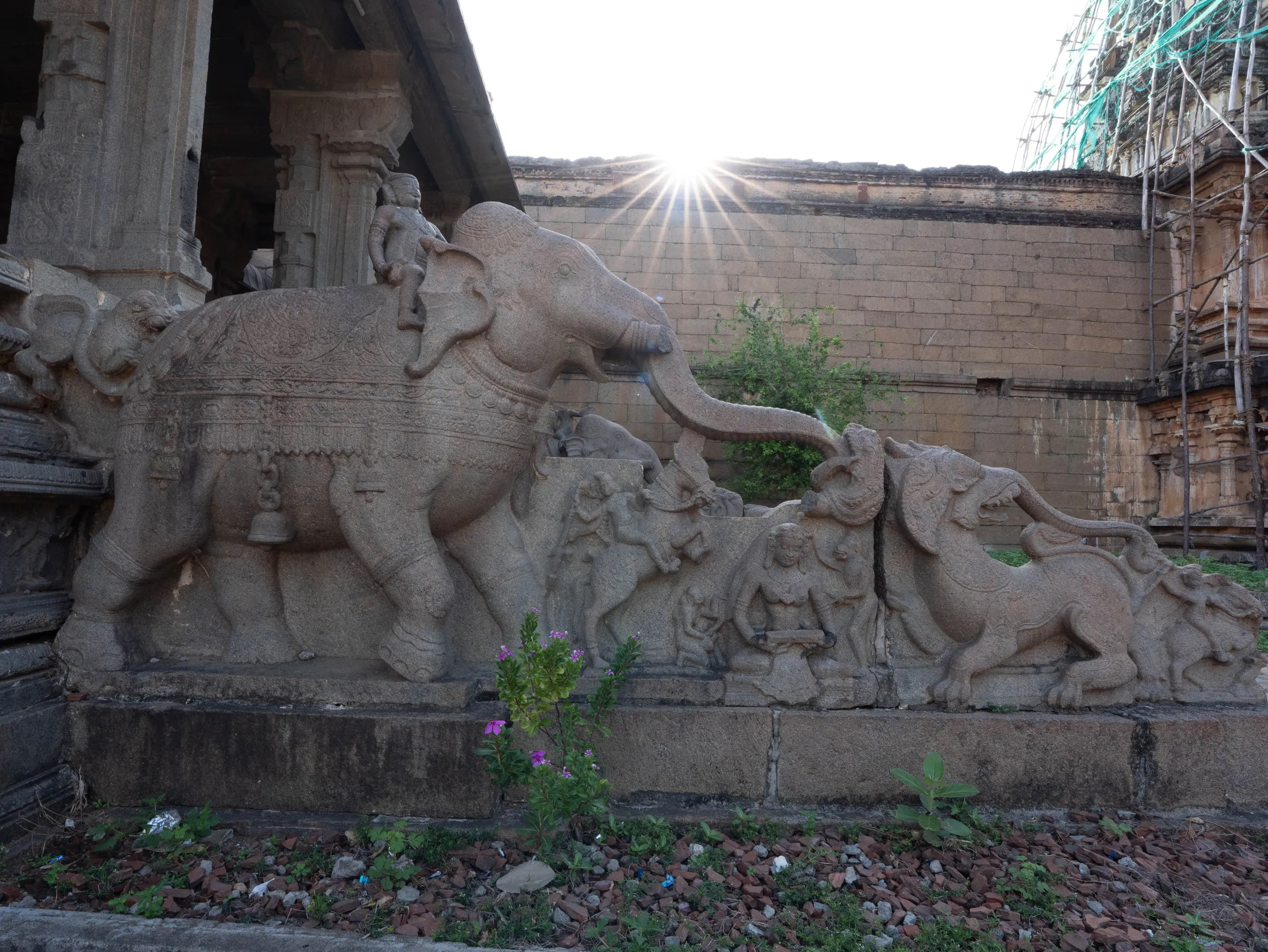
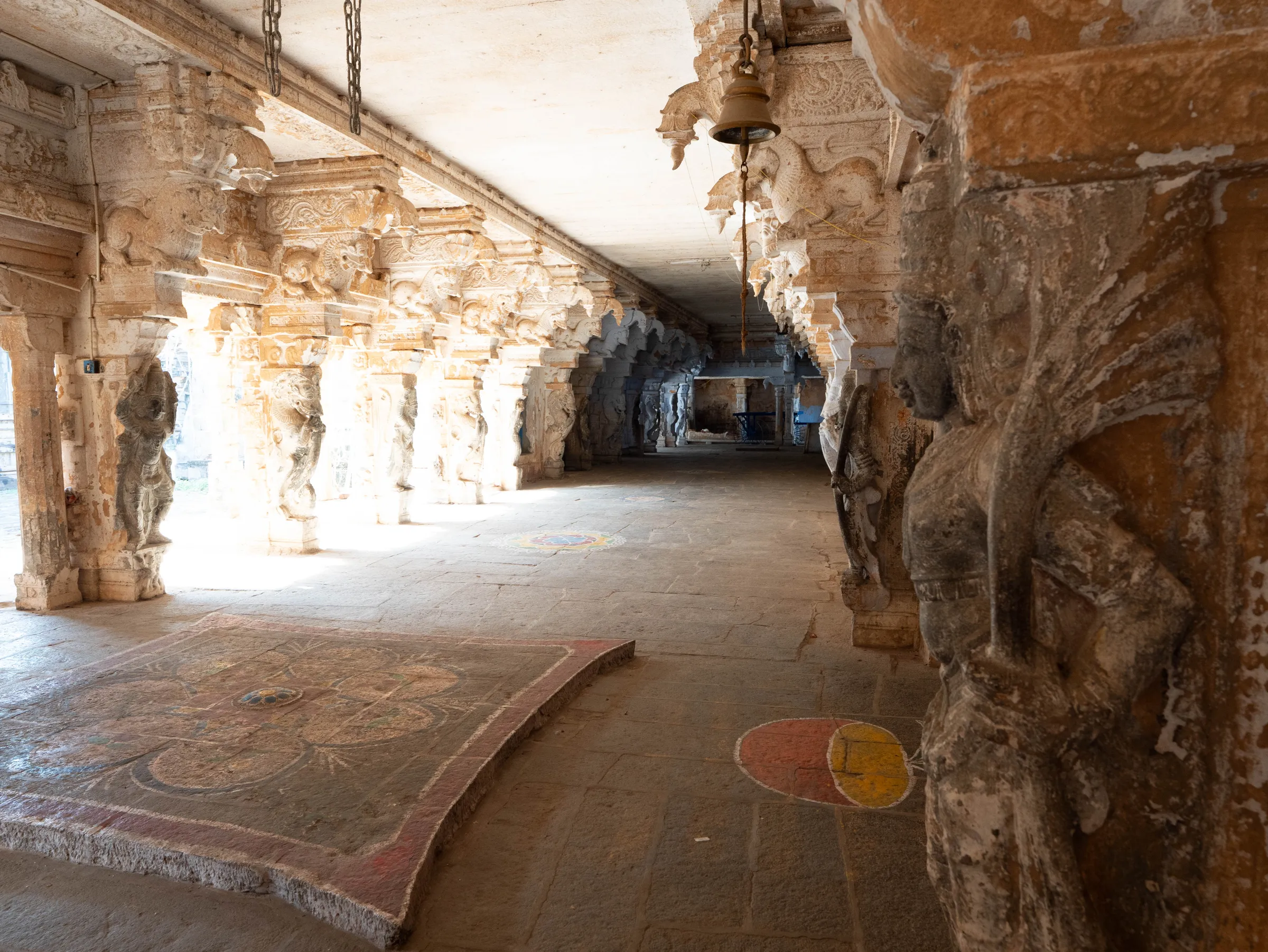
The temple stands by the Ghatana River amid rice fields and coconut groves, with a large temple pond before its seven-tiered gopuram. The tall gopuram doors carry woodcarvings of Śiva and Viṣṇu themes, with finely worked iron knobs to deter elephants from battering them. A long passage leads inward to a very large stone Nandi, said to be monolithic and one of the largest in the region, and a stone bell in the roof, often missed, shaped like the metal ones.

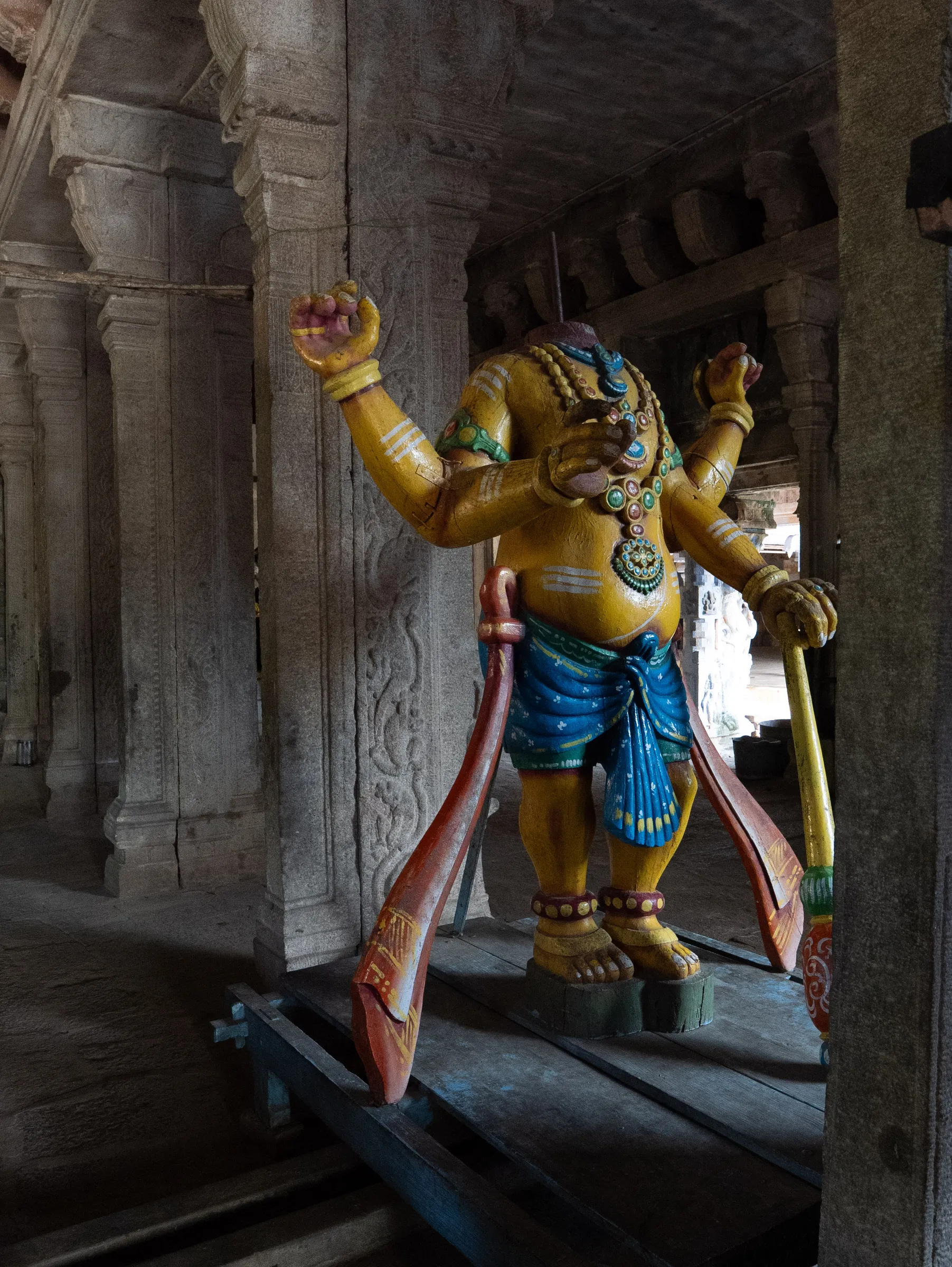
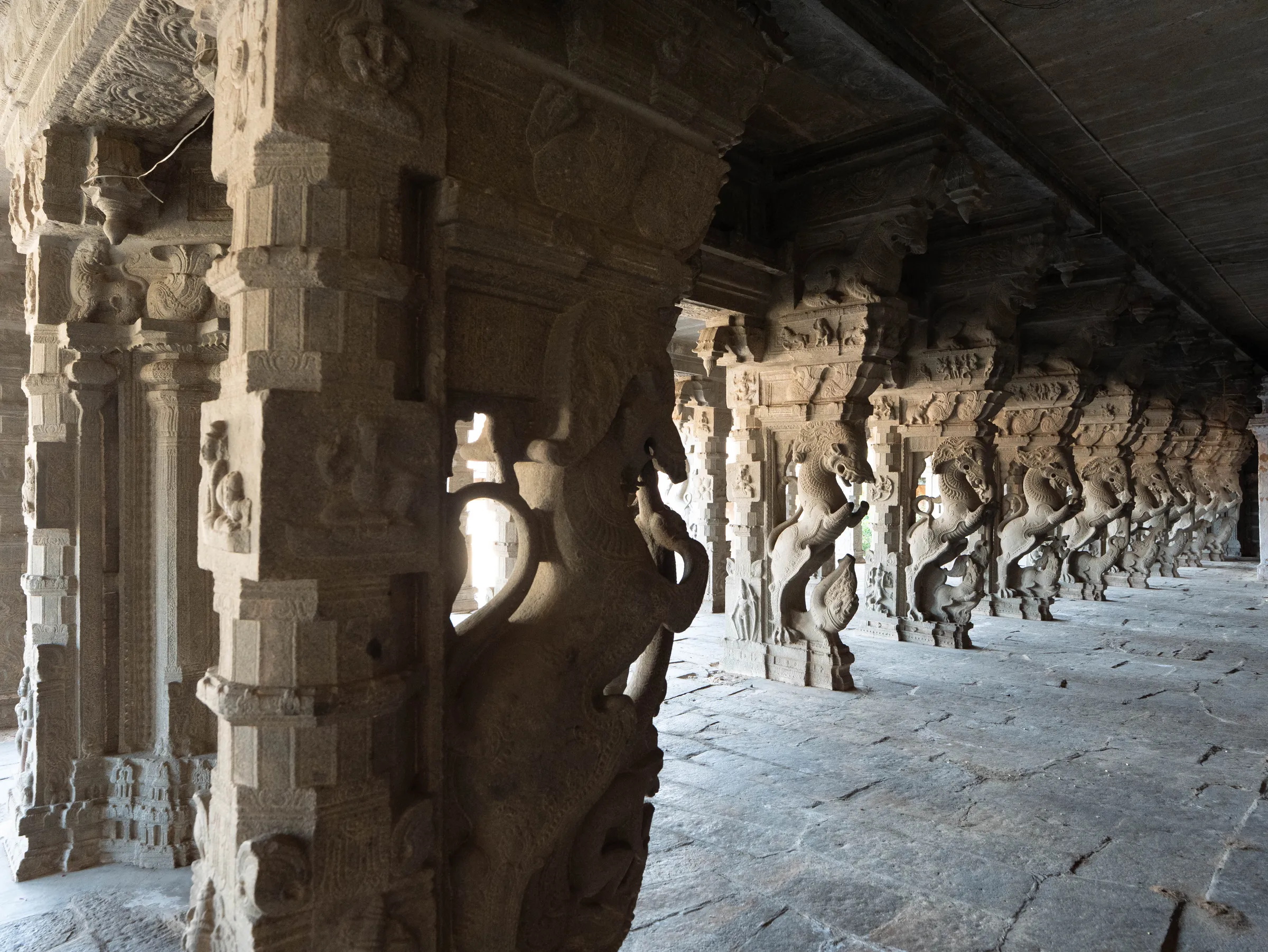
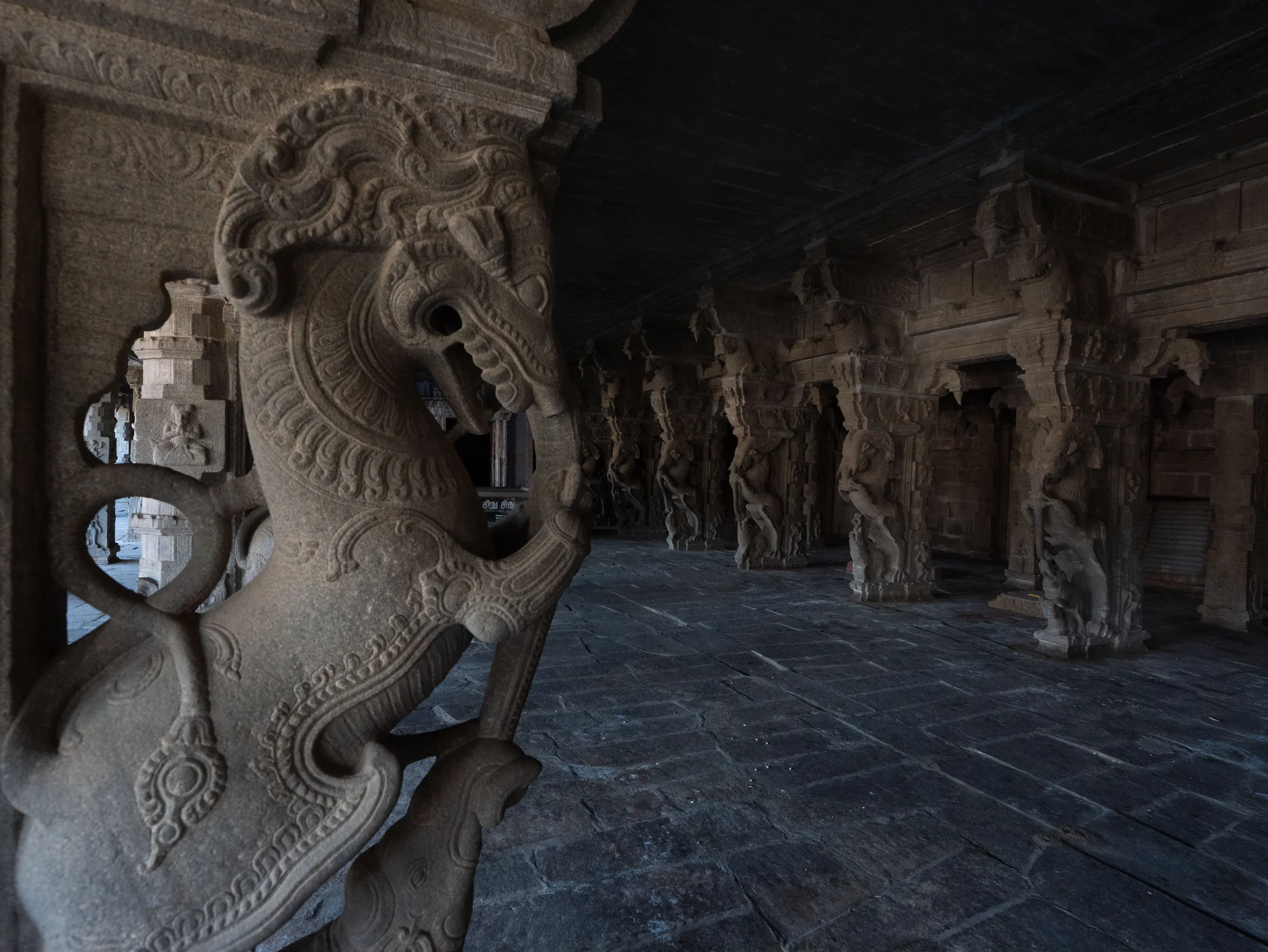
To the right is the Tiruvadirai Mandapa, where Śiva's star was grandly celebrated, with finely carved steps. A flight of steps climbs to a pathway atop the compound wall, thick enough to walk along and said to have been built so soldiers could fire arrows. The main shrine has a grand wooden prabhavali and a statue of Vishwanatha Nāyaka nearby; the Periya Nayaki shrine has a flag mast on a large tortoise, the symbol of stability. The main shrine is surrounded by yali motifs at its base, a stylistic feature of the Cholas, especially Rajendra. The temple holds several fine metal images and a unique incense holder.

02

Archaeological

dated & cited

Rajendra Chōḷa probably completed the Rajagopala temple at Mannar Koil after returning to the Bramhadesam in the Pandya region under his dynasty's reign; the place was a Brahmadeya, a parcel of land given to Brahmins to start a settlement, and so came to be called Bramhadesam. An inscription on the gopuram entrance wall, dated 1625 CE, records the writ of the Madurai Nāyaka king Vishwanatha Nāyaka ordering the five subdivisions of artisans (Kanmalar) not to mix with one another, to end frequent strife.

Other inscriptions record that Sadashiva Raya of the Vijayanagara dynasty gifted an entire village to the temple, that a gift from Veppangulam funded festival expenses through the year, and that many 16th-century records note gifts by local merchants. One of the same period names an Ayyangar Nāyaka, son-in-law of Peddu Nāyaka, who built the inner gopuram. The town was the birthplace of the second pontiff of the Kanchi Matha; its Vedic school has since closed. Two kilometres away the Tiruvaleeswaram Śiva temple, of stone and maintained by the ASI, is held to have been built in the late 10th century with the main Śiva temple raised in the 11th, a temple Raja Raja favoured.

Inscription · Gopuram entrance wall

An inscription of 1625 CE records the writ of the Madurai Nāyaka king Vishwanatha Nāyaka, ordering the five subdivisions of artisans (Kanmalar) not to mix with one another, in the hope of ending the strife frequent among them in the village.

Register interest in prints Buy the book
Improve this entry

This is an open, reviewed record. If you have spotted an error or have something to add — a correction, a date, a source, a name in another script — propose it. Every change is reviewed before it joins the record.

“Suggest an edit” opens this entry on GitHub and turns your change into a pull request. “Share feedback” opens a short form. Both go through review.