Kailasanatha Temple, photograph
← Thondaimandalam
Entry 007

Kailasanatha Temple

Kanchipuram · Kanchipuram · Pallava

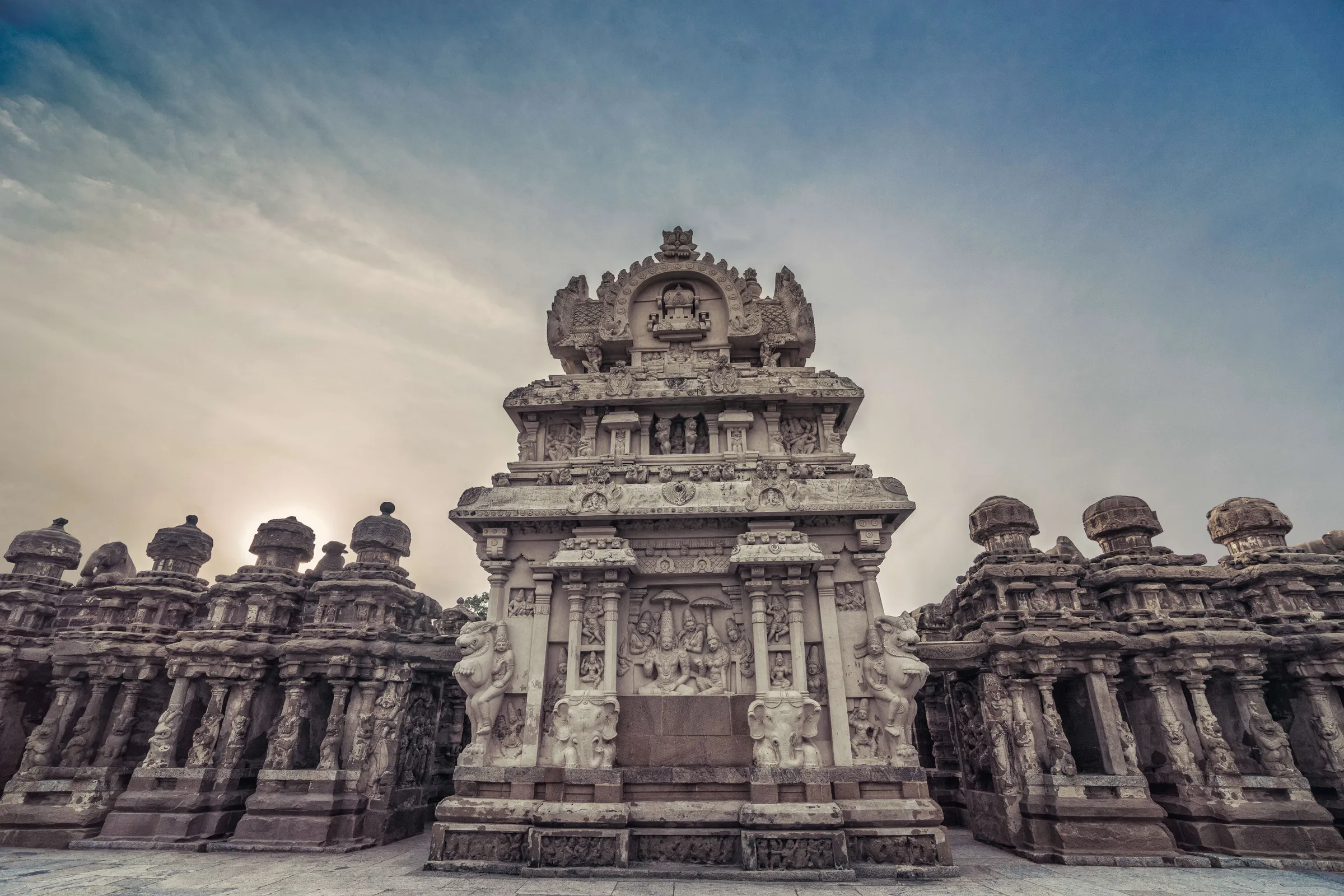
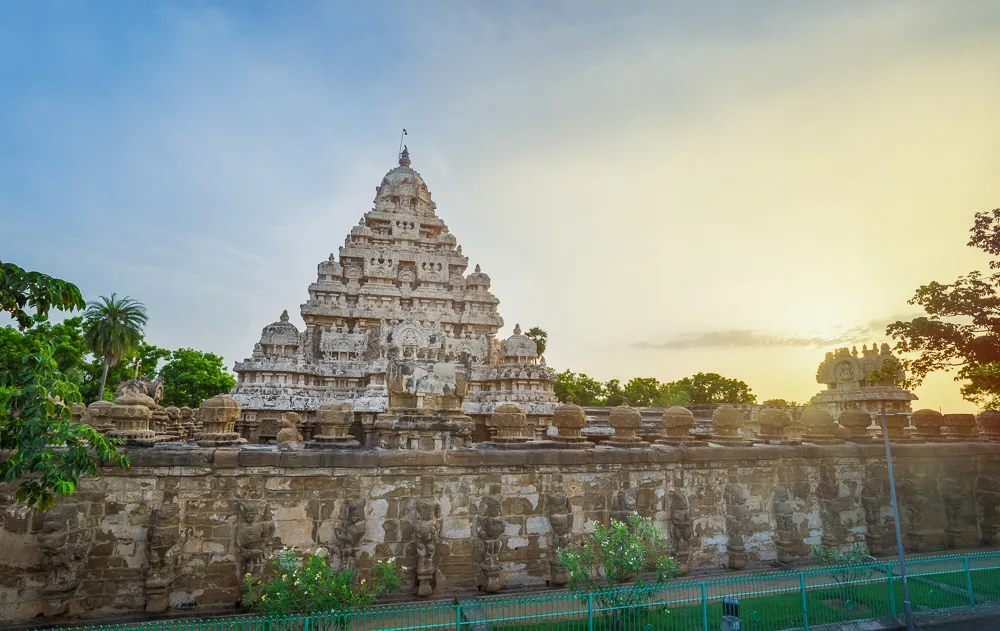
The first structural temple built in South India, raised around 700 CE by the Pallava emperor Rajasimha as a palace for his Lord, and renowned for its intricately carved galaxy of late-7th and early-8th century Hindu art.

Populated from “100 Timeless Tamil Nadu Temples” (book pp. 19 to 22). The three registers are held apart: what stands, what is dated and cited, and what is told.

The photographs

Plates · 23

Kailasanatha Temple, photograph
© Amar Ramesh and team · All rights reserved
Kailasanatha Temple, photograph
© Amar Ramesh and team · All rights reserved
Kailasanatha Temple, photograph
© Amar Ramesh and team · All rights reserved
Kailasanatha Temple, photograph
© Amar Ramesh and team · All rights reserved
Kailasanatha Temple, photograph
© Amar Ramesh and team · All rights reserved
Kailasanatha Temple, photograph
© Amar Ramesh and team · All rights reserved
Kailasanatha Temple, photograph
© Amar Ramesh and team · All rights reserved
Kailasanatha Temple, photograph
© Amar Ramesh and team · All rights reserved
Kailasanatha Temple, photograph
© Amar Ramesh and team · All rights reserved
Kailasanatha Temple, photograph
© Amar Ramesh and team · All rights reserved
Kailasanatha Temple, photograph
© Amar Ramesh and team · All rights reserved
Kailasanatha Temple, photograph
© Amar Ramesh and team · All rights reserved
Kailasanatha Temple, photograph
© Amar Ramesh and team · All rights reserved
Kailasanatha Temple, photograph
© Amar Ramesh and team · All rights reserved
Kailasanatha Temple, photograph
© Amar Ramesh and team · All rights reserved
Kailasanatha Temple, photograph
© Amar Ramesh and team · All rights reserved
Kailasanatha Temple, photograph
© Amar Ramesh and team · All rights reserved
Kailasanatha Temple, photograph
© Amar Ramesh and team · All rights reserved
Kailasanatha Temple, photograph
© Amar Ramesh and team · All rights reserved
Kailasanatha Temple, photograph
© Amar Ramesh and team · All rights reserved
Kailasanatha Temple, photograph
© Amar Ramesh and team · All rights reserved
Kailasanatha Temple, photograph
© Amar Ramesh and team · All rights reserved
01

Architectural

structure & vocabulary

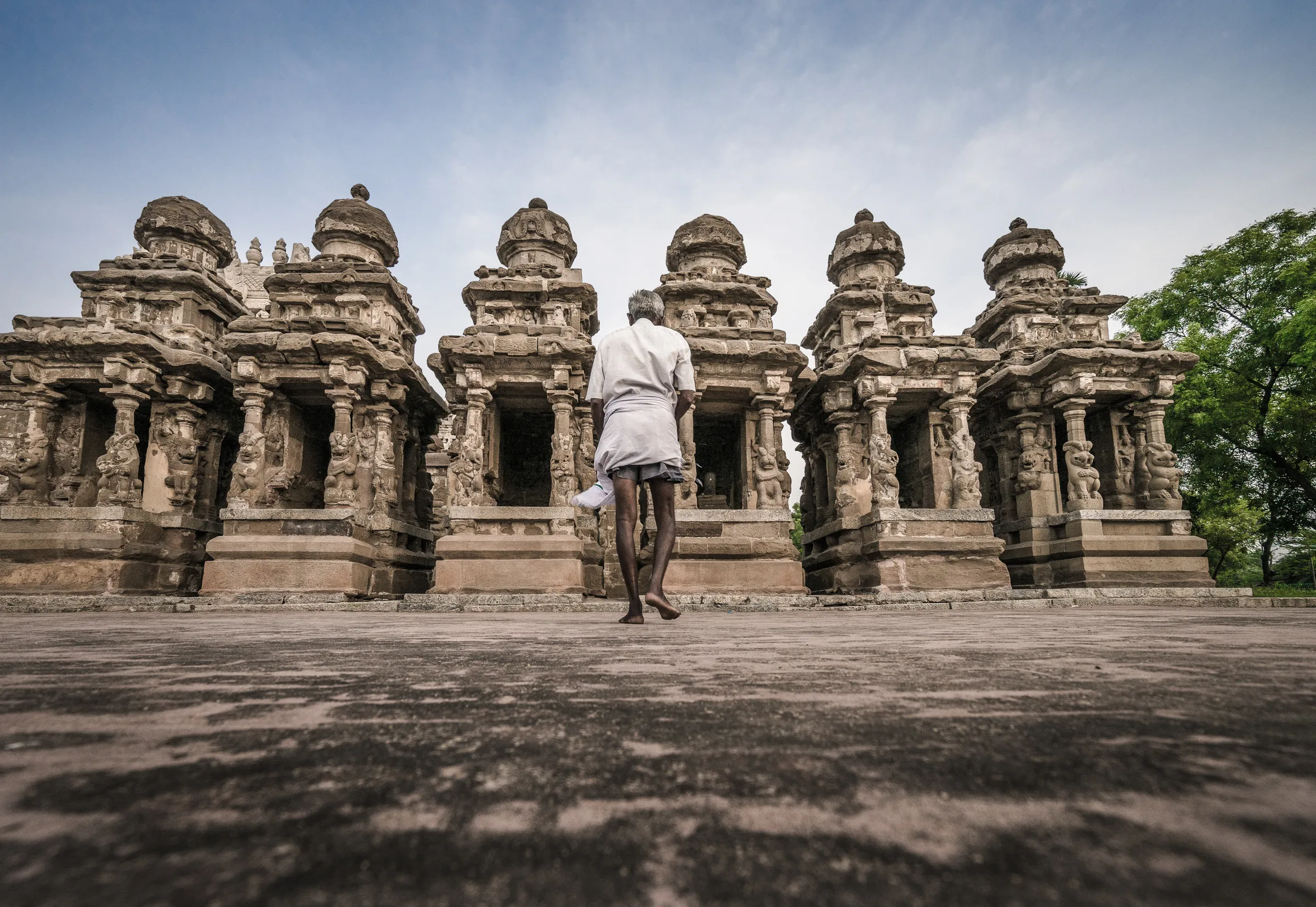
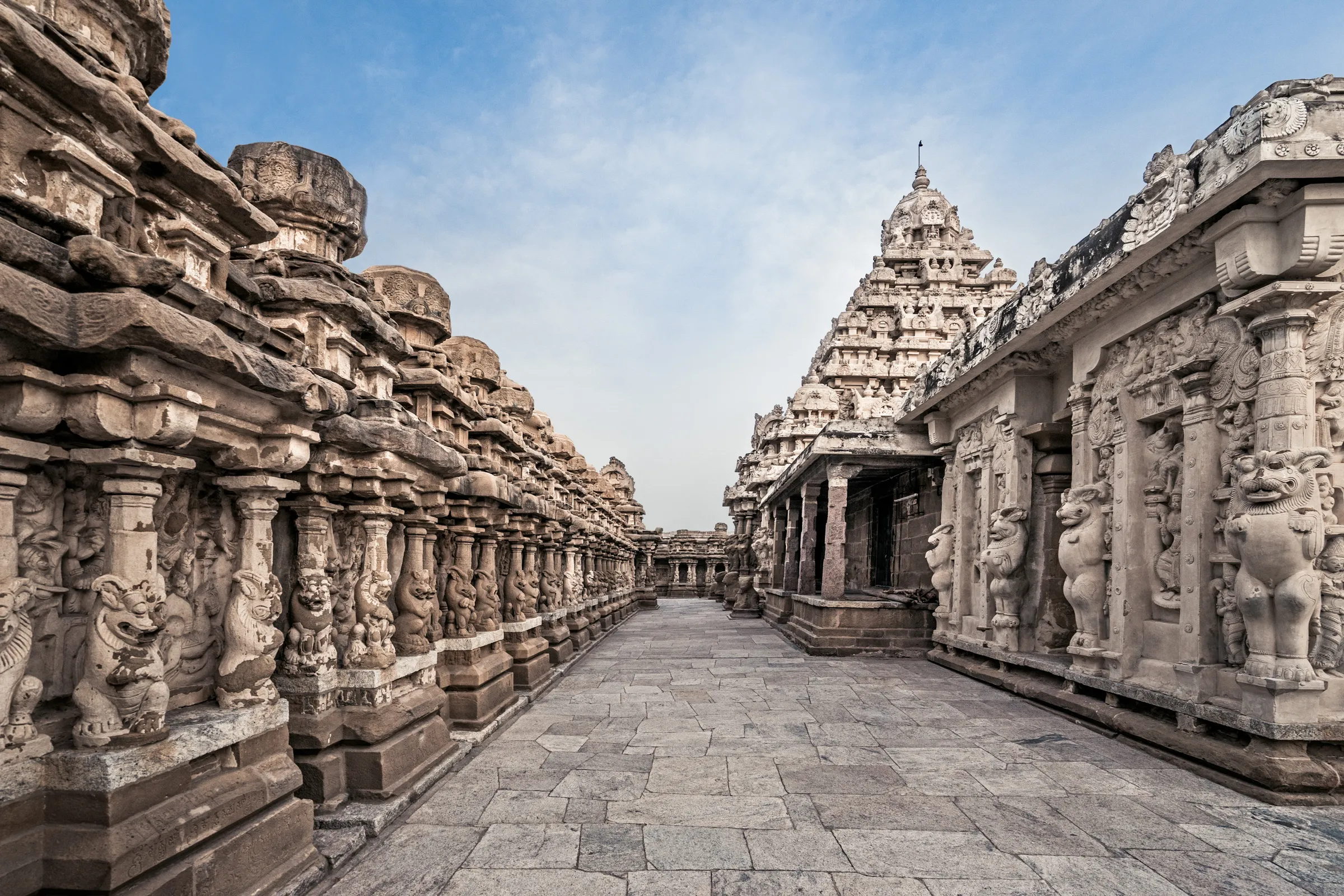
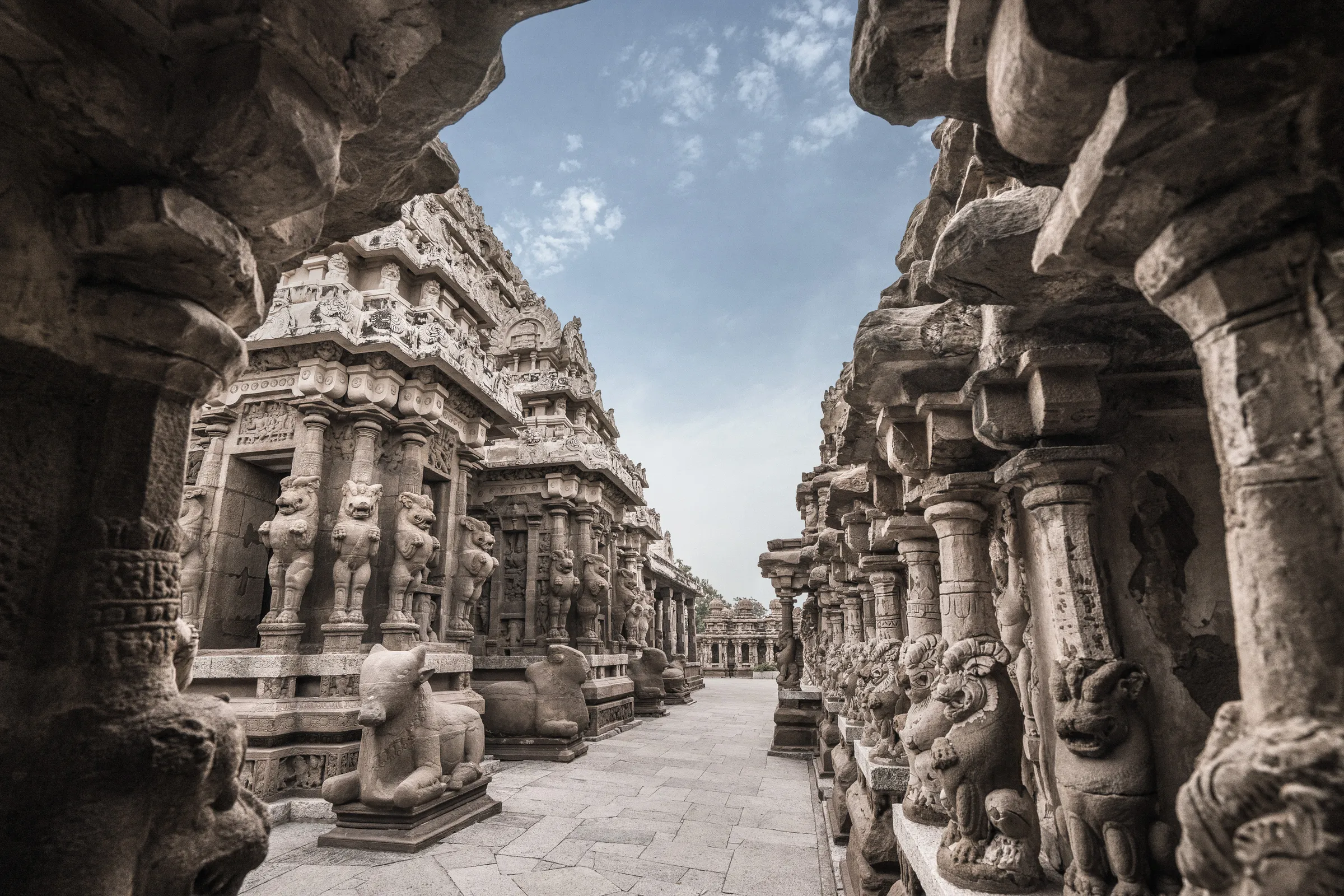
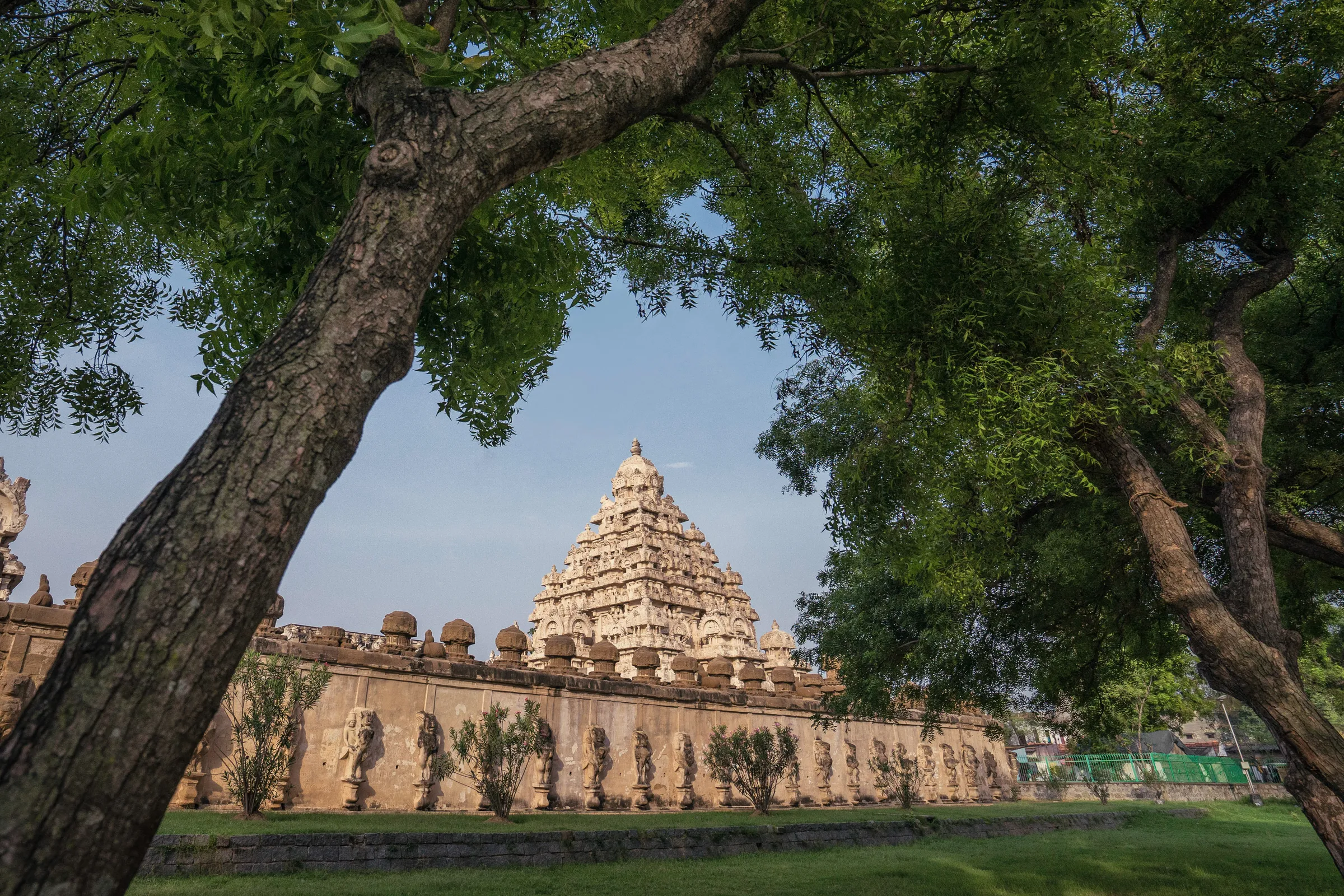
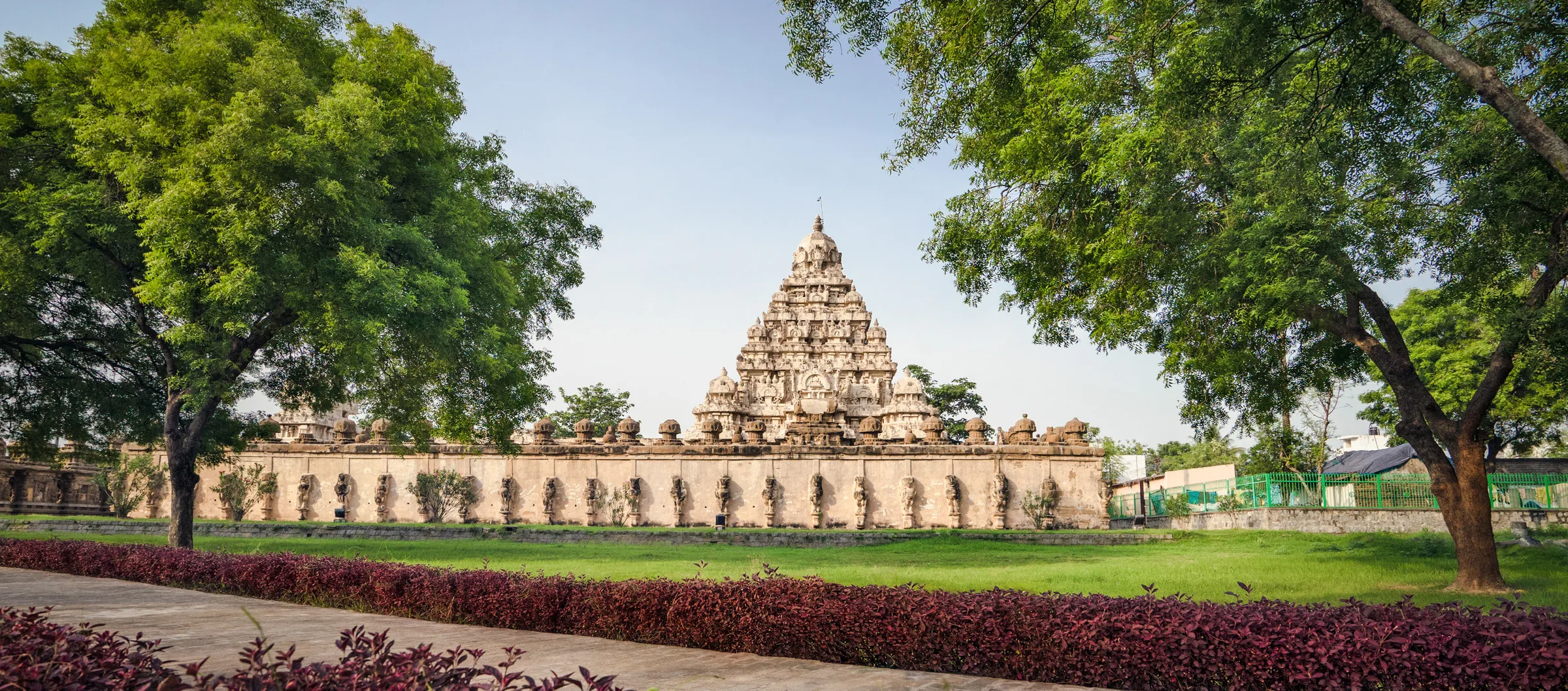
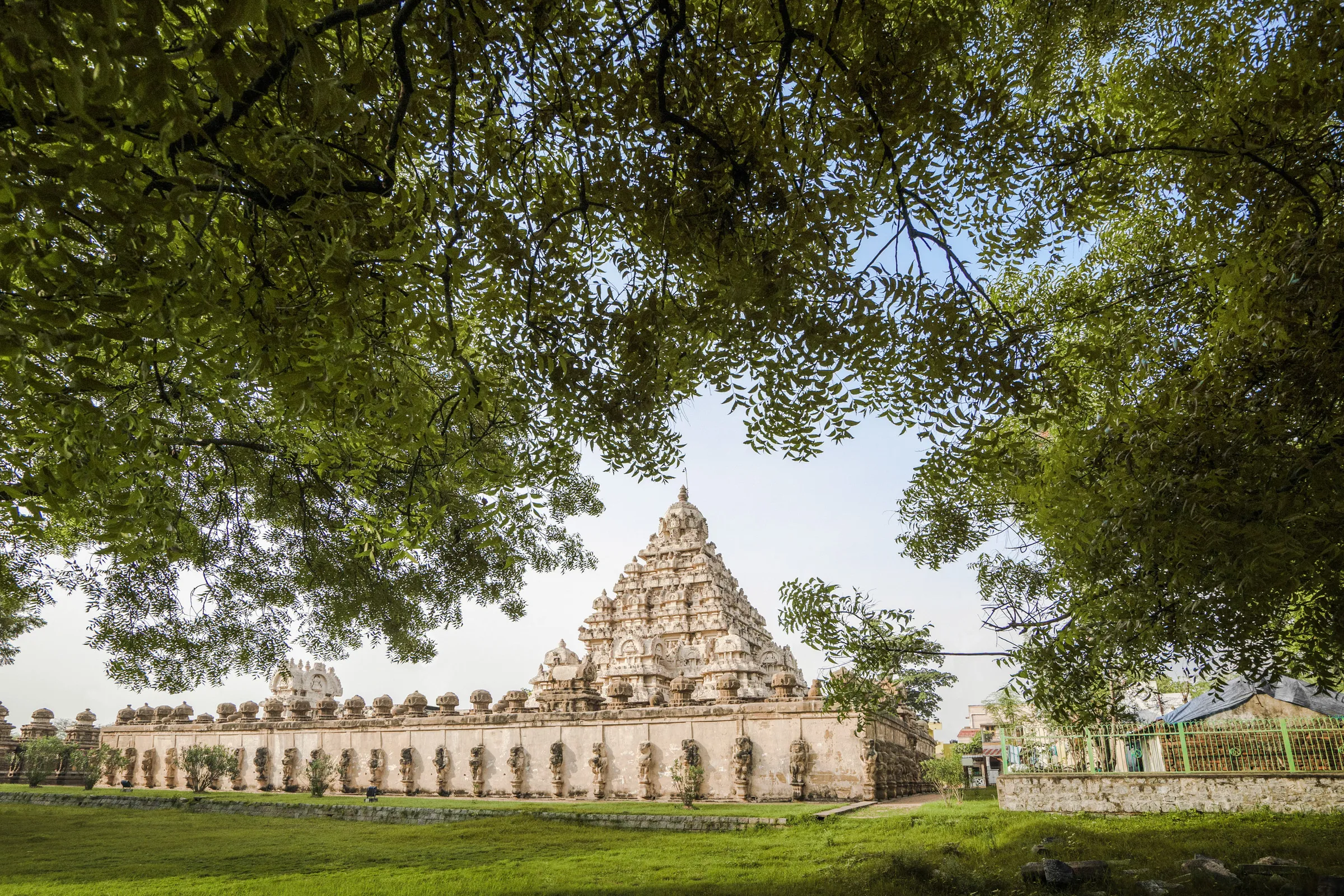
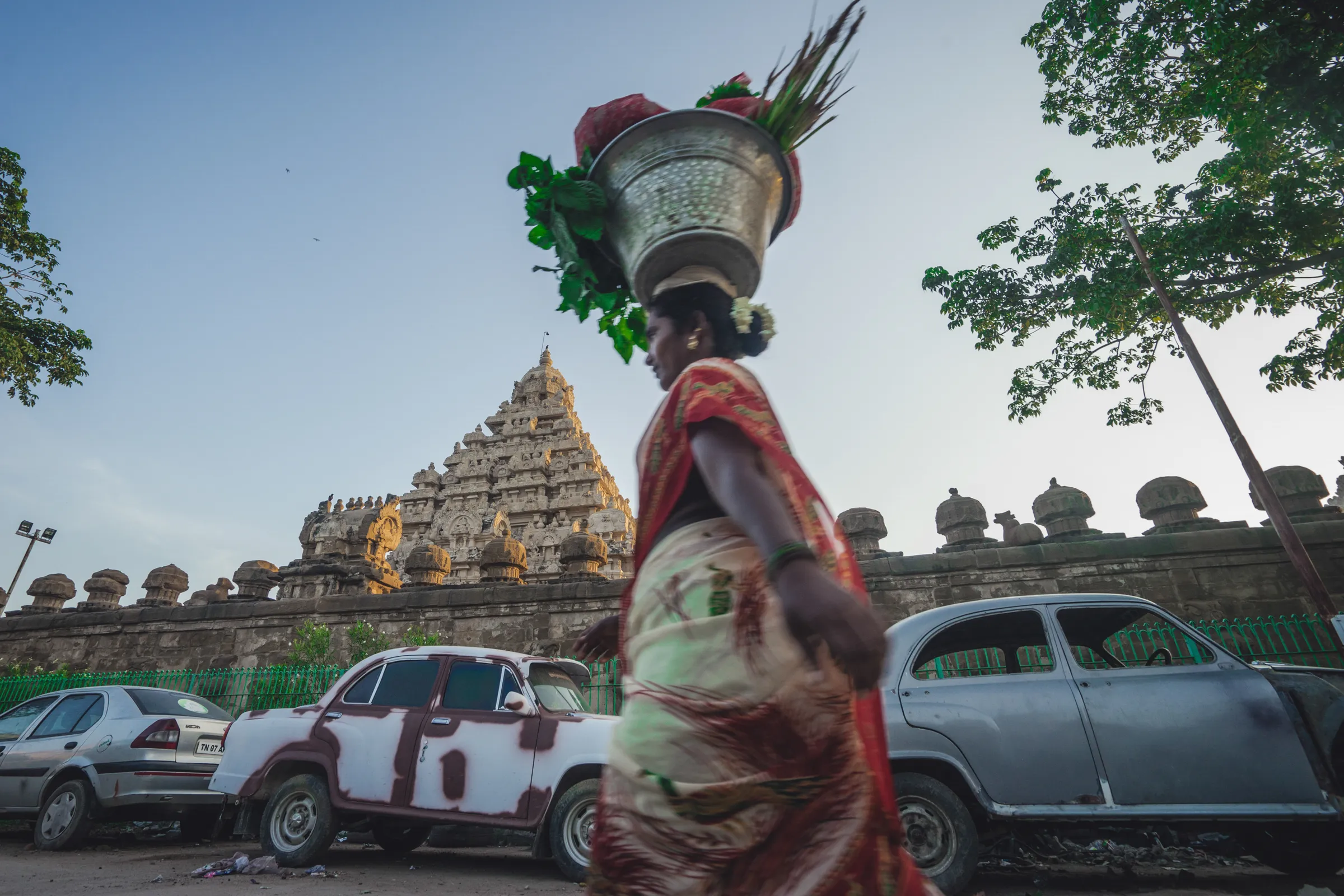
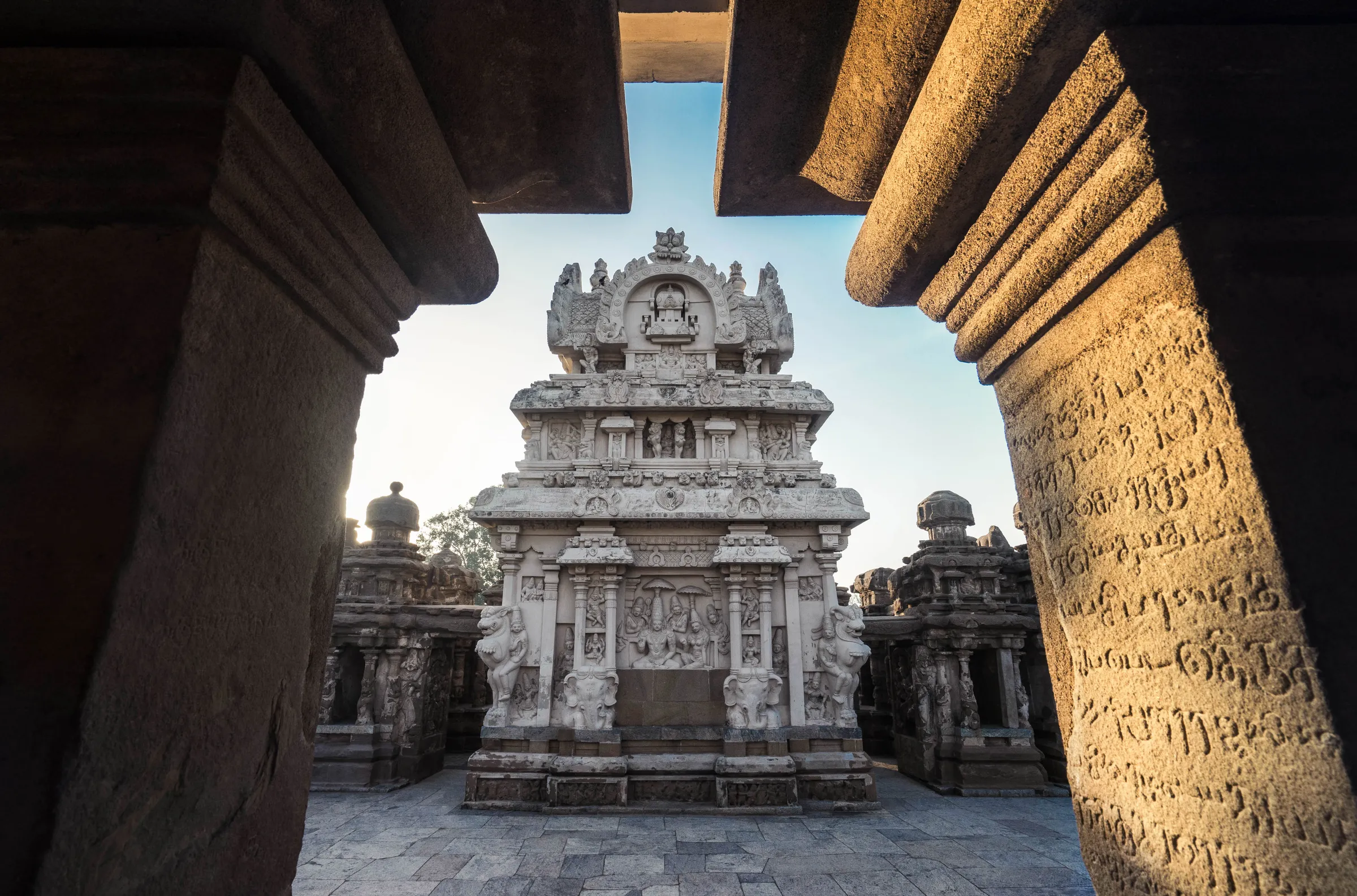
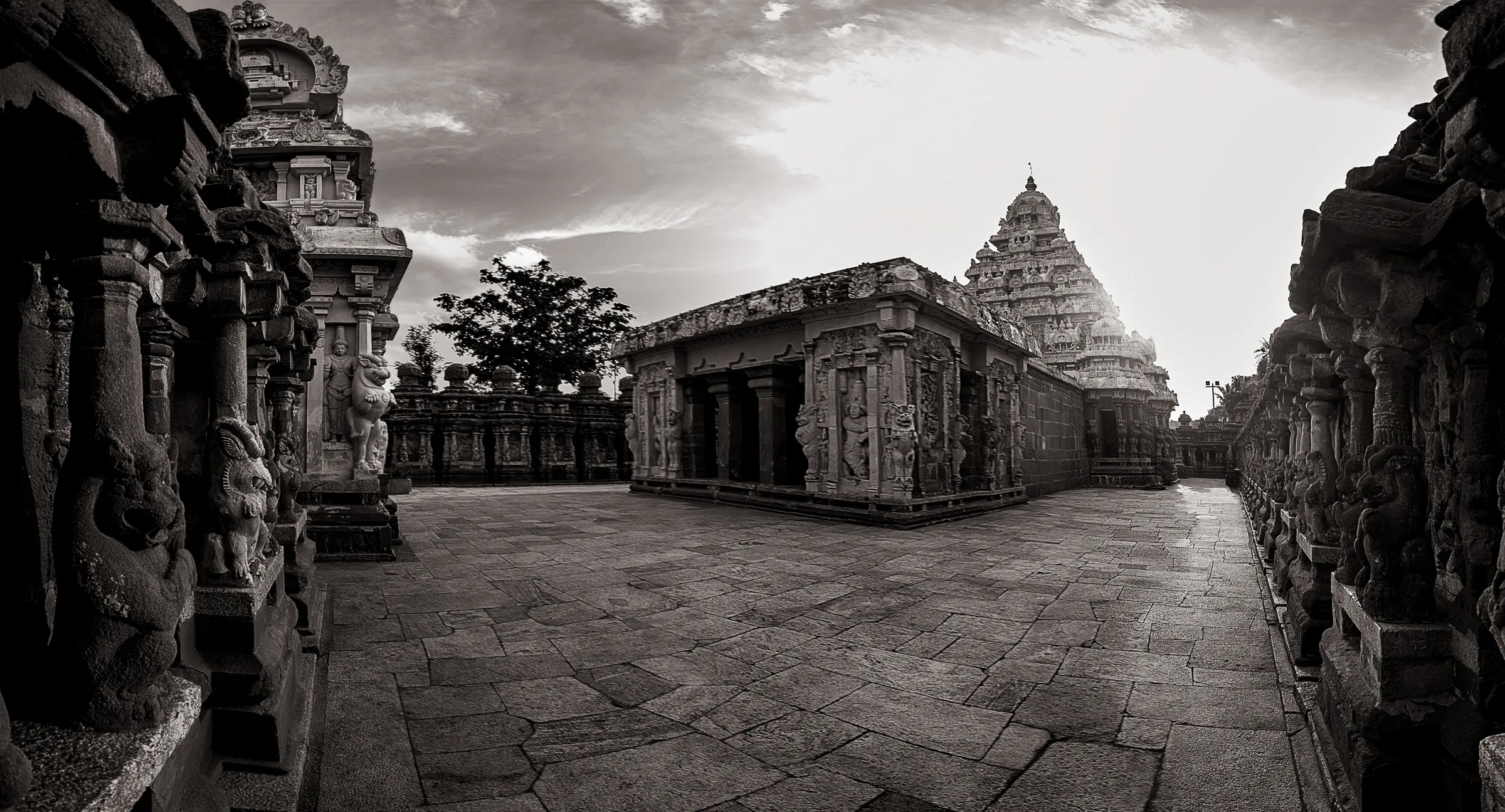
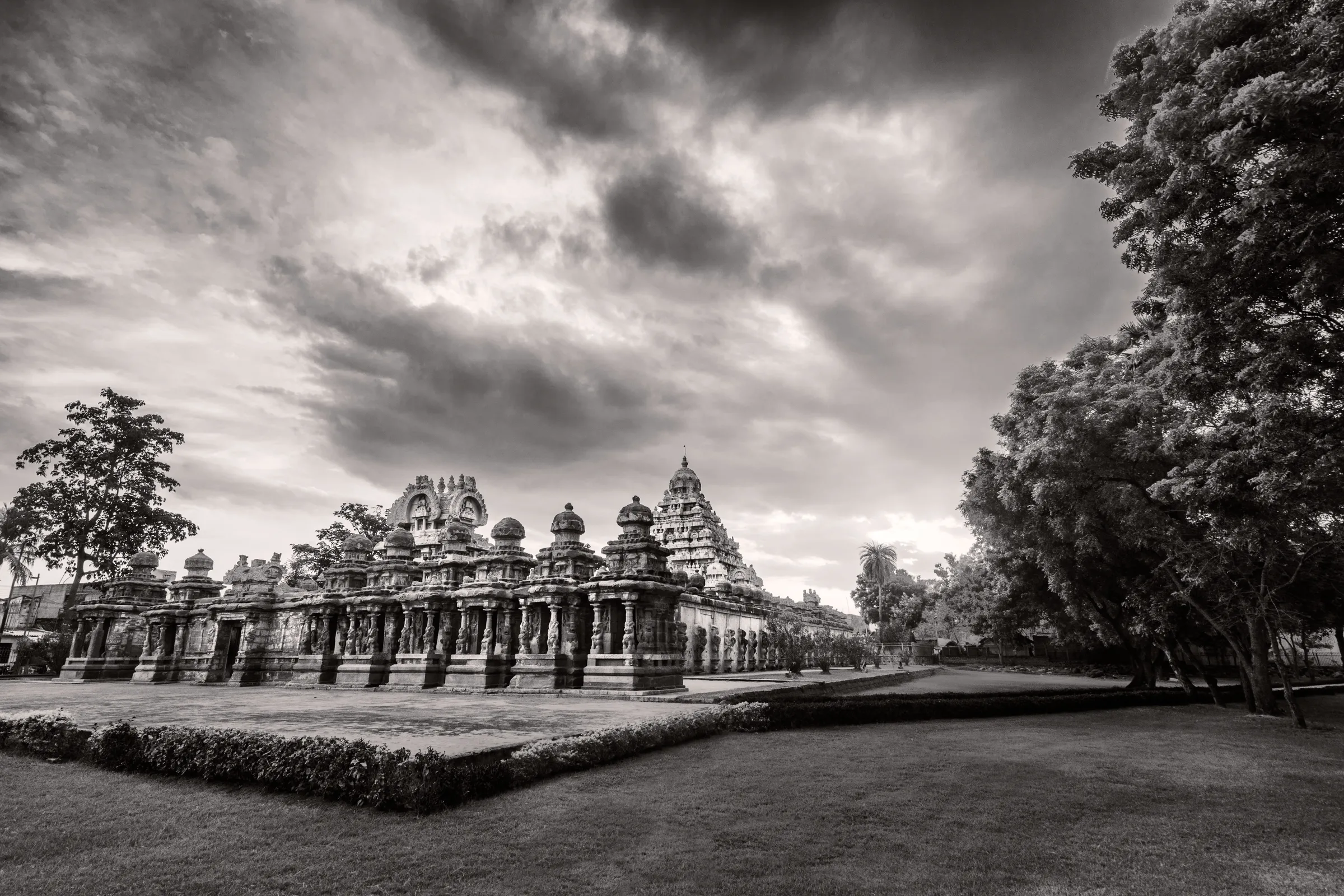
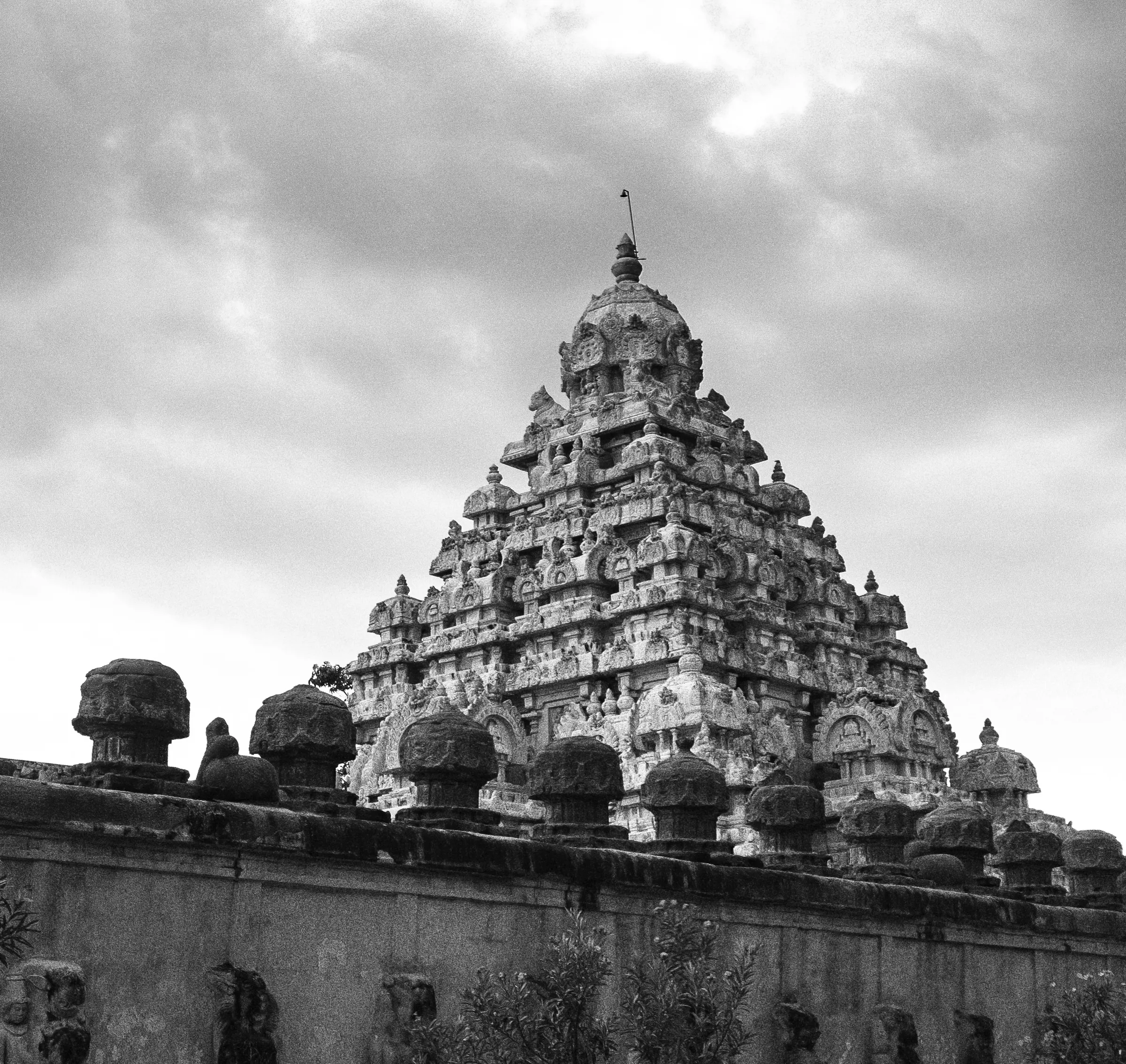
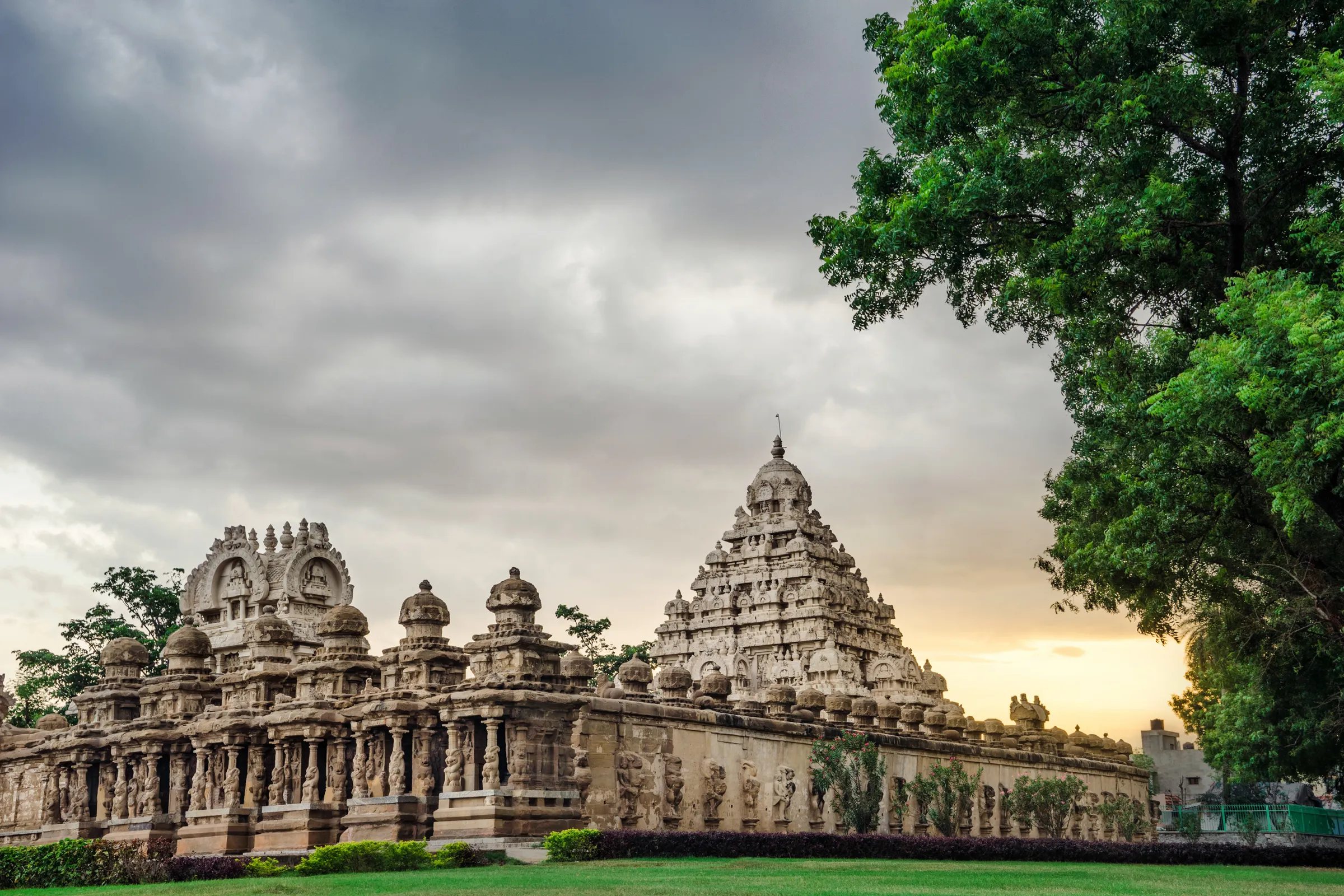
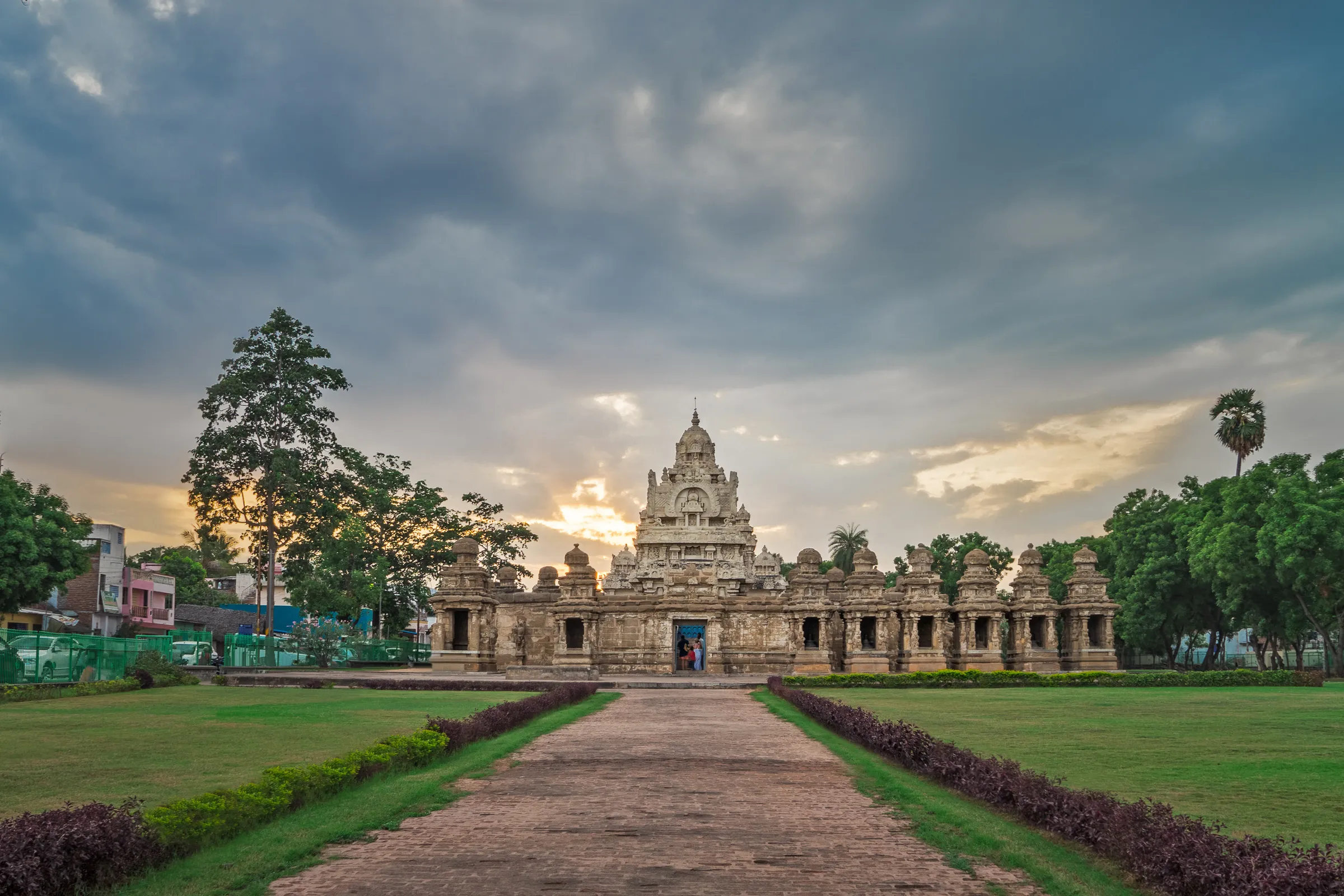
A square-plan temple, it has a mukha mandapa, entrance hall, a maha mandapa, gathering hall, and a primary sanctum topped with a four-story vimana. The main sanctum is surrounded by nine shrines, seven outside and two inside, flanking the entrance of the sanctum, all with forms of Śiva. The outer walls of the temple's courtyard are also surrounded by cells. The structure contains 58 small shrines dedicated to various forms of Śiva, built into niches on the inner face of the high compound wall of the circumambulatory passage.

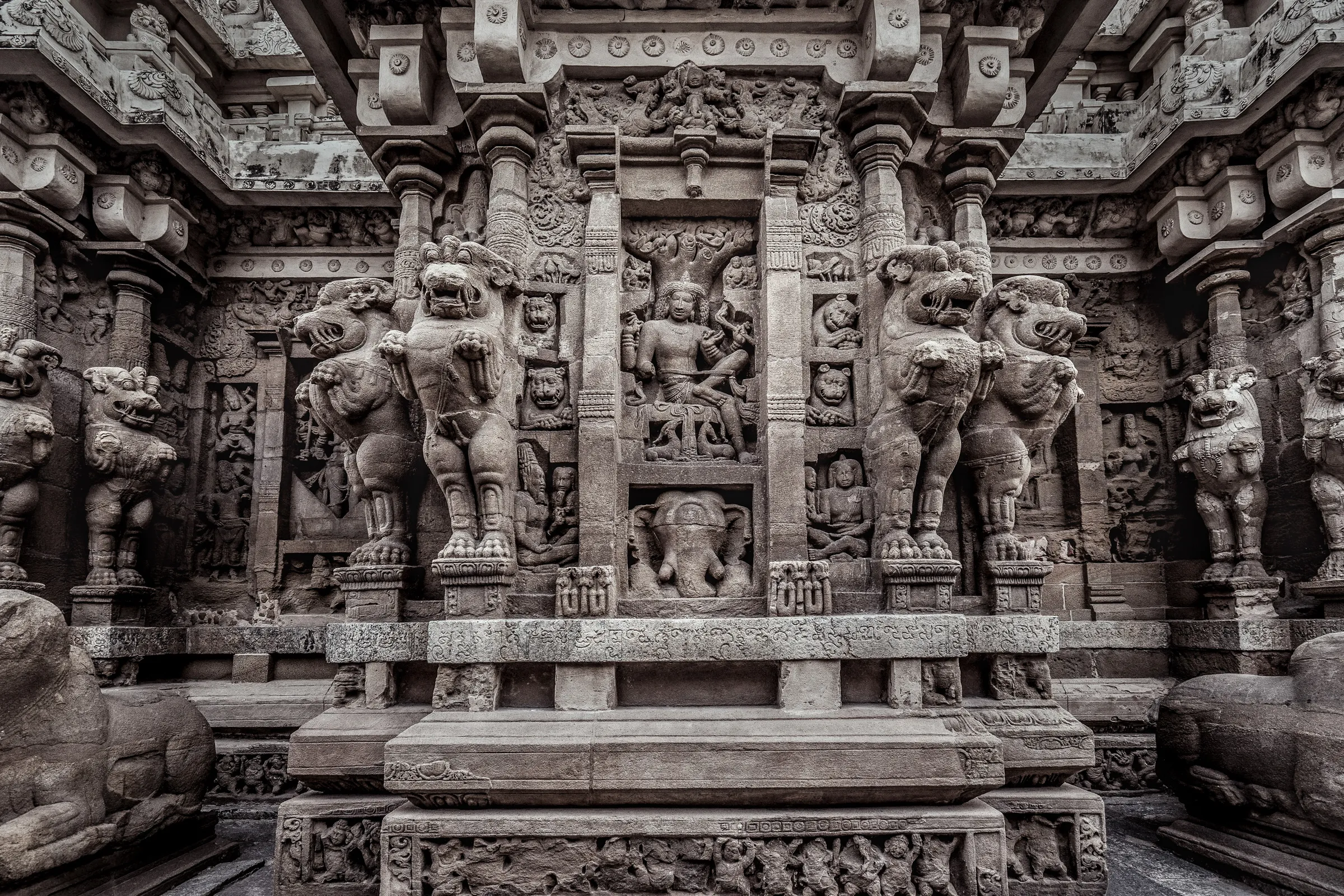
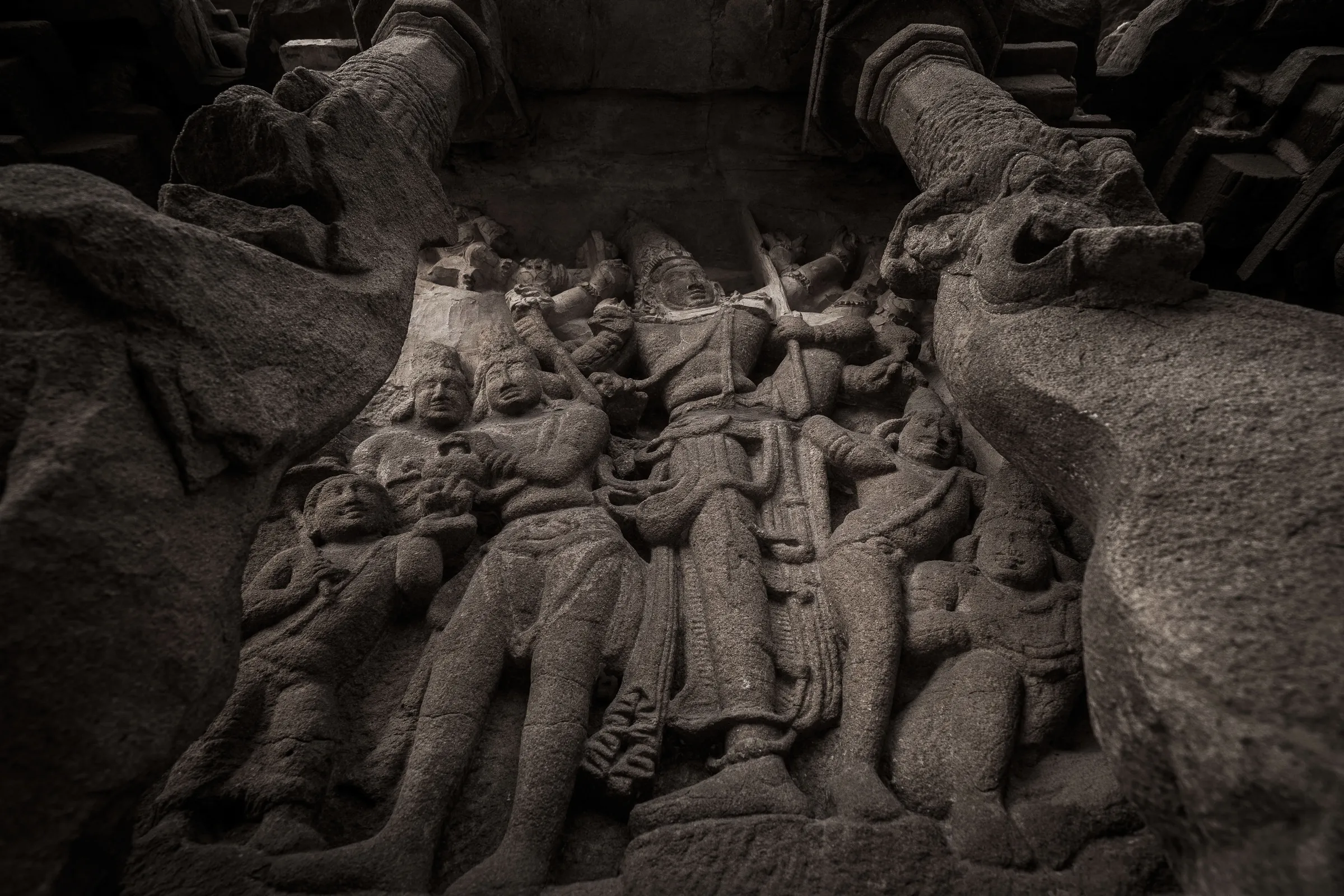
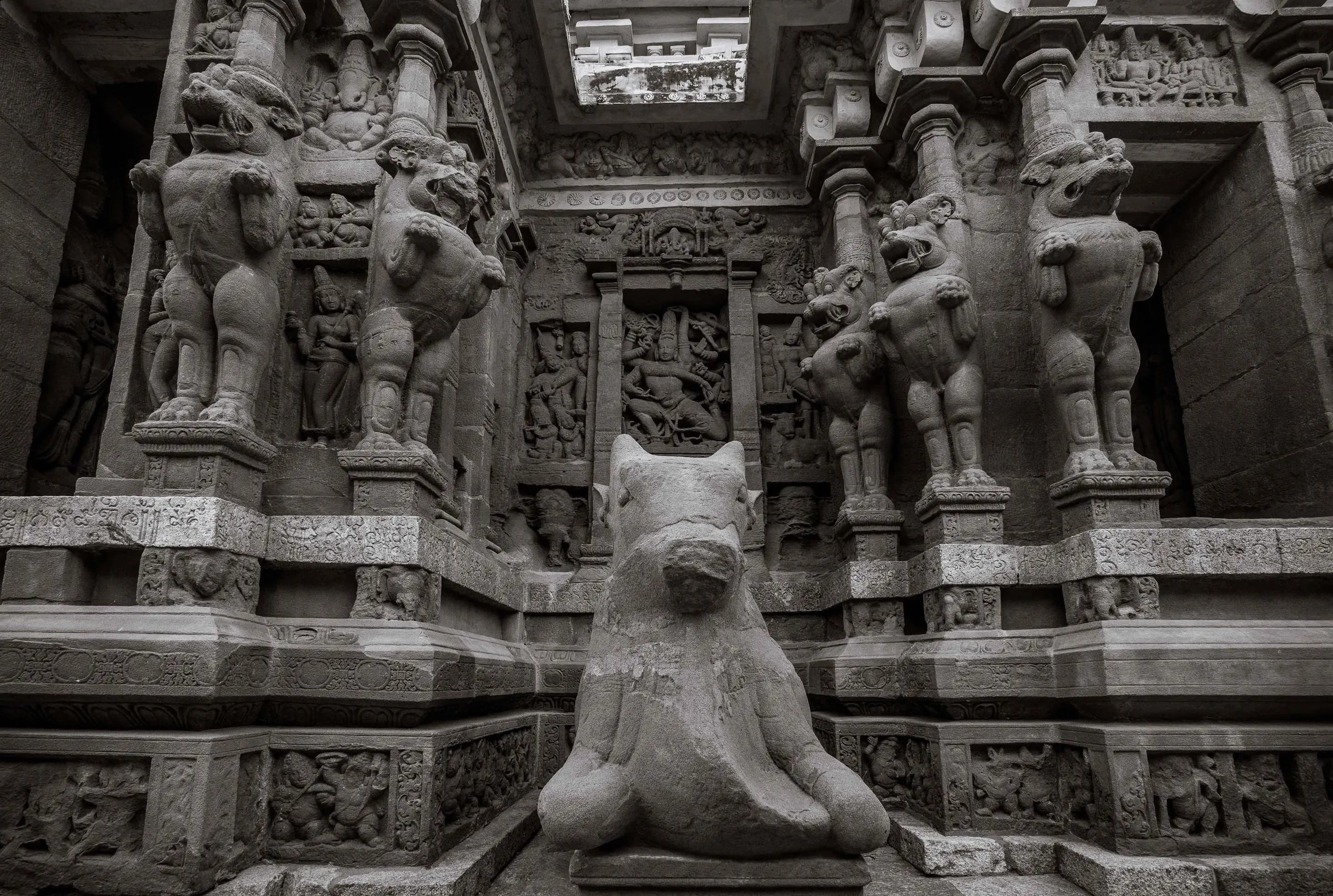
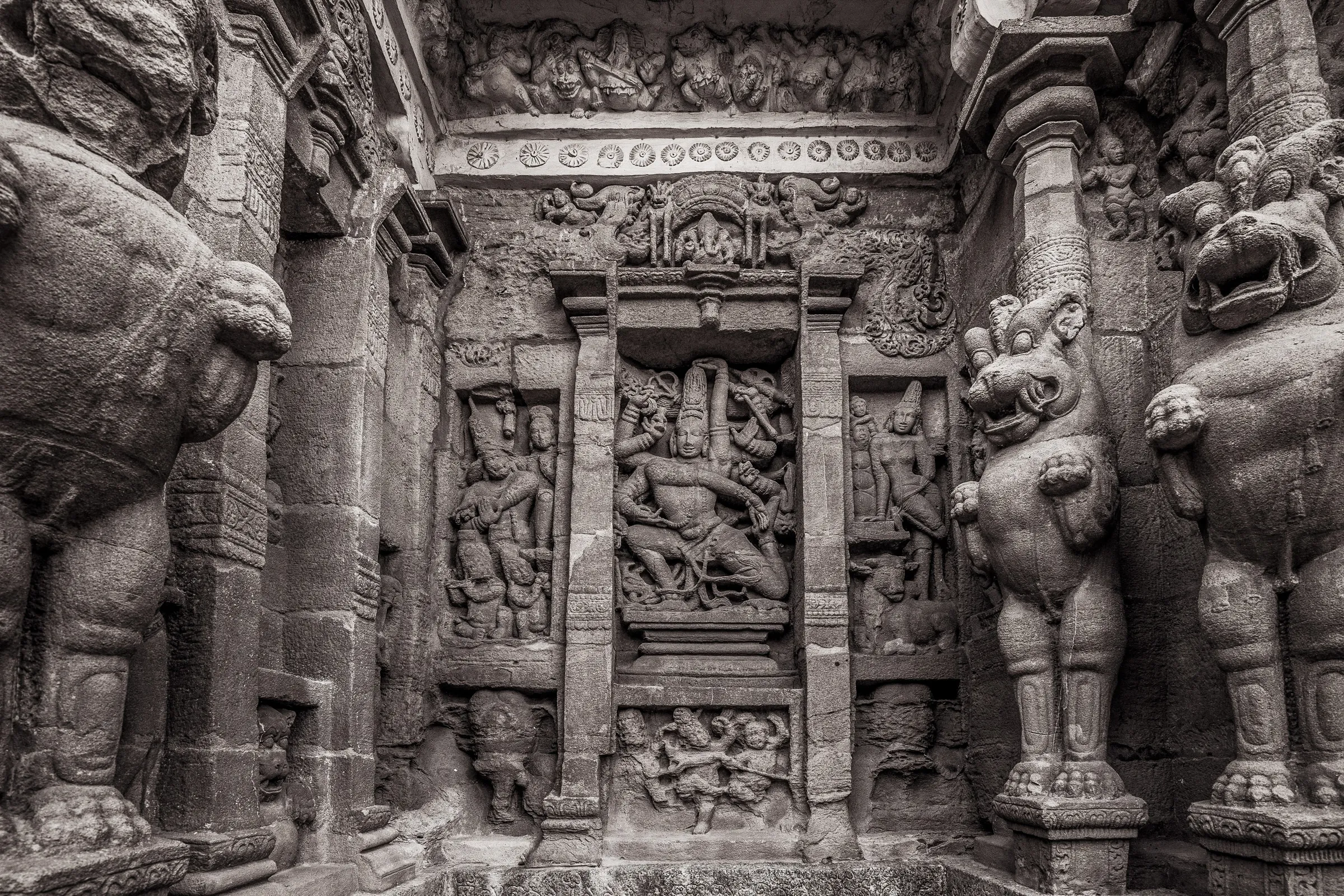
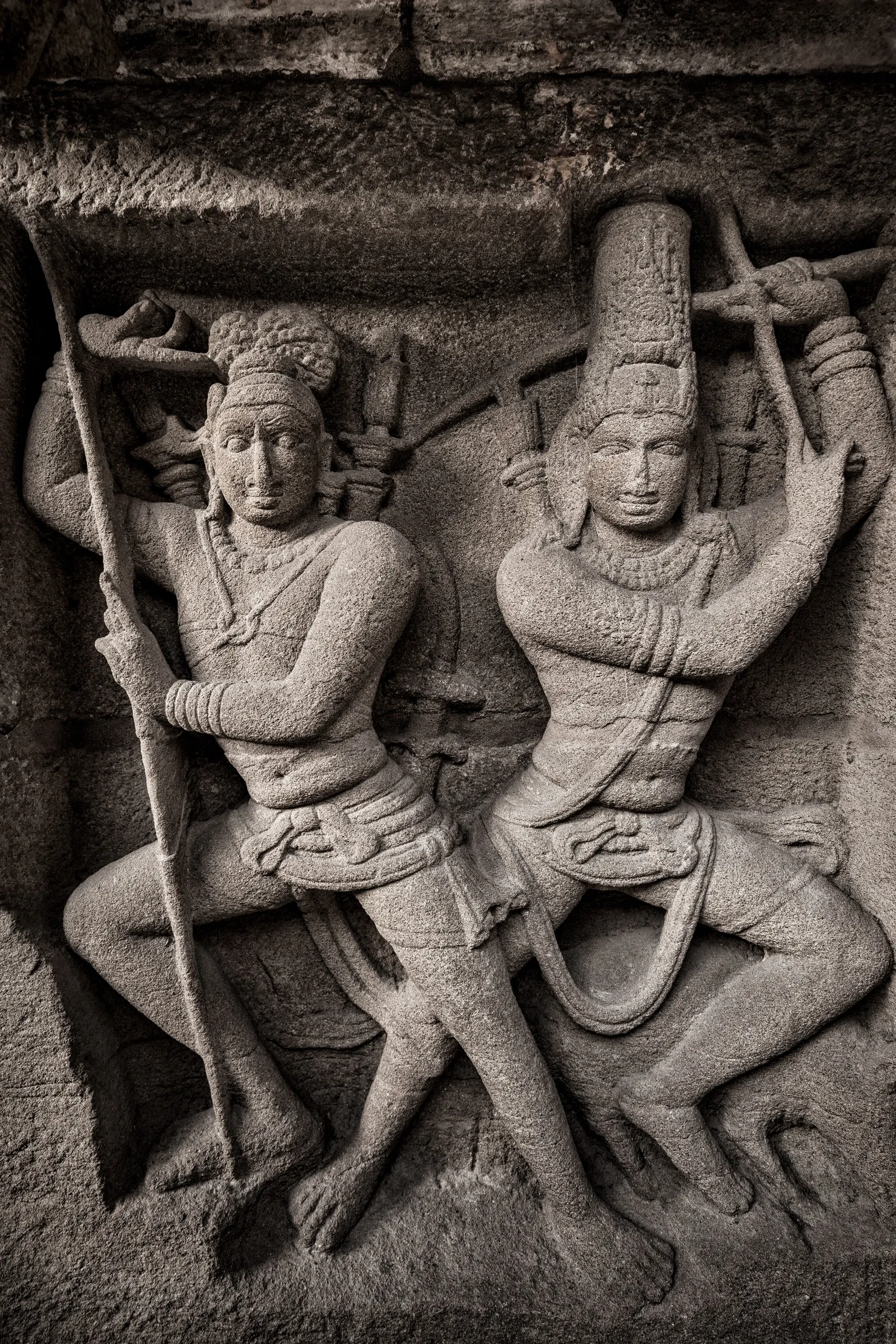
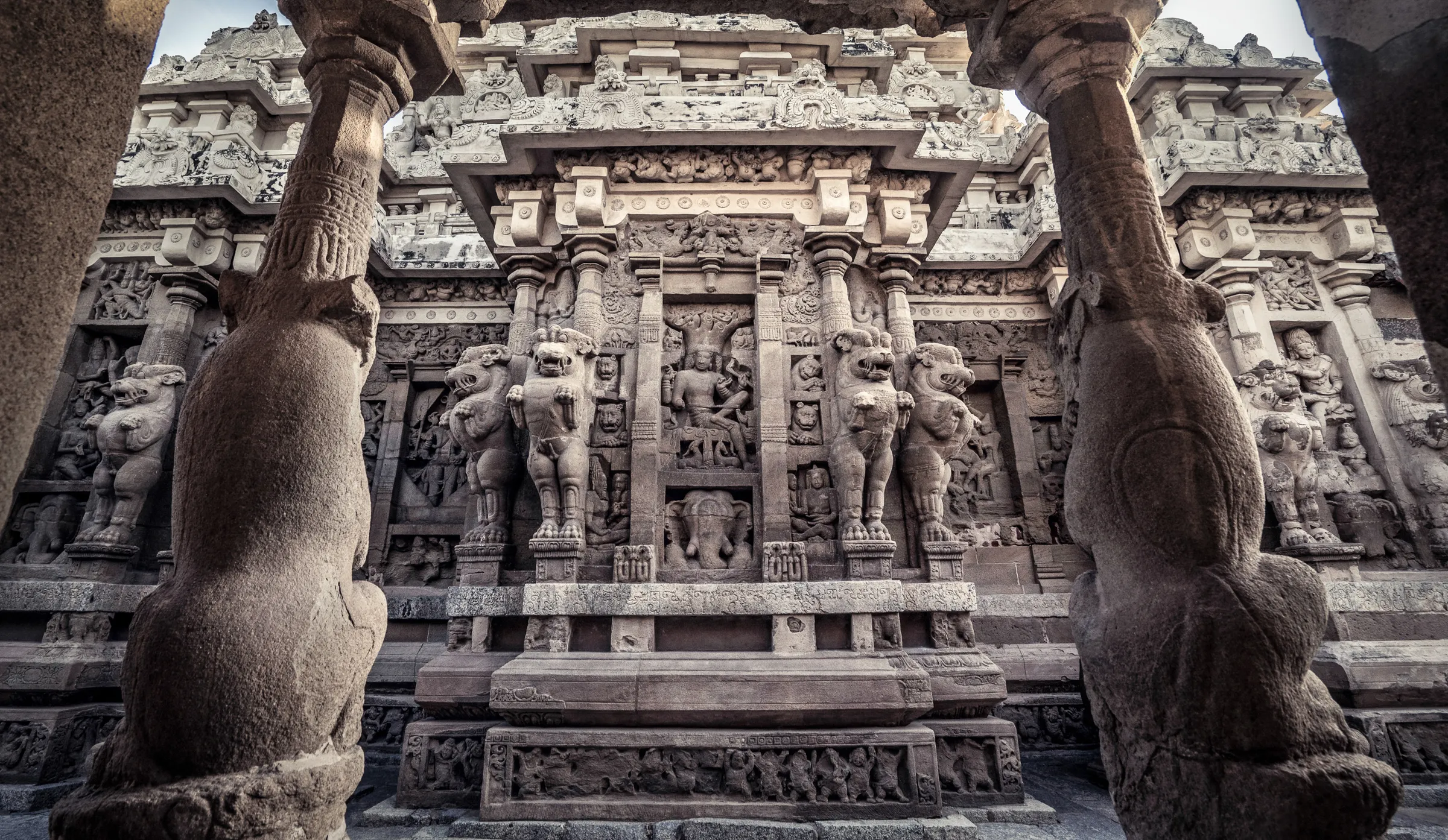
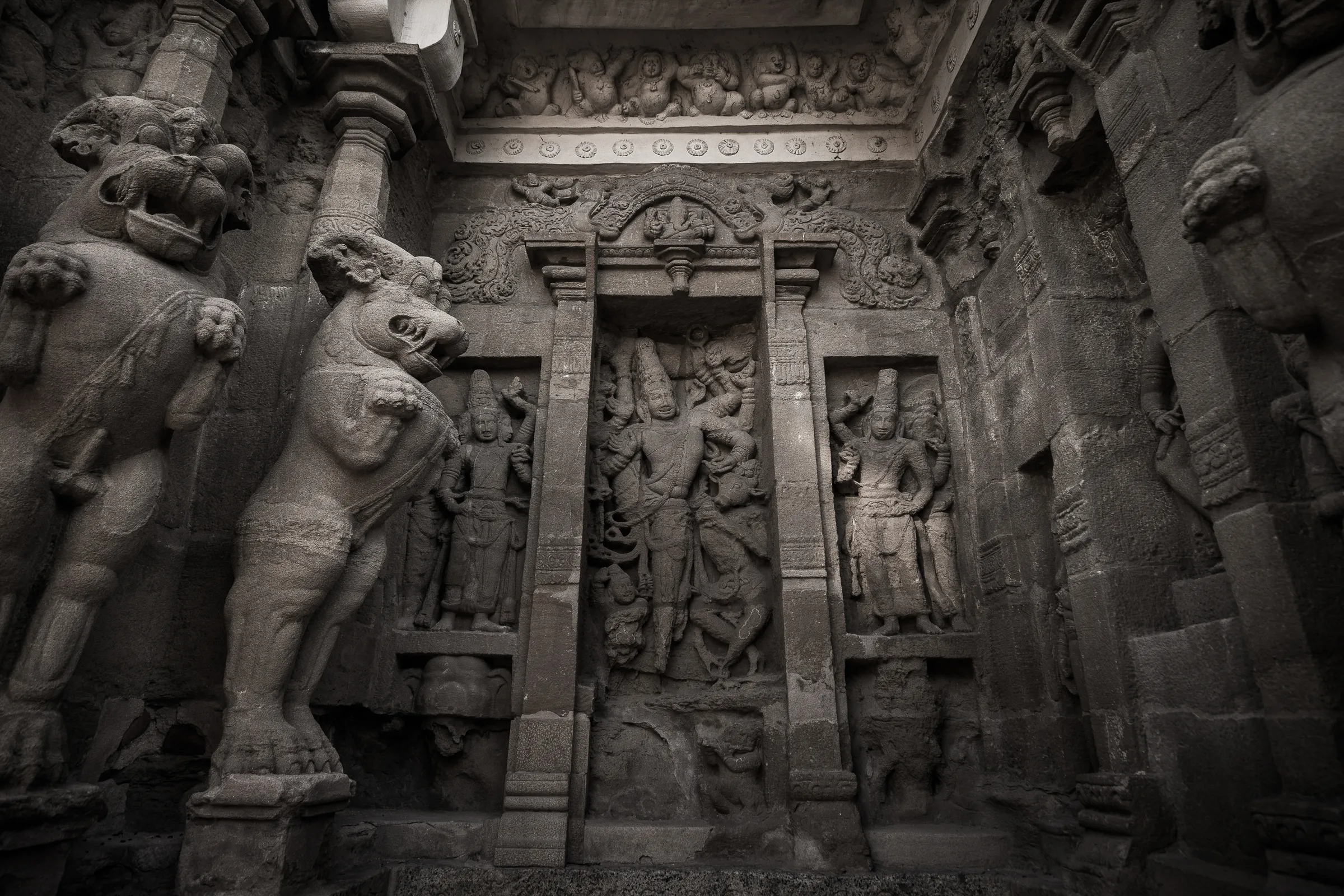
The main shrine has a 16-sided Shivalinga in black granite deified in the sanctum sanctorum. Within the walls of the main shrine are elegantly carved images of gods and a sculpted Nandi guarding the deity. On the south-facing wall the sculpture depicts Śiva as Umamaheshavara with Lingodbhava surrounded by Brahma, Vishnu and flying amaras; the west-facing hall has Śiva as Sandhya Tandavamurti and Urdhuva Tandavamurti with dancing ganas, Brahma, Vishnu, Nandi and Parvathi. The exterior faces of the vimana carry Śiva in the Bhikshatana, Somaskanda and Samhara-Tandava poses.

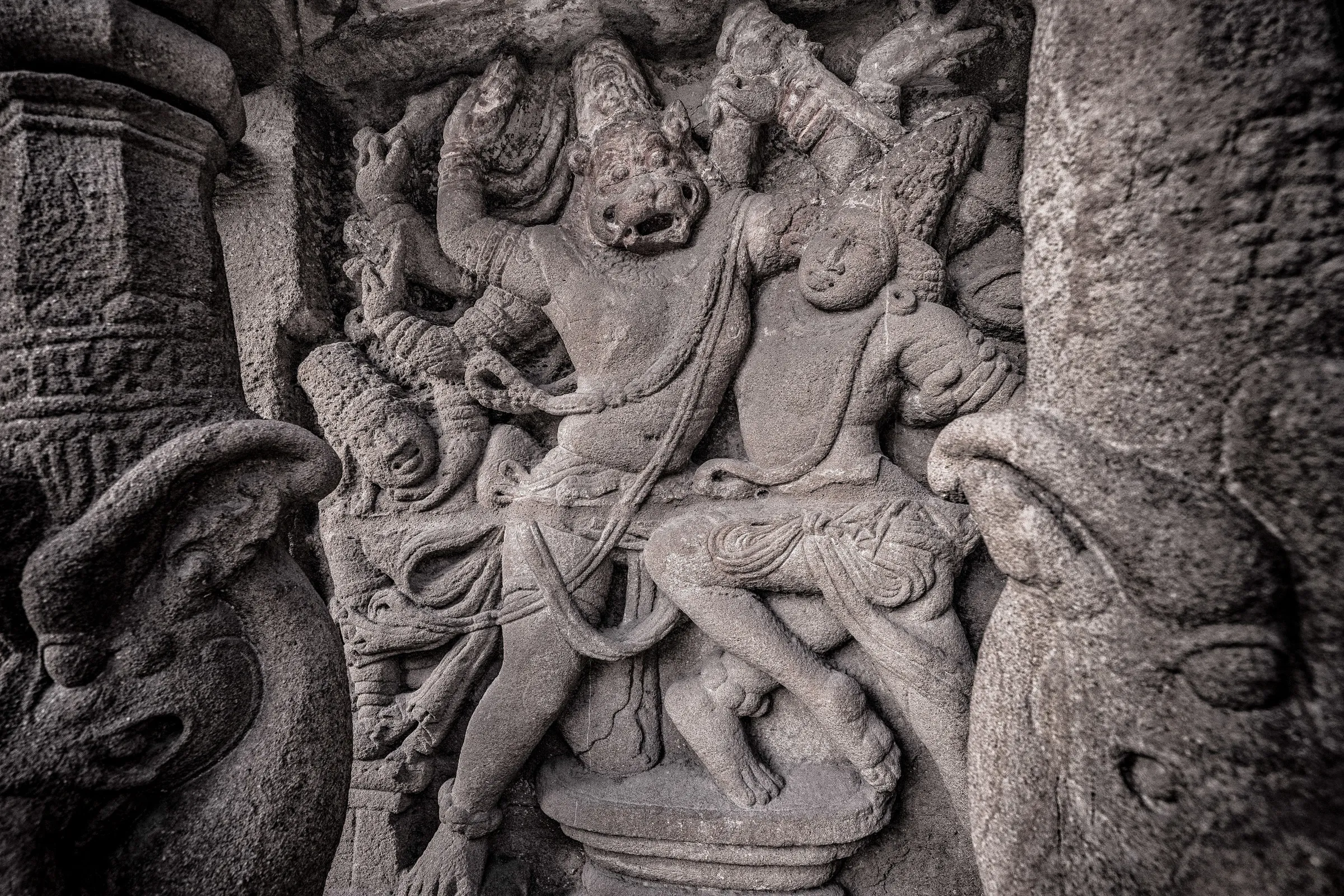
The inner walls of the circumambulatory passage hold a galaxy of images: Durga as Mahishasuramardini, Karthikeya, Tripurantaka, Garudarudha-Vishnu, Ashura Samhara, Narasimha, Trivikrama, Shiva Tandava, Shiva severing the fifth head of Brahma, the desecration of Yagna by Daksha, Gangadhara, Urdhuva Tandava, Lingodbhava, Bhikshatana, Ravana and Vali, with the image of Ardhanareeswara on a bull held the most noteworthy. The temple is also notable for one of the earliest and best specimens of Hindu mural art in Tamil Nadu, found on the inner walls of the courtyard cells, in a style also seen in the Ajanta Caves and the 8th-century Vaikunthaperumal temple at Kanchipuram.

02

Archaeological

dated & cited

The Pallava emperor Rajasimha built the temple as a palace for his Lord, Rajasimheshvara, Śiva. Built around 700 CE with additions in the 8th century and restorations in later centuries, it is the first structural temple built in South India, by Narasimhavarman II (Rajasimha), and is known as Rajasimha Pallaveswaram. His son Mahendravarman III completed the front facade and the gopuram. The intricately carved art belongs to the late 7th and early 8th century Tamil tradition, largely Shaivite but including Vaishnavism, Shaktism and Vedic themes.

The temple has evidence of the earliest calligraphy, with letters beautifully carved alongside images of a duck, a peacock and an annam. The walls carry many inscriptions in early scripts, important to the epigraphical study of regional history and Tamil temple traditions, listing all the titles of Rajasimha. There is also an inscription in Kannada issued by the Badami Chalukya king Vikramaditya II, who avenged earlier Chalukya defeats, invaded Pallava territory, defeated Mahendra III (Paramesvara) and captured Kanchipuram. Stunned by the temple's architecture, he instructed his army not to take anything as war trophies and gave gifts, including gold, to the temple; the Virupaksha temple he later built at Pattadakkal for his queen Lokamadevi was inspired by the Kailasanatha temple.

Dating
Begunaround 700 CE

Built around 700 CE with additions in the 8th century and restorations in later centuries.

03

Mythological

as transmitted

Rajasimha viewed himself as analogous to Śiva's son, Skanda. The portrayal of Śiva with his consort Uma sitting with the young Skanda in the middle, Somaskanda, is a Pallava specialty and can be seen in many sub-shrines and Pallava-built temples.

Register interest in prints Buy the book
Improve this entry

This is an open, reviewed record. If you have spotted an error or have something to add — a correction, a date, a source, a name in another script — propose it. Every change is reviewed before it joins the record.

“Suggest an edit” opens this entry on GitHub and turns your change into a pull request. “Share feedback” opens a short form. Both go through review.