Dhandayudhapani Temple, photograph
← Pandya Nadu
Entry 092

Dhandayudhapani Temple

Palani · Chera and Pāṇḍya rule at different periods; later Vijayanagara and Nāyaka renovation

The hilltop Murugan temple at Palani, third of the Arupadai Veedu, its idol of Dhandayudhapani made of navapashana and consecrated by Siddha Bogar, drawing pilgrims from Tamil Nadu and Kerala.

The Dhandayudhapani temple crowns Palani hill, third of Murugan’s Arupadai Veedu, its navapashana idol consecrated by Siddha Bogar and its main sanctum built by a Chera king. The record runs from the Sangam Velir chiefs through Chera and Pandya rule to British annexation; the myth holds the fruit of knowledge that named Pazhani and the guard Idumban who named the Lord.

The photographs

Plates · 4

Dhandayudhapani Temple, photograph
© Amar Ramesh and team · All rights reserved
Dhandayudhapani Temple, photograph
© Amar Ramesh and team · All rights reserved
Dhandayudhapani Temple, photograph
© Amar Ramesh and team · All rights reserved
01

Architectural

structure & vocabulary

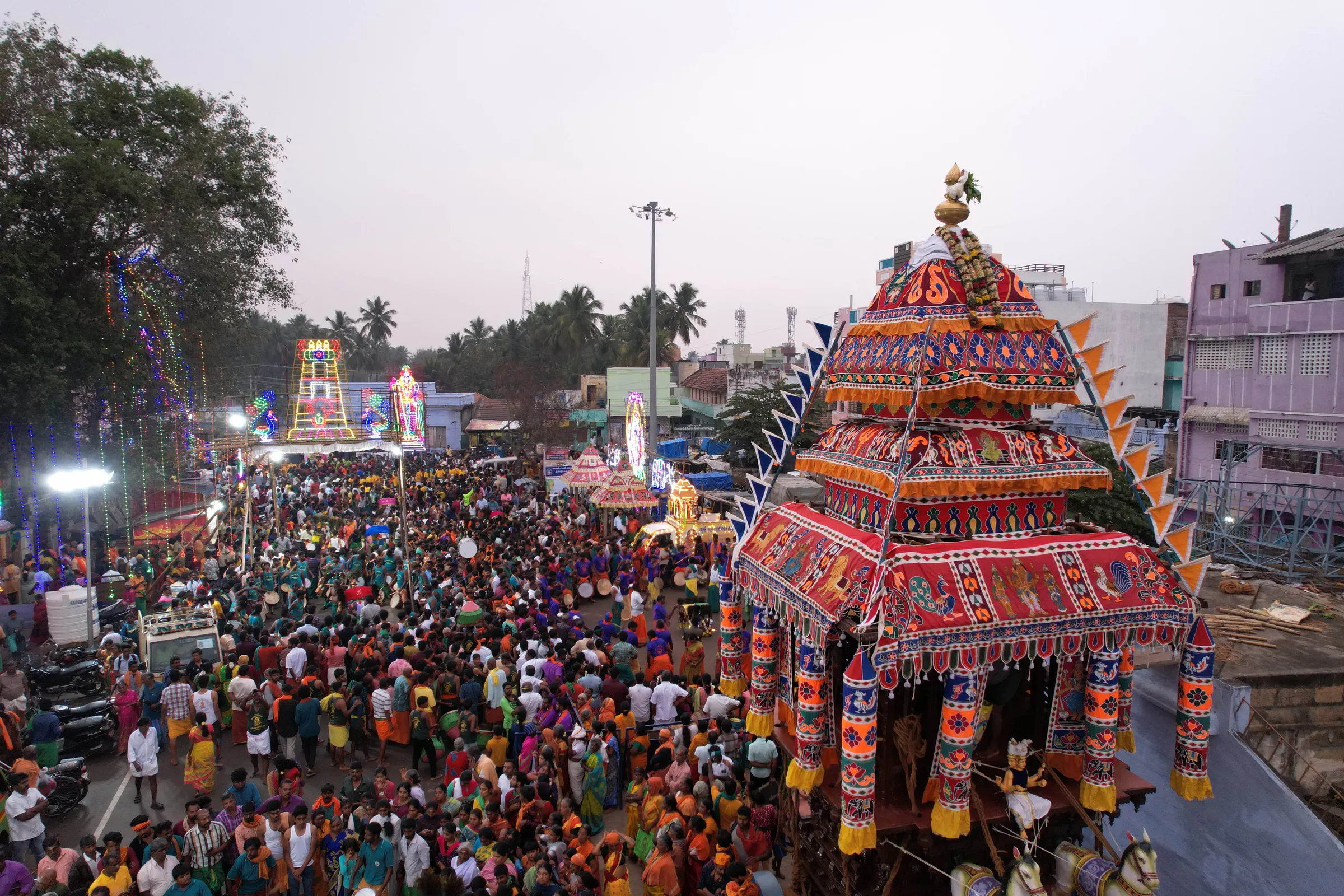
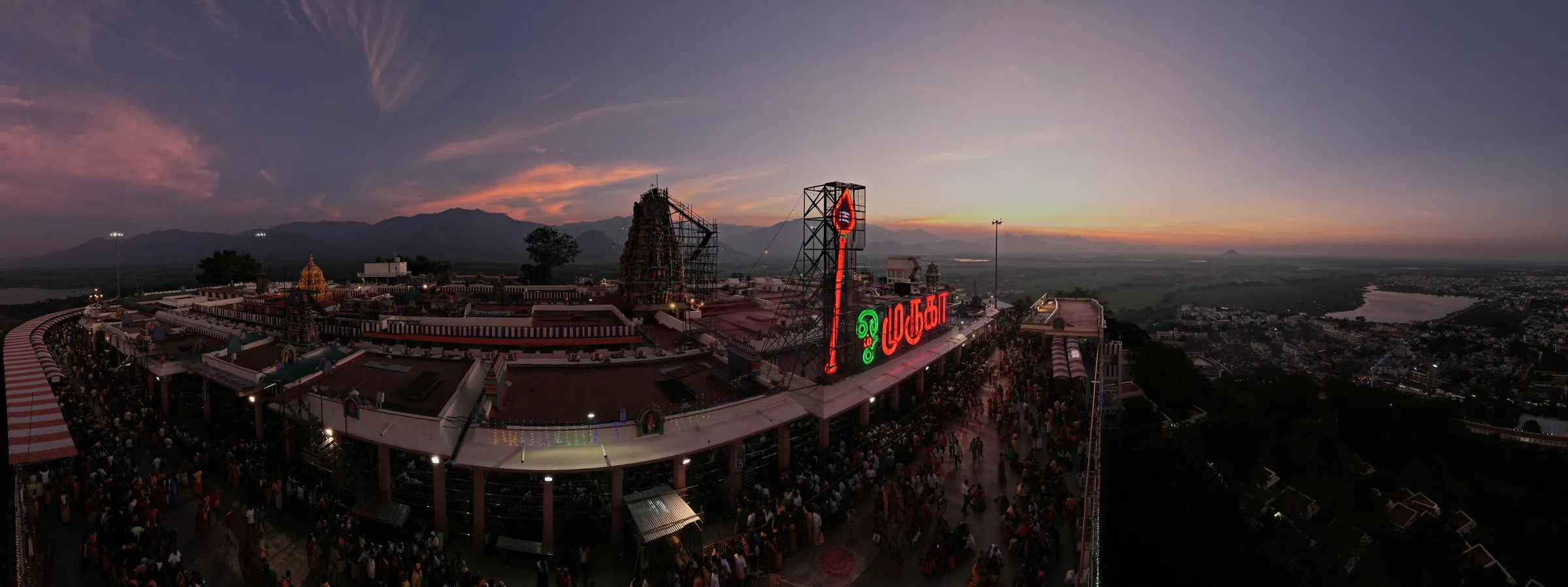
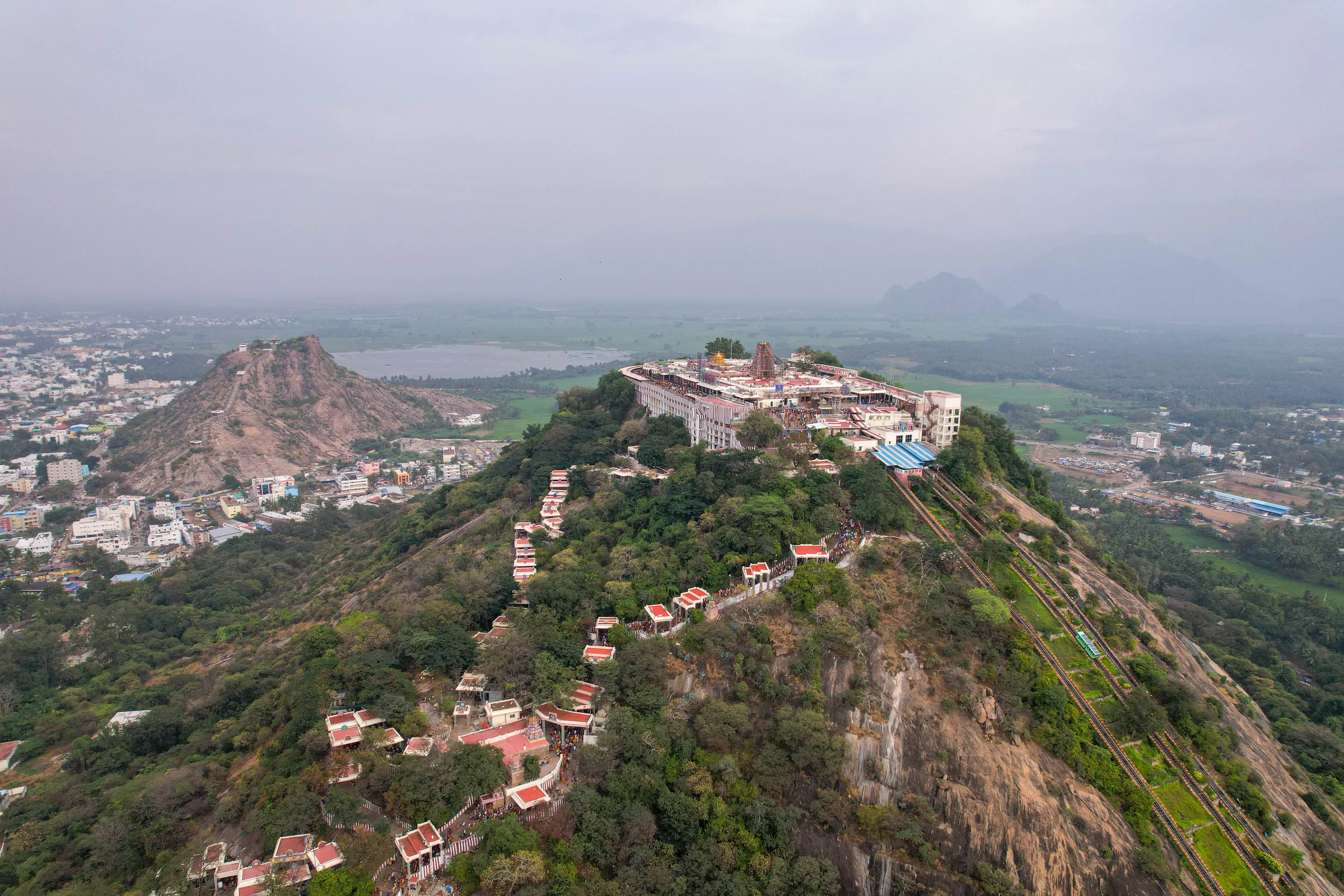
Palani hill, an offshoot of the Western Ghats, carries the temple, with the Avinankudi temple at the base (adivaram) housing the six-faced Shanmuganatha. The hilltop shrine is 689 steps from the foot, the path lined with mandapas and small shrines and three routes of ascent, one called the elephant path on the old ghat road, with a winch and rope-car service. A shrine to Idumban stands midway, with shrines for Śiva, Agastya, Kura-adi-Velavar, and Vezh-Avi Ko, the Velir chieftain who ruled the area.

The outer prakara leads to the entrance mandapa, with Sri Vallaba Vinayaka and the flag mast and Peacock Mandapa nearby. The Navarang mandapa in the inner prakara, where devotees gather, is borne on twelve massive pillars of ornate workmanship; its two sanctums house Shanmuganatha and the processional Chinna Kumara. Facing it is the sanctum of Dhandayudhapani made of navapashana, with Sivalokanathar, Chandeswara and Bogar shrines in the outer prakara. The golden gopuram on the sanctum carries sculptures of Shanmuga and his attendant gods, and a famous Ganapati and the golden chariot of Murugan stand in the second precinct.

02

Archaeological

dated & cited

The Velir chief Velavi Koman Padhuman of the Sangam period had Podhini, the former name of Palani, as his capital. Palani was under Chera and Pāṇḍya rulers at different periods until Hyder Ali took it in the 18th century, and after the third Anglo-Mysore War of 1790 to 1792 CE the British annexed it. The Vijayanagara and Nāyaka rulers renovated and expanded the temple. The early history is found in Mackenzie's collection, corroborated by local accounts.

It is recorded that a Chera king, said to be Cheraman Perumal Nayanar, a contemporary of Saint Sundara of the 9th century CE, took charge of the temple and built the main sanctum and the ardha mandapa; his figure on horseback is on the south wall of the principal shrine. The prakara shows Pāṇḍya influence in its fish insignia, and the sanctum walls bear extensive inscriptions in old Tamil script. The Sangam poet Nakkeerar praised Murugan here in the Tirumurugatrupadai, and Arunagirinadhar of the 15th century in his Tirupugazh.

03

Mythological

as transmitted

It is told that when Vinayaka was given the Gnana Pazham, the fruit of knowledge, by Śiva and Parvathi before Murugan could circle the world on his peacock, Murugan grew angry and withdrew to the hilltop as a recluse in a loincloth. Parvathi pacified him, saying Pazham Nee, that he himself is the fruit of knowledge, and so the place is called Pazhani. Siddha Bogar is said to have consecrated the navapashana idol at Sivagiri and begun the worship.

Of the name it is told that when Kailasa was unbalanced Śiva asked the sage Agastya to balance it by taking away a portion of the mountain. Agastya gave his ward Idumba two separated hillocks to carry; resting on the way, Idumba could not lift them again, and saw a small boy on a hilltop staying their movement. He fought the boy in vain until Agastya appeared and enlightened him. Murugan blessed Idumba and kept him as his guard, and so is named Dhandayudhapani, one who holds a dhanda (baton).

Sources
  • Mackenzie collection
Register interest in prints Buy the book
Improve this entry

This is an open, reviewed record. If you have spotted an error or have something to add — a correction, a date, a source, a name in another script — propose it. Every change is reviewed before it joins the record.

“Suggest an edit” opens this entry on GitHub and turns your change into a pull request. “Share feedback” opens a short form. Both go through review.