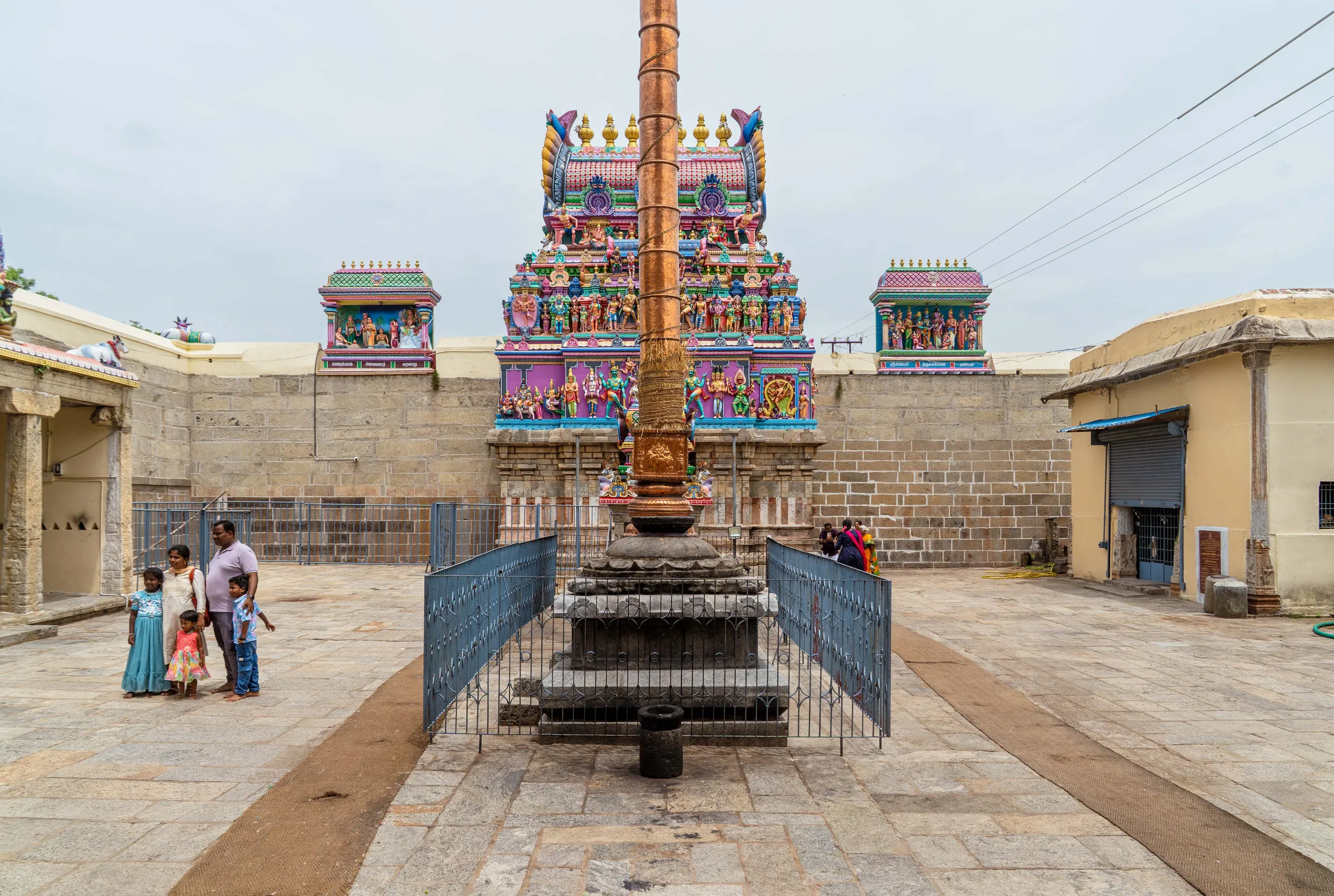
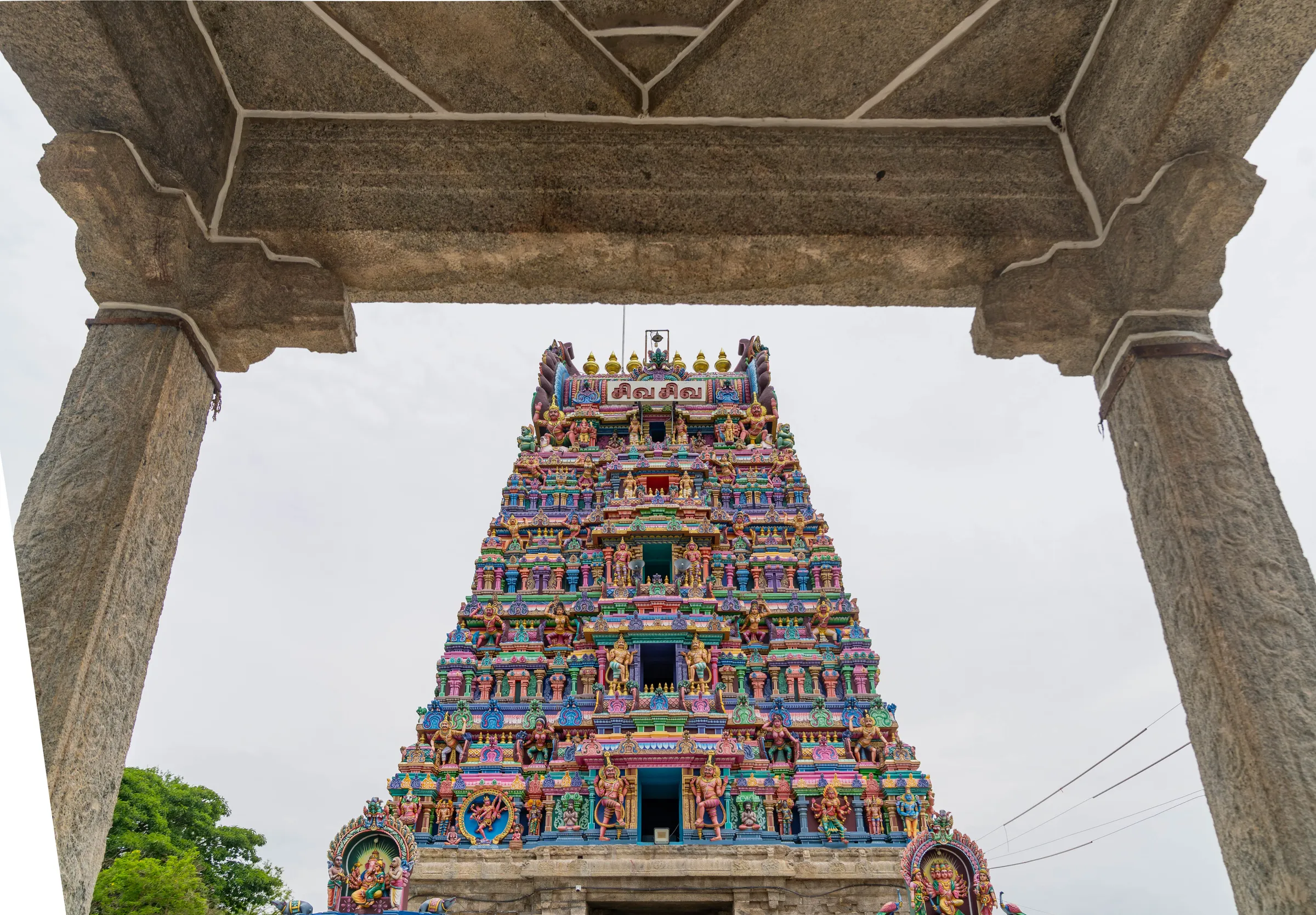
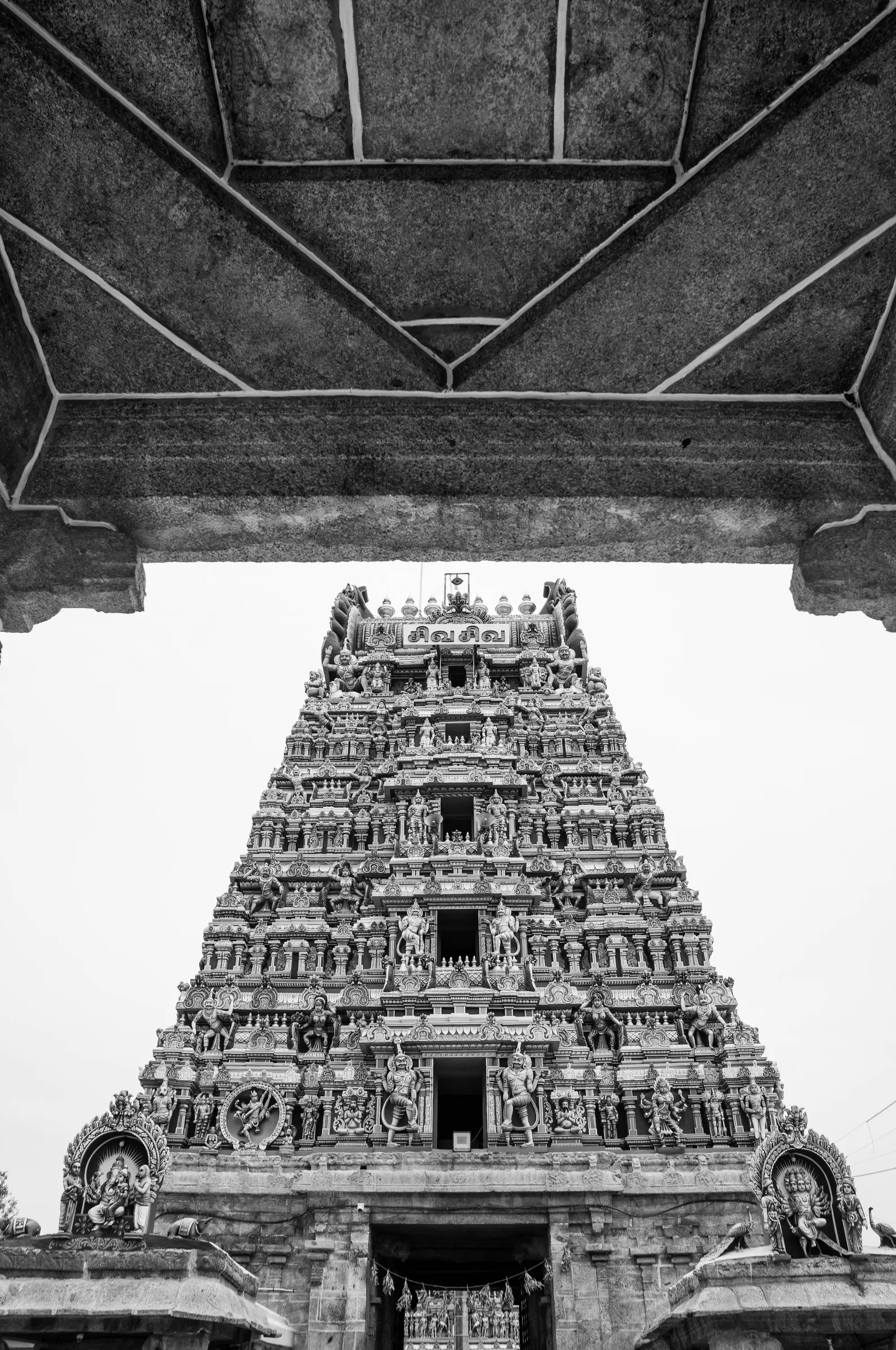
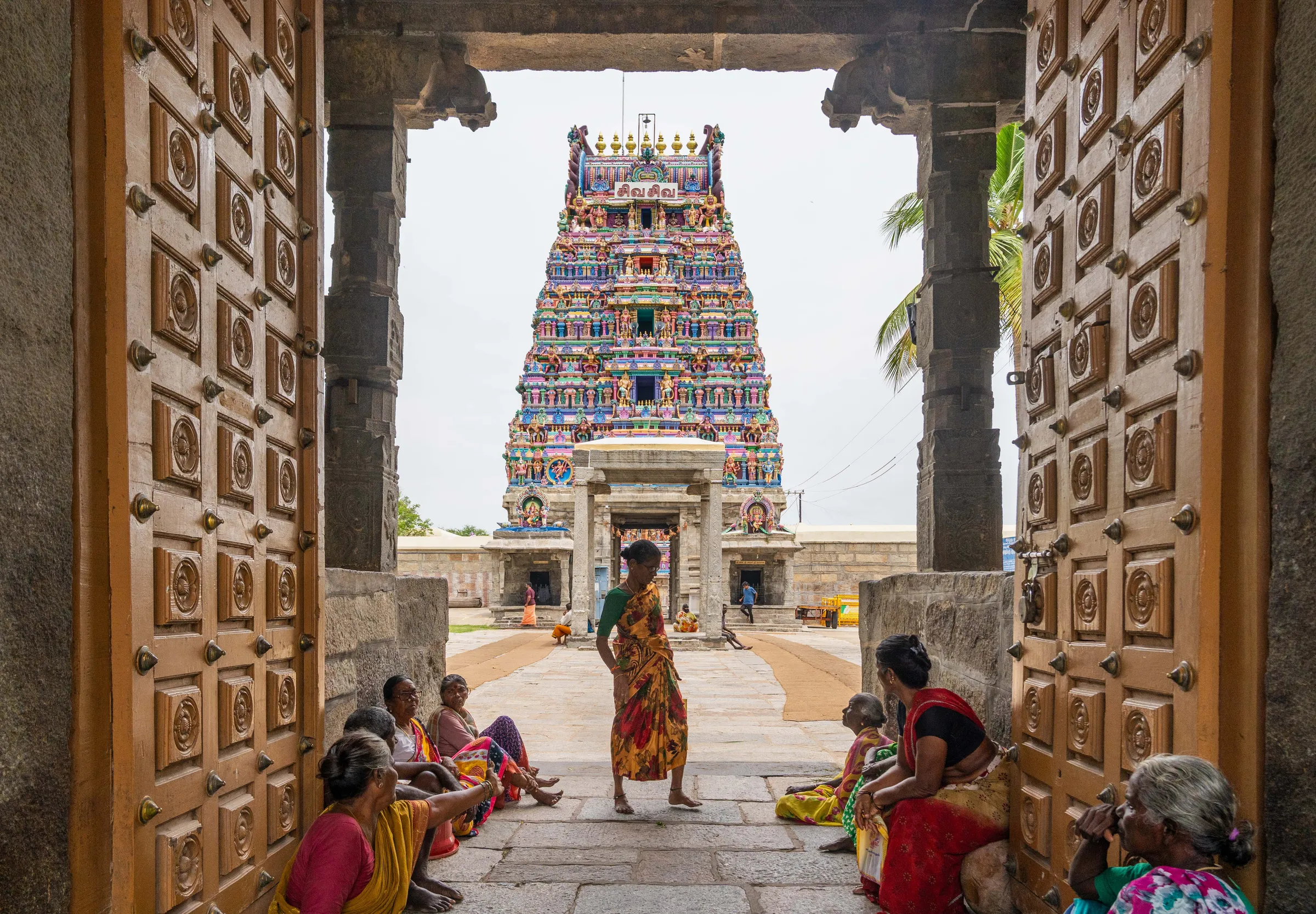
Bathrakali Amman & Vataranyeshwarar Temple, photograph
← Thondaimandalam
Entry 006

Bathrakali Amman & Vataranyeshwarar Temple

Thiruvalangadu · Thiruvallur · Chōḷa, existed in Pallava times

A 12th century Chōḷa temple at Thiruvalangadu, the sacred banyan forest, where Śiva as Vataranyeshwarar is depicted in the Urdhuva Thandavam, the raised-leg dance of his victory over Kali.

Populated from “100 Timeless Tamil Nadu Temples” (book pp. 17 to 18). The three registers are held apart: what stands, what is dated and cited, and what is told.

The photographs

Plates · 4

Bathrakali Amman & Vataranyeshwarar Temple, photograph
© Sai Sanjay Prasath · All rights reserved
Bathrakali Amman & Vataranyeshwarar Temple, photograph
© Sai Sanjay Prasath · All rights reserved
Bathrakali Amman & Vataranyeshwarar Temple, photograph
© Sai Sanjay Prasath · All rights reserved
01

Architectural

structure & vocabulary

The presiding deity Vataranyeshwarar, meaning god of the banyan forest, follows the name Thiruvalangadu, the sacred banyan forest, which also makes the sthalam vriksham the same. The image of Lord Nataraja here is depicted lifting his left leg up in Urdhuva Thandavam, instead of the Ananda Thandavam pose seen at Chidambaram. A representation of Nataraja performing the Urdhuva Thandavam elsewhere, even on the Kapaleeshwarar temple gopuram in Chennai, is taken to refer to the Urdhuvathandava-moorthy as seen at Thiruvalangadu.

02

Archaeological

dated & cited

Thiruvalangadu in the Thiruvallur district is known for its 12th century Chōḷa temple dedicated to Vataranyeshwarar, a form of Lord Nataraja. Though it existed during the Pallava times too, it was enlarged later. It is one of the 275 Paadal Petra Sthalams where four songs of the Thevaram were composed.

Dating

12th century Chōḷa temple; existed during the Pallava times too and was enlarged later.

Protection & condition
GroupPadal Petra Sthalam
Inscription

The first verse of the Thiruvalangadu Mootha Thirupadhigam, in which Karaikal Ammaiyar describes her own ghostly appearance, with breasts dried up and bulging nerves, sunk eyes and a hollow maw, jutting teeth and raised ankles, abiding screaming in the withered woods where the father dances carrying fire in his cool body. Behold Thiruaalangaadu.

Translation by Sri T.N. Ramachandran, Thanjavur
03

Mythological

as transmitted

Legend dictates that before visiting the Vataranyeshwarar temple, one must first visit the nearby temple that houses Bathrakali Amman. Kali was so enraged after killing some demons that it required Śiva to come down to pacify her and return her to her docile state. Kali challenged Śiva, who was in the form of Nataraja, to a dance battle, wherein if she lost she would regain composure. During the contest, one of Nataraja's earrings fell to the ground, and without pausing he tactfully picked it up with his left toe, lifting his leg all the way up and putting the earring back on. Unable to match the pose, Kali accepted defeat, and the image of Nataraja here lifts his left leg up in Urdhuva Thandavam.

Another significance of the location is its connection with Karaikal Ammaiyar, one of only 3 women among the 63 Saivite Nayanmars. Born as Punithavathi in the 6th to 8th century CE in the Chōḷa kingdom, she married a trader called Paramadattan, but when he realized her deep devotion gave her divine powers he left her, and she prayed to Śiva to transform her into an old, haggard woman, spending the rest of her life singing hymns in praise of the Lord. Impressed by her devotion, Śiva sent her to Thiruvalangadu where she composed verses called the Thiruvalangadu Mootha Thirupadhigam, which predate those composed by the Nalvars; it is believed she still abides there in spirit, eternally witnessing the cosmic dance.

Register interest in prints Buy the book
Improve this entry

This is an open, reviewed record. If you have spotted an error or have something to add — a correction, a date, a source, a name in another script — propose it. Every change is reviewed before it joins the record.

“Suggest an edit” opens this entry on GitHub and turns your change into a pull request. “Share feedback” opens a short form. Both go through review.