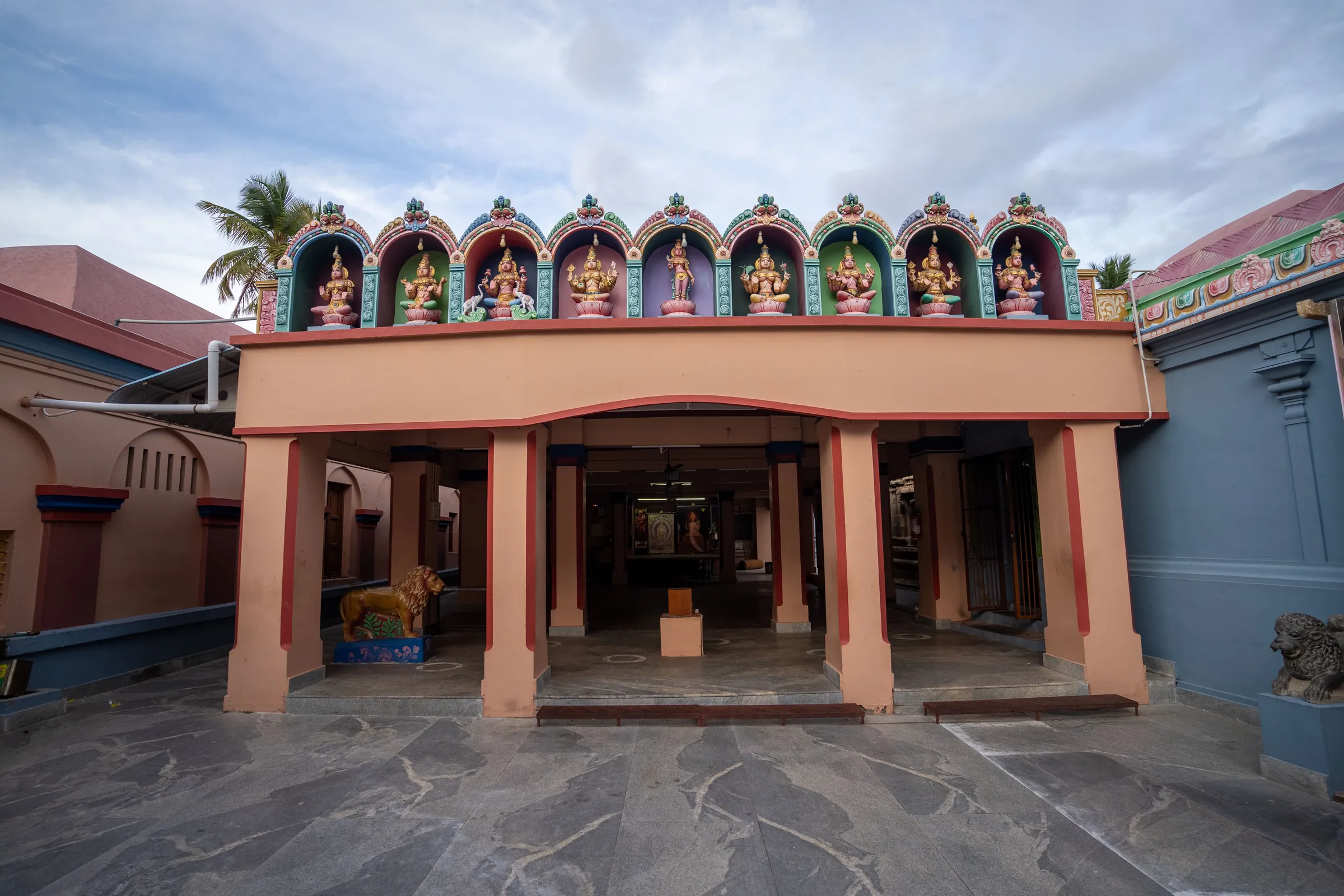
The golden goddess Bangaru Kamakshi, originally of Kanchipuram, was relocated to Thanjavur during the rule of the Maratha Pratap Singh Bhonsle in the 1760s. Bangaru means gold in Telugu, for the golden body of the deity.
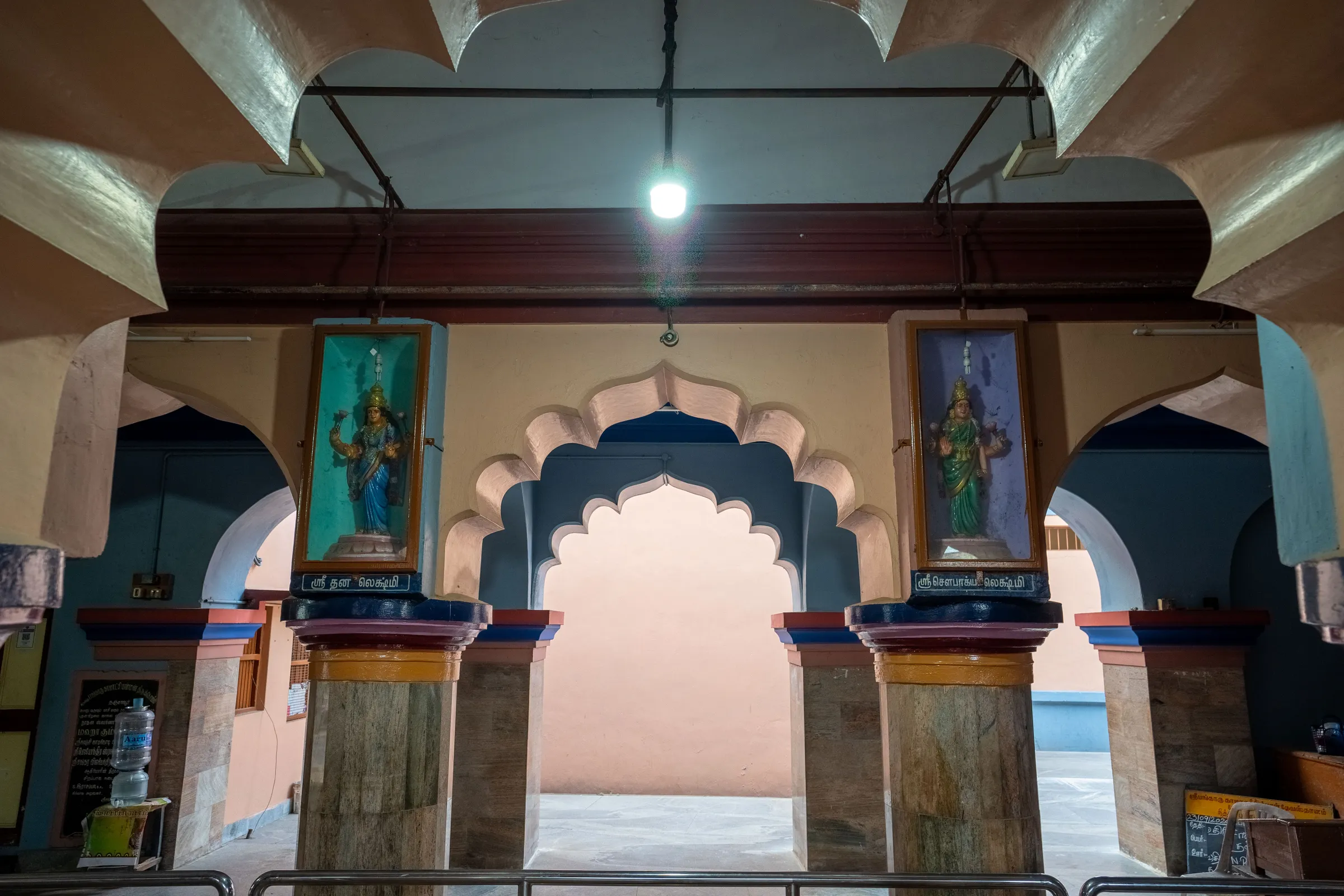
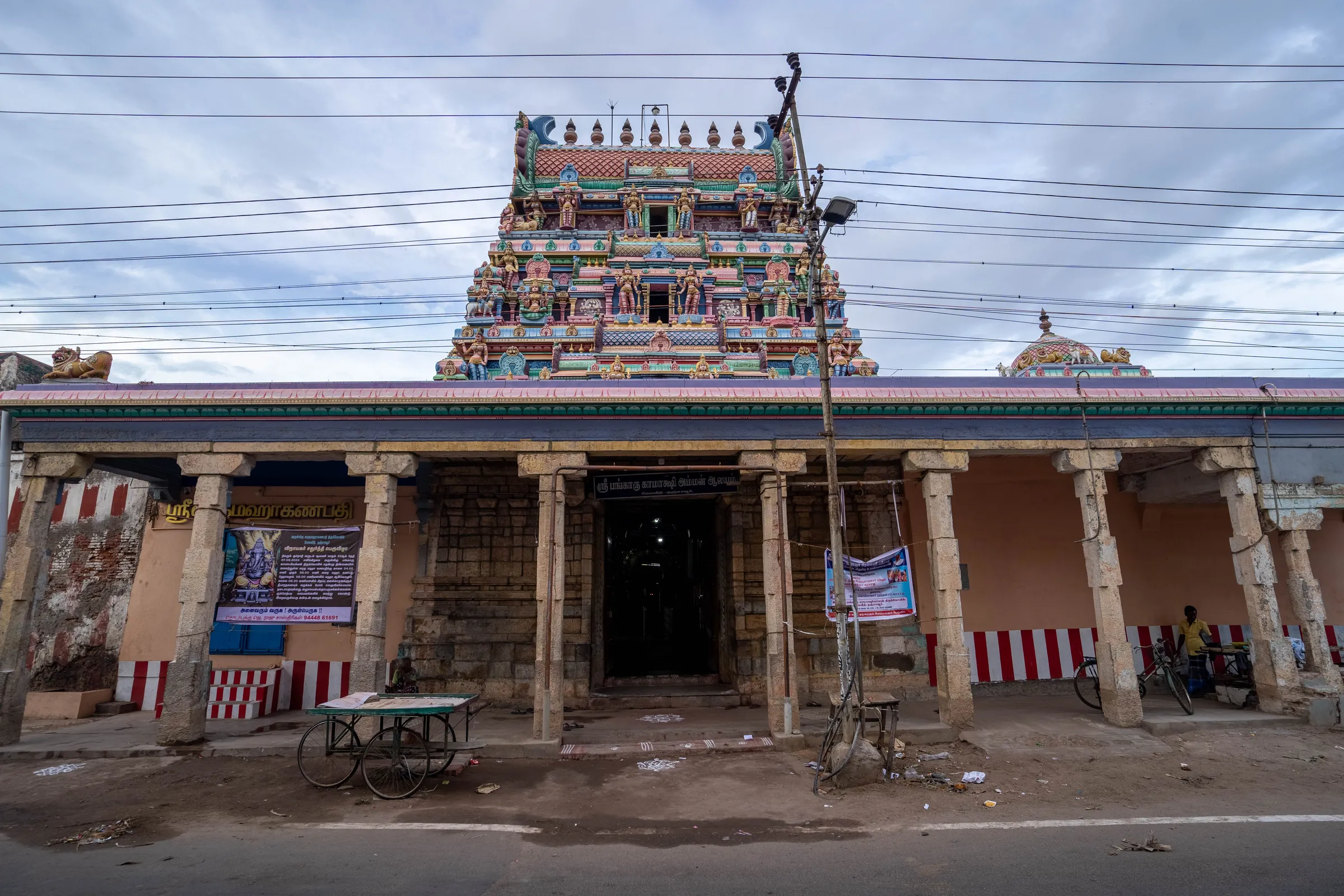
The deity in the main shrine stands on a lotus pedestal with a graceful bend at the hip. She holds a parrot in her right hand and is adorned with gold jewellery head to toe, while her face is depicted in black, keeping the idol rooted to its history. Architecturally the temple is rather small, with a short gopuram facing north towards Kanchipuram, and a single prakaram with pillars that imitate the Chōḷa style. Besides the main sanctum there are shrines to Ganesh and Kanchi Kamakoti Amman.
02
Archaeological
dated & cited
The idol was relocated from Kanchipuram in the 1760s during the rule of the Thanjavur Maratha Pratap Singh Bhonsle. It was consecrated in its present premises, about a kilometre from the Brihadeeswara temple, and so the processional bronze idol of one temple became the principal idol of another. The temple is closely linked to the Carnatic composer Shyama Shastri, who lived 1762 to 1827, the eldest of the Carnatic music Trinity. His father Viswanatha Iyer was head priest, and Shyama Shastri later performed the puja for Kamakshi, his ishta devata. Around 35 of his kritis are dedicated to her in her many forms, including five to Bangaru Kamakshi.
03
Mythological
as transmitted
With the fall of the Vijayanagara Empire in the sixteenth century, Kanchipuram faced turmoil, and in the eighteenth century the Kamakshi Amman temple and the Shankaracharya Math were caught up in conflicts between native rulers and the British and Dutch. Pratap Singh offered shelter to the deity and the Math, inviting Shankaracharya Sri Chandrasekhar Saraswathy IV of the Kanchi Kamakoti Pitham to Thanjavur. For the journey via Udayarpalayam the goddess's face was covered in a black paste called pungu, derived from the civet cat, wrapped in cloth and disguised as a child being treated for smallpox, so as to pass unseen by those who wished to destroy it.
This is an open, reviewed record. If you have spotted an error or have
something to add — a correction, a date, a source, a name in another script —
propose it. Every change is reviewed before it joins the record.
You are suggesting an edit. Click any highlighted paragraph to change it.
“Suggest an edit” makes this entry editable right here — change the text, tell us how to reach you, and send it. No account needed. “Share feedback” opens a short form. Both go through review before anything is published.