Tiruchengode · Namakkal · Conquered by the Chōḷas but largely ruled by local chieftains
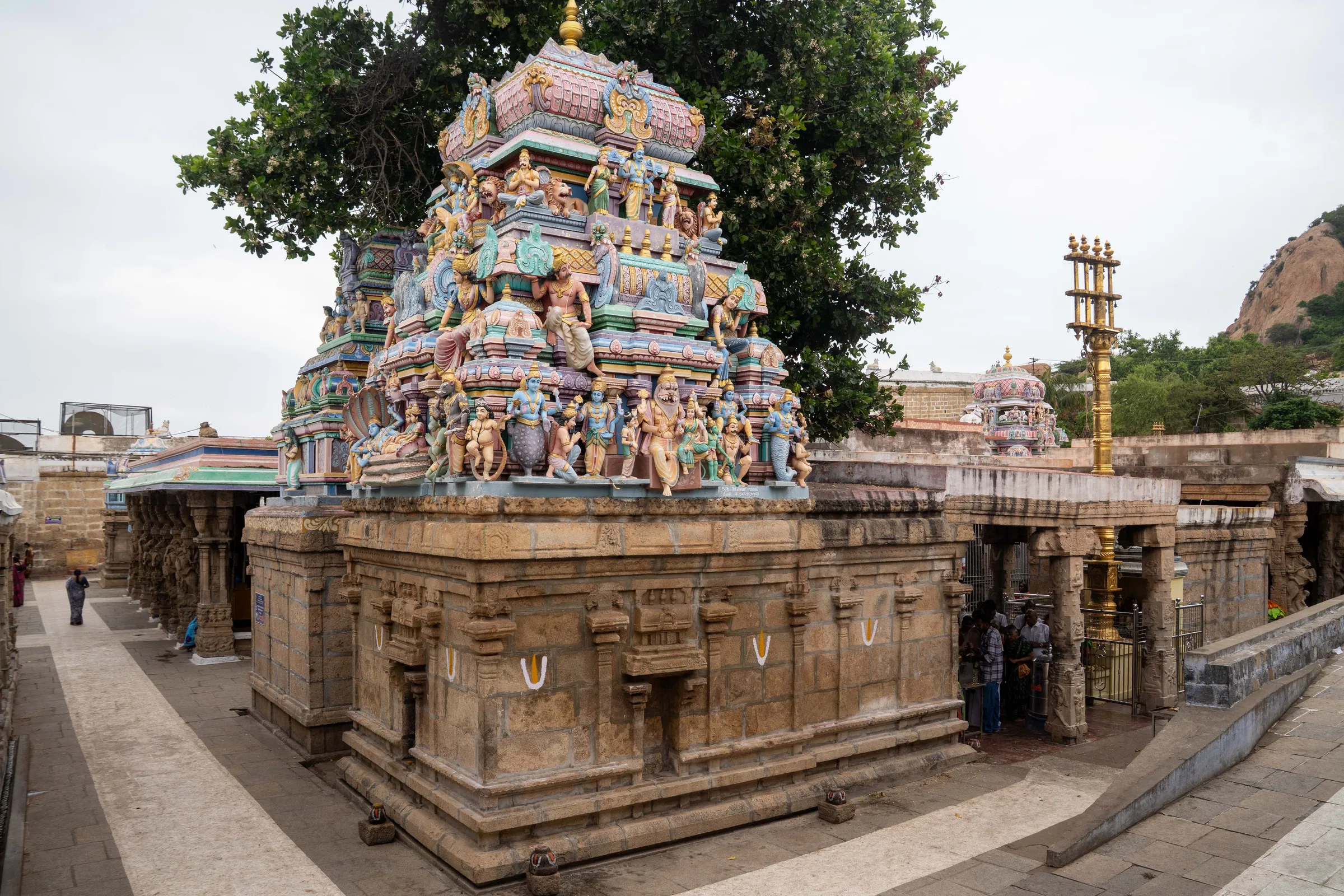
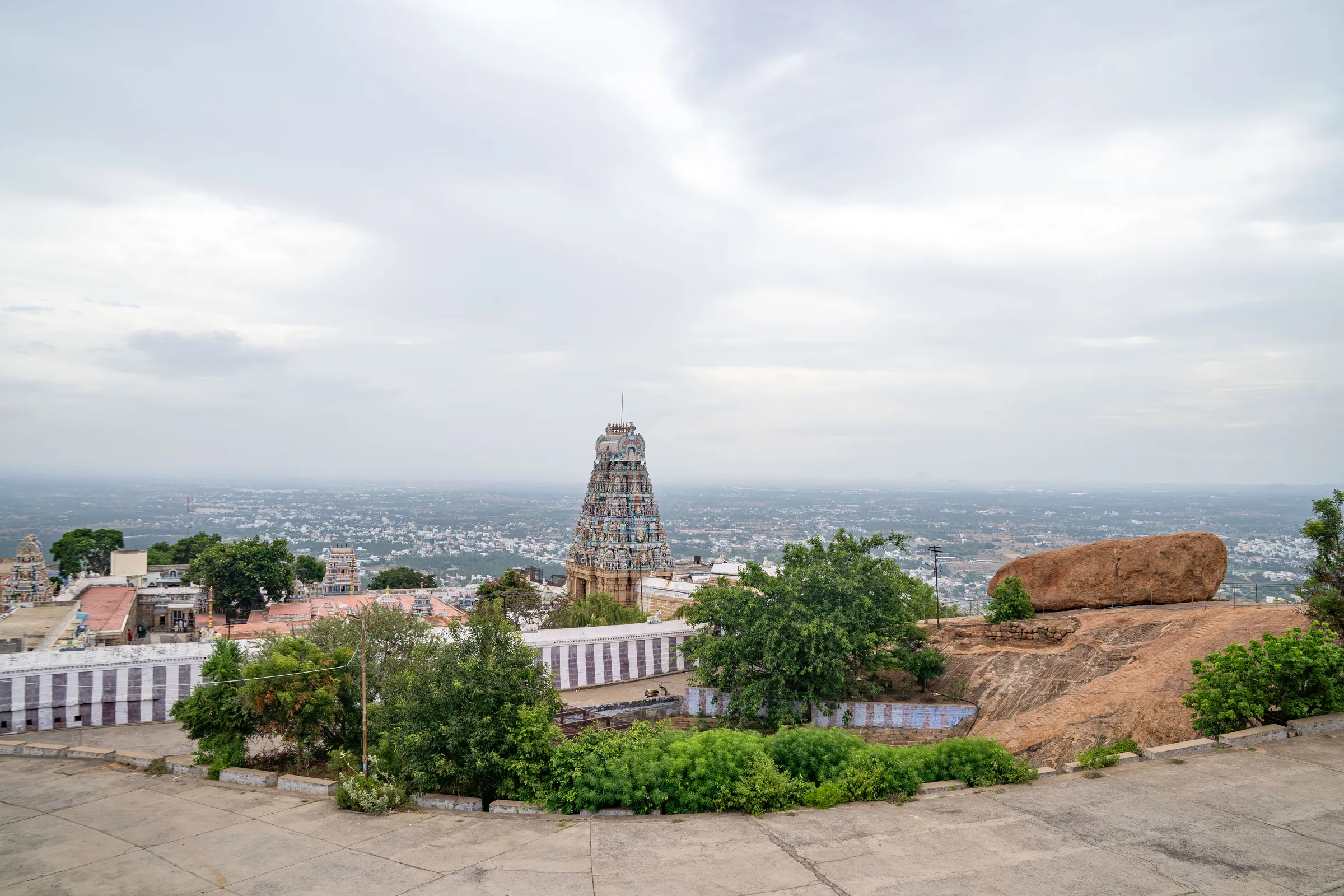
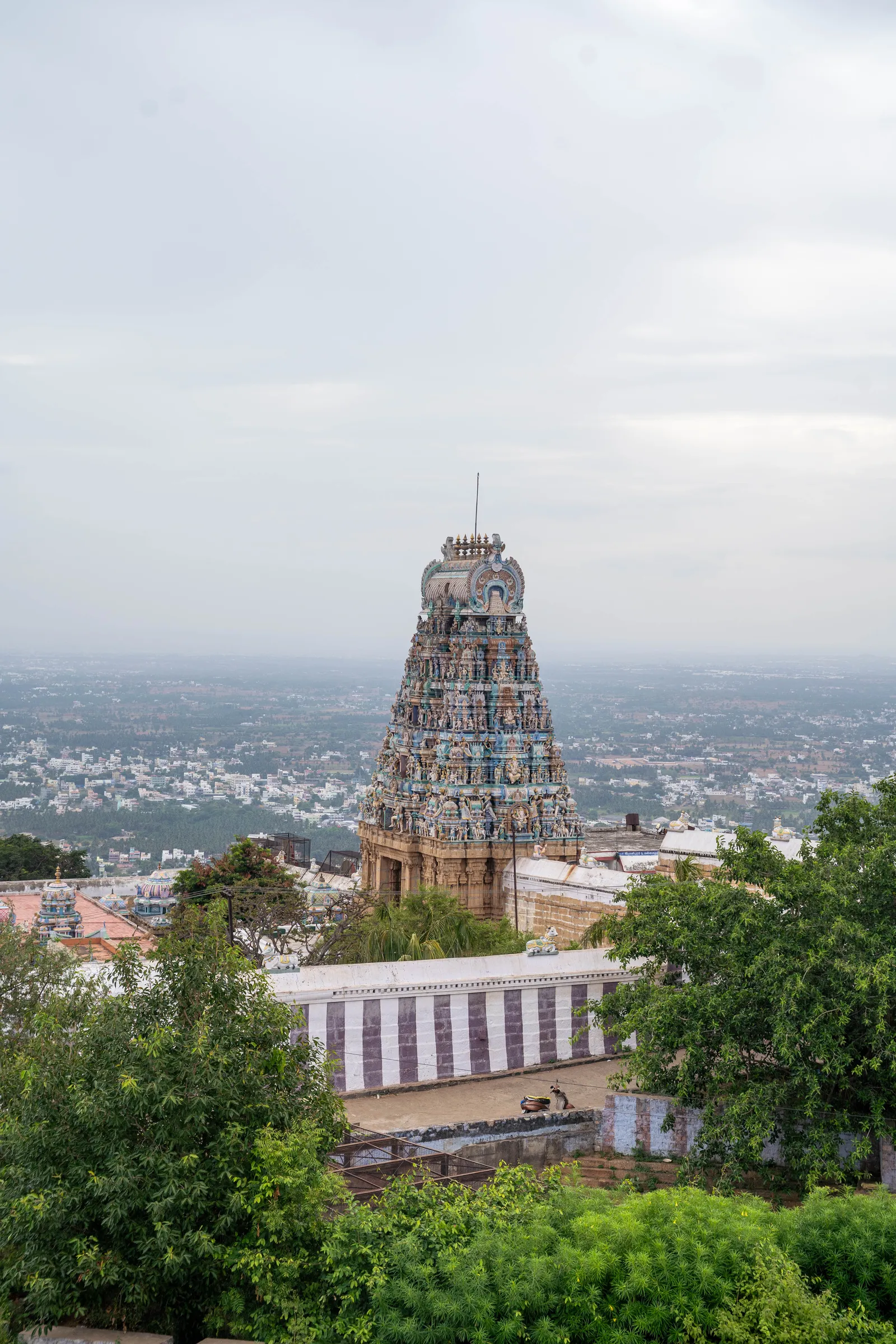
A hill temple at Tiruchengode near Salem and Erode, in worship for the rare Ardhanareeswar form of Śiva, half Śiva and half Parvathi. One of the seven important Śiva temples of the Kongu region.
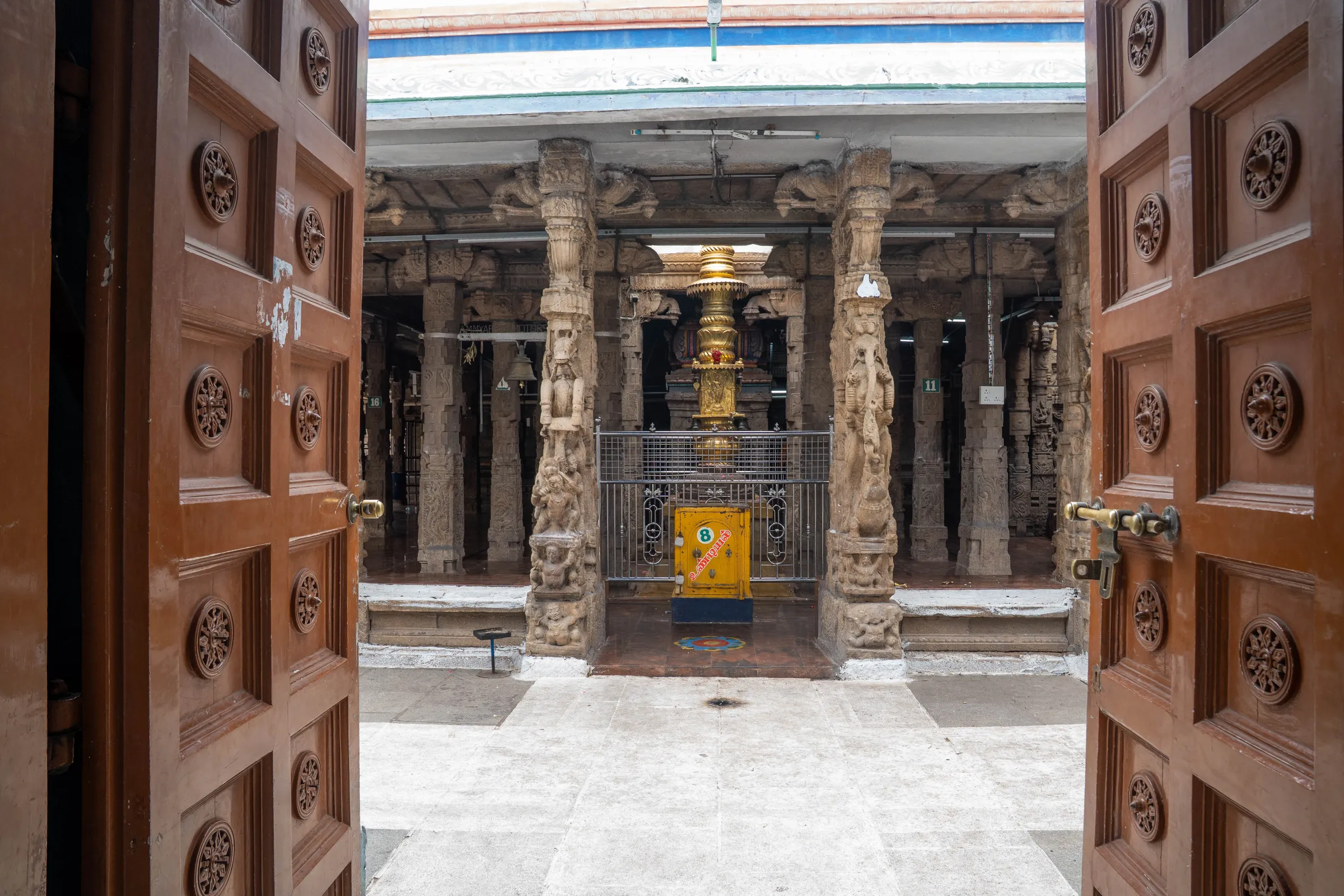
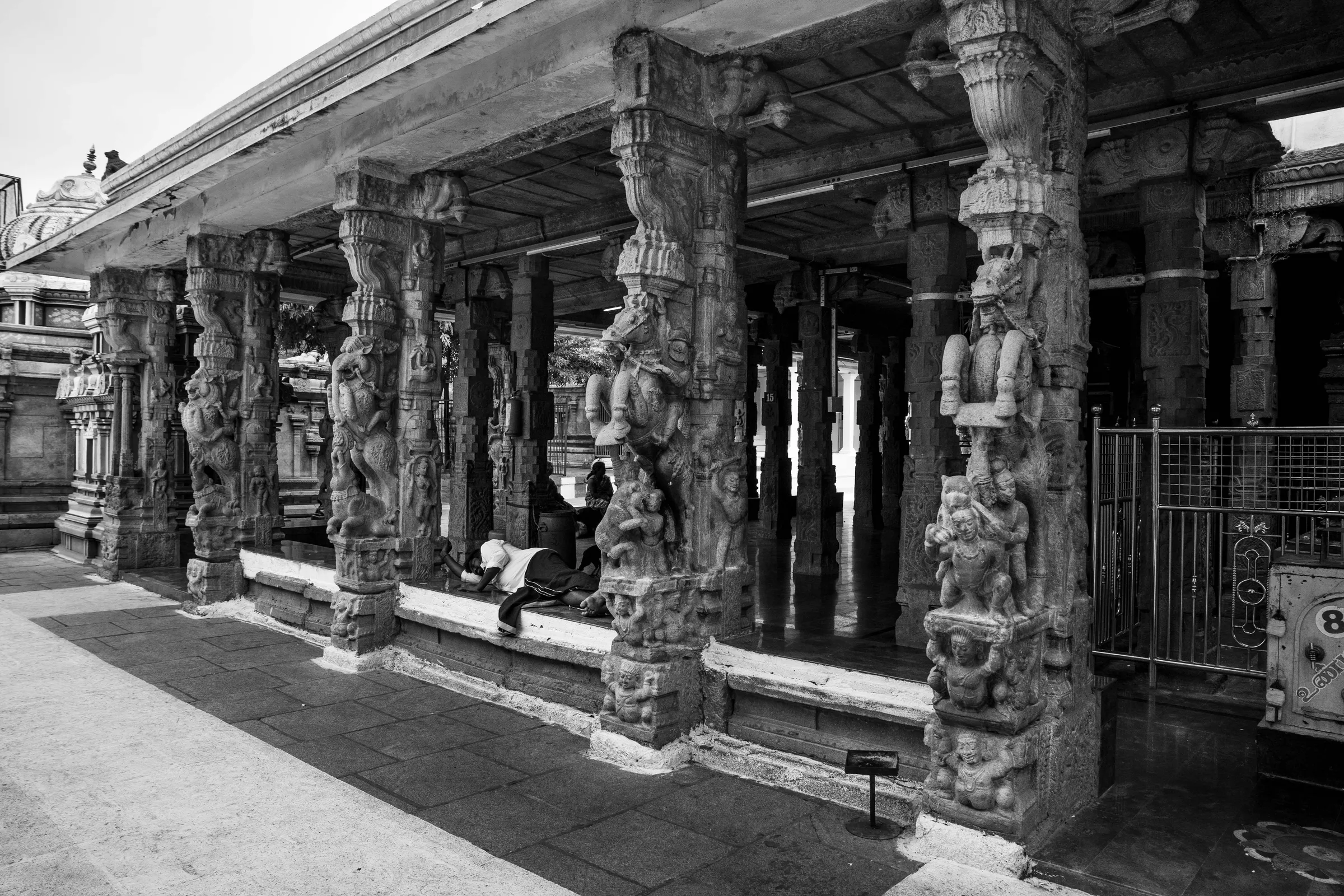
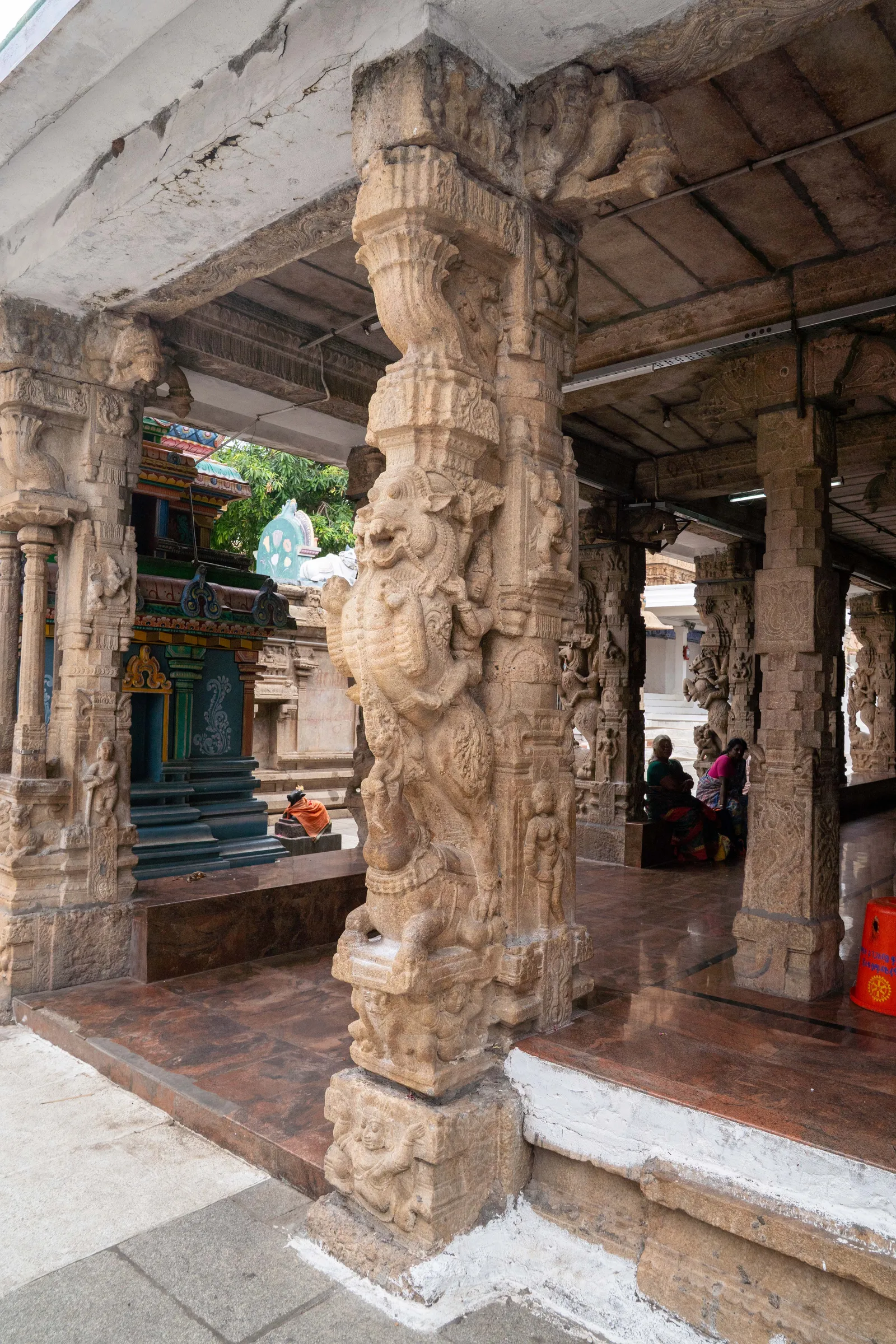
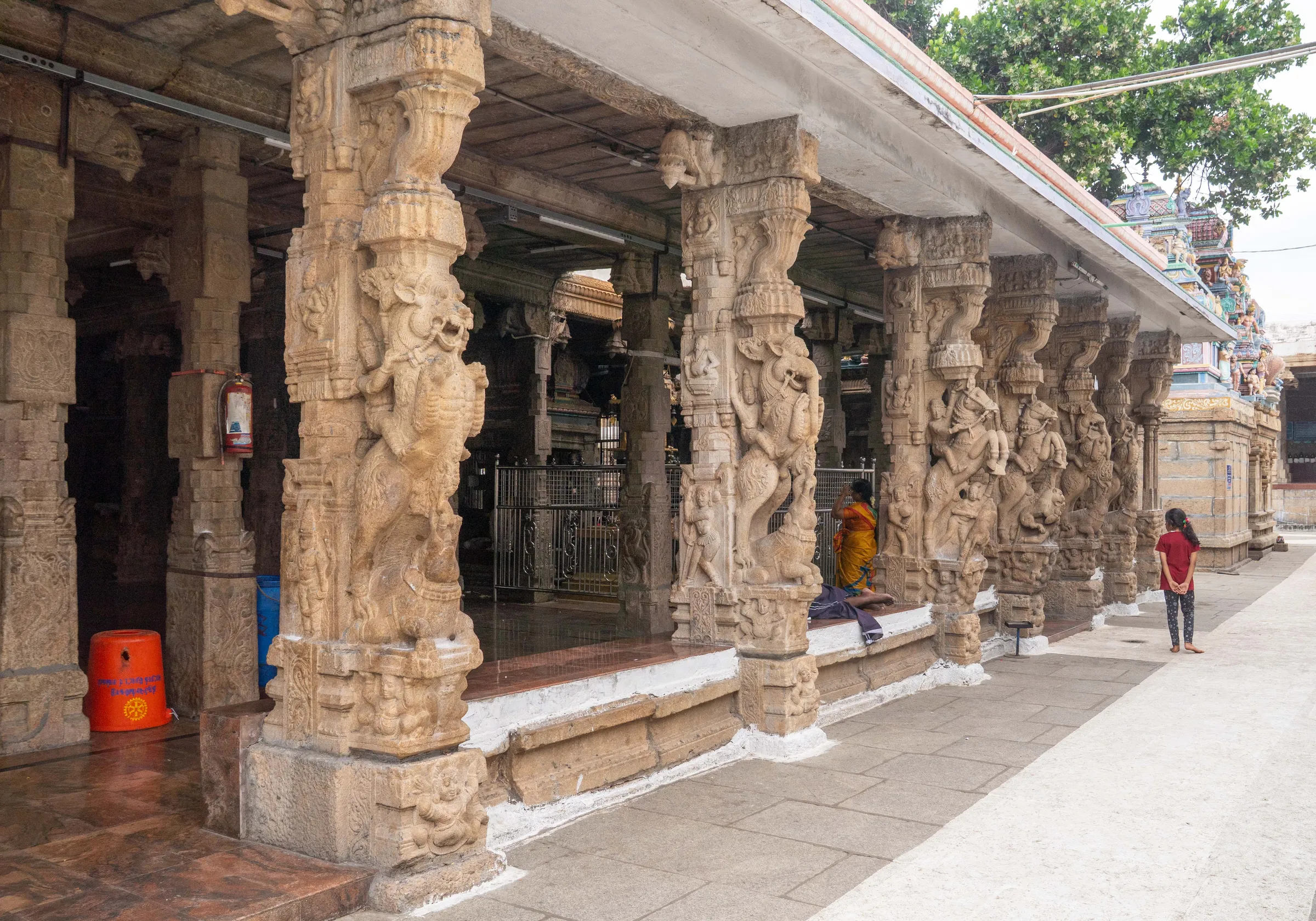
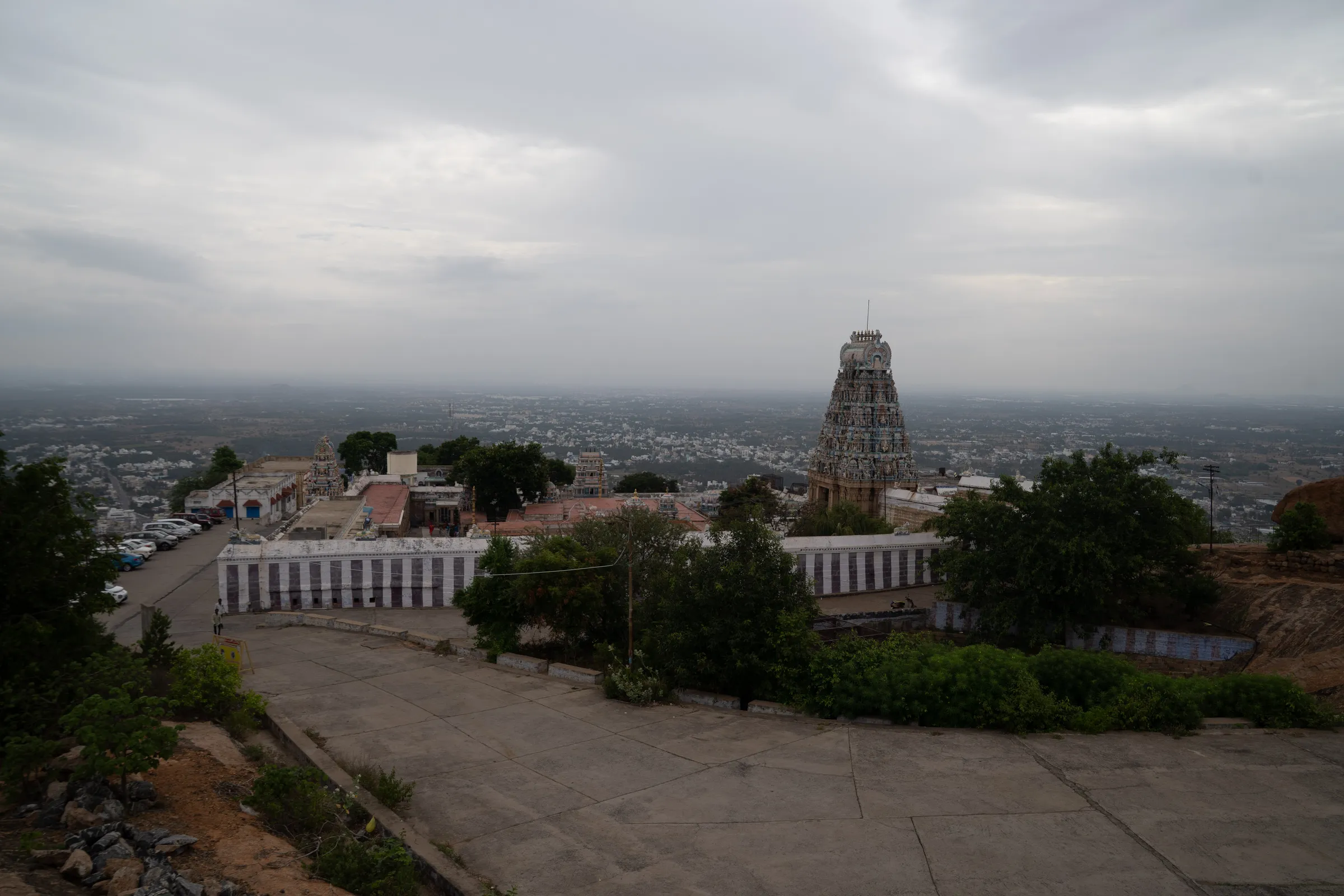
The temple stands on a hill of about 1,900 feet. As one climbs, there is a massive sculpture of a serpent and a Shivalinga; the shape of the hill itself is held to be like a serpent. The Nandi near the Taili mandapa is often smeared with butter, and the singa mandapa has well-carved pillars. Sixty steps lead up to the temple.
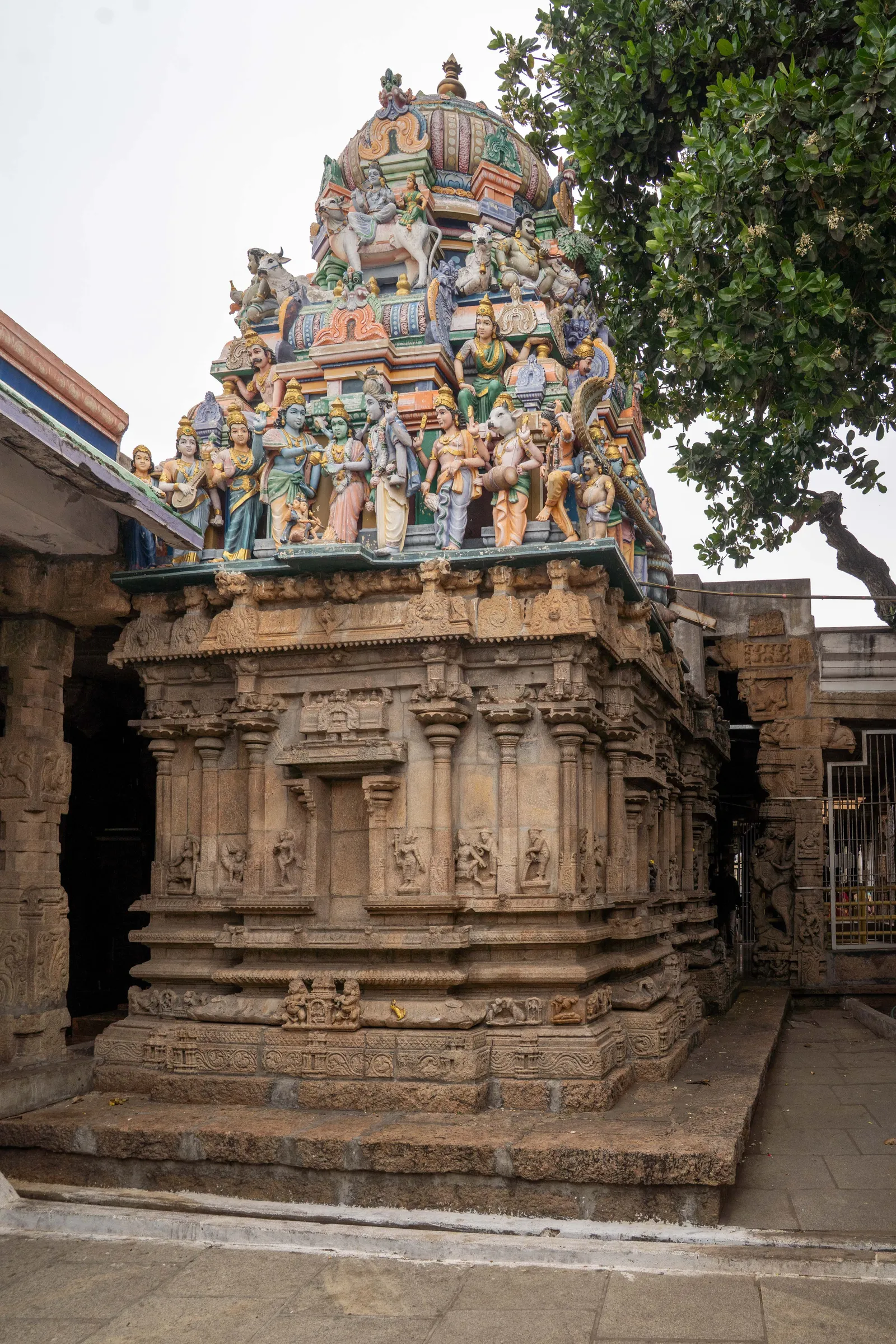
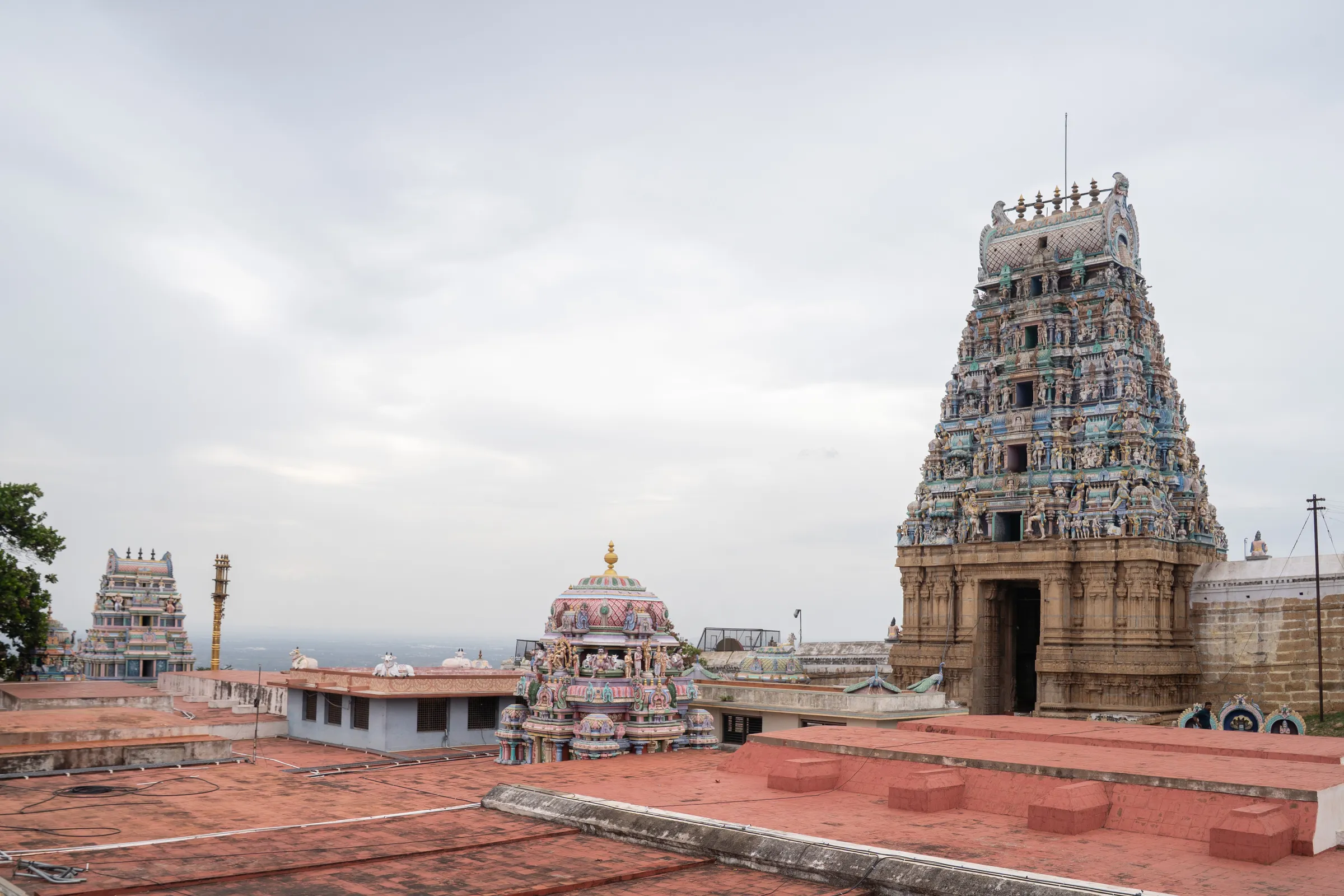
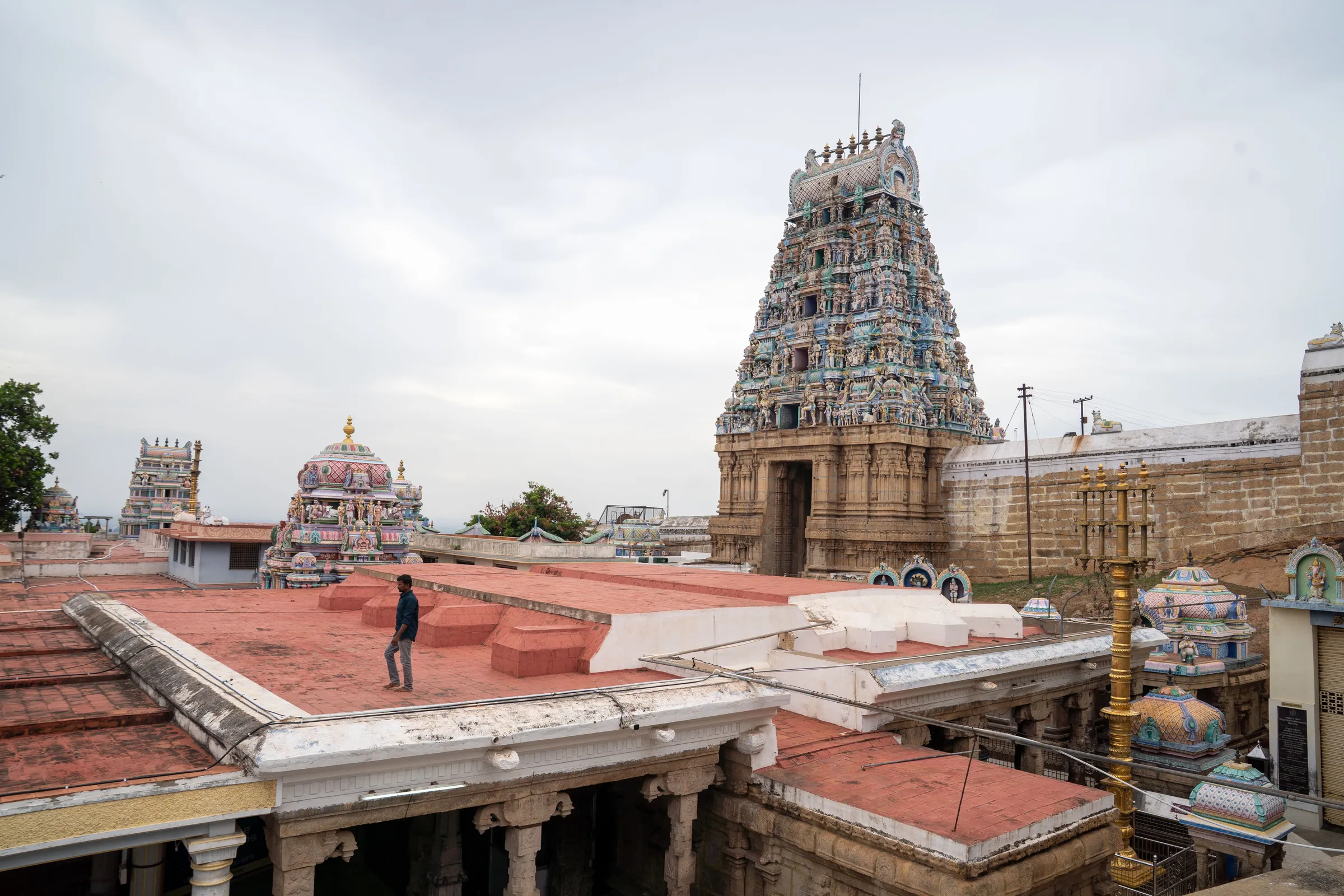
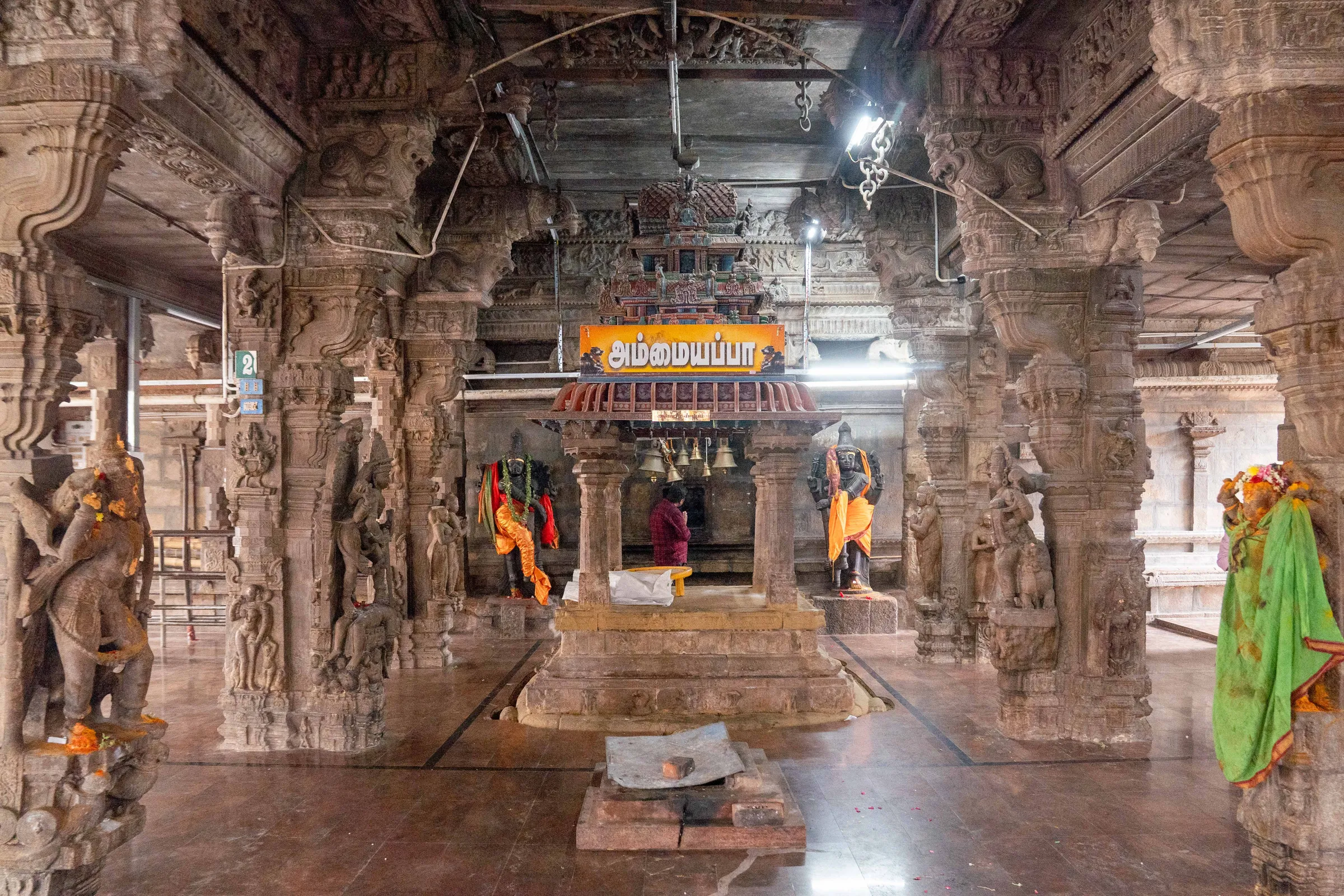
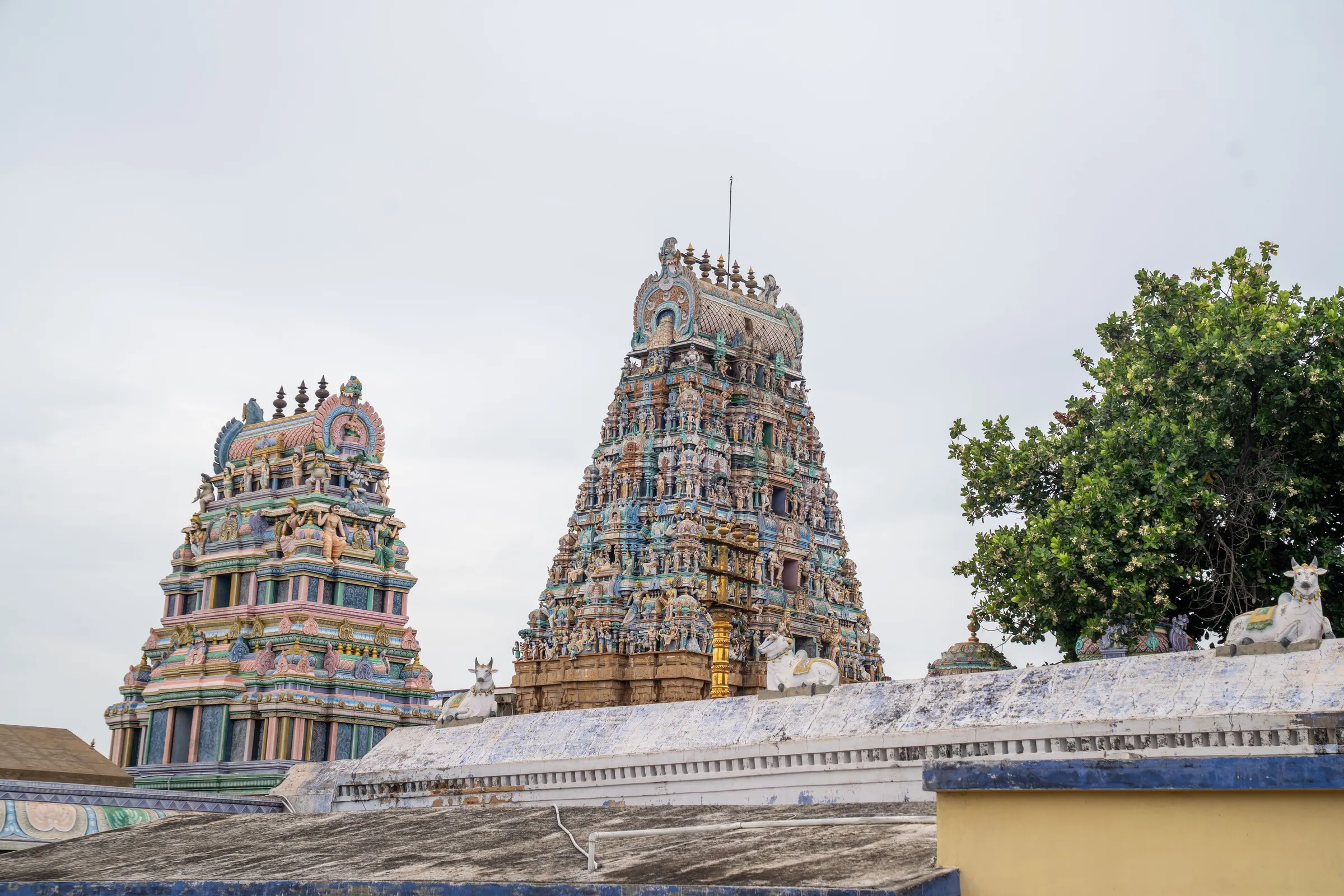
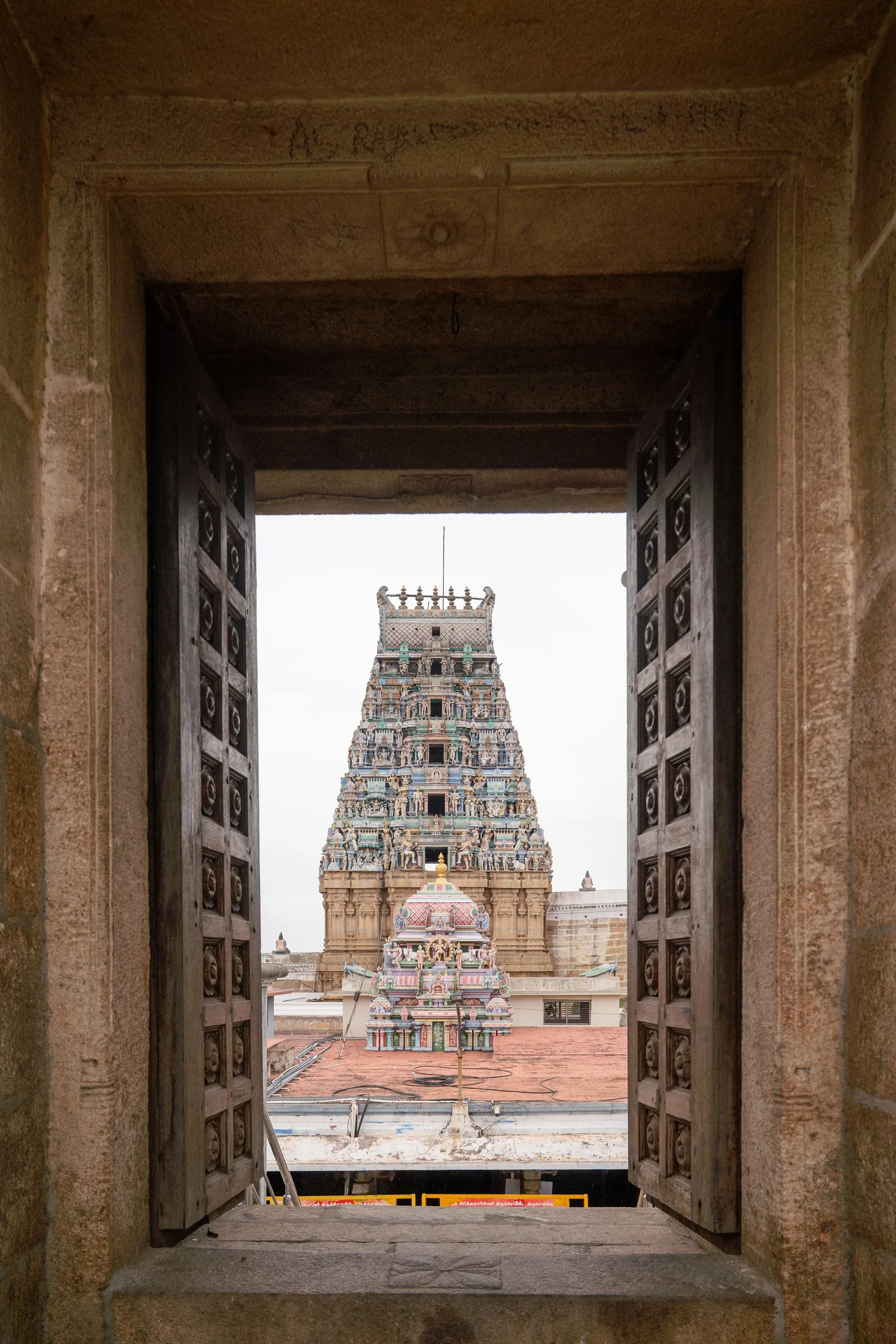
Siyali Gatti Mudaliar built the gopuram on top, by which one enters, in 1654. The actual temple lies almost twenty feet below the gopuram level. Within the complex the first shrine is dedicated to Velar, Muruga, and beside it is the shrine of Ardhanareeswar with a perennial spring next to it. An intricate window of nine holes lets light fall on the feet of the lord on three days of the year, grand occasions for a Surya puja.
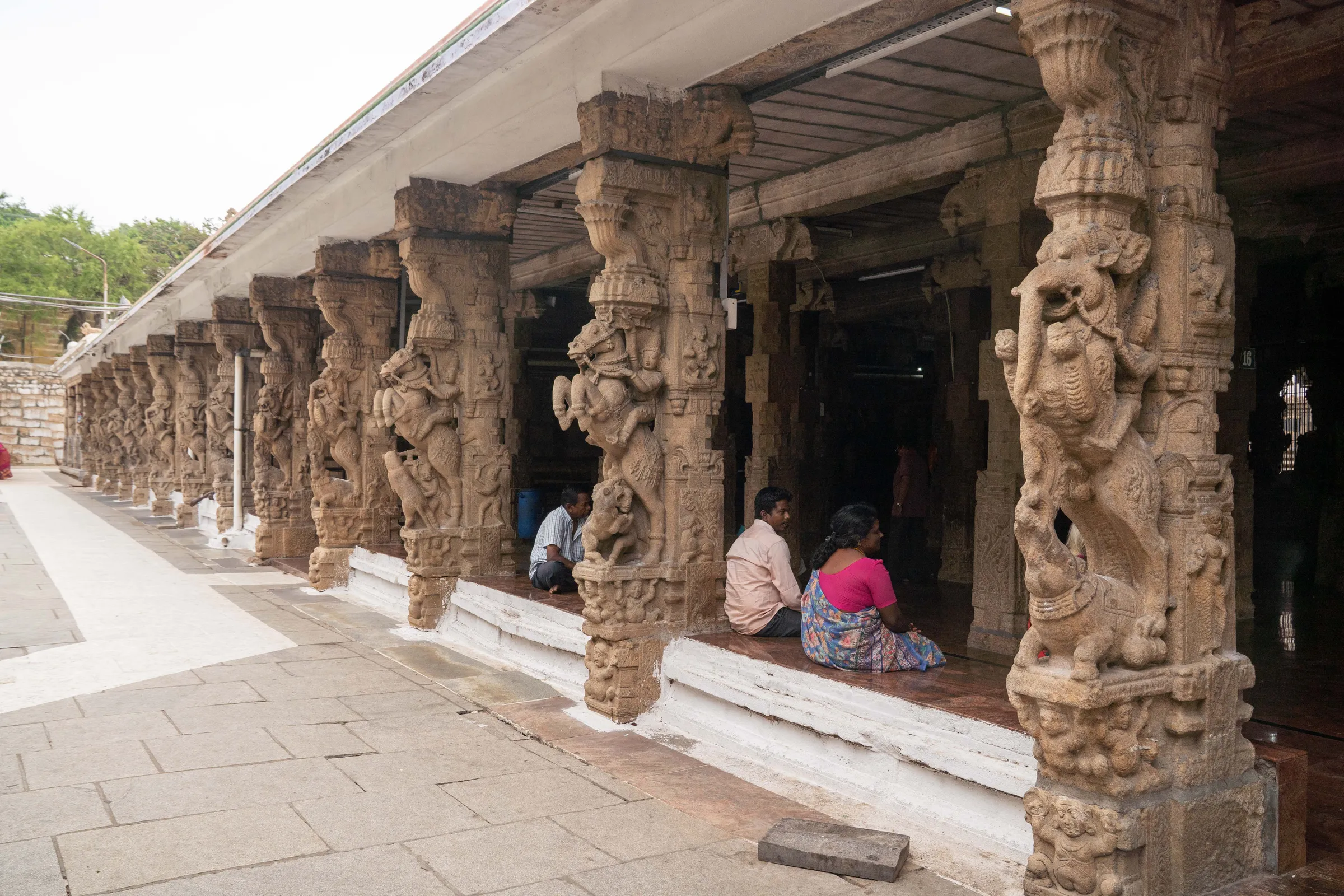
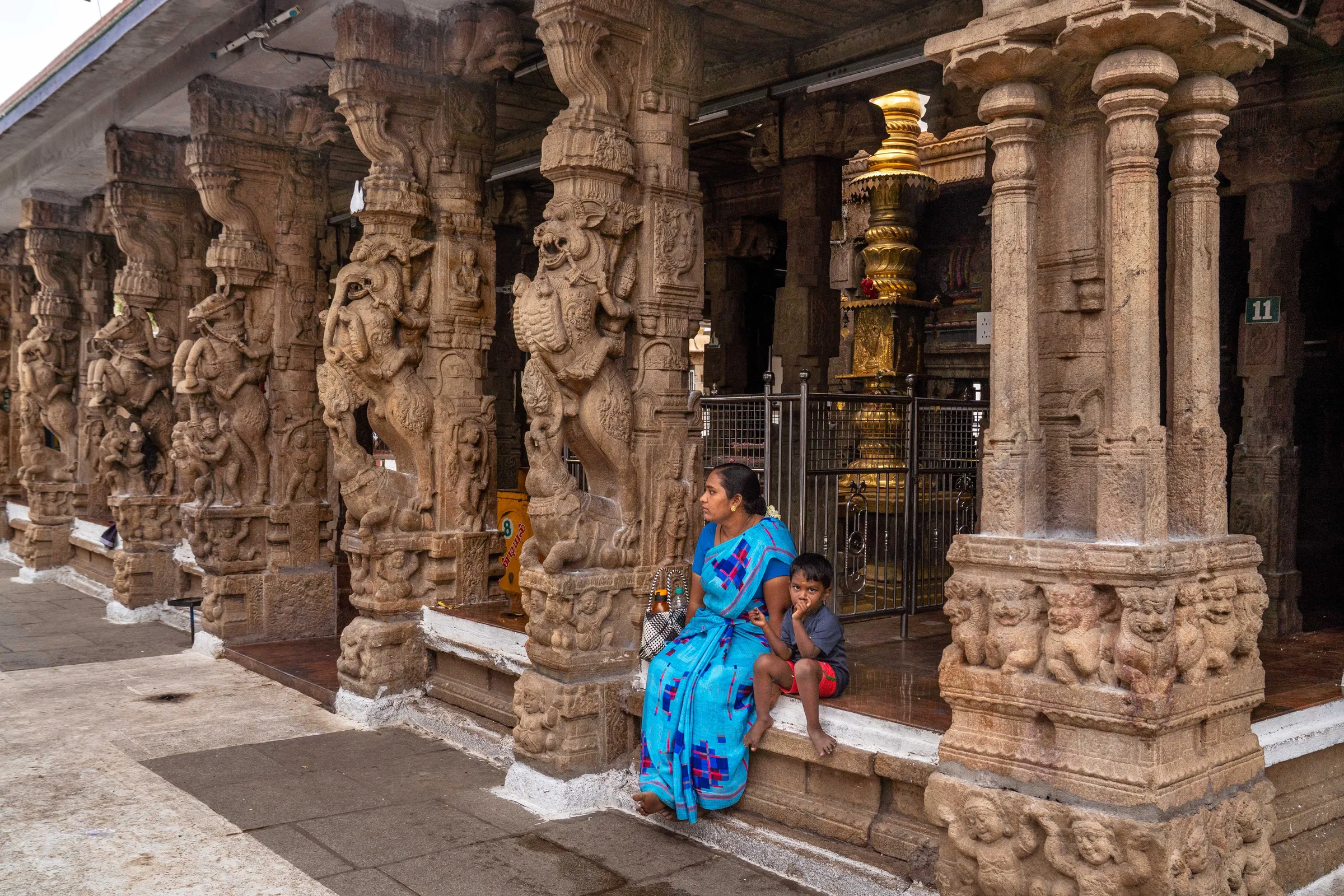
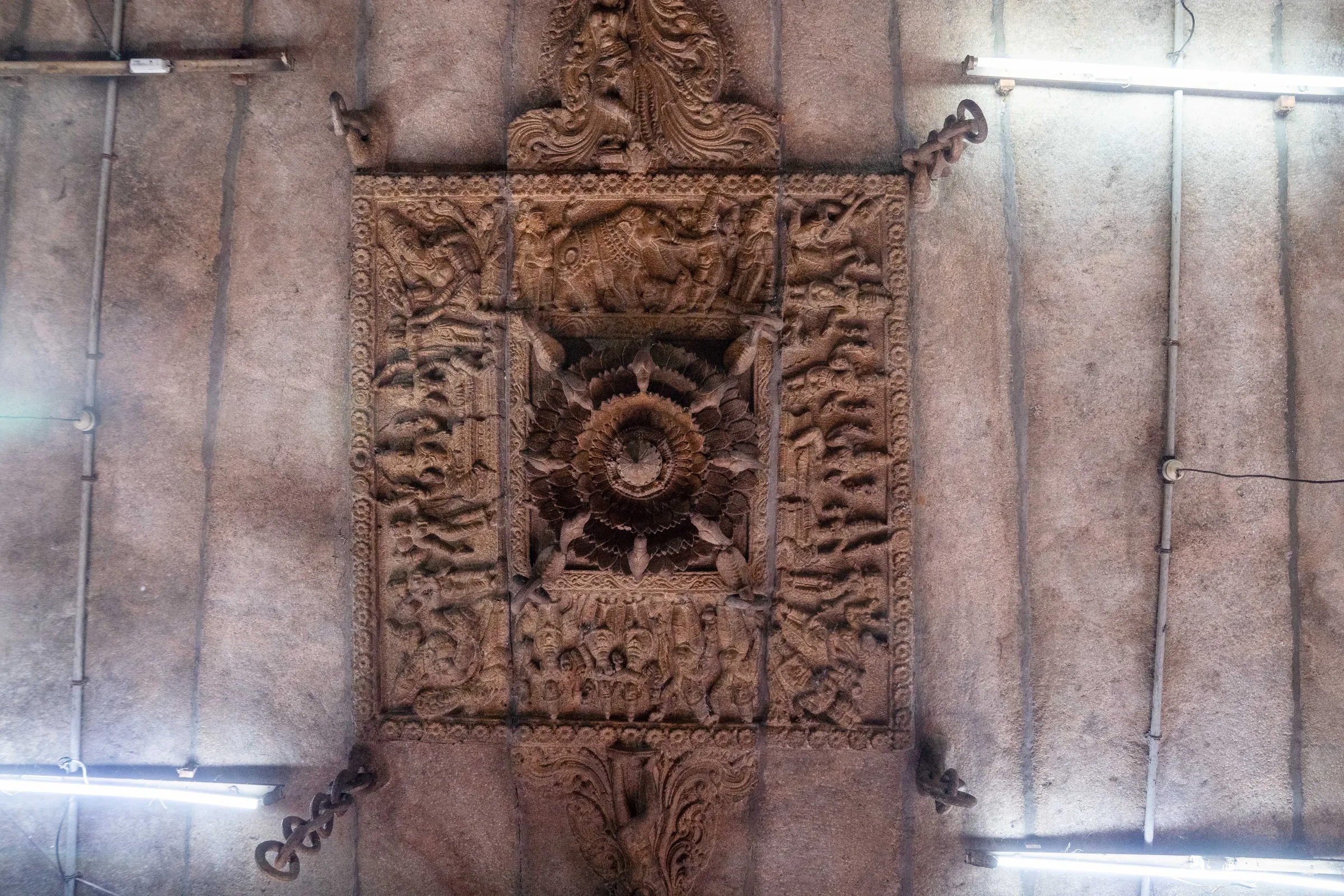
For art lovers the Nritta mandapa, built in 1599 by Attappa Nallathambi Kangaiyan of Morur, and the Tandava Badrai Vilasa Mandapa are important. The sculptor was one Pichai Anna Asari. The chains made from stone and the dancing images of Shiva and Parvathi are particularly fine, and the Nritta Mandapa carries a sculpture of Attappa Nallathambi and his wives. The hill holds several other temples and waterbodies, and near the temple are the ruins of an old fort, Pandava Gundu.
02
Archaeological
dated & cited
The Kongu region was at one time heavily forested and very fertile. It was conquered by the Chōḷas but has largely been ruled by local chieftains, and through the Palghat pass into Kerala it lay on the east-west coast trade even in Roman times. Both this temple and the Kailasanatha temple in the foothills are rich in inscriptions.
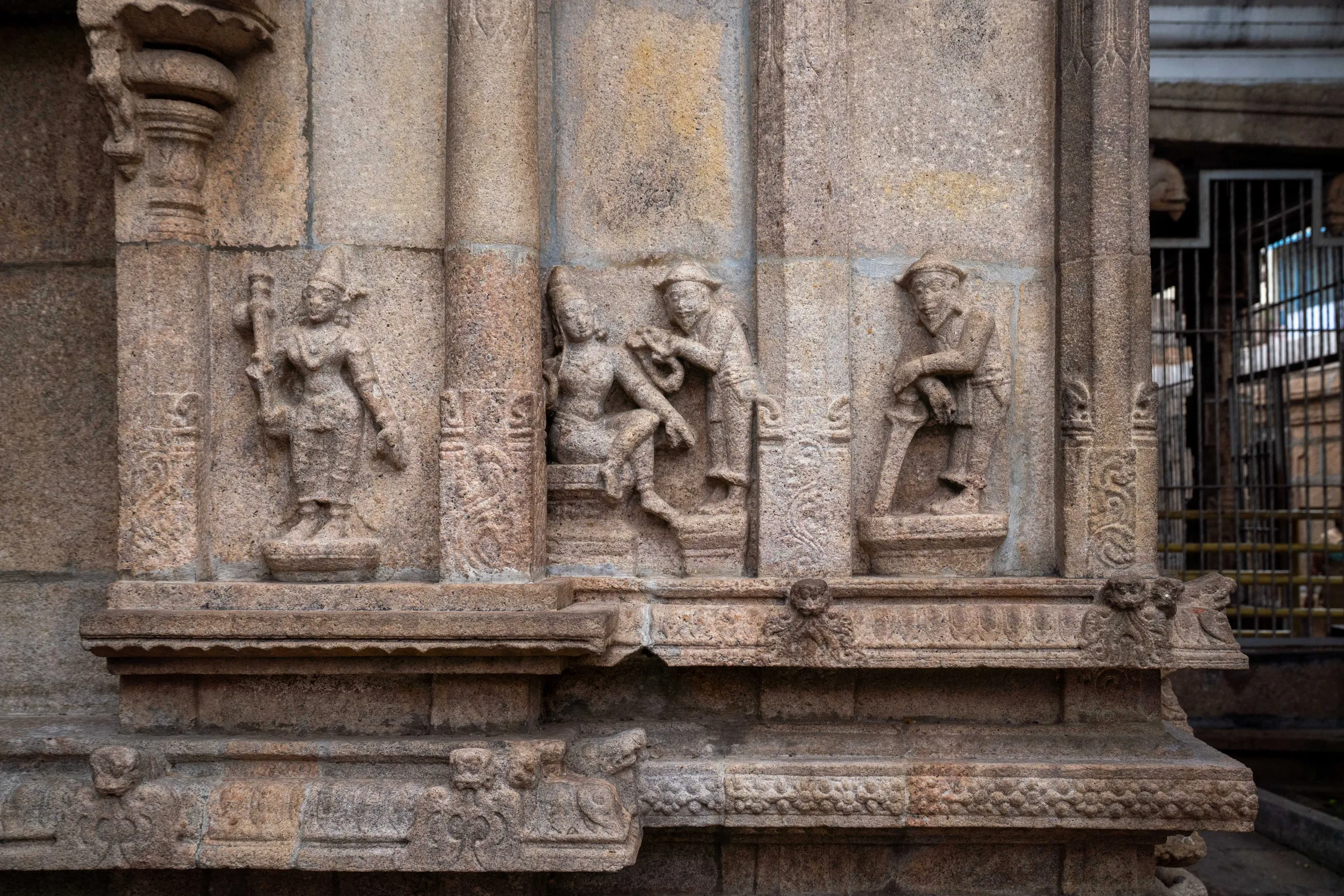
The gopuram was built in 1654 and the Nritta Mandapa in 1599. A pillar commemorates W. D. Davis, erstwhile Collector of Salem, who repaired part of the temple in 1823, shown with a walking stick and a hat. The 1962 Gazette of Salem district mentions a nearby temple, Malaikavalar Koil on the Paramatti road, as being in a 'bristling forest of spears'.
Dating
Gopuram 1654; Nritta Mandapa 1599; both temples here are rich in inscriptions.
Protection & condition
ConditionHeavily renovated through the wealth and piety of local business people; in worship
03
Mythological
as transmitted
In the old days the Kongu tribes offered blood sacrifices on the hill to protect themselves against snakebite. The sixty steps leading to the temple were used to settle disputes: the disputing parties had to sweat it out on the steps to prove their truthfulness, swearing on each step that they spoke the truth.
Arunagirinathar, the famous Muruga devotee and saint of the fifteenth century, wished he had a thousand eyes to admire the beauty of the deity. The temple has been sung by Sambandar, his verse here given in gratitude for the deity curing a severe fever. In the Kailasanatha temple in the foothills is a well reached by a passage under the Nandi.
Sources
100 Timeless Tamil Nadu Temples (Pradeep Chakravarthy)
This is an open, reviewed record. If you have spotted an error or have
something to add — a correction, a date, a source, a name in another script —
propose it. Every change is reviewed before it joins the record.
You are suggesting an edit. Click any highlighted paragraph to change it.
“Suggest an edit” makes this entry editable right here — change the text, tell us how to reach you, and send it. No account needed. “Share feedback” opens a short form. Both go through review before anything is published.