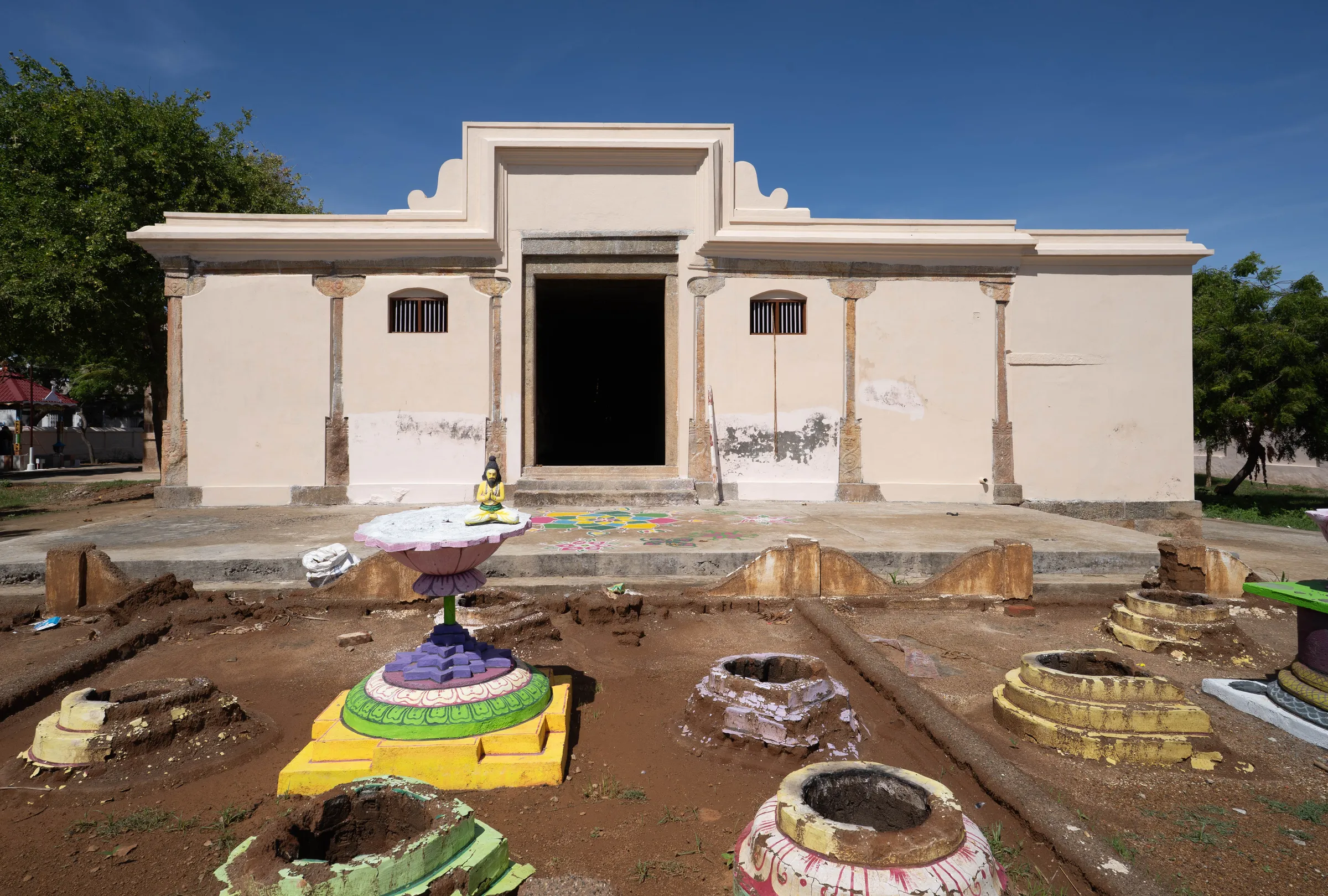
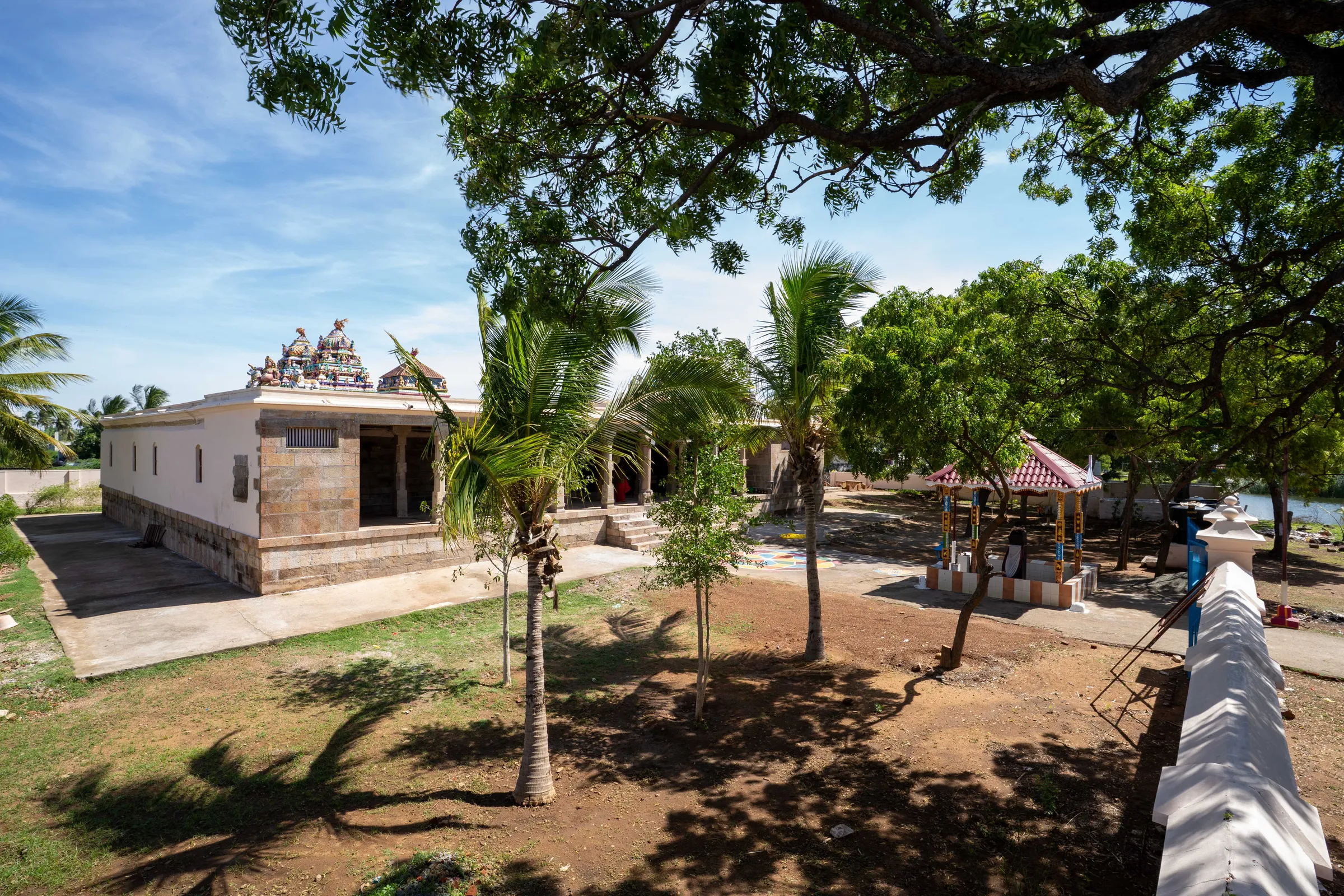
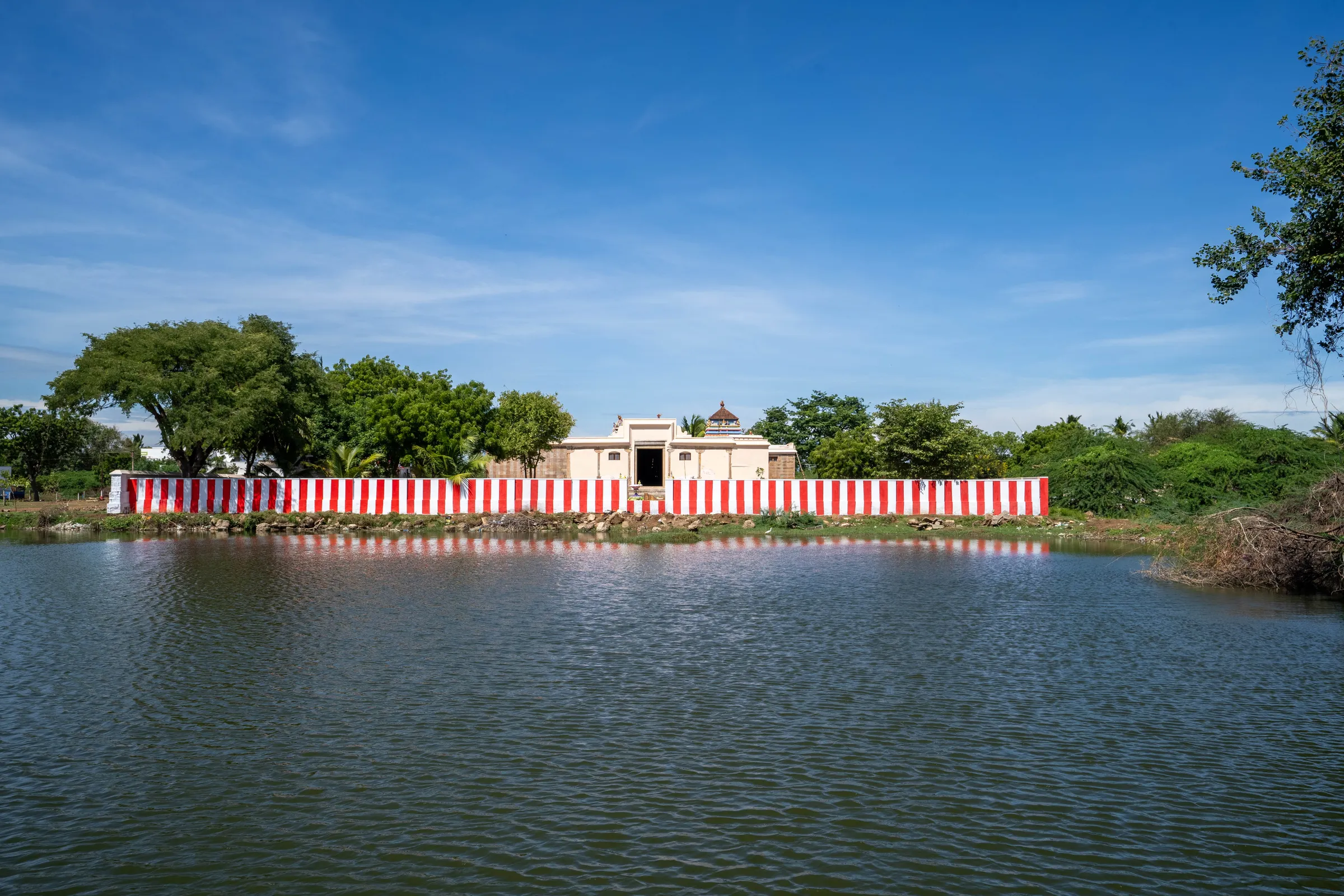
Ambalanathaswamy Temple, photograph
← Pandya Nadu
Entry 083

Ambalanathaswamy Temple

Manur · Tirunelveli · Pandya

A small, plain village temple at Manur whose single inscribed pillar preserves a remarkable record of village self-governance from the reign of Maranjadaiyan.

The Ambalanathaswamy temple at Manur is small, plain and barely known beyond its village, yet a single inscribed pillar makes it important. Set up in the 35th year of the Pandya king Maranjadaiyan, the inscription lays out in seven clauses the rules of membership and voting in the village assembly, a rare close record of medieval self-governance in the Tamil country.

The photographs

Plates · 11

Ambalanathaswamy Temple, photograph
© Sai Sanjay Prasath · All rights reserved
Ambalanathaswamy Temple, photograph
© Sai Sanjay Prasath · All rights reserved
Ambalanathaswamy Temple, photograph
© Sai Sanjay Prasath · All rights reserved
Ambalanathaswamy Temple, photograph
© Sai Sanjay Prasath · All rights reserved
Ambalanathaswamy Temple, photograph
© Sai Sanjay Prasath · All rights reserved
Ambalanathaswamy Temple, photograph
© Sai Sanjay Prasath · All rights reserved
Ambalanathaswamy Temple, photograph
© Sai Sanjay Prasath · All rights reserved
Ambalanathaswamy Temple, photograph
© Sai Sanjay Prasath · All rights reserved
Ambalanathaswamy Temple, photograph
© Sai Sanjay Prasath · All rights reserved
Ambalanathaswamy Temple, photograph
© Sai Sanjay Prasath · All rights reserved
01

Architectural

structure & vocabulary

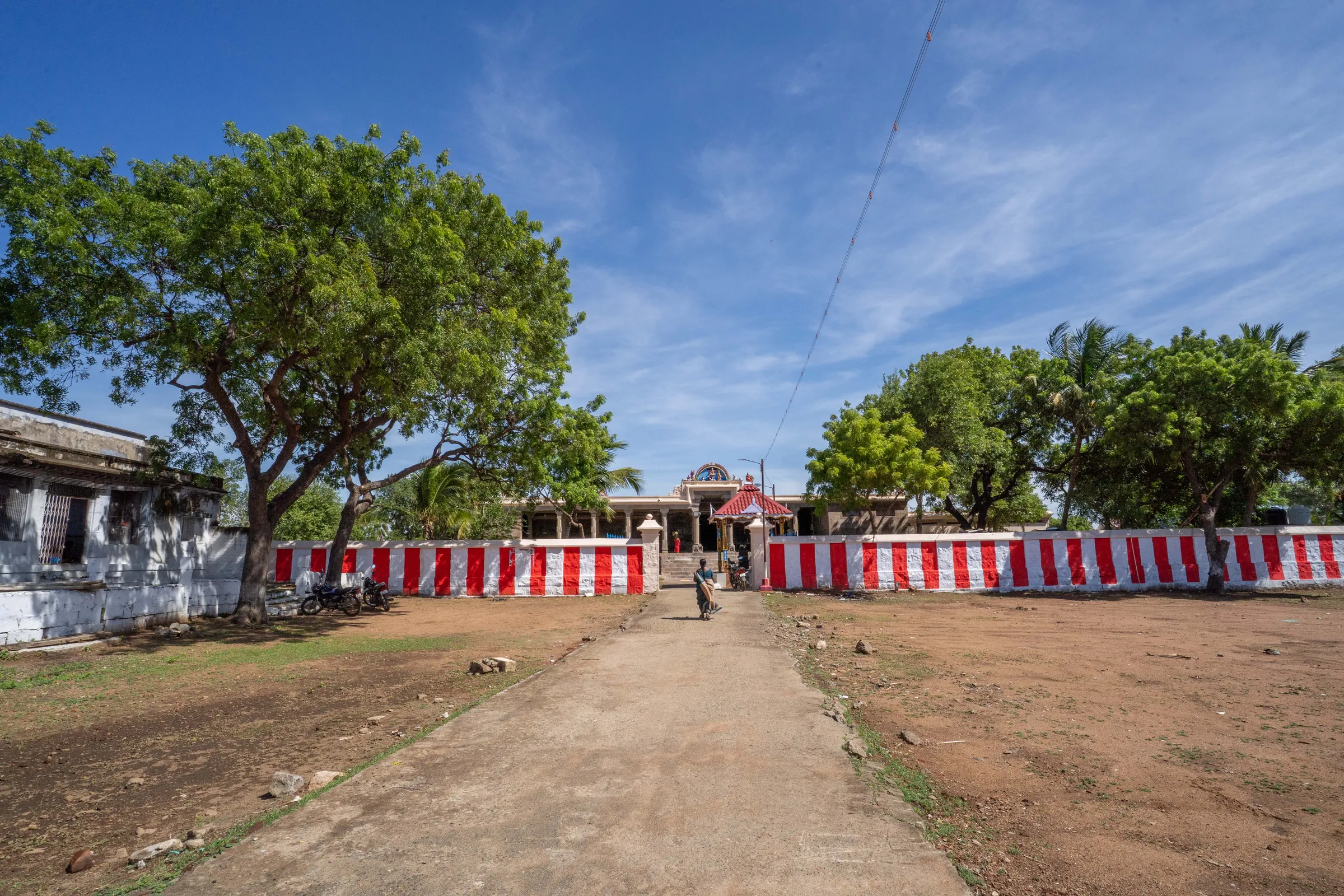
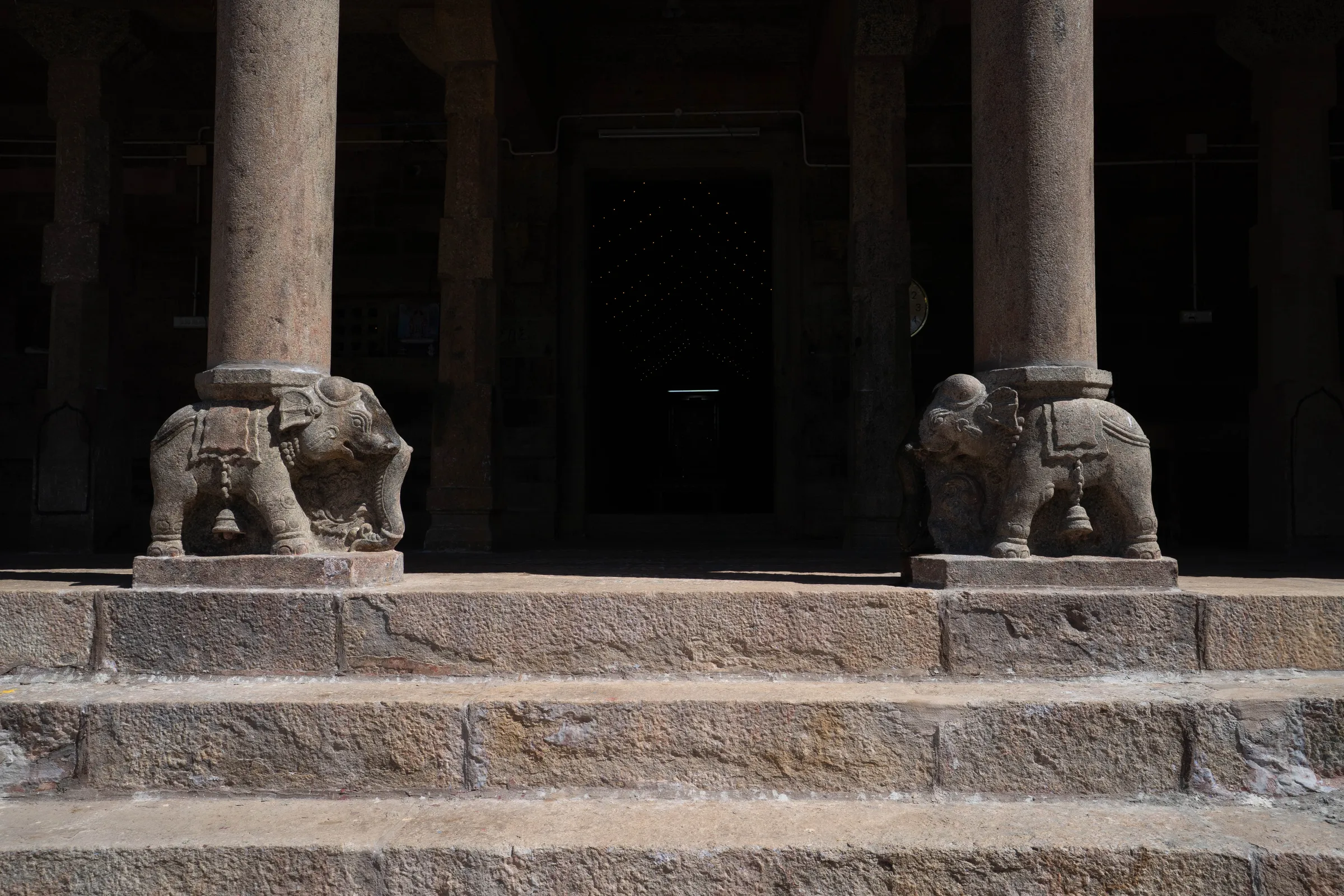
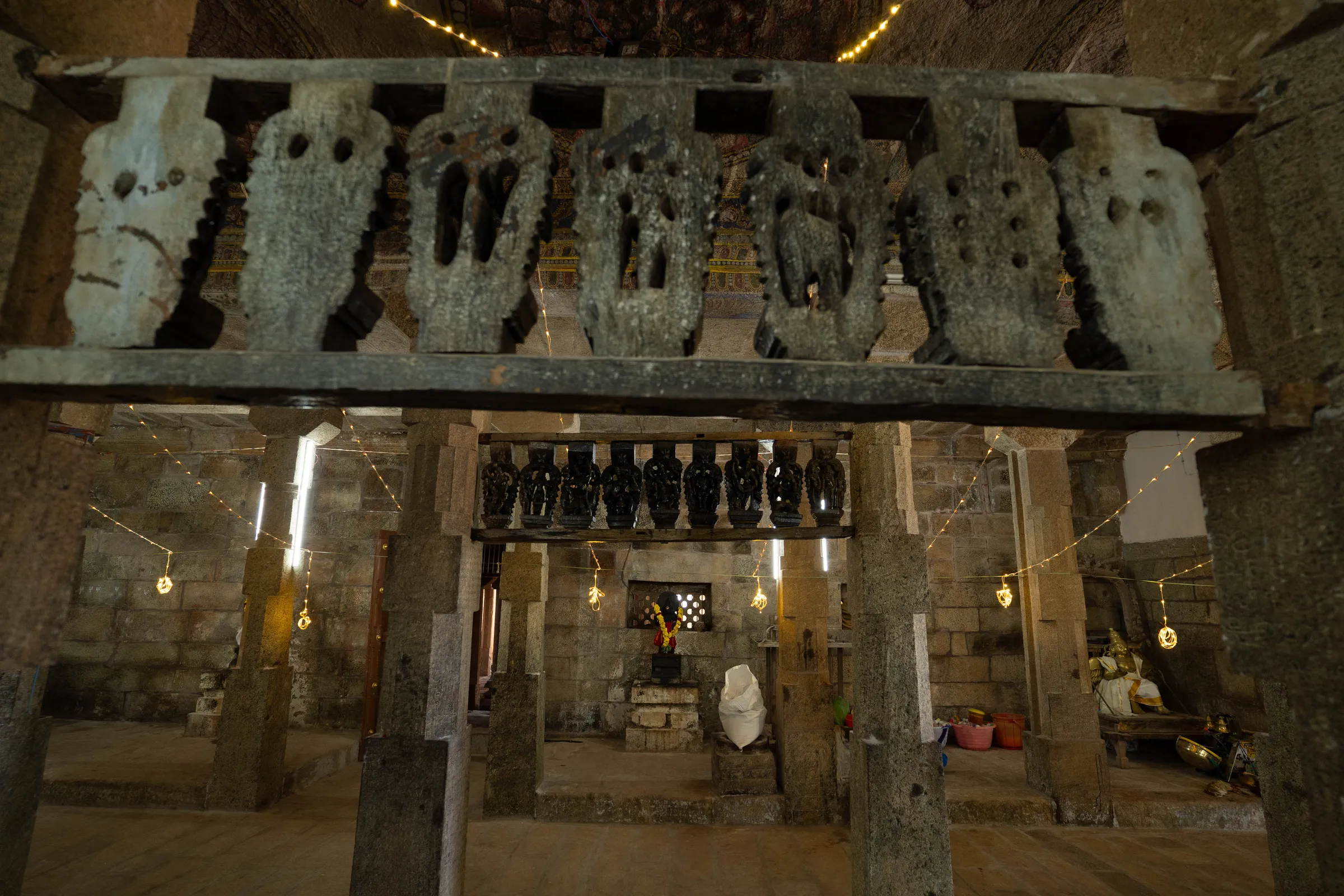
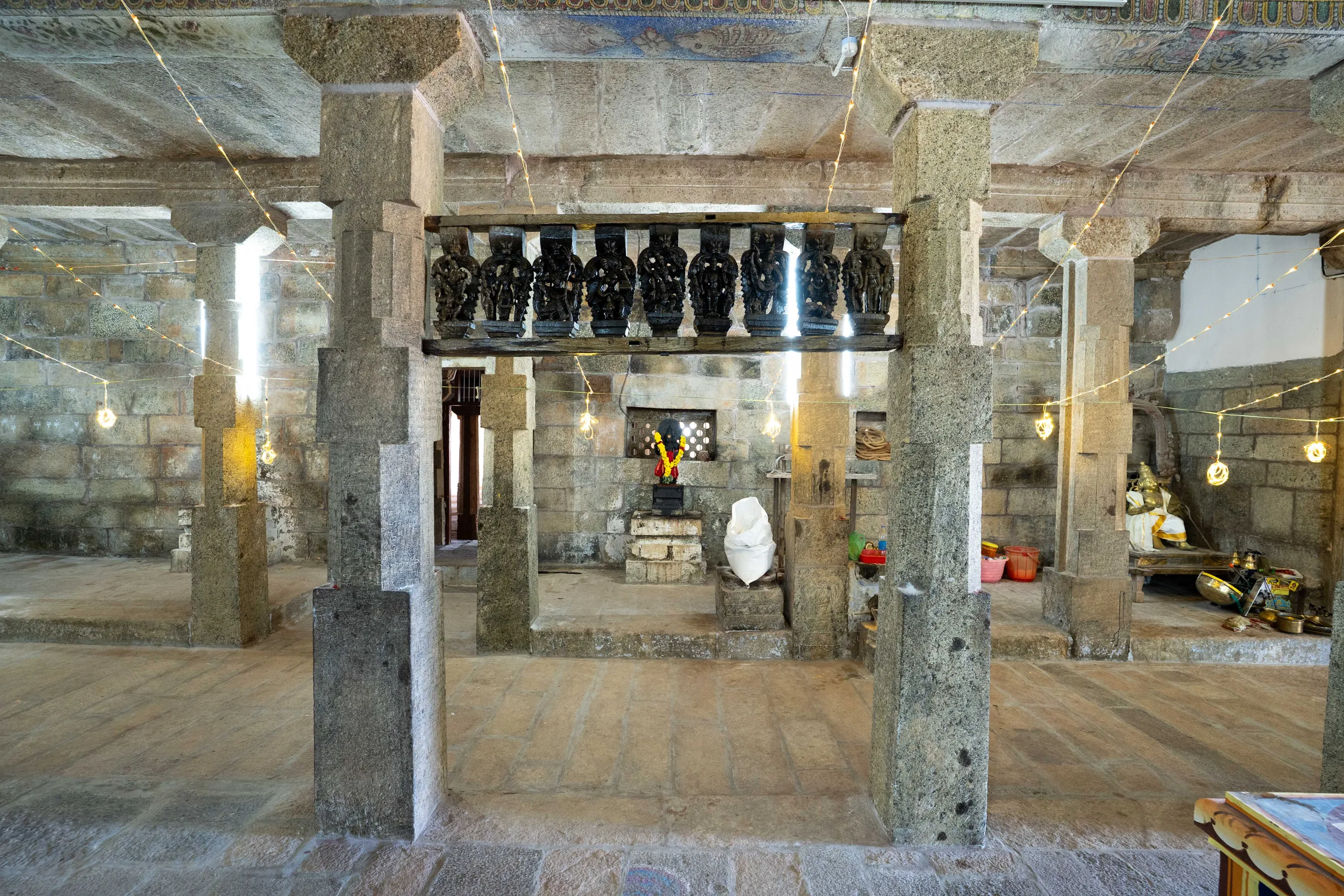
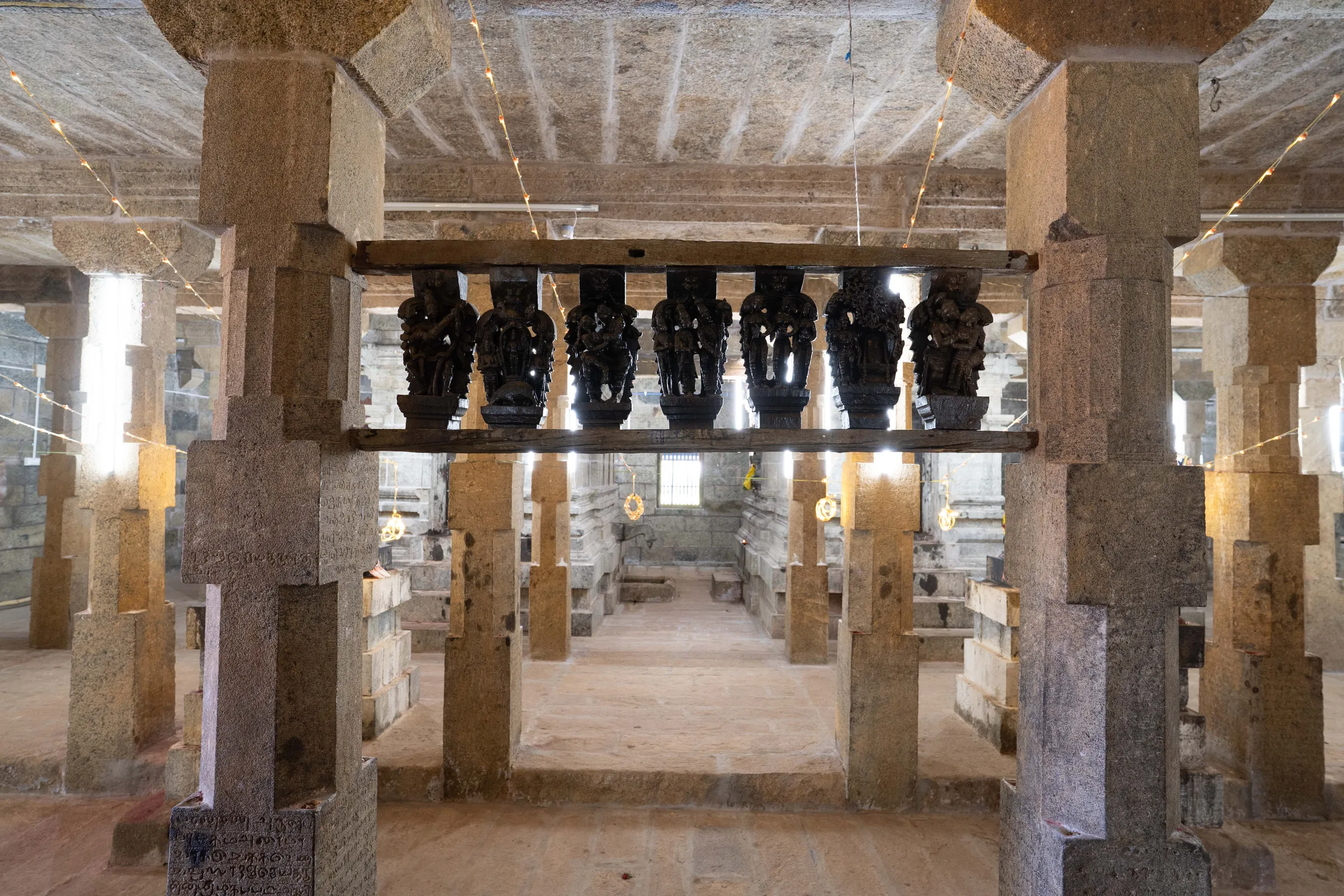
The temple stands on a slightly raised part of the land in the village of Manur. It is small and plain, with few devotees and little known outside the village. Its interior is simple, with rows of pillars between the entrance and the main shrine. The pillars hold no artistic value, but one carries a long inscription.

02

Archaeological

dated & cited

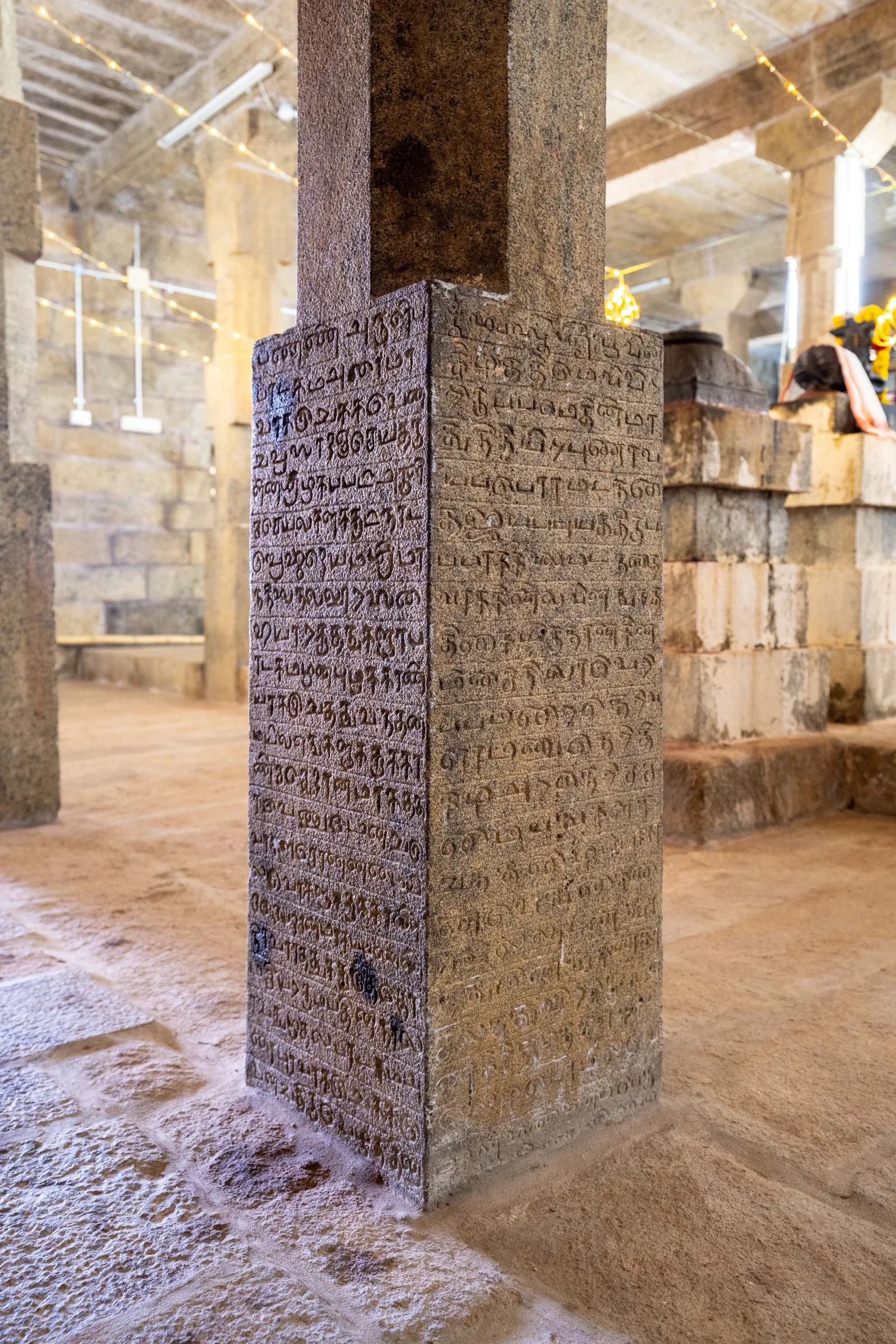
A pillar bears a long inscription in Tamil Vatteluthu and Grantha script, from the 35th regnal year of the Pandya king Maranjadaiyan, of whom little is known; the pillar has been repainted many times, so the text is now hard to read. The book values the inscription highly for the political history of Tamil Nadu.

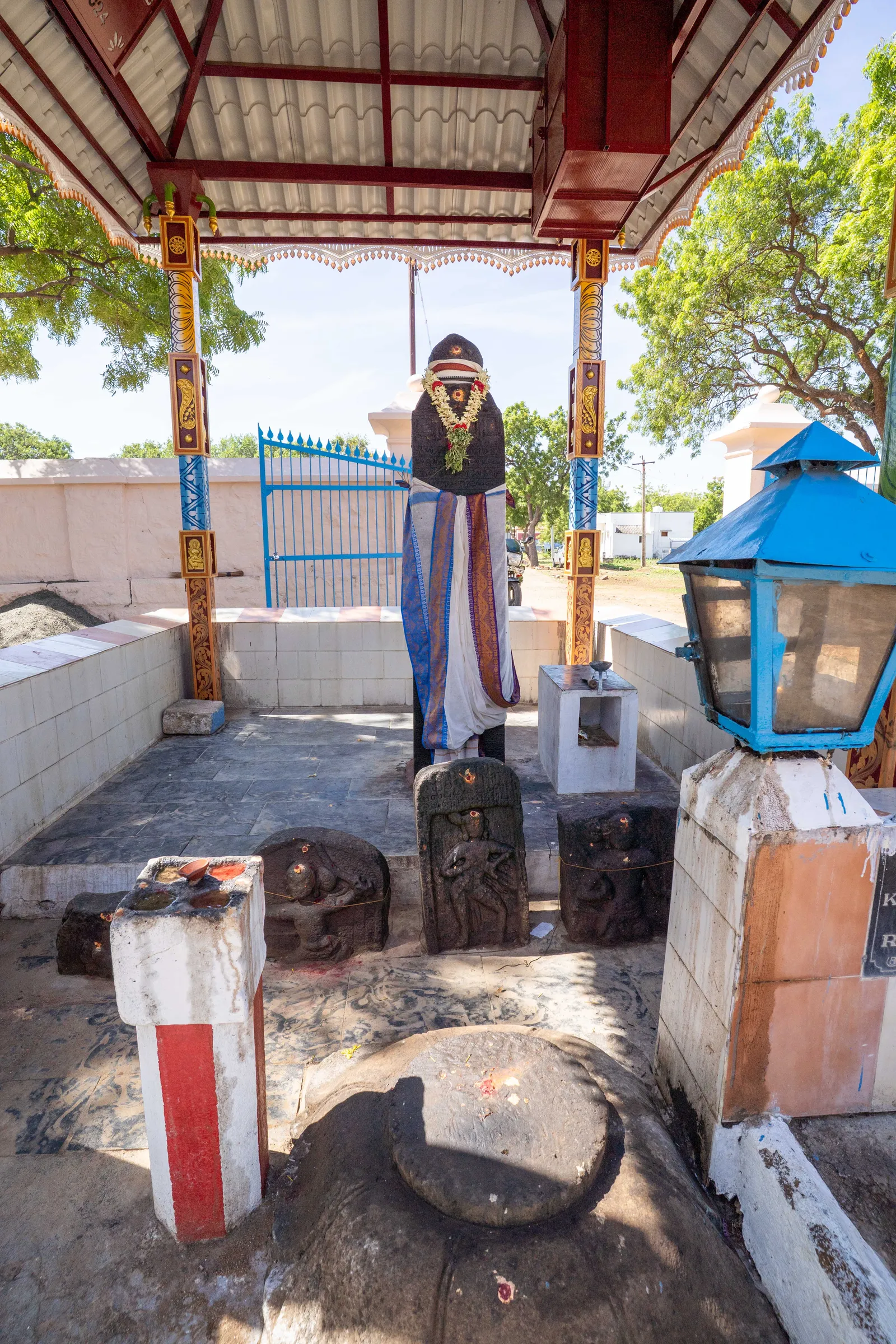
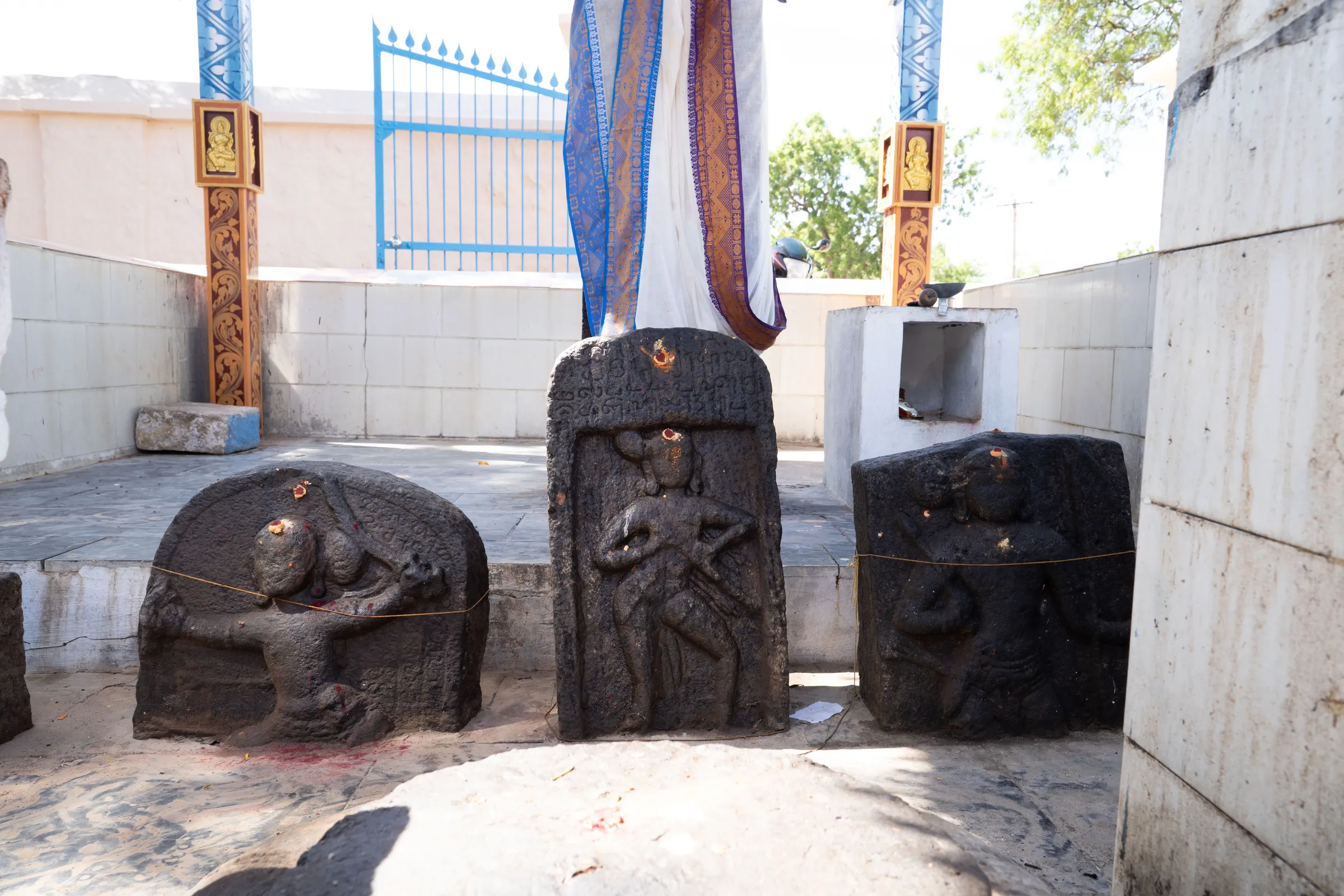
Its seven clauses set out a reform of the village Sabha as the original landowners' character changed, safeguarding the rights of original shareholders and of newcomers who came by purchase or as sons-in-law. The village is named Mananilainallur in Kalaikudi Nadu and described as a Brahmadeyam, with general meetings announced by drumbeat in the sacred place Govardhana, possibly the raised ground on which the temple stands. In front of the temple are hero stones for warriors who died in the 1485 wars between the Vijayanagara kings and the Pandyas, remembered in a ballad, the Ivarasar Kathai, once performed as villu paattu.

Inscription · On a pillar between the entrance and the main shrine

A record of the 35th regnal year of the Pandya king Maranjadaiyan, in Tamil Vatteluthu and Grantha script, setting out in seven clauses the reformed rules of membership and voting in the village Sabha of Mananilainallur in Kalaikudi Nadu, a Brahmadeyam.

Register interest in prints Buy the book
Improve this entry

This is an open, reviewed record. If you have spotted an error or have something to add — a correction, a date, a source, a name in another script — propose it. Every change is reviewed before it joins the record.

“Suggest an edit” opens this entry on GitHub and turns your change into a pull request. “Share feedback” opens a short form. Both go through review.