Adikesava Perumal Temple, photograph
← Pandya Nadu
Entry 073

Adikesava Perumal Temple

Thiruvattar · Kanyakumari · Travancore royal temple; Chera and Chola inscriptions

A Divya Desam at Thiruvattar in Kanyakumari district, once the royal temple of Travancore, where a 23-foot reclining Vishnu is seen through three doorways and the architecture blends Tamil granite with Kerala woodwork.

A Divya Desam at Thiruvattar in Kanyakumari district, set among three rivers and once the royal temple of Travancore. A 23-foot reclining Vishnu is seen through three doorways, and the building blends Tamil granite construction with Kerala woodwork.

The photographs

Plates · 6

Adikesava Perumal Temple, photograph
© Sai Sanjay Prasath · All rights reserved
Adikesava Perumal Temple, photograph
© Sai Sanjay Prasath · All rights reserved
Adikesava Perumal Temple, photograph
© Sai Sanjay Prasath · All rights reserved
Adikesava Perumal Temple, photograph
© Sai Sanjay Prasath · All rights reserved
Adikesava Perumal Temple, photograph
© Sai Sanjay Prasath · All rights reserved
01

Architectural

structure & vocabulary

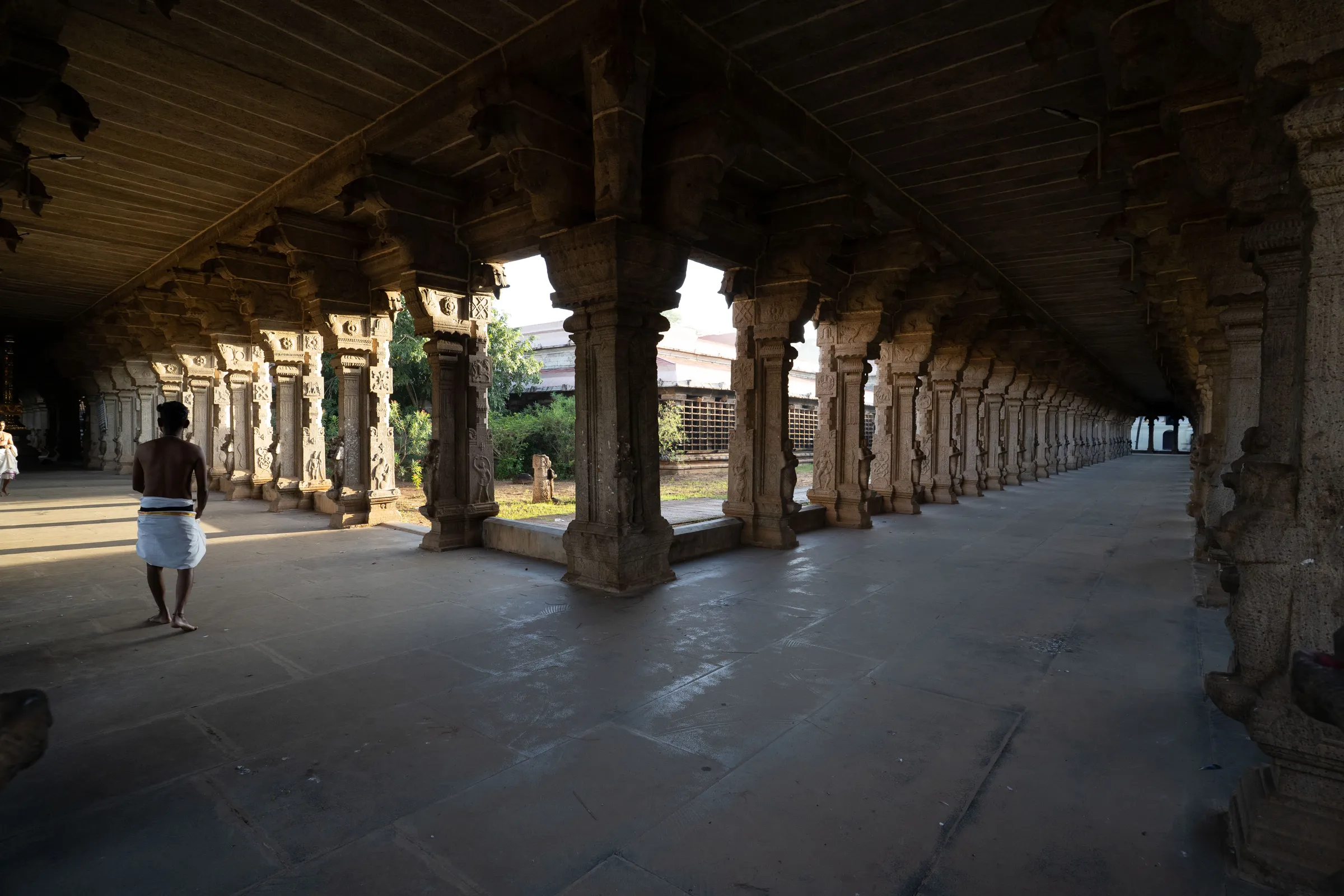
The primary deity is a 23-foot-long reclining figure of Vishnu on his serpent bed, Adisesha or Anantha, viewed through three doorways to the main shrine as at the Padmanabhaswamy temple in Thiruvananthapuram. Here the two reclining idols face each other, head in the south and feet in the north, and the Thiruvattar image predates the Thiruvananthapuram one.

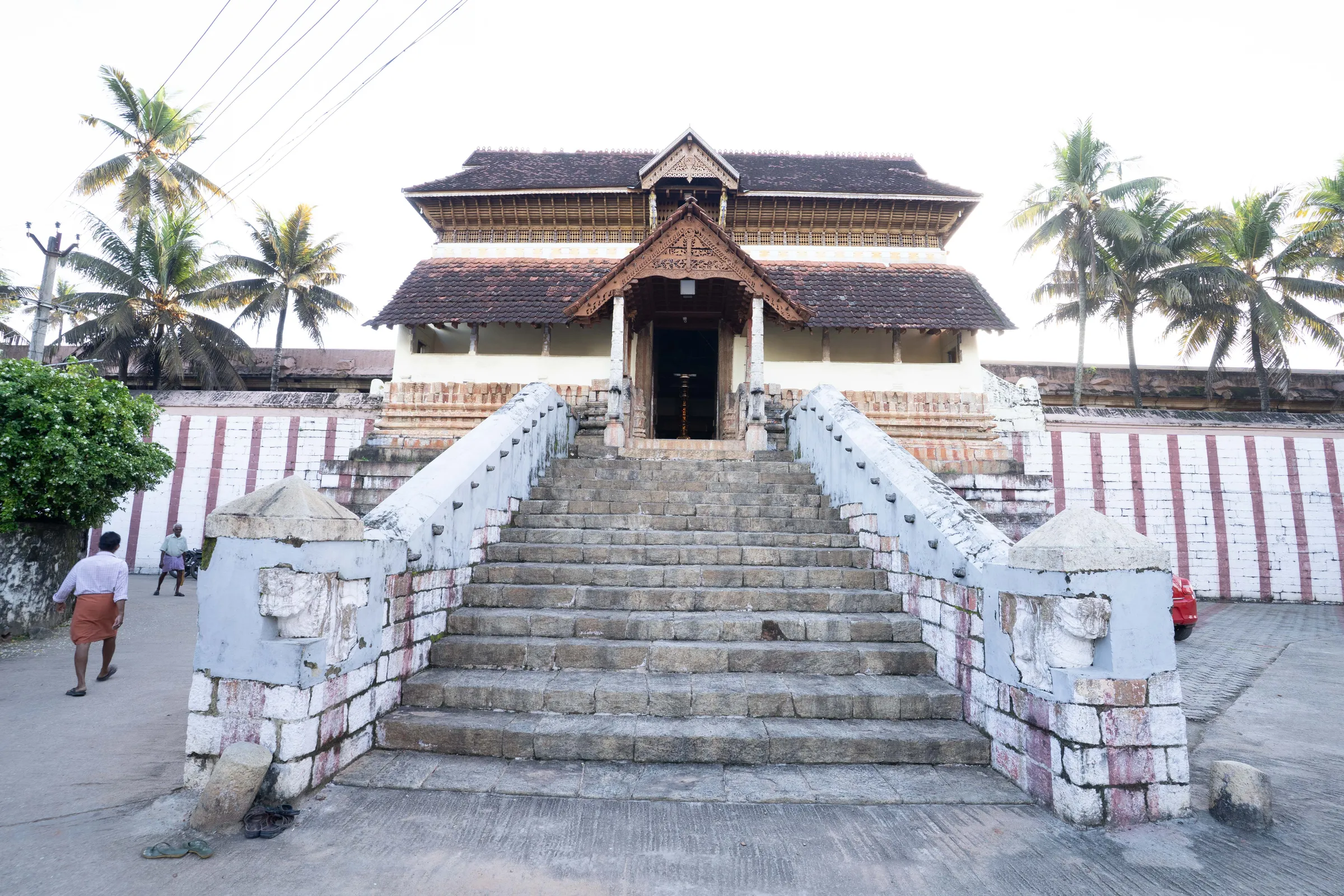
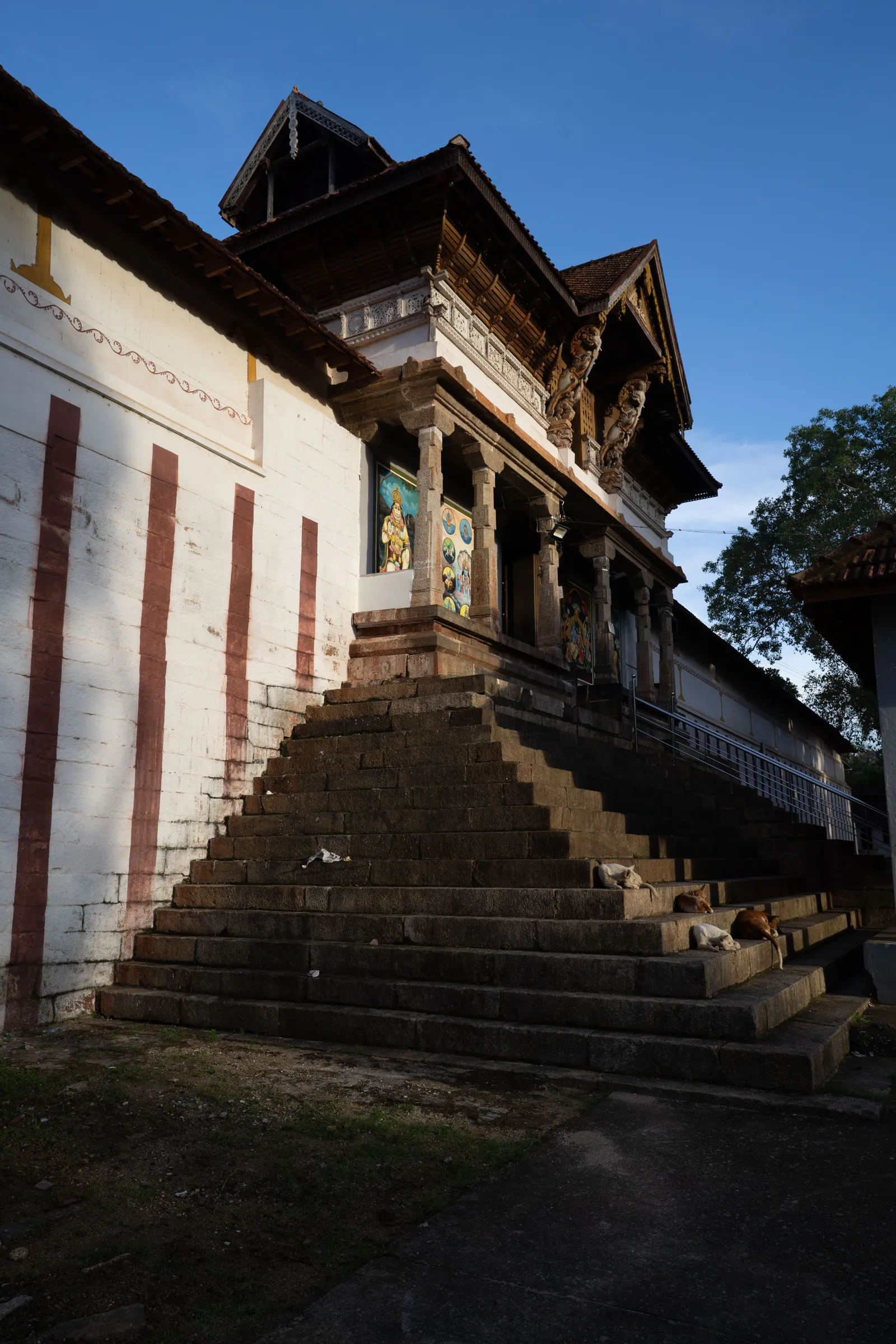
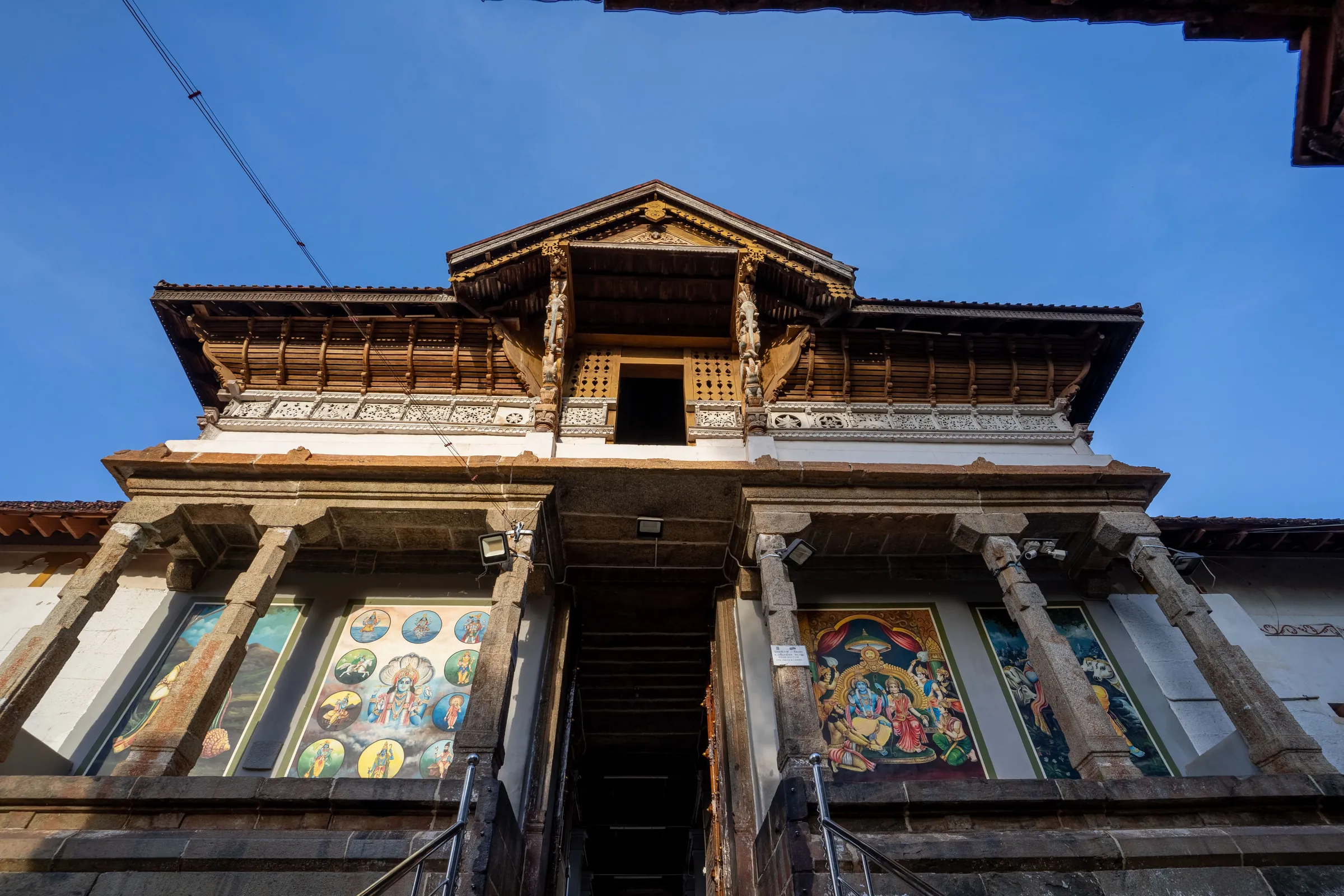
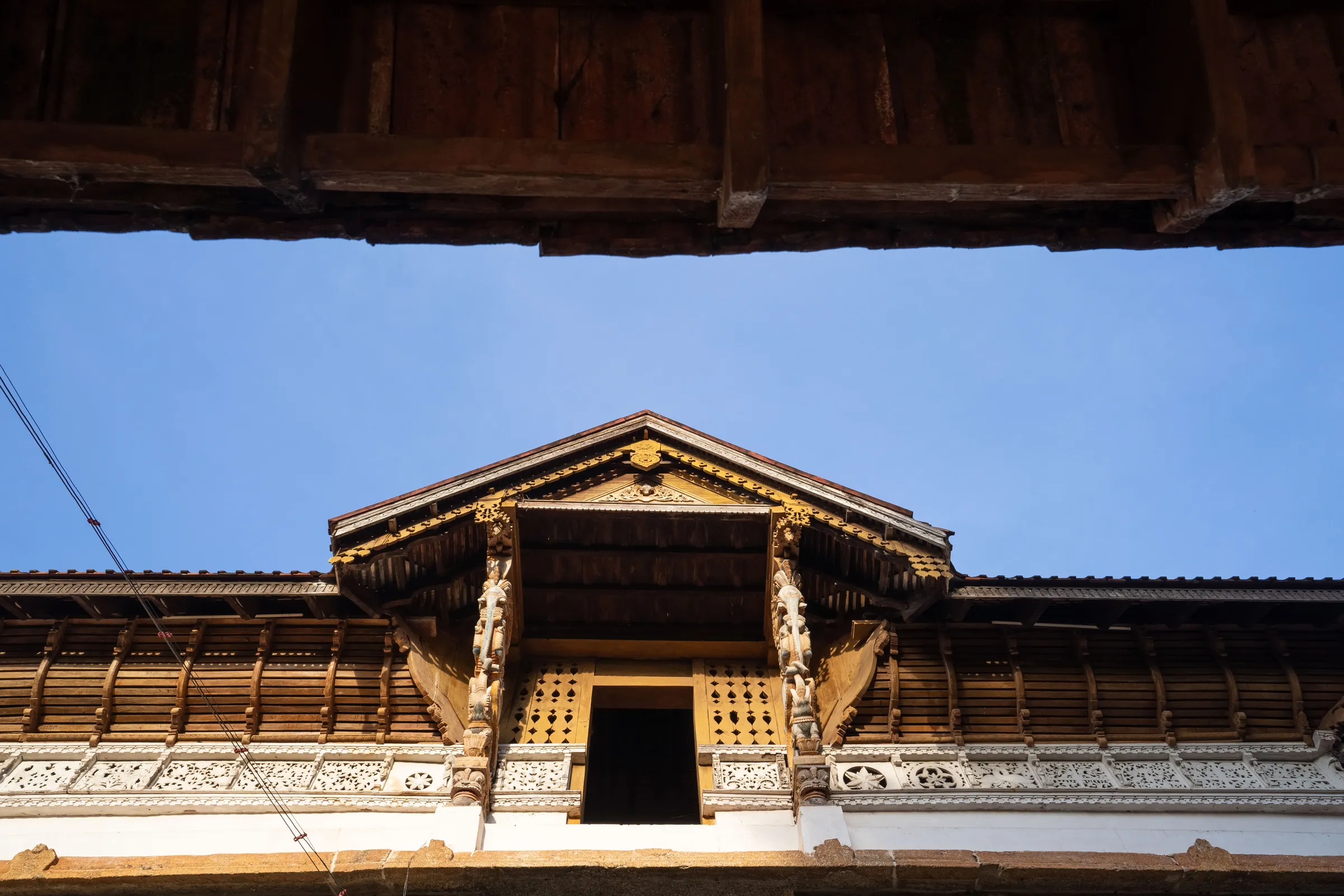
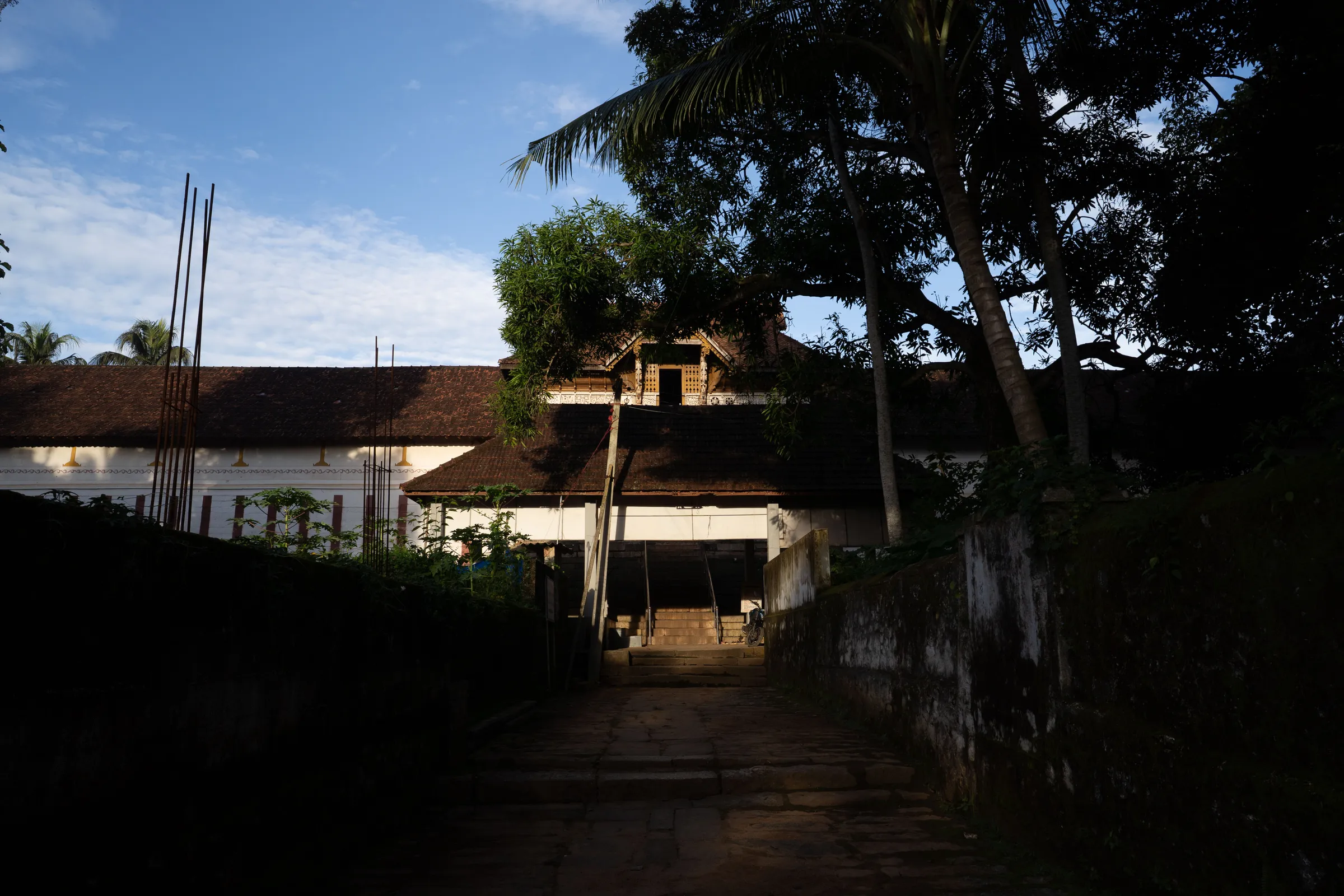
The temple blends the styles and materials of Tamil Nadu and Kerala. The garbhagriha, mandapas, pillars and sculptures are in granite, while some roofs, ceilings and carved panels are in wood. The pillars are notable for their sculpture, some with composite groups of figures. The outer prakaram has female figures holding lamps, Pavai Vilakku, one to a pillar, with relief birds, flowers and animals on the base and sides, and many Vyali figures, lion-faced creatures with an elephant's trunk and feline bodies.

The Belikkal Mandapa entrance has armed warriors riding pouncing Vyalis. The Sabha Mandapa has rows of sculptures, some from the Ramayana and Mahabharata, and a Venugopal on the second right pillar surrounded by a cow, a tiger cub drinking milk and mice. Two imposing Dwarapalakas guard the Mukha Mandapa, which holds wooden relief deities, Ashtadikpalas on the ceiling, and figures of Arjuna, Karna, Rati, Manmatha and Bikshatanar. The mandapa ceilings carry finely carved wooden panels, and the clay tiles (odu) and wooden roof at the entrance are in the Kerala style. The sanctum walls have murals of Vishnu's avatars and Gajalakshmi.

02

Archaeological

dated & cited

The early history is unclear. A Vattezhuthu palm-leaf manuscript found at the temple gives dates so remote, claiming a Treta Yuga origin, that the book treats them as unfathomable; other sources put the temple's age at about 2,500 years.

More concrete evidence lies in inscriptions across the temple, ranging from about the 11th century CE to a 1937 English inscription recording Mahatma Gandhi's visit to Thiruvattar. An inscription on the base of the Belikkal Plat, from the time of Rajendra Chola I (1013 to 1045 CE), describing the deity, seems the oldest surviving. An inscription of 1582 attributes the building of the Ottakal Mandapa to Veera Ravi Varma Kulasekara. The temple holds 22 inscriptions in Tamil Vattezhuthu and Sanskrit Nagari scripts referring to the Cheras and Cholas.

The temple was first the royal temple of the Kingdom of Travancore. It passed to the Madras State and then to the Tamil Nadu HR&CE department after the State Reorganization Act of 1956.

03

Mythological

as transmitted

The temple is one of the 108 Divya Desams. Nammazhvar is said to have visited it and sung hymns in praise of Adikesava Perumal at Thiruvattar.

Register interest in prints Buy the book
Improve this entry

This is an open, reviewed record. If you have spotted an error or have something to add — a correction, a date, a source, a name in another script — propose it. Every change is reviewed before it joins the record.

“Suggest an edit” opens this entry on GitHub and turns your change into a pull request. “Share feedback” opens a short form. Both go through review.